Jude the Obscure by Thomas Hardy

Thomas Hardy really seems to be an author people either love or hate and Jude the Obscure must be the book that divides opinion more than any of his others. This is the third Hardy book I’ve read, the first two being Tess of the d’Urbervilles and A Pair of Blue Eyes and although this one didn’t have quite the same emotional impact on me that Tess did, I was still moved to tears in places.

Jude Fawley is eleven years old when he sees his schoolmaster, Mr Phillotson, leave the hamlet of Marygreen to go and study in the great city of Christminster. As a working-class boy it’s unlikely that Jude will ever be able to do the same. His only chance is to spend the next few years teaching himself Greek and Latin from books every night after going out to work through the day. Jude hopes that hard work, determination and a desire for knowledge will be enough to enable him to fulfil his dream of going to university in Christminster.

“It is a city of light,” he said to himself.

“The tree of knowledge grows there,” he added a few steps further on.

“It is a place that teachers of men spring from and go to.”

“It is what you may call a castle, manned by scholarship and religion.”

After this figure he was silent a long while, till he added:

“It would just suit me.”

What makes this so sad is that we, as readers, can see almost from the beginning that Jude is going to be disappointed. The class system in Victorian England meant it was almost impossible for someone in Jude’s position to go to university. The hopelessness of his situation becomes clear when the head of one of the Christminster colleges advises him that as a working man he should ‘remain in his own sphere and stick to his trade’. Jude’s response is to write on the college wall with a piece of chalk: “_I have understanding as well as you; I am not inferior to you: yea, who knoweth not such things as these?_”–Job xii. 3. That scene was one of many that made my heart break for Jude.

But education is not the only problem Jude faces. Following a disastrous marriage to a pig farmer’s daughter, he falls in love with his cousin, Sue Bridehead, who has also been unhappily married. Disillusioned with marriage, Jude and Sue decide to live together without marrying, but this unconventional arrangement could have tragic consequences.

I can see why this book was so controversial at the time of its publication (1895) as there are a few aspects of the story that must have been quite shocking for Victorian readers, particularly the way it challenges the way we think about Christianity and marriage. Hardy places Jude and Sue into a situation which he could use to explore England’s marriage and divorce laws as well as the problems that faced two unmarried people living together and how they could (or couldn’t) reconcile this with their religious and moral beliefs.

All of this eventually leads to a devastating tragedy which takes place towards the end of the book – anyone who has read it will know what I’m referring to and for those of you who haven’t, I can tell you it’s one of the saddest scenes you’re ever likely to read. A couple of pages before it happened I guessed (knowing Hardy) what was going to occur and yet I still wasn’t really prepared for it. One of the reasons people give for not liking Hardy is that he’s too depressing and while I can’t deny that this book is relentlessly tragic and heartbreaking, I still felt compelled to keep reading, to find out what happened next, to see what further ordeals Jude would have to face.

I can’t recommend Jude the Obscure highly enough, unless you really just don’t like this type of book. Now I need to decide which of his books I should read next…
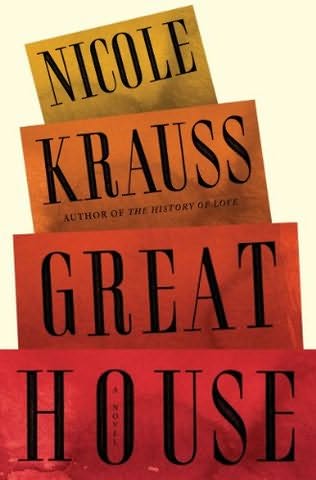
Great House by Nicole Krauss

I picked up Great House after it was named on the Orange Prize longlist in April and probably wouldn’t have thought about reading it otherwise. Based on what I had heard about the book before I started reading it I suspected I wouldn’t enjoy it, but I wanted to give it a try anyway. I liked the central concept of a number of different people being linked by an item of furniture (a desk) and was curious to see how this would work. Having read the book, though, it would be inaccurate to describe it as ‘a book about a desk’ – in fact, in several of the book’s eight sections the desk is barely mentioned at all.

The novel is made up of four separate stories, with two chapters devoted to each one. The first story is narrated by Nadia, an author living in New York, who receives a writing desk from a Chilean poet, Daniel Varsky. At the end of the first chapter we leave Nadia behind for a while and move to Israel, where we meet Aaron and learn about the difficult relationship he has with his son, Dov. Next the action switches to England and our third narrator, Arthur, who tells us about his wife, Lotte. Lotte, another writer, has a secret which is only revealed as she grows older and begins to suffer from Alzheimer’s. The fourth storyline involves Izzy and her relationship with Yoav and Leah Weisz, the son and daughter of a collector of antique furniture.

There are some themes that recur throughout most or all of these four narratives: authors, relationships between parents and children, loss and memories. All four storylines interested me but the one that I found the most engaging was Aaron’s. I thought his voice was the strongest of all the narrators; the others were not as easy to distinguish between.

Great House is a novel that requires a lot of patience and concentration. The ways in which the four stories are linked are not immediately obvious and you need to read the entire book to be able to fit the various pieces of the puzzle together. Although I didn’t enjoy it enough to want to read it again, it’s a book that would almost certainly benefit from a re-read. Even reading slowly and making a few notes as I went along there were still things that didn’t quite make sense to me, but I think if I started the book again with my knowledge of the later sections I should be able to pick up on little details in the earlier chapters that I’d missed the first time.

The quality of the writing is excellent; there were sentences that were so beautifully constructed that I had to go back and read them twice. It’s a clever book and definitely not an easy read, but one that leaves the reader with a lot to think about, and although the book wasn’t really to my taste it’s undeniably a very impressive novel.

Before I Go to Sleep by SJ Watson

Every morning Christine Lucas wakes up to find a strange man lying beside her in bed. Every morning she listens while he tells her that his name is Ben and he’s her husband. Every morning she discovers that she is suffering from amnesia and that she has no memory at all of most of her adult life.

Christine’s doctor advises her to keep a journal. If she records everything she learns each day, he says, perhaps it will help to bring her memories back and allow her to make sense of what has happened. Then one day Christine picks up her journal and sees that she has written the words DON’T TRUST BEN. But why shouldn’t she trust him? What is going on?

SJ Watson’s psychological thriller, Before I Go to Sleep, is one of the most gripping books I’ve read this year. My only regret is that I didn’t save it to read at the weekend when I would have fewer interruptions. Reading during the week I had to tear myself away from it to go to work or to bed. What makes the book so suspenseful is the uncertainty about what exactly is happening. With the entire story told from Christine’s perspective we don’t know any more than she does. It’s possible that Ben could be genuine – it’s also possible that everything he says is a lie. And what about Dr Nash? Could he also be lying to her? Christine doesn’t know and neither do we.

It’s hard to imagine anything worse than waking up each day, not knowing where you are (or even who you are), not able to recognise the man who says he’s your husband, having to learn everything about your life all over again. By losing her memory Christine has lost her whole identity. As she says to herself at one point in the novel, “What are we, if not an accumulation of our memories?” She was in such a horribly vulnerable situation and I felt afraid for her. The atmosphere throughout the book is very unsettling and although I had a few guesses, the ending still managed to shock me.

Without spoiling the story for you there’s nothing more to say other than to echo all the other glowing reviews out there and to tell you that in my opinion all the hype surrounding this book is justified!

I received a copy of this book from Transworld for review

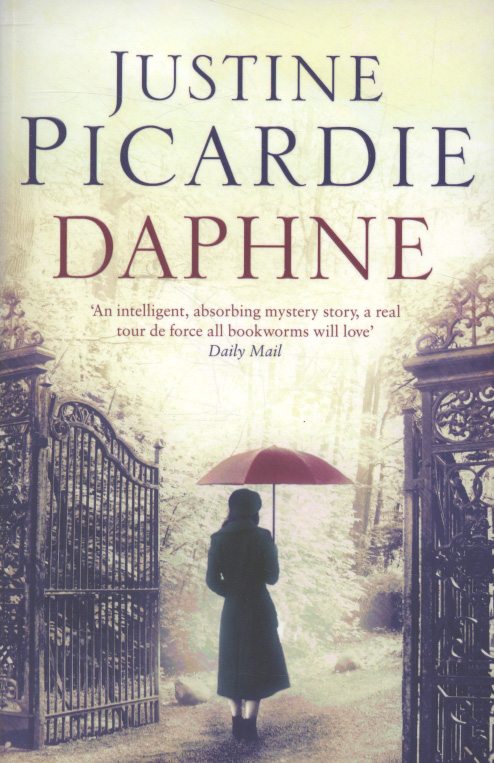
Daphne by Justine Picardie

Justine Picardie’s novel Daphne features one of my favourite authors, Daphne du Maurier, as the main character. We first meet Daphne in 1957, an eventful time in her life. Having discovered that her husband has been having an affair, she throws herself into her current project: a biography of Branwell Brontë. Daphne is convinced that Branwell has been unfairly treated by literary historians. She believes that he may have been capable of writing a novel to rival Wuthering Heights or Jane Eyre and that he may even have been the author of some of the works attributed to his more famous sisters. As part of the research for her new biography Daphne begins corresponding with Alex Symington, a Brontë scholar who shares her views on Branwell. But Symington has some secrets in his past. Can he be trusted?

Another thread of the novel takes place in the present day and is narrated by a student who is busy writing her PhD thesis on Daphne and the Brontes. The story of the shy, naïve student and her difficult relationship with her older husband, Paul, is clearly supposed to mirror the story of Maxim de Winter and his young wife in du Maurier’s Rebecca. Paul even has a glamorous ex-wife, reminiscent of Rebecca herself.

Whenever I read a novel with multiple time frames I usually find that I’m more interested in the historical parts than in the modern day sections, but with Daphne I thought all three strands of the story were equally interesting. The chapters which deal with the characters of Daphne and Symington seemed to be well-researched and were very informative. We learn a lot about Daphne’s relationship with her father, the actor Gerald du Maurier. We are also shown how Daphne was feeling the pressures of being a famous author, how she felt haunted by the ghost of Rebecca and could only truly relax when she was at Menabilly, her Cornwall home. And Picardie explores the link between Daphne and the Llewelyn Davies brothers, particularly Peter, who was the inspiration for J.M. Barrie’s Peter Pan.

I should warn you that if you haven’t read any of Daphne du Maurier’s novels yet you may come across some spoilers, particularly for Rebecca, so you might want to read that one first. I would highly recommend reading Rebecca anyway – it’s a fantastic novel and one that I’ve read and loved several times. I thought Daphne lacked the magic of du Maurier’s own novels and I don’t feel the desire to read it again and again as I have with Rebecca, but it was still an enjoyable book. If you’re interested in du Maurier, the Brontes or literary mysteries with a gothic feel, I’d suggest giving Daphne a try.

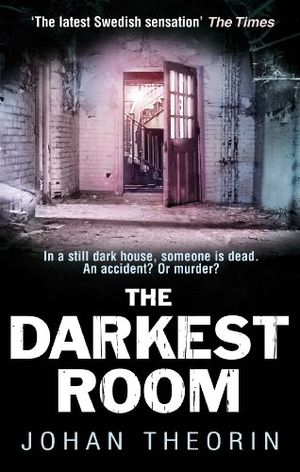
The Darkest Room by Johan Theorin

“Those who have lived here in times gone by are still here,” said Gerlof, his coffee cup in his hand. “Do you think they rest only in graveyards?”

The Darkest Room is the second in a planned quartet of novels by crime writer Johan Theorin, all set on the Swedish island of Öland. In March I wrote about how much I enjoyed the first book in the series, Echoes from the Dead, and I thought this one was even better. So far I have been very impressed by these books. I would describe them as intelligent, well-written mystery novels with believable characters and one of the most vivid and atmospheric settings I’ve come across. There are surprises, revelations and plot twists but nothing that I’ve found too hard to believe. And in this second novel there’s a touch of the supernatural too, as well as some Swedish folklore.

There are three main threads which alternate throughout the novel. The first follows Joakim and Katrine Westin who have recently moved to Öland with their two young children, Livia and Gabriel. Their new home, the isolated manor house at Eel Point, has an interesting history which is slowly revealed through a number of flashbacks. The second thread features Henrik Jansson and his involvement with a pair of criminals, the Serelius brothers, who are planning a series of burglaries. And the third storyline introduces us to Tilda Davidsson, a police officer who is another new arrival on the island. Add a couple of abandoned lighthouses and a ‘sacrificial peat bog’ and it soon becomes clear that this is much more than just another haunted house story.

Although I personally prefer to read a series in the correct order if possible, it wouldn’t be necessary to read Echoes from the Dead before this one; they don’t really follow on from each other in any way. The only links that connect the two books are the Öland setting and the character of Gerlof Davidsson, a retired sea captain. He’s Tilda Davidsson’s great-uncle and with his knowledge of Eel Point and the superstitions surrounding it, she decides to enlist his help with her investigations. Gerlof, at eighty years old, again plays an important part in solving the mystery as he did in the previous book. I love Gerlof; with his independence, his quiet confidence and his ability to listen he’s a great character and it was wonderful to meet him again.

On the author’s website, Theorin states that his aim in writing the Öland quartet is to set each novel in a different season, so that the atmosphere of the story is influenced by the weather and the changing landscape. Having now read the first two books in the quartet, I can say that so far he has done this very well. The Darkest Room is set in the winter after all the summer tourists have left Öland and the island is at its most deserted. Snow storms, blizzards and relentless cold all add to the mood of the book. Theorin doesn’t give us pages and pages of lengthy descriptions of the scenery; instead, the descriptions are woven into the fabric of the story conveying both the beauty of the island and the sense of loneliness and isolation that give the setting its eerie feel. I’m now looking forward to starting the third book, The Quarry, and finding out what Öland is like in the spring!

Orlando by Virginia Woolf

Virginia Woolf is one of those authors who I’ve always felt slightly intimidated by but after finally reading one of her books I’m pleased to say I’m no longer afraid of her. I’m glad I chose to begin with this book because I found it witty, engaging and surprisingly easy to read, as well as being a very original and fascinating story. In Orlando, Woolf has surely created one of the most unusual protagonists in literature: a character who lives for four hundred years and changes gender midway through his/her life.

The book, although obviously a work of fiction, is presented as a biography. We first meet Orlando as a young sixteenth-century nobleman, during the final years of the reign of Elizabeth I, and the biographer follows our hero/heroine throughout the centuries. The book covers a period of four hundred years and during this time Orlando ages only slightly. At one point in the story Orlando sleeps for a week and awakens to find that he is now a woman – and gradually her perceptions of the world and the roles of males and females begin to change. No explanation is given for Orlando’s remarkable life span or gender change; it’s simply accepted that those things have occurred.

As you would expect, over the course of four hundred years Orlando has a lot of unusual experiences and adventures, both as a man and as a woman living through the Elizabethan age, the Great Frost (one of the most memorable episodes of the story, for me), the Restoration period, the 18th century, and the Victorian era. One thread that runs through the entire story is Orlando’s love of literature and attempts at becoming a writer. The story finally comes to its conclusion in 1928, at which point we can look back at everything Orlando has been through and what she has learned about gender, love and what it means to be an artist.

I’m not a fan of the stream of consciousness writing style but although there’s some of that in Orlando, particularly in the second half of the book, much of it was in the form of a more conventional narrative and I didn’t find it hard to read at all. I was aware that this book has been described as a love letter from Woolf to her friend, Vita Sackville-West, but I deliberately avoided reading the introduction first as I wanted to enjoy the book on its own merits as a novel first. But after I’d finished the story it was interesting to turn back and find out more about the inspiration behind it and how some of the events that take place in the story relate to aspects of Sackville-West’s and Woolf’s own lives.

Orlando is a very clever and imaginative piece of writing. I’ve heard that this is one of Woolf’s more accessible books and now that I’ve read it, I think I would advise other people who are new to her work to try this one first too.

June Reading Summary

I had mixed feelings about my June reading – there were some books that I loved and others that I didn’t enjoy very much at all. I read 13 books and 7 were by authors who were new to me. My reading took me to Sweden, England, Sierra Leone, America and Italy. As usual I haven’t had time to post my thoughts on all of these books yet, so if there are any you’re particularly interested in please let me know and I’ll try to make those reviews a priority.

Favourite books read in June

I enjoyed Dr Thorne by Anthony Trollope as much as the other two Trollope books I’ve read and I’m now really looking forward to Framley Parsonage, the next in the Barsetshire series. On Wednesday I explained why I loved Innocent Traitor by Alison Weir – definitely one of my favourite books of the month! And I finished The Darkest Room by Johan Theorin just in time for it to be included in my June summary. Hopefully I’ll be posting my review of this wonderful Scandinavian crime novel within the next few days.

Other books read in June

The Map of Time by Felix Palma
Rule Britannia by Daphne du Maurier
Cousin Kate by Georgette Heyer
The Memory of Love by Aminatta Forna
Daphne by Justine Picardie
A Visit from the Goon Squad by Jennifer Egan
The Flight of the Falcon by Daphne du Maurier
Why Didn’t They Ask Evans? by Agatha Christie
The Small Hand by Susan Hill
Grace Williams Says It Loud by Emma Henderson

Did you read any great books in June? What are you looking forward to reading in July?