Classics Circuit Tour: Jane Austen (Persuasion) vs Charles Dickens (The Mystery of Edwin Drood)

Today, as part of a Classics Circuit Tour, I’m hosting a duel between two very different authors: Jane Austen and Charles Dickens!

Tour participants were invited to choose a novel by either Austen or Dickens – or both. As there were still a couple of Austen novels I hadn’t read, as well as a whole pile of unread Dickens books, I decided this would be a good opportunity to read one of each. But which one would I like the best?
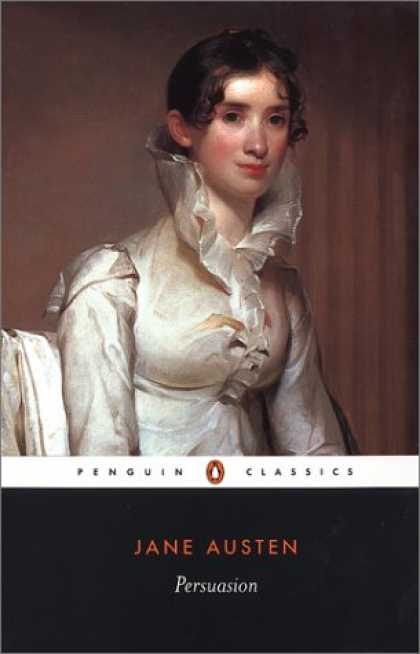
The first book I want to discuss is Jane Austen’s Persuasion, a moving story of mistakes, misunderstandings and second chances.

Austen begins by introducing us to the Elliot family: the vain and conceited Sir Walter of Kellynch Hall and his three daughters, Elizabeth, Anne, and Mary. Mary is married with children of her own, but Elizabeth and Anne still live at home. Elizabeth is very like her father but Anne is gentle, kind-hearted and intelligent. We also meet Lady Russell, a family friend who took on the role of advisor to the girls following the death of their mother.

Several years prior to the beginning of our story, Lady Russell persuaded Anne against marrying Frederick Wentworth, who at that time was a poor young naval officer. Anne has tried to move on with her life but has been unable to forget her first love and she is still unmarried eight years later when she hears that he has returned as the wealthy and respectable Captain Wentworth. Unexpectedly thrown back into his company and forced to see him with another woman, Louisa Musgrove, Anne knows she still loves him – but can Wentworth forgive her for breaking off their engagement all those years ago?

In comparison to the other Austen books I’ve read this one feels more serious and subdued. Anne Elliot is twenty-seven years old which makes her the oldest of Austen’s heroines and this could explain the different tone of the book (as well as the fact that Jane Austen herself was older, this being her final novel). We don’t see Anne as a younger girl in the days of her original romance with Wentworth; instead we meet her when she’s older and more mature. Anne is not a lively, spirited young woman like Elizabeth Bennet or Emma Woodhouse but she has a quiet strength and a warm heart and it’s easy to see what Captain Wentworth loved in her.

It’s slightly disappointing that Anne and Wentworth are kept apart through most of the novel and have little direct interaction with each other, but I appreciated the way Austen kept the reader waiting and wondering, giving the story a sense of restraint and tension. I loved this book and I think it might even have become my favourite Austen novel – although that could still change after I read Sense and Sensibility, which is the only one of her books that I still need to read.

Moving on to Charles Dickens…
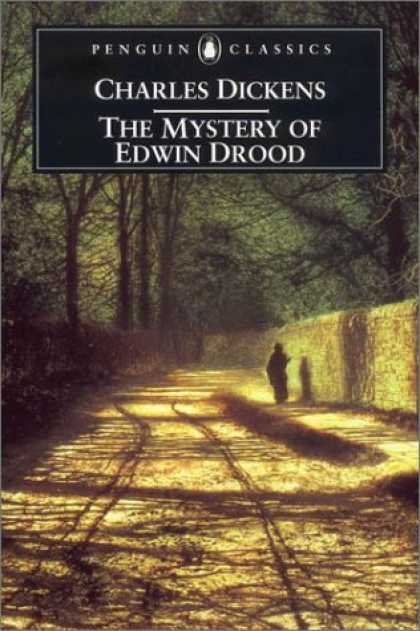
There were plenty of Dickens books I could have chosen, as I’ve only read three of them so far (A Christmas Carol, Bleak House and Our Mutual Friend) but as I’d also committed to reading a Jane Austen book I thought I’d better pick one of his shorter novels.

Trying to avoid one of his eight hundred page tomes played a large part in my decision to read The Mystery of Edwin Drood for the Duelling Authors tour. In comparison to other Dickens novels it’s relatively short – and for a good reason. It’s the novel Dickens was working on when he died in 1870 and unfortunately he was unable to complete it. I wasn’t sure how I would feel about reading an unfinished book but I can tell you that reaching the final page and realising that the mystery wasn’t going to be solved was every bit as frustrating as you might expect!

A large part of the novel is set in the fictional cathedral town of Cloisterham, which is thought to have been based on Rochester, where Dickens lived. We are also taken on a journey into the darker side of Victorian London; the opening scenes of the book take place in Princess Puffer’s opium den, to which Cloisterham choirmaster and piano teacher John Jasper is a regular visitor.

We learn that Jasper is in love with Rosa Bud, an orphan who lives at the Nun’s House in Cloisterham. There are only two problems with this: the first is that Rosa finds Jasper terrifying; the second is that she’s already engaged to his nephew, Edwin Drood, who is only a few years younger than Jasper himself. So when Drood disappears and is presumed to have been murdered it should be obvious who’s to blame, shouldn’t it? Well, no. There’s another suspect: Neville Landless, recently arrived in Cloisterham with his twin sister Helena, who is known to have previously had a violent argument with Drood and was with him the night before his disappearance.

Unfortunately we never find out what really happened to Drood and a number of other storylines are also left unresolved. We can guess what might have been going to happen, and I was able to find lots of possible theories online, but maybe Dickens had a few surprise twists planned for us – we’ll probably never know for certain.

Compared to the other Dickens books I’ve read, I found this one more direct and easy to follow, with less sub-plots and superfluous characters. Almost every chapter helps to move the story forward significantly. It was also quite funny in places, which was good as I haven’t really got on with Dickens’ sense of humour in the past. I can’t help thinking I’ve done things backwards though: I read Drood by Dan Simmons last year, which meant that when I started this book I felt I knew part of the story already. Many of the characters’ names were familiar and I could appreciate how cleverly Simmons had incorporated elements of Dickens’ novel into his own: the opium dens, the tours of the cathedral vaults and crypts, Drood’s interest in Egypt, the ‘hideous small boy’ who throws stones at Durdles. I think it would have been more sensible to have read this book first before the Dan Simmons one!

So who has emerged as the victor of this duel? Well, The Mystery of Edwin Drood was a fun, entertaining read but Persuasion I’m sure will be one of my books of the year – so I think Jane Austen is the winner here!

If you’re still not sure which author you prefer, the other Classics Circuit participants’ Austen and Dickens reviews might help you decide – you can find a full list of tour stops on the Classics Circuit blog.

Touch by Alexi Zentner

In Touch, the debut novel by Alexi Zentner, we follow the story of three generations of one family who live and work in Sawgamet, a small Canadian mining and logging town. Our narrator, Stephen, has just returned to Sawgamet after a long absence because his mother is dying. Back in his childhood home Stephen becomes lost in memories – and shares some of those memories with the reader. Foremost in Stephen’s thoughts is the day his grandfather, Jeannot, came back to the town after disappearing for many years and announced that he had come to “raise the dead”.

With tales of sea witches and creatures that live in the forest, dogs that sing and golden caribou, the line between fantasy and reality often becomes blurred. I’m not always a fan of magical realism but it is done perfectly here, and so is the non-linear narrative which moves seamlessly between past and present.

Sawgamet is one of the most vivid settings I’ve encountered in a book for a long time. I could picture Jeannot’s cabin and mill, the miners panning for gold in the river, the suffocating blankets of snow that buried the landscape during the long cold winters. Enchanting and magical one minute, dark and threatening the next, the atmosphere Zentner created was wonderful. His writing is beautiful and elegant and there are some haunting images that have stayed in my mind even after finishing the book.

As a debut novel I thought Touch was hugely impressive and I’ll certainly be looking out for more work by this author in the future.

The Weed that Strings the Hangman’s Bag by Alan Bradley

The Weed that Strings the Hangman’s Bag is the second book in Alan Bradley’s Flavia de Luce mystery series. I read and loved the first one, The Sweetness at the Bottom of the Pie, last year but it’s taken me so long to find time to read this one that the third book has also now been released and is waiting patiently on my shelf.

For those of you who are new to the series, the novels are set in the small English village of Bishop’s Lacey during the 1950s and feature Flavia de Luce, an eleven-year-old detective and chemistry genius. The mysteries are not particularly complex but Flavia’s unique narrative voice makes the books a lot of fun to read.

The Weed that Strings the Hangman’s Bag begins shortly after the previous book ended, but if you haven’t already read The Sweetness at the Bottom of the Pie I don’t think it would matter too much. And if you have read The Sweetness… you’ll find that this book is really very much the same: Flavia is still conducting experiments in her laboratory, her sister Daffy is still obsessed with books, her other sister Feely is still obsessed with her appearance, Father is still collecting stamps. But the tone of this book is slightly darker than its predecessor and I enjoyed the mystery more as there were a lot of possible suspects and the villain wasn’t immediately obvious – at least not to me!

This time Flavia investigates a murder that takes place during a puppet show in the village hall and begins to connect this death with the hanging of a little boy in Gibbet Wood several years earlier. As a detective, the advantage Flavia has is that being an eleven-year-old girl she can ask questions that the police can’t ask and can convince the local people to tell her things they might not tell an adult. Being an expert in poisons helps too, of course!

Flavia hasn’t changed a lot between the first book and this, but she does feel that little bit older and her sense of humour seems sharper. I’m hoping her character is going to develop further as the series goes on. The thing I love about Flavia is that she is somehow both a believable and an unbelievable character at the same time. She has a vocabulary like no eleven-year-old I’ve ever met and both her chemical and general knowledge are exceptional even by adult standards, but despite this she still feels real to me. She also has fears and insecurities (usually covered up by her tough exterior) and this book continues to explore her difficult relationships with her sisters and father, as well as introducing another family member, Aunt Felicity.

I love the old-fashioned, innocent feel of this series, which reminds me so much of the Enid Blyton books I grew up reading. Hopefully it won’t be too long before I can let you know what I think of A Red Herring Without Mustard!

New book arrivals

As a change from all the book reviews I’ve been posting recently I thought I’d share with you some of the new books I’ve acquired in the last couple of weeks.

Touch by Alexi Zentner – I’ve already finished reading this novel about a Canadian gold mining town and I would highly recommend it – it’s beautifully written with some haunting imagery and elements of magical realism.

Here Be Dragons by Sharon Penman – I bought this secondhand copy for myself because I loved The Sunne in Splendour and want to try another of Penman’s books. This one is set in 13th century Wales.

The Report by Jessica Francis Kane – I’ve seen so many positive reviews of this book recently and am interested in learning more about the Bethnal Green tube disaster.

The Map of Time by Felix Palma – This book is set in Victorian London and features characters such as H.G. Wells, Jack the Ripper and Bram Stoker. This really sounds like something I should love, so I hope it lives up to my expectations.

Gillespie and I by Jane Harris – I was delighted to win a copy of this book from LibraryThing Early Reviewers. I haven’t heard much about it but it looks and sounds wonderful.

Have you read any of these?

The Creation of Eve by Lynn Cullen

I think most people have probably heard of famous Renaissance artists such as Michelangelo and Leonardo da Vinci. But what about Sofonisba Anguissola? In The Creation of Eve, Lynn Cullen introduces us to this talented female artist who was prevented from reaching her full potential simply because she was a woman. Sofonisba, who spent many years in the Spanish court, was not allowed to sign her paintings with her own initials and some of her works were even credited to other people.

At the beginning of the book, Sofonisba is studying in Rome with Michelangelo. She leaves Rome following an affair with another student and travels to Spain where she joins the royal court as lady-in-waiting and art instructor to the fourteen-year-old Queen, Elizabeth of Valois. Here she becomes caught up in a scandal involving the Queen and the King’s half brother, Don Juan.

This book was not quite what I had thought it would be. I was expecting it to focus on the story of Sofonisba Anguissola and was looking forward to learning about her training as an artist and the challenges she faced as a woman working in a male-dominated field. As it turned out though, the book was as much about the relationship between King Felipe II and his young French wife, Elizabeth, as it was about Sofonisba. For much of the book Sofonisba is little more than a passive observer, a witness to the events that are unfolding in the Spanish court.

I thought The Creation of Eve was an interesting and entertaining read but it lacked any real emotional impact for me. Looking at other reviews of this book (as I usually do after writing my own) opinion seems to be overwhelmingly positive, so if you like reading historical fiction revolving around intrigue in royal courts there’s a good chance that you’ll love this book. The novel does appear to be very well-researched. Cullen manages to incorporate a large amount of historical detail, but this never gets in the way of the plot. I appreciated the author’s note at the end of the book which tells us which parts of the book are historical fact and which are fiction.

I actually won this book in last year’s Readathon (April 2010) and am glad I’ve finally read and enjoyed it, as I was starting to feel very guilty about not reading it sooner!

Some examples of Sofonisba Anguissola’s paintings can be seen on her Wikipedia page.

Swamplandia! by Karen Russell

Swamplandia! is an alligator-themed amusement park in the Everglades run by Chief Bigtree, his wife, Hilola, and their three children. For years tourists have been flocking to the park to see the star attraction: Hilola Bigtree and her alligator-wrestling act. The fortunes of the Bigtree family start to change, however, when Hilola dies of cancer – and then a rival theme park called World of Darkness opens on the mainland nearby and the downfall of Swamplandia! is complete.

Swamplandia! first came to my attention when it appeared on the Orange Prize longlist. Not having read anything by Karen Russell before I didn’t know what to expect from this book but was intrigued by the unusual setting and subject. And at first I loved the originality and quirkiness of the story. I loved reading about the Swamplandia! theme park (complete with Swamp Café and Bigtree Family Museum), the alligator-wrestling and the other details of the Bigtree family’s life on the island. After a while the novelty started to wear off, but luckily the characters were strong enough to keep me interested.

The three Bigtree children all have an innocence that makes them likeable and endearing characters. It’s understandable in a way, as they haven’t had the most conventional of childhoods. They’ve been homeschooled on the island and the only other children they’ve really come into contact with have been tourists visiting the park. After their mother’s death, each of the three tries in their own way to cope with what has happened, unable to rely on their father who is reluctant to accept that his beloved park is in trouble and who fails to be there for his family when they need his support.

Osceola, the elder sister, announces that she’s in love with a dead man – and begins ‘dating’ him via séances and possessions. Ossie’s ghostly romance seemed ridiculous at first, but was actually quite a poignant and moving story. Her brother, seventeen-year-old Kiwi, runs away from Swamplandia! quite early in the story and goes to work on the mainland in an attempt to earn money to solve his family’s financial problems. But it’s Ava, as the youngest girl, who is particularly vulnerable. It’s Ava’s narration (including some disturbing scenes involving a ‘journey to the underworld’ with a stranger who calls himself the Bird Man) that gives the book an underlying darkness, with some moments of real sadness and heartbreak.

I loved the chapters narrated by Ava and I was also interested in Ossie’s storyline, but whenever the action switched to Kiwi’s adventures on the mainland, I quickly got bored. I can see why the Kiwi sections were included, as a way of lightening the mood of the book and to show how his childhood growing up in the swamps left him completely unequipped for life on the mainland, but to me they just didn’t fit with the rest of the book and I would rather have stayed with Ava’s narration. This was potentially a great book but the uneven plot let it down.

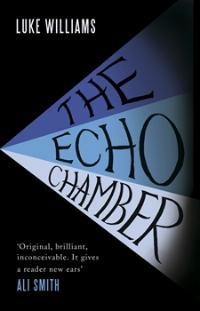
The Echo Chamber by Luke Williams

The Echo Chamber is narrated by Evie Steppman who was born in Lagos in 1946. Evie has always considered herself to have a remarkable sense of hearing – she even remembers listening to her father telling her stories while she was still in the womb – but now that she’s getting older she can’t hear as well as she used to. Sitting in her attic in Scotland surrounded by diaries, maps, postcards and other items from her past, Evie decides that it’s time to write the story of her life.

This is an interesting and unusual book which encourages the reader to think about sound in a new way. It made me really appreciate the everyday sounds that we take for granted.

At first I found it difficult to form an emotional connection with Evie as a person. There were other characters that I found more interesting – I was particularly fascinated by the character of Evie’s grandfather, Mr Rafferty, a watchmaker who tried to create a clockwork replica of his late wife. And so I appreciated the inclusion of two chapters in which we get the chance to read Evie’s lover’s diary; seeing her through someone else’s eyes gave an extra dimension to her character. I also enjoyed the chapters which dealt with Evie’s childhood in Nigeria during the final years of British rule.

The Echo Chamber is written in a number of different formats – diary entries, question and answer sessions, stories-within-stories – and although I’m not sure this really worked for me it did add to the originality of the book. I didn’t find it an easy read, but as a debut novel I think Luke Williams can be proud to have come up with something so different and imaginative.