A House of Pomegranates by Oscar Wilde

Last week I posted my thoughts on Laura Silver Bell by Sheridan Le Fanu for Irish Short Story Week. I then wanted to read another short work by an Irish author and remembered that A House of Pomegranates by Oscar Wilde was one of the free ebooks that came with my Sony Reader. Perfect!

A House of Pomegranates contains four short fairy tales by Wilde. I originally intended just to read one of them but ended up reading the whole book! Each story has a moral lesson for the reader but first and foremost they are enjoyable fairy tales – although quite dark in tone, as many fairy tales are.

Wilde apparently said that the stories in A House of Pomegranates are “meant partly for children, and partly for those who have kept the childlike faculties of wonder and joy, and who find in simplicity a subtle strangeness.” Having read the book I would agree with this assessment of it. Although I’m sure there are a lot of children who would enjoy the stories (I know I would probably have loved them if I’d read them when I was younger), I think they might be too long and too heavy on description for some, and in many ways will be appreciated more by adults.

In The Young King, we are warned against the love of beauty and luxury. On the eve of his coronation, the young king, who loves all the beautiful things in life, has three dreams in which he learns exactly where his magnificent new robe, sceptre and crown have come from – and suddenly, they don’t appear so beautiful after all.

The Birthday of the Infanta is a poignant story about the King of Spain’s daughter, who is celebrating her twelfth birthday. Among the entertainments that have been arranged for her is a performance by a dwarf, who later becomes convinced that the Infanta is in love with him. It quickly becomes obvious that the Infanta has a very sad and lonely life, but my sympathy was for the dwarf, who can be seen to represent anyone who is the victim of cruelty and prejudice. Even the flowers in the palace garden ridicule him.

The Flowers were quite indignant at his daring to intrude into their beautiful home, and when they saw him capering up and down the walks, and waving his arms above his head in such a ridiculous manner, they could not restrain their feelings any longer.

‘He is really far too ugly to be allowed to play in any place where we are,’ cried the Tulips.

‘He should drink poppy-juice, and go to sleep for a thousand years,’ said the great scarlet Lilies, and they grew quite hot and angry.

The Fisherman and his Soul is the longest of the four stories and to be honest, I didn’t think it needed to be quite so long. It felt very repetitive, which was a shame because it was otherwise an excellent story about a fisherman who falls in love with a mermaid and sacrifices his soul for her. It can almost be seen as a re-working of The Little Mermaid by Hans Christian Andersen, but instead of the mermaid longing to become human as in Andersen’s story, this is the reverse.

My favourite story in the book was The Star-Child, about a child who is found by a woodcutter after a shooting star falls from the sky. The child grows up to be selfish and conceited, but finally gets a chance to redeem himself.

A House of Pomegranates is certainly worth reading if you’re looking for something a bit different or if you like Oscar Wilde’s writing (although the wit and humour which shines through in his other works isn’t really present here). I would be interested in comparing this book with Wilde’s other, more popular, book of short stories, The Happy Prince & Other Tales, but I’ll have to wait until I’m in the mood for some more fairy tales!

Have you read either of Oscar Wilde’s two books of fairy tales?
Far to Go by Alison Pick

Far to Go is the moving story of a secular Jewish family, the Bauers, living in the former Czechoslovakia during the build up to the Second World War. Marta is nanny to the Bauers’ beloved little boy, Pepik, and at the beginning of the book, she is quite happy with her position – she gets along with both Pavel, a rich factory owner, and his wife, Anneliese (although Anneliese’s insensitivity annoys her at times) and she loves taking care of Pepik. But in 1938, when the Germans take control of the Sudetenland – the border region of Czechoslovakia where the family live – they find their peaceful existence is under threat. It doesn’t matter to the Nazis that the Bauers don’t consider themselves to be particularly religious – anyone with even a trace of Jewish ancestry is in serious danger. In an attempt to keep six-year-old Pepik safe the Bauers consider sending him to safety on the Kindertransport – but can they go through with it, knowing that they might never see their little boy again?

Far to Go is the first novel I’ve read that covers the lead up to World War II from the Czechoslovakian perspective, so a lot of the historical information was new to me. But instead of confusing the reader with a lot of names, dates and politics, Pick has chosen to concentrate on the lives of an ordinary Czechoslovakian family – a family who at first don’t realise how much danger they are in. Through Marta’s eyes we see how each member of the family tries to cope with the challenging times they are facing and the difficult decisions they are forced to make.

This is also the first time I’ve read about the Kindertransport (a scheme to help Jewish children escape from Czechoslovakia and other occupied countries by train, where they were then placed with foster families in Britain). I had tears in my eyes at the images of children being forcibly removed from their parents’ arms and pushed onto the trains, where they stood looking out of the windows as their families disappeared into the distance. Pick’s writing perfectly evoked the fear and confusion these poor children must have felt.

Although most of the book is written in the third person and focuses on Marta and the Bauers in the late 1930s, there are some sections which are set in the present day and from the viewpoint of an unnamed narrator who is carrying out research into the Holocaust and the survivors of the Kindertransport. At first I was slightly confused and wasn’t sure exactly who or what I was reading about, but eventually everything became clear and I could appreciate the clever structure of the book.

Far to Go is a beautiful, heartbreaking novel and one I would recommend to anyone interested in learning more about such an important period of Czech history.

I received a copy of this book from Headline for review.

South Riding by Winifred Holtby

I read South Riding in February and managed to finish it just in time to watch the recent BBC adaptation. I’m glad I was able to read the book before watching the series as I like to be able to form my own images of the characters before seeing someone else’s interpretation of them. I also think if I hadn’t read the book first I would have found some parts of the adaptation quite confusing.

I first came across Winifred Holtby in Vera Brittain’s Testament of Youth (she and Brittain were close friends) but this is the first time I’ve read any of her work. South Riding, as well as being a wonderful story, is also a realistic and insightful portrait of a community, which reminded me of Middlemarch by George Eliot. It also shares some plot elements with Jane Eyre – one of the main characters even remarks on this herself!

So what is the book actually about? Well, it’s about Sarah Burton who is appointed headmistress of Kiplington High School for Girls and who begins to fall in love with troubled gentleman farmer Robert Carne. It’s also about Lydia Holly, the brightest girl in the school, who is forced to abandon her education and stay at home to look after her younger siblings after their mother dies in childbirth. And it’s about…no, I won’t tell you any more – South Riding is about so many different things I would rather leave you to discover them for yourself. But at the centre of all these storylines is the South Riding council, which makes the important decisions that affect the lives of every character in the book. And there are a lot of characters! When I first opened the book and saw the huge character list at the front, I was slightly overwhelmed: would I be able to keep track of who was who?

The answer is yes, because every one of them is well drawn and memorable. I really admired Sarah Burton. She was a woman who thought she could make a difference and she was prepared to take action to make things happen. But even some of the minor characters (such as Miss Sigglesthwaite, the nervous science teacher and Lily Sawdon, the innkeeper’s invalid wife) get their turn in the spotlight and I was very impressed that Holtby was able to give such a large number of very different characters so much depth. They all feel like real, believable people, people you might live or work with in real life.

Another aspect of the book I enjoyed was the portrayal of Yorkshire in the 1930s. Holtby paints vivid pictures and images, from the crowded streets and alleys of Kingsport to ‘The Shacks’, a cluster of huts and converted railway carriages where the poorest families live. The ‘South Riding’ doesn’t actually exist – the North, East and West Ridings are the three historic subdivisions of Yorkshire – but the setting feels completely realistic (Holtby apparently used the East Riding, where she grew up, as her inspiration).

I admit that South Riding hadn’t previously sounded very interesting to me and I hadn’t expected to love it as much as I did. It was a book I looked forward to returning to every day and I was sorry when I reached the final page.

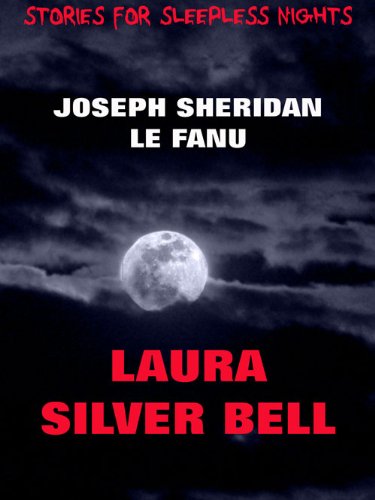
Laura Silver Bell by Joseph Sheridan Le Fanu (Irish Short Story Week)

This week (14-20 March) Mel U of The Reading Life is hosting an Irish Short Story Week. If you’d like to participate all you need to do is read at least one short story by an Irish author. There are plenty of these available to read for free online, including stories by classic authors such as Oscar Wilde, James Joyce and Bram Stoker.

I thought this would be a good opportunity to try a short story by Joseph Sheridan Le Fanu. Le Fanu is probably most famous for his vampire novella, Carmilla, and gothic novel Uncle Silas, but has also written a lot of shorter fiction. As I’m not familiar with his short stories at all, I chose one at random from The Literature Network.

Laura Silver Bell is a simple but effective story. It is set in the north of England, in an isolated rural area. Laura Lew, known as Laura Silver Bell, has been raised as a farmer’s daughter after the death of her mother.

So Farmer Lew called the little girl Laura; and her sobriquet of “Silver Bell” was derived from a tiny silver bell, once gilt, which was found among her poor mother’s little treasures after her death, and which the child wore on a ribbon round her neck.

When Laura falls in love with a tall man dressed in black whom she meets while walking home one night, she receives a warning from Mother Carke, a former sage femme (midwife) who is believed to be a witch. Mother Carke suspects that the man is a fairy and she advises Laura to stay away from him. But will Laura take her advice or will she be tempted to go with the fairy – and what will happen to her if she does?

“Say yer prayers, lass; I can’t help ye,” says the old woman darkly. “If ye gaa wi’ the people, ye’ll never come back. Ye munna talk wi’ them, nor eat wi’ them, nor drink wi’ them, nor tak a pin’s-worth by way o’ gift fra them – mark weel what I say – or ye’re lost!”

Although this is not a horror story exactly, it does have quite an eerie atmosphere, due to the lonely setting and the grounding in traditional folklore – there are frequent references to fairies, witchcraft and black magic (fairies, in this sense, are not the pretty winged creatures that are often depicted in modern culture, but something more sinister). It seems that Le Fanu had a particular interest in the legends of humans being stolen away by fairies – after reading this story I read another one by the same author called The Child that Went with the Fairies which, as the title suggests, is on the same theme as Laura Silver Bell.

Have you read this story or anything else by Le Fanu? Which of his stories or novels would you recommend I read next?

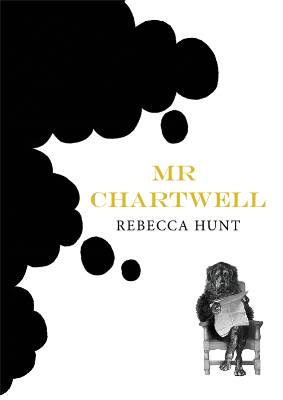
Mr Chartwell by Rebecca Hunt

It’s a well-known fact that British Prime Minister Winston Churchill experienced periods of depression which he referred to as ‘the black dog’. Just a metaphor, of course, but what if the black dog was real? Rebecca Hunt has used this idea as her inspiration for one of the most bizarre books I’ve read for a long time!

It begins with the 89-year-old Churchill waking up one morning in 1964 to find that he’s not alone in the room; someone – or something – is sitting in the opposite corner. Later that morning, librarian Esther Hammerhans is preparing to welcome the new tenant who’s going to be renting her spare room. When she opens the door and is confronted by a huge black dog who introduces himself as Mr Chartwell, Esther is shocked but agrees to let him have the room. He needs to stay in the area for a few days, he says, while he’s visiting a client. But what is Mr Chartwell’s job and who is his mysterious ‘client’?

If you’re going to read Mr Chartwell you need to be prepared to keep an open mind and just accept that one of the protagonists is a dog or you’re not going to get very far with this book! I thought bringing the ‘black dog’ of depression to life was a wonderful idea. Mr Chartwell, or Black Pat as he calls himself, is a fascinating character (and not just because he’s a huge talking dog). He’s manipulative and controlling but sometimes behaves in a more dog-like manner and can even be quite charming and likeable. But although the reader knows what the dog represents (and Churchill knows it too, having been well acquainted with him for many years) Esther has no idea what’s going on and is completely in the dark as to why Mr Chartwell has chosen her house to visit.

Another interesting aspect of the book is that there are little details of Churchill’s life incorporated into the plot, both directly and indirectly. Some of the things he says in the book are based on things that the real Churchill was quoted as saying. And even the dog’s name, Chartwell, was the name of the Churchill family home in Kent.

I loved the opening chapters of this book but started to lose interest a little bit as I got further into the story. The overall tone was quite light (which I know it was probably intended to be) but I think it would have worked better for me if it had been more serious in places and if Mr Chartwell had been portrayed as a less likeable character. The first half of the book in particular is very whimsical, though it does turn darker towards the end where Hunt starts to explain the significance of some of the metaphors and how they relate to depression. Overall though, I thought this was an impressive debut novel and I’ll be looking out for more Rebecca Hunt books in the future.

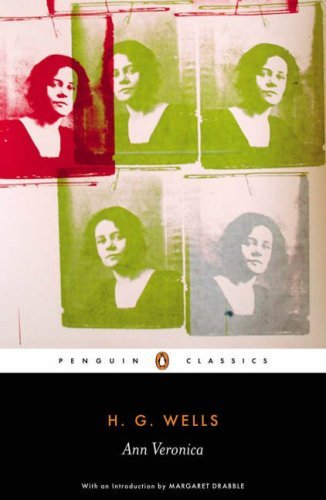
Ann Veronica by H.G. Wells

I’ve never read anything by H.G. Wells before and never thought he would be an author I would enjoy. In fact, I hadn’t even realised he had written anything other than the science fiction books he’s famous for (The War of the Worlds, The Invisible Man, The Time Machine etc) and as I’m not a lover of science fiction, none of those have ever really appealed. So when I noticed this one in the library, sounding entirely different to the books I’ve just mentioned, I was intrigued and decided to give it a try.

The story is set in the early years of the 20th century and the title character is twenty-one-year-old biology student Ann Veronica Stanley. Tired of being locked in a constant battle of wills with her father, a strict and conservative solicitor who has very strong opinions about women and their place in society, she decides to run away to London to start an independent life of her own. In London, she is exposed to a range of influences and experiences (including the suffragette movement), becomes involved with several different men, and discovers that life can be difficult for a young single woman living on her own.

I wouldn’t recommend this novel to people who are looking for something with lots of action but if you’re in the mood for a slower, more character-driven story this is a very interesting read. And as a book about feminism written by a male author, I’m sure it must have caused controversy when it was first published in 1909. The book wasn’t perfect though – the main character started to irritate me after a while and at times it felt less like a novel and more of a vehicle for Wells to express his views on feminism, politics and science.

The first half of the book is concerned mainly with Ann Veronica’s struggle to gain independence from her father. She considers it unreasonable that he won’t let her go to a party in London with her friends and that he refuses to let her attend Imperial College to study for her science degree. And yet Ann Veronica’s father clearly loves his daughter and is not trying to be unkind to her – he truly believes women should behave in a certain way and it puzzles him that Ann Veronica doesn’t want to conform.

After a promising beginning, the second half of the book was dominated by a romantic storyline which became very sentimental and started to bore me. And although I can’t say too much because I don’t want to spoil the story for anyone, I was quite disappointed with the way the book ended and felt confused as to exactly what point Wells was trying to make. So, although I was left with mixed feelings about this book, at least it’s taught me not to have pre-conceived ideas about certain authors. I do feel happier about maybe trying one of his science fiction books now.

The version I read was the Penguin Classics one, but for those of you who like to collect Virago Modern Classics it has also been published as a VMC (and is one of the few written by a man).

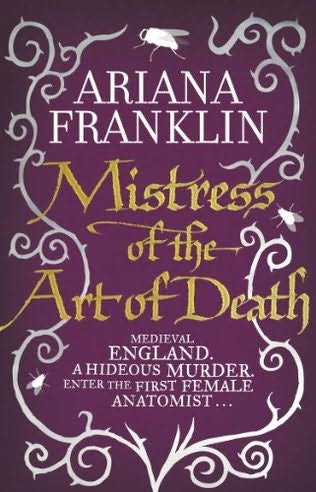
Mistress of the Art of Death by Ariana Franklin

This is my second book for the Great Transworld Crime Caper and is the first in a series of historical mysteries by the late Ariana Franklin. I knew nothing about this series but Mistress of the Art of Death appealed to me because of the medieval setting (I love books set in medieval England).

This book has an unusual heroine. Her name is Adelia Aguilar and she is a trained doctor, very rare in the year 1171. Adelia is from Salerno, where women are allowed to attend medical school. Her speciality, however, is as a ‘doctor of the dead’ – in other words, she is skilled in performing autopsies and finding out the causes of death. When several young children go missing in Cambridge and the city’s Jews are blamed for the disappearances, Adelia is sent to England to investigate.

As I said, I love reading about medieval history and Franklin touches on many different aspects of the period – from the big things, such as the relationship between the church and the monarchy, to the small, such as the clothes people wore and the food they ate. Adelia, being Italian, is unfamiliar with the politics and customs of 12th century England, which allows the reader to learn along with her – so no need to worry if you don’t have much knowledge of the period. Despite some very modern dialogue and Adelia’s distinctly 21st century thought processes, everything else felt suitably ‘medieval’. Setting and atmosphere are so important in fiction and this is an area in which I thought Franklin excelled. It wouldn’t really be fair for me to comment on the historical accuracy as I haven’t studied the 12th century in any detail but I would say that if you’re looking for a serious piece of historical fiction which is correct in every detail then you need to look elsewhere. Accept this book for what it is though, and it’s an enjoyable read.

The writing in the prologue and opening chapters feels quite light and humorous and I expected the whole book to have the same tone, but when Adelia begins to investigate the mystery things start to feel a lot darker. I should point out that the story does revolve around the abduction and murder of children which isn’t nice to read about; it’s quite graphic in places and a bit disturbing. As for the mystery itself, I didn’t guess who the murderer was, but then I wasn’t really trying to guess. Sometimes I prefer not to attempt to work things out and just enjoy the story – and this was one of those occasions.

I found Adelia a fascinating and engaging character although, as I mentioned earlier, she thought, spoke and behaved more like a woman from the 21st century than the 12th. She’s a strong, independent person who is constantly questioning the role of women in society and has a very modern outlook on medicine, the law and life in general; I liked her but she wasn’t a believable medieval woman. Most of the secondary characters are well-rounded and interesting, particularly Adelia’s housekeeper, Gyltha, and her surly but endearing grandson, Ulf – and I loved the depiction of Henry II.

I enjoyed Mistress of the Art of Death and I look forward to being reacquainted with Adelia Aguilar in the other three books in the series. Sadly, Ariana Franklin (Diana Norman) died in January this year aged 77.

I received a copy of this book from Transworld for review.