Reading the Victorians in 2011

Around this time last year, I signed up for a lot of challenges for 2010. After a few months though, I discovered that challenges don’t really work for me. I prefer to just read whatever I feel like reading without being under any pressure – so I’ve been trying not to be tempted by any of the 2011 challenges. However, I couldn’t resist the Victorian Literature Challenge as I was planning to read a lot of Victorian classics next year anyway.

* The challenge is hosted by Bethany at Words, Words, Words and runs from 1 Jan 2011 to 31 Dec 2011.

* There are four levels to choose from:
Sense and Sensibility: 1-4 books.
Great Expectations: 5-9 books.
Hard Times: 10-14 books.
Desperate Remedies: 15+ books

I’m signing up for the Hard Times level, but hopefully will read enough for the Desperate Remedies level. I prefer not to make lists because I have trouble sticking to them, but here are some of the authors and books I’d like to read in 2011.

Charles Dickens
I’ve only read two of Dickens’ books so far: A Christmas Carol and Bleak House. I have a copy of Our Mutual Friend on my shelf so I might read that one next, but I’d also like to read Great Expectations. Hopefully I’ll have time for them both next year.

Thomas Hardy
The only two Thomas Hardy books I’ve read so far are Tess of the d’Urbervilles and A Pair of Blue Eyes, both of which I read this year and loved. I would welcome any suggestions as to which one I should read next. I’d like to read them all eventually!

Charlotte Bronte
I love the Brontes – all three of them. I’ve read Emily’s Wuthering Heights and both of Anne’s books, The Tenant of Wildfell Hall and Agnes Grey, but only Jane Eyre by Charlotte. I’ll definitely read Villette in 2011 (I was hoping to get to it this year, but I’m not going to have time now) and would like to read Shirley and The Professor too.

Mary Elizabeth Braddon
Aurora Floyd is definitely on my list for 2011 as I’ve really enjoyed both Lady Audley’s Secret and The Doctor’s Wife

Anthony Trollope
I enjoyed The Warden, and Barchester Towers was even better (I’ll be posting my review of that one soon) so I can’t wait to read more Trollope. I just need to decide whether to continue with the remaining four books in the Barsetshire series or to try one of his other books.

George Eliot
I read Middlemarch this summer and loved it, so I want to read another George Eliot book in 2011. Not Silas Marner though, because I read that at school and although I can’t remember much about it, I know I didn’t like it.

Oscar Wilde
I’m not sure about including Oscar Wilde on my list. I read The Picture of Dorian Gray a few years ago and The Canterville Ghost in October, and most of his other works are plays. I don’t usually read plays and the few that I have read I haven’t really enjoyed, but I’d be prepared to give one of his a try, probably The Importance of Being Earnest.

Elizabeth Gaskell
I feel guilty about not having read any of Elizabeth Gaskell’s books yet, despite reading so many glowing reviews of her work. I did read one of her short stories and liked her writing style, so I’m looking forward to reading some of her novels next year.

What do you think? Any Victorian classics I definitely need to read in 2011? Will you be reading some Victorian literature next year too?

Northanger Abbey by Jane Austen

I feel embarrassed admitting that I still haven’t read all of Jane Austen’s books, knowing how popular she is both with book bloggers and the world in general. The reason for that is because although I enjoyed Pride and Prejudice I was less impressed with Mansfield Park and Emma. I didn’t dislike them but I didn’t love them, so I haven’t been in any hurry to read the rest of her books.

Northanger Abbey is the story of Catherine Morland, a seventeen-year-old girl who is obsessed with reading gothic novels. On a visit to Bath with some friends of the Morland family, Mr and Mrs Allen, Catherine gets to know Henry Tilney and his sister Eleanor. The Tilneys invite Catherine to stay at their family home and she is thrilled to discover they live in an abbey! But when on her first night at Northanger Abbey, in the middle of a thunderstorm, she finds a mysterious cabinet in her bedroom, Catherine’s imagination starts to run away with her…

This seems to be a book of two distinct halves. The first half, set in Bath, follows Catherine as she begins to fall in love with Henry Tilney and tries to escape the unwelcome attentions of her brother’s obnoxious friend, John Thorpe. She also meets John’s shallow, self-absorbed sister Isabella, who quickly becomes her ‘best friend’. In the second half, after Catherine accompanies the Tilneys to Northanger Abbey, the book becomes a parody of the gothic novel for a while before everything starts to tie together at the end. I’ve read a lot of gothic novels (including Catherine’s favourite Ann Radcliffe book, The Mysteries of Udolpho) and I think this probably helped me understand the humour, although all you really need is a basic knowledge of what a gothic novel involves (crumbling castles, dark passageways, sinister secrets, a gloomy atmosphere, melodrama etc). I imagine a lot of people are inspired to pick up a gothic novel for the first time after reading this book, rather than the other way round though!

Northanger Abbey could also be described as a coming of age novel. At the start of the book Catherine is very naïve and innocent, with romantic notions and an over-active imagination. As the story continues she begins to discover that there are some big differences between the world she lives in and the world of Ann Radcliffe’s novels. She also learns to be a better judge of character and to understand other people’s motives. Catherine is not a particularly strong character but she’s amusing and likeable, and so is Henry Tilney.

I found this a lot easier to read than the other Austen books I’ve read. The writing feels very bright and lively. This is the first Jane Austen book that I’ve really found funny and been able to understand why her wit and irony are so highly regarded. I know a lot of people don’t like it when an author ‘intrudes’ into the story and speaks directly to the reader, but it’s not actually something that bothers me at all. Austen does quite a lot of it in this book, particularly in chapter 5 when she defends novel-reading:

There seems almost a general wish of decrying the capacity and undervaluing the labour of the novelist, and of slighting the performances which have only genius, wit, and taste to recommend them. “I am no novel-reader — I seldom look into novels — Do not imagine that I often read novels — It is really very well for a novel.” Such is the common cant. “And what are you reading, Miss — ?” “Oh! It is only a novel!” replies the young lady, while she lays down her book with affected indifference, or momentary shame. “It is only Cecilia, or Camilla, or Belinda”; or, in short, only some work in which the greatest powers of the mind are displayed, in which the most thorough knowledge of human nature, the happiest delineation of its varieties, the liveliest effusions of wit and humour, are conveyed to the world in the best-chosen language.

I think I can see why this is considered one of Austen’s less popular books, because although it was a fun, entertaining and relatively quick and easy read, it did somehow feel less satisfying than the other books of hers that I’ve read. The ending seemed slightly rushed and some of the characters not as well developed as they could have been. But those are only minor criticisms because overall I loved this book. I still have two more Jane Austen books left to read and as I enjoyed this one so much, I’m now looking forward to reading the other two!

Remember These? Books beginning with ‘A’

A few weeks ago I mentioned that I was planning a series of posts looking at some of the books I recorded in my old reading diary. The diary spanned my teenage years to my early twenties, so most of the books mentioned below will have been read during the 1990s and although I’ve included my original ratings, these do not necessarily reflect what I would feel about the books if I read them again today!

I gave the books ratings out of 5. The symbol * means I loved the book. X means I didn’t finish it.

Books beginning with ‘A’

Here are a selection of the books that appeared on the ‘A’ page of my notebook. Some of these are classics that many of you have probably read. Others are very obscure, so if you’ve read them I’d love to know what you thought of them!

Animal Farm by George Orwell (5/5*)

I obviously loved this when I first read it. I’ve reread it a couple of times since then and I still think it’s a great book.

Alice’s Adventures in Wonderland by Lewis Carroll (5/5)

One of those children’s classics that can also be enjoyed by adults. I haven’t read it for a long time; I wonder if I would feel any differently about it after reading Alice I Have Been earlier this year?

A Home For Jessie by Christine Pullein-Thompson (4/5)

My best friend and I bought this book and the next two in the Jessie series (Please Save Jessie and Come Home Jessie) from the school book fair when we were about 10 or 11 years old. The series follows the adventures of a boy called Matt and the black Labrador puppy that he rescues from being drowned. This was my favourite Jessie book and I loved it so much I re-read it many times, even after I was ‘too old’ for it (can you ever really be too old for a book?) and it made me cry every time.

All the Rivers Run by Nancy Cato (3/5)

This was recommended to me by my mother because I had enjoyed The Thorn Birds and she said this was a similar book also set in Australia. I can’t remember much about this one, though.

Acorna: The Unicorn Girl by Anne McCaffrey and Margaret Ball (3/5)

I’ve never been a big reader of fantasy novels, but I must have enjoyed this enough to give it a 3/5 rating.

A Kind of Thief by Vivien Alcock (3/5)

I can’t remember reading this at all, and even the Goodreads description doesn’t bring back any memories for me: “When her father is suddenly arrested and put into prison, thirteen-year-old Elinor finds that she has to face many unpleasant truths about him and their way of life.”

A Christmas Carol by Charles Dickens (3/5)

I really need to be in a Christmassy mood to appreciate this book. I’ve read it several times over the years and would probably have given it a different rating every time! I re-read it on Christmas Eve last year and really enjoyed it. The edition shown in the picture is the one that was given to me as a Christmas present when I was a child and is a beautiful hardback with colour illustrations.

A Proper Little Nooryeff by Jean Ure (2/5)

I forgot about this one when I did my post on children’s ballet books a few months ago. It was about a teenage boy who becomes a ballet dancer. Nooryeff, if you were wondering, is a mispronunciation of the name (Rudolf) Nureyev.

A Portrait of the Artist as a Young Man by James Joyce
(2/5)

I remember my English teacher at school telling us about this book but saying it was suitable for a ‘more mature reader’ so I didn’t actually read it until after I had left school. The chapters describing the fires of hell must have left a big impression on me because that’s all I can actually remember about the book. I’ve never wanted to read anything else by Joyce though, so I don’t think he’s an author for me.

Across the Barricades by Joan Lingard (2/5)

We read this at school in English Literature. It would have been very relevant in the 1990s, as it was set in Northern Ireland and told the story of Kevin, a Catholic boy, who falls in love with Sadie, a Protestant girl. Although I didn’t know it at the time, this was actually the second in a series of books about Kevin and Sadie. I think maybe the fact that I was made to read it at school affected my enjoyment of it.

Are You There God? It’s Me, Margaret by Judy Blume (2/5)

Like many children/young teenagers I used to read a lot of Judy Blume books. This was one of her most popular books, so I’m sure some of you will remember reading it too. I don’t seem to have enjoyed this one very much though.

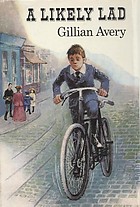
A Likely Lad by Gillian Avery (1/5)

I can’t remember reading this but I only rated it 1/5. According to the product description on Amazon, ‘Pressured by his father to leave school for a career he doesn’t want, a nineteenth-century Manchester boy runs away and gains a new perspective on his future.’ This actually sounds like something I would probably enjoy more if I was reading it now!

An Air That Kills by Andrew Taylor (x); Act of Violence by Margaret Yorke (1/5); A Thin Dark Line byTami Hoag (3/5)

These three are crime novels which is why I’ve grouped them together, but I can remember absolutely nothing about them and even looking up the descriptions on Amazon doesn’t help bring them back to my mind. I must have thought the Tami Hoag one was okay. I did go through a phase of reading a lot of crime novels, but now I almost never read them (I think I’ve only read one in 2010).

A Touch of Practical Magic by Robert Gould (x)

I recognise the title and can even picture what the cover looked like, but I have no idea what it was about. It seems to be out of print and I can’t even find a synopsis online. I obviously didn’t like it enough to finish it anyway, so I won’t spend too much time worrying about it, but if anyone remembers this book please let me know!

Coming soon… Remember These? Books Beginning with ‘B’.

The Uncommon Reader by Alan Bennett

The Queen has never had much time for reading but when she discovers a mobile library parked behind Buckingham Palace and decides to borrow a book, a whole new world is suddenly opened to her. With the help of her new friend Norman she reads one book after another and discovers that she has a real passion for literature. Unfortunately, not everyone shares her enthusiasm – and some people are prepared to do whatever it takes to stop Her Majesty from reading.

I have a feeling I’m one of the last people in the world to read this book (as usual) but I’m so glad I finally got round to it. Alan Bennett is one of my sister’s favourite writers and as we have such different reading tastes I never thought I would like him too. I’ve never been more pleased to have been proved wrong! This is a lovely, light-hearted, whimsical story that still contains a lot of witty observations, profound insights and wisdom.

In The Uncommon Reader, Bennett takes a humorous look at what it’s like to be the Queen and the pressure she’s under to conform to other people’s expectations. She is portrayed as an endearing character discovering the joys of reading for the first time and who just wants to be left alone with her books! It was interesting to watch the Queen progress as a reader, from being initially overwhelmed by the number of books available and relying on Norman to choose titles for her, to being able to make her own choices and develop her own tastes. Eventually, her reading begins to change the way she approaches her public duties and the way she views herself and the world around her.

There are some very funny moments, such as when the Queen perfects the art of waving from the royal carriage while holding a book in her other hand below the level of the window, and when one of her books is exploded because security think it’s a bomb.

Being a bookworm myself, I loved Bennett’s insights into the philosophy of reading and on almost every page there were quotes that every book lover will be able to identify with. I’ll leave you with a few of them…

‘I think of literature’, she wrote, ‘as a vast country to the far borders of which I am journeying but cannot possibly reach. And I have started too late. I will never catch up.’

‘Can there be any greater pleasure’, she confided in her neighbour, the Canadian minister for overseas trade, ‘than to come across an author one enjoys and then to find they have written not just one book or two, but at least a dozen?’

‘Books are wonderful, aren’t they?’ she said to the vice-chancellor, who concurred.
‘At the risk of sounding like a piece of steak,’ she said, ‘they tenderise one.’

The Wilding by Maria McCann

The Wilding is set in England in 1672, just after the end of the Civil War. Our narrator is Jonathan Dymond, a young man who works as a cider-maker. Jonathan lives with his loving parents and leads a quiet, happy life, travelling around the neighbouring villages with his mobile cider-press. But when Jonathan’s father receives a mysterious letter from his dying brother, Jonathan grows suspicious and decides to visit his uncle’s widow to investigate. At his Aunt Harriet’s house he meets Tamar, one of his aunt’s servants, and begins to unravel the circumstances surrounding his uncle’s death.

Due to the fast pace and the plot twists, I would recommend reading this book in as few sittings as possible. I had started off reading it in small portions alongside another book and found it difficult to get into the story; when I decided to put my other book to one side for a while and concentrate solely on this one, I found that I flew through the rest of the novel. The story was entertaining, very compelling and kept me turning the pages.

McCann evokes the period very well. I liked the way she portrayed a small rural community in 17th century England. I also learned more than I could ever wish to know about cider-making and apples…

What does Solomon say? ‘Comfort me with apples.’ Everything about them is kind and comforting: the mild eating apple, the sharp or bitter fruit that crushes to a miraculous sweetness, the homely apples, like tried and trusted friends, that serve all purposes.

But to me, the difference between a good book and a great book is having strong characters that I can connect with – and unfortunately I felt that most of the characters in The Wilding had very little depth. As the narrator, Jonathan was boring and not very engaging. Tamar and her mother were both interesting, well-drawn characters, but as we only saw them through Jonathan’s eyes, I didn’t get to know them as well as I would have liked to. It would have been nice to have had part of the story told from Tamar’s perspective, because Jonathan was just too weak and I felt no emotional involvement with him at all.

So, I thought The Wilding was a good book but not a great one. I would recommend it to people who like well-written, fast moving historical fiction with plenty of twists and revelations.

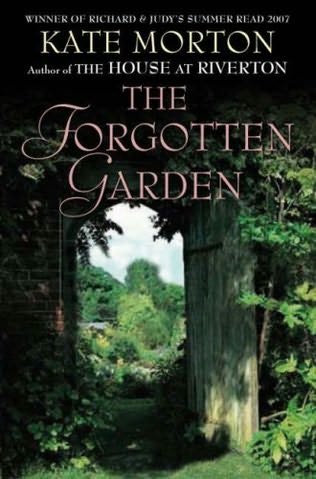
The Forgotten Garden by Kate Morton

Kate Morton’s latest book, The Distant Hours, is getting a lot of attention at the moment but I thought that before I decided whether to buy it I should really read the previous two books of hers that have been sitting on my shelf unread for a long time. I’m so glad I finally decided to pick up The Forgotten Garden because, although it wasn’t perfect, I loved it overall.

In 1913, just before the beginning of World War I, a port master finds a little girl with a suitcase sitting alone on the docks at Maryborough, Australia. With no sign of the child’s parents and no clue to her identity, he takes the girl home with him, where he and his wife name her Nell and raise her as their own daughter. But what was Nell doing in Australia? Who were her real parents? And what is her connection with the mysterious Eliza Makepeace, writer of fairy tales?

When Nell dies in 2005, she leaves everything to her granddaughter, Cassandra – including a cottage in Cornwall, England. When Cassandra travels to Cornwall to investigate, she begins to uncover some secrets about her grandmother’s identity and attempts to solve the mystery of Cliff Cottage.

At first I thought I was going to have a problem with Kate Morton’s writing style. She has quite a flowery, descriptive style which you’ll either love or hate. For example:

Was it always this way? Did those with passage booked on death’s silent ship always scan the dock for faces of the long-departed?

As the book went on though, the writing bothered me less, because I was becoming so absorbed in the story. It had a wonderful atmosphere and was very reminiscent of The Secret Garden in places (the manor house, the invalid cousin, the walled garden – and Frances Hodgson Burnett even makes a brief appearance!) It also felt a bit like a Daphne du Maurier book in places (particularly the Cornwall scenes) and the Swindell family whom Eliza lives with in turn-of-the-century London could have come straight from a Dickens novel. Some of Eliza’s fairy tales are even included in the book which I thought was a nice touch although I wasn’t too impressed with the stories themselves.

The biggest problem I had with this book was the constant jumping around in time and place. One chapter would be set in London in 1900, the next in Brisbane in 2005 and the next in Cornwall in 1975, which disrupted the flow of the story and made it difficult to follow. We also switch narrator with every chapter, which made me even more confused, particularly as there was almost nothing to differentiate between the voices of Cassandra, Nell and Eliza. It was too easy to forget who I was reading about. Eliza’s storyline was by far the most interesting of the three though and I think it would probably have worked on its own as a straight historical fiction novel.

The solution to the mystery was made very obvious to the reader from early on in the book, so when it was finally revealed it came as an anti-climax. This didn’t really spoil the story for me but it was slightly frustrating to watch Cassandra trying to solve the mystery and knowing that she was getting it completely wrong. I would have appreciated it if some of the clues could have been kept from the reader until nearer the end.

Other than those few points, I loved this book, which was great because I really hadn’t expected to. For such a long and complex book it was surprisingly quick to read.

Those of you who have read all of Kate Morton’s books, how does this one compare to The House at Riverton or The Distant Hours?

The Dressmaker of Khair Khana by Gayle Tzemach Lemmon

When journalist Gayle Lemmon was looking for a subject that hadn’t already been given a lot of news coverage, she became intrigued by the topic of female entrepreneurs working in war zones. Travelling to post-Taliban Afghanistan, Lemmon intended to report on women who were running their own businesses. Unfortunately finding female business owners at first proved more difficult than she had expected, but eventually she heard about Kamila Sidiqi. In The Dressmaker of Khair Khana, subtitled Five Sisters, One Remarkable Family, and the Woman Who Risked Everything to Keep Them Safe, Lemmon tells Sidiqi’s amazing story.

After receiving her teacher training certificate from college in 1996, Kamila Sidiqi was looking forward to going to university and becoming a teacher like her elder sisters, when the Taliban took control of Kabul and everything changed almost overnight. Suddenly women found their freedom stripped away from them. Required to wear the chadri (full-length burqa) and unable to go outdoors without being accompanied by a male relative, the options available for a woman to earn her living became very limited.

Trying to find a way of making money that would still comply with the Taliban’s rules, Kamila decided to set herself up as a seamstress, making clothes in her own living room and selling them to local tailor’s shops. As the weeks and months went by, Kamila’s dressmaking business grew in size and reputation until eventually she and her sisters and several of their neighbours were working round the clock to meet their orders. Kamila also came up with the idea of starting a school to teach other girls from the neighbourhood the basics of dressmaking, enabling them to support themselves and their families.

Throughout the book you can never forget the danger Kamila was in and the risks she was taking. For example, there’s a frightening moment where she and two female friends are caught taking a bus to Pakistan without their mahram (male companion). Kamila’s courage and quick-thinking really shines through in situations like this.

Lemmon has a nice clear writing style, and the book is as easy to read as fiction. As well as being a fascinating story, I also found The Dressmaker of Khair Khana completely inspiring. Kamila and her sisters refused to be defeated, searched for solutions to every problem and managed to prosper despite the oppressive conditions they were forced to live under.

Recommended.

The Dressmaker of Khair Khana will be published by HarperCollins in March 2011. I received a review copy as an ebook from NetGalley.