Remember These? A possible new series of posts

I started my blog in October 2009 and have kept a list of every book I’ve read since then. Of course, I’ve been reading books for much, much longer than that – before I had ever heard of blogs or the internet (or even had a computer). So how did I used to keep track of the books I had read? Naturally, I wrote them down in a notebook.
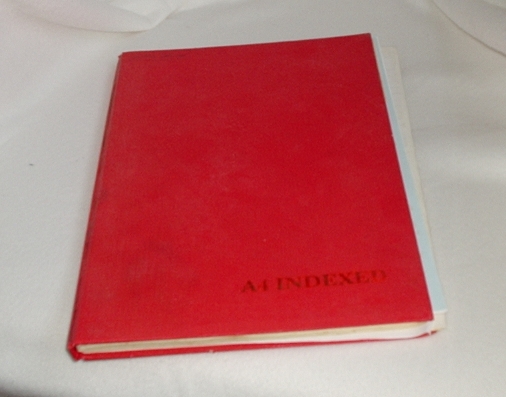
I started my notebook in 1993, listing the books from A-Z and giving them star ratings (with a couple of special ratings for books that I particularly loved or hated). Although I can’t remember exactly when I stopped writing them down I know it was sometime around 1999/2000 when I was at university and had less time to read for pleasure. Unfortunately, I didn’t note down any other thoughts about the books, so when I look back now I have no idea why I thought a particular book deserved one star or five stars. I can’t remember what a lot of them were about and some of the titles don’t even seem familiar to me at all. It makes me feel sad to think that I’ve read so many books that have now been forgotten…and so I’m hoping to bring them back into the spotlight with a new series of Remember These? posts.

I’m planning to dedicate a separate post to each letter, going through my list of books in alphabetical order. Some letters of the alphabet have over 100 books listed and a lot of them are YA or children’s books; I won’t look at all of these books in-depth, but will choose a few to focus on. I’ll also reveal the ratings I gave, but please bear in mind that if the ratings seem harsh or strange or not what you would expect from me, all I can say in my defence is that my reading tastes have changed quite a lot over the years!

What do you think? Would anyone be interested in reading these posts? Did you keep a record of the books you read before you started blogging?

Blacklands by Belinda Bauer

Twelve year-old Steven Lamb’s family has never recovered from the disappearance of his Uncle Billy almost two decades ago. Billy, who went missing aged eleven, was thought to have been murdered by the serial killer Arnold Avery. However, although six of Avery’s other victims were found buried on Exmoor, Billy’s body was never found.

Steven’s grandmother still can’t accept that her son is dead and stands at the window every day watching for him coming home. In an attempt to set his Nan’s mind at rest and restore some peace to his family by finding out where Billy is buried, Steven decides to write a letter to Arnold Avery in prison – but what he doesn’t realise is that by doing so he could be putting his own life in danger.

Blacklands is a dark and atmospheric psychological thriller, but due to the subject matter it won’t appeal to everyone. Although there’s nothing very gory or graphic, the book does takes us right inside the head of Arnold Avery, getting much closer to the mind of a serial killer than I was comfortable with. Of course, this type of thing should be disturbing and chilling, so I think the author has done a great job of creating a character who is genuinely frightening to read about.

Belinda Bauer said in her author’s note that this was originally intended to be a story about a boy and his grandmother and not a crime novel at all, which I thought was interesting because the family scenes were the aspect of the book that I really liked, rather than the crime plot. I was impressed with the way Bauer portrayed twelve-year-old Steven’s sad, lonely life and showed us the long term effects one tragic incident can have on future generations of a family.

The book explores Steven’s relationships with each member of his family. His Nan, still grieving for her lost son, is distant and detached, unable to move on with her life. His mother, a stressed single parent finding it difficult to cope in the aftermath of Billy’s murder, doesn’t have much time for Steven and lavishes most of her attention on his younger brother, five-year-old Davey. To make things even worse, Steven is being bullied and doesn’t feel he can tell anyone about it. His only moments of happiness come when he’s working in the garden with Uncle Jude, one of the many boyfriends who pass in and out of his mother’s life. Although he sometimes seems older than twelve, I found him a very believable character and it’s sad to think that all over the world there are real-life Stevens.

I can’t say that I ‘enjoyed’ this book, because how can you really enjoy reading about a child killer? But I did find it very gripping and didn’t want to put it down until I was finished. This was an impressive debut novel and although I don’t usually read a lot of crime fiction, I’ll look forward to reading more of Belinda Bauer’s books.

I received a review copy of this book from Transworld

Final thoughts on Bleak House by Charles Dickens

I was hoping to have this review ready to post at the end of Amanda’s readalong, but as usual things didn’t go according to plan and I’m almost a week late!

I had tried to read Bleak House once or twice in the past but gave up after a few chapters, so I hoped that taking part in the readalong would give me the motivation to actually finish the book. And it did. However, I was reminded of the reasons why I had given up on the book on my previous attempts. Dickens’ writing can be very long-winded, descriptive and detailed, even in comparison to other Victorian authors, and there were many parts of the book where I really had to force myself to concentrate – particularly during the first two chapters.

The plot is so complex I’m not even going to try to write a summary, other than to say that the story revolves around a court case called Jarndyce and Jarndyce with which many of the characters are in some way involved. The action moves back and forth between the foggy streets of London and a quiet country estate in Lincolnshire. Half of the story is told by an unnamed narrator in the third person present tense, and the other half is narrated by Esther Summerson. There are some characters who appear in only one of the narratives and some who feature in both, so that the two cross and intersect from time to time.

If you’re thinking of reading Bleak House you should be aware that a huge number of characters are introduced throughout the first half of the book. As I mentioned in one of my readalong update posts, it felt as if storylines were being started then abandoned for hundreds of pages at a time. It takes a long time for the separate storylines to start coming together so you’ll need to have patience, but when they do the book becomes much more enjoyable.

Although many of the characters lacked depth, they were all different and memorable enough that I never had a problem remembering who was who. There were some that I liked (Mr Jarndyce, Inspector Bucket and George), and some that I hated (Skimpole, Smallweed and Tulkinghorn). As for Esther, she appeared to be Dickens’ portrayal of what an ideal woman should be like (i.e. perfect in every way, loved by everyone, happy to be nicknamed ‘little housewife’ and ‘Dame Durden’). But although Esther irritated me, I would probably have enjoyed the book more if it had all been told from her perspective. I found I could get more absorbed in the story while she was narrating and her chapters were much easier to follow than the others.

Bleak House has everything I would normally love in a book: an intricate plot, secrets and revelations, humour, a mystery, unusual characters. Unfortunately there was something about the book that didn’t quite work for me; I’m not sure whether it was the writing style or the narrative structure or a combination of both. But although I didn’t love it, I didn’t dislike it either and as this was only the second Dickens book I’ve read (the other being A Christmas Carol), I’ll definitely be giving him another chance.

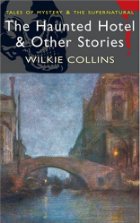
Review: The Haunted Hotel & Other Stories by Wilkie Collins

Time for one more review before the RIP challenge ends!

Having read so many of Wilkie Collins’ books and loving them all, I’m starting to worry now whenever I pick up one that I haven’t read yet, in case that’s going to be the one that disappoints me. Luckily it wasn’t this one! This collection published by Wordsworth Editions includes the novella The Haunted Hotel and eight other short stories, all with a ghostly, spooky or supernatural theme.

Part ghost story and part gothic mystery, The Haunted Hotel begins in London but soon moves to Venice, an atmospheric setting complete with dark canals and ancient palaces. At the heart of the story is the mysterious Countess Narona, who marries Lord Montbarry after he breaks off his engagement to Agnes Lockwood. When Montbarry dies in Venice soon after insuring his life for ten thousand pounds, rumours abound that the Countess may have had something to do with his death.

While I enjoyed The Haunted Hotel, I wouldn’t class it among Collins’ best work and the shortness of the story means the characters aren’t as well developed. I did love the second half of the story in which the palace where Montbarry died is converted into a hotel. There’s a very creepy sequence of events where each member of the Montbarry family who stays in the hotel feels a ghostly influence that manifests itself in a different way to each person.

You can buy The Haunted Hotel on its own, but I recommend looking for this edition because the additional short stories are well worth reading too. In every story, Collins gradually builds the suspense and draws the reader into the story. One of my favourites was Miss Jeromette and the Clergyman, a short ghost story in which the ghostly happenings are accompanied by mysterious clouds of white fog. I loved the way even though the story was quite predictable, it was still a pageturner. The same can be said about Nine O’Clock, in which a man condemned to death during the French Revolution tells his friend about a family curse. We know almost from the beginning what will happen, but the story still manages to be suspenseful.

Another favourite was A Terribly Strange Bed, an Edgar Allan Poe-like tale which creates a feeling of claustrophobia and terror as the narrator finds himself trapped in a room with a very unusual bed. Another story on a similar theme is The Dead Hand, in which a man attempts to find a room at an inn for the night, but finds that everywhere is full. When he’s eventually offered a bed in a double room, he makes a surprising discovery about the stranger who’s occupying the other bed.

I also enjoyed the final story in the book, The Devil’s Spectacles, which is about a man who is given a pair of spectacles that allow him to see the true thoughts and feelings of anyone he looks at.

I don’t generally like reading short story collections straight through from beginning to end, but I didn’t have a problem with this book. There are only eight stories (plus The Haunted Hotel) and most of them are less than twenty pages long. This was a perfect book to read in the week before Halloween.

Review: A Moment of Silence by Anna Dean

A Moment of Silence is an entertaining murder mystery set in the early 19th century. It’s the first in a series of novels featuring the wonderful Miss Dido Kent.

The story begins when Dido is summoned to Belsfield Hall, the country estate of the Montague family. Her niece Catherine is engaged to Sir Montague’s son Richard – who has mysteriously disappeared during their engagement party. Dido agrees to help Catherine solve the mystery behind Richard’s disappearance, but events soon take a more sinister turn when a dead body is found in the shrubbery…

This was a light, easy read which should appeal to fans of Jane Austen due to the setting and the elegant, witty writing style – although I’m not a huge Austen fan and I still loved it! A Moment of Silence has all the elements of a classic English country house mystery: clues, red herrings and lots of possible suspects, with almost every one of the guests and family members concealing a secret of some kind. Although some of the clues were quite obvious, there were others that I didn’t figure out and the mystery was interesting enough to hold my attention right to the end.

But rather than the mystery itself, the main reason I loved this book was because of Miss Dido Kent, who is a wonderfully engaging character. She’s intelligent, observant and always speaks her mind, though usually in a good-natured way. Although we’re not told exactly how old she is (unless I missed it) she’s unmarried and her ‘spinster’ status gives her the freedom to investigate and to wander around the estate asking questions and interfering – always with the best intentions of course! I loved reading Dido’s letters updating her sister Eliza on the progress of her investigations (we never actually meet Eliza, but the letters are intended to allow us some insights into Dido’s private thoughts and musings).

I can’t wait to read more Dido Kent mysteries. This was a great start to the series and I’m looking forward to reading the second, A Gentleman of Fortune.

Recommended

Note: This book is published under the title Bellfield Hall in the US.

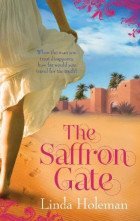
Review: The Saffron Gate by Linda Holeman

Linda Holeman’s books are perfect comfort reading for me. She writes the kind of historical fiction I love, with just the right combination of romance, history and adventure. One of the things I like about her books is the way she chooses such interesting settings (19th century Afghanistan in The Moonlit Cage, for example, or British-ruled India in In a Far Country). The Saffron Gate is set in 1930s Morocco, a time and place I know very little about, but Holeman really makes the setting come alive, from the noise and bustle of the souks in Marrakesh, the taste of hot couscous and mint tea, the vibrant colours of the trees and flowers.

But Morocco in the 1930s can be a dangerous place for a woman on her own, as our narrator soon discovers. Her name is Sidonie O’Shea and she’s travelling to North Africa from her home in Albany, New York in search of her fiancé Etienne Duverger, who disappeared without word, leaving behind a mysterious letter from his sister in Marrakesh. When Sidonie arrives in Morocco she realises the enormity of her task – she has no idea where to start looking for Etienne and it seems that certain people are determined to stop her from finding him at all costs. As Sidonie continues to search, she begins to fall in love with Morocco and at the same time uncovers some important truths about both Etienne and herself.

There were times when I wanted to throw this book across the room in disgust, not because it was badly written, but because one of the characters was just so horrible and so cruel to Sidonie I didn’t think I could bear to read any more. Not only that, but Sidonie is far too innocent and trusting, which started to frustrate me after a while. Somewhere in the middle of the book though, the story began to go in a different direction to what I was expecting and I started to feel more hopeful of a happy ending. Whether I got one or not I’ll leave you to find out for yourself.

I learned a lot from this book about the role of women in 1930s Morocco, how they lived, and how they were scorned and looked down upon if they didn’t have a husband. There was also a lot of information about their fashions, customs, superstitions – and some fascinating details, such as the rituals of the hammam (public baths).

I’ve enjoyed all of the Linda Holeman books that I’ve read, but I think this one has been my favourite so far. I would highly recommend The Saffron Gate to anyone who likes to read long historical fiction novels that allow you to immerse yourself in another culture for a while.

After the Sunday Papers #8: Persephones and Jane Austen

I had a nice surprise this week when I discovered part of my review of Good Evening, Mrs Craven: The Wartime Stories of Mollie Panter-Downes had been quoted in the Readers’ Comments section of the Persephone Biannually Autumn and Winter 2010 magazine.

I’ve enjoyed all four of the Persephones I’ve read so far, and would appreciate any recommendations for which ones I should read next.

The Persephones I’ve already read are:

The Victorian Chaise-longue by Marghanita Laski
Good Evening, Mrs Craven: The Wartime Stories of Mollie Panter-Downes
Miss Ranskill Comes Home by Barbara Euphan Todd
Miss Pettigrew Lives For a Day by Winifred Watson

Have you read any Persephone books? Which books or authors would you recommend?

Jane Austen

I came across this article yesterday about Jane Austen. Apparently Austen’s manuscripts show that she made spelling mistakes, had trouble with the ‘i before e’ rule and wrote in a regional accent. Although I’m not a big Jane Austen fan or an expert on her background, I think the article is a bit harsh considering the standard of education that was available to girls in those days and also the fact that written English didn’t necessarily follow the same rules then as it does today. What do you think?

Currently reading

I’m still working my way through the stories in The Haunted Hotel & Other Stories by Wilkie Collins which as you might expect, is proving to be a perfect Halloween read! This will be my seventh book for the RIP challenge, which means the only book on my original challenge list that I haven’t read yet is Frankenstein. I don’t think I’ll have time to fit that one in before the end of the month, so I’ll have to either read it after Halloween or leave it until next year.

I’m also reading a book that I requested from Netgalley, called The Dressmaker of Khair Khana by Gayle Tzemach Lemmon. It’s the true story of a woman living in Taliban-era Afghanistan who started her own business to support herself and her younger sisters, and is one of the most inspirational stories I’ve ever read.

What are you reading this week?