Completing my second Classics Club list!

classicsclub Some good news to start the new year – I’ve completed my Classics Club list at last! Yesterday I reviewed my 50th and final book, The Silver Branch by Rosemary Sutcliff, and now it’s time to think about posting a new list. Before I do that, though, I want to look back at the list I’ve just finished.

The Classics Club was launched in 2012 with the aim of uniting people who like to read and blog about classic literature. The idea is to make a list of fifty or more classics you want to read within a five year time period. I finished my first list of 100 books in October 2017 – you can see the complete list, with links to my reviews, here. I then started again with a second list (just 50 books this time) and for some reason, even though it was shorter, it has ended up taking a lot longer to complete than the first.

Here are the books I read for my second Classics Club list:

1. Death Comes for the Archbishop by Willa Cather
2. Jezebel’s Daughter by Wilkie Collins
3. The New Magdalen by Wilkie Collins
4. Dombey and Son by Charles Dickens
5. Nicholas Nickleby by Charles Dickens
6. La Dame aux Camelias by Alexandre Dumas fils
7. Castle Dor by Daphne du Maurier
8. Don’t Look Now and Other Stories by Daphne du Maurier
9. Farewell the Tranquil Mind by RF Delderfield
10. Moonfleet by John Meade Falkner
11. Nightmare in Berlin by Hans Fallada
12. Tales from the Underworld by Hans Fallada
13. Black Narcissus by Rumer Godden
14. The End of the Affair by Graham Greene
15. The Black Lake by Hella S. Haasse
16. In a Dark Wood Wandering by Hella S Haasse
17. Desperate Remedies by Thomas Hardy
18. A Laodicean by Thomas Hardy
19. The Trumpet-Major by Thomas Hardy
20. Two on a Tower by Thomas Hardy
21. Strangers on a Train by Patricia Highsmith
22. The Life and Opinions of the Tomcat Murr by ETA Hoffmann
23. The Crowded Street by Winifred Holtby
24. Goodbye Mr Chips by James Hilton
25. Random Harvest by James Hilton
26. Rogue Male by Geoffrey Household
27. In a Lonely Place by Dorothy B Hughes
28. Ride the Pink Horse by Dorothy B Hughes
29. The Europeans by Henry James
30. A Pin to See the Peepshow by F Tennyson Jesse
31. Dubliners by James Joyce
32. How Green Was My Valley by Richard Llewellyn
33. That Lady by Kate O’Brien
34. The Elusive Pimpernel by Baroness Orczy
35. I Will Repay by Baroness Orczy
36. The Scottish Chiefs by Jane Porter
37. The Manuscript found in Saragossa by Jan Potocki
38. Fire from Heaven by Mary Renault
39. Bardelys the Magnificent by Rafael Sabatini
40. St Martin’s Summer by Rafael Sabatini
41. Pied Piper by Nevil Shute
42. The Black Arrow by Robert Louis Stevenson
43. The Silver Branch by Rosemary Sutcliff
44. A Game of Hide and Seek by Elizabeth Taylor
45. Wild Strawberries by Angela Thirkell
46. High Rising by Angela Thirkell
47. The Prime Minister by Anthony Trollope
48. The Fountain Overflows by Rebecca West
49. The Chrysalids by John Wyndham
50. The Fortune of the Rougons by Émile Zola

~

I enjoyed nearly all of these books, but if I had to pick some favourites they would be Random Harvest, In a Lonely Place, How Green Was My Valley and In a Dark Wood Wandering.

I hope to post my new list later in the month!

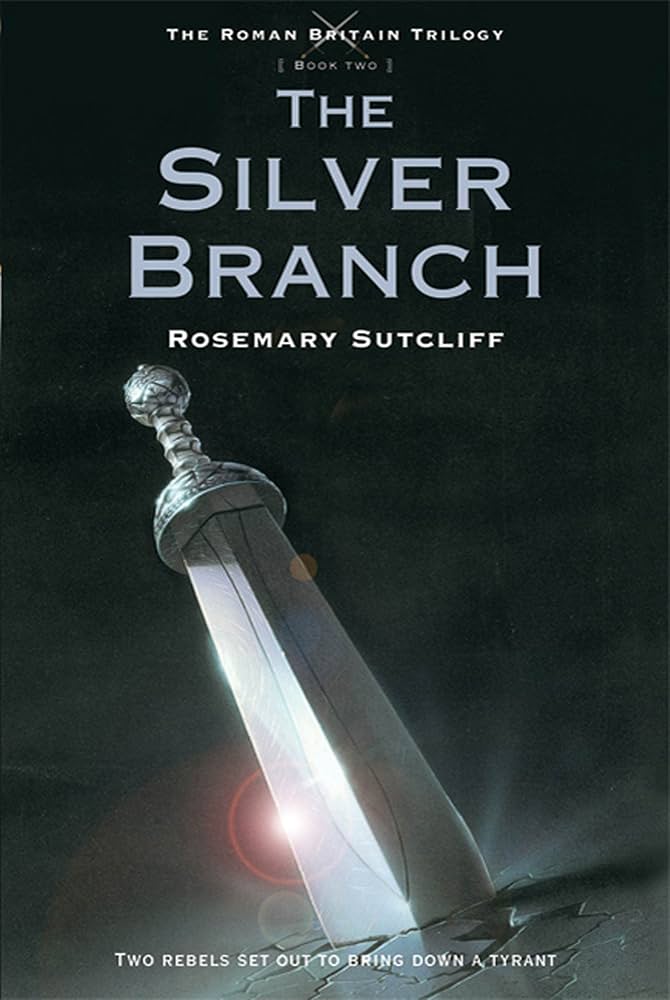
The Silver Branch by Rosemary Sutcliff

After reading Rosemary Sutcliff’s The Eagle of the Ninth a few years ago, the first book in her Dolphin Ring Cycle, I wasn’t sure which one to read next. I was advised that it wouldn’t really matter as the books are all separate stories, but as I’m interested in reading all of them anyway, I decided to continue with the one listed next chronologically, which is The Silver Branch.

First published in 1957, The Silver Branch is set in Roman Britain more than a century after the events of The Eagle of the Ninth. The two main characters, Justin and Flavius, are descendants of Marcus Flavius Aquila, which provides the link between the two books. Towards the end of the 3rd century, Justin (Tiberius Lucius Justinianus) completes his apprenticeship as an army surgeon and is posted to Britain for the first time. Arriving at the fort of Rutupiae in Kent, he meets the centurion Flavius (Marcelus Flavius Aquila) and the two discover that they are distant cousins.

The Roman military commander Carausius has recently declared himself emperor of Britain and North Gaul. When the cousins overhear Allectus, the finance minister, plotting against Carausius, they try to warn the emperor but he seems reluctant to believe them and instead they find themselves sent north to Magnis, a fort near Hadrian’s Wall, apparently in disgrace. Worse still, they have now made an enemy of the powerful Allectus, who still has his sights set on the throne…

Although I thought The Eagle of the Ninth was the stronger book, I enjoyed this one as well. I knew nothing at all about this particular period of Roman history so I was able to learn a lot from it, not just about the historical and military events, but also about life in general in Roman Britain during and after Carausius’s reign. This is all described in vivid detail, making the novel completely immersive, and Sutcliff never talks down to the reader – it’s marketed as a children’s book, but it doesn’t actually feel like one and it definitely has a lot to offer readers of all ages.

Not all of the characters are Roman – for example, we meet Evicatos of the Spear, an exiled Dalriad hunter (Dalriada was an ancient Gaelic kingdom from western Scotland/north-eastern Ireland) – and although it’s a very male dominated story, Flavius’s great-aunt Honoria has an important role to play. The main focus of the book, though, is always on our two young protagonists and I found both of them very easy to like, particularly the shy, quiet Justin who grows as a person through his relationship with the more confident Flavius. It’s as much a story of male friendship as it is of the politics of Roman Britain.

If you’re wondering about the ‘silver branch’ of the title, it refers not to a tree but to an unusual musical instrument with silver apples on it belonging to Cullen, the emperor Carausius’s Fool, an eccentric man who calls himself a hound and wears a dog’s tail. The silver branch is a motif that appears several times throughout the novel, along with the dolphin signet ring, an Aquila family heirloom, and the lost eagle standard of the Ninth Legion.

This is book 50/50 from my second Classics Club list. Yes, I’ve completed it at last!

Six Degrees of Separation: From The Night Circus to A Small Circus

It’s the first Saturday of the month – and of 2026! – which means it’s time for another Six Degrees of Separation, hosted by Kate of Books are my Favourite and Best. The idea is that Kate chooses a book to use as a starting point and then we have to link it to six other books of our choice to form a chain. A book doesn’t have to be connected to all of the others on the list – only to the one next to it in the chain.

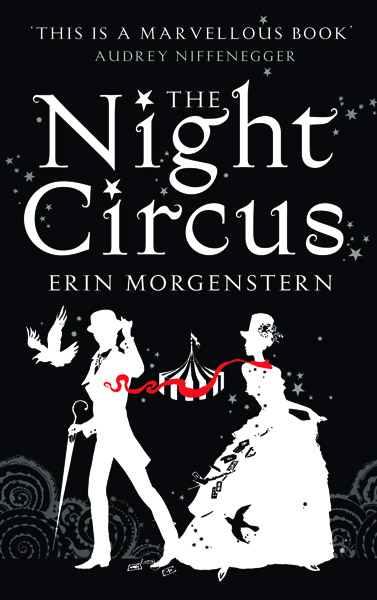
This month we’re starting with the book with which we finished last month’s chain (or the last book we read if we didn’t take part last month). For me, this was The Night Circus by Erin Morgernstern. Here’s how I described it in my review:

The Night Circus tells the story of Celia and Marco, two young magicians who have been selected by their mentors to take part in a very special contest. The rules of the competition are shrouded in mystery and even the two illusionists themselves aren’t sure what they have to do to win. And the venue for this magical battle? Le Cirque des Rêves, or the Circus of Dreams, one of the strongest, most vivid fictional worlds I’ve ever come across in a novel.

The Night Circus was a great starting point, with lots of options to move forward with the chain. Usually I choose books that I’ve actually read and reviewed on my blog, but instead I’m going to start with a first link suggested to me by one of my blog readers. Thanks Paul! Round the Bend by Nevil Shute (1), which I haven’t read yet, follows the story of two aircraft engineers who begin their careers with Alan Cobham’s Flying Circus. I would like to read this eventually as I enjoyed the one Shute novel I’ve read (Pied Piper) and am looking forward to reading more.

The Hazelbourne Ladies Motorcycle and Flying Club by Helen Simonson (2) is set in 1919 and features a group of women who buy a damaged fighter plane to restore so that they can begin training female pilots. I enjoyed this book – it’s a fascinating portrayal of life in the aftermath of the First World War when the War Practices Act meant that many women were dismissed from their jobs to make way for the returning soldiers.

I’m going to break my own rule of only including books I’ve reviewed again, because the next book that comes to mind is one I read years before I started blogging: Zen and the Art of Motorcycle Maintenance by Robert M. Pirsig (3). It was published in 1974, although I think I read it in the 90s. It’s about a man who travels across America with his young son by motorcycle, discussing philosophy along the way. I remember finding it interesting but I probably only understood half of it and wouldn’t want to read it again today.

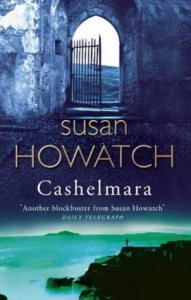
I want to get away from transport related books now, so I’m linking next to another novel published in 1974 – Cashelmara by Susan Howatch (4). This novel, like some of Howatch’s others, is a family saga retelling Plantagenet history in a more recent setting. In this one, Edward I, Edward II and Edward III of England are recreated as Edward de Salis, his son Patrick and grandson Ned, a fictional 19th century family. It’s not necessary to be familiar with the history, but if you can spot the parallels it makes the story even more interesting!

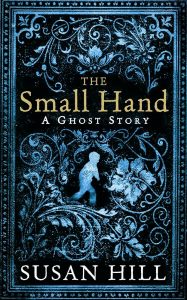
An author who shares a name with Susan Howatch is Susan Hill, who wrote The Small Hand (5), a ghost story in which an antiquarian book dealer begins to have several unsettling experiences where he feels a child’s small hand holding his own. I found this an eerie, atmospheric novel rather than a particularly scary one, though maybe that’s because I read it in the summer – it’s a story for a dark winter night, I think!

The word ‘small’ also appears in the title of A Small Circus by Hans Fallada (6), which brings my chain full circle this month! I usually love Fallada, but this novel, first published in German in 1931, wasn’t for me. It does have an interesting setting, describing tensions and corruption in a small German town in the period between the two world wars, but I struggled with the unpleasant characters and confusing plot. I read a modern translation by Michael Hofmann.

~

And that’s my chain for this month! My links have included circuses, flying, motorcycles, books published in 1974, authors named Susan and books with ‘small’ in the title.

In February we’ll be starting with Flashlight by Susan Choi.

New Year, New plans!

Happy New Year! As I do every January, I am listing below some reading resolutions for the year ahead. I prefer not to set numerical targets and goals or anything that restricts my reading choices too much, so these are just some loose plans and projects to help shape my year of reading.

First of all, I’m pleased to say that I’ve finished my Classics Club list at last! It’s my second list and seemed to take me a lot longer to complete than the first – I had almost given up hope! I’ll be posting my 50th and final review soon, along with a roundup post, then I’ll be ready to share my new list with you. I’m excited about being able to take part in the Classics Club Spins again after missing the last few due to not having enough books left.

The Read Christie challenge is back again for 2026 and the theme is ‘Biggest, Best, Beloved’. I’ve looked at the books of the month and alternative options for the year ahead and have already read a lot of them, but will probably join in for five or six of the months. Although I’ve read most of Christie’s novels now, I still have some of her short story collections and Mary Westmacott books to read and also need to finish the Tommy and Tuppence series. If you would like to take part, you can sign up for the Agatha Christie newsletter here and will receive an email with a postcard to complete and the full list of titles for the year.

As I mentioned last week, I’ll also be taking part in the Historical Fiction Reading Challenge again (see my sign-up post here). This is never a very ‘challenging’ challenge for me, but I still like to join in and be part of the historical fiction community! I was disappointed to find that I only read one historical novel in translation last year, so I would like to improve on that, as well as expanding my range of time periods and geographical settings.

I read more non-fiction than usual in 2025 – eight books, which may not seem a lot to some people but is good for me! I want to continue reading non-fiction in 2026 and have several books on the TBR including The Story of Tudor Art by Christina J. Faraday, Eleanor by Alice Loxton and Raising Hare by Chloe Dalton. First, though, I need to finish Helen Castor’s The Eagle and the Hart, which I’ve had on the go for several months already.

Every year I say I’m going to do some re-reading, but never seem to actually get round to it. The list of books I would like to re-read is getting longer and longer and I’m determined to find time for at least a few of them in 2025. Finally, I want to catch up with my Reading the Walter Scott Prize project. The aim is to read all of the shortlisted titles since the prize began in 2010, but I still have a lot of them to get through. I’m currently reading the 2025 winner, The Land in Winter by Andrew Miller, and will be looking out for the announcement of the 2026 longlist in February and shortlist in April.

I’m sure I’ll be joining in with some of the reading events hosted by other bloggers throughout the year, hopefully beginning with Dolce Bellezza’s Japanese Literature Challenge this month. My ultimate resolution for 2026, though, is to choose my books carefully so that every book I read could be a potential book of the year! Wouldn’t that be nice?

~

What about you? Do you have any reading resolutions or plans for 2026? I hope your new year gets off to a great start!

My Commonplace Book: December 2025

For the last time this year…

A selection of quotes and pictures to represent December’s reading:

commonplace book
noun
a book into which notable extracts from other works are copied for personal use.

~

“A pity she was so fond of snooping. ‘Knowledge is power,’ she used to say, and I used to tell her ‘If you want to be liked, miss, don’t you be a Poll Pry,’ but she only laughed at me.”

The Art School Murders by Moray Dalton (1943)

~

She would curl up in a secluded corner and read story after story, while her father worked nearby in companionable silence. For Evie – like her father – old stories and legends meant escape into another world, one of boundless possibilities and far horizons.

Circle of Shadows by Marisa Linton (2025)

~

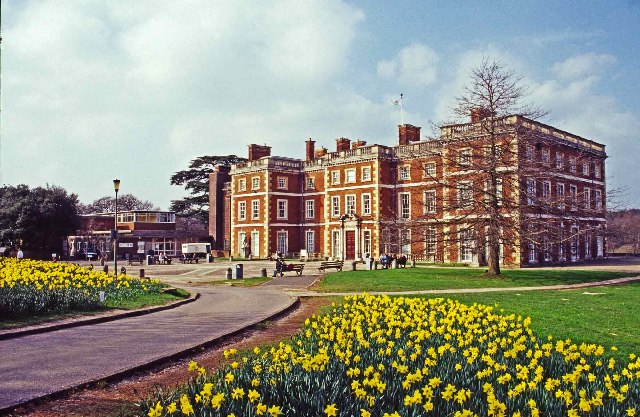
Trent Park House, North London

“Art’s important at a time like this. It gives human life its value. It’s what we’re fighting for.”

Appointment in Paris by Jane Thynne (2025)

~

There was something in the Bible about casting out fear. If you could cast out fear, everything would be all right. But you couldn’t do it. Too many people were frightened of too many things.

Alice by Elizabeth Eliot (1949)

~

“The most difficult thing in this world,” he said, “is to know where one’s duty lies, for duty is a mechanism of the mind, and the heart is forever stepping in and playing havoc with one’s resolutions.”

The Bishop Murder Case by S.S. Van Dine (1929)

~

“Always, everywhere, the Wolves gather on the frontiers, waiting. It needs only that a man should lower his eye for a moment, and they will be in to strip the bones. Rome is failing, my children.”

The Silver Branch by Rosemary Sutcliff (1957)

~

Santa Catalina Monastery, Peru – By Hans Brian Brandsberg Berg

“You think you are brave, because you do not cry to others to help you, but no one,” and here her voice broke down to a whisper, “no one can withstand cruelty on their own. It is vain to think you can do so. There are times when it is a kind and courageous act to cry out, to tell the world what is happening, to warn other victims…”

The Book of Human Skin by Michelle Lovric (2010)

~

We use the same word, ‘story’, to describe a verifiable matter of fact, a self-proclaimed work of the imagination, and the brazen lie. Did we never foresee a problem?

The Tower by Thea Lenarduzzi (2025)

~

“That’s…very noble of you.”

He shrugs. “Maybe. Because if I’ve learned one thing from history, it’s that there’s no point holding on to something when it wants to be free.”

The Inn at Penglas Cove by Lauren Westwood (2026)

~

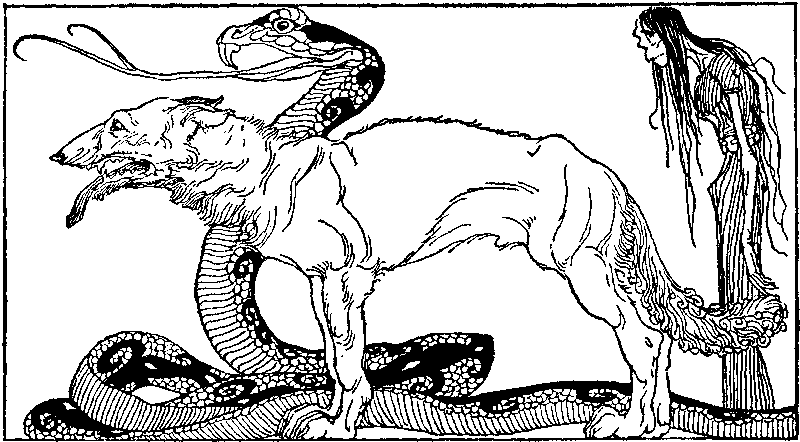
“The children of Loki” (1920) by Willy Pogany.

Grief is complicated. Doesn’t matter whether you think you have a right to feel it. Doesn’t matter how long you’ve carried it. Grief burrows away inside you and sometimes it helps to talk.

The Shapeshifter’s Daughter by Sally Magnusson (2025)

~

He wondered how much kinder all humanity would be if any day the rich and powerful might find themselves the lowest of the low, and those they used to trample suddenly in charge.

The Hill in the Dark Grove by Liam Higginson (2026)

~

Favourite books read in December:

Circle of Shadows and The Inn at Penglas Cove

Authors read for the first time in December:

Moray Dalton, Marisa Linton, Elizabeth Eliot, S.S. Van Dine, Liam Higginson, Thea Lenarduzzi, Lauren Westwood

Places visited in my December reading:

England, France, Italy, Peru, US, Scotland, Wales

~

Reading notes: December was a good month of reading for me. I’m pleased that I managed to read two books for Dean Street December (Alice and The Art School Murders) and one for Doorstoppers in December (The Book of Human Skin as well as making a start on my January NetGalley books. I haven’t had time to review everything I read this month, but I do at least have most of the reviews written and scheduled. I’m looking forward to starting a fresh new year of reading tomorrow!

What did you read in December? Do you have any plans for January?

Happy New Year!

My Favourite Books of 2025

With only a few days of 2025 remaining, I think it’s safe to post my books of the year list now. I’ve enjoyed putting this post together, going back over the last twelve months and picking out some favourites. This year’s list ended up being longer than I expected and includes a mixture of old and new books from a variety of genres. In no particular order, here they are:

~

Buckeye by Patrick Ryan

From my review: “Almost as soon as I started to read I was reminded of Ann Patchett and I’m not suprised to see that other reviewers have made the same comparison…but Patrick Ryan has his own style and a real talent for creating strong, engaging characters…Buckeye is a long book, but family sagas usually are, and although the pace moves slowly at times it’s hard to know what could have been left out.”
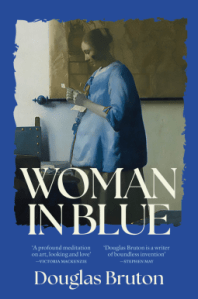
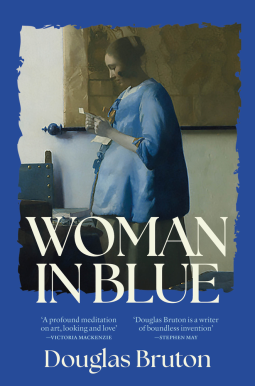
Woman in Blue by Douglas Bruton

From my review: “At times, Bruton returns to a theme he also touched on in Blue Postcards: the idea that a painting offers something different to each individual who views it and that the viewers themselves can almost ‘become’ part of the painting…For a short book – a novella at 144 pages – there’s so much packed into it that I’ve probably only scratched the surface in this review. I would recommend Woman in Blue to anyone who loves art, but even if you don’t, there’s still a lot here to enjoy.”
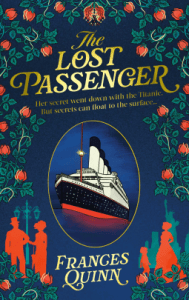
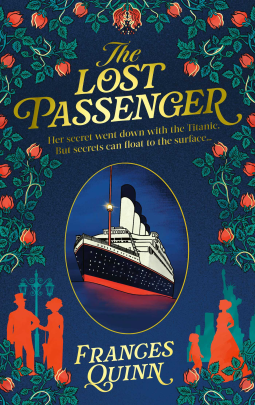
The Lost Passenger by Frances Quinn

From my review: “Frances Quinn’s That Bonesetter Woman was one of my books of the year in 2022 and I didn’t really expect her new one, The Lost Passenger, to live up to it. Well, I’m pleased to say that I thought it was even better…Frances Quinn has a real gift for creating characters the reader can get behind and root for…It’s both fascinating and inspirational to see how Elinor is able to create a whole new life out of the ruins of her old one.”
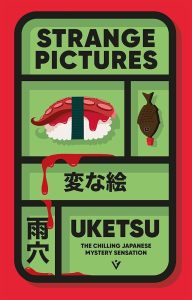
Strange Pictures by Uketsu

From my review: “Strange Pictures is a strange novel, but it’s also a completely fascinating one…Each of the three stories involves some ‘strange pictures’…I loved the interactive feel, with not just the main drawings but also other sketches, maps and diagrams helping to clarify what’s happening and lead us to the solution.”
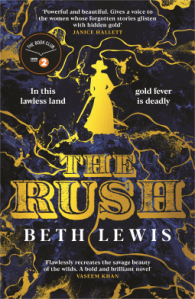
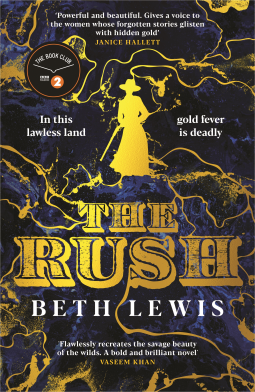
The Rush by Beth Lewis

From my review: “I loved this! I’ve never read anything by Beth Lewis before, or even come across her, but this is one of my favourite books of the year so far. It’s set in Canada during the Gold Rush and follows the stories of three very different women whose paths cross in Dawson City in the Klondike…This really is a fascinating book, in so many different ways, and I can’t recommend it highly enough.”
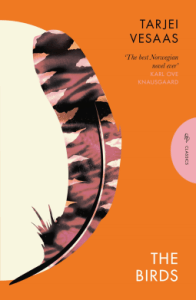
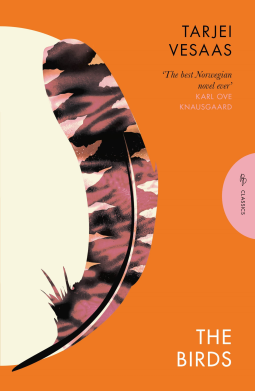
The Birds by Tarjei Vesaas

From my review: “On the front cover, the author Karl Ove Knausgaard describes it as ‘the best Norwegian novel ever’…The Birds is a sad, poignant novel but also has some moments of hope and inspiration and is beautifully written, in a simple, gentle way. I loved it.”
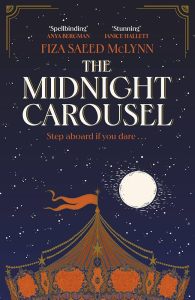
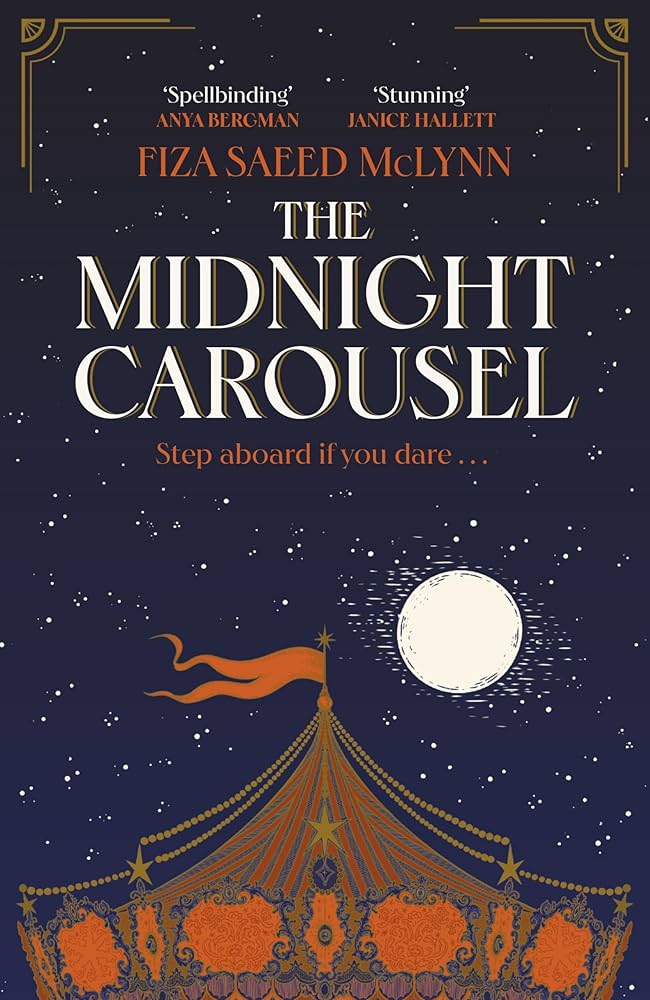
The Midnight Carousel by Fiza Saeed McLynn

From my review: “I loved The Midnight Carousel from the beginning; it’s such an original, unusual story that I was completely captivated by it…The mystery element of the book is not so much a whodunit as a howdunit. How can people be disappearing into thin air while riding the wooden jumping horses?…what I found particularly unsettling is that all through the book I never really knew whether I was reading magical realism or something with a more human explanation.”
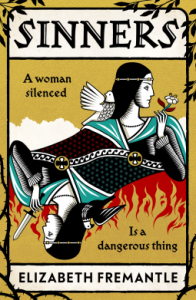
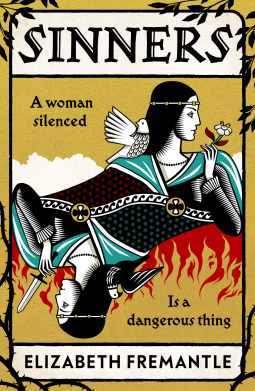
Sinners by Elizabeth Fremantle

From my review: “I’ve enjoyed all of her novels, to varying degrees, but I think her latest one, Sinners, is the best so far. It’s the story of the Italian noblewoman, Beatrice Cenci, and is a very dark and powerful read…I love the way Fremantle recreates the feel of late-16th century Italy.”
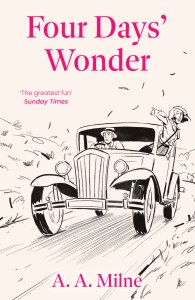
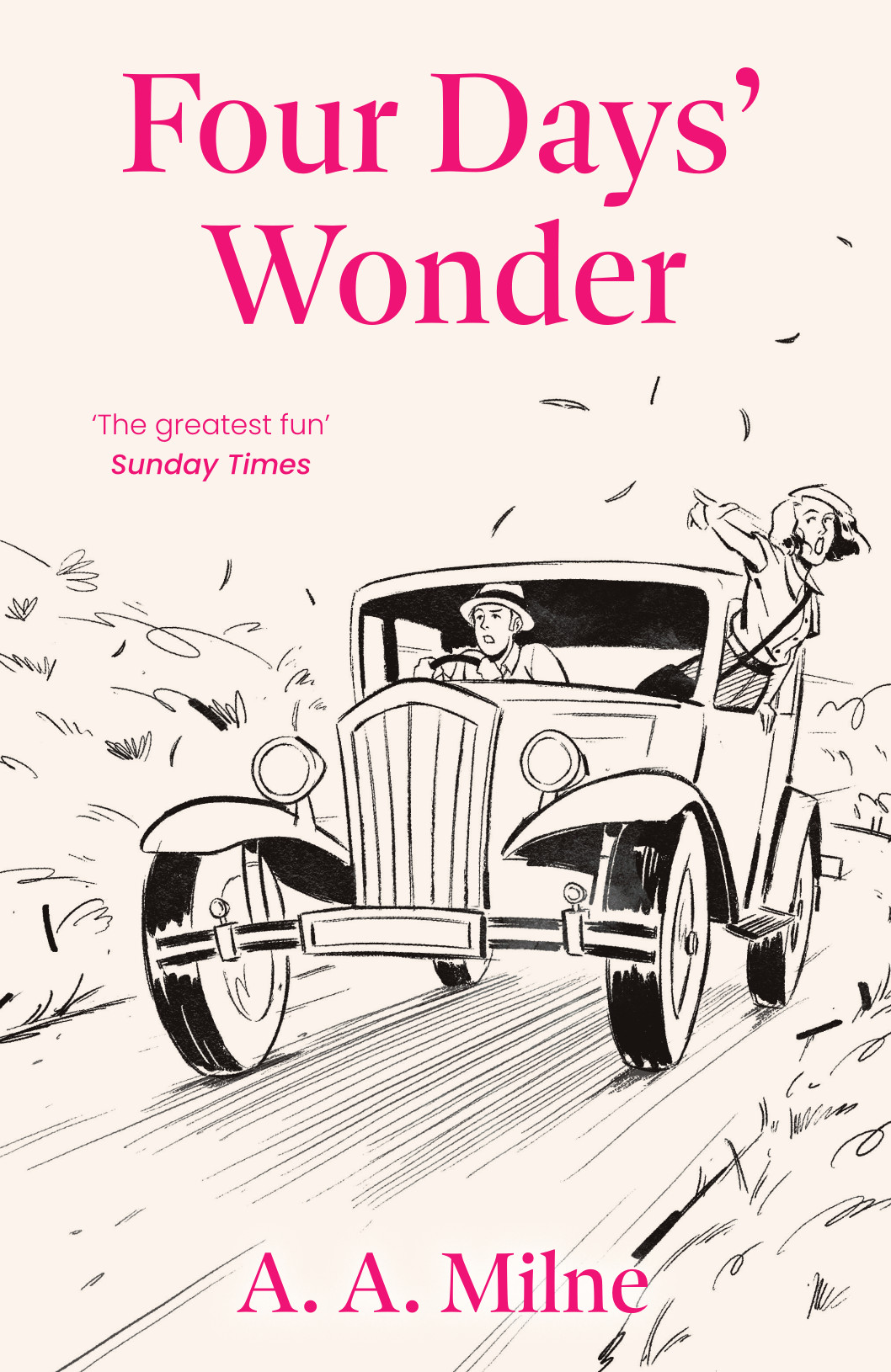
Four Days’ Wonder by A.A. Milne

From my review: “Four Days’ Wonder is not a book you can take too seriously and Milne clearly didn’t intend it to be. It’s a comic novel, with a similar kind of humour to P.G. Wodehouse or Christie’s Tommy and Tuppence series, where the characters keep getting themselves into ridiculous, farcical situations. The book was published in 1933 and you can see that Milne is parodying various tropes of the Golden Age crime novels that were so popular at that time… Four Days’ Wonder is a lot of fun!”
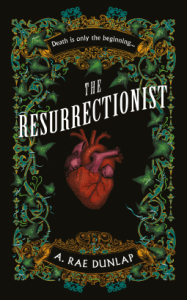
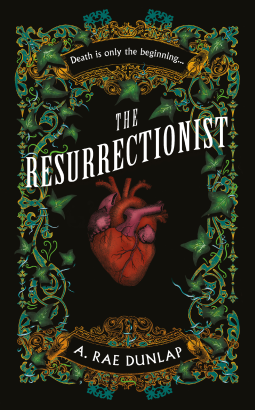
The Resurrectionist by A. Rae Dunlap

From my review: “I loved this book! As a debut novel it’s very impressive and I’ll certainly be looking out for more by A. Rae Dunlap. From the very first page she captures the formal feel of the 19th century novel and manages to avoid using the sort of inappropriately modern language that could have so easily pulled me out of the historical setting…There are lots of suitably Gothic descriptions of lonely cemeteries, dark alleys and disreputable inns, all forming the backdrop to the trade of body snatching.”

The Impossible Thing by Belinda Bauer

From my review: “When this one caught my eye, I decided to give it a try and I’m very pleased that I did. The plot is completely different from any other crime novel I’ve read…This is definitely the first book I’ve read about egg trafficking! It’s an unusual subject for a crime novel, but Bauer builds a story around it that I found completely fascinating and unexpectedly exciting.”

The Black Cabinet by Patricia Wentworth

From my review: “I was impressed by how cleverly Wentworth leads us to suspect first one, then the other, so that I found myself changing my mind several times throughout the book!…I thoroughly enjoyed The Black Cabinet, my only problem being that I couldn’t understand why Chloe didn’t just go straight to the police…I suppose the answer is that there would have been no story otherwise!”
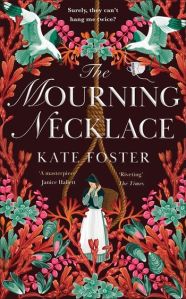
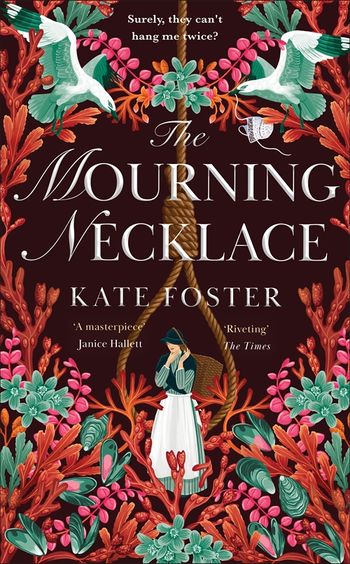
The Mourning Necklace by Kate Foster

From my review: “Maggie Dickson was a real person and the story of her survival is a true one…In The Mourning Necklace, Kate Foster builds a fictional story around this amazing woman and her near-death experience, using her imagination to fill in the gaps around the historical facts…This is a fascinating novel, with some great descriptions of 18th century Musselburgh, Edinburgh and Kelso…I loved it.”
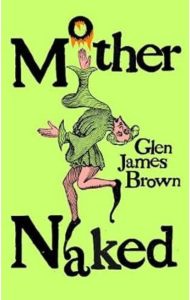
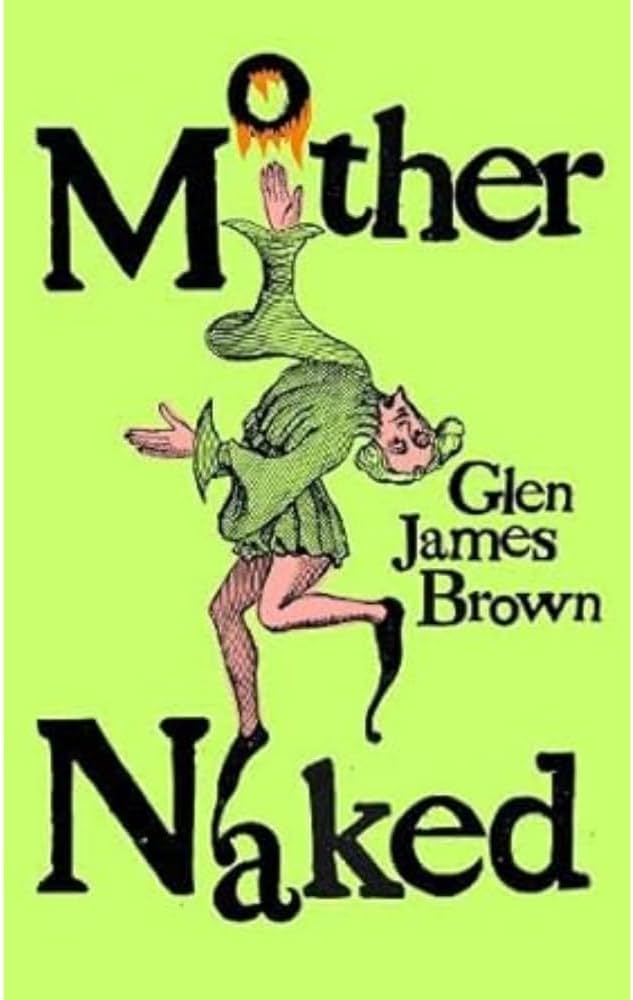
Mother Naked by Glen James Brown

From my review: “The whole novel is written in the form of a monologue delivered by Mother Naked in front of an audience of some of Durham’s most powerful men…Brown also writes in a sort of pseudo-medieval language and I thought this would be distracting at first, but it actually works very well. The combination of the language, the setting and the level of research makes the book feel very authentic and believable. I could easily imagine I was sitting in the hall at Durham Cathedral listening to Mother Naked’s story!”

Seascraper by Benjamin Wood

From my review: “Seascraper is a beautifully written novella and the coastal setting, with fog hanging over the sea and treacherous sinkpits in the sand, is vividly described…This is a quiet, simple story but also a powerful and atmospheric one…I’m so impressed by this book overall, particularly as it’s not one I was planning to read and I didn’t expect to enjoy it as much as I did.”

~

Have you read any of these? What are the best books you’ve read in 2025?

Historical Fiction Reading Challenge: Looking back at 2025 and forward to 2026!

I don’t often take part in year-long reading challenges as I prefer to just join in with shorter reading events these days. However, there’s still one that I like to participate in every year – and that is the Historical Fiction Reading Challenge, hosted by Marg at The Intrepid Reader & Baker. Although it’s not really very challenging for me as I read a lot of historical fiction anyway, I do enjoy linking my reviews to the monthly challenge posts, seeing what other participants are reading and discovering new historical fiction novels and bloggers. Marg has also been posting monthly statistics so we can see which books and authors are proving particularly popular.

Before I post the details of the 2026 challenge, I want to look back at what I achieved in 2025.

I had signed up at the ‘Prehistoric’ level, which meant reading 50+ historical fiction novels during the year. I managed to read 57 (which, coincidentally, is exactly the same as last year!) and here they are, with links to my reviews:

1. The Ghosts of Rome by Joseph O’Connor
2. The Queen of Fives by Alex Hay
3. The Resurrectionist by A. Rae Dunlap
4. The Secrets of the Rose by Nicola Cornick
5. Woman in Blue by Douglas Bruton
6. Island Song by Pepsi Demacque-Crockett
7. The Impossible Thing by Belinda Bauer
8. The Lost Passenger by Frances Quinn
9. Clear by Carys Davies
10. Murder at Gulls Nest by Jess Kidd
11. Moonfleet by John Meade Falkner
12. The Heart in Winter by Kevin Barry
13. The Queen and the Countess by Anne O’Brien
14. The Eights by Joanna Miller
15. The Hymn to Dionysus by Natasha Pulley
16. Mother Naked by Glen James Brown
17. The Versailles Formula by Nancy Bilyeau
18. The Darkening Globe by Naomi Kelsey
19. The Midnight Carousel by Fiza Saeed McLynn
20. The Woman in the Wallpaper by Lora Jones
21. Cleopatra by Natasha Solomons
22. The Edinburgh Murders by Catriona McPherson
23. Traitor’s Legacy by S.J. Parris
24. The Sirens by Emilia Hart
25. The Cardinal by Alison Weir
26. The Surgeon’s House by Jody Cooksley
27. Love, Sex & Frankenstein by Caroline Lea
28. Before Dorothy by Hazel Gaynor
29. A Schooling in Murder by Andrew Taylor
30. The Hounding by Xenobe Purvis
31. The Rush by Beth Lewis
32. These Wicked Devices by Matthew Plampin
33. The Art of a Lie by Laura Shepherd-Robinson
34. The Mourning Necklace by Kate Foster
35. Love & Other Poisons by Lesley McDowell
36. A Case of Life and Limb by Sally Smith
37. The Lily and the Lion by Maurice Druon
38. Sinners by Elizabeth Fremantle
39. The Emerald Shawl by Louise Douglas
40. How to Lose a Lord in Ten Days by Sophie Irwin
41. Fire from Heaven by Mary Renault
42. The Greek House by Dinah Jefferies
43. The House at Devil’s Neck by Tom Mead
44. No Life For a Lady by Hannah Dolby
45. The Silent Companions by Laura Purcell
46. The Portrait Artist by Dani Heywood-Lonsdale
47. The House of Seymour by Joanna Hickson
48. The Elopement by Gill Hornby
49. The Predicament by William Boyd
50. Glorious Exploits by Ferdia Lennon
51. A Ghost Hunter’s Guide to Solving a Murder by F.H. Petford
52. Simon the Coldheart by Georgette Heyer
53. Buckeye by Patrick Ryan
54. The Christmas Clue by Nicola Upson
55. The Twelve Days of Christmas by Susan Stokes-Chapman
56. The Book of Human Skin by Michelle Lovric
57. Venetian Vespers by John Banville

~

Now, here are the rules for the 2026 challenge, taken from Marg’s blog:

Any sub-genre of historical fiction is accepted (Historical Romance, Historical Mystery, Historical Fantasy, Young Adult, History/Non-Fiction, etc.)

During the following 12 months you can choose one of the different reading levels:

20th Century Reader – 2 books
Victorian Reader – 5 books
Renaissance Reader – 10 books
Medieval – 15 books
Ancient History – 25 books
Prehistoric – 50+ books

You can sign up for the challenge here. I will be aiming for Prehistoric again in 2026.

Let me know if you’re planning to take part too!