Act of Oblivion by Robert Harris

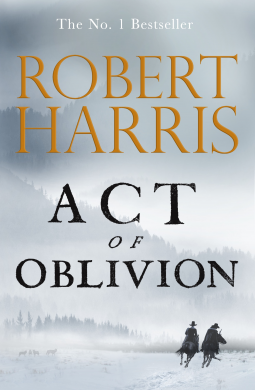
Robert Harris is one of my favourite authors, so a new book by him is always something to look forward to. This one sounded particularly interesting, dealing with a manhunt that takes place in 17th century New England, a setting Harris has never written about before.

The men being hunted are Edward Whalley and his son-in-law William Goffe, both of whom had been colonels in Oliver Cromwell’s New Model Army, fighting for the Parliamentarians against Charles I’s Royalists. When that war ended in a Parliamentarian victory, Whalley and Goffe, along with fifty-seven other men, signed the death warrant that led to the king’s execution. Oliver Cromwell then ruled as Lord Protector of England, Scotland and Ireland until his death in 1658.

Harris’ Act of Oblivion begins in the year 1660, just after Parliament invites the former king’s son to return from exile and take the throne as Charles II. With the monarchy now restored, attention turns to punishing the regicides who were responsible for Charles I’s beheading. Most of these are either already dead or are quickly caught and brought to justice, but several – including Whalley and Goffe – have disappeared, seemingly without trace. Richard Nayler, secretary of the Regicide Committee, is the man tasked with tracking them down.

Part of the novel is written from the perspective of Nayler and part from the points of view of Ned Whalley and Will Goffe. This means that the reader knows from the beginning exactly where Ned and Will have gone – they have crossed the Atlantic to America, to build new lives for themselves in the like-minded Puritan colonies of Massachusetts and Connecticut. When Nayler arrives in pursuit, however, the two regicides are forced to move from one hiding place to another, never able to relax, knowing that they could be betrayed by anyone at any time.

If, like me, you come to Act of Oblivion with no knowledge of what happened to Whalley and Goffe (both real people), then I would strongly advise against looking up the details until you’ve finished reading. It’s better not to know and be kept in suspense wondering whether or not they’ll be caught. However, the book wasn’t quite as exciting as I’d expected based on others I’ve read by Robert Harris; although some of the ‘chase’ sections are very gripping, a lot of time is also spent on a memoir Whalley has been writing about the events of the Civil War and his relationship with Oliver Cromwell, and I felt that this slowed the pace down a lot.

Whalley and Goffe are real historical figures, as I’ve said, and so are most of the others we meet in the novel, including not only Charles II, the future James II and the Lord Chancellor, Edward Hyde, but also many of the governors, magistrates and ministers of the colonies in which they seek refuge. Richard Nayler is fictional, although Harris states that he’s sure someone like Nayler must have existed in order to carry out the hunting down of the regicides. I found Whalley and Goffe quite difficult to identify with (particularly Goffe, a religious zealot and Fifth Monarchist who believes that Jesus will return to form a new kingdom on earth in the year 1666), so I actually found myself on Nayler’s side a lot of the time, which probably wasn’t the author’s intention!

The pages of this novel are packed with history, but what I found particularly interesting was the portrayal of life in the recently founded colonies of Connecticut, Massachusetts Bay and New Haven. New Haven’s role in sheltering the two regicides was apparently one of the reasons why that colony was never given a royal charter allowing it to become a state like the other two. The people of New Haven also follow a stricter set of Puritan laws than Whalley and Goffe had been used to in England and it’s interesting to see how differently the two men react to this, with Goffe feeling that he has found his spiritual home while Whalley begins to have doubts.

Act of Oblivion is not my favourite Harris novel, then – I think, for me, An Officer and a Spy and the Cicero trilogy will be hard to beat – but it’s still a very good one. I must find time to catch up on the earlier novels of his that I haven’t read yet!

Thanks to Hutchinson Heinemann for providing a copy of this book for review via NetGalley.

This is book 47/50 read for the Historical Fiction Reading Challenge 2022.
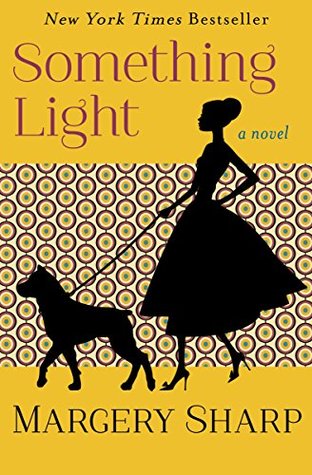
Something Light by Margery Sharp

This was one of the books from my 20 Books of Summer list, which I did actually read before the September deadline although I didn’t manage to post my review in time. First published in 1960, as the title suggests, it’s a light read.

Our heroine, Louisa Datchett, is a thirty-year-old single woman who lives alone in a tiny London flat – so tiny that she can ‘turn on a tap, fill a kettle, light a gas ring and reach down the coffee tin, all without moving her feet’. Louisa has never married, but that doesn’t mean she doesn’t like men – she does like them and has plenty of male friends, all of whom have a habit of coming to her with their problems. In fact, she’s been so busy solving men’s problems that she has barely had time to think about herself – and there certainly hasn’t been time for any romance in her life.

Being a ‘modern’ woman, Louisa hasn’t previously felt that having a husband was in any way essential and has established a career for herself as a dog photographer. This unusual job has provided lots of interesting opportunities for Louisa, but she’s finding that it’s not a reliable way of paying the rent! One morning, having bought an extra yogurt from the milkman for the starving musician next door and worried about her friend, Hugo, who has bronchitis, it occurs to Louisa that it would be nice to have someone taking care of her for a change!

The rest of the book follows Louisa’s attempts to find a husband, each one more disastrous than the one before. First she sets her sights on Freddy Pennon, a wealthy older man whom she met the previous year in Cannes while photographing an Italian film star’s poodles. When this ends in failure, she decides that perhaps a steady, dependable man would be a better option – or maybe a widowed family man looking for a stepmother for his children. Fortunately, Louisa has enough sense to see that none of these relationships are likely to work…but just as she gives up hope of ever meeting a suitable husband, one appears where she had least expected to find him!

Louisa could be seen as quite a contradictory character; on the one hand she is an independent and capable woman who lives on her own and supports herself financially through work, while on the other she sets herself the old-fashioned goal of finding a husband no matter what. It also seems a bit unfair on the men she targets, who have no idea that they are being lined up for marriage. However, she goes about this in such a good-natured way, making sure nobody gets hurt by her actions, that you can’t help liking her and hoping she’ll get what she wants in the end.

The overall story is quite predictable and I could easily predict who Louisa would end up with as soon as he made his first appearance, but each separate episode in the novel has its own little twist, which keeps things interesting. This isn’t one of my favourite Margery Sharp books (so far that would be Britannia Mews or The Flowering Thorn) but it’s an entertaining read and sometimes ‘something light’ is just what you need.

Six Degrees of Separation: From Elizabeth and Her German Garden to Stormy Petrel

It’s the first Saturday of the month which means it’s time for another Six Degrees of Separation, hosted by Kate of Books are my Favourite and Best. The idea is that Kate chooses a book to use as a starting point and then we have to link it to six other books of our choice to form a chain. A book doesn’t have to be connected to all of the others on the list – only to the one next to it in the chain.

This month we’re starting with the book that finished last month’s chain! This will be different for everyone, but in my case it’s Elizabeth and Her German Garden by Elizabeth von Arnim.

From my review:

Published in 1898, the book has an autobiographical feel and is written in the form of a diary in which the narrator, Elizabeth, takes us through a year in her life, describing her love for the garden of her home in northern Germany and the changes she sees as the seasons go by.

There were so many different options I could have chosen for my first link – diaries, Germany, the name Elizabeth – but while I was trying to decide I came across this quote from Sleeping Murder by Agatha Christie (1):

Gardening was her passion. Her favourite literature was bulb catalogues and her conversation dealt with primulas, bulbs, flowering shrubs and alpine novelties.

The character being described here is Dolly Bantry. It sounds as though she would get along well with Elizabeth! Dolly Bantry appears in several of Christie’s other Miss Marple novels, including The Body in the Library and The Mirror Crack’d From Side to Side, but only has a small part to play in Sleeping Murder, which is one of my favourite Marples. I love the eerie atmosphere Christie creates in this book.

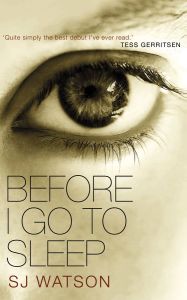
Next, I’m linking to another book with a sleepy title: Before I Go to Sleep by SJ Watson (2), a psychological thriller in which a woman wakes every morning to find she has lost her memory and doesn’t recognise the man who says he is her husband. This wasn’t really my usual sort of read but I found it completely gripping, as well as very unsettling – poor Christine was in such a frightening and vulnerable position.

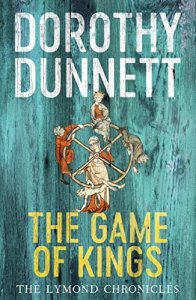
Near the beginning of The Game of Kings by Dorothy Dunnett (3) a character is suffering from amnesia, but is he genuine or is he pretending? As with so many things in Dunnett’s Lymond Chronicles, we can’t be sure. In fact, we aren’t even told the character’s name in this scene and have to work out for ourselves who he is. Set in 16th century Scotland, this is one of my favourite books (and series); it can be challenging for a first-time reader, but so rewarding when you reach a certain point where everything – sort of – begins to make sense!

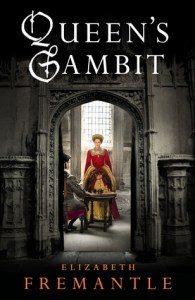
Chess is often described as ‘the game of kings’ and all six of the Lymond Chronicles have titles that refer to chess pieces or moves. Another book with a chess-related title is Queen’s Gambit by Elizabeth Fremantle (4) – not to be confused with the recent Netflix series, which is something completely different! This Queen’s Gambit is the story of Katherine Parr, Henry VIII’s sixth and final wife. Katherine may not have had such a dramatic life as some of the other queens, but I find her the most likeable and I enjoyed this book.

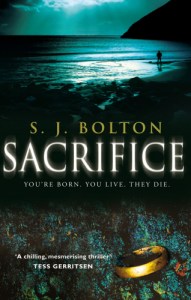
Elizabeth Fremantle’s last few books have been published under the name E.C. Fremantle. An author who went from using her initials to using her full name is SJ Bolton, now publishing as Sharon Bolton. I love her books, particularly her Lacey Flint series and her early standalones, which have stronger Gothic elements than her later ones. The first of these I read was Sacrifice (5), a dark and mysterious murder mystery set in Shetland. I really enjoyed the way Bolton incorporated Norse myths and legends into the plot.

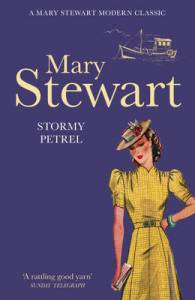
From Shetland to another Scottish island for my final link. Stormy Petrel by Mary Stewart (6) is set in the Hebrides on the island of Moila, which I believe is fictional but so vividly described I’m sure she must have based it on a real place. Published in 1991, this was one of Stewart’s final novels and like her other later books (Rose Cottage and Thornyhold) it has a gentler feel than her earlier, more suspenseful ones.

~

And that’s my chain for this month! My links have included gardens, sleeping, amnesia, chess-related titles, authors using their initials and Scottish islands. In October we’ll be starting with Notes on a Scandal by Zoë Heller.

The end of 20 Books of Summer…and the start of R.I.P XVII!

This year’s 20 Books of Summer (hosted by Cathy at 746 Books) is over now, so let’s take a look at how I did. The rules were very simple – just make a list of 20 books and read them during June, July and August. In previous years I’ve never come close to finishing my list, but this time I’ve been much more successful!

Here are the books I’ve managed to read and review from my list, in the order I read them:

1. Fortune by Amanda Smyth
2. Death on Gokumon Island by Seishi Yokomizo
3. The Colour Storm by Damian Dibben
4. Death in the Andamans by M.M. Kaye
5. Summerhills by D.E Stevenson
6. Godmersham Park by Gill Hornby
7. Pied Piper by Nevil Shute
8. At Bertram’s Hotel by Agatha Christie
9. The Fortune Men by Nadifa Mohamed
10. A Pin to See the Peepshow by F. Tennyson Jesse
11. Haven by Emma Donoghue
12. The Mirror & the Light by Hilary Mantel
13. Fool’s Quest by Robin Hobb
14. The Flight Portfolio by Julie Orringer
15. Destination Unknown by Agatha Christie
16. The Wolf Den by Elodie Harper
17. Excellent Intentions by Richard Hull
18. The Rose of Sebastopol by Katharine McMahon

I’ve also read this one but not had time to review it yet:

19. Something Light by Margery Sharp

And I’m reading this one now:

20. Shadows and Strongholds by Elizabeth Chadwick

I could probably have completed all twenty by the deadline, but didn’t want to rush the last few books. I’ve also read several others that weren’t on my list, so I consider this summer’s reading to have been a success – particularly as it included some very long books!

If you’ve been taking part, how did you do?

~

This is also the first day of another of my favourite reading challenges, R.I.P., which is back for its seventeenth year! This used to be one of the biggest events in the book blogging calendar but seems to take place mainly on Instagram and Twitter now. I still like to join in, even if it’s in a more casual and flexible way these days.

The idea is to read, watch or listen to anything that fits one of the following categories:

Mystery
Suspense
Thriller
Dark Fantasy
Gothic
Horror
Supernatural

After reading from my 20 Books of Summer list all summer, I don’t want to make another long list of R.I.P. reads as I would prefer to be spontaneous and just read whatever I feel like reading. However, there are a few books that I would definitely like to get to during this year’s challenge.

Two mysteries on my NetGalley shelf:

The Twist of a Knife by Anthony Horowitz
Blue Water by Leonora Nattrass

A book of short stories I would like to dip into throughout the event:

Kwaidan: Stories and Studies of Strange Things by Lafcadio Hearn

I have plenty of other books on the TBR that would also be perfect for R.I.P., so watch this space to see what else I decide to read!

If you would like to join in with R.I.P. XVII, more details can be found on the Readers Imbibing Peril blog or by following @perilreaders on Twitter or Instagram.

My Commonplace Book: August 2022

A selection of words and pictures to represent August’s reading:

commonplace book
noun
a book into which notable extracts from other works are copied for personal use.

~

At countless crossroads, the future becomes the past and an infinite number of possibilities die as an infinite number are born.

Fool’s Quest by Robin Hobb (2015)

~

‘In my experience,’ he told me, ‘if you run away from a thing just because you don’t like it, you don’t like what you find either. Now, running to a thing, that’s a different matter, but what would you want to run to? Take it from me, it’s a lot better here than it is most places.’

The Chrysalids by John Wyndham (1955)

~

The Lupanar, Pompeii

“When you see a bird flying,” she says, “that moment when it chooses to swoop lower or soar higher, when there’s nothing but air stopping it, that’s what freedom feels like.” She pauses, knowing that this isn’t the whole truth. The memory she tries to keep buried, the agony of her last day as a free woman rises to the surface. “But hunger feels the same, Fabia. Whether you are slave or free, hunger is the same.”

The Wolf Den by Elodie Harper (2021)

~

At times, circumstances conspire to make us believe the lies we tell ourselves. Everything – the weather, the season, the fall of light – sets the stage for our play; we find ourselves, instead of acting, becoming the characters, moving into a reality in which we’re inseparable from our roles.

The Flight Portfolio by Julie Orringer (2019)

~

Not knowing the truth was like leaving a book half read.

The Blood Flower by Alex Reeve (2022)

~

“Why do you decry the world we live in? There are good people in it. Isn’t muddle a better breeding ground for kindliness and individuality than a world order that’s imposed, a world order that may be right today and wrong tomorrow? I would rather have a world of kindly, faulty human beings, than a world of superior robots who’ve said goodbye to pity and understanding and sympathy.”

Destination Unknown by Agatha Christie (1954)

~

Florence Nightingale, an angel of mercy. Scutari hospital 1855

‘There is always a crisis of some kind in a hospital. Can’t you see? That’s why I so want to work here. I want to intervene at the point in people’s lives where they most need me.’

The Rose of Sebastopol by Katharine McMahon (2007)

~

“And what, finally, has he done with it?”

“Left it all to the nation.”

“Of all the dull and undeserving -”

“Precisely. He held the economic view that money paid to the nation in any form, taxes or gifts, was always wasted and did nobody any good, and he wanted to do nobody any good. At one time he thought of putting up shower baths in the North Pole or Turkish ones in the Sahara, but then he dropped that as being childish.”

Excellent Intentions by Richard Hull (1938)

~

If at this point Louisa plumbed her professional nadir, there is always this about a nadir, that any subsequent motion must inevitably be upwards.

Something Light by Margery Sharp (1960)

~

Favourite books read in August:

Fool’s Quest, The Rose of Sebastopol and The Wolf Den

Authors read for the first time in August:

Elodie Harper, Katharine McMahon

Places visited in my August reading:

The fictional Realm of the Elderings, post-apocalyptic Canada, France, Morocco, England, Ancient Rome, Crimea, Turkey

~

Reading notes: This month I’ve been concentrating on trying to finish my 20 Books of Summer list. This is the last day of the challenge, so I’ll be posting a summary soon. Although I didn’t manage to read all twenty books on my list, I came very close this year and am quite happy with that result!

Tomorrow marks the start of another of my favourite reading events – R.I.P! This involves reading mysteries, thrillers, ghost stories and anything else dark, spooky or suspenseful. I’ll be posting my list of potential reads in the next few days.

Did you read any good books in August? Do you have any plans for your September reading?

The Rose of Sebastopol by Katharine McMahon

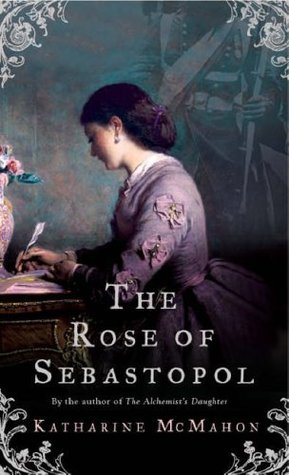
When I put my list together for this year’s 20 Books of Summer, I tried to include a mixture of new releases I was excited about reading and older books that had been on my TBR for a long time. The Rose of Sebastopol is one that I bought back in 2010 from my favourite bookshop, Barter Books, and has been waiting on my shelf for twelve years! If I’d known I was going to enjoy it so much I would certainly have made time for it before now.

The novel opens in 1855 with our narrator, Mariella Lingwood, arriving in Italy to visit her fiancé, Henry Thewell, a surgeon who has recently been stationed in Crimea where war is continuing to rage between Russia and the allied forces of France, Britain, Turkey and Sardinia. Having become seriously ill, Henry has left the battlefields and is recuperating in the Italian town of Narni. Their reunion doesn’t go as planned, however, when the feverish Henry mistakes Mariella for her cousin, Rosa – and she discovers that throughout his illness he has been calling Rosa’s name.

Rosa had left England for the Crimean peninsula several months earlier hoping to join Florence Nightingale’s team of nurses. At first she had kept her family informed as to her whereabouts, but then her letters stopped coming. Unable to learn any more from Henry other than that he and Rosa had met in the Crimea and that Rosa is now missing, Mariella sets off for the war zone herself, determined to find her lost cousin and to hear the truth about her relationship with Henry.

Mariella is an unlikely heroine to be undertaking such an epic journey. Coming from a comfortable middle class background, she has led a very sheltered life and so far her only involvement in the war has been sticking maps and newspaper cuttings into a scrapbook. She represents the Victorian ideal – quiet, obedient, devoted to her parents and conforming to society’s expectations in every way – but for most of the book, I found her very unlikeable. Not only does she lack personality, she’s also quite selfish – probably a product of her upbringing as she has never been encouraged to show any real empathy for people less fortunate than herself.

In contrast, Rosa is a much more engaging character – strong, courageous, determined to achieve her ambition of becoming a nurse and making a difference to people’s lives. I think most authors would have chosen to tell Rosa’s story rather than Mariella’s, so I was intrigued by Katharine McMahon’s decision to write from the perspective of the boring, uninteresting Mariella who, until Rosa disappears, seems content to sit at home with her needlework. Of course, there’s some character development eventually and the journey across Europe does begin to gradually change Mariella’s outlook on life, but it’s always Rosa who drives the plot forward despite being physically absent for most of the novel. Similarly, it seemed at first that Henry would be the main male love interest in the book, but the real hero turns out to be someone unexpected. I was impressed by the way McMahon has us thinking we know which characters we’re supposed to like or dislike, then turns everything around and makes us think again.

This is possibly the first novel I’ve read with the Crimean War as the setting. I’ve read other books set in that time period where the war has been referred to, but I can’t think of any that have actually taken us to the heart of the action – Florence Nightingale’s base at the hospital in Scutari, the sites of the Battle of Balaclava and the Battle of Inkerman, and the besieged city of Sebastopol (or Sevastopol as we would normally call it now). McMahon doesn’t try to portray the war in any kind of romantic way, concentrating instead on the mistakes made by the British and French commanders and the terrible human cost, with large numbers of deaths and casualties. The idea of allowing women to nurse wounded soldiers was very new at that time and we see how some of the women volunteering to join Florence Nightingale were turned down because they were too young or too attractive; they had to meet a strict set of criteria because everything they did would be reported in the British media and Nightingale wanted nothing to damage the reputation of the nursing team she had put together.

I really enjoyed this book and if any of you have read any others set during the Crimean War I would love to hear about them.

This is book 18/20 from my 20 Books of Summer list.

This is book 46/50 read for the Historical Fiction Reading Challenge 2022.
The Wolf Den by Elodie Harper

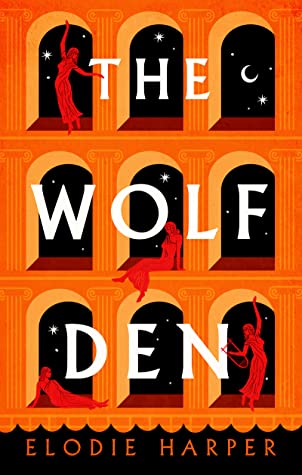
I wasn’t expecting to enjoy The Wolf Den as much as I did. A book about prostitutes in a Pompeii brothel didn’t sound very appealing to me, particularly as Ancient Rome has never been one of my favourite settings for historical fiction, yet it has turned out to be one of the best books I’ve read from my 20 Books of Summer list this year. Once I got into the story I found it difficult to put down and am looking forward to reading the second book (this is the first in a planned trilogy).

Set in 74 AD, just a few years before Pompeii will be destroyed by the eruption of Mount Vesuvius, this is the story of Amara, the daughter of a doctor from the Greek town of Aphidnai, who is sold into slavery after her father’s death. Following a series of misfortunes she has ended up at the notorious Wolf Den brothel owned by the moneylender Felix. Amara and her fellow She-Wolves are treated as commodities, existing only to give pleasure to their clients and to make money for Felix. The women have lost not only their freedom but also their identities and even their original names. It’s a miserable life, but Amara finds some comfort in the friendships she has formed with the other prostitutes.

The women working at the Wolf Den come from a diverse range of backgrounds – from Greece, from Carthage or from Egypt, abandoned at birth, taken captive by slave traders or, like Amara, sold off by their own families. There are just five of them at the beginning of the book – Amara, Victoria, Dido, Cressa and Beronice – although more will arrive later as Felix continues to make ‘investments’ in his business. Each of the five, despite some clients seeing them as interchangeable, has her own distinctive personality and her own way of coping with the situation she has found herself in. Not all of the women can remember life before the brothel, but Amara can and she’s determined to regain her freedom.

This is the first book I’ve read set in Pompeii (I do have a copy of Robert Harris’ Pompeii somewhere, which I’ll get round to eventually) and I loved following Amara around the bustling, vibrant city, going into the shops, taverns and bathhouses, taking part in the Vinalia festivities and watching the gladiators in the amphitheatre. We also see inside the beautiful villas owned by Pompeii’s rich and powerful when Amara and Dido are booked to entertain at private parties and get a glimpse of the lives that could have been theirs under different circumstances. Although most of the characters in the book are fictional, the Roman author, naturalist and military leader Pliny the Elder makes an appearance and has an important role to play in the plot. Finally, real pieces of graffiti found in the ruins of Pompeii are used in the chapter headings, adding some further historical authenticity to the story.

The Wolf Den is not always an easy book to read; the nature of the story means there are some quite graphic descriptions of both the women’s work within the brothel and the violence they are often subjected to by the men who pay for their services. Elodie Harper doesn’t shy away from having bad things happen to her characters, but there’s some warmth and humour in the novel too, as well as the beginnings of a romance between Amara and another slave. I can’t wait to read The House with the Golden Door to see how the story continues.

This is book 17/20 from my 20 Books of Summer list.

This is book 45/50 read for the Historical Fiction Reading Challenge 2022.