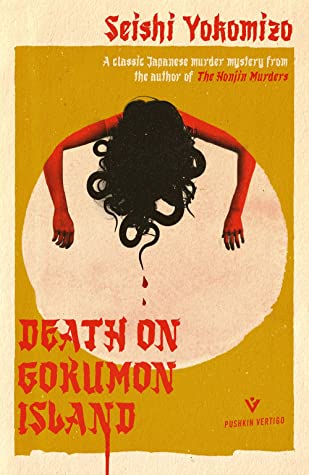
Death on Gokumon Island by Seishi Yokomizo (Trans. Louise Heal Kawai)

The second book I’ve read from my 20 Books of Summer list is this 1948 Japanese mystery novel, now available in an English translation. This is the fourth book in Yokomizo’s Kosuke Kindaichi series to be published in English by Pushkin Press, but actually the second in original publication order. It works as a standalone, with a few references to Kindaichi’s first case, The Honjin Murders, so you could easily start with this one if you wanted to.

Death on Gokumon Island is set in 1946, just after the end of the Second World War, and nearly ten years after the events of The Honjin Murders. Kosuke Kindaichi is on his way to the strangely named Gokumon – or ‘Hell’s Gate’ – Island to deliver the sad news of his army friend Chimata Kito’s death. Kindaichi knows this will be a difficult task, but what really worries him is a prediction made by the dying man that his three half-sisters, who all live on the island in the family home, are going to be murdered.

Arriving on Gokumon Island, Kindaichi gets to know the members of the Kito household, including Chimata’s father who is said to be mad and kept locked up behind bars, as well as another rival branch of the family who live nearby and would benefit from deaths in the main Kito family. The scene is set for a classic murder mystery – and it’s not long before the first murder does take place. Kindaichi begins to investigate, but the islanders are suspicious of newcomers and are reluctant to answer questions.

I struggled to get into this book at first; I felt that we were being introduced to a lot of characters all at once and it was difficult to distinguish between them. I’ve found that with all of the Japanese mysteries I’ve read the authors seem to be more concerned with puzzle-solving than with character development, although Yokomizo is better in that respect than some of the others. After a few chapters I had settled into the story and began to enjoy it. It was good to see more of Kosuke Kindaichi than we did in The Village of Eight Graves; he’s quite endearing with his nervous stammer and head-scratching and the way he makes mistakes and isn’t afraid to admit to them.

Louise Heal Kawai’s translation is clear and easy to read (she also did the translation for The Honjin Murders, although not Eight Graves, which was translated by Bryan Karetnyk). I’m sure Japanese must be a difficult language to translate into English and I do wonder if any nuance is lost along the way, but I was impressed by the way she managed to capture the meaning of the wordplay, poetry and haikus that form part of the plot. I felt I was learning quite a lot about Japanese culture, as well as post-war life in a country that had been on the losing side.

This book has been compared with Agatha Christie’s And Then There Were None, but I don’t think they have much in common other than that they are both mysteries set on islands. This is a very different sort of island, for a start – unlike Christie’s, it’s inhabited, with a fishing community, a mayor, doctors, priests and barbers (to name just some of the characters we meet) – and although there may be a few similarities in the way the murders are carried out, the solution is completely different. It’s a solution I didn’t manage to guess at all; I was convinced I had picked up on an important clue halfway through but it turned out to be a red herring!

Now I need to find time to read The Inugami Curse, the other Yokomizo book currently available in English.

Thanks to Pushkin Vertigo for providing a copy of this book for review via NetGalley.

This is book 2/20 from my 20 Books of Summer list.
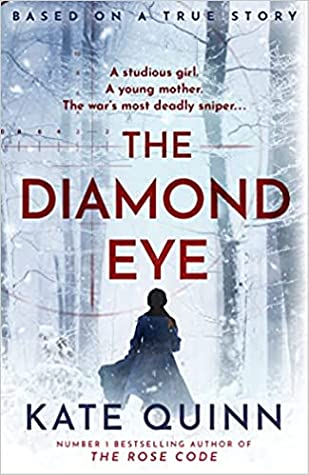
The Diamond Eye by Kate Quinn

I loved The Rose Code by Kate Quinn – it was one of my favourite books last year. Because of that, I think my expectations for her new novel, The Diamond Eye, were slightly too high. I enjoyed it, but I don’t think it will be one of my books of the year this time.

The Diamond Eye is the story of Lyudmila Pavlichenko, a female sniper in the Soviet Army during World War II (and a real historical figure). Lyudmila, or ‘Mila’ as she is called in the novel, was born in Ukraine but considered herself Russian. The book was written before the current war in Ukraine began earlier this year, which gives something as simple as Mila’s choice of identity new relevance.

When we first meet Mila, she is a twenty-one-year-old history student in Kiev (now known as Kyiv, of course) and is trying to get a divorce from her husband Alexei, who seduced her as a teenager then left her to raise their son, Slavka, alone. After an encounter with Alexei at a shooting range during which Mila embarrasses herself by missing a shot, she decides to join an advanced marksmanship course so that she’ll never miss again and can prove to Slavka that she’s the equal of his father. This decision changes Mila’s life because, when Hitler invades Russia a few years later, she is handed a rifle and enlisted into the Red Army as a sniper.

We then follow two alternating storylines – one which describes Mila’s time in the army and how she acquires her reputation as ‘Lady Death’, being credited with 309 kills, and another set in 1942 as Mila embarks on a US tour in an attempt to persuade the Allies to provide support for Russia against the Nazis. The chapters set in America explore Mila’s relationship with Eleanor Roosevelt and a fictitious plot to assassinate the President. This invented storyline adds some tension and excitement to the book, but with Mila’s own life being so fascinating I’m not sure that it was really necessary!

The factual parts of the novel are based on Lyudmila Pavlichenko’s own memoir, Lady Death: The Memoirs of Stalin’s Sniper, which I haven’t read. In fact, I knew nothing at all about Mila before reading this book so everything in it was new to me. Quinn includes a very comprehensive author’s note at the end in which she explains where she tried to stick to the known facts and where she had used her imagination to fill in gaps or make the story more interesting (mainly the bits concerning Mila’s marriage to Alexei and her romantic relationships with two men she meets in the army). Some of the most surprising parts of the story, such as Mila’s friendship with the First Lady are actually true.

There’s a lot of focus on military life, weapons and tactics, which I suppose is to be expected in a novel about a sniper, but that’s never been a particular area of interest to me and reading about the Bletchley Park codebreakers in The Rose Code was much more to my taste. Still, it’s always good to learn something new and I did enjoy the parts of the book about Mila’s personal life and ambassadorial work, if not so much the parts about shooting and killing. I’m sure I’ll be reading more of Kate Quinn’s books.

Thanks to HarperCollins for providing a copy of this book for review via NetGalley.

This is book 28/50 read for the Historical Fiction Reading Challenge 2022.

Classics Club Spin #30: The Result

The result of the latest Classics Club Spin was revealed today.

The idea of the Spin was to list twenty books from my Classics Club list, number them 1 to 20, and the number announced by the Classics Club represents the book I have to read before 7th August. The number that has been selected is…

5

And this means the book I need to read is…

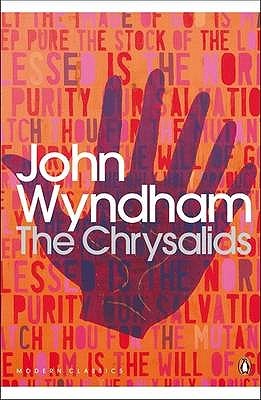
The Chrysalids by John Wyndham

First published in 1955, The Chrysalids is a post-nuclear story of genetic mutation in a devastated world, which tells of the lengths the intolerant will go to to keep themselves pure.

David Strorm’s father doesn’t approve of Angus Morton’s unusually large horses, calling them blasphemies against nature. Little does he realize that his own son, his niece Rosalind and their friends, have their own secret aberration which would label them as mutants. But as David and Rosalind grow older it becomes more difficult to conceal their differences from the village elders. Soon they face a choice: wait for eventual discovery or flee to the terrifying and mutable Badlands…

~

Of all the books on my list, this is one I hadn’t expected to come up in the spin – I have no idea why, but it was a surprise! From the blurb, this is not the sort of book I would usually choose to read, but I have enjoyed others by John Wyndham so am looking forward to this one.

Have you read The Chrysalids? If you took part in the Spin, are you happy with your result?

The Second Sight of Zachary Cloudesley by Sean Lusk

I was drawn to The Second Sight of Zachary Cloudesley by the setting – 18th century Constantinople – but I wasn’t sure that it would really be my sort of book. From the blurb, I was expecting a strong magical realism element, something I don’t always get on with. However, I was pleased to find that this aspect of the novel was actually much more subtle than I’d expected.

The story begins in London in 1754 with the birth of Zachary Cloudesley. Sadly, his mother dies giving birth to him, leaving little Zachary to be raised by his father Abel, a clockmaker and inventor of automata. Fortunately, Abel doesn’t have to do this alone – help soon arrives in the form of wet nurse Mrs Morley and the eccentric Aunt Frances, two very different women who go on to play important roles in Zachary’s life.

From an early age, it becomes apparent that Zachary possesses the gift of ‘second sight’ which allows him to see into the future and this gift only becomes stronger following a serious accident for which Abel blames himself. In order to keep his son safe, Abel is persuaded to accept a commission which takes him far away from his London workshop, to Constantinople (Istanbul). But when Abel fails to return from his journey, Zachary is determined to follow him and do whatever it takes to rescue his missing father.

The first half of this novel has a very Dickensian feel. I was particularly reminded of Dombey and Son, which also begins with a baby being born, the death of the mother in childbirth and the arrival of a wet nurse. I enjoyed getting to know the characters who make up the Cloudesley household: the forthright, opinionated but warm-hearted Grace Morley and her little daughter Leonora; the larger-than-life Aunt Frances who takes her crow and two parrots everywhere she goes; and Abel’s apprentice Tom, an intelligent, talented young man with a not-so-well hidden secret. All of these people have interesting histories of their own, which are revealed during the early stages of the novel.

When the action moves away from London, to the heart of the Ottoman Empire, we are treated to some colourful descriptions of Constantinople, the sultan’s palace, and the seraglio, presided over by the kizlar agha (the head of the eunuchs). However, this is where I felt the story lost its way a little bit and for a while I struggled to stay interested. I think this could have been partly due to the focus switching to Zachary who, despite being the title character, was not as engaging as Frances or Mrs Morley. I’m also not quite sure what the point was in the ‘second sight’ aspect of the book as it didn’t really seem essential to the plot. Still, this was an entertaining debut novel by Sean Lusk – if you read and enjoy it, I can recommend Cynthia Jefferies’ The Outrageous Fortune of Abel Morgan for another adventure in Constantinople or The Clockwork Girl by Anna Mazzola if you’re interested in the world of 18th century automata.

Thanks to Doubleday for providing a copy of this book for review via NetGalley.

This is book 27/50 read for the Historical Fiction Reading Challenge 2022.

Classics Club Spin #30: My list

It’s time for another Classics Club Spin – the 30th, in fact! If you’re not sure what a CC Spin is, here’s a reminder:

The rules for Spin #30:

* List any twenty books you have left to read from your Classics Club list.
* Number them from 1 to 20.
* On Sunday 12th June the Classics Club will announce a number.
* This is the book you need to read by 7th August 2022.

I’m already busy working through my 20 Books of Summer list, so not sure if I will actually have time to read a Spin book as well, but I can’t resist taking part anyway!

Here’s my list:

1. A Laodicean by Thomas Hardy
2. Pied Piper by Nevil Shute
3. Shadows on the Rock by Willa Cather
4. Farewell the Tranquil Mind by RF Delderfield
5. The Chrysalids by John Wyndham
6. Wild Strawberries by Angela Thirkell
7. Moonfleet by John Meade Falkner
8. The White Guard by Mikhail Bulgakov
9. My Theodosia by Anya Seton
10. A Pin to See the Peepshow by F Tennyson Jesse
11. Jane and Prudence by Barbara Pym
12. Strangers on a Train by Patricia Highsmith
13. The New Magdalen by Wilkie Collins
14. Random Harvest by James Hilton
15. Fire from Heaven by Mary Renault
16. Sword at Sunset by Rosemary Sutcliff
17. Pied Piper by Nevil Shute
18. Brat Farrar by Josephine Tey
19. A Pin to See the Peepshow by F Tennyson Jesse
20. The Trumpet-Major by Thomas Hardy

~

Which of these do you think I should be hoping for? I would love to get either Pied Piper or A Pin to See the Peepshow as both of those are on my 20 Books of Summer list, so I’ve included each of them on my Spin list twice to increase my chances! Otherwise, I don’t really mind which number comes up.

Top Ten Tuesday: A Journey Through Time

This week’s topic for Top Ten Tuesday, hosted by Jana of That Artsy Reader Girl, is “Books With a Unit of Time In the Title (seconds, minutes, hours, days, weeks, months, years, eternity, etc.) (Submitted by RS @ The Idealistic Daydream)”.

I decided to make things more interesting by starting with a very short period of time and becoming gradually longer! All of the titles on my list are books that I’ve read and reviewed on my blog.

1. The Second Sleep by Robert Harris – I’m starting with a title which includes the word ‘second’. Robert Harris is a favourite author of mine and I usually love his books, but I found this one a bit disappointing. It seems at first to be a conventional historical novel set in rural England in the year 1468, but it turns out to be something very different! A fascinating idea, but not what I had expected.

2. Ten-Second Staircase by Christopher Fowler – I don’t seem to have reviewed any books with ‘minute’ in the title, so I’m going with something longer than a second but not as long as an hour. This is the fourth novel in Fowler’s Bryant and May series which follows the investigations of two octogenarian detectives working for London’s Peculiar Crimes Unit.

3. The Distant Hours by Kate Morton – I’ve read most of Kate Morton’s books, although this isn’t one of my favourites. Moving between the 1990s and 1940s, the novel has lots of gothic elements from crumbling castles to family secrets and I did find it entertaining, but much longer than it really needed to be.

4. The Day of the Triffids by John Wyndham – I don’t read a lot of science fiction, but I’ve enjoyed everything I’ve read by John Wyndham. In The Day of the Triffids, after an unusual display of meteors throws the world into chaos, an aggressive species of tall and vicious plants begin to dominate. A fascinating, but unsettling read.

5. A Week in Paris by Rachel Hore – In this dual timeline novel, the ‘modern’ storyline is set in 1961 and follows music student Fay Knox who is spending a week in Paris trying to discover the truth about her childhood. The other narrative tells the story of Fay’s mother during the occupation of Paris during World War II. I enjoyed this book, but much preferred the wartime storyline to the 1960s one.

6. The Nine Day Queen by Ella March Chase – Lady Jane Grey lasted slightly longer than a week on the throne of England. Her nine day reign in July 1553 is the subject of this historical novel which also gives plenty of attention to the stories of Jane’s two younger sisters, Katherine and Mary.

7. Around the World in Eighty Days by Jules Verne – I didn’t have any books with ‘month’ in the title, so am skipping ahead to ‘eighty days’ instead. This classic adventure novel follows the journey of Phileas Fogg who attempts to travel around the world in eighty days in order to win a bet. It’s an entertaining story, but it seemed such a waste to pass through so many countries without having time to explore them!

8. The Year Without Summer by Guinevere Glasfurd – This fascinating novel is set in 1816, the year after the eruption of Mount Tambora, an Indonesian volcano. Glasfurd tells the stories of six people, some real and some fictional, whose lives were affected by the extreme weather that followed the eruption.

9. Twenty Years After by Alexandre Dumas – This is the second book in Dumas’ d’Artagnan series and, as the title suggests, takes place twenty years after the events of The Three Musketeers. I loved this one every bit as much as the first book and I think it’s a shame it’s so much less well known.

10. Like This, For Ever by Sharon Bolton – For the final title on my list, I couldn’t decide between this one and Sebastian Barry’s Days Without End. Which is the longer period of time? They’re both the same, surely. Anyway, I settled on this one, which is the third novel in Bolton’s wonderful Lacey Flint crime series and one of my favourites!

~

Have you read any of these? Which other books with units of time in the title can you think of?

Fortune by Amanda Smyth

My first book for this year’s 20 Books of Summer is also one of the shortlisted titles for the 2022 Walter Scott Prize for Historical Fiction. The winner is going to be revealed at the Borders Book Festival on Friday 17th June, so I wanted to read this one before the announcement. It’s the second of the four titles on the shortlist that I’ve read – the other is the excellent Rose Nicolson; I am currently halfway through the third, The Magician, but am not sure if I’ll finish it in time, and I won’t get to the fourth one, News of the Dead, now either.

Anyway, Fortune is set in Trinidad in the 1920s and begins with a chance meeting between two men. One of them, Eddie Wade, has spent the last few years working in the US oilfields and has recently returned home, hoping to make his fortune on the island. He’s convinced that the land beneath Sonny Chatterjee’s cocoa plantation is rich in oil and is on the verge of persuading Sonny to let him start drilling when his truck breaks down on the road. Businessman Tito Fernandez stops to help and when he hears about Eddie’s project, he agrees to invest.

Soon Eddie and Tito are the best of friends and their trust in each other pays off when the oil begins to flow. However, as Eddie spends more and more time visiting the Fernandez family and becoming part of their social circle, he finds himself increasingly drawn to Tito’s beautiful wife, Ada – and the attraction is mutual.

The novel is inspired by a real event which took place in Trinidad in 1928, but I would recommend not looking it up before reading the book. Although I did eventually guess what was going to happen, I’m glad I didn’t know for certain as it would have taken away some of the impact of the story. The characters also seem to be loosely based on real people, but with different names and obviously with fictitious storylines created around the historical facts.

I can’t think of any other books I’ve read set in Trinidad and I’m ashamed to admit that it’s a place I know very little about, but Amanda Smyth, who is an Irish-Trinidadian author, brings it to life beautifully – the landscape, the plants and wildlife, the bustling streets of Port of Spain, and the cultures, beliefs and traditions of the Trinidadian people. At the time of our story, the island is going through a period of change; the cocoa trees that had formed such an important part of the economy are dying and new sources of income are needed. With the growing popularity of cars and planes, Trinidad’s oil boom comes at just the right time. Smyth does a wonderful job of portraying the ambition and greed of the various oil prospectors, the reluctance of Sonny Chatterjee to give up on his cocoa farming and allow drilling on his land, the fears of his wife Sita, who is mistrustful and suspicious of the whole business, and the excitement the characters feel when the first well is struck.

The tensions between the characters are also very well done; the relationship between Eddie and Ada develops slowly but once their affair begins they take so many risks it seems inevitable that Tito will find out and you wonder what will happen when he does. The personal stories of the characters play out against the backdrop of the oil rush, with all the different elements of the novel falling into place to build towards a dramatic conclusion. Although I still prefer Andrew Greig’s Rose Nicolson, this is an impressive novel too and while it hadn’t sounded very appealing to me at first, I can see now why the Walter Scott Prize judges decided to shortlist it.

This is book 1/20 from my 20 Books of Summer list.

This is book 26/50 read for the Historical Fiction Reading Challenge 2022.