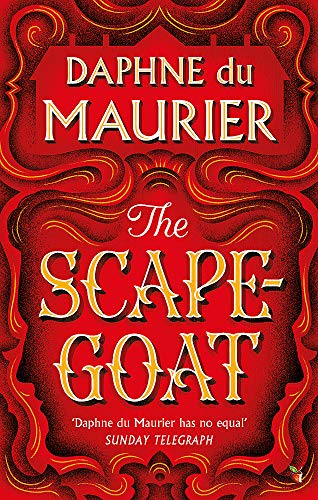
The Scapegoat by Daphne du Maurier (re-read) – #DDMReadingWeek

This week HeavenAli is hosting another of her Daphne du Maurier Reading Weeks, assisted by Liz who is collecting the links this year. As you may know, du Maurier is one of my favourite authors; I have now read all of her novels and short story collections at least once and some of her non-fiction (I attempted to rank them all in this post, just for fun). For this year’s Reading Week I’ve decided to re-read her 1957 novel The Scapegoat, which is one I particularly loved when I first read it back in 2011 (here’s my original review). I’ve wanted to read it again ever since, not just because I enjoyed it so much, but also because I formed a theory about what was actually happening in the book and I was curious to see whether I would feel the same way on a second read. I’ll discuss this later in this post, but don’t worry – I’ll include a spoiler warning for those of you who haven’t read the book yet.

The novel opens in Le Mans where our narrator, John, an English academic, is on holiday. When he meets a man who looks and sounds just like him at the station, he feels an instant connection with him and after spending the evening drinking and talking, he accompanies the other man back to his hotel room. He learns that his new friend is a French count, Jean de Gué, and that they have something else in common – they are both depressed and dissatisfied with life, John because he is lonely and has no family, Jean because he has a large family, all of whom are causing him problems. As the night wears on, John falls into a drunken stupor and when he wakes up the next day his companion has disappeared, taking all of John’s clothes and possessions with him and leaving his own in their place.

When Jean’s chauffeur arrives, ready to drive him home to his château in the French countryside, John begins to protest, explaining that there has been a mistake – but then, on an impulse, he decides to take this opportunity to leave his old life behind for a while and continue to impersonate Jean de Gué. On reaching Jean’s château, John finds that nobody suspects he is an impostor and he is able to take Jean’s place within the family. He also begins to understand why Jean had said his family life was so difficult – there are all sorts of tensions and conflicts between various members of the family and to make things worse, the de Gué glassworks is facing financial ruin. It’s up to John to put things right, if he can.

I enjoyed this read of The Scapegoat as much as my first. If you take everything at face value, of course, it requires a huge suspension of disbelief. Not only do John and Jean look completely identical, so much so that not even Jean’s mother, wife or daughter guess the truth, but they also sound exactly the same (and John’s French is so fluent that nobody suspects a thing). Is this likely? Of course not, but it provides du Maurier with her starting point for this fascinating novel and it’s perfectly possible to just accept the plot for what it is and enjoy the story. After all, it’s no more ridiculous than the book that apparently inspired this one – Anthony Hope’s The Prisoner of Zenda. And as always with a du Maurier novel, you can expect beautiful descriptions, a strong sense of place and interesting, if not necessarily very likeable, characters.

*My Scapegoat theory (includes spoilers)*

When I first read this book in 2011, I found myself beginning to wonder – what if John and Jean weren’t doubles after all? What if there was only one man, with multiple personalities (now known as dissociative identity disorder)? It makes so much more sense to me that Jean, feeling that he has made a mess of his life, has created a new identity to deal with the problems he has caused for himself. At the end of the book, when everything has been resolved, he has no further need of John and although it’s not clear exactly how much Jean has learned and how he will manage his relationships and business affairs in the future, he feels that he can now cope on his own. He tells John that he has emptied John’s bank account, sold his flat and furniture in London and resigned John’s position as university lecturer – in other words, destroyed John altogether, because John never really existed and is no longer necessary.

After finishing the book on that first occasion, I remember looking at other reviews and being surprised that almost nobody else had mentioned that any of this had occurred to them too. I accepted that I must have misunderstood the whole book; however, the Daphne du Maurier website quotes a letter written by Daphne herself regarding The Scapegoat which seems to support my interpretation. Her reference to ‘that man’s nature’ doesn’t really make sense to me if there were actually two separate men in the book.

“Every one of us has his, or her, dark side. Which is to overcome the other? This is the purpose of the book. And it ends, as you know, with the problem unsolved, except that the suggestion there, when I finished it, was that the two sides of that man’s nature had to fuse together to give birth to a third, well balanced.”

On reading the book for a second time, I have been paying closer attention and looking for subtle clues and hints. There are just three main obstacles in the way of my theory. First, there’s Jean’s dog, César, who is hostile towards John and the only member of the household who seems to sense that something is wrong. However, when Jean and John meet up again at the end of the book, Jean explains that John hasn’t been whistling to César in the correct way and this is why he hasn’t been obeying his commands. Also, during a scene in a hospital, we are told that Jean is blood group O and John is blood group A – but as it’s John himself who tells us this I don’t think it can be taken as conclusive evidence of anything. The only thing I can’t manage to explain away is that when Jean calls the château to inform John that he’s coming home, it’s a servant who answers the phone and tells John that someone wants to speak to him. If it wasn’t for this one moment, I would have been nearly convinced that I was right!

I did find plenty of things to support my theory, including the fact that, when speaking to Jean’s family for the first time, John finds that the ‘tu‘ form of French comes naturally to him, although he’s never used it before; the way John muses that Jean’s ‘inner substance was part of my nature, part of my secret self’; and in particular, the whole conversation he has with Jean’s mistress, Béla, in Chapter 12.

‘You said something a while ago about taking stock of oneself,’ I said. ‘Perhaps that’s just what I’ve been doing, over a period of time, and it came to a head that evening in Le Mans. The self I knew had failed. The only way to escape responsibility for failure was to become someone else. Let another personality take charge.’

‘The other Jean de Gué,’ she said, ‘the one who’s been hidden for so long beneath the surface gaiety and charm, I’ve often wondered if he existed. If he’s going to emerge, he’d better do so now. Time’s getting on.’

What do you think?

*End of spoilers*

Overall, after finishing my second read of the book, I think probably the way everyone else has interpreted it is the correct way, but du Maurier does like to be ambiguous and I enjoyed looking below the surface and dissecting the different layers! It really is a fascinating novel and still one of my favourites by du Maurier. Now I just need to find time to revisit some of her others!

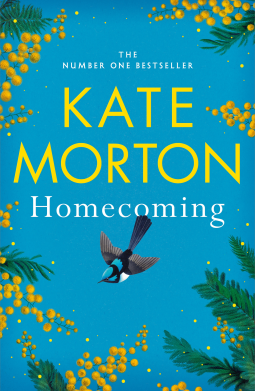
Homecoming by Kate Morton

‘People who grow up in old houses come to understand that buildings have characters. That they have memories and secrets to tell. One must merely learn to listen, and then to comprehend, as with any language.’

The Christmas Eve of 1959 is a hot summer’s day in South Australia. Isabel Turner takes her four children out into the grounds of their Adelaide Hills home for a picnic – and this is where they are found later that day by a man delivering groceries. At first he thinks they are asleep in the sun but, sensing an unnatural stillness, he comes closer and makes the shocking discovery that the Turners are all dead. The local police are convinced that Isabel, who is believed to have been depressed, must have poisoned herself and the children, but the case is never fully solved and becomes the subject of a true crime book, As If They Were Asleep, written by American journalist Daniel Miller.

Almost sixty years later, in 2018, Jess Turner-Bridges is living in London when she receives a call from a hospital in Sydney informing her that her beloved grandmother, Nora, has had a fall and is in a serious condition. Jess hasn’t been back to Australia for years, but her grandmother is the person who raised her when her own mother was unable to, so she leaves for Sydney immediately to be by Nora’s side. Alone in Nora’s house, Jess discovers Daniel Miller’s book in her grandmother’s bedroom and is drawn into the story of the Turner Family Tragedy. Having been unaware until now of her own connection with this tragic incident, Jess is shocked by what she reads, but now that Nora is dying it seems that her chance to find out the truth could be slipping away.

Homecoming, like the other books I’ve read by Australian author Kate Morton, is deeply layered, containing stories within stories, multiple viewpoints and alternating timelines. It’s a long novel and I felt there were things that could probably have been left out without affecting the story too much – Jess’s life in London at the beginning and the backgrounds of some of the minor characters, for example – but otherwise I was completely gripped and read it much more quickly than I would usually read such a long book.

I loved the descriptions of rural Australia and the portrayal of 1950s Tambilla, the small town where the story takes place. As the title suggests, the theme of ‘homecoming’ plays an important part in the story: what it’s like to come home after a long absence and the idea of ‘home’ being not just the opposite of ‘away’ but also of ‘loneliness’. And for forty-year-old Jess, despite living in London for most of her adult life, Australia is still the place where she feels most at home.

The mystery at the heart of the novel – the deaths of Isabel Turner and her children – is not resolved until the end of the book and although the clues were all there, I didn’t pick up on them so didn’t work out what happened. However, there’s another family secret which has big implications for Jess and I found that one very easy to guess, which took away some of the fun. Maybe I’ve just read too many books like this one, but I thought it was very obvious! I did very much enjoy reading Daniel Miller’s As If They Were Asleep (not a real book, of course) which is reproduced in full, a few chapters here and there. It sheds some light on both mysteries, as well as allowing us to see the Turners and their friends and neighbours from a different perspective.

I do wonder whether this book might have worked just as well as a straightforward crime novel set in the 1950s, without the additional family secrets and the Jess and Nora storylines, but I know that’s not what Kate Morton does and probably not what her readers would expect from her! Anyway, apart from guessing the twist too soon, I did love this book and still have one or two of her earlier ones to look forward to.

Thanks to Pan Macmillan for providing a copy of this book for review via NetGalley.

This is book 15/50 read for the 2023 Historical Fiction Reading Challenge.

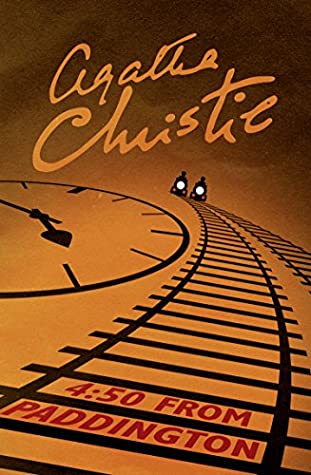
4.50 from Paddington by Agatha Christie

This month’s theme for Read Christie 2022 is ‘a story featuring train travel’. I had already read most of the possibilities – The Mystery of the Blue Train, Murder on the Orient Express and The ABC Murders – but hadn’t yet read the Miss Marple novel 4.50 from Paddington, so that was my choice for this month.

The ‘train travel’ element of the story appears in the very first chapter, with the elderly Elspeth McGillicuddy taking a train to the village of St Mary Mead to visit her friend, Miss Jane Marple. Mrs McGillicuddy happens to glance out of the window just as her train passes another train running parallel in the same direction. At that moment, a blind flies open in the window of the other train and she is horrified to witness a man standing with his back to her strangling a woman. She reports the incident to the ticket collector and the police are informed, but when no dead body is found on the train Mrs McGillicuddy is dismissed as an old woman with an overactive imagination. Miss Marple, however, knows her friend is telling the truth and is determined not to let the matter drop.

Convinced that the body may have been thrown from the train as it passed the grounds of Rutherford Hall, Miss Marple enlists the help of Lucy Eyelesbarrow, a young woman she knows who has established a reputation for herself as a professional and efficient cook and housekeeper. Lucy’s skills mean she is very much in demand and never short of work, but Miss Marple persuades her to take a position at Rutherford Hall for a few weeks so that she can search for the body while she’s there. Settling into her new job, Lucy begins to get to know the residents of Rutherford Hall – the family patriarch Luther Crackenthorpe, his sons, daughter, in-laws and grandchildren – and begins to wonder whether their connection to the murder on the train really was a coincidence after all.

I found this a particularly enjoyable Miss Marple novel – probably in my top two or three. It seems that it has had some criticism due to the lack of clues and logical deductions and I do understand that complaint because we never find out exactly what leads Miss Marple to identify the correct suspect. However, I didn’t have a problem with this. The solution does make sense, even if we don’t know how she arrived at it, and the culprit was actually the person I suspected myself (again, not based on any real evidence – just a hunch!).

Although Miss Marple is the one who solves the mystery, we don’t really see very much of her in this book. Unable to infiltrate the Crackenthorpe household herself, she sends Lucy Eyelesbarrow in her place, which means a lot of the story is written from Lucy’s perspective. Luckily, Lucy is a great character – independent, intelligent and courageous. Several of the male Crackenthorpes are drawn to her and there’s a hint at the end of the book that she’s going to marry one of them. Which one she chooses is left for the reader to decide – although I’ve since discovered that Christie reveals Lucy’s choice in her Secret Notebooks, published in 2009.

There’s only one month left in this year’s Read Christie challenge and the December theme will be ‘a story containing precious jewels’. However, plans for Read Christie 2023 have already been announced and you can register your interest here: https://linktr.ee/OfficialAgathaChristie

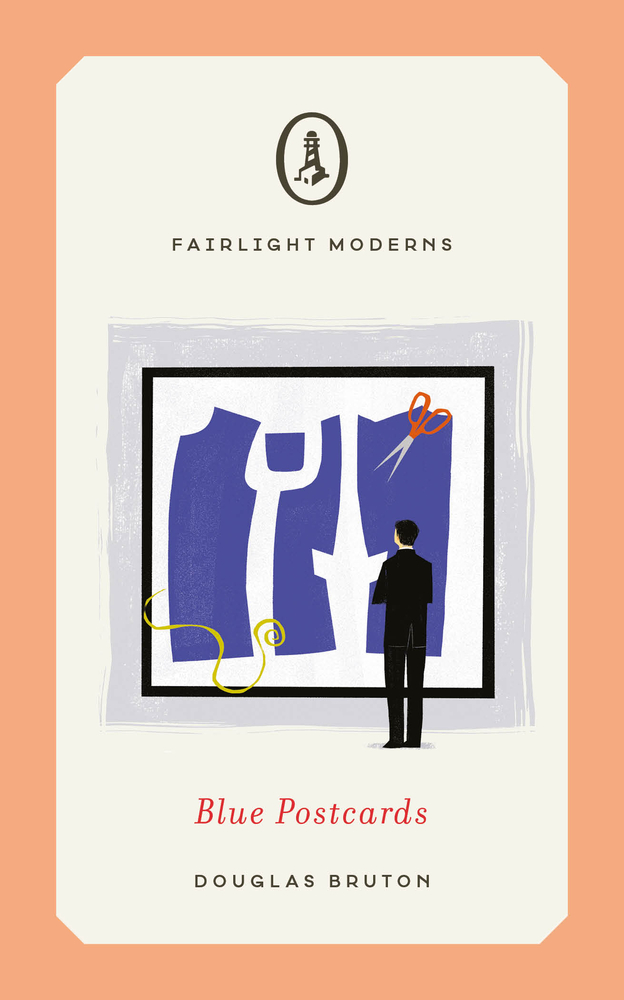
Blue Postcards by Douglas Bruton – #NovNov22

This little book published by Fairlight Moderns came to my attention when it was longlisted for the Walter Scott Prize earlier this year. I wasn’t sure it would be my sort of book but it sounded intriguing and at only 160 pages I knew it would be perfect for Novellas in November.

The book opens in the present day with our unnamed narrator buying a postcard from a Parisian market stall beside the Eiffel Tower. The postcard is completely blue on one side and date stamped 1957. The young woman who sells it to him has no idea of its significance, but the narrator knows exactly what it is: an invitation to an exhibition of the French artist Yves Klein’s monochrome paintings which was held in that year. He takes the card away with him but is drawn back to the stall again and again hoping to find more blue postcards and slowly a relationship begins to develop between the narrator and Michelle, the postcard seller.

Two other narratives are woven into the story. In one, we follow the career of Yves Klein, who becomes famous as the creator of International Klein Blue (IKB), an intense shade of aquamarine. In the other we meet Henri, a Jewish tailor – the only one left on what was once called the Street of Tailors. Henri also has a connection with blue: he sews a blue thread, in a shade known as ‘tekhelet’ in Hebrew, into the leg of every suit he makes in the belief that it will bring good luck to the wearer. One day, Yves Klein visits the tailor to order a suit and so the three separate parts of the novel fit together like the pieces of a jigsaw puzzle.

There was something to interest me in each of the three storylines. In the modern day one it was the unreliability of the narrator who admits that some of the things he is telling us didn’t necessarily happen and that memories can change over the years. The most compelling parts of Henri’s story involve his memories of the 1930s when he and his family were victims of the Night of Broken Windows. And I was struck by the descriptions of Klein’s monochrome exhibition where he displayed eleven identical blue (IKB) squares, placed at different angles and priced differently because he argued that the experience of viewing each one was different. I knew nothing about Klein before reading this book and his art is not really the kind I like, but it was good to learn a little bit about him.

What makes this book unusual, however, is the structure – and as I suspected, it wasn’t entirely successful with me! There are five chapters and each chapter is made up of one hundred numbered paragraphs, some only one or two sentences long but all what you could describe as ‘postcard-sized’. The three narratives alternate rapidly throughout the book, so we have one or two paragraphs telling the narrator’s story then one or two telling Henri’s or Yves Klein’s. I found it easy enough to follow but it does feel fragmented and meant I didn’t have time to become invested in one story before switching back to another.

Bruton has also set himself the challenge of including the word ‘blue’ at least once in every single paragraph, so we have characters with blue eyes, clothes with blue ink stains, mussels with blue shells, memories lost in the blue mists of time, and so on. Add to this the narrator’s obsession with finding blue postcards, Klein’s obsession with creating blue artworks and Henri’s obsession with blue threads and I started to feel overwhelmed with blue. There’s no doubt that it’s all very cleverly done and can’t have been an easy book to write, but I personally prefer books that allow me to become fully absorbed in the story without any distractions. I wasn’t the ideal reader for this book, but I knew that before I started and wanted to try it anyway, so I don’t have any complaints!

Have you read anything by Douglas Bruton – or any of the other books in the Fairlight Moderns collection?

I’m counting this book towards Novellas in November hosted by 746 Books and Bookish Beck.

Book #59 read for the Historical Fiction Reading Challenge 2022.

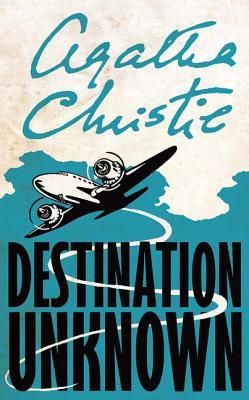
Destination Unknown by Agatha Christie

August’s theme for the Read Christie 2022 challenge is ‘a story set in a hot climate’, so the recommended title, Destination Unknown, which is set in North Africa, was the perfect choice. I was a bit apprehensive about reading this one because it doesn’t seem to get very good reviews and it’s certainly not one of Christie’s better known novels (in fact it’s one of only four of her books never to have been adapted for TV or film), but I found it entertaining enough.

We first meet our heroine, Hilary Craven, in a Casablanca hotel room, preparing to commit suicide. Her daughter has died, her marriage has broken down and she feels she has nothing to live for. Before she can go through with her plans, however, she is interrupted by Jessop, a British secret agent. Jessop has noticed a resemblance between Hilary and another woman, Olive Betterton, who has been fatally injured in a plane crash, and he has an interesting suggestion to make…

It is believed that Olive was on her way to Morocco to join her husband, Thomas Betterton, a renowned nuclear physicist who recently went missing in Paris. Betterton is one of several scientists from around the world who have all disappeared without trace. Jessop wants Hilary Craven to impersonate the dying woman in the hope that she will be able to locate Betterton and the other missing scientists. With nothing to lose, Hilary agrees.

As you can probably tell from my synopsis of the plot, this is not a murder mystery like most of Christie’s other books and it does not feature any of her famous characters such as Hercule Poirot, Miss Marple or Tommy and Tuppence. It’s much more of a thriller, with elements of spy/espionage fiction. I really enjoyed the first half of the novel – although the plot is undoubtedly a bit far-fetched and unlikely, I do like a good impersonation story and was interested to see how Hilary would cope with her task and where following Betterton’s trail would lead her to. I also loved the descriptions of Morocco and wished we could have spent more time in Casablanca and Fez before Hilary’s adventures took her off into the High Atlas mountains:

All about her were the walls of old Fez. Narrow winding streets, high walls, and occasionally, through a doorway, a glimpse of an interior or a courtyard, and moving all around her were laden donkeys, men with their burdens, boys, women veiled and unveiled, the whole busy secret life of this Moorish city. Wandering through the narrow streets she forgot everything else, her mission, the past tragedy of herself, even her life.

As is typical of Christie, the plot takes lots of twists and turns, there are some surprises and we are never sure which of the many characters Hilary meets can and cannot be trusted. However, later in the book, when we discover what has happened to the missing scientists, it all becomes quite bizarre and I felt that the motive behind the disappearances was quite weak and implausible. Remembering that the book was published in 1954, though, the world war which ended less than ten years earlier must have been on Christie’s mind, as well as post-war politics and the Cold War; there are references to creating a ‘new world order’ and a mysterious figure whose charisma and power of oration makes Hilary think of Hitler.

Hilary herself is less engaging than the heroines of some of Christie’s other thrillers, such as Anne Beddingfield in The Man in the Brown Suit and Victoria Jones in They Came to Baghdad, and the book overall is not as much fun as those two. I find the thrillers a nice change from the mysteries, though, and I did enjoy this one despite finding the first half much stronger than the second. I’m not sure whether I’ll take part in Read Christie in September – the theme is ‘a story with a female adventurer’ and the group read is They Came to Baghdad which, as I’ve just mentioned, I’ve already read (and loved, but don’t want to read again just yet). I might see if there’s an alternative title I could read to fit that theme instead, or maybe I’ll wait and join in again in October.

This is book 13/20 from my 20 Books of Summer list.

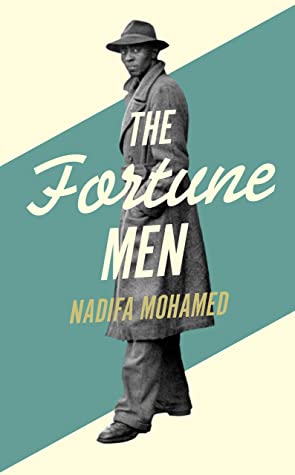
The Fortune Men by Nadifa Mohamed

The next book I’ve read from my 20 Books of Summer list is Nadifa Mohamed’s third novel, The Fortune Men. I enjoyed her previous book, The Orchard of Lost Souls, and was looking forward to this one, particularly as it has been so highly acclaimed, being shortlisted for the 2021 Booker Prize and Costa Novel Award and longlisted for the 2022 Walter Scott Prize for Historical Fiction. It’s based on a true story – the trial of a Somali man accused of murder in 1950s Wales. If you don’t already know all the details of the trial and its outcome, I would recommend not looking them up until you’ve finished the book. I’ve tried to avoid spoilers in this review!

I found the opening chapters of the novel slightly overwhelming, as we are introduced to a large number of characters of various nationalities and backgrounds, switching quickly from one viewpoint to another, but in hindsight I think this was probably intentional, designed to throw the reader straight into the bustling, multicultural heart of Cardiff’s Tiger Bay as it would have been in 1952. After a while, the focus tightens to concentrate on two main characters: the murder victim and the man accused of the murder. His name is Mahmood Mattan, a Somali sailor who has settled in the dockland area of Tiger Bay.

Things are not going well for Mahmood at the beginning of the novel – he has separated from his wife, Laura, a Welsh woman who lives nearby with their three sons, and he is staying in a boarding house with several other men, none of whom make him feel very welcome. He’s struggling to find work and is drifting into a life of petty crime and theft, with any money he does have being spent on gambling. However, when Violet Volacki is found dead on the floor of her shop, her throat slit and a large sum of money missing from the safe, Mahmood is blamed just because the victim’s sister and young niece – Diana and Grace – reported seeing a Somali man standing in the shop doorway just before the murder took place. Even when Diana and Grace say that Mahmood was not the man they saw, the police are adamant that they’ve caught the right man and that he will hang for what he’s done.

Although we know Mahmood is not a murderer, he is not a particularly easy character to like either. He’s a thief, a gambler and often his own worst enemy, as we see during his arrest and trial, when his attitude rubs everyone up the wrong way and makes things worse for himself. But he’s also a loving husband and father and despite feeling that she couldn’t go on living with him, Laura has not given up on their relationship and vows to help him in any way she can. In the middle of the book, we are given Mahmood’s backstory, with some insights into his childhood in British Somaliland (as it was known then), his days working as a ship’s stoker, and how he came to live in Wales and to marry Laura. While I think this information could have been worked into the story more gradually, it was good to learn more about Mahmood’s past and to discover what made him into the man he became.

We also get to know Violet Volacki and her widowed sister Diana – but I’m not sure how much of this part of the novel was based on fact and how much was fictional, because Violet Volacki was not the real name of the murder victim (it was Lily Volpert, apparently changed at the request of a family member). Still, it was interesting to see some of the story from a different perspective, although I thought Diana disappeared from the novel too soon after Violet’s death – I would have liked to have seen more of how she was coping in the aftermath of the murder and how she felt about Mahmood being blamed.

This is a powerful novel and becomes quite emotional as the full scale of this terrible miscarriage of justice is revealed. I can’t really say that it’s a book I loved, but it’s one that I’m glad I’ve read.

This is book 9/20 from my 20 Books of Summer list.

This is book 37/50 read for the Historical Fiction Reading Challenge 2022.

The White Hare by Jane Johnson

‘Once you’ve lived in this valley, you’ll never be free of it. Its uncanny beauty gets inside you, right into the marrow. It has its own climate, its own peculiar character. In the same way as people can draw you in and repel you at the same time; both beguile and frighten you.’

I love Jane Johnson’s books; they always have such fascinating settings – 17th century Morocco in The Sultan’s Wife, 15th century Spain in The Court of Lions, and the author’s native Cornwall in The Tenth Gift. She returns to Cornwall again for her new novel, The White Hare, a book steeped in the myths and legends of that region of England.

The novel begins in 1954, with Mila Prusik, her mother Magda and five-year-old daughter Janey arriving at White Cove near Eglosberyan on the Cornish coast. Having left Poland for England during World War II, the family had been settled in London until a disastrous relationship with a married man left Mila desperate to make a fresh start. She and Magda have bought a neglected old house in the Cornish countryside and are planning to restore it to its former glory and turn it into a guest house. However, not everyone is happy to see the house under new ownership and the Prusiks receive a hostile welcome.

As Mila and her mother begin their restoration work, they hear hints from their neighbours that the house has a sinister past and should be left alone. The two women think this is nonsense and continue with their plans, but Mila becomes increasingly concerned about the changes in Janey’s behaviour – particularly her obsession with Rabbit, a stuffed toy that seems to have a mind of its own. How is all of this related to sightings of the legendary White Hare and to the strange symbols and carvings Mila finds all over the house and its grounds?

The White Hare is one of the most atmospheric books I’ve read for a while, not just because of the supernatural aspects – which are subtle, ambiguous and unsettling – but also because of the way the setting is so beautifully described. As Jane Johnson explains in her author’s note, the town of Eglosberyan and its valley are not real but are inspired by several real places. I could picture the white house surrounded by dark woodland, the stream tumbling between mossy rocks, the lonely beach framed by granite cliffs – they are all brought so vividly to life.

I also found it interesting to follow the relationship between Mila and Magda. When they first arrive in Cornwall, Mila is timid and submissive, allowing herself and Janey to be bullied by the hard and domineering Magda, but both characters do grow and change throughout the novel as the valley works its magic on them. There’s also a love interest for Mila, but although I did like him I felt that this part of the story took too much of a dramatic turn towards the end. Still, this is a very enjoyable novel and, while it’s quite different from the other Jane Johnson books I’ve read, being set entirely in one period and not as far into the past, I liked it just as much.

I still have three novels by Jane Johnson left to read: The Sea Gate, The Salt Road and Pillars of Light. If you’ve read any of them, please help me decide which I should read next!

Thanks to Head of Zeus for providing a copy of this book for review via NetGalley.