Thomasina by Paul Gallico – #ReadingtheMeow2024

When I saw that Mallika of Literary Potpourri was hosting her second Reading the Meow event this week – a celebration of cats in books – I knew exactly what I wanted to read. The Disney film The Three Lives of Thomasina was a favourite of mine as a child, but it never occurred to me to read the book on which it was based until I noticed that Lory of Entering the Enchanted Castle had read it for last year’s Reading the Meow so onto the list it went!

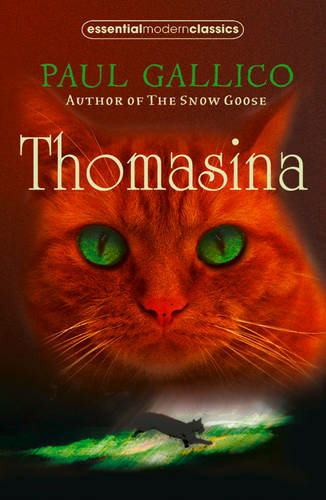
Published in 1957, Paul Gallico’s Thomasina is set in the fictional Scottish town of Inveranoch. Having lost his wife a few years earlier, veterinarian Andrew MacDhui has moved to the town from Glasgow and opened a surgery there, where he treats the pets of the townspeople, as well as looking after the health of the livestock on the surrounding farms. When the novel begins, MacDhui has only been living in Inveranoch for eighteen months and has already gained a reputation as a cold, bitter man who is good at his job but not mentally suited for it:

The gossips allowed that Andrew MacDhui was an honest, forthright and fair-dealing man, but, and this was the opinion of the strictly religiously inclined, a queer one to be dealing with God’s dumb creatures, since he appeared to have no love for animals, very little for man, and neither the inclination nor the time for God.

Since his wife’s death it seems that MacDhui has given what little love he still possesses to his seven-year-old daughter, Mary Ruadh, who is devoted to her ginger cat, Thomasina. When Thomasina becomes ill with a suspected meningeal infection, Mary takes her next door to her father’s surgery and begs him to save her pet’s life. Not pleased at being interrupted at his work and distracted by a difficult operation on a blind man’s dog, MacDhui tells her that Thomasina can’t be cured and orders his assistant to put the cat to sleep. Heartbroken, Mary vows never to speak to her father again and seems to really mean what she says. As the days go by and Mary’s silence continues, a desperate MacDhui pays a visit to Lori, a young woman who lives alone in the forest and is said to be a witch. Can Lori help repair the relationship between father and daughter or has too much damage been done?

Although I was already familiar with the plot, I found that this novel had far more depth than the Disney version and also a stronger religious element. There’s a lot of focus on MacDhui’s internal struggles as he tries to confront the loss of faith that has been with him since his wife died and on the efforts of Lori and the minister, Angus Peddie, to restore his belief in God and the power of love. Lori, a gentle, compassionate woman who tries to heal injured wild animals that others see as worthless, is a lovely character and reminded me a lot of Froniga in The White Witch by Elizabeth Goudge. However, I didn’t find the book overly sentimental because it’s balanced by the darker themes of loss and grief, as well as animal cruelty and its consequences for those who perpetrate it.

I’m sure younger readers will enjoy the chapters written from Thomasina’s own perspective, where she gives amusing descriptions of life in the MacDhui household, but I never really felt that I was reading a ‘children’s book’ and I think there’s enough here for readers of all ages to enjoy. Finally, without wanting to spoil too much, if you think Thomasina’s fate sounds too sad, I can assure you that her story is a happier one than you might expect.

This is book 3/20 of my 20 Books of Summer 2024.
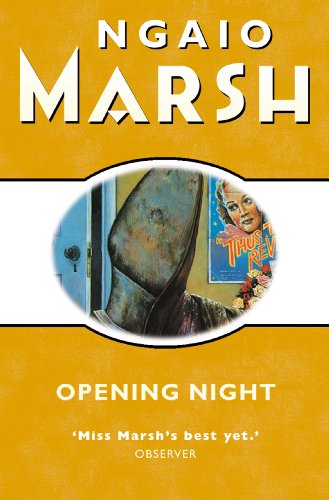

Opening Night by Ngaio Marsh

Opening Night (also published as Night at the Vulcan) is the sixteenth book in Ngaio Marsh’s Inspector Roderick Alleyn series and like many of her novels has a theatrical setting, which makes it perfect for Reading the Theatre, hosted this month by Lory of Entering the Enchanted Castle.

Published in 1951, the novel opens with Martyn Tarne, a young woman from New Zealand, arriving in London to look for acting work. After an exhausting day of unsuccessful auditions and meetings with agents, she eventually finds herself at the door of the Vulcan Theatre where rehearsals are about to begin for a new play, Thus to Revisit. Disappointingly, the play has already been cast, but there’s a vacancy for a dresser to the leading actress, Helena Hamilton, and Martyn finds herself accepting the job.

The next 100+ pages (of a 240 page book) are devoted to describing the backstage preparations for the play, Martyn’s work as first a dresser and then an understudy, and the relationships and interactions between the various members of the cast. There is no hint of any crime until we reach the middle of the book and no sign of Inspector Alleyn either until after the halfway point. I think how much you enjoy this novel will depend on whether you picked it up just because you wanted to read a murder mystery or because you were drawn to the setting.

The crime, when it eventually occurs, involves the death on opening night of one of the actors, Clark Bennington, who is found unconscious backstage after inhaling gas. Suicide is assumed – everyone knows that Bennington has been unhappy and has a drinking problem – but when Alleyn arrives to investigate, he quickly decides that the man was murdered. There are plenty of suspects and motives; for a start, Bennington was married to Helena Hamilton, who has openly been having an affair with one of the other actors, Adam Poole. Also, Bennington is known to have had several heated arguments and altercations before and during the opening night. And to complicate things further, Martyn Tarne’s arrival at the Vulcan has not been welcomed by everyone, least of all Gay Gainsford, a young actress who feels that her role in the company is threatened by Martyn.

Although I would have preferred the murder to have come earlier in the book, once it does happen and Alleyn’s investigation gets under way, the mystery becomes quite an interesting and compelling one. I guessed who the murderer was, but not the motive – and I think it would be very difficult to work that out before it’s revealed right at the end of the book. The mystery is definitely secondary to the setting in this novel, though; Ngaio Marsh herself was a theatre director and her love and knowledge of the theatre comes through very strongly.

Have you read any of Marsh’s Inspector Alleyn novels, theatrical or otherwise? I’ve read very little of her work compared to other Golden Age crime writers so would love to hear your recommendations.

Impact of Evidence by Carol Carnac

“The snow and the floods have been abnormal even for these parts,” said Rivers. “I’ve had several investigations in country areas, but I admit I’ve never struck anything quite like St Brynneys. It has a secret quality, and its remoteness affects all the people who live in it.”

First published in 1954, Impact of Evidence has recently been reissued as a British Library Crime Classic. It’s my first Carol Carnac book – I haven’t read Crossed Skis, the other one currently in print – but she also published as E.C.R. Lorac and I’ve read her before under that name. This one is subtitled A Welsh Borders Mystery and is part of a series featuring Chief Inspector Julian Rivers and his sidekick, Inspector Lancing.

The novel begins with a car accident near the village of St Brynneys in the hills of the Welsh borders. Elderly Dr Robinson – whom everyone agrees was too old to be driving – has collided with Bob Parsons’ jeep, with both vehicles being thrown off the road by the impact. Parsons has been lucky and escaped with minor injuries and concussion, but the doctor, whose car has ended up in a stream, has been killed. The Lambton family, who live on a farm nearby, hear the crash and hurry to the rescue, but after retrieving the doctor’s body from the car, they make a shocking discovery. There’s a second body in the back of the car – a man none of the local people have seen before, and as St Brynneys has been cut off from the world for the last few days due to extreme winter weather, nobody knows where he came from.

A local police inspector visits the doctor’s house to try to get to the bottom of the mystery, but when he suffers a fatal accident on the stairs, the mystery only deepens. Chief Inspector Julian Rivers and Inspector Lancing are called in from Scotland Yard, and with the roads still impassable they require the help of the army to access the area. Once they reach St Brynneys, Rivers and Lancing begin their investigations and uncover tensions between the local farming families, the possibility of blackmail and a range of theories to explain the presence of the unidentified corpse.

As my first Carol Carnac book, I’m not sure if there’s anything significantly different between these and her books published as E.C.R. Lorac. The writing style feels very much the same but I haven’t really read enough of her under either name to be able to comment on any other differences. What struck me most about this particular book was the setting and the wonderful atmosphere Carnac creates. The novel is set in a place that has experienced several days of very heavy snowfall, followed by a thaw that has caused flooding, destroying bridges and blocking roads. Carnac’s descriptions of the flooded countryside, the damaged infrastructure and the effect all of this has on a small community really convey a sense of isolation and remoteness. Also, with no routes in or out, this means the suspects (and for that matter, the victims) are limited to people who were already in the area when the snow began.

The actual mystery, I felt, took second place to the setting – which is not to say that it wasn’t interesting, because it was, but I think the descriptions of the snow and the thaw and a society severed from the outside world are what I’ll remember about this book rather than the plot. I’ll try to get round to Crossed Skis at some point and hopefully some more of the Lorac books as well.

A Pink Front Door by Stella Gibbons

My second book for this year’s Dean Street December, hosted by Liz at Adventures in Reading, Running and Working from Home, is Stella Gibbons’ 1959 novel A Pink Front Door. I didn’t love the only other Gibbons book I’ve read, Cold Comfort Farm – I know I’m in the minority, but I just didn’t find it as funny as everyone says it is – so I wanted to give her another chance. I’m pleased to report that I enjoyed this one much more.

The house with the pink front door is home to Daisy and James Muir and their baby son (whom Daisy always refers to as James Too). Daisy is one of those people everyone turns to when they are in need of help and who enjoys trying to solve their problems for them. In post-war London these problems often involve housing and the novel opens with Daisy finding new lodgings for Tibbs, an Eastern European refugee who is struggling to settle into a new life, and Molly Raymond, a young woman who keeps embarrassing herself by chasing after unsuitable men. However, when Daisy’s old university friend, Don, tells her that he is also searching for somewhere to live with his wife and three young children, this proves to be much more of a challenge. Daisy knows that Mrs Cavendish has the whole top floor of her house available to rent, but will that snobbish woman agree to share her home with people who are ‘not her sort’?

The novel shifts between the perspectives of some of the characters mentioned above and also several others, including Daisy’s elderly aunts, Marcia and Ella, who have lived together for many years since neither of their lives went quite the way they had expected when they were younger. Through the stories of Marcia and Ella, Gibbons explores some of the issues facing older unmarried women, as well as the different but equally frustrating ones faced by younger, married women – Don’s wife Katy, for example, who has a degree in chemistry which she is unable to use because she’s now looking after three children and being treated like a servant by Mrs Cavendish in return for the use of her spare rooms.

For most of the book, the plot moves along at a slow, steady pace; I would describe this as much more of a character-driven novel and I did enjoy getting to know all of the characters, even the unpleasant ones. There’s some drama later on when Daisy’s long-suffering husband begins to lose patience with being neglected all the time and decides to take drastic action – and then another dramatic development right at the end of the book which was unexpected and, in my opinion, unnecessary. Still, I got on with A Pink Front Door better than I did with the much more popular Cold Comfort Farm. I’m glad I decided to try Stella Gibbons again and am looking forward to reading more of her work now.

The Black Crescent by Jane Johnson

Jane Johnson is a British author who has set several of her novels in Morocco, her husband’s country, with each book exploring a different period in Morocco’s history. The Black Crescent is set in the 1950s, during the time of the French protectorate, when support for Moroccan independence was building momentum.

Our narrator, Hamou Badi, grows up in the remote mountain village of Tiziane, a place where the people still cling to ancient traditions and superstitions. Due to the lines on his hands, Hamou himself is said to be a ‘zouhry’, a legendary figure blessed by a djinn and capable of locating treasure and detecting sources of water. However, it is not treasure that eleven-year-old Hamou finds one day in 1939, but the body of a woman, hidden amongst the palm trees by a dried up riverbed. The lack of interest shown by the French authorities in trying to solve this murder leads to Hamou’s decision to become a police officer and ensure that future victims of crime are given the justice they deserve.

Several years later, in 1955, we rejoin Hamou in Casablanca, where he is now working for the Sûreté, the police force of the French colonialists who are still ruling the country. Hamou takes his job seriously, trying to maintain law and order on the streets of Casablanca, but he quickly discovers that many of his fellow Moroccans see him as a traitor and someone not to be trusted. As the independence movement continues to gather force, Hamou finds himself caught between the two sides and must decide which is most important to him – loyalty to his country or to the employer who pays his wages.

The Black Crescent is a fascinating novel, particularly as I previously had such limited knowledge of French-ruled Morocco. I knew nothing about the work of the Istiqlal (independence) Party or the tensions and unrest following France’s exile of Sultan Mohammed V in 1953. Hamou is the perfect choice of narrator, with one foot in both worlds, showing us that there are good and bad people on both sides. Johnson has clearly researched this period thoroughly (she provides a list of her sources in her author’s note) and writes with an understanding and sympathy for the aims of the Moroccans in attempting to overthrow their French occupiers, but without condoning the violence used by some groups such as the ‘Black Crescent’ of the title.

Hamou is portrayed as an honourable, kind-hearted man trying to navigate his way through a difficult situation and I found him easy to like. He also has a love interest – a young woman he meets in Casablanca – but it only plays a small part in the book and I was just as captivated by the relationship he forms with Madani, the little black cat he rescues and adopts. The book did feel very slow-paced and took much longer to read than I’d expected based on the length, but it held my interest throughout and I learned a lot from it. I wish I’d known there was a glossary at the end of the book, but I was able to understand most of the Moroccan terms from the context anyway, so that wasn’t too much of a problem!

I think The Sultan’s Wife, set in 17th century Morocco, is still my favourite Jane Johnson book so far, but there are three of her earlier novels I haven’t read yet, so that could change!

Thanks to Head of Zeus for providing a copy of this book for review via NetGalley.

This is book 49/50 for the 2023 Historical Fiction Reading Challenge.

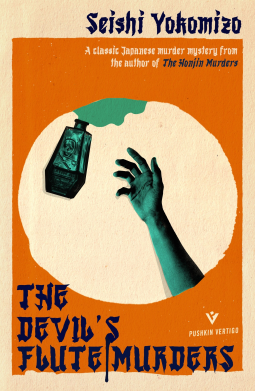
The Devil’s Flute Murders by Seishi Yokomizo (tr. Jim Rion)

The Devil’s Flute Murders, first published in Japanese in 1953, is the fifth of Seishi Yokomizo’s detective novels to be made available in new English translations by Pushkin Press. I’ve now read all five of them and enjoyed some more than others; I think this is one of the best, along with The Inugami Curse and The Honjin Murders.

In this book, set in 1947, Yokomizo’s dishevelled, nervous, stammering detective, Kosuke Kindaichi, is approached by a young woman who wants him to investigate the disappearance of her father, Hidesuke Tsubaki. Tsubaki, who had been a viscount until the recent abolition of the Japanese aristocracy, was found dead in the woods several weeks after leaving his family home, but although his daughter Mineko was the one to identify the body, she now has reason to believe he isn’t dead at all. There have been sightings of a man closely resembling Tsubaki in the grounds of the family estate and sounds of the haunting flute playing for which he was famous in his lifetime.

That evening, Kindaichi is invited to a séance at the Tsubaki home, which has been arranged by the viscount’s widow in the hope of discovering whether her husband is alive or dead. At the end of the event, a recording of Tsubaki’s final composition, The Devil Comes and Plays His Flute, begins to play by itself – and next morning, Kindaichi hears the news that another family member has been found dead in a locked room during the night. Who is responsible for the murder? Is the viscount’s ghost really haunting the family estate? And what is the meaning of the strange symbol found at the scene of the crime?

Yokomizo’s plots are always clever and fascinating and don’t rely quite as heavily on complex puzzle-solving as some of the books I’ve read by other Japanese classic crime authors. Understanding the relationships between the characters, their family secrets and their personalities and motives is just as important as working out how the crimes were committed. I guessed who the culprit was but didn’t know why they did it – I’m not sure if it would have been possible to know until the backstory of each character was revealed, but maybe I missed some clues.

Something else I like about this series is the insight the books offer into life in Japan during the post-WWII years. In The Devil’s Flute Murders the shadow cast by the war is particularly strong. There are mentions of food shortages, problems with electricity supplies and overcrowded, unreliable public transport. The new constitution drafted by the Allies during the occupation of Japan is the reason why Tsubaki and other members of the nobility have lost their titles, while bombed out houses and damage from fire has led to Tsubaki’s extended family all coming to live on the former viscount’s estate, bringing them together in one place for the events of the novel to play out.

This is the first book in the series to be translated by Jim Rion (the others have been translated by Louise Heal Kawai, Bryan Karetnyk and Yumiko Yamazaki). I think all of the translators have done a good job and I haven’t noticed any real differences in quality or readability between the different translations. My only problem with this one came when Kindaichi’s investigations take him from the Tsubaki home in Tokyo to Awaji Island near Kobe in the west and I found the way Rion chooses to write the western accent slightly odd and jarring. Of course, I appreciate how difficult it must be to capture nuances of accent and dialect in a translation!

I’m already looking forward to the next Kindaichi mystery, The Little Sparrow Murders, which is due to be published next May and sounds just as intriguing as the others.

Thanks to Pushkin Vertigo for providing a copy of this book for review via NetGalley.

Uncle Paul by Celia Fremlin

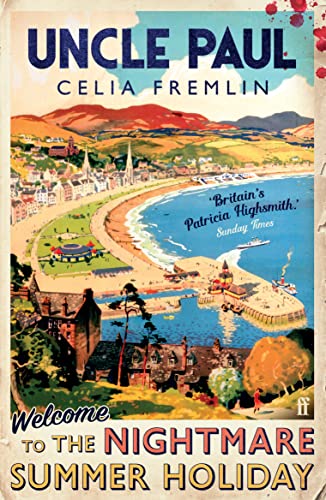
I know they say never to judge a book by its cover, but I have to confess, the cover is what made me want to read this book before I even knew what it was about! Luckily, the story lived up to the cover and you can expect to see Uncle Paul on my books of the year list in December, without a doubt.

First published in 1959, this is a recent reissue by Faber & Faber. It’s Celia Fremlin’s second novel but the first I’ve read and I was delighted to find that she wrote fifteen more. If any of them are even half as good as this one then I have some great reading ahead of me!

Uncle Paul is written from the perspective of Meg, the youngest of three sisters but in many ways the most mature. She is leading her own independent life in London with a job, a flat and a new boyfriend, Freddy, a pianist who is both charming and secretive. The novel opens with Meg receiving a telegram from her older sister Isabel, who is spending the summer holidays in a caravan at the seaside with her family. Isabel is concerned about their half-sister Mildred, who is twenty years older and helped to bring them up as children. Mildred has left her husband and come to stay at a nearby cottage – the same cottage where she spent her honeymoon with her first husband, Paul, fifteen years earlier.

Meg and Isabel had been very young at the time of Mildred’s marriage to Paul – they knew him as ‘Uncle Paul’ – but they remember the scandal that occurred when it emerged that he was guilty of both bigamy and attempted murder. Paul was given a long prison sentence after Mildred went to the police, but she is convinced that he has now been released and is coming to take his revenge. Believing that her sisters are panicking about nothing, Meg sets off for the coast intending to tell them to stop being foolish, but when she finds herself spending the night at Mildred’s cottage listening to footsteps moving around in the dark she begins to wonder whether Uncle Paul really has come back after all.

Uncle Paul is an excellent psychological thriller, but I think what I actually loved most about it was the setting – the portrayal of a typical British seaside holiday in the 1950s. Fremlin does a great job of bringing to life Isabel’s rickety caravan, trips to the beach and walks along the pier, the challenges of keeping children amused on a wet day and the friendships that inevitably begin to form with the other guests – in this case, the gallant old Captain Cockerill and a mother with her son, Cedric, an irritating little boy who thinks he knows everything (and often does). The characters are all very well drawn, even the minor ones like these, but I found the three sisters particularly interesting, with their very different personalities: the sensible, level-headed Meg who, despite being the youngest, is the one the others rely on to take control of every situation; the rich, dramatic and often irrational Mildred (her decision to stay on her own in an isolated cottage where she could easily be found by Paul being one example of her illogical behaviour); and the nervous, anxious Isabel, the sort of person who worries about anything and everything.

The psychological elements of the story are very well done, so that we can never be quite sure whether the strange occurrences and the noises in the middle of the night are real or just a figment of our characters’ imaginations. Even when one alarming incident is proven to have an innocent explanation, the suspense begins to build all over again, convincing us that this time Meg and her sisters really are in danger! Similarly, Fremlin creates enough mystery around the characters of Isabel’s husband and Meg’s boyfriend that neither we nor Isabel and Meg themselves know whether they really are who they claim to be.

Having been kept guessing all the way through this wonderful novel, I found the ending both unexpected and clever. Definitely one of my favourite books of the year so far and I can’t wait to try another one by Celia Fremlin.