Murder in Mesopotamia by Agatha Christie – #1936Club

This is the second book I’ve read for the 1936 Club (hosted by Karen and Simon) and an obvious one for me as I’m also taking part in Read Christie 2021 this year. The monthly prompt for Read Christie is ‘a story set before WWII’, which makes Murder in Mesopotamia, published in 1936, the perfect choice!

Murder in Mesopotamia is a Poirot mystery and one of several to feature a first person narrator – usually Captain Hastings, but in this case Nurse Amy Leatheran. At the beginning of the novel she agrees to travel to the site of an archaeological dig near Hassanieh in Iraq to nurse the wife of the expedition leader, Dr Leidner. Louise Leidner is being blamed by some of the other archaeologists for causing tension on this year’s dig, but when Nurse Leatheran arrives at the site what she finds is a nervous, frightened woman who claims to be receiving threatening letters from a former husband. A few days later, Louise is found dead in her bedroom, having been hit on the head by a blunt object. It seems impossible that a stranger could have entered the site without being seen, therefore the murderer must be someone on the dig…but who?

When I first began to read, I couldn’t help making comparisons with They Came to Baghdad, one of my favourite Christie novels, which features lots of colourful descriptions of Iraq. The sense of place in this one isn’t quite as strong – and in fact, we see very little of Iraq beyond the confines of the dig site – but there’s still plenty of atmosphere. The descriptions we do get of the dig and the various roles of the members of the expedition are fascinating and feel authentic, which is to be expected as Christie herself was married to an archaeologist, Max Mallowan, and often accompanied him on digs. Not only could she draw on her own personal knowledge and experience in the writing of this novel, she also apparently based some of the characters on people she knew.

Nurse Leatheran is a very opinionated narrator who doesn’t hold back on her views of ‘Foreigners’ (including Poirot), but apart from that I quite enjoyed her narration. We get to know the other participants in the dig through her eyes and, because she is an outsider, meeting all of these people for the first time, we can never be completely sure whether or not she is giving us an accurate impression of them. Poirot himself appears halfway through the novel, conveniently passing through Hassanieh after working on a case in Syria – and we are told that a week later, after solving this mystery, he will go on to investigate the Murder on the Orient Express.

As usual, I didn’t manage to solve the mystery myself. I came up with a few theories, but none of them were correct, which isn’t surprising as the final solution is so far-fetched I don’t think I would ever have thought of it! The method by which the murder is carried out seems unlikely, if not impossible, but the motive relies on us accepting something which I found impossible to believe. Still, this was an entertaining read and another great 1936 book.

Sparkling Cyanide by Agatha Christie

The March theme for the Read Christie 2021 challenge is ‘a story featuring a society figure’. I had narrowed my choices down to the Poirot novel Lord Edgware Dies and the Colonel Race mystery Sparkling Cyanide. As I had just read a Poirot in February and have another one lined up for April, I decided to go with this one, Sparkling Cyanide. First published in 1945, the novel is an extended version of one of Christie’s short stories, Yellow Iris, which I haven’t read – but apparently the culprit is someone different in that story, so both are worth reading.

The novel begins one year after the death of Rosemary Barton, a beautiful heiress who had been celebrating her birthday at the Luxembourg restaurant with friends and family. The cause of death was believed to be cyanide in Rosemary’s champagne and it was assumed that she had committed suicide due to depression following an illness. Her husband George accepted the verdict at the time but has now received some anonymous letters stating that Rosemary was actually murdered. Sure that the murderer must have been one of the other people at the table, George decides to recreate the dinner party by inviting the same guests to the same restaurant in the hope that he will be able to identify the culprit. However, things don’t go according to plan and the evening ends with a second death…

The characterisation in this book is very strong and Christie begins by giving us one chapter from the perspective of each of the six dinner party guests, so that the nature of their relationship with Rosemary and their thoughts and feelings about her are clear from the start. It is quickly established that each of them had a possible motive for wanting Rosemary dead, but it doesn’t seem at first that any of them actually had the opportunity to carry out the murder. With the second death, things become even more complicated as this murder appears to be an almost impossible crime. I very rarely manage to solve an Agatha Christie mystery, but this is one that I found particularly difficult, despite paying close attention to the descriptions of the seating plans in the restaurant and even sketching a few diagrams! The eventual explanation, when it comes, seems quite unlikely and relies on a certain sequence of events that could easily have happened in a different way with a different result. However, I didn’t feel cheated as I don’t think any clues were withheld from us – I just didn’t put them together correctly!

The detective in this novel is Colonel Race rather than one of Christie’s more famous detectives such as Poirot or Marple – not that he really seems to do a lot of detecting. In fact, one of the suspects makes a bigger contribution to the solving of the mystery than he does. Still, Race is a straightforward, unobtrusive character who just quietly gets on with his investigations, makes mistakes now and then and isn’t afraid to admit that he has got things wrong. This is the first book I’ve read in which he appears; I think there are only three others, but as I’m hoping to read or re-read all of Christie’s novels eventually I’ll be meeting him again at some point.

Sad Cypress by Agatha Christie

The February prompt for Read Christie 2021 was ‘a story featuring love’; as usual there were several books I could have chosen to fit this theme, but I decided on Sad Cypress, a Poirot title from 1940.

The novel begins with Elinor Carlisle on trial for the murder of Mary Gerrard. All the evidence points to her being guilty – not only was Mary her rival in love, Elinor was also in the right place at the right time to have carried out the murder. Only the village doctor, Peter Lord, believes Elinor didn’t do it and he calls in Hercule Poirot to find proof of her innocence. As Poirot begins to investigate, he discovers that almost everyone connected with the case is telling lies – but Poirot knows that where crimes are concerned, a detective can learn as much from a lie as he can from the truth.

Sad Cypress has not become a favourite Christie novel, but it’s still one that I enjoyed and one that stands out to me as feeling slightly different from most of the other Poirots I’ve read. In fact, Poirot himself doesn’t appear until almost halfway through the book and although he plays his usual vital role in solving the crime, I think the story could have been just as strong without him (apparently this was Christie’s own view as well, when she reflected on the novel after it was published). A large part of the story is written from Elinor’s perspective which gives it an emotional, intimate feel; I particularly liked the sections at the beginning and end of the book which become almost dreamlike as Elinor stands in court ‘as though imprisoned in a thick mist’, waiting to hear the decision of the jury.

As for the mystery itself, I think the plot is perhaps simpler than a lot of Christie’s others, but cleverly constructed and tightly focused. There are really only two or three likely suspects and for once I did correctly guess how the murder had been carried out and therefore who must have been responsible, but I wasn’t completely sure and had to wait for Poirot to provide the evidence. I didn’t manage to solve the mystery entirely, though – there were still lots of things that confused me, including the motive, and the twists towards the end of the book took me by surprise! Finally, in case you’re wondering, the unusual title comes from Shakespeare’s Twelfth Night: “Come away, come away, death, And in sad cypress let me be laid.”

The Read Christie theme for March is ‘a story featuring a society figure’. I’m torn between Lord Edgware Dies and Sparkling Cyanide; if you’ve read either of them, maybe you can help me decide!

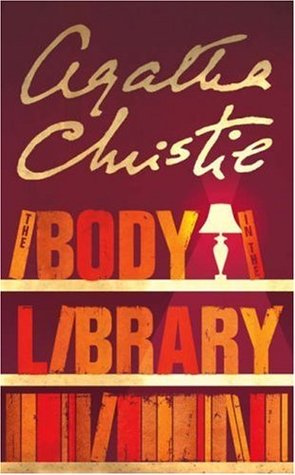
The Body in the Library by Agatha Christie

I’m taking part in Read Christie 2021 this year and the prompt for January is ‘a story set in a grand house’. Christie wrote lots of those and I’ve already read some of them, including The Hollow, which is the one the challenge hosts have chosen as the book of the month. Fortunately, they provided a list of alternative suggestions and I decided on the 1942 Miss Marple mystery, The Body in the Library, as my January book for the challenge.

The ‘grand house’ in this novel is Gossington Hall in St Mary Mead, home to Dolly Bantry and her husband, Colonel Arthur Bantry. When the Bantrys are woken by the maid early one morning to be told that a dead body has been found on their library floor – the body of a blonde young woman in a white satin evening dress and silver shoes – suspicion immediately falls on the Colonel. But the Colonel insists that he has never seen the woman before and there is no evidence to connect him with the murder, so attention then turns to other suspects.

Could the culprit be Basil Blake, a newcomer to the village who is involved in the film industry and whose lifestyle has made him the centre of village gossip? What about George Bartlett, a guest at the nearby Majestic Hotel where the murdered woman, Ruby Keene, had worked as a dancer? Or maybe it’s Conway Jefferson, who had been planning to adopt Ruby as his daughter after losing his wife and children in a plane crash several years earlier. As the police begin to investigate, Dolly Bantry enlists the help of her friend Miss Marple because she’s ‘very good at murders’. And Miss Marple once again proves just how good she is at murders by using her usual blend of observation and knowledge of human nature to piece together the clues and solve the crime.

The Body in the Library is a short, quick read and like most of Christie’s novels it is cleverly constructed so that most of the information you need to be able to solve the mystery is there from the beginning, but very easy to overlook. As Miss Marple says once or twice, most people are too trusting and too ready to believe everything they are told; even bearing that in mind, I still didn’t suspect the right person and the murderer had me completely fooled! The murderer also had the police fooled – although we don’t actually see very much of Miss Marple in this novel and the focus is more on the police investigation, she is the one who provides the necessary insights that lead to the identification of the killer.

In the foreword to the novel, Christie states that the ‘body in the library’ story is a cliché of detective fiction and that she wrote this book as a variation on that cliché: ‘The library in question must be a highly orthodox and conventional library. The body, on the other hand, must be a wildly improbable and highly sensational body.’ Well, the library at Gossington Hall certainly sounds conventional and the body caused plenty of sensation in St Mary Mead, so I think Christie achieved what she set out to do! This has not become a favourite Marple novel but I did enjoy it and am looking forward to reading February’s book for the challenge.

Sleeping Murder by Agatha Christie

I was doing so well with the Read Christie 2020 challenge earlier in the year. I read the suggested novels for January, February and March (Murder on the Orient Express, A Murder is Announced and The Hollow) but then, distracted by Covid-19 and lockdown, I never picked up April’s book – or May’s or June’s or July’s. I think I’ve officially failed this year’s challenge now, don’t you? Anyway, Sleeping Murder is the book I was supposed to have read in April. Published in 1976, it’s a Miss Marple mystery and was the final book in the Marple series.

The novel opens with a young woman, Gwenda Reed, arriving in England from New Zealand. Her husband, Giles, is due to come and join her soon, and Gwenda hopes to have found somewhere to live in time for his arrival. As soon as she sees Hillside, a house in the seaside town of Dillmouth, she decides she wants to buy it. There’s something about the house that feels strangely familiar and in fact, she seems to know things about it that she really shouldn’t know at all. When she suddenly has a vivid memory of seeing a dead body at the bottom of the staircase, Gwenda panics, believing that she is losing her mind.

After confiding in Miss Marple, who is related to Giles’ cousin, Gwenda discovers that there is a logical explanation for her recent experiences: Hillside had actually been her home as a very small child, before she left England for New Zealand. Convinced that a murder must have taken place in the house – and that she herself had witnessed the aftermath – Gwenda and Giles begin to investigate. However, Miss Marple has serious forebodings; she likes the young couple and is worried that they could put themselves in danger by trying to uncover secrets that have remained buried for almost twenty years. The only way to protect her new friends is to solve the mystery herself and catch the murderer before he or she has the chance to strike again!

I haven’t read all of Christie’s Marple novels yet, but this is one of my favourites so far. I didn’t manage to solve the mystery – I thought I had, but I was wrong – and I was surprised to find out who the murderer really was. The clues were all there, but I didn’t pick up on them; in fact, the biggest clue went over my head because I didn’t have the general knowledge to be able to interpret it. I can’t explain what I mean without spoiling the story, but if you’ve read the book you’ll know which clue I’m talking about.

I love the atmosphere Christie creates in this novel, with a sense of lingering evil from the moment Gwenda walks through the doors of Hillside. With the crime being one that took place in the past and which needs to be solved in retrospect, I was reminded of the Poirot mystery Five Little Pigs, although I enjoyed reading this one more, maybe because the present day characters are more actively involved in the story. We see most of the investigation unfold from Gwenda’s perspective, but Miss Marple herself has a large role to play in the novel. Although the book wasn’t published until the 1970s, it was actually written much earlier in Christie’s career (possibly in 1940) so Marple is actually younger and livelier than she is in some of the other books in the series which were published before this one!

Have you read Sleeping Murder? Which is your favourite Marple novel?

This is book 9/20 from my 20 Books of Summer list.

The Hollow by Agatha Christie

March’s theme for the Read Christie 2020 Challenge was ‘a Christie story adapted for the stage’ and with several unread options to choose from, I settled on The Hollow, a Poirot novel first published in 1946. Christie herself said this book was “the one I ruined by the introduction of Poirot” and in fact, her famous detective doesn’t appear in the stage version at all.

The novel begins with the eccentric Lucy Angkatell preparing to welcome several friends and family members to her home, The Hollow, for the weekend. These include John Christow, a successful London doctor, and his timid, downtrodden wife, Gerda, who seems unable to do anything right. With Henrietta Savernake, a talented sculptor with whom John has been having an affair, also attending the house party, it’s clear that tensions will be running high – and to complicate things further, the beautiful actress Veronica Cray, a former girlfriend of John’s, just happens to be staying in a cottage nearby.

Christie takes her time setting the scene and introducing us to the people who are gathering at The Hollow, rounding out each character and exploring the complex relationships between them. As well as those I’ve already mentioned above, there’s also Sir Henry, Lucy Angkatell’s husband, and three younger cousins: Edward, who has hopes of marrying Henrietta; David, a sullen and humourless young student; and Midge, the ‘poor relation’ who works for a living. The characterisation is excellent and by the time another guest – Hercule Poirot – arrives for Sunday lunch, we have been given a good understanding of all the undercurrents and resentments simmering beneath the surface.

As Poirot reaches the house, he witnesses what appears to be an artificially staged murder: John Christow lies bleeding to death at the edge of a swimming pool, while his wife, Gerda, stands over him with a gun in her hand and several of the other characters approach from different directions. At first assuming this is a game designed to test his skills as a detective, Poirot quickly discovers that it is all too real and that John is dying. But surely there is more to the scene that meets the eye? Has Gerda really murdered her husband or could there be another culprit?

I always enjoy reading Christie, but this particular book hasn’t become a favourite. Not all of them can, I suppose. There was nothing that I actually disliked about it and as I’ve said, the characters are excellent, very strongly drawn with plenty of depth and complexity – I just felt that, as a mystery, it doesn’t have quite the ingenuity and originality of some of her others. Apparently Christie describes this book in her autobiography as “in some ways rather more of a novel than a detective story” and I understand what she means. And while I don’t agree that Poirot ruins the book, I don’t think he adds a lot to it either. He doesn’t make his first appearance until a third of the way through and most of the investigating is actually done by Inspector Grange anyway, so I think the story could have worked just as well without Poirot.

But Poirot, of course, is the one who finally brings the investigation to its conclusion and leads us to the murderer. I wish I could say that I had solved the mystery too, but I didn’t – there were at least four characters I suspected and I couldn’t make up my mind between them. Maybe I will have more success in solving the next Christie mystery I read: the April topic for the challenge is ‘a story Christie disguised’, which sounds intriguing, doesn’t it?

A Murder is Announced by Agatha Christie

February’s book of the month for the Read Christie 2020 Challenge is A Murder is Announced, a Miss Marple novel from 1950. This month’s theme for the challenge is ‘a story Christie loved’ and apparently this is one that she mentioned in a 1972 letter to a fan as being a current favourite. Now that I’ve read it, I can see why she liked it so much.

A Murder is Announced is set in the quiet little village of Chipping Cleghorn where, as the novel opens, the residents are waking up to an unusual notice in their local newspaper:

A murder is announced and will take place on Friday, October 29th, at Little Paddocks at 6.30 p.m. Friends please accept this, the only intimation.

The villagers are intrigued and, believing it must be an invitation to a party game of some sort, they all make their way to Little Paddocks, the home of Miss Letitia Blacklock, at the stated time. Miss Blacklock herself denies having anything to do with the announcement – as do the other members of her household – but she makes her neighbours welcome anyway. They are all gathered together inside when the clock strikes 6.30, the lights go out and shots are fired. When the lights are turned back on, a man is found dead on the floor. It seems it wasn’t a game after all…

Of all the Christie novels I’ve read, this has one of the best openings: first an introduction to each character in turn as we jump from house to house as newspapers are opened and the announcement is read; then the murder scene itself – a wonderful set piece with all of the suspects together in one place. We are given many of the clues we need in that scene and the rest in the chapters that follow, so that the reader has at least a chance of solving the mystery before the truth is revealed. I managed to work out parts of it, but not the whole thing and the eventual solution came as a surprise to me.

What really makes this book stand out, though, is the excellent characterisation, with characters drawn from a range of different social backgrounds. There’s Bunny – Miss Bunner – an old school friend of Miss Blacklock’s who has fallen on hard times and has been invited to stay at Little Paddocks; there are Miss Hinchcliffe and Miss Murgatroyd, two unmarried women who live together and whose relationship is portrayed with warmth and affection; Phillipa Haymes, a young mother left to raise her son alone in the aftermath of the Second World War; Colonel Easterbrook, who thinks he knows all there is to know about India; and the Reverend Julian Harmon and his cheerful, tactless wife ‘Bunch’, who happens to be the goddaughter of Jane Marple.

It is through her connection with Bunch that Miss Marple comes into the story (surprisingly late – the murder has been committed and an investigation by the police is well under way before she makes her first appearance). Miss Marple solves the mystery both through the usual methods of observing, deducting and asking questions, and through her knowledge of small villages like Chipping Cleghorn and how they have changed since the war. ‘Fifteen years ago, one knew who everybody was,’ she says, ‘but now the big houses have been sold, and the cottages have been converted and changed. And people just come – and all you know about them is what they say of themselves.’

The one aspect of this book that I didn’t like was the portrayal of Mitzi, the cook at Little Paddocks who is a refugee from an unspecified Central European country. We are told that Mitzi has had some traumatic experiences during the war, yet the other characters seem to treat her with an unusual level of unkindness and insensitivity, ridiculing her for her screaming and crying and fear of the police. That was the only thing that slightly spoiled my enjoyment of what was otherwise a perfect murder mystery.

This year’s Read Christie challenge is only two months old and already I’ve read two great books that I’ve loved – this one and Murder on the Orient Express. I’m looking forward to next month’s selection!