
I have just finished writing my review of The Girl in the Tower, the second in Katherine Arden’s fantasy trilogy which began with The Bear and the Nightingale. The trilogy is set in 14th century Russia (or Rus’, as it was called then), a world which has been researched and recreated to resemble the real 14th century Rus’ – apart from the existence of household spirits, frost-demons, firebirds and magical horses. This made me think about other books I’ve read which have both historical and fantasy elements.
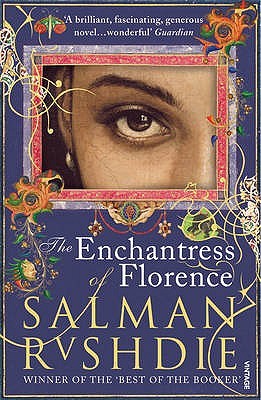 First, there are the books I consider to be mainly historical fiction with some elements of magical realism. A good example would be The Miniaturist by Jessie Burton, which is set in 17th century Amsterdam but has a supernatural twist in the form of a dolls’ house and a mysterious miniaturist. Another recent read, The Mermaid and Mrs Hancock by Imogen Hermes Gowar is set in Georgian England with only a few brief touches of fantasy, while The Bedlam Stacks by Natasha Pulley, about a quinine-collecting expedition to Peru, incorporates moving statues and exploding trees. At the other end of the scale there’s The Enchantress of Florence by Salman Rushdie, which takes us to a 16th century India populated with giants and witches, where emperors have imaginary wives and artists hide inside paintings.
Naomi Novik’s Temeraire series (of which I’ve still only read the first one!) is set during the Napoleonic Wars in a world very much as it would have been at the time, with one important difference: dragons exist and are used by both the British and French as a sort of early air force. Another book with the Napoleonic Wars for a setting, one which I read pre-blogging this time, is Jonathan Strange and Mr Norrell by Susanna Clarke. I remember loving the mixture of magic and history and the fascinating footnotes describing the world of Faerie.
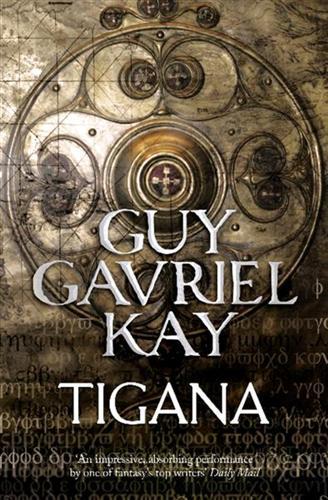 Then there are Guy Gavriel Kay’s books, which are set in fantasy worlds which resemble real historical worlds. Tigana, my favourite, takes place in a world with one blue moon and one white, but there are clear parallels with Renaissance Italy, while The Lions of Al-Rassan has a setting similar to medieval Spain. The Last Light of the Sun takes us to a land where magical forces gather in the forests and faeries wait to claim the souls of the dead, yet this land is identifiable as Northern Europe in the time of the Vikings, the Anglo-Saxons and the Celts. Finally, Children of Earth and Sky is set in thinly-disguised versions of Venice, Dubrovnik and Constantinople during the Renaissance period. These are the only books I have read by Kay so far, but I will certainly be reading more.
How do you feel about fantasy or magical realism combined with historical fiction? Have you read any of the books I’ve mentioned here? Can you recommend more?
 She Reads Novels