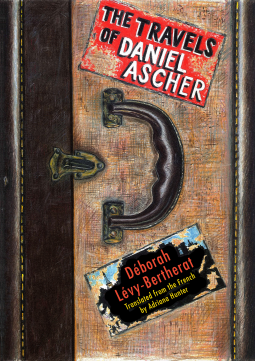
The Travels of Daniel Ascher by Déborah Lévy-Bertherat

The Travels of Daniel Ascher When I read The People in the Photo a few weeks ago for Women in Translation Month (#WITMonth on Twitter), I didn’t expect to have time to read another book for the same event, but I’ve had this one on my Kindle for a while and have managed to squeeze it in before the end of the month. The Travels of Daniel Ascher was originally published in French in 2013; I read an English translation by Adriana Hunter.

At the beginning of the novel, twenty-year-old Hélène Roche has just moved to Paris to begin studying archaeology at university. Her great-uncle, Daniel Ascher, also lives in Paris and has offered to let her rent one of the upstairs rooms in his house, but when Hélène arrives she finds that he is out of the country, on a trip to Tierra del Fuego. This is nothing surprising – for as long as Hélène can remember, Daniel has been off on his travels, visiting one exotic location or another – and actually, his absence doesn’t bother her too much as she has always found her eccentric great-uncle slightly embarrassing.

As Hélène gets to know her fellow students, she discovers that most of them are fans of The Black Insignia, a series of novels in which the hero travels the world, having exciting adventures in locations as varied as the Amazon, Machu Picchu and Pompeii. Hélène alone has never read a Black Insignia book, partly because she thinks the stories sound childish and uninteresting and partly because the author of the series is her great-uncle Daniel, writing under the name HR Sanders. Her new friend Guillaume, however, is so enthusiastic about the books that Hélène is persuaded to look at them again – and in the process she makes some surprising discoveries about the life of Daniel Ascher.

The Travels of Daniel Ascher is a very short book (I easily read it in one evening) and I think it’s probably aimed at young adults, although that’s not to say it has nothing to offer an adult reader too. When the truth about Daniel Ascher’s childhood begins to emerge (I’m trying not to spoil anything here) it’s a story which has been written about many times before, but the way in which Déborah Lévy-Bertherat chooses to approach that story feels fresh and different.

I thought the book was generally well written, although as with all translated novels, unless you’re able to read the original, it’s difficult to know whether anything has been lost in translation. I do have a criticism, though, and that relates to the dialogue, which is written without quotation marks and presented as one continuous paragraph, with what one character says separated from the next by a comma. I’m really not sure why so many contemporary authors think this sort of thing is a good idea – I find anything other than conventional dialogue very distracting and unnecessary. In this particular novel, I suppose it helped to create a dreamlike atmosphere, but at the same time it made it difficult to connect with the characters and took away some of the emotional impact of the story.

WITMonth 2016 The Travels of Daniel Ascher wasn’t a perfect book, then (at least not for me), but it was an interesting and unusual one and I don’t feel that I wasted my time reading it.

The People in the Photo by Hélène Gestern

The People in the Photo August is Women in Translation Month and although I hadn’t made any formal plans to take part, I found myself reading a translated novel by a woman this month anyway – one I’d been interested in reading for a while. Hélène Gestern’s The People in the Photo was originally published in French in 2011; this Gallic Books edition is an English translation by Emily Boyce and Ros Schwartz.

Hélène Hivert lives in Paris, where she works as an archivist. She has never known her mother, who died when Hélène was very young, and for some reason her father and stepmother have never wanted to talk about her. When Hélène finds a photograph of Nathalie, her mother, taken at a tennis tournament in Interlaken in 1971, she’s intrigued. There are two men in the photograph whom she can’t identify, so she places a newpaper advertisement asking if anyone can provide more details.

Stéphane Crusten, a Swiss biologist living in England, responds. One of the men in the photo is his father, Pierre, who is now dead, and he recognises the other as a close friend of his father’s. What Stéphane doesn’t know is why Hélène’s mother is in the picture with them. Corresponding at first through letters and emails and later by telephone and in person, the two begin to piece together the fragments of information they have in an attempt to discover the connection between their parents. Gradually, as they delve into their family histories and more old photographs come to light, the true story of Nathalie and Pierre is revealed.

The People in the Photo is a beautiful, moving novel. The story is told in epistolary form, through the letters and emails Hélène and Stéphane send to each other, and it was nice to watch two people being drawn together in this way, forming a bond in writing before they had even had the chance to meet. The photos they discover are not included in the book, but they are described in such careful detail that I could picture them quite clearly in my mind, and I liked that aspect of the novel too.

However, this was not a perfect book; it did have a few flaws which stopped me from loving it as much as I’d hoped to. First, I thought it was very predictable – maybe not for Hélène and Stéphane, who were genuinely shocked by each revelation, but definitely predictable for the reader. This in itself wouldn’t have been a big problem, but I also found the plot very contrived and too reliant on coincidences, on photographs which turned up just when another clue was needed and on circumstances which conveniently prevented secrets from being revealed until after the next letter was received.

In the end, though, none of this mattered too much. It’s still a lovely, emotional story and once I started reading it I didn’t want to stop until I reached the final page and had learned all the secrets of the people in the photo.

The Royal Succession by Maurice Druon

The Royal Succession The Royal Succession is an English translation of Maurice Druon’s 1957 French novel La Loi des mâles, the fourth volume of his Accursed Kings series which began with The Iron King. Described by George R.R. Martin as “the original Game of Thrones”, the seven books in this series tell the story of Philip IV the Fair of France and the kings who follow him, said to have been cursed “to the thirteenth generation” by the vengeful Grand Master of the Knights Templar.

Books two and three – The Strangled Queen and The Poisoned Crown – described the troubled reign of Philip’s son, Louis X. As The Royal Succession opens in the year 1316, Louis is dead, leaving no clear heir to the throne. There is some doubt over the parentage of Jeanne, his five-year-old daughter from his first marriage, so all eyes are on Queen Clémence, his pregnant second wife.

While France looks forward to the birth of Clémence’s child, a regent is needed; the obvious choices are Louis’ younger brother, Philippe of Poitiers, and his uncle, Charles of Valois. At this crucial moment, Philippe is away in Lyon awaiting the election of a new pope, but by resorting to some underhand methods he is able to turn the situation to his advantage and becomes regent on his return to Paris. However, his mother-in-law, Mahaut, Countess of Artois, is even more ambitious and vows to clear the path to the throne for Philippe.

Nobody is safe from Mahuat’s plotting, and when Clémence gives birth to Louis’ posthumous child, the sickly Jean I, the baby king finds himself at the centre of one of her schemes. Meanwhile, Philippe searches for a way to deal with the claim of his little niece, Jeanne, and finds a possible solution in the Salic Law, which excludes females from the line of succession.

I hope I haven’t made all of this sound too complicated! Some concentration is needed, but Druon does explain everything clearly and the plot is easy enough to follow, especially if you have also read the previous three books (something I would highly recommend). The period covered in this particular novel is fascinating and I found this a much more gripping and entertaining read than The Poisoned Crown.

The Accursed Kings series is based closely on historical fact, but there is one part of The Royal Succession which feels more like fiction – and that is the storyline surrounding the fate of little Jean I. However, having looked this up, it seems that Druon has developed this storyline out of a theory which has never been proved or disproved. It’s unlikely, but not impossible, and other books have been written on the subject. It also explained for me the role in the series of Guccio Baglioni and Marie de Cressay, something I’ve been wondering about since the first book as their story had previously seemed so disconnected from the central history.

There are three books left in the series and I’m looking forward to continuing with the next one, The She-Wolf.

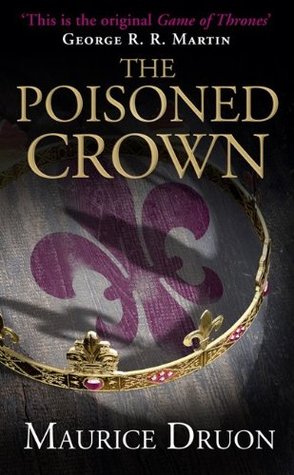
The Poisoned Crown by Maurice Druon

The Accursed Kings has it all. Iron kings and strangled queens, battles and betrayals, lies and lust, deception, family rivalries, the curse of the Templars, babies switched at birth, she-wolves, sin and swords, the doom of a great dynasty…and all of it (well, most of it) straight from the pages of history.

This is how the author George R.R. Martin has described Maurice Druon’s series of French historical novels, the inspiration behind his own Game of Thrones. The Accursed Kings (Les Rois Maudits) consists of seven books, all published between 1955 and 1977 and all available in English translations. The Poisoned Crown (Les Poisons de la Couronne) is the third in the series, continuing the story from The Iron King and The Strangled Queen.

The Poisoned Crown It’s 1315 and Louis X (known as le Hutin, the Quarreller) is on the throne of France. As the son of the late Philip the Fair, whose line was cursed ‘to the thirteenth generation’, Louis’ reign will be short and troubled. In the previous novel we saw the demise of his first wife, Marguerite of Burgundy. Now a second marriage has been arranged – with the beautiful Clémence of Hungary, who arrives in France after a terrible sea voyage and quickly wins the hearts of those around her with her kindness, generosity and religious devotion. All that remains is for Clémence to provide the king with heirs and secure the succession to the throne.

In some ways it seems that the presence of Clémence is making Louis a better person, but in others he is still proving to be cruel, weak and incompetent. A war against Flanders ends disastrously, he is unable to deal with the impact of famine and he fails to listen to good advice, being too easily influenced by his unscrupulous uncle, Charles of Valois. Meanwhile, trouble is brewing again between the king’s cousin, Robert of Artois, and Robert’s great-aunt Mahaut, who are still fighting over the lands they each regard as their own. Eventually the barons of Artois begin to rise against Mahaut, bringing the king into the dispute and setting a chain of events into motion which could bring about the end of Louis’ reign.

Three books into this series, I’m still enjoying it, but The Poisoned Crown is probably my least favourite so far. It feels like a bridging novel, leading us from the previous two volumes into the remainder of the series, rather than a satisfying story in itself. There’s less action in this one and too much focus, at least in my opinion, on the conflict between Robert of Artois and the Countess Mahaut. Still, there were plenty of things that I did like and the history is as fascinating as ever; I previously had almost no knowledge of what was happening in France during this period, so I’m really learning a lot from these novels.

Not everything in The Accursed Kings is based strictly on historical fact, though. One of the subplots which is largely fictional involves the Lombard banker, Spinello Tolomei, and his young nephew, Guccio Baglioni. Guccio’s romance with the impoverished noblewoman Marie de Cressay moves on a step in this book, although Druon goes on to spoil things for us by informing us of what the next ten years will have in store for them. One thing I find quite annoying about Druon’s writing is his habit of constantly telling us what is going to happen next. Of course, when you don’t know the history, even the titles of some of these books are spoilers in themselves!

The Poisoned Crown ends abruptly, but the scene is set for the fourth book in the series, The Royal Succession.

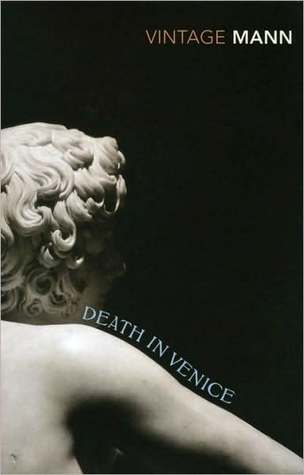
Death in Venice and Other Stories by Thomas Mann

Death in Venice When I decided to participate in this year’s German Literature Month (hosted by Caroline and Lizzy) I discovered that I already had two books by German authors unread on my shelves: Death in Venice and Other Stories by Thomas Mann and Wolf Among Wolves by Hans Fallada. I chose the Thomas Mann simply because the book was a lot shorter and I could be sure of finishing it before the end of the month, but now that I’ve read it I wish I had gone with my heart and chosen Hans Fallada, whose books I have read before and loved. I did find a lot to like and appreciate in Mann’s writing, but I’m not convinced yet that he’s really an author for me.

As well as the title novella, Death in Venice (1912), this edition includes six other stories by Thomas Mann. I read all of them, but will concentrate here on Death in Venice as it is by far the most famous story in this collection and the one I was most interested in reading.

Death in Venice tells the story of Gustav von Aschenbach, an ageing author suffering from writer’s block. He decides to travel in the hope that it will clear his mind and provide inspiration and the destination he settles on is Venice. Mann’s descriptions of Venice are beautifully written, even though at the time of Gustav von Aschenbach’s arrival the weather is dark, gloomy and oppressive, matching the overall mood of the story. I have been to Venice myself, so I found the descriptions of Aschenbach’s approach over the lagoon, his ride in the gondola and his trip across to the Lido particularly vivid.

While in Venice, von Aschenbach becomes intrigued by Tadzio, a beautiful young Polish boy who is staying with his family in the same hotel. Day by day, his infatuation with Tadzio grows; he finds himself watching out for the boy entering the breakfast room each morning and then tries to secretly follow him around Venice. Even when he learns that it may not be safe to remain in the city any longer, von Aschenbach is unable to tear himself away from Venice and Tadzio…and eventually, as the title suggests, his obsession will lead to a death in Venice.

Reading Death in Venice in 2015, it’s difficult not to feel disturbed by the story of a middle-aged man’s infatuation with a teenage boy – although I should point out that Aschenbach never touches or even speaks to Tadzio. The focus is on Aschenbach’s private feelings for the boy and how he chooses to deal with those feelings. I think at least part of his obsession can be attributed to an appreciation of beauty and the despair of a man who is growing older, knowing that his own youth is lost forever (towards the end of the novella, we see Aschenbach dye his hair and cover his wrinkles with make-up in an attempt to look younger). I found out after finishing the story that it was based on Thomas Mann’s real-life experiences and this made me think again about what he was trying to say and how he may have wanted it to be interpreted.

I found the other six stories in this collection a bit uneven, but they are all worth reading. Little Herr Friedemann (1897) – one of the earliest examples of Mann’s work included in the book – is a sad story of a man who was dropped on the floor as a baby and grew up with physical disabilities. Herr Friedemann has learned to cope with his lot in life and things aren’t going too badly for him…until he falls in love. The Joker (also 1897) has some similar themes, but I have to admit the details of this particular story have faded from my mind just a few days after reading it.

The Road to the Churchyard (1900) is a very short story about a widower who sets out to visit the churchyard and becomes irrationally angry with a boy (referred to only as ‘Life’) who is riding his bicycle along the path. This is followed by Gladius Dei (1902), in which a man called Hieronymus enters an art gallery in Munich and loses his temper when he sees a piece of immoral artwork displayed in the window.

Tristan (1903), one of the longer stories in the book, is a love story set in a sanatorium. It contains allusions to the legend of Tristan and Iseult, as well as some musical references and an exploration of attitudes towards life and death. Finally, Tonio Kröger (1903), another novella, follows the course of a man’s life from childhood to adulthood and, like Death in Venice, has some autobiographical elements.

I’m pleased to have finally read some of Thomas Mann’s work, but I found this an interesting book rather than an enjoyable one. I am not a huge fan of short story collections, though, so now I’m wondering whether I would have a better experience with one of his longer novels.

The Vicomte de Bragelonne by Alexandre Dumas

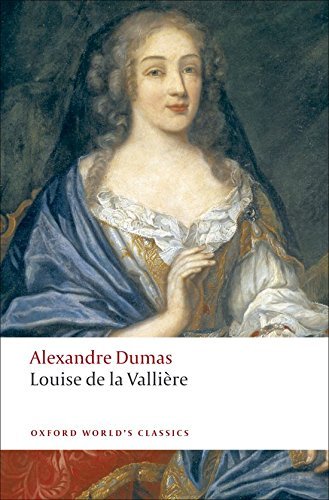
The Vicomte de Bragelonne This is the third Dumas novel to feature d’Artagnan and his three friends, Athos, Porthos and Aramis. Originally published in serial form as part of a much longer book, it is now usually split into three volumes of which The Vicomte de Bragelonne is the first and Louise de la Vallière and The Man in the Iron Mask are the others. As Dumas is one of my favourite authors I was fully expecting to love this book – and I did, although it was not quite as satisfying as the first two d’Artagnan novels – The Three Musketeers and Twenty Years After.

The first thing to say about The Vicomte de Bragelonne is that it is not really about the Vicomte de Bragelonne! He does appear near the beginning and again near the end, but his role in the story is not really any more significant than any number of other characters. The next thing I should say is that any reader hoping to find the four friends working together again in the spirit of “all for one and one for all” will be disappointed; we do see quite a lot of Athos, but Porthos and Aramis only come into the story very briefly towards the end.

So, what is this book about, then? Well, possibly because this is only one section of a longer work, it’s difficult to give a summary of the plot. The first half of the novel concentrates mainly on d’Artagnan and Athos who are working on two separate schemes both designed to restore Charles II to the throne of England. History tells us that the restoration would be accomplished – though not quite in the way described in this book, which is much more fun than what actually happened!

Later in the book we learn that Aramis and Porthos seem to be helping the Superintendent of Finances, Monsieur Fouquet, to build fortifications on the island of Belle-Île. We don’t find out exactly what they are up to, however, and this part of the story is left shrouded in mystery, presumably to be developed in the next two novels. Finally, there’s the storyline involving the title character, Raoul (the Vicomte), and his love for Louise de la Vallière.

The gaps between these three subplots are filled with lots of chapters detailing the political situation in France in the 1660s (particularly the death of Cardinal Mazarin and the rivalry between Fouquet and Louis XIV’s new Minister of Finance, Colbert) and the romantic intrigues of the French court (revolving around the King’s marriage and also his brother’s marriage to Charles II’s sister, Henrietta). All of this makes The Vicomte de Bragelonne a heavier, slower read than the previous two novels, but I didn’t find it boring at all – I love the way Dumas writes and I love French history, so I didn’t really mind the fact that there was less swashbuckling action and that we don’t see as much of d’Artagnan’s friends.

Of course, where history (or even geography) is concerned it can’t always be assumed that everything in a Dumas novel is completely accurate. I was amazed to find that in Dumas’ world the city of Newcastle had suddenly been transported from the River Tyne to the banks of the River Tweed sixty miles to the north! Dumas also tends to change dates or rearrange the sequence of events whenever the story calls for it as well, though I’m sure I wouldn’t have even noticed most of these alterations if I hadn’t been referring to the notes at the back of the book. I’m pleased to say, by the way, that the notes in the Oxford World’s Classics edition didn’t spoil any of the story – although I avoided the introduction just in case.

As The Vicomte de Bragelonne doesn’t stand alone as a complete novel and wasn’t originally intended to, there are a lot of things left unresolved at the end of the book, as you would expect. I’m looking forward to continuing the story soon with Louise de la Vallière!

Cousin Bette by Honoré de Balzac

Cousin Bette Balzac is an author I have wanted to try for years but have kept putting off, partly because I thought he sounded intimidating and difficult to read and partly because he wrote so many books it was hard to know where to start! Then, last month I chose ten books at random from my Goodreads “to-read” shelf – and one of them was Cousin Bette, a novel I couldn’t even remember adding to my shelf in the first place, but which sounded very appealing. I obviously couldn’t put off reading Balzac any longer!

Cousin Bette (originally La Cousine Bette and sometimes translated as Cousin Betty) was published in 1846 and is set in 19th century Paris. The title character is Lisbeth – Bette – Fischer, a relation of the Hulot family who has always been jealous of her beautiful cousin Adeline. Plain, poor, and having turned down several marriage proposals, Bette is still unmarried at the age of forty-two. When she rescues a young Polish sculptor, Wenceslas Steinbock, from a suicide attempt and takes him under her wing, she is pleased to be able to tell everyone that she has a lover at last. Her happiness is shattered, however, when Adeline’s daughter, Hortense, falls in love with Wenceslas and marries him herself.

Bette vows to take revenge on the Hulot family and joins forces with Valerie Marneffe, her pretty young neighbour. Knowing that Adeline’s husband, the Baron Hulot, is a notorious womaniser and that Valerie is looking for a rich lover, Bette sees a way to ruin the Baron and destroy the rest of the family in the process.

I enjoyed Cousin Bette and I think it was a good choice for my first Balzac novel. I found it surprisingly easy to read and very entertaining, although I did need to concentrate to follow all the intricacies of the plot. The summary I have given above is only the beginning of the story; Bette is by no means the only character who plots and schemes and tries to cause trouble – and in fact, many of the misfortunes that befall members of the Hulot family are caused by their own personal weaknesses and flaws rather than the influence of others. Baron Hulot, for example, despite being one of the targets of Bette and Valerie’s cruelty, really only has himself to blame as he is unable to resist the temptation placed in his way.

I saw the three main female characters – Cousin Bette, Valerie Marneffe and Adeline Hulot – as representing three stereotypical views of 19th century women of different classes and social groups. Bette is the bitter, jealous middle-aged spinster, Valerie the selfish, manipulative beauty, and Adeline the faithful, loving wife who turns a blind eye to her husband’s many affairs. Any reader who is interested in gender roles and the portrayal of women in literature will find a lot to think about in Cousin Bette.

Before reading this novel I had no idea what the outcome of the story would be and I was kept in suspense until the end. Of course, I’m not going to tell you how it ends, but it’s not quite as simple as the ‘good’ characters being rewarded and the ‘bad’ ones being punished. It’s all very melodramatic – and all very bleak as well – but I enjoyed it and am looking forward to reading more Balzac. As he wrote more than one hundred books, I would love to know if you’ve read any of them and which ones you would recommend.