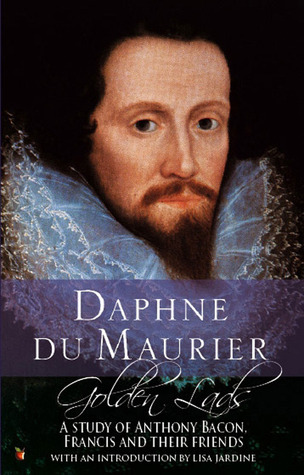
Golden Lads by Daphne du Maurier

When I was making my list for this year’s R.I.P. challenge last week, I remembered that one of the books I read for last year’s R.I.P. was Alan Bradley’s Flavia de Luce mystery As Chimney Sweepers Come to Dust. The title was from Shakespeare’s Cymbeline: “Golden lads and girls all must, As chimney-sweepers, come to dust” – the same lines that inspired the title of Daphne du Maurier’s Golden Lads: A Study of Anthony Bacon, Francis and Their Friends, a book I’ve been interested in reading for a while. Having been reminded of it, I picked it up and started reading, knowing that I have to be in the right mood for non-fiction.

Golden Lads was published in 1975 and was followed a year later by a second volume, The Winding Stair: Francis Bacon, His Rise and Fall, which I may or may not read at some point. I love Daphne du Maurier and since discovering Rebecca as a teenager, I have read almost all of her novels and most of her short story collections, but only one of her non-fiction books, The Infernal World of Branwell Brontë. I remember finding the Brontë biography almost as readable as her fiction, so I hoped this book would be the same. And it is certainly very readable – it only took a few days to read and was quite a page-turner at times, probably because, as stated in the introduction, du Maurier was writing this book with ‘her sort of reader’ in mind.

Anthony Bacon (born in 1558) and his younger brother Francis (born in 1561) were the sons of Sir Nicholas Bacon, who was Elizabeth I’s Lord Keeper of the Great Seal and one of the most powerful men in England. Their mother, Anne Cooke, was the sister-in-law of the Lord High Treasurer William Cecil, Elizabeth’s most trusted adviser. With such impressive family connections, the Bacon brothers were well placed to develop glittering careers of their own, but for Anthony that never quite happened, and for Francis not as quickly as he’d hoped.

After attending Cambridge University together at the ages of fifteen and twelve, their lives went in different directions with Francis entering Gray’s Inn as a lawyer while Anthony spent several years in Europe building up a network of contacts to send intelligence back to Elizabeth’s spymaster, Sir Francis Walsingham. During this period he became a friend of Henri of Navarre (later Henri IV of France) and the French essayist Montaigne. I was intrigued to find that another of his friends was Antonio Perez, whom I met just a few weeks ago in That Lady by Kate O’Brien! On his return to England in 1592, however, Anthony seems to have kept a low profile, which du Maurier explains as being as a result of his increasingly poor health (he suffered from gout and possibly other illnesses as well) but also due to a scandal which took place during his time in Montauban and for which du Maurier found new evidence in the form of archival records.

Francis is the best known of the Bacon brothers today, but most of the accomplishments in science, politics, philosophy and literature for which he is remembered are not discussed in Golden Lads as this book concentrates more on Anthony and only covers the period up to 1601. I didn’t mind this as I knew nothing at all about Anthony and was glad to have the opportunity to learn something new, but I didn’t feel that I got to know Francis very well at all. For that, I will obviously need to read The Winding Stair – although I’m not sure if or when I will get round to reading that book.

I found a lot to like about Golden Lads. As I’ve said, du Maurier’s writing style makes it easy to read and it’s obvious that she is enthusiastic about her subject. She includes extracts from letters and occasional bits of dialogue written in play format, which adds some variety, but readers who are hoping for an academic, scholarly biography might be disappointed as not everything is fully referenced (although she does include a bibliography and list of sources at the back of the book). I thought the first half of the book, which covers the Bacons’ early lives, was very enjoyable, but in the second half the focus switches to Robert Devereux, the Earl of Essex, and his military exploits in Cadiz and Ireland and this is where I started to get bored. I have read about Essex before and although I understand the important role he played in the lives of Anthony and Francis Bacon, I didn’t really want to read about him again in so much detail.

Golden Lads will not be a book for everyone, but I can definitely recommend it to readers who are particularly interested in Elizabethan England. I enjoyed it overall, but I’m not sure if I enjoyed it enough to want to continue with The Winding Stair. Has anyone read it – or any of du Maurier’s other non-fiction?

20 Books of Summer 2018 – The End

This is the last day of this year’s 20 Books of Summer challenge hosted by Cathy at 746 Books. It’s the second time I’ve participated and although I haven’t been completely successful with it, I’ve still enjoyed taking part. It’s a simple idea – to make a list of twenty books at the start of the summer and then read them between 1st June and 3rd September – but not that easy when you keep getting distracted by other books! I’ve read more than twenty books this summer, but only fifteen that were on my original list.

Here are the fifteen books in the order I read them, with links to my reviews:

1. For the Immortal by Emily Hauser
2. The Poison Bed by EC Fremantle
3. A Game of Hide and Seek by Elizabeth Taylor
4. Desperate Remedies by Thomas Hardy
5. The Story Keeper by Anna Mazzola
6. My Beautiful Imperial by Rhiannon Lewis
7. The King’s Witch by Tracy Borman
8. Don’t Look Now and Other Stories by Daphne du Maurier
9. Post of Honour by RF Delderfield
10. Fool’s Errand by Robin Hobb
11. Lamentation by CJ Sansom
12. The Silence of the Girls by Pat Barker
13. The Way of All Flesh by Ambrose Parry
14. Marking Time by Elizabeth Jane Howard
15. Elizabeth and Her German Garden by Elizabeth von Arnim

I enjoyed all of these, especially Desperate Remedies, Post of Honour, Fool’s Errand, Lamentation and Marking Time.

And here are the books I didn’t have time for:

16. The Bull from the Sea by Mary Renault
17. Tapestry of War by Jane MacKenzie
18. Fortune’s Fool by David Blixt
19. The Wardrobe Mistress by Patrick McGrath
20. The Craftsman by Sharon Bolton

I’m still planning to read those books – in fact, I’m halfway through The Bull from the Sea now – but they will have to be autumn reads instead of summer ones.

Did you take part in 20 Books of Summer this year? How did you do?

Six Degrees of Separation: From Mara Wilson to Edgar Allan Poe

It’s the first weekend of a new month which means it’s time for another Six Degrees of Separation, hosted by Kate of Books are my Favourite and Best. The idea is that Kate chooses a book to use as a starting point and then we have to link it to six other books of our choice to form a chain. A book doesn’t have to be connected to all of the others on the list – only to the one next to it in the chain.

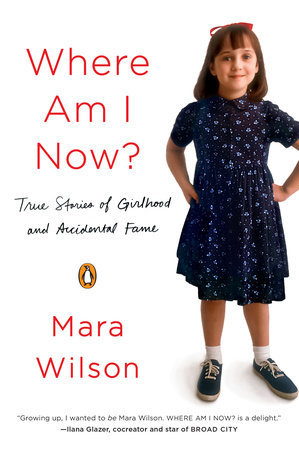
This month we begin with Where Am I Now? by Mara Wilson. When I first saw that this was the starting point for the chain, I struggled to think of who Mara Wilson was, but I discovered she was the child actress in Mrs Doubtfire and Matilda.

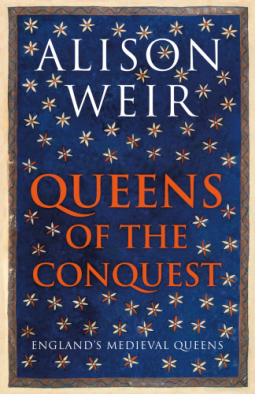
Roald Dahl’s Matilda is a great children’s book, but that’s not the book I’m going to choose for my first link. Instead I’m going to link to a non-fiction book about not just one Matilda, but four – Matilda of Flanders, Matilda of Scotland, Matilda of Boulogne and the Empress Matilda (sometimes known as Maud). The lives of these four medieval queens are explored in Alison Weir’s Queens of the Conquest.

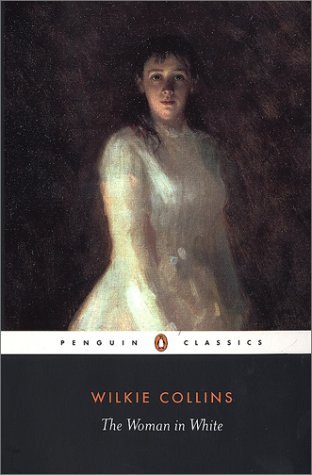
One of the anecdotes I remember reading about Empress Matilda involves her escape from Oxford Castle during a siege wearing a white cape as camouflage against the snow. Thinking of women dressed in white leads me, quite obviously, to The Woman in White by Wilkie Collins.

The Woman in White is one of my favourite Victorian novels and the intelligent, resourceful Marian Halcombe is one of my favourite heroines. Another Victorian novel with a strong and memorable, though very different, female protagonist is Vanity Fair by William Makepeace Thackeray.

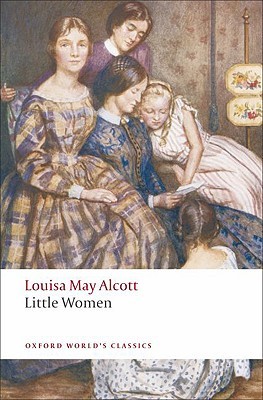
It’s been a long time since I last read Little Women by Louisa May Alcott, but it’s a book I loved when I was younger and read over and over again. I was sure I could remember a chapter with ‘Vanity Fair’ in the title, so I checked my old copy and yes – Chapter 9: Meg Goes To Vanity Fair. It’s amazing the things you remember!

Louisa May Alcott is one of several historical figures to appear as a character in Mrs Poe by Lynn Cullen, a novel telling the story of the poet Frances Sargent Osgood. Frances is known to have exchanged a series of romantic poems with Edgar Allan Poe and this book explores their relationship.

And that brings me to my final link: The Complete Tales and Poems of Edgar Allan Poe. I chose a selection of stories from the book to re-read last Halloween and I’m thinking about doing the same this year.

That’s my chain for this month! Have you read any of these books?

Next month we will be starting with The Outsiders by S. E. Hinton.

My Commonplace Book: August 2018

A selection of words and pictures to represent August’s reading:

commonplace book
noun
a book into which notable extracts from other works are copied for personal use.

~

Yet even without deliberately attempting to cut and discard pieces of a story, years after giving a full and just accounting of an event, a man may discover himself a liar. Such lies happen not by intent, but purely by virtue of the facts he was not privy to at the time he wrote, or by being ignorant of the significance of trivial events. No one is pleased to discover himself in such a strait, but any man who claims never to have experienced it is but stacking one lie on top of another.

Fool’s Errand by Robin Hobb (2001)

~

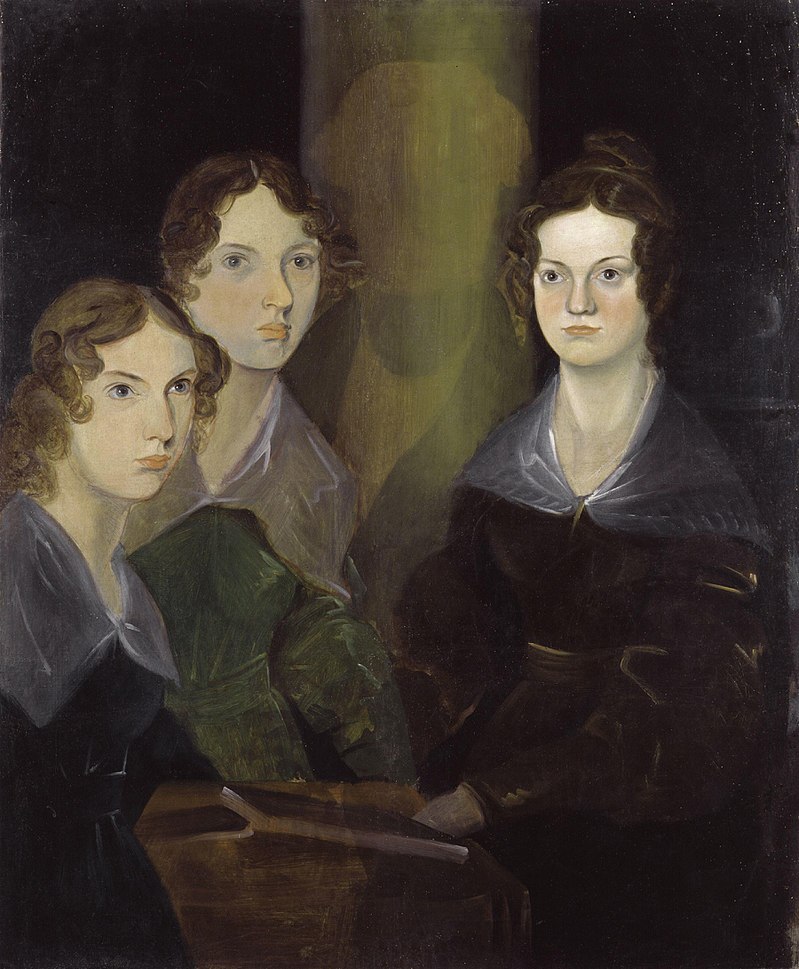
Branwell Brontë’s portrait of Anne, Emily and Charlotte.

‘That’s just what I feel. What is profoundly personal cannot be exposed without -‘ Emily stopped.

‘Without what?’

‘Betraying it.’

‘Well! But what about our work?’

‘That’s fiction. It’s the stuff of your experience, perhaps, but not the stuff of your souls.’ She spoke quite matter-of-factly and without any special emphasis; yet Anne and Charlotte were silenced.

Dark Quartet by Lynne Reid Banks (1976)

~

Two steps. Two steps were all it took. An ocean; a universe. A gulf separating innocence from almost certain damnation. And yet innocence can be a burden and above all rarely profitable. Innocence affords private satisfaction; money and power simple recompense.

The Lady Agnès Mystery by Andrea Japp (2006)

~

“The trouble is,” said Laura, “walking in Venice becomes compulsive once you start. Just over the next bridge, you say, and then the next one beckons.”

Don’t Look Now and Other Stories by Daphne du Maurier (1971)

~

Achilles’ surrender of Briseis to Agamemnon

Would you really have married the man who’d killed your brothers?

Well, first of all, I wouldn’t have been given a choice. But yes, probably. Yes. I was a slave, and a slave will do anything, anything at all, to stop being a thing and become a person again.

I just don’t know how you could do that.

Well, no, of course you don’t. You’ve never been a slave.

The Silence of the Girls by Pat Barker (2018)

~

‘Germany will declare war on France tomorrow, if she hasn’t already done so. As for us, we shall be in by Tuesday at the latest!’

‘How can you be so sure?’ Paul demanded. ‘Grenfell rang two days ago and said it depended upon half-a-dozen unknown factors, any of which might result in us standing aside.’

Franz said, ‘My dear boy, the politicians are the clowns who provide the curtain raiser, an entirely different cast act the play!’

Post of Honour by R.F. Delderfield (1966)

~

‘In my work I never calculate on persons, as apart from what I see them do. A person more or less is of no account in state affairs – it is what he promotes and what he does that I have to reckon with. I see your recent actions and your future intentions, and I hold them to be invidious. So I am not interested in emotional recollections of the kind of person you are, or seemed to be. I only work on what I see you doing.’

That Lady by Kate O’Brien (1946)

~

Coat of arms of Henry VII, founder of the House of Tudor

A man who carries the blood of Lancaster in his veins and has the Welsh dragon at his heel is a constant threat to York. The time may not be yet, Harri, but when the time comes, it is to you that the followers of the dragon will look for leadership. I look towards the crown for you – a Tudor crown.’

The Tudor Crown by Joanna Hickson (2018)

~

‘But you see,’ she said, ‘we are not either of them. However much we care for other people, we cannot become them. People can only do as much as they are. It may be more than we could do, it may be less, but very often it will be different. Sometimes that is very hard to bear, as I know you know.’

Marking Time by Elizabeth Jane Howard (1991)

~

Title page of The Lamentation of a Sinner by Catherine Parr

She looked round the gallery. ‘This is my favourite place in this palace. Where I can walk undisturbed, and rest my eyes on its treasures.’

‘There is much beauty here.’

‘The clocks remind me that however frantically courtiers plot and plan beyond these doors, time ticks by regardless.’ She looked at me directly with her hazel eyes. ‘Taking us to our judgement.’

Lamentation by CJ Sansom (2014)

~

What a happy woman I am living in a garden, with books, babies, birds, and flowers, and plenty of leisure to enjoy them! Yet my town acquaintances look upon it as imprisonment, and I don’t know what besides, and would rend the air with their shrieks if condemned to such a life. Sometimes I feel as if I were blest above all my fellows in being able to find my happiness so easily.

Elizabeth and Her German Garden by Elizabeth von Arnim (1898)

~

A serious note crept into Elizabeth’s voice. ‘There is much to be said for a lack of ambition. I would not be sorry should you think less of advancement and more of the content to be had in small things.’

‘No more would I, should we be allowed that luxury.’

She ignored the implication, sought to counter it. ‘Surely we should be able to find much to take pleasure in within our own bounds.’ There was a sound of scuffling from above their heads, followed by a shriek and a succession of giggles. ‘Family for one. Our children healthy and happy and full of life.’

By Sword and Storm by Margaret Skea (2018)

~

Favourite books read in August:

Fool’s Errand, Dark Quartet, Lamentation and Marking Time.

Where did my reading take me in August?

England, France, Italy, Crete, Ireland, Israel, Ancient Greece, Spain, Germany, Scotland

Authors read for the first time in August:

Lynne Reid Banks, Andrea Japp, Pat Barker, Kate O’Brien, Margaret Skea

~

Have you read any of these books? Which books did you enjoy in August?