Six Degrees of Separation: From Tom Lake to The Cellist of Sarajevo

It’s the first Saturday of the month which means it’s time for another Six Degrees of Separation, hosted by Kate of Books are my Favourite and Best. The idea is that Kate chooses a book to use as a starting point and then we have to link it to six other books of our choice to form a chain. A book doesn’t have to be connected to all of the others on the list – only to the one next to it in the chain.
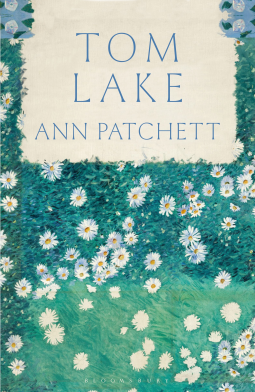
This month we’re starting with Tom Lake by Ann Patchett. I read this last year and liked it, although not as much as I hoped to. Here’s how I described it in my review:

“The title of Ann Patchett’s latest novel, Tom Lake, doesn’t refer to a person, as I’d assumed before I started reading, but to a place – a town in Michigan with a theatre overlooking the lake. One summer in the 1980s, a theatrical group gather at Tom Lake to rehearse the Thornton Wilder play, Our Town. The role of Emily has gone to Lara, a young woman who previously played that same part in a high school production. Here at Tom Lake, Lara meets and falls in love with the charismatic Peter Duke, the actor who plays her father in Our Town and who goes on to become a famous Hollywood star.

Many years later, in 2020, Lara and her husband, Joe, are living on a Michigan farm with their three adult daughters, Emily, Maisie and Nell, who have all come home to be with their parents as the Covid pandemic sweeps across the world. While they help to harvest cherries from the family orchard, the girls ask Lara to tell them about her relationship with Duke. As they listen to her story unfold, they discover things about their mother’s past that makes them reassess everything they thought they knew about her and about themselves.”
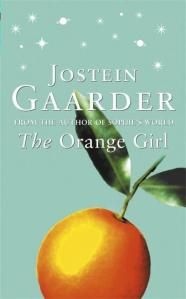
Using cherries as my first link takes me to another book featuring fruit: The Orange Girl by Jostein Gaarder (1), a novel first published in Norwegian and translated into English by James Anderson. Our narrator, a teenage boy whose father has died, reads a letter left to him by his father describing how, as a young man in 1970s Oslo, he had a series of encounters with a mysterious young woman wearing an orange dress and carrying a bag of oranges.

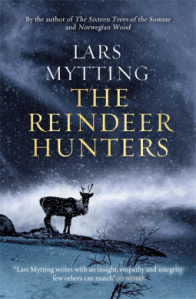
Another novel set in Norway and translated from Norwegian (this time by Deborah Dawkin) is The Reindeer Hunters by Lars Mytting (2). This is the second book in the Sister Bells trilogy about life in the remote village of Butangen where two church bells are said to have supernatural powers. I’ve just discovered that the final book, The Night of the Scourge, is being published in January next year, so that’s something to look forward to!

From reindeer hunting to fortune hunting now! Daisy Goodwin’s The Fortune Hunter (3) is the story of Empress Elizabeth of Austria (known as Sisi) and her relationship with Captain Bay Middleton, a British cavalry officer who acts as her ‘pilot’ (or guide) when she visits England for the hunting season in 1875. Bay, like Sisi, was a real person; he was a notable horseman and jockey who, in the novel, is preparing to race in the Grand National with his horse, Tipsy.
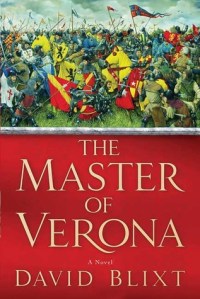
The Master of Verona by David Blixt (4) also features a horse race, in this case the Palio, the medieval race that still takes place today in Siena. The Palio is just one small part of this very entertaining novel set in 14th century Italy and inspired by both the story of Romeo and Juliet and the life of the poet Dante Alighieri. It’s the first in a series of which I’ve also read the second, but still need to finish the others.

A book with a shared word in the title is Madame Verona Comes Down the Hill (5) by Belgian author Dimitri Verhulst. This novella, translated from the original Dutch by David Colmer, is the story of a woman who lives alone in a cottage on a hill, waiting for a cello to be made from the wood of the tree from which her husband hanged himself. This is a beautifully written little book, but it wasn’t really for me.

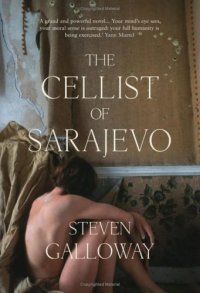
My final link is to another novel featuring cellos. The Cellist of Sarajevo (6) by Steven Galloway is set in 1992 during the Bosnian War. It tells the story of a cellist in the besieged city of Sarajevo, who plays his music in the street for twenty-two consecutive days as a message of hope and resilience.

~

And that’s my chain for March! My links have included fruit, Norway, hunting, horse races, Verona and cellos. It’s a very international chain this month, taking me from America to Bosnia via Norway, England, Italy and Belgium – and including three translated books.

In April we’ll be starting with any travel guide of our choice.

Top Ten Tuesday: Ten Quick Reads

This week’s topic for Top Ten Tuesday (hosted by That Artsy Reader Girl) is “Top Ten Quick Reads/Books to Read When Time is Short”. I am listing below a selection of ten books with fewer than 200 pages – perfect if you don’t have much time to read.

1. Every Eye by Isobel English – A beautifully written novella published by Persephone in which a woman on her honeymoon in Ibiza looks back on her life. (144 pages)

2. Carmilla by Sheridan Le Fanu – This early example of the vampire novel was first published in 1872 and is thought to have influenced Bram Stoker’s Dracula. (160 pages)

3. The Man from London by Georges Simenon – One of many standalone novellas by Simenon, this psychological thriller from 1937 is available in an English translation by Howard Curtis. (160 pages)

4. Water by John Boyne – The first in a new quartet of books based on the four elements. I’m looking forward to reading the second one, Earth, soon. (161 pages)

5. The Beacon by Susan Hill – An atmospheric and unsettling story about a family living in a lonely farmhouse in the north of England. (162 pages)

6. Mr Harrison’s Confessions by Elizabeth Gaskell – This 1851 novella about a young doctor working in a small, rural community is a prequel to Gaskell’s better known book, Cranford. (113 pages)

7. The Lifted Veil by George Eliot – I think this science fiction/horror story will surprise a lot of people as it’s not typical of Eliot at all! My edition also includes her essay, Silly Novels by Lady Novelists. (110 pages)

8. Chocky by John Wyndham – This short book about a boy with an imaginary friend is one of my favourites so far by Wyndham! (164 pages)

9. The End of the Alphabet by CS Richardson – A moving little book in which a man with only a month to live sets out on a tour of the world, visiting each place on his list in alphabetical order. (128 pages)

10. The Frozen Deep by Wilkie Collins – I love Collins and enjoyed this novella based on the ill-fated 1845 Franklin Expedition to the Arctic in search of the North West Passage. (112 pages)

~

Have you read any of these? Which other short books have you read and enjoyed?

Six Degrees of Separation: From The Loving Spirit to Endless Night

It’s the first Saturday of the month which means it’s time for another Six Degrees of Separation, hosted by Kate of Books are my Favourite and Best. The idea is that Kate chooses a book to use as a starting point and then we have to link it to six other books of our choice to form a chain. A book doesn’t have to be connected to all of the others on the list – only to the one next to it in the chain.

This month we are each starting with either the book with which we finished last month’s chain or the last book we read. My January chain finished with The Loving Spirit by Daphne du Maurier, so I’m going to use that as my starting point. The novel was published in 1931 and was du Maurier’s first. Here’s what I said in my review:

The Loving Spirit is a family saga spanning four generations of the Coombe family. It begins in 1830 with the story of Janet Coombe, a passionate young woman who is forced to abandon her dreams of going to sea when she marries and settles down to start a family with her husband, a boat builder. We then move forward through the decades, ending one hundred years later in the 1930s. Along the way we meet Janet’s son, Joseph, her grandson, Christopher, and finally her great-granddaughter, Jennifer. The book is divided into four parts, one devoted to each of the main characters, but I won’t go into any plot details here as each story has its own set of dramas and surprises which I’ll leave you to discover for yourself.

The Loving Spirit takes its title from an Emily Brontë poem, Self-Interrogation:

“Alas! The countless links are strong,
That bind us to our clay;
The loving spirit lingers long,
And would not pass away!”
.

Another book with a title taken from a poem (in this case Rudyard Kipling’s A Smuggler’s Song) is Watch the Wall, My Darling by Jane Aiken Hodge (1), a Gothic suspense novel set during the Napoleonic Wars. I described it in my review as a tale of “smugglers, soldiers and spies, a crumbling abbey believed to be haunted, family secrets and an inheritance to be decided”.

The plot of Alex Preston’s Winchelsea (2) also features smuggling. Our heroine’s adoptive father is murdered by a gang of smugglers in the East Sussex town of Winchelsea and she and her brother set out to take revenge. The book is set in the 1740s and includes a subplot involving the Jacobites and Bonnie Prince Charlie.

The Masqueraders by Georgette Heyer (3) also takes place just after the Jacobite Rising of 1745. This was one of the first Heyer novels I read and although I’ve read better ones since, it still holds a special place in my heart. I loved the Georgian setting, the characters and the entertaining plot.

The idea of ‘masqueraders’ leads logically to The Man in the Iron Mask by Alexandre Dumas (4). This is the final volume in Dumas’ d’Artagnan series, which began with The Three Musketeers, and revolves around a plot involving a man imprisoned in the Bastille who bears a striking resemblance to the King of France. I always enjoy Dumas and this is one of the stronger novels in the series.

A book which shares a word in the title is The Iron King by Maurice Druon (5), the first book in Druon’s series Les Rois maudits (The Accursed Kings). The series tells the story of Philip IV of France and his descendants, a line of kings “cursed to the thirteenth generation” by the Grand Master of the Knights Templar, whom Philip sent to burn at the stake. I still have the last two books in the series to read – hopefully this year!

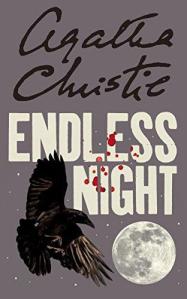
Another book which features a curse as part of the plot is Agatha Christie’s Endless Night (6). And the title of the book is also taken from a poem, bringing the chain full circle! The poem this time is William Blake’s Auguries of Innocence:

“Every Night and every Morn
Some to Misery are born.
Every Morn and every Night
Some are born to Sweet Delight.
Some are born to Sweet Delight,
Some are born to Endless Night.”

~

And that’s my chain for this month! My links have included: titles taken from poems, smugglers, Jacobites, masked men, the word ‘iron’ and curses.

In March we’ll be starting with Tom Lake by Ann Patchett.

Top Ten Tuesday: Authors I discovered in 2023

This week’s topic for Top Ten Tuesday (hosted by That Artsy Reader Girl) is “New-to-Me Authors I Discovered in 2023”. There were lots of authors I tried for the first time last year, but the ten I’m listing below are all authors whose books I enjoyed and would consider reading again.

1. Edgar Rice Burroughs – His more famous books have never really appealed to me, but The Efficiency Expert was recommended to me and it was very entertaining.

2. E.C.R. Lorac – I’m not sure whether Death of an Author was really the best Lorac to start with, as I liked it but didn’t love it. I hope to try another one soon!

3. Helen Scarlett – I enjoyed The Lodger for its portrayal of London in the aftermath of World War I and must try Scarlett’s previous novel at some point.

4. Geoffrey Household – A man goes on the run after a failed assassination attempt in Household’s 1939 novel, Rogue Male. An interesting read, but I’m not sure if any of his other books appeal.

5. Dolores Hitchens – I read The Cat Saw Murder, a Rachel Murdock mystery, for Mallika’s Reading the Meow week and would like to read some of the others in that series.

6. Ursula BloomWonder Cruise was my first Ursula Bloom book; it seems she was a very prolific author, so I have lots more to look forward to.

7. Patricia Highsmith – Having meant to try something by Patricia Highsmith for years, I finally read her classic psychological thriller Strangers on a Train in 2023!

8. J.B. PriestleyBenighted, Priestley’s 1927 novel, was a creepy and unsettling read, perfect for October!

9. Kate GrenvilleRestless Dolly Maunder, based on the story of Grenville’s own grandmother, was an interesting look at life in Australia in the early 20th century.

10. Rebecca Netley – I enjoyed The Black Feathers, a Gothic novel set in Victorian England, and I would like to read Netley’s previous book, The Whistling, now.

~

Have you read any of these authors? Which new (or new-to-you) authors did you discover last year?

Spell the Month in Books: January – The newest additions

I don’t take part in Spell the Month in Books (hosted by Reviews From the Stacks) every month but the theme for January appealed to me so I decided to join in. The rules are very simple – spell the current month using the first letter of book titles, excluding articles such as ‘the’ and ‘a’ as needed. This month’s theme is New, which can be interpreted in several ways.

I’ve decided to go with the book most recently added to my TBR for each letter. The books themselves are not necessarily ‘new’ – some of them were published many years ago – but they are all relatively new to my shelves. Descriptions are from Goodreads.

~

JJohn Halifax, Gentleman by Dinah Maria Mulock Craik (1856)
Acquired October 2019

“Like Charles Dickens’ beloved David Copperfield, John Halifax is an orphan, determined to make his success through honest hard work. He becomes an apprentice to Abel Fletcher, a tanner and a Quaker, and is soon befriended by Abel’s invalid son, Phineas, who chronicles John’s success in business and love, rising from the humblest of origins to the pinnacle of wealth made possible by England’s Industrial Revolution.

Dinah Maria Mulock Craik explores the sweeping transformation wrought by this revolutionary technological age, including the rise of the middle class and its impact on the social, economic, and political makeup of the nation as it moved from the eighteenth to the nineteenth century.”

AAbove Suspicion by Helen MacInnes (1941)
Acquired October 2022

“It is the summer of 1939. A young Oxford don, Richard Myles and his wife Frances are about to leave for their usual long vacation on the continent. At the request of a Foreign Office friend of Richard’s they agree to serve as messengers to a man who has been involved in rescue work and anti-Nazi espionage, a man who now seems to have gone missing. Their qualifications? Next to nothing except for Richard’s superb memory and the fact that they look so very innocent. Across a continent on the brink of war from Paris to Innsbruck and beyond Richard and Francis travel ever deeper into danger.”

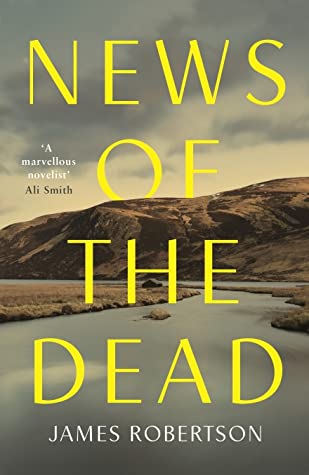
NNews of the Dead by James Robertson (2021)
Acquired October 2022

“Deep in the mountains of north-east Scotland lies Glen Conach, a place of secrets and memories, fable and history. In particular, it holds the stories of three different eras, separated by centuries yet linked by location, by an ancient manuscript and by echoes that travel across time.

In ancient Pictland, the Christian hermit Conach contemplates God and nature, performs miracles and prepares himself for sacrifice. Long after his death, legends about him are set down by an unknown hand in the Book of Conach. Generations later, in the early nineteenth century, self-promoting antiquarian Charles Kirkliston Gibb is drawn to the Glen, and into the big house at the heart of its fragile community. In the present day, young Lachie whispers to Maja of a ghost he thinks he has seen. Reflecting on her long life, Maja believes him, for she is haunted by ghosts of her own.”

UThe Undertaking by Audrey Magee (2014)
Acquired March 2022

“Desperate to escape the Eastern front, Peter Faber, an ordinary German soldier, marries Katharina Spinell, a woman he has never met; it is a marriage of convenience that promises ‘honeymoon’ leave for him and a pension for her should he die on the front. With ten days’ leave secured, Peter visits his new wife in Berlin; both are surprised by the attraction that develops between them.

When Peter returns to the horror of the front, it is only the dream of Katharina that sustains him as he approaches Stalingrad. Back in Berlin, Katharina, goaded on by her desperate and delusional parents, ruthlessly works her way into the Nazi party hierarchy, wedding herself, her young husband and their unborn child to the regime. But when the tide of war turns and Berlin falls, Peter and Katharina, ordinary people stained with their small share of an extraordinary guilt, find their simple dream of family increasingly hard to hold on to…”

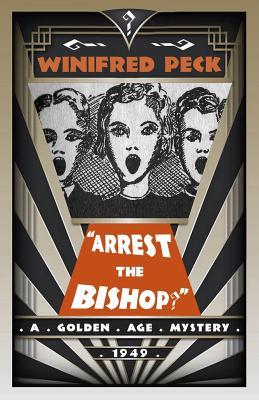
AArrest the Bishop? by Winifred Peck (1949)
Acquired October 2022

“He caught the back of a chair, staggered and groaned. There was a heavy crash and fall, and the parson lay motionless and livid, while lilies from a vase fell, like a wreath, across his chest. The Rev. Ulder, everyone agreed, was the parish priest from hell. In addition to tales of drunkenness and embezzlement, the repellent cleric had recently added blackmail to his list of depravities. There was scandal in the district, plenty of it, and Ulder had the facts. Until, that is, a liberal helping of morphia, served to him in the Bishop’s Palace, silenced the insufferable priest – for good.

Was it the Bishop himself who delivered the fatal dose? Was it Soames, the less-than-model butler? Or one of a host of other inmates and guests in the house that night, with motives of their own to put Ulder out of the way? Young Dick Marlin, ex-military intelligence and now a Church deacon, finds himself assisting Chief Constable Mack investigate murder most irreverent.”

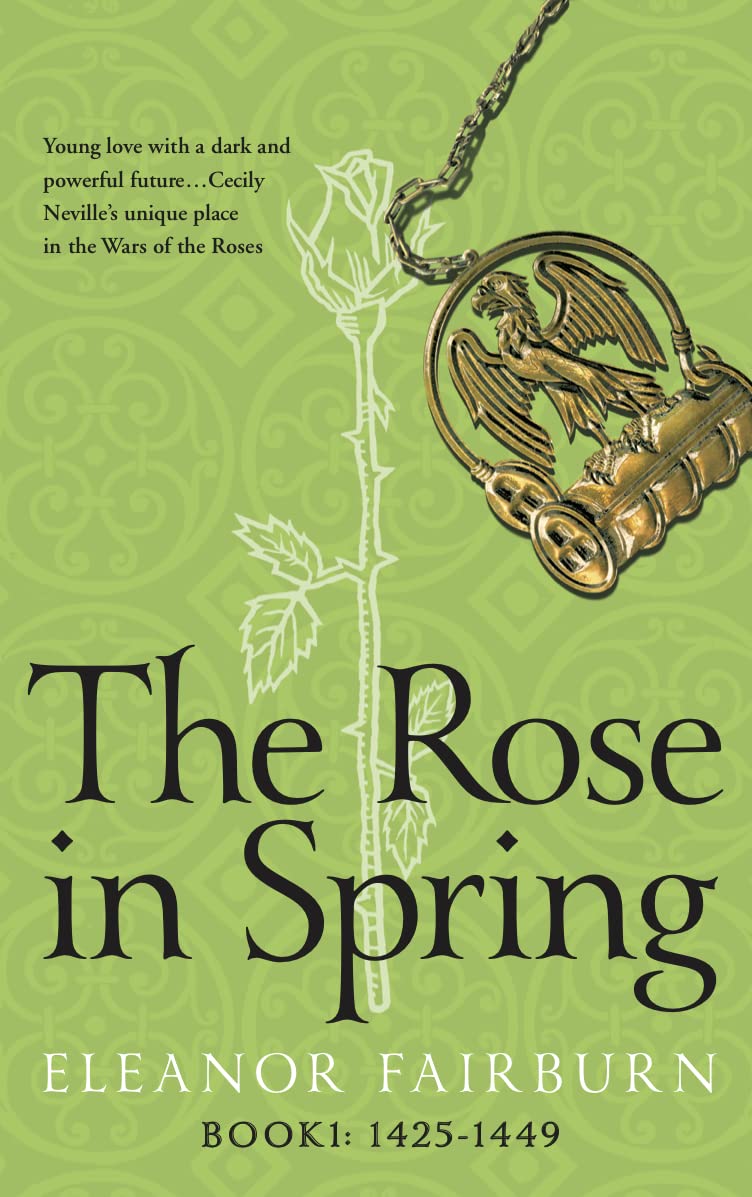
RThe Rose in Spring by Eleanor Fairburn (1971)
Acquired November 2022

“Cecily Neville, dubbed the ‘Rose of Raby’, is ten years old when she is betrothed to her childhood love, Richard Plantagenet, Duke of York. Little does she know that their union is one to change Britain’s history for centuries to come, and that she will become a powerful matriarch in her own right.

Beautiful, courageous and intelligent, Cecily carves out her place at her husband’s side as they navigate the increasingly difficult political sphere of 15th century Europe, rocked by the actions of Jeanne d’Arc in France. With wit and sensitivity, The Rose in Spring is a unique perspective of a previously overlooked figure in history, and the first in a quartet dedicated to the Wars of the Roses.”
YYours Cheerfully by AJ Pearce (2021)
Acquired August 2021

“London, November 1941. Following the departure of the formidable Henrietta Bird from Woman’s Friend magazine, things are looking up for Emmeline Lake as she takes on the challenge of becoming a young wartime advice columnist. Her relationship with boyfriend Charles (now stationed back in the UK) is blossoming, while Emmy’s best friend Bunty, still reeling from the very worst of the Blitz, is bravely looking to the future. Together, the friends are determined to Make a Go of It.

When the Ministry of Information calls on Britain’s women’s magazines to help recruit desperately needed female workers to the war effort, Emmy is thrilled to be asked to step up and help. But when she and Bunty meet a young woman who shows them the very real challenges that women war workers face, Emmy must tackle a life-changing dilemma between doing her duty and standing by her friends.”

~

Have you read any of these books? Which do you think I should read first?

Six Degrees of Separation: From Tomorrow and Tomorrow and Tomorrow to The Loving Spirit

It’s the first Saturday of the month – and of 2024 – which means it’s time for another Six Degrees of Separation, hosted by Kate of Books are my Favourite and Best. The idea is that Kate chooses a book to use as a starting point and then we have to link it to six other books of our choice to form a chain. A book doesn’t have to be connected to all of the others on the list – only to the one next to it in the chain.

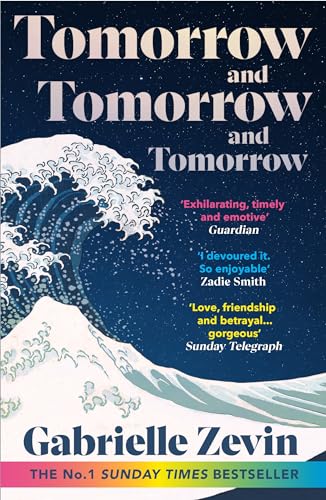
This month we’re starting with Tomorrow and Tomorrow and Tomorrow by Gabrielle Zevin. I haven’t read it, but here’s what it’s about:

When Sam catches sight of Sadie at a crowded train station one morning he is catapulted straight back to childhood, and the hours they spent immersed in playing games.

Their spark is instantly reignited and sets off a creative collaboration that will make them superstars. It is the 90s, and anything is possible.

What comes next is a decades-long tale of friendship and rivalry, fame and art, betrayal and tragedy, perfect worlds and imperfect ones. And, above all, our need to connect: to be loved and to love.

The title of the Zevin novel is a line from one of the most famous soliloquies in Shakespeare’s Macbeth: “Tomorrow, and tomorrow, and tomorrow, Creeps in this petty pace from day to day, To the last syllable of recorded time.” In Elizabeth Bailey’s For One More Tomorrow (1), Sadie Grey is directing a production of Macbeth when she discovers that she has somehow conjured up the ghost of Macbeth himself…and he is not at all happy with the way he is being portrayed.

I didn’t immediately notice that as well as the Macbeth and ‘Tomorrow’ connections, both the Zevin and Bailey novels feature a character whose name is Sadie! So does At the Edge of the Orchard by Tracy Chevalier (2), although this is a completely different kind of novel, set in the 1830s and following the story of a family who are trying to establish an orchard in the Black Swamp region of Ohio.

I learned a lot about trees and apples from the Chevalier book – more than I knew I needed to know! Another book that features apples, but in a very different way, is For the Most Beautiful by Emily Hauser (3). This novel, the first in a trilogy inspired by the ‘golden apples’ from Greek mythology, is a retelling of the Trojan War from the perspectives of two female characters, Krisayis and Briseis. The other two books in the trilogy focus on Atalanta (For the Winner) and Hippolyta (For the Immortal).

The word ‘beautiful’ also appears in the title of Your Beautiful Lies by Louise Douglas (4), a novel set in a small mining town in Yorkshire during the miners’ strike of 1984. A crime takes place – a woman is murdered on the moors – but although the book does have a strong mystery element, I described it in my review as “difficult to classify as belonging to a particular genre, being a mixture of crime, romance, suspense and domestic drama”.

Mining also features heavily in the plot of Ross Poldark (5), the first book in Winston Graham’s Poldark series. Set in 18th century Cornwall, it begins with Ross returning home after a long absence to find that his father has died and the woman he loves is marrying his cousin. The rest of the book follows Ross as he tries to restore the family estate and open a new copper mine. I read this book in 2015 when a new adaptation was being shown on the BBC, but although I enjoyed it and intended to continue with the rest of the series, I still haven’t picked up the second book.

An author who is closely associated with Cornwall is Daphne du Maurier. Many of her novels are set there, but the one I’ve chosen to finish my chain is The Loving Spirit (6). Published in 1931 when she was just twenty-four years old, this was du Maurier’s first novel and tells the story of four generations of the Coombe family, who live in a fictional shipbuilding town on the Cornish coast. Although it’s not as strong as her later novels, I still enjoyed it. The title is taken from an Emily Brontë poem, Self-Interrogation, which provides a link back to the beginning of this chain – books with titles inspired by another author’s work.

~

And that’s my chain for this month! My links have included: The word ‘tomorrow’, Macbeth, the name Sadie, apples, the word ‘beautiful’, mining and Cornwall.

In February we’ll be starting with the book we finished with this month – which for me is The Loving Spirit.

Six Degrees of Separation: From Kitchen Confidential to The Thirteenth Tale

It’s the first Saturday of the month, which means it’s time for another Six Degrees of Separation, hosted by Kate of Books are my Favourite and Best. The idea is that Kate chooses a book to use as a starting point and then we have to link it to six other books of our choice to form a chain. A book doesn’t have to be connected to all of the others on the list – only to the one next to it in the chain.

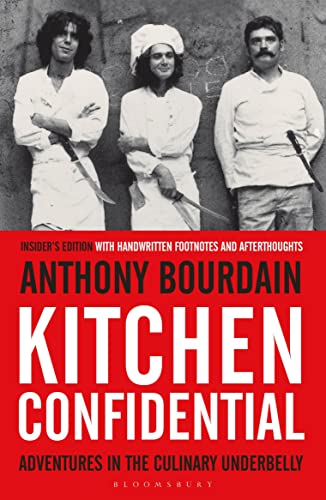
This month we’re starting with Kitchen Confidential by Anthony Bourdain. I haven’t read it and I’m not likely to, but here’s what it’s about:

After twenty-five years of ‘sex, drugs, bad behaviour and haute cuisine’, chef and novelist Anthony Bourdain has decided to tell all. From his first oyster in the Gironde to his lowly position as a dishwasher in a honky-tonk fish restaurant in Provincetown; from the kitchen of the Rainbow Room atop the Rockefeller Center to drug dealers in the East Village, from Tokyo to Paris and back to New York again, Bourdain’s tales of the kitchen are as passionate as they are unpredictable, as shocking as they are funny.

Using food and kitchens as my first link, John Saturnall’s Feast by Lawrence Norfolk (1) is set in the 17th century and tells the story of John Sandall, an orphan who is taken into the household of a wealthy nobleman, Sir William Fremantle. With his knowledge of food and ancient recipes, John is given the task of creating a meal to tempt Sir William’s daughter, who is refusing to eat as a protest against an arranged marriage. This is a complex, multi-layered novel with an unusual plot and a vivid portrayal of life in the kitchen!

The Feast by Margaret Kennedy (2) shares a word in the title, but is a very different book. Published in 1950, it follows a week in the lives of a group of guests who are staying in a hotel on the coast of Cornwall. We know from the beginning that by the end of the week the hotel will have been destroyed by a cliff collapsing on top of it, but we don’t know who will survive and who won’t. I really enjoyed this one; it’s one of my favourites so far by Margaret Kennedy.

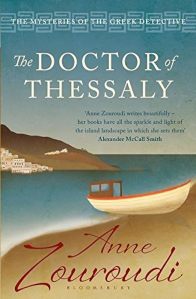
Although it doesn’t form a big part of the plot, some of the characters in The Feast have traits that represent one of the seven deadly sins, which I thought was a clever touch. Anne Zouroudi’s Greek Detective series, which follows the investigations of the mysterious Hermes Diaktoros, also uses one of the seven sins as a theme for each novel. The Doctor of Thessaly (3) is the third book in the series, although they can be read in any order, and this one has ‘envy’ as its theme.

I haven’t read many authors whose surname begins with the letter Z, but one of them is Émile Zola. I’ve read three of his books so far and my favourite is Thérèse Raquin (4), the first one I read and a standalone novel which is not part of his longer Rougon-Macquart cycle. This is a very dark novel about two people who commit a terrible crime and the psychological effect this has on the rest of their lives.

I’m going to use a word in the title again for my next link, which leads me to 13, rue Thérèse by Elena Mauli Shapiro (5). This unusual and imaginative novel begins with a man discovering a box full of photographs, letters, postcards and other items that once belonged to Louise Brunet, a Frenchwoman who lived through both world wars. We are given a picture of each item, followed by a few pages of story describing the item’s significance and background, and gradually Louise’s history begins to unfold.

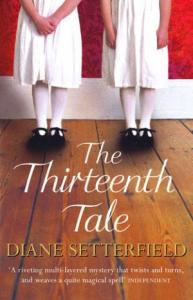
My final link uses the number 13. The Thirteenth Tale by Diane Setterfield (6) is the story of a young woman who agrees to write the biography of a reclusive author. It’s an entertaining read, clearly inspired by several classic Gothic novels, and I described it in my review as a tale of ‘Yorkshire moors, twins, mistaken identities, ghosts and governesses’.

~

And that’s my chain for this month! My links have included: Kitchens, the word ‘Feast’, the seven deadly sins, author names beginning with Z, the name Thérèse and the number thirteen.

In January we’ll be starting with Tomorrow and Tomorrow and Tomorrow by Gabrielle Zevin.