Top Ten Tuesday: Bookish Worlds I’d Never Want To Live In

The topic for this week’s Top Ten Tuesday hosted by That Artsy Reader Girl is: Bookish Worlds I’d Want to/Never Want to Live In. I decided to focus on the second option and list ten of the most unpleasant or unappealing settings from books previously reviewed on my blog…and here they are:

1. The Republic of Gilead (The Handmaid’s Tale by Margaret Atwood)

From my review: “In this new dystopian society, women no longer have any of the rights or freedoms they had before; they’re not allowed to work, not allowed to have their own bank accounts, not even allowed to read in case reading leads them into temptation.”

2. The room (Room by Emma Donoghue)

From my review: “The story is narrated by Jack, a five-year-old boy who has spent his whole life living with his mother in a converted shed measuring eleven foot square. His mother had been kidnapped seven years ago and Jack was born in captivity. He has no idea that a world exists outside Room and apart from Ma and Old Nick, the man who is keeping them captive, he has never seen another human being.”

3. Tregannon House, Cornwall (The Asylum by John Harwood)

From my review: “Most of the action takes place within the confines of Tregannon House (the private asylum on Bodmin Moor, Cornwall, in which Georgina becomes trapped) and the atmosphere Harwood creates is wonderfully claustrophobic and eerie. I really sympathised with Georgina’s situation and shared her terror and bewilderment.”

4. Melanie Langdon’s drawing room (The Victorian Chaise-Longue by Marghanita Laski)

From my review: “The book conveys a sense of confusion, panic and disorientation and I could really feel Melanie’s helplessness as she lay on the chaise-longue, trapped in Milly’s body, desperately trying to work out who she was and how she could escape.”

5. The Marshalsea Prison (The Devil in the Marshalsea by Antonia Hodgson)

From my review: “The prisoners who had some money to spend or who had influential friends, lived on the Master’s Side, which was almost like a complete town in itself, with coffee houses, bars, restaurants and even a barber. They had the freedom to move around and in some cases were even given permission to go out into London during the day. For the poor people on the Common Side, things were much worse. Crammed into tiny cells and suffering from starvation, disease and overcrowding, they died at a rate of up to twelve a day.”

6. Starkfield, Massachusetts (Ethan Frome by Edith Wharton)

From my review: “The most striking thing about this book, for me, was the tense, claustrophobic atmosphere Wharton created, making the reader feel locked within Ethan’s miserable world. The town of Starkfield, Massachusetts is as stark as its name suggests; the descriptions of the snow, the ice and the cold all contribute to the heavy feeling of oppression which hangs over the entire book.”

7. Hill House (The Haunting of Hill House by Shirley Jackson)

From my review: “I loved the descriptions of Hill House – it has all the characteristics you would expect a haunted house to have, including a tragic history – but there are very few physical manifestations of ghostly activity. The creepiness of the story comes mainly from the fact that we don’t know how much of the ‘haunting’ is caused by Hill House itself and how much is the product of Eleanor’s disturbed mind.”

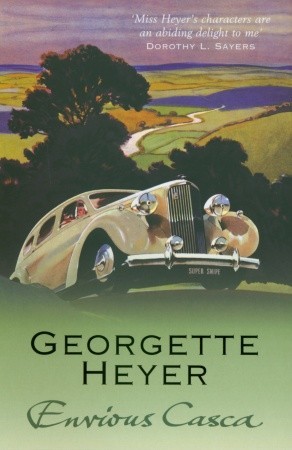
8. Lexham Manor at Christmas (Envious Casca by Georgette Heyer)

From my review: “I have rarely read a novel with so many nasty, rude, unpleasant characters and I couldn’t think of anything worse than being a guest at the Herriards’ party, even without a murder taking place! From the obnoxious, sarcastic Stephen and the haughty butler Sturry to the cantankerous, bad-tempered Nathaniel, they were all so annoying I was surprised only one murder was committed.”

9. Green Town, Illinois at carnival time (Something Wicked This Way Comes by Ray Bradbury)

From my review: “Good versus evil is obviously one of the major themes of the novel. A feeling of malice and danger hangs over the carnival from the moment it arrives and the people connected with it are both strange and sinister – particularly the blind Dust Witch who hovers over the boys’ houses in a hot air balloon in one of the creepiest scenes in the book.”

10. The future (The Time Machine by HG Wells)

From my review: “Remembering when this novel was published, Wells’ vision of a future world has been developed from some of the issues which would have seemed relevant at the end of the 19th century, such as widening class divisions, theories of evolution and Darwinism. It’s a bleak and depressing view of the future – and if that really is what we have to look forward to, then imperfect as our current society may be, I’m very glad to be living in 2016!”

~

Have you taken part in this week’s Top Ten Tuesday? Can you think of some bookish worlds you wouldn’t want to live in?
My blog’s name in TBR books

I’ve seen this meme appearing on a lot of other book blogs recently and I knew I wouldn’t be able to resist joining in with it myself! It originated at Fictionophile’s blog, who posted the following rules:

1. Spell out your blog’s name.

2. Find a book from your TBR that begins with each letter.

3. Have fun!

Luckily, my blog doesn’t have a very long name and as I use Goodreads to keep track of my TBR, I found it easy enough to choose a book for each letter.

Shadows on the Rock by Willa Cather
High Rising by Angela Thirkell
Elijah’s Mermaid by Essie Fox

Red Adam’s Lady by Grace Ingram
Elizabeth and Her German Garden by Elizabeth von Arnim
Angels and Insects by AS Byatt
Dark Angel by Sally Beauman
Saraband for Two Sisters by Philippa Carr

Next of Kin by John Boyne
Over Sea, Under Stone by Susan Cooper
Viper Wine by Hermione Eyre
Eugene Onegin by Alexander Pushkin
Lady in Waiting by Rosemary Sutcliff
Sacred Hearts by Sarah Dunant

~

Have you read any of these books?

Six Degrees of Separation: From The Poisonwood Bible to Why Didn’t They Ask Evans?

Sorry for the unannounced absence over the last week – I’ve been to Malta on holiday and didn’t get round to scheduling any posts before I left. Anyway, I’m back now and it’s time for another Six Degrees of Separation, hosted by Kate of Books are my Favourite and Best. The idea is that Kate chooses a book to use as a starting point and then we have to link it to six other books of our choice to form a chain. A book doesn’t have to be connected to all of the others on the list – only to the one next to it in the chain.

The first book this month is The Poisonwood Bible by Barbara Kingsolver. I have never read this book, but it is described as “the story of an American missionary family in the Congo during a poignant chapter in African history”.

Thinking of other books about missionary families, I’m going to link to a novel I remember really enjoying a few years ago: In a Far Country by Linda Holeman. It is set in India in the 19th century and the heroine, Pree Fincastle, is the daughter of two British missionaries living on a Church of England medical mission in Punjab.

I’ve read most of Linda Holeman’s adult novels and enjoyed them all – the settings are always interesting and beautifully described. My favourite of her books is The Saffron Gate, which is set in Morocco in the 1930s. Morocco is not a country that has featured very often in my reading, but it does provide the setting for another book I loved: The Sultan’s Wife by Jane Johnson.

There are so many books around these days with the word “wife” in the title. Some that I have reviewed on my blog include The Aviator’s Wife, The Tea Planter’s Wife, The Tiger’s Wife and, most recently, The Pharmacist’s Wife. A much earlier example is Mary Elizabeth Braddon’s The Doctor’s Wife, a Victorian novel from 1864 with a similar plot and themes to Madame Bovary by Gustave Flaubert.

The image on the front cover of the Oxford World’s Classics version of The Doctor’s Wife is apparently called Faraway Thoughts by an unknown artist. Coincidentally, the same image has been used on the cover of one of my current reads, Friday’s Child by Georgette Heyer (although I am reading a different edition).

Friday’s Child, one of Heyer’s Regency romances, follows the early days of a marriage between two young people, Sherry and Hero. This brings to mind another funny and charming novel about a newly-married couple, Little Man, What Now? by Hans Fallada. I loved that book and really wish it was better known!

It’s unusual to find a book with a question mark in the title, but I can think of a few that I’ve read, including Why Didn’t They Ask Evans? by Agatha Christie. I really enjoyed that one – it’s a bit melodramatic and silly, but a lot of fun to read.

And that’s my chain for this month! Have you read any of these books?

Next month, the starting point will be The Tipping Point by Malcolm Gladwell, a book I’ve never read and know nothing about!

Six Degrees of Separation: From Memoirs of a Geisha to A Tale of Two Cities

It’s the first Saturday of the month, which means it’s time for another Six Degrees of Separation hosted by Kate of Books are my Favourite and Best. The idea is that Kate chooses a book to use as a starting point and then we have to link it to six other books of our choice to form a chain. A book doesn’t have to be connected to all of the others on the list – only to the one next to it in the chain.

The first book this month is Memoirs of a Geisha by Arthur Golden. I have never read it, but I know it is set in Japan.

Thinking about other books I’ve read that are also set in Japan, the first one to come to mind is Shogun by James Clavell, but I prefer to only link to books that I have actually reviewed on my blog. My next choice, then, is The Shogun’s Queen by Lesley Downer. I really enjoyed this novel about Atsu, wife of the Shogun Tokugawa Iesada.

The Shogun’s Queen was part of a quartet of novels, although I still haven’t read the other three in the series. Another quartet of novels I have started (but not finished) is Johan Theorin’s Öland Quartet, which begins with Echoes from the Dead.

These four crime novels are all set on the Swedish island of Öland, which is a very atmospheric setting, and each book takes place in a different season. The other two I have read are The Darkest Room and The Quarry. I don’t often read Scandinavian crime fiction, but apart from the Theorin books, another that I enjoyed was Burned by Norwegian author Thomas Enger.

The main character in Burned, Henning Juul, is a journalist. Journalism makes me think of a book I read recently and loved – Dear Mrs Bird by AJ Pearce, about a young woman who dreams of becoming a Lady War Correspondent but finds herself typing up letters for the problem page instead.

For my next link, I thought of other books I’ve read with ‘bird’ in the title and decided on Birdcage Walk by Helen Dunmore. This was Dunmore’s last novel before her death and although the story is set in England, the French Revolution is played out in the background.

I have read quite a few novels about the French Revolution so I had plenty of options for the last book in my chain. The one I’m going to choose is A Tale of Two Cities, which, so far, is my favourite Charles Dickens novel.

So, that’s my chain for this month! From Japan to France via Sweden, Norway and England. Have you read any of these books?

Next month, the starting point will be The Poisonwood Bible by Barbara Kingsolver, yet another book I haven’t read!

Top Ten Tuesday: Books on my Spring TBR

This week’s Top Ten Tuesday, hosted by That Artsy Reader Girl, asks for ten books on our spring TBR. I’m sometimes hesitant to make lists like this because saying that I’m planning to read a book seems to guarantee that I won’t do it. There are still four books from the winter TBR list I posted in November that I haven’t read yet. Anyway, here are ten books that I really do intend to read in the next few months!

~

1. Desperate Remedies by Thomas Hardy (1871)

This was the book chosen for me in the recent Classics Club Spin, so I need to read it before the end of April.

Cytherea has taken a position as lady’s maid to the eccentric arch-intriguer Miss Aldclyffe. On discovering that the man she loves, Edward Springrove, is already engaged to his cousin, Cytherea comes under the influence of Miss Aldclyffe’s fascinating, manipulative steward Manston.

Blackmail, murder and romance are among the ingredients of Hardy’s first published novel, and in it he draws blithely on the ‘sensation novel’ perfected by Wilkie Collins. Several perceptive critics praised the author as a novelist with a future when Desperate Remedies appeared anonymously in 1871. In its depiction of country life and insight into psychology and sexuality it already bears the unmistakable imprint of Hardy’s genius.

~

2. Circe by Madeline Miller (2018)

Review copy received from NetGalley.

In the house of Helios, god of the sun and mightiest of the Titans, a daughter is born. But Circe is a strange child – not powerful, like her father, nor viciously alluring like her mother. Turning to the world of mortals for companionship, she discovers that she does possess power – the power of witchcraft, which can transform rivals into monsters and menace the gods themselves.

Threatened, Zeus banishes her to a deserted island, where she hones her occult craft, tames wild beasts and crosses paths with many of the most famous figures in all of mythology, including the Minotaur, Daedalus and his doomed son Icarus, the murderous Medea, and, of course, wily Odysseus.

But there is danger, too, for a woman who stands alone, and Circe unwittingly draws the wrath of both men and gods, ultimately finding herself pitted against one of the most terrifying and vengeful of the Olympians. To protect what she loves most, Circe must summon all her strength and choose, once and for all, whether she belongs with the gods she is born from, or the mortals she has come to love.

~

3. The Illumination of Ursula Flight by Anna-Marie Crowhurst (2018)

Another review copy received from NetGalley.

Born on the night of an ill-auguring comet just before Charles II’s Restoration, Ursula Flight has a difficult future written in the stars.

Against the custom of the age she begins an education with her father, who fosters in her a love of reading, writing and astrology.

Following a surprise meeting with an actress, Ursula yearns for the theatre and thus begins her quest to become a playwright despite scoundrels, bounders, bad luck and heartbreak.


~

4. The Pharmacist’s Wife by Vanessa Tait (2018)

And one more NetGalley book.

When Rebecca Palmer’s new husband opens a pharmacy in Victorian Edinburgh, she expects to live the life of a well-heeled gentlewoman. But her ideal is turns to ashes when she discovers her husband is not what he seems. As Rebecca struggles to maintain her dignity in the face of his infidelity and strange sexual desires, Alexander tries to pacify her so-called hysteria with a magical new chemical creation. A wonder-drug he calls heroin.

Rebecca’s journey into addiction takes her further into her past, and her first, lost love, while Alexander looks on, curiously observing his wife’s descent. Meanwhile, Alexander’s desire to profit from his invention leads him down a dangerous path that blurs science, passion, and death. He soon discovers that even the most promising experiments can have unforeseen and deadly consequences…

Reminiscent of the works of Sarah Waters, this is a brilliantly observed piece of Victoriana which deals with the disempowerment of women, addiction, desire, sexual obsession and vengeance.

~

5. Munich by Robert Harris (2017)

One of those unread books from my winter list that I do still want to read as soon as possible!

September 1938
Hitler is determined to start a war.
Chamberlain is desperate to preserve the peace.
The issue is to be decided in a city that will forever afterwards be notorious for what takes place there.
Munich.

As Chamberlain’s plane judders over the Channel and the Fürher’s train steams relentlessly south from Berlin, two young men travel with secrets of their own.

Hugh Legat is one of Chamberlain’s private secretaries; Paul Hartmann a German diplomat and member of the anti-Hitler resistance. Great friends at Oxford before Hitler came to power, they haven’t seen one another since they were last in Munich six years earlier. Now. as the future of Europe hangs in the balance, their paths are destined to cross again .

When the stakes are this high, who are you willing to betray? Your friends, your family, your country or your conscience?

~

6. Thrice the Brinded Cat Hath Mew’d by Alan Bradley (2016)

The latest Flavia de Luce mystery, The Grave’s a Fine and Private Place, has recently been published but I need to catch up with this one first.

In spite of being ejected from Miss Bodycote’s Female Academy in Canada, twelve-year-old Flavia de Luce is excited to be sailing home to England. But instead of a joyous homecoming, she is greeted on the docks with unfortunate news: Her father has fallen ill, and a hospital visit will have to wait while he rests. But with Flavia’s blasted sisters and insufferable cousin underfoot, Buckshaw now seems both too empty—and not empty enough.

Only too eager to run an errand for the vicar’s wife, Flavia hops on her trusty bicycle, Gladys, to deliver a message to a reclusive wood-carver. Finding the front door ajar, Flavia enters and stumbles upon the poor man’s body hanging upside down on the back of his bedroom door. The only living creature in the house is a feline that shows little interest in the disturbing scene. Curiosity may not kill this cat, but Flavia is energized at the prospect of a new investigation. It’s amazing what the discovery of a corpse can do for one’s spirits. But what awaits Flavia will shake her to the very core.

~

7. Under Heaven by Guy Gavriel Kay (2010)

It’s been a while since I last read any of Guy Gavriel Kay’s books so I would like to read this one soon.

It begins simply. Shen Tai, son of an illustrious general serving the Emperor of Kitai, has spent two years honoring the memory of his late father by burying the bones of the dead from both armies at the site of one of his father’s last great battles. In recognition of his labors and his filial piety, an unlikely source has sent him a dangerous gift: 250 Sardian horses.

You give a man one of the famed Sardian horses to reward him greatly. You give him four or five to exalt him above his fellows, propel him towards rank, and earn him jealousy, possibly mortal jealousy. Two hundred and fifty is an unthinkable gift, a gift to overwhelm an emperor.

Wisely, the gift comes with the stipulation that Tai must claim the horses in person. Otherwise he would probably be dead already…

~

8. Gentian Hill by Elizabeth Goudge (1949)

For the last three years I have joined in with Lory’s Elizabeth Goudge Day; she isn’t hosting one this year but I will still be celebrating Goudge’s birthday in April.

Unable to bear the prospect of a life at sea, young Anthony O’Connell deserts his ship at Torquay and escapes into the Devonshire countryside under a new name. When Stella Sprigg, adopted daughter of a local farmer, encounters ‘Zachary’, the pair instantly know they are destined to be together.

Intertwined with the local legend of St. Michael’s Chapel, Stella and Zachary’s story takes them from the secluded Devonshire valley to the perilous Mediterranean seas and finally to the poverty and squalor of eighteenth-century London.

~

9. Cashelmara by Susan Howatch (1974)

Having recently re-read Penmarric (review coming soon), I’m looking forward to continuing my Howatch re-reads with Cashelmara and then The Wheel of Fortune.

There were two subjects which lonely widower Edward de Salis never discussed: his dead wife and his family home in Ireland, ‘matchless Cashelmara’. So when he meets Marguerite, a bright young American with whom he can talk freely about both, he is able to love again and takes her back to Ireland as his wife. But Marguerite soon discovers that married life is not what she expected, and that she has married into a troubled family bitterly divided by love and hatred. Cashelmara becomes the curse of three generations as they play out their fates in a spellbinding drama, which moves inexorably towards murder and retribution.

~

10. The Prime Minister by Anthony Trollope (1876)

Another book from my Classics Club list. I started to read it earlier this year but the time wasn’t right and I’m ready for another attempt now.

Despite his mysterious antecedents, an unscrupulous financial speculator, Ferdinand Lopez, aspires to marry into respectability and wealth and join the ranks of British society. One of the nineteenth century’s most memorable outsiders, Lopez’s story is set against that of the ultimate insider, Plantagenet Palliser, Duke of Omnium, who reluctantly accepts the highest office of state, becoming “the greatest man in the greatest country in the world.”

The Prime Minister is the fifth in Trollope’s six-volume Palliser series and a wonderfully subtle portrait of a marriage, political expediency, and misplaced love.

~

Have you read any of these? What do you have on your own spring TBR?

Top Ten Tuesday: Wise, Witty, Wonderful Words

This week’s Top Ten Tuesday hosted by That Artsy Reader Girl asks us to list our ten favourite quotations from books, but I have taken a slightly different approach to the topic. There are so many passages I love from so many books that I would never be able to narrow them down to ten favourites – or even remember them all (which is why, for the last few years, I have been putting together my monthly Commonplace Book posts so that I will have some sort of record to look back on in the future).

Back to today’s post, though, and I have turned to Goodreads for help. Those of you who use Goodreads may know that there is a ‘Quotes’ function where you can find, ‘like’ and save notable quotations – and I have quite a few stored there, from which I have picked out ten that I found beautiful, funny, interesting or memorable in some way. Not necessarily all-time favourites, then, but I hope you’ll enjoy reading them anyway.

~

1. One that all book lovers will understand:

“What she was finding also was how one book led to another, doors kept opening wherever she turned and the days weren’t long enough for the reading she wanted to do.”

Alan Bennett – The Uncommon Reader

~

2. One from a favourite children’s book:

“Animals don’t behave like men,’ he said. ‘If they have to fight, they fight; and if they have to kill they kill. But they don’t sit down and set their wits to work to devise ways of spoiling other creatures’ lives and hurting them. They have dignity and animality.”

Richard Adams – Watership Down

~

3. One I find beautiful and inspiring:

“A hard truth: that courage can be without meaning or impact, need not be rewarded, or even known. The world has not been made in that way. Perhaps, however, within the self there might come a resonance, the awareness of having done something difficult, of having done…something.”

Guy Gavriel Kay – The Last Light of the Sun

~

4. One of my favourite opening lines:

“He was born with a gift of laughter and a sense that the world was mad.”

Rafael Sabatini – Scaramouche

~

5. One that I can identify with at the moment:

“Are there any leading men in your life?”

“Several, but they’re all fictional.”

Catherine Lowell – The Madwoman Upstairs

~

6. One with which anyone who has read Dorothy Dunnett’s Lymond Chronicles will sympathise:

“I wish to God,” said Gideon with mild exasperation, “that you’d talk – just once – in prose like other people.”

Dorothy Dunnett – The Game of Kings

~

7. One from a favourite classic:

“Some of us rush through life and some of us saunter through life. Mrs. Vesey sat through life.”

Wilkie Collins – The Woman in White

~

8. One of Dickens’ best:

“That was a memorable day to me, for it made great changes in me. But it is the same with any life. Imagine one selected day struck out of it, and think how different its course would have been. Pause you who read this, and think for a moment of the long chain of iron or gold, of thorns or flowers, that would never have bound you, but for the formation of the first link on one memorable day.”

Charles Dickens – Great Expectations

~

9. One which gives us some good advice:

“The past can teach us, nurture us, but it cannot sustain us. The essence of life is change, and we must move ever forward or the soul will wither and die.”

Susanna Kearsley – Mariana

~

10. One I find comforting when I’m having a bad day:

“Come what come may, time and the hour run through the roughest day.”

William Shakespeare – Macbeth

~

Do you have any favourite quotations? How do you remember them? Do you keep a notebook or do you record them online somewhere?

Six Degrees of Separation: From The Beauty Myth to Death in Venice

It’s the first Saturday of the month, which means it’s time for another Six Degrees of Separation hosted by Kate of Books are my Favourite and Best. The idea is that Kate chooses a book to use as a starting point and then we have to link it to six other books of our choice to form a chain. A book doesn’t have to be connected to all of the others on the list – only to the one next to it in the chain.

The first book this month is The Beauty Myth by Naomi Wolf. For the first time since I started taking part in Six Degrees in January, I haven’t read the starting book in the chain – and I have to confess that I hadn’t even heard of it. It seems that The Beauty Myth was originally published in 1990 and was “the bestselling classic that redefined our view of the relationship between beauty and female identity.” It sounds interesting, but is probably not a book I will ever read.

I struggled for a while trying to decide where to take the chain next, but in the end I went with another book with a ‘beautiful’ title: For the Most Beautiful by Emily Hauser. This is a novel based on Homer’s Iliad, retelling the story from a feminine perspective and focusing on two female characters – Krisayis and Briseis.

It’s the first of three books which form the Golden Apple trilogy, which brings me to my next link: books with an apple connection. I had two to choose from here – one was The Wilding by Maria McCann, about a 17th century cider-maker, but the book I’m going to include in my chain is At the Edge of the Orchard by Tracy Chevalier, the story of a family trying to establish an orchard in the Black Swamp of Ohio.

Another book with an orchard in the title (not one containing apples, though) is The Orchard of Lost Souls by Nadifa Mohamed. This is a novel set in 1980s Somalia, following the lives of three women as the country heads towards civil war.

In 2013, Nadifa Mohamed was named one of Granta’s Best of Young British Novelists. Also nominated in the same year was Joanna Kavenna, who wrote The Birth of Love, a novel about childbirth and motherhood. This turned out not to be my sort of book, but I think a lot of readers would love it.

Staying on the subject of childbirth, the next link in my chain is to The Midwife of Venice by Roberta Rich. Set in 16th century Venice and Malta, this is the story of Hannah Levi, a Jewish midwife accused of witchcraft after assisting at a difficult birth.

Venice is a wonderful place to visit and to read about. The book I have chosen to finish my chain is Death in Venice by Thomas Mann. I read it for German Literature Month in 2015 and although I didn’t love the book, I did love the atmospheric descriptions of Venice.

~

Have you read any of the books in my chain? What did you think of them?

Next month’s chain will begin with Memoirs of a Geisha by Arthur Golden, another book I haven’t read.