20 Books of Summer: Final Recap Questionnaire

With this year’s 20 Books of Summer challenge now over, one of our hosts – Emma of Words and Peace – has compiled a final questionnaire to help us look back at what we read during the summer months.

I’m pleased to say that I completed all 20 books for only the second time since I started participating in 2017. I think the reason for my success this year is that I only listed 14 books in advance and left the other six slots empty so I had the freedom to choose books as I went along (my only rule was that they needed to be books I’d acquired prior to January 2025).

Here’s what I managed to read:

1. Come, Tell Me How You Live by Agatha Christie
2. One, Two, Buckle My Shoe by Agatha Christie
3. Jennie by Paul Gallico
4. A Schooling in Murder by Andrew Taylor
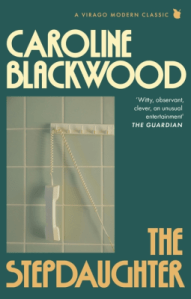
5. The Stepdaughter by Caroline Blackwood
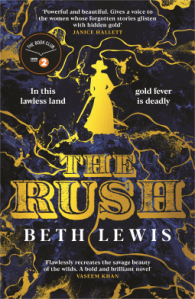
6. The Rush by Beth Lewis
7. These Wicked Devices by Matthew Plampin
8. Sinners by Elizabeth Fremantle
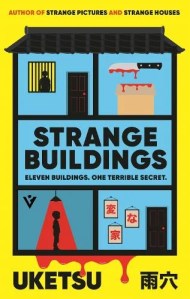
9. Strange Houses by Uketsu
10. The Spiral Staircase by Ethel Lina White
11. The Art of a Lie by Laura Shepherd-Robinson
12. Love and Other Poisons by Lesley McDowell
13. How to Lose a Lord in Ten Days by Sophie Irwin
14. The House at Devil’s Neck by Tom Mead
15. A Caribbean Mystery by Agatha Christie
16. The Lily and the Lion by Maurice Druon
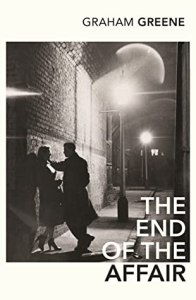
17. The End of the Affair by Graham Greene
18. Fire from Heaven by Mary Renault
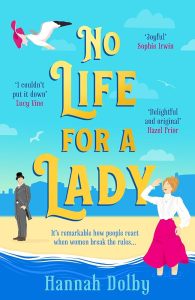
19. No Life for a Lady by Hannah Dolby
20. The Silent Companions by Laura Purcell

~

And here are my answers to Emma’s questionnaire.

1. Did you manage to finish all 10/15/20 books? If not, what kept you from completing the challenge?

Yes, I did (see above)!

2. Of all the books you read this summer, which one(s) was/were your favorite and why? Did you DNF any? Why?

My favourites were The Rush by Beth Lewis, Sinners by Elizabeth Fremantle, No Life for a Lady by Hannah Dolby and The Silent Companions by Laura Purcell. I didn’t DNF anything, but I usually don’t anyway.

3. Which book surprised you the most, either by being better or worse than you expected?

I wasn’t expecting Come, Tell Me How You Live to be so funny. Christie’s own personality really shines through in that book.

4. Did you notice any patterns in the genres you chose or enjoyed this summer?

Not surprisingly, most of the books I read were either historical fiction or mystery/crime. I did also manage to include a children’s book, a non-fiction book and some classics.

5. Which one had the best cover?

I like the cover of The Art of a Lie by Laura Shepherd-Robinson.

6. Which one was the longest? And the shortest?

The shortest was The Stepdaughter by Caroline Blackwood at 128 pages. The Lily and the Lion by Maurice Druon, at 432 pages, was the longest.

7. Did you read them mostly in print? ebook? audio?

Most of them were ebooks as they were review copies from NetGalley. The rest were print copies – I don’t tend to listen to audio.

8. Imagine you’re hosting a “20 Books of Summer” book club wrap party.
Which book would you nominate as the guest of honor, and what kind of toast or speech would you give celebrating it?

I would nominate The Rush by Beth Lewis, one of my favourite books of the summer, because it has such an interesting setting – Canada during the Gold Rush. I would invite all three main characters (Kate, Ellen and Martha) to speak to the audience about their experiences of life in such a harsh but fascinating environment.

9. Looking back at all the characters you met over the summer, which one would you want as a summer buddy for a weekend getaway, and what activity would you do together?

There weren’t actually many characters from my summer reading that I would like to spend time with! I did love Violet Hamilton from No Life for a Lady so I would join her in Hastings and we could be Lady Detectives together for the weekend.

~

Did you take part in 20 Books of Summer? How did you do?

Thanks to Emma and Annabel for hosting this year’s challenge! I’m looking forward to 2026.

Top Ten Tuesday: Books with occupations in the title

This week’s topic for Top Ten Tuesday (hosted by That Artsy Reader Girl) is “Books With Occupations in the Title (Submitted by Hopewell’s Public Library of Life)”.

There were lots of books I could have listed here, but I’ve chosen ten with different occupations in the title and have restricted myself to only using books that I’ve reviewed on my blog.

1. The Bookseller of Inverness by SG MacLean – Historical mystery set in Scotland in the aftermath of the failed 1745 Jacobite Rising.

2. The Tutor by Andrea Chapin – A fictional account of a year in the life of William Shakespeare.

3. The Glassmaker by Tracey Chevalier – This novel follows the story of a family of Murano glassmakers through several centuries.

4. The Butcher’s Hook by Janet Ellis – An unusual, unsettling novel set in Georgian London and with a protagonist more anti-heroine than heroine.

5. The Lighthouse Keeper’s Daughter by Hazel Gaynor – Historical fiction about the life of Grace Darling.

6. The Dressmaker of Khair Khana by Gayle Tzemach Lemmon – Non-fiction about a woman who starts her own dressmaking business in Taliban-ruled Afghanistan.

7. The Professor by Charlotte Brontë – Classic Victorian novel narrated by an Englishman who (like Brontë herself) becomes a teacher at a school in Brussels.

8. Death of an Author by E.C.R. Lorac – In this Golden Age crime novel from 1935, an author disappears without trace, leaving the police questioning whether he ever even existed.

9. The Pharmacist’s Wife by Vanessa Tait – A dark historical novel set in Victorian Edinburgh.

10. The Glovemaker by Stacia Brown – A glovemaker’s assistant is accused of killing her illegitimate child in 17th century England.

~

Have you read any of these? Which other books with occupations in the title have you read?

Top Ten Tuesday: Very Long Books!

This week’s topic for Top Ten Tuesday (hosted by That Artsy Reader Girl) is “Books with a High Page Count

The books I’ve listed here all have more than 800 pages. There are others that I read before I started blogging, but I’ve only included books that I’ve actually reviewed on my blog. Not surprisingly, most of them are classics.

1. Clarissa by Samuel Richardson (1536 pages) – I read this epistolary 18th century novel as part of a year-long group read and probably wouldn’t have made it to the end otherwise. I liked it overall but it was so repetitive!

2. Les Miserables by Victor Hugo (1456 pages) – I loved the story but could have done without so many digressions. It’s one of the books on this list that I really think could have been a lot shorter!

3. War and Peace by Leo Tolstoy (1440 pages) – This was another group read, although I abandoned the schedule after a while to finish it at my own pace. I enjoyed it, but liked the peace sections much better than the war!

4. The Count of Monte Cristo by Alexandre Dumas (1312 pages) – This is one of my favourite books of all time, so I don’t mind the length at all and would have been happy for it to be even longer!

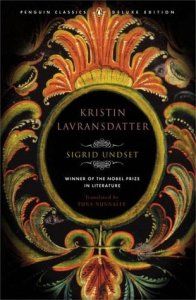
5. Kristin Lavransdatter by Sigrid Undset (1168 pages) – This bleak but fascinating Norwegian classic is technically three separate books, but often packaged together in one volume. My edition was translated by Tiina Nunnally.

6. The Sunne in Splendour by Sharon Penman (1080 pages) – This long, detailed and gripping account of the life of Richard III is one of my favourite historical novels.

7. Don Quixote by Miguel de Cervantes (1056 pages) – I read this slowly, over the course of a year, which suited its episodic structure. I found it much more entertaining than I’d expected.

8. David Copperfield by Charles Dickens (1024 pages) – I’ve read a lot of very long Dickens novels, but decided to limit my list to one book per author. This is one I remember enjoying.

9. The Far Pavilions by M.M. Kaye (964 pages) – Another of my favourite historical novels, set in 19th century India and following the story of a British orphan raised as a Hindu.

10. Go Tell the Bees that I am Gone by Diana Gabaldon (930 pages) – I loved the first three or four books in the Outlander series, but I feel that the more recent ones have been getting weaker as they get longer and longer! Still looking forward to book ten, though.

Honourable mentions: The Last Chronicle of Barset by Anthony Trollope (928 pages), Quicksilver by Neal Stephenson (922 pages), The Mirror and the Light by Hilary Mantel (912 pages) Paris by Edward Rutherfurd (848 pages), The Luminaries by Eleanor Catton (832 pages).

~

Have you read any of these? What are the longest books you’ve read? Laura is hosting Doorstoppers in December later this year, if any of these books appeal – but better get started now!

20 Books of Summer 2025: July Recap

The second month of this year’s 20 Books of Summer challenge is over and one of our hosts – Emma of Words and Peace – has compiled another questionnaire to help us recap our July reading. My answers aren’t as imaginative as the questions, but I’ve done my best!

I read eight books for the challenge this month, which means as I read nine in June I only have three more left to read in August (I’m halfway through one of them now). I’m behind with the reviews as usual, but the outstanding ones should be coming soon.

1. Which book surprised you the most this month?
Describe what made it stand out — was it a plot twist, unique character, or something unexpected?

The Art of a Lie by Laura Shepherd-Robinson had plenty of plot twists, but what really surprised me was the way it ended! It wasn’t what I expected at all – and not what I would personally have liked, although other readers may disagree.

2. If your July reading experience was a weather forecast, what would it be and why?
Did your reads feel like sunny days, thunderstorms, gentle breezes, or heatwaves?

A real mixture of weather, just like a typical British summer! There were some hot, stormy days (Elizabeth Fremantle’s Sinners), some bleak, rainy ones (The End of the Affair by Graham Greene) and also a few brighter, breezier days (Sophie Irwin’s How to Lose a Lord in Ten Days and Hannah Dolby’s No Life For a Lady).

3. Name a setting from your July books where you’d love (or hate) to take a summer vacation.
What drew you to (or repelled you from) the place?

The Syria of the 1930s, as described by Agatha Christie in Come, Tell Me How You Live, sounds like a fascinating place to visit in many ways – and a glimpse into a world and a way of life now gone forever. However, her first night in the town of Amuda, in a house infested by rats and cockroaches sounded horrific!

4. If you could turn one book into a summer festival, what would the main event be?
Describe the vibe, activities, or the bookish highlight of your imagined festival.

I would turn The Art of a Lie into an 18th century food festival. The highlight would be a sample of Hannah Cole’s delicious homemade ice cream, a delicacy most of the guests will never have seen or tasted before! As additional entertainment, the author Henry Fielding will give readings from his recently published novel The History of Tom Jones, a Foundling.

5. Choose your own adventure — recap July in the style of your choice:
You might write a diary entry, poem, comic panel, or even a simple list. Be as creative as you like!

I’m not feeling very creative at the moment, I’m afraid, so here are some very simple one-word reviews for the books I read this month:

Sinners by Elizabeth Fremantle – Tragic
The Art of a Lie by Laura Shepherd-Robinson – Twisty
The Lily and the Lion by Maurice Druon – Informative
Come, Tell Me How You Live by Agatha Christie – Funny
How to Lose a Lord in Ten Days by Sophie Irwin – Amusing
The End of the Affair by Graham Greene – Sad
Fire from Heaven by Mary Renault – Powerful
No Life for a Lady by Hannah Dolby – Entertaining

~

Are you taking part in 20 Books of Summer? How did your July reading go?

Six Degrees of Separation: From The Safekeep to Enlightenment

It’s the first Saturday of the month which means it’s time for another Six Degrees of Separation, hosted by Kate of Books are my Favourite and Best. The idea is that Kate chooses a book to use as a starting point and then we have to link it to six other books of our choice to form a chain. A book doesn’t have to be connected to all of the others on the list – only to the one next to it in the chain.
This month, we’re starting with The Safekeep by Yael van der Wouden. I haven’t read it yet but do have a copy and am hoping to read it soon. Here’s what it’s about:

It is fifteen years after the Second World War, and Isabel has built herself a solitary life of discipline and strict routine in her late mother’s country home, with not a fork or a word out of place. But all is upended when her brother Louis delivers his graceless new girlfriend, Eva, at Isabel’s doorstep – as a guest, there to stay for the season…

In the sweltering heat of summer, Isabel’s desperate need for control reaches boiling point. What happens between the two women leads to a revelation which threatens to unravel all she has ever known.
I’ve read a lot of books about the war so it would have been easy to go down that route, but I was drawn to the phrase ‘the sweltering heat of summer’ so decided to use that as my first link instead. The Hounding by Xenobe Purvis (1), about five young women who don’t fit in with their small community in 18th century England, is a book I read recently that is also set during a hot summer. It’s so hot that the river starts to dry up, affecting the trade of Pete Darling, the ferryman, who takes out his frustration on the girls, claiming he has seen them turn into dogs.

Once Upon a River by Diane Setterfield (2) follows the story of a child rescued from a river on the evening of the winter solstice in 1887. The legend of Quietly, a ghostly ferryman said to guide those in danger on the river to safety, plays an important part in the novel.

The name ‘Quietly’ leads me to The Quiet Gentleman by Georgette Heyer (3). I loved this one – it’s one of Heyer’s Regency novels but has a strong mystery element (involving a series of accidents that befall Gervase Frant, 7th Earl of St Erth) as well as a romance. I wish we saw more of the heroine, though!

The Temporary Gentleman by Sebastian Barry (4) is another book with ‘gentleman’ in the title. Barry’s novels are always beautifully written and this one is no exception. It’s set in 1950s Ghana, where Jack McNulty is writing his memoirs, looking back on his early life in Ireland and his difficult relationship with his wife.

I don’t seem to have reviewed any other books by authors with the name Sebastian, but I did find one by a Seb: The Light Ages by Seb Falk (5). This is a non-fiction book in which Falk looks at some of the advances in science, mathematics and astronomy during the medieval period and tries to dispel the idea that the Dark Ages were a time of little progress.

A similar title and a shared theme of astronomy brings me to the final book in my chain: Enlightenment by Sarah Perry (6). Perry’s novel explores the relationship between two members of a Strict Baptist community in Essex, tied together through the story of a 19th century female astronomer, Maria Vǎduva, whose ghost is said to haunt a local manor.

~

And that’s my chain for August! My links have included: hot summers, ferrymen, the word ‘quiet’, the word ‘gentleman’, Sebs and Sebastians, and astronomy.

Next month we’ll be starting with Ghost Cities by Siang Lu.

Top Ten Tuesday: Classics Set in Italy

This week’s topic for Top Ten Tuesday (hosted by That Artsy Reader Girl) is “Books Set in/Take Place During X”. We can choose the time or place.

I have chosen ten books set in Italy and to narrow things down, they are all books that a) were published at least 60 years ago and b) have been reviewed on my blog.

1. Prince of Foxes by Samuel Shellabarger

From my review: “Andrea and Belli have a number of adventures involving battles, duels, clever disguises, last-minute escapes, sieges, miracles and all sorts of trickery and deception.”

2. Romola by George Eliot

From my review: “I was gripped by the plot, fascinated by the characters and loved the portrayal of Florence, its buildings, its art and culture and its people.”

3. The Enchanted April by Elizabeth von Arnim

From my review: “The images of Italy in the spring were beautifully described, with the sun shining and the flowers bursting into bloom. I defy anybody to read this story and not want to immediately book a trip to Italy this April!”

4. Flight of the Falcon by Daphne du Maurier

From my review: “In The Flight of the Falcon she succeeds in making Ruffano, with its medieval streets, historic churches and ducal palace, seem beautiful and picturesque but claustrophobic and forbidding at the same time.”

5. The Leopard by Giuseppe Tomasi di Lampedusa

From my review: “…a beautifully written book and although it’s surprisingly short, there’s so much packed into its pages I think a re-read would be necessary to be able to fully appreciate it.”

6. Bellarion by Rafael Sabatini

From my review: “…a world of warring city states, tyrannical dukes and beautiful princesses, of powerful condottieri and bands of mercenary soldiers, of sieges and battles, poisonings and conspiracies.”

7. Amours de Voyage by Arthur Hugh Clough

From my review: “Amours de Voyage follows a group of people who are visiting Italy during the political turmoil surrounding the fall of the short-lived Roman Republic in 1849. Their story is told in the form of letters written in hexameter verse and divided into five cantos.”

8. Death in Venice by Thomas Mann

From my review: “Mann’s descriptions of Venice are beautifully written, even though at the time of Gustav von Aschenbach’s arrival the weather is dark, gloomy and oppressive, matching the overall mood of the story.”

9. A Sicilian Romance by Ann Radcliffe

From my review: “…everything you would expect from a gothic novel: An old castle with crumbling staircases and dark, dusty chambers, locked doors, family secrets, lonely monasteries, bandits, shipwrecks, dungeons and underground tunnels, thunder and lightning, and almost anything else you can think of.”

10. A Room with a View by E.M. Forster

From my review: “The beginning of the book with the portrayal of the English in Italy made me think of The Enchanted April by Elizabeth von Arnim and as for the descriptions of Italy itself, they were beautiful and vivid.”

~

Have you read any of these? Are there any other classic novels set in Italy you can recommend?

Top Ten Tuesday: Books with Mrs in the title

This week’s topic for Top Ten Tuesday (hosted by That Artsy Reader Girl) is Books with Honorifics in the Title (“…an honorific is a form of address conveying esteem, courtesy or respect. These can be titles prefixing a person’s name, e.g.: Mr., Mrs., Miss, Ms., Mx., Sir, Dame, Dr., Cllr, Lady, or Lord, or other titles or positions that can appear as a form of address without the person’s name, as in Mr. President, General, Captain, Father, Doctor, or Earl.”) (Submitted by Joanne @ Portobello Book Blog)
I noticed that I’ve reviewed exactly ten books with the word Mrs in the title, so decided to just stick to those for this week’s post. They are listed below:

1. The Other Side of Mrs Wood by Lucy Barker – The story of a successful medium in 19th century London who gets more than she bargained for when she takes on a new apprentice!

2. The Autobiography of Mrs Tom Thumb by Melanie Benjamin – A fictional memoir of the American circus performer Lavinia Warren.

3. Mrs Poe by Lynn Cullen – This novel explores the relationship between Edgar Allan Poe and the poet Frances Sargent Osgood.

4. The Mermaid and Mrs Hancock by Imogen Hermes Gowar – Set in Georgian England, this book begins with a captain selling his ship in exchange for a mermaid!

5. Mrs England by Stacey Halls – A children’s nurse takes a new position with a family in Yorkshire and quickly sense that something is not quite right.

6. The Trouble with Mrs Montgomery Hurst by Katie Lumsden – A small, quiet community in 1840s England is shaken up by the arrival of Mr Montgomery Hurst’s new wife.

7. Mrs Engels by Gavin McCrea – A fictional look at the life of Lizzie Burns, common law wife of the German philosopher Friedrich Engels.

8. Good Evening, Mrs Craven by Mollie Panter-Downes – A collection of short stories written between 1939 and 1944 and giving some insights into Britain during the Second World War.

9. Dear Mrs Bird by AJ Pearce – The first in the Emmy Lake series, about a young woman who becomes an advice columnist in wartime London.

10. Mrs Whistler by Matthew Plampin – A fictional account of the life of Maud Franklin, the model and muse of the artist James McNeill Whistler

~

Have you read any of these? Which other books with ‘Mrs’ in the title have you read?