Top Ten Tuesday: Books with fire on the cover

This week’s topic for Top Ten Tuesday (hosted by That Artsy Reader Girl) is: “Covers with [Item] on the Cover (You choose the item! It can be anything at all.)”

Tonight is Bonfire Night here in the UK (also known as Guy Fawkes Night or Fireworks Night), where we remember the failed Gunpowder Plot of 1605. Here are nine books I’ve read and reviewed on my blog – and another that I’m reading now and haven’t reviewed yet – which all have fire or flames on the cover.

1. Fire by John Boyne

2. Dark Fire by CJ Sansom

3. The Fire Court by Andrew Taylor

4. Dance of Death by Helen McCloy

5. Fire by CC Humphreys

6. Villette by Charlotte Brontë

7. Priestess of Ishana by Judith Starkston

8. The Trap by Dan Billany

9. There Came Both Mist and Snow by Michael Innes

10. The Progress of a Crime by Julian Symons

~

Have you read any of these? Can you find any other books with fire on the cover?

Six Degrees of Separation: From Intermezzo to Murder to Music

It’s the first Saturday of the month which means it’s time for another Six Degrees of Separation, hosted by Kate of Books are my Favourite and Best. The idea is that Kate chooses a book to use as a starting point and then we have to link it to six other books of our choice to form a chain. A book doesn’t have to be connected to all of the others on the list – only to the one next to it in the chain.
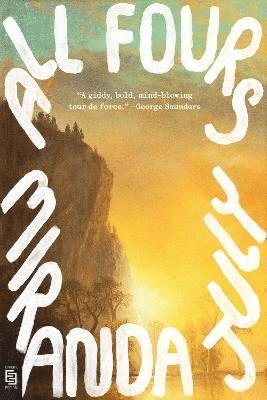
This month we’re starting with Intermezzo by Sally Rooney. As usual, it’s a book I haven’t read, but here’s what it’s about:

Aside from the fact that they are brothers, Peter and Ivan Koubek seem to have little in common.

Peter is a Dublin lawyer in his thirties – successful, competent and apparently unassailable. But in the wake of their father’s death, he’s medicating himself to sleep and struggling to manage his relationships with two very different women – his enduring first love Sylvia, and Naomi, a college student for whom life is one long joke.

Ivan is a twenty-two-year-old competitive chess player. He has always seen himself as socially awkward, a loner, the antithesis of his glib elder brother. Now, in the early weeks of his bereavement, Ivan meets Margaret, an older woman emerging from her own turbulent past, and their lives become rapidly and intensely intertwined.

For two grieving brothers and the people they love, this is a new interlude – a period of desire, despair and possibility – a chance to find out how much one life might hold inside itself without breaking.

The description of Ivan as a ‘competitive chess player’ makes me think of Adam Strauss, a character in Close to Death by Anthony Horowitz (1). Adam is a chess grandmaster and he and his neighbours become suspects in the murder of Giles Kenworthy, who has been making life difficult for them all since moving into their quiet London street. This is the fifth in the Hawthorne and Horowitz series, in which the author uses himself as a character in the books.

Another author who appears as a character in his own books is Akimitsu Takagi. I loved The Noh Mask Murder (2), which I read earlier this year in a new English translation by Jesse Kirkwood. First published in 1949, this is a very enjoyable locked room mystery and I found it interesting to learn about Japan in the post-war period, as well as the different types of masks used in Japanese theatre.

Next, a simple link using a shared word in the title. The Man in the Iron Mask by Alexandre Dumas (3) is the final book in the d’Artagnan series which begins with The Three Musketeers. A lot of people go straight from the first to the last without reading the middle books, but I would recommend not skipping any of them. In The Man in the Iron Mask, d’Artagnan and his three friends, Athos, Porthos and Aramis, become involved in a plot to free a prisoner from the Bastille who closely resembles the King of France.
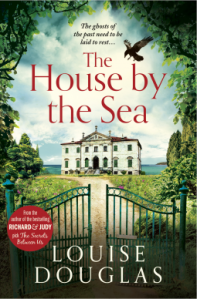
The word Bastille leads me straight to The Bastille Spy by CS Quinn (4), a fast-paced historical thriller set during the French Revolution and featuring a female spy, Attica Morgan. I described this in my review as ‘a cross between The Scarlet Pimpernel, James Bond and Pirates of the Caribbean’. It’s a book not to be taken too seriously and I’m sure a lot of readers will find it fun, but it wasn’t really for me and I haven’t continued with the sequel.

I’ve read and reviewed several other books by authors with the surname Quinn (Kate Quinn, Frances Quinn and Anthony Quinn). Apart from the Quinns, the only other author I’ve read and reviewed on my blog whose name begins with a Q is Sarah Quigley, who wrote The Conductor (5). This is a fascinating novel about the conductor Karl Eliasberg who is given the task of performing the Seventh Symphony by Shostakovich to raise morale during the Siege of Leningrad.

In Murder to Music by Margaret Newman (6), a conductor is shot dead during a choir’s performance of a new mass. Detective Superintendent Simon Hudson happens to be present in the audience and begins to investigate. However, his own girlfriend, Delia, is on the choir committee and can’t be ruled out as a suspect! This entertaining 1959 novel could have been the start of a new mystery series, but Newman changed direction and began writing romance and family sagas under other pseudonyms.
~

And that’s my chain for November. My links included: competitive chess players; authors using themselves as characters; the word ‘mask’; the Bastille; Q authors; and conductors. Intermezzo is a musical term, meaning ‘a short connecting instrumental movement’, so by finishing with Murder to Music I have managed to bring the chain full circle!

In December we’ll be starting with Sandwich by Catherine Newman.

Six Degrees of Separation: From Long Island to The White Devil

It’s the first Saturday of the month which means it’s time for another Six Degrees of Separation, hosted by Kate of Books are my Favourite and Best. The idea is that Kate chooses a book to use as a starting point and then we have to link it to six other books of our choice to form a chain. A book doesn’t have to be connected to all of the others on the list – only to the one next to it in the chain.

This month we’re starting with Long Island by Colm Tóibín. I haven’t read it, but it’s a sequel to Brooklyn, which I have read and enjoyed. Here’s what it’s about:

A man with an Irish accent knocks on Eilis Fiorello’s door on Long Island and in that moment everything changes. Eilis and Tony have built a secure, happy life here since leaving Brooklyn – perhaps a little stifled by the in-laws so close, but twenty years married and with two children looking towards a good future.

And yet this stranger will reveal something that will make Eilis question the life she has created. For the first time in years she suddenly feels very far from home and the revelation will see her turn towards Ireland once again. Back to her mother. Back to the town and the people she had chosen to leave behind. Did she make the wrong choice marrying Tony all those years ago? Is it too late now to take a different path?

~

There are lots of directions I could have gone in from this month’s starting point, but I’ve decided to link to another novel about an Irish immigrant living in New York: Norah by Cynthia G. Neale (1). It’s set in the 1850s, much earlier than the Tóibín novels, and follows the story of Norah McCabe who left Ireland during the Great Famine to start a new life in America. This is actually Neale’s third book about Norah, but I hadn’t read the first two and that didn’t seem to be a problem.

Almost the same name but a different spelling: my second book is Nora Bonesteel’s Christmas Past by Sharyn McCrumb (2). This is a novella set in the Appalachian Mountains and blending crime, history and folklore. Nora Bonesteel, an elderly woman with ‘the Sight’ is helping her new neighbours celebrate a traditional mountain Christmas when they are interrupted by the arrival of the Sheriff who has come to make an arrest. It’s part of McCrumb’s Ballad series and I read some of the full-length novels in the series years ago, before I started blogging.

The word Ballad leads me to Lyrical Ballads by William Wordsworth and Samuel Taylor Coleridge (3), a collection of poetry first published in 1798 and revised in 1802. This edition of the book contains both the original and revised versions, which I think will be of more interest to the academic reader than the casual one. It includes some of both poets’ most famous poems, including The Rime of the Ancient Mariner and Lines Written a Few Miles above Tintern Abbey.

Wordsworth and Coleridge, along with Robert Southey, were known as the Lake Poets because they lived in England’s Lake District. In The Shadow Sister by Lucinda Riley (4), our narrator, Star D’Aplièse, investigates the story of an ancestor who grew up in the Lake District and was a friend of the children’s author Beatrix Potter. This is one of my favourite books from Riley’s Seven Sisters series in which each book focuses on one of the adopted daughters of the mysterious Pa Salt.

A simple link to another novel with the word ‘shadow’ in the title next – Shadow Girls by Carol Birch (5). This is a ghost story set in a school in 1960s Manchester. I enjoyed it, but the supernatural element is only introduced very late in the novel and it’s much more ‘school story’ than ‘ghost story’ which won’t appeal to everyone.

The White Devil by Justin Evans (6) is also a ghost story set in a school – the famous boys’ school, Harrow. One of the new boys at Harrow discovers that he closely resembles Lord Byron, who attended the same school two centuries earlier. I loved the setting, the atmosphere and the Byron connection, but felt that the lack of strong characters let the book down.

~

And that’s my chain for October! My links have included: Irish immigrants in New York, the name Nora/Norah, ballads, the Lake District, the word Shadow and ghost stories set in schools.

In November we’ll be starting with Intermezzo by Sally Rooney.

Top Ten Tuesday: Books on my Autumn TBR

This week’s topic for Top Ten Tuesday (hosted by That Artsy Reader Girl) is: “Books on My Fall 2024 To-Read List”.

I have a lot more than ten books I’m hoping to read this autumn, but here’s a selection of them:

For the upcoming 1970 Club:

1. God is an Englishman by RF Delderfield
2. Passenger to Frankfurt by Agatha Christie

For Margaret Atwood Reading Month:

3. The Blind Assassin by Margaret Atwood

For Novellas in November:

4. Fire by John Boyne

Some review copies:

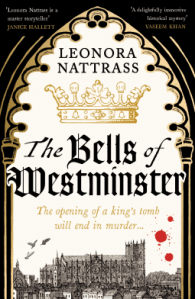
5. The Bells of Westminster by Leonora Nattrass
6. The Glassmaker by Tracy Chevalier
7. The Royal Rebel by Elizabeth Chadwick
8. The Voyage Home by Pat Barker
9. The Significance of Swans by Rhiannon Lewis
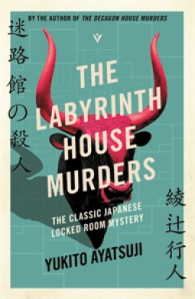
10. The Labyrinth House Murders by Yukito Ayatsuji

~

Which books are on your autumn/fall TBR?

Six Degrees of Separation: From After Story to The Testaments

It’s the first Saturday of the month which means it’s time for another Six Degrees of Separation, hosted by Kate of Books are my Favourite and Best. The idea is that Kate chooses a book to use as a starting point and then we have to link it to six other books of our choice to form a chain. A book doesn’t have to be connected to all of the others on the list – only to the one next to it in the chain.

This month we’re starting with After Story by Larissa Behrendt. As usual, I haven’t read it, but here’s what it’s about:

When Indigenous lawyer Jasmine decides to take her mother, Della, on a tour of England’s most revered literary sites, Jasmine hopes it will bring them closer together and help them reconcile the past. Twenty-five years earlier the disappearance of Jasmine’s older sister devastated their tight-knit community. This tragedy returns to haunt Jasmine and Della when another child mysteriously goes missing on Hampstead Heath. As Jasmine immerses herself in the world of her literary idols – including Jane Austen, the Brontë sisters and Virginia Woolf – Della is inspired to rediscover the wisdom of her own culture and storytelling. But sometimes the stories that are not told can become too great to bear. Ambitious and engrossing, After Story celebrates the extraordinary power of words and the quiet spaces between. We can be ready to listen, but are we ready to hear?

I was drawn to the line ‘to rediscover the wisdom of her own culture and storytelling’, which reminded me of The Story Keeper by Anna Mazzola (1) in which a young woman applies for a job as assistant to a folklorist and travels to the Isle of Skye to collect folk tales from the local people. I enjoyed this book, with its wonderfully atmospheric setting.

To the Lighthouse by Virginia Woolf (2) is also set on the Isle of Skye, where the Ramsay family have a summer home. The novel begins with six-year-old James Ramsay being promised a trip to the lighthouse the next day if the weather is fine – but the weather is not fine and James won’t get to visit the lighthouse until ten years later. Although this is one of her best known books, it wasn’t really for me and I’ve enjoyed others by Woolf much more.

Another book featuring a lighthouse is The Light Between Oceans by ML Stedman (3). Tom Sherbourne is a lighthouse keeper on the island of Janus Rock, off the coast of Australia. When a boat is washed up on the shore with a baby girl inside, Tom and his wife decide to keep her and raise her as their own child. This is a beautiful, thought-provoking novel which perfectly captures the isolation endured by lighthouse keepers and their families, as well as the guilt experienced after making an impulsive decision that you know was wrong.

The Daughters of Mars by Thomas Keneally (4) is also set, at least partly, in Australia. It tells the story of two sisters who join the Australian Army Nursing Service during the First World War and serve on a hospital ship in the Dardanelles and on the Western Front. It’s a fascinating novel but was spoiled for me by the unconventional punctuation and the distance I felt from the two main characters.

Another book about nursing during the Great War is Testament of Youth by Vera Brittain (5). This is the only non-fiction book in my chain and is Brittain’s memoir covering the years 1900-1925 and describing her experiences as a VAD nurse during the First World War. I highly recommend reading this book if you haven’t already, but be warned that it’s completely heartbreaking in places!

My final book has a shared word in the title. Margaret Atwood’s The Testaments (6) is a sequel to her earlier novel, The Handmaid’s Tale and is again set in Gilead, a dystopian community ruled by a patriarchal regime. The novel is made up of the ‘testaments’ of three characters, giving us three different perspectives of life in Gilead. I didn’t like it as much as the first book, but still found it interesting.

~

And that’s my chain for this month. My links have included: Collecting stories, the Isle of Skye, lighthouses, Australia in WWI, wartime nursing and the word ‘testament’. In October, we’ll be starting with Colm Tóibín’s Long Island.

Top Ten Tuesday: Planes, Trains and Automobiles

This week’s topic for Top Ten Tuesday (hosted by That Artsy Reader Girl) is: “Planes, Trains & Automobiles/Books Featuring Travel (books whose plots involve travel or feature modes of transportation on the cover/title) (submitted by Cathy @ What Cathy Read Next)”.

I have listed below four books featuring planes, four with trains and two with automobiles!

~

Planes

1. The Aviator’s Wife by Melanie Benjamin – The story of Anne Morrow Lindbergh, wife of the famous aviator, Charles Lindbergh, and an accomplished pilot in her own right.

2. The Hazelbourne Ladies Motorcycle and Flying Club by Helen Simonson – I’ve just recently finished this one, so no review yet. A group of ladies in post-WWI England form a motorcycle club, then come up with the idea of expanding to offer flying lessons to women.

3. Death in the Clouds by Agatha Christie – A Poirot mystery in which a woman is found dead on a plane flying between Paris and London. After landing in England, Poirot must decide which of his fellow passengers was responsible for the murder.

4. The Wild Air by Rebecca Mascull – I loved this novel about a young woman who decides she wants to become an aviator and sets out to pursue her dream.

Trains

5. Strangers on a Train by Patricia Highsmith – Only a small part of this psychological thriller is actually set on a train, but it’s the scene of a very significant meeting between a pair of strangers who find themselves discussing a plan to commit two perfect murders!

6. The Mystery of the Blue Train by Agatha Christie – Christie wrote several novels set, or at least partly set, on trains: Murder on the Orient Express and 4.50 from Paddington are two others. In this one, Poirot investigates the murder of an American heiress found dead in her compartment on the famous Blue Train.

7. The Venice Train by Georges Simenon – Another psychological novel in which a man travelling from Venice to Paris by train agrees to deliver another passenger’s briefcase to an address in Switzerland. I read an English translation by Ros Schwartz.

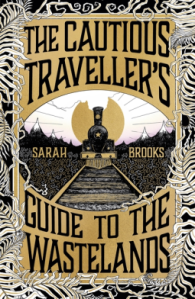
8. The Cautious Traveller’s Guide to the Wastelands by Sarah Brooks – An alternative history/fantasy novel set on the Great Trans-Siberian Express in 1899. A book that leaves us with lots to think about!

Automobiles

9. Madam, Will You Talk? by Mary Stewart – This suspense novel set in Provence is one of my favourites by Mary Stewart and features a very memorable car chase scene.

10. Maureen Fry and the Angel of the North by Rachel Joyce – A sequel to The Unlikely Pilgrimage of Harold Fry, in which Harold’s wife, Maureen, travels by car from the south of England to the north to visit a garden containing a memorial to her son.

~

Have you read any of these? Which other books can you think of featuring forms of transport?

Top Ten Tuesday: Ten Favourite Books from Ten Series

This week’s topic for Top Ten Tuesday, hosted by That Artsy Reader Girl, is “Ten Favourite Books from Ten Series” (submitted by A Hot Cup of Pleasure).

I have limited this to one series per author and have only included series where I have read most or all of the published books. I’ve linked to my reviews where available.

1. Agatha Christie’s Miss Marple series: A Murder is Announced

2. Alison Weir’s Six Tudor Queens: Katharine Parr, The Sixth Wife

3. Dorothy Dunnett’s Lymond Chronicles: The Disorderly Knights

4. Anthony Trollope’s Chronicles of Barsetshire: Doctor Thorne

5. Sharon Bolton’s Lacey Flint series: The Dark

6. Lucinda Riley’s Seven Sisters: The Shadow Sister

7. Diana Gabaldon’s Outlander series: Dragonfly in Amber

8. Andrew Taylor’s Marwood and Lovett series: The Royal Secret

9. Anthony Horowitz’s Horowitz and Hawthorne series: Close to Death

10 M.M. Kaye’s Death In… series: Death in Kashmir

~

What do you think? Have you read any of these series – and if so, do you disagree with my choices?