Six Degrees of Separation: From Rapture to The Graces

It’s the first Saturday of the month which means it’s time for another Six Degrees of Separation, hosted by Kate of Books are my Favourite and Best. The idea is that Kate chooses a book to use as a starting point and then we have to link it to six other books of our choice to form a chain. A book doesn’t have to be connected to all of the others on the list – only to the one next to it in the chain.
This month we’re starting with Rapture by Emily Maguire, which is loosely based on the legend of Pope Joan, who was supposedly the first and only female pope. I haven’t read it and am not sure if I want to, but it does sound interesting.

I found it very easy to decide on my first link this month, particularly with the recent death of Pope Francis. It’s Conclave by Robert Harris (1), a fictional account of a papal conclave, the process by which cardinals gather at the Vatican to elect a new pope. It may not sound like the most exciting subject for a thriller, but Harris makes it gripping and suspenseful.

The Vatican is my next link and leads me to The Vatican Princess by CW Gortner (2). Set in Renaissance Italy, this novel is narrated by Lucrezia Borgia, whose father Rodrigo bribes his way to the papal throne and becomes Pope Alexander VI.

City of God by Cecelia Holland (3) also tells the story of the Borgias, this time seen through the eyes of Nicholas Dawson, secretary to the Florentine ambassador to Rome. This is a complex novel, mainly concerned with political intrigue and spying, and gives a completely different perspective from the Gortner book.

Another book with the word ‘God’ in the title is Old God’s Time by Sebastian Barry (4). Set in Ireland, this novel follows Tom Kettle, a retired police detective looking back at his memories of a case from the 1960s which has been reopened. It involves one of the darkest episodes in the recent history of the Catholic Church.

In A History of Loneliness (5), John Boyne tackles the same subject from the perspective of Odran Yates, a Catholic priest. This is a fascinating novel, raising the question of whether choosing to look the other way and do nothing makes us complicit in crime.

The John Boyne novel is set in Dublin and so is The Graces by Siobhan MacGowan (6), the final book in my chain. This is the story of Rosaleen Moore, known as The Rose, who becomes known for her gifts of prophecy and healing in the early 20th century and makes a shocking deathbed confession to the priests of Mount St Kilian Abbey.

~

And that’s my chain for May! My links have included: popes, the Vatican, the Borgias, the word God, Irish authors writing on a shared theme and Dublin. The books are also all connected to the topic of religion and the Catholic Church.

In June we’ll be starting with All Fours by Miranda July.

Top Ten Tuesday: Books with House in the title

This week’s topic for Top Ten Tuesday (hosted by That Artsy Reader Girl) is “Books with the Word “[Insert Word Here]” in the Title”. I picked the word House as I’ve reviewed a lot more than ten books with that word in the title, which meant I had plenty to choose from and could cover a range of genres.

1. The Red House Mystery by A.A. Milne – Published in 1922, this is Milne’s only detective novel (although he did also write a spoof, Four Days’ Wonder). It’s a lot of fun and I wish he had written more of them!

2. This House is Haunted by John Boyne – A wonderfully entertaining and atmospheric ghost story set in Victorian England and featuring a governess who takes a position at a house which appears to be haunted.

3. The Valentine House by Emma Henderson – This dual time period novel is set in the French Alps and follows several generations of the Valentine family from 1914 to 1976.

4. The Labyrinth House Murders by Yukito Ayatsuji – An imaginative Japanese crime novel set in a house built in a labyrinth design and inspired by the Minotaur myth. I enjoyed this much more than The Decagon House Murders by the same author (which could also have been on this list).

5. The Professor’s House by Willa Cather – Moving house causes Professor Godfrey St Peter to reflect on his life and his memories of a former student. This was my first Willa Cather book and I found it slow but beautifully written.

6. A House of Pomegranates by Oscar Wilde – A collection of four fairy tales by Oscar Wilde. Although each one has a moral, they are also very entertaining! The stories are quite dark in places (like many fairy tales), but I think they’re suitable for both children and adults.

7. The Dutch House by Ann Patchett – The story of a brother and sister and their connection to the house in Philadelphia where they grew up. I hadn’t expected to enjoy this as much as I did!
8. Great House by Nicole Krauss – A novel made up of four separate stories, linked by an antique writing desk that once belonged to a Chilean poet. The desk touches the lives of each of the main characters in some way and you need to read all four stories to fully understand how they are connected.

9. The House by the Sea by Louise Douglas – Our narrator inherits a house in Sicily and intends to sell it until she discovers it’s hiding some intriguing secrets. This book combines mystery and romance with some beautiful descriptive writing.

10. The House on the Strand by Daphne du Maurier – This time travel novel is set in the author’s beloved Cornwall and moves between the 1960s and the 14th century. I love du Maurier and this is one of my favourites.

~

Have you read any of these? Which other books with House in the title have you read?

Six Degrees of Separation: From Knife to Island Song

It’s the first Saturday of the month which means it’s time for another Six Degrees of Separation, hosted by Kate of Books are my Favourite and Best. The idea is that Kate chooses a book to use as a starting point and then we have to link it to six other books of our choice to form a chain. A book doesn’t have to be connected to all of the others on the list – only to the one next to it in the chain.

This month we’re starting with Knife by Salman Rushdie. Here’s what it’s about:

On the morning of 12 August 2022, Salman Rushdie was standing onstage at the Chautauqua Institution in upstate New York, preparing to give a lecture on the importance of keeping writers safe from harm, when a man in black – black clothes, black mask – rushed down the aisle towards him, wielding a knife. His first thought: So it’s you. Here you are.

What followed was a horrific act of violence that shook the literary world and beyond. Now, for the first time, Rushdie relives the traumatic events of that day and its aftermath, as well as his journey towards physical recovery and the healing that was made possible by the love and support of his wife, Eliza, his family, his army of doctors and physical therapists, and his community of readers worldwide.

I haven’t read Knife, but I’m going to begin my chain by linking to the one book I have read by Salman Rushdie: The Enchantress of Florence (1). This unusual novel takes us to a 16th century India populated with giants and witches, where emperors have imaginary wives and artists hide inside paintings.

I read The Enchantress of Florence for a reading event called A More Diverse Universe hosted by a fellow blogger in 2013. The following year, for the same event, I read another book by an Indian author – The Twentieth Wife by Indu Sundaresan (2). It’s set in 17th century Mughal India and is the first in a trilogy of novels describing the history behind the construction of the Taj Mahal.

From twentieth to tenth now! The Tenth Gift by Jane Johnson (3) is a fictional account of the 1625 raid on Cornwall by Barbary pirates who took sixty men, women and children into captivity to be sold at the slave markets of Morocco. The novel is divided between the past and the modern day, focusing on the story of one of the young women abducted during the raid.
Another author known for her books set in her native Cornwall is Daphne du Maurier. I could have chosen several of her novels for my chain, but I’ve decided on Jamaica Inn (4). This 1936 classic features stormy weather, smugglers, locked rooms, shipwrecks, desolate moors, and a remote, lonely inn – everything you could ask for in a Gothic novel! It isn’t one of my absolute favourites by du Maurier, but I enjoyed it much more on a re-read several years ago.

Using Jamaica as my next link, Small Island by Andrea Levy (5) is about a Jamaican couple who leave their island in the 1940s to come to another island, Britain. The book is narrated by the two Jamaican characters and the British couple whose house they lodge in, giving a range of voices and perspectives.

My final book is linked by a word in the title (island) and also a theme of immigration. Island Song by Pepsi Demacque-Crockett (6) follows the stories of two people from St Lucia who start new lives in London in the 1950s. The book is inspired by the author’s own family history and I enjoyed reading about the experiences of the characters, both good and bad.

~

And that’s my chain for April! The links have included Salman Rushdie books, blogging events, positional numbers, Cornwall, Jamaica and immigration. My chain has taken me from India to St Lucia via Italy, Morocco, England and Jamaica!

Next month we’ll be starting with Rapture by Emily Maguire.

Top Ten Tuesday: Books on My Spring TBR

This week’s topic for Top Ten Tuesday (hosted by That Artsy Reader Girl) is “Books on My Spring 2025 To-Read List”.

I have a lot more than ten books I’m hoping to read this spring, but here’s a selection of them:

~

1. That Dark Spring by Susannah Stapleton – I haven’t read Susannah Stapleton’s previous non-fiction book, but her new one, about a true crime in 1920s Provence, sounds fascinating.

2. The Versailles Formula by Nancy Bilyeau – I was very excited to see the next book in the Genevieve Planché series on NetGalley last week.

3. Traitor’s Legacy by SJ Parris – The first in a new series of historical thrillers set in Elizabethan England.

4. Written on the Dark by Guy Gavriel Kay – A new book by GGK is always something I look forward to. This one is set in a world based on medieval France.

5. The Mourning Necklace by Kate Foster – I enjoyed Kate Foster’s last novel, The King’s Witches, so I’m hoping this one will be just as good.

6. The Elopement by Gill Hornby – A sequel to Hornby’s Godmersham Park, about Jane Austen’s niece, Fanny Knight.

7. Linden Rise by Richmal Crompton – When I was looking for books published in 1952 to read for the upcoming 1952 Club, I remembered I had this one on my Kindle. Not sure what else I’ll read yet.

8. White Corridor by Christopher Fowler – My recent Six Degrees of Separation post reminded me about the Bryant and May series. I enjoyed the first four books and this is the fifth.

9. The Eagle and the Hart by Helen Castor – Another non-fiction book, this time about the relationship between Richard II and Henry IV. I’ve already started it, but it’s so long I think it will take me the rest of the spring to finish it.

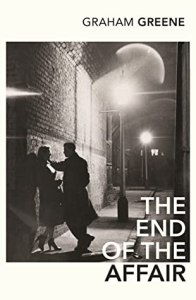
10. The End of the Affair by Graham Greene – One of the final few books on my Classics Club list. It will also be the first book I’ve read by Graham Greene.

~

What are you planning to read this spring?

Top Ten Tuesday: Books featuring doubles, doppelgängers and impersonations

This week’s topic for Top Ten Tuesday (hosted by That Artsy Reader Girl) is “Books that Include/Feature [insert your favourite theme or plot device here]”. There were lots of different options here! After some thought, I decided to list ten books with characters who have doubles and are either mistaken for them or decide to impersonate them.

1. The Scapegoat by Daphne du Maurier – I’ve read all of du Maurier’s novels and I think this is one of her best. John, an Englishman visiting France, meets his exact double, Jean de Gué, a French count. As they are both dissatisfied with their current lives, John ends up impersonating Jean, taking his place at the family château with interesting results!

2. A Tale of Two Cities by Charles Dickens – This is probably my favourite Dickens novel, featuring one of my favourite characters, Sydney Carton, who bears a strong resemblance to Charles Darnay, a Frenchman on trial for treason in 1780s London.

3. The Prisoner of Zenda by Anthony Hope – One of the most famous impersonation novels of all time is this 1894 classic by Anthony Hope in which an English gentleman, Rudolf Rassendyll, impersonates the King of Ruritania to save him from a treasonous plot.

4. The Man in the Iron Mask by Alexandre Dumas – This is the final book in Dumas’ d’Artagnan series which began with The Three Musketeers. The first half of the novel revolves around one of the musketeers, Aramis, and a plot involving a man imprisoned in the Bastille who resembles the King of France and is forced to hide his face behind an iron mask.

5. The Woman in White by Wilkie Collins – This is another favourite of mine! It begins with drawing master Walter Hartright’s meeting on a lonely London road with a mysterious woman dressed all in white who has escaped from an asylum. The next day Walter takes up a teaching position at Limmeridge House in Cumberland where he finds that one of his students, Laura Fairlie, bears a striking resemblance to the woman in white…

6. The Ivy Tree by Mary Stewart – I love Mary Stewart’s books, including this one, in which Mary Grey is approached by a man who has mistaken her for his cousin, Annabel, and persuades her to impersonate Annabel as part of a scheme to inherit his great-uncle’s fortune.

7. The Mark of the Horse Lord by Rosemary Sutcliff – This book appeared on my recent Top Ten Tuesday list of books set in the ancient world, but it fits perfectly with this week’s topic as well. In Roman Britain, Phaedrus, a slave, is asked to impersonate King Midir of the Dalriadain, whom he closely resembles and who has been overthrown by a usurper queen.

8. The Great Impersonation by E. Phillips Oppenheim – The title says it all! This entertaining impersonation novel from 1920 begins with Everard Dominey meeting his doppelganger in an African desert and coming up with a plan to steal his identity.

9. Dance of Death by Helen McCloy – Published in 1938, this is one of a series of detective novels featuring the psychiatrist Dr Basil Willing. The body of a young woman is found buried in snow in a New York street and is quickly identified by the police – but the mystery deepens when they interview her cousin, who looks very like the dead girl and claims she had been asked to impersonate her.

10. Destination Unknown by Agatha Christie – This is a standalone thriller rather than a detective novel. Our heroine, Hilary Craven, encounters a British secret agent in a Casablanca hotel who persuades her to impersonate a dying woman whom she resembles. He hopes she will be able to locate the woman’s husband, one of a group of scientists who have disappeared. Maybe not one of Christie’s best, but I still enjoyed it.

~

Have you read any of these? Can you think of any other books where a character has a double and/or impersonates them?

Six Degrees of Separation: From Prophet Song to The Old Man’s Birthday

It’s the first Saturday of the month which means it’s time for another Six Degrees of Separation, hosted by Kate of Books are my Favourite and Best. The idea is that Kate chooses a book to use as a starting point and then we have to link it to six other books of our choice to form a chain. A book doesn’t have to be connected to all of the others on the list – only to the one next to it in the chain.

This month we’re starting with Prophet Song by Paul Lynch. It’s not a book I’ve read, but here’s what it’s about:

“On a dark, wet evening in Dublin, scientist and mother-of-four Eilish Stack answers her front door to find the GNSB on her step. Two officers from Ireland’s newly formed secret police are here to interrogate her husband, Larry, a trade unionist.

Ireland is falling apart. The country is in the grip of a government turning towards tyranny and when her husband disappears, Eilish finds herself caught within the nightmare logic of a society that is quickly unravelling. Soon, she must decide just how far she is willing to go to keep her family safe.

Exhilarating, terrifying and propulsive, Paul Lynch’s Booker Prize-winning novel is a devastating vision of a country falling apart and a moving portrait of the resilience of the human spirit when faced with the darkest of times.”

~

It can be difficult to know where to begin when you haven’t read the starter book. I’m going to focus on two words from the first sentence of the blurb – Dublin and scientist. The Coroner’s Daughter by Andrew Hughes (1) is also set in Dublin – in this case in the 19th century – and features a young woman, Abigail Lawless, who, as the title suggests, is the daughter of a coroner. The novel follows Abigail’s investigations into the deaths of a maid and her newborn baby, as well as her determination to pursue her passion for astronomy and forensic science at a time when they were not considered suitable interests for a woman.

Next, a simple link using the word ‘daughter’. Faro’s Daughter by Georgette Heyer (2) was published in 1941 and is one of her Georgian novels, set slightly earlier than her more famous Regencies. The hero, Max Ravenscar is enlisted by his aunt to prevent the marriage of her son, Adrian, to Deb Grantham, the hostess of a gaming house. Although Heyer is always entertaining, this book isn’t one of my favourites as I never really warmed to the characters.

The word ‘faro’ makes me think of ‘pharaoh’. In fact, it has been suggested that the name of the card game faro could be derived from the picture of a pharaoh on an early set of cards. When Women Ruled the World by Kara Cooney (3) is a biography of six female rulers of Ancient Egypt – Merneith, Neferusobek, Hatshepsut, Nefertiti, Tawosret and Cleopatra. I found it interesting because, apart from Cleopatra, I knew nothing at all about these female pharaohs, but I also felt that I didn’t learn as much about them as I would have liked because Cooney spent too much time drawing parallels with modern day world leaders, which seemed to be the real focus of the book.

A much more enjoyable non-fiction book about female rulers is The Dark Queens by Shelley Puhak (4). The book explores the lives of Brunhild and Fredegund, who belonged to the Merovingian dynasty in the 6th century and ruled over large areas of what are now known as France and Germany. Not knowing anything about either of these queens, I found this book completely fascinating and also very entertaining, although it might not suit readers who want something more academic.

I’m linking to another book with the word ‘dark’ in the title now: Full Dark House (5), the first book in Christopher Fowler’s series about two octogenarian detectives, Arthur Bryant and John May, who work for the Peculiar Crimes Unit, a branch of the London Metropolitan Police created to deal with unusual cases. This book includes flashbacks to Bryant and May’s first ever case involving some murders in a London theatre during the Blitz, while another mystery begins to play out in the modern day. I really enjoyed the first four books in this series and still need to continue with the others!

Another book with an elderly protagonist is The Old Man’s Birthday by Richmal Crompton (6). Matthew Royston is preparing to celebrate his ninety-fifth birthday with a family party to which he has invited all of his children, grandchildren and great-grandchildren. The novel is set during the course of that one day, as we meet each member of the family in the hours leading up to the party. I really enjoyed it and although I can’t find a way to link it back to the starting book this month, I think it’s a good place to end my chain!

~

And that’s my chain for March. My links included scientists in Dublin, the word ‘daughter’, faro/pharaoh, women rulers, the word ‘dark’ and elderly characters.

In April we’ll be starting with Salman Rushdie’s memoir, Knife.

Top Ten Tuesday: Books set in the Ancient World

This week’s topic for Top Ten Tuesday (hosted by That Artsy Reader Girl) is “Books Set in Another Time”.

This is perfect for me as historical fiction is one of my favourite genres. There are many different ways I could approach this topic, but I’ve decided to list ten books I’ve read that are set in the Ancient World (most of my historical reading is set in much more recent periods). To make the list more fun, the final two books aren’t just set in the ancient past, they were also written then.

~

1. Death Comes as the End by Agatha Christie – Christie’s only historical novel is set in Ancient Egypt and deals with a series of murders in the household of the priest Imhotep. The book is written mainly from the perspective of Imhotep’s daughter, Renisenb, who has just recently returned to her father’s home after being widowed and finds that many tensions and rivalries have formed between the family members during her absence. It’s an unusual Christie novel, but one I really enjoyed!

2. I, Claudius by Robert Graves – This is the first part of Graves’ fictional autobiography of the Roman emperor, Claudius, who ruled from AD 41 to 54. This book deals with Claudius’ childhood and his experiences during the reigns of his three predecessors, Augustus, Tiberius and Caligula. I found it a bit intimidating at first due to not being very familiar with the lives of the emperors, but I did enjoy the book and am still planning to continue with the second one.

3. The King Must Die by Mary Renault – This is the first of Renault’s two novels about the life of Theseus, the Greek hero most famous for the slaying of the Minotaur. One of the things I loved about this book and its sequel, The Bull from the Sea, is the way Renault gave logical, rational explanations for the various aspects of the myth instead of magical ones, which made the two books feel more like historical fiction rather than mythology retellings.

4. Babylonia by Costanza Casati – This book is set in the 9th Century BC at the time of the Assyrian Empire and tells the story of the legendary Semiramis, who is thought to be based on the historical Assyrian queen, Sammuramat. I had never read a book set in this period before, so I found it fascinating. It’s also beautifully written and I would happily recommend it to anyone interested in reading about periods of Ancient history other than Greek, Roman or Egyptian!

5. The Mark of the Horse Lord by Rosemary Sutcliff – This book is set during the time of the Roman Empire, in what we now call Scotland and the north of England. The story follows the gladiator Phaedrus who becomes part of a plot to impersonate King Midir of the Dalriadain. Although it’s marketed as a book for younger readers, I found it had a lot to offer adults too.

6. House of Names by Colm Tóibín – Set in Ancient Greece, this is a retelling of the tragic story of the House of Atreus, described in Aeschylus’ trilogy, the Oresteia. Written from the perspectives of first Clytemnestra, then her children Orestes and Electra, I wasn’t very familiar with this story at the time when I read Tóibín’s novel, but having read several other retellings since then I think I might get more out of this one if I read it again.

7. The Cicero trilogy by Robert Harris – I’m cheating slightly here because this is three books, not just one: Imperium, Lustrum and Dictator, which together tell the story of the Roman statesman and lawyer Marcus Tullius Cicero, as seen through the eyes of his slave and secretary, Tiro. I loved all three of these novels and had never imagined reading about Roman politics could be so exciting!

8. Priestess of Ishana by Judith Starkston – I’m including this one because it’s the only book I’ve read set in the Bronze Age. It’s historical fantasy but set in a world based on the real Hittite Empire and the main character, Tesha, is inspired by the historical Puduhepa, a priestess of Ishtar. There are three other books in the series, but I’ve only read the first one.

9. The Odyssey by Homer – The first eight books on my list are historical fiction, but the final two are works that were both set and written in the ancient past. There are many different versions of Homer’s Odyssey, and I read a translation by T.E. Lawrence from 1932. It was very readable and captured the excitement of Odysseus’s adventures, but I would be interested to see how a more modern translation compares.

10. The Epic of Gilgamesh – This epic poem was written on a set of clay tablets from ancient Mesopotamia which were discovered in the 19th century and are believed to date from around 2000 BC. It tells the story of Gilgamesh, a powerful Sumerian king, and his relationship with his friend Enkidu. I read a translation by Andrew George and found it surprisingly easy to read and also very enjoyable.

~

There are several more books I could have included on this list, but I had to restrict myself to ten and wanted to represent as many different periods and locations as I could.

Have you read any of these? Which other books set in the Ancient world can you think of?