My Commonplace Book: September 2018

A selection of words and pictures to represent September’s reading:

commonplace book
noun
a book into which notable extracts from other works are copied for personal use.

~

Sometimes, he wondered at the choices a man made in his life: what a chaotic road had been laid behind him of carefully made plans and rushed decisions, rapid shifts and backtracks. Where might that road have led him if any one of them had been different? Sometimes, the thought left him light-headed, as if he were looking out over an abyss, no road laid before him, all the choices yet to make and the weight of those already made pushing at his back.

Court of Wolves by Robyn Young (2018)

~

“These old corners with layers of history attached to them. They seem to exist in more dimensions than most places do.”
“What do you mean?”
“I’m not quite sure I know. I suppose I mean it exists in time as well as space. So there’s always more to it than there seems. Only you don’t quite know what.”

Bleeding Heart Square by Andrew Taylor (2008)

~

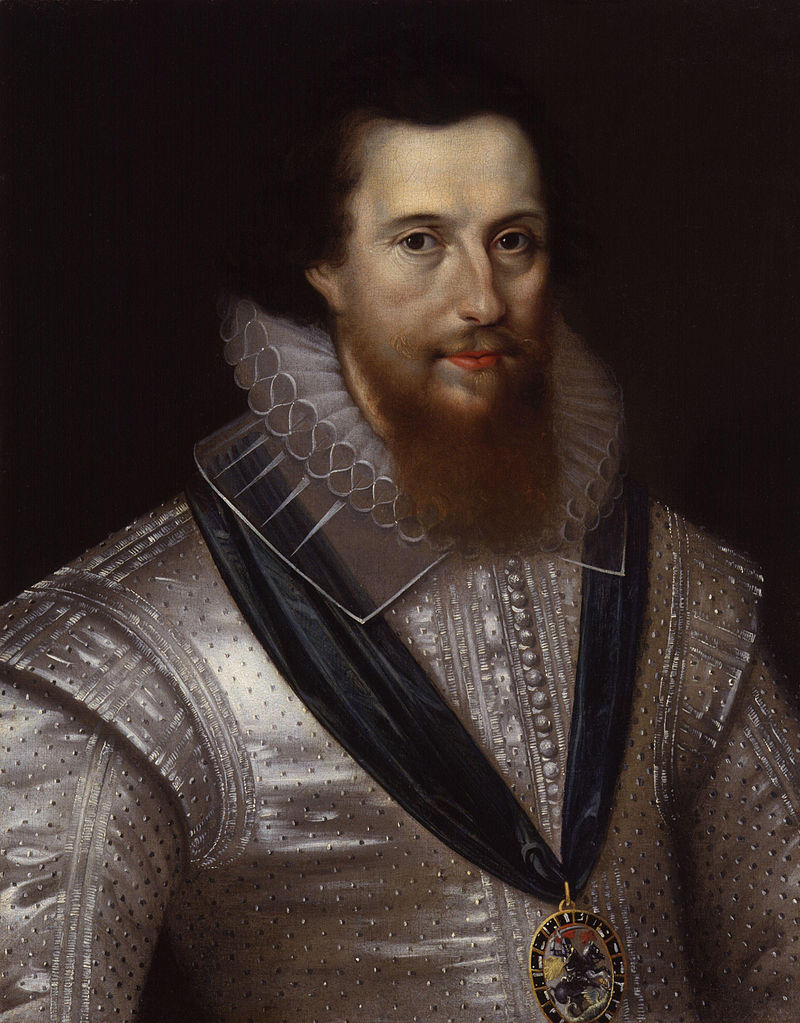
Robert Devereux, 2nd Earl of Essex

If the advice was not heeded – and Francis was well aware that there was little likelihood of persuading the Earl of any course of action that he did not sincerely believe had been instigated by himself – it was because confrontation then, now, and always, is not only between the commander in the field and the enemy he seeks to subdue, but also between the men of action on the ground and the politicians back at home.

Golden Lads by Daphne du Maurier (1975)

~

‘History is a good story, in my humble opinion,’ he said at last. ‘And at best it’s a matter of interpretation of selected facts, which may not even be genuine facts. Few historians have the chance to interview their subjects first-hand. Don’t knock it, Ruth. Listen. Write. Work out what it is you’ve written later.’

The Ghost Tree by Barbara Erskine (2018)

~

What was it like to trust no one? Was it wise? Or was there a small file, like a watchmaker’s file, that rasped away at the heart until, one day, in the crossing of a street, the middle of a sentence, you ceased to be human at all?

Now We Shall Be Entirely Free by Andrew Miller (2018)

~

‘Do please, Bella, think hard of what you are planning. You have no idea, I am sure, of what life can be like for a woman.’
‘For one who fails,’ said Cristabel. ‘I don’t mean to fail. I mean to have the world at my feet. Because I am me, not because I’m Sarum’s unwanted daughter. Just give me my chance.’

First Night by Jane Aiken Hodge (1989)

~

The deeds of Theseus on an Attic red-figured kylix (British Museum)

Before, when I have tried to understand my enemies, it has been to ‘plan’ against them. Why try now when it is finished, why not be content to curse? But while man is man he must look and think; if not forward, back. We are born asking why, and so we end. So the gods made us.

The Bull from the Sea by Mary Renault (1962)

~

Tad once told me that there is only one true queen on a chessboard. I remember asking him which one it was, and he asked me what I thought in return. I hazarded that she was always the one that won the game, and he shook his head slowly.
“No, child,” he said. “A queen may lose the game at hand, but ever is she a queen.”

Perdita by Hilary Scharper (2013)

~

The storm-centre had moved to some distance now, but the sky was still low and dark, and in the intermittent electric flicker the mountain shapes showed a curious light olive-green, lighter than the indigo clouds beyond them. The lower meadows and slopes shone paler still, stretching ghostly and frostlike where the shower had left its evanescent hoary glimmer. Dark sky, pale mountains, phantom-grey meadows…it was like looking at the negative of the normal daylight picture, a magically inverted landscape through whose pale foreground drove the sharp ink-black furrow of the Petit Gave.

Thunder on the Right by Mary Stewart (1957)

~

Nell was not impressed by his revelation. The highborn were always up to no good, but what of it? No matter who sat on the throne at Westminster, she’d still be fretting about that leak in the roof and her daughter’s need for new shoes.

Cruel as the Grave by Sharon Penman (1998)

~

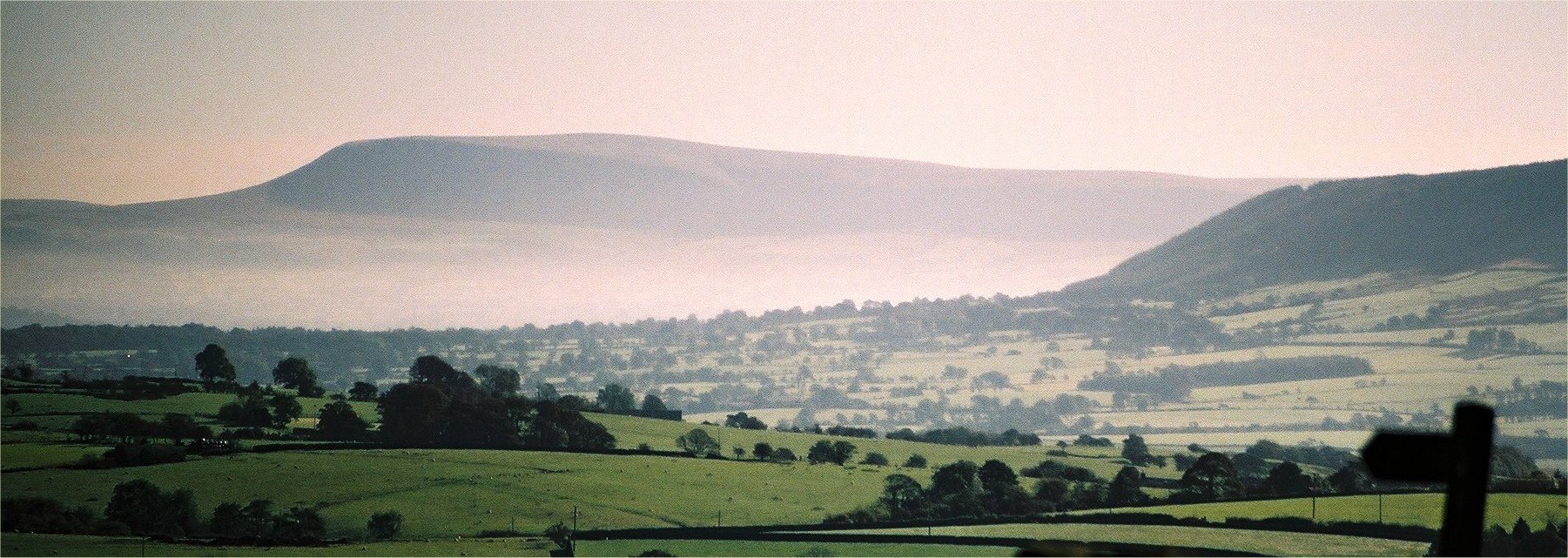
Pendle Hill, Lancashire

‘People think in pictures,’ I said. ‘Sometimes if you jog their memories with one picture, it helps to release others. People remember more than they think, but their memories are stored deep and you need to find a way to bring them to the surface.’

The Craftsman by Sharon Bolton (2018)

~

‘No? She wanted advice, just like you. I told her to go home and cook her husband’s dinner. Instead she went to Spain where she was murdered. People don’t want advice. They want to be told that what they want to do is right.’

Dark Summer in Bordeaux by Allan Massie (2012)

~

The extraordinary pleasantness of the last days of a holiday does not make a determined man want to be on holiday forever; he enjoys each second with peculiar gusto just because he is prepared to leave at an appointed time.

Harriet by Elizabeth Jenkins (1934)

~

Favourite books read in September:

The Craftsman, Bleeding Heart Square and Harriet

Where did my reading take me in September?

England, France, Ancient Greece, Spain, Italy, Scotland, Canada

Authors read for the first time in September:

Hilary Scharper and Elizabeth Jenkins

~

Have you read any of these books? Which books did you enjoy in September?

My Commonplace Book: August 2018

A selection of words and pictures to represent August’s reading:

commonplace book
noun
a book into which notable extracts from other works are copied for personal use.

~

Yet even without deliberately attempting to cut and discard pieces of a story, years after giving a full and just accounting of an event, a man may discover himself a liar. Such lies happen not by intent, but purely by virtue of the facts he was not privy to at the time he wrote, or by being ignorant of the significance of trivial events. No one is pleased to discover himself in such a strait, but any man who claims never to have experienced it is but stacking one lie on top of another.

Fool’s Errand by Robin Hobb (2001)

~

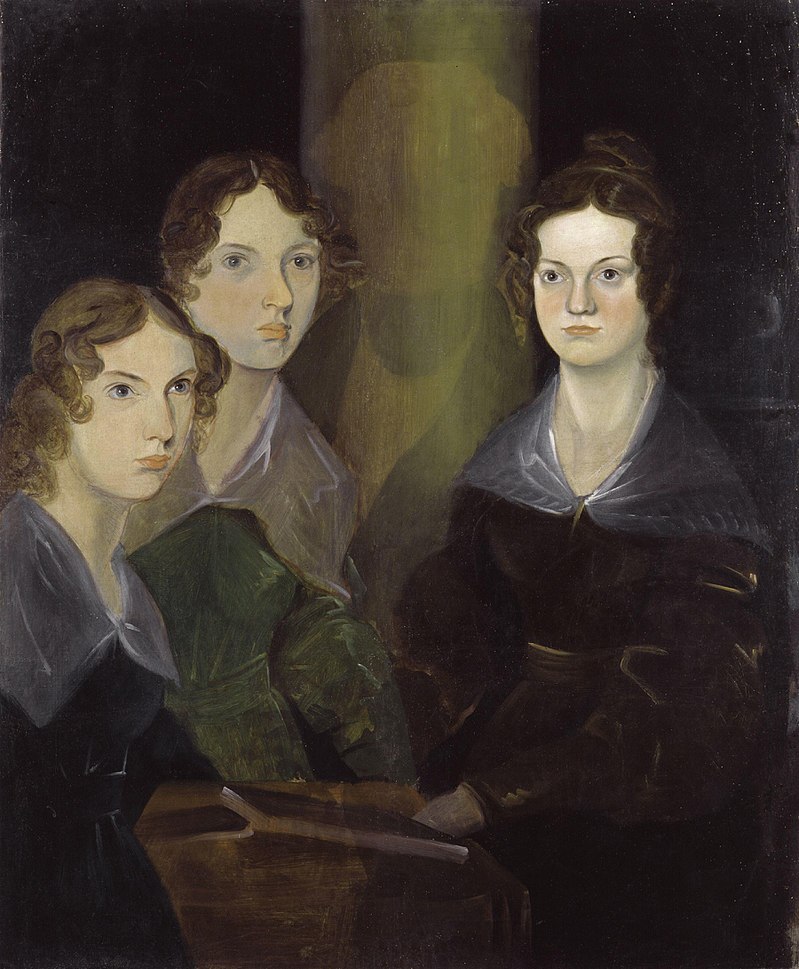
Branwell Brontë’s portrait of Anne, Emily and Charlotte.

‘That’s just what I feel. What is profoundly personal cannot be exposed without -‘ Emily stopped.

‘Without what?’

‘Betraying it.’

‘Well! But what about our work?’

‘That’s fiction. It’s the stuff of your experience, perhaps, but not the stuff of your souls.’ She spoke quite matter-of-factly and without any special emphasis; yet Anne and Charlotte were silenced.

Dark Quartet by Lynne Reid Banks (1976)

~

Two steps. Two steps were all it took. An ocean; a universe. A gulf separating innocence from almost certain damnation. And yet innocence can be a burden and above all rarely profitable. Innocence affords private satisfaction; money and power simple recompense.

The Lady Agnès Mystery by Andrea Japp (2006)

~

“The trouble is,” said Laura, “walking in Venice becomes compulsive once you start. Just over the next bridge, you say, and then the next one beckons.”

Don’t Look Now and Other Stories by Daphne du Maurier (1971)

~

Achilles’ surrender of Briseis to Agamemnon

Would you really have married the man who’d killed your brothers?

Well, first of all, I wouldn’t have been given a choice. But yes, probably. Yes. I was a slave, and a slave will do anything, anything at all, to stop being a thing and become a person again.

I just don’t know how you could do that.

Well, no, of course you don’t. You’ve never been a slave.

The Silence of the Girls by Pat Barker (2018)

~

‘Germany will declare war on France tomorrow, if she hasn’t already done so. As for us, we shall be in by Tuesday at the latest!’

‘How can you be so sure?’ Paul demanded. ‘Grenfell rang two days ago and said it depended upon half-a-dozen unknown factors, any of which might result in us standing aside.’

Franz said, ‘My dear boy, the politicians are the clowns who provide the curtain raiser, an entirely different cast act the play!’

Post of Honour by R.F. Delderfield (1966)

~

‘In my work I never calculate on persons, as apart from what I see them do. A person more or less is of no account in state affairs – it is what he promotes and what he does that I have to reckon with. I see your recent actions and your future intentions, and I hold them to be invidious. So I am not interested in emotional recollections of the kind of person you are, or seemed to be. I only work on what I see you doing.’

That Lady by Kate O’Brien (1946)

~

Coat of arms of Henry VII, founder of the House of Tudor

A man who carries the blood of Lancaster in his veins and has the Welsh dragon at his heel is a constant threat to York. The time may not be yet, Harri, but when the time comes, it is to you that the followers of the dragon will look for leadership. I look towards the crown for you – a Tudor crown.’

The Tudor Crown by Joanna Hickson (2018)

~

‘But you see,’ she said, ‘we are not either of them. However much we care for other people, we cannot become them. People can only do as much as they are. It may be more than we could do, it may be less, but very often it will be different. Sometimes that is very hard to bear, as I know you know.’

Marking Time by Elizabeth Jane Howard (1991)

~

Title page of The Lamentation of a Sinner by Catherine Parr

She looked round the gallery. ‘This is my favourite place in this palace. Where I can walk undisturbed, and rest my eyes on its treasures.’

‘There is much beauty here.’

‘The clocks remind me that however frantically courtiers plot and plan beyond these doors, time ticks by regardless.’ She looked at me directly with her hazel eyes. ‘Taking us to our judgement.’

Lamentation by CJ Sansom (2014)

~

What a happy woman I am living in a garden, with books, babies, birds, and flowers, and plenty of leisure to enjoy them! Yet my town acquaintances look upon it as imprisonment, and I don’t know what besides, and would rend the air with their shrieks if condemned to such a life. Sometimes I feel as if I were blest above all my fellows in being able to find my happiness so easily.

Elizabeth and Her German Garden by Elizabeth von Arnim (1898)

~

A serious note crept into Elizabeth’s voice. ‘There is much to be said for a lack of ambition. I would not be sorry should you think less of advancement and more of the content to be had in small things.’

‘No more would I, should we be allowed that luxury.’

She ignored the implication, sought to counter it. ‘Surely we should be able to find much to take pleasure in within our own bounds.’ There was a sound of scuffling from above their heads, followed by a shriek and a succession of giggles. ‘Family for one. Our children healthy and happy and full of life.’

By Sword and Storm by Margaret Skea (2018)

~

Favourite books read in August:

Fool’s Errand, Dark Quartet, Lamentation and Marking Time.

Where did my reading take me in August?

England, France, Italy, Crete, Ireland, Israel, Ancient Greece, Spain, Germany, Scotland

Authors read for the first time in August:

Lynne Reid Banks, Andrea Japp, Pat Barker, Kate O’Brien, Margaret Skea

~

Have you read any of these books? Which books did you enjoy in August?

My Commonplace Book: July 2018

A selection of words and pictures to represent July’s reading:

commonplace book
noun
a book into which notable extracts from other works are copied for personal use.

~

She was sure that only those who had never had freedom understood its true worth, a treasure to be guarded at all times and never to be lost again.

Claudine’s Daughter by Rosalind Laker (1979)

~

If we do not alter with the times, the times yet alter us. We may stand perfectly still, but our surroundings shift round and we are not in the same relationship to them for long; just as a chameleon, matching perfectly the greenness of a leaf, should know that the leaf will one day fade.

A Game of Hide and Seek by Elizabeth Taylor (1951)

~

Suspected witches kneeling before King James

‘But the Devil is not so cunning as he believes. He has left certain marks on the bodies of those whom he has claimed as his own. He most commonly shows favour towards a particular type of woman. Sometimes she is poor. Often she is unmarried. She may also be skilled in the art of healing.’

Despite the cool of the old stone church, Frances felt her body prickle with a rising heat.

The King’s Witch by Tracy Borman (2018)

~

‘Now, do listen, Deb! Seven hundred pounds for the bays and a new barouche! Well, I can’t think where the money is to come from. It seems a monstrous price.’

‘We might let the bays go, and hire a pair of job horses,’ suggested Miss Grantham dubiously.

‘I can’t and I won’t live in Squalor!’ declared her aunt tearfully.

Faro’s Daughter by Georgette Heyer (1941)

~

The chief pleasure connected with asking an opinion lies in not adopting it.

Desperate Remedies by Thomas Hardy (1871)

~

Portrait of René Descartes

He ran his hand along a shelf, but was not checking for dust. ‘One book is not enough. Never enough. What one needs is a library. A library is an investment in the future, Helena.’

The Words in My Hand by Guinevere Glasfurd (2016)

~

‘Have you noticed what is left, at the end of the day, as it were, after all these ancient civilizations have been and gone, disappeared into the mists of time?’

Mrs Wilkinson smiled vacantly as she held her wine glass to her lips.

‘I’ll tell you,’ he said, smiling disarmingly. ‘The beautiful things that people have made, and, occasionally, if they are lucky, the things that they have said. That is all that remains. Not fame, nor fortune or notoriety: these things pass…we take very seriously the gift of art and literature, as these are the things that will be left after all our empires are gone.’

My Beautiful Imperial by Rhiannon Lewis (2017)

~

It is a great prophet, is the sea: one need only sit upon the shore for a time to know that the answers to all mysteries are contained within the chanting of the waves. But we have lived apart from the sea for so long that we no longer speak its language. And so we look upon it like deafened men towards a singer, trying to understand what has been lost to us.

Smile of the Wolf by Tim Leach (2018)

~

‘Well now, suppose you got out the Meccano and made a pretty elaborate crane. Then suppose you took it to pieces again and handed just those bits to your boys and told them to make a crane. Each boy would produce something different, and each would have a few bits over, which they’d just have to use up anyhow. We’ve been given just such an assortment of bits – but we don’t even know whether they should make up into a crane or a windmill or a bridge. For instance, why am I here? Why did your precious Chief Constable get me down? What am I supposed to be investigating?’

Appleby’s End by Michael Innes (1945)

~

Whitby Abbey

“You’re the daughters of a prince, Edwin’s closest marriageable kin,” said Breguswid. “Peace-Weavers, they call them. Brides who gather broken threads and weave them together to mend the hurt men cause.”

The Abbess of Whitby by Jill Dalladay (2015)

~

While it was certainly true that country folk could still be a little credulous, being far removed as they were from great seats of learning, Sarah understood that when there was a dearth of knowledge and education, people – no matter their origins – were inclined to believe just about anything communicated to them with sufficient confidence and authority. However, Sarah also knew from personal experience that when all hope was lost, when all else had failed, people were willing to try almost anything to save those that they loved.

The Way of All Flesh by Ambrose Parry (2018)

~

“Every group of people have their own stories that they create to make sense of their world. Therefore, in folk stories, in fairy tales, we see the reflection of humankind: its strengths, flaws, hopes, fears. They tell us what it takes to survive. That, Miss Hart, is why the stories are important, and why they must be protected.”

The Story Keeper by Anna Mazzola (2018)

~

Favourite book read in July:

Desperate Remedies

Where did my reading take me in July?

England, the Netherlands, Wales, Chile, Scotland, Iceland

Authors read for the first time in July:

Elizabeth Taylor, Guinevere Glasfurd, Rhiannon Lewis, Tim Leach, Tracy Borman, Ambrose Parry, Jill Dalladay

~

Have you read any of these books? Which books did you enjoy in July?

My Commonplace Book: June 2018

A selection of words and pictures to represent June’s reading:

commonplace book
noun
a book into which notable extracts from other works are copied for personal use.

~

Charlie asked a lot of questions, and if Henry couldn’t answer them, he bought a book which he read quickly and Charlie read slowly. Henry didn’t seem at all surprised by this overwhelming plenitude of objects to look at or ideas to think about, but Charlie was. It seemed to him that he had spent thirty years circling neighborhoods and buildings without even wondering what was inside. And each building was a Fabergé egg, pleasant on the outside, a treasure trove within. Henry said, “Books are like that, too.”

Golden Age by Jane Smiley (2015)

~

They had talked of it, planned it, and now here I was, to be informed. What would be the simplest way to curb a woman whose loyalties were suspect? For centuries, how had women of influence been robbed of their freedom?

“I have planned a marriage for you,” he said, fists on the arms of his chair to take his weight as he pushed himself to his feet.

Queen of the North by Anne O’Brien (2018)

~

Royal Pavilion, Brighton

Everything about Brighton pleased him: the fine streets and squares and well-planned gardens, the bow-fronted emporia and the libraries, the chop-houses, the coffee shops, the Assembly Rooms at the Castle Inn and countless other places of refreshment and entertainment, all set about that grand arena of elegant promenade, the Steine. As he turned to follow the Steine he looked across at the exotic Marine Pavilion, the King’s seaside palace, which had been that royal gentleman’s favourite residence during his days as Prince of Wales and later as Prince Regent. With its opal-tinted minarets and bulbous domes glinting with gold in the sun it had the appearance of an enormous, many-faceted Arabian Nights’ jewel set down glorious and incongruously within sight and sound of the English Channel.

Warwyck’s Wife by Rosalind Laker (1978)

~

Say good-night to Vicky, looking angelic in bed, and ask what she is thinking about, lying there. She disconcertingly replies with briskness: “Oh, Kangaroos and things.”

(Note: The workings of the infant mind very, very difficult to follow, sometimes. Mothers by no means infallible.)

Diary of a Provincial Lady by E M Delafield (1930)

~

“Very well, then. I want it understood that I’m a full third partner in this enterprise, and intend to remain so. I’m not to be put in a corner and disregarded because I am a woman. My uncle picked a good crew for this voyage; if you gentlemen think you can run away with this ship or go pirating, you’ll discover otherwise.”

The Big Book of Swashbuckling Adventure, ed. Lawrence Ellsworth (2014)

~

Helmeted Amazon with her sword and shield, 510-500 BC

‘To be an Amazon,’ she had said, striding ahead, her boots crunching a path for me, ‘is to fight, whether man or woman, virgin or mother. You are destined to become a queen, so the fight to protect your people will be both your calling and your duty, and nothing, no man, no marriage, no child, shall come before it.’

For the Immortal by Emily Hauser (2018)

~

‘Strawberry blonde!’ his voice boomed.

There had been a field of strawberries on their fruit farm, Cecily remembered. But as much as she searched, she never found a blonde one.

‘Real life,’ her mother Agnes had remarked, ‘is persistently disappointing’.

Real life, then, was like a field of red strawberries.

The Last Pier by Roma Tearne (2015)

~

Frances Howard, Countess of Somerset

Frances simplifies it, saying, ‘Imagine the King is a lit candle. The closer you stand the more light you have. But too close and you’re burned. My great-uncle wanted power more than anything, you see.’

The Poison Bed by EC Fremantle (2018)

~

Favourite books read in June:

Queen of the North and The Last Pier

Where did my reading take me in June?

USA, England, Ancient Greece, France, Italy

Authors read for the first time in June:

EM Delafield
H Bedford-Jones, Sidney Levett-Yeats, Jeffery Farnol, Johnston McCulley, Pierce Egan, John Bloundelle-Burton, Harold Lamb, Stanley J Weyman, Marion Polk Angellotti (all in The Big Book of Swashbuckling Adventure)

~

Have you read any of these books? Which books did you enjoy in June?

My Commonplace Book: May 2018

A selection of words and pictures to represent May’s reading:

commonplace book
noun
a book into which notable extracts from other works are copied for personal use.

~

My master was not often rude to people, but he replied sternly: ‘Every war is a civil war. Does the fact that armies come from different realms make the fight between them more natural? We all occupy the same realm, sir: it is called humanity.’

Tomorrow by Damian Dibben (2018)

~

Anne Boleyn

‘The guide’s here,’ she said, seeing a lady in Tudor dress advancing towards them. ‘She’s early too. And what a gown!’ It was an exact replica, in sumptuous black velvet, of the elegant attire Anne wore in her portrait. Even the French hood – no easy thing to get right – was perfect.

The Tower is Full of Ghosts Today by Alison Weir (2017)

~

‘Well, never mind about that,’ said his lordship. ‘It’s no use your saying that you’d prefer to be a governess to marrying me, because it’s absurd! No one would. Dash it, Hero, I don’t want to talk like a coxcomb, and I dare say I may want for principle, and have libertine propensities, and spend all my time in gaming-hells, besides being the sort of ugly customer no woman of sensibility could stomach, but you can’t pretend that you wouldn’t be far more comfortable with me than at the curst school you keep on prosing about!’

Friday’s Child by Georgette Heyer (1944)

~

‘The thing is to be happy if you can,’ said Arthur.

‘No; – that is not the thing. I’m not much of a philosopher, but as far as I can see there are two philosophies in the world. The one is to make one’s self happy, and the other is to make other people happy. The latter answers the best.’

The Prime Minister by Anthony Trollope (1876)

~

Flag used by the Templars in battle

‘Then I hope you are finding comfort in your memories, sire.’

William smiled a little. ‘Not all are comfortable, but they are instructive and enlightening. When I returned, I stowed them away and did not look at them again, but now it is time to make my peace with those that are still difficult, and to draw sustenance from the uplifting ones.’

Templar Silks by Elizabeth Chadwick (2018)

~

He’d grown to accept that joy was to be discovered at the edge of existence, fluttering in the corner of one’s eye, glimpsed only in those moments of serenity at dawn before one was fully awake. Happiness, when it came to Albert, was an explosion of sunlight.

House of Gold by Natasha Solomons (2018)

~

Louise apologised again. ‘I’m afraid I spoiled it. Is it a favourite of yours? I like thrillers, too. Miriam, my daughter, is trying to remould my taste. I have to keep books like that in a drawer, because if I leave them by my bed, she takes them away and substitutes a biography she thinks I should read, or one of those novels they write nowadays about uneasy people who think things for pages and pages.’

The Winds of Heaven by Monica Dickens (1955)

~

Jane Seymour

His smile vanished. ‘Jane, you have little idea of what makes a woman beautiful to men. It is not just a matter of face and form. If her heart is pure, it shines forth. If she be modest and virtuous, yet kindly withal, it is written in her face. But if she is shrewish, complaining and unkind, be she never so lovely, she cannot be beautiful.’

Jane Seymour: The Haunted Queen by Alison Weir (2018)

~

“I am afraid,” confessed Pen, “that I am not very well-behaved. Aunt says that I had a lamentable upbringing, because my father treated me as though I had been a boy. I ought to have been, you understand.”

“I cannot agree with you,” said Sir Richard. “As a boy you would have been in no way remarkable; as a female, believe me, you are unique.”

She flushed to the roots of her hair. “I think that is a compliment.”

“It is,” Sir Richard said, amused.

The Corinthian by Georgette Heyer (1940)

~

‘One thing I do know,’ I said, ‘is that there is no pleasure on this earth better than reading. I have been transported,’ I said, ‘to realms beyond my wildest imagining, to places I shall never see, for they are on the other side of the world, or do not exist at all. And I have been made to cry – and to laugh and to think and to be peaceful, and all of this I have got from books’.

The Illumination of Ursula Flight by Anna-Marie Crowhurst (2018)

~

Favourite books read in May:

The Prime Minister, House of Gold, The Corinthian and The Winds of Heaven (lots of good ones this month!)

Where did my reading take me in May?

England, Italy, Austria, Germany, the Holy Land

Authors read for the first time in May:

Damian Dibben, Anna-Marie Crowhurst, Monica Dickens

~

Have you read any of these books? Which books did you enjoy in May?

My Commonplace Book: April 2018

A selection of words and pictures to represent April’s reading:

commonplace book
noun
a book into which notable extracts from other works are copied for personal use.

~

There are no friends at Whitehall. Only allies and enemies. Among the great, power ebbs and flows according to their conjuctions and oppositions. And the rest of us are tossed about in the current, helpless to direct our course, let alone navigate our way to safety.

The Fire Court by Andrew Taylor (2018)

~

Alexander frowned. ‘I am sure you exist, John, for I can see you here praying to God. But say this: a man may wake up one day and feel happy, and wake up the next and feel as if he cannot go on, though his life remains exactly the same. Or, to take another example: two men may lose their sight. One man quickly adjusts to it and continues to lead a useful life, the other falls into despair. What does that tell us? That the mind is all! If we can control the mind, it does not matter the circumstance.’

The Pharmacist’s Wife by Vanessa Tait (2018)

~

“Circe” from Boccaccio’s De Claris Mulieribus, 1474 edition

When I was born, the name for what I was did not exist. They called me nymph, assuming I would be like my mother and aunts and thousand cousins. Least of the lesser goddesses, our powers were so modest they could scarcely ensure our eternities. We spoke to fish and nurtured flowers, coaxed drops from the clouds or salt from the waves. That word, nymph, paced out the length and breadth of our futures. In our language, it means not just goddess, but bride.

Circe by Madeline Miller (2018)

~

The universe about you is charged with opposing forces – angels and devils, good and evil, light and darkness – you can call them what you will, and as you think of things and people, you invite into them one or the other. Think evil things of a man, and you’ve done your poor best to make a devil of him.

Gentian Hill by Elizabeth Goudge (1949)

~

I do believe I begin to grasp the nature of miracles! For would it be a miracle, if there was any reason for it? Miracles have nothing to do with reason. Miracles contradict reason, they strike clean across mere human deserts, and deliver and save where they will. If they made sense, they would not be miracles.

A Morbid Taste for Bones by Ellis Peters (1977)

~

If the sixty years seemed full of brilliance and adventure to a few at the top, to most they were a succession of wayward dangers; of the three galloping evils, pillage, plague and taxes; of fierce and tragic conflicts, bizarre fates, capricious money, sorcery, betrayals, insurrections, murder, madness and the downfall of princes; of dwindling labor for the fields, of cleared land reverting to waste; and always the recurring black shadow of pestilence carrying its message of guilt and sin and the hostility of God.

A Distant Mirror: The Calamitous 14th Century by Barbara W Tuchman (1978)

~

London in the 16th Century

I usually like being by the river. I like the noise: the bellowing between ship and dock, the raucous squabbling of gulls, the shoving and shouting, the creak and groan of ropes and the slap of palms as bargains are struck. The quays reek of the scent of fish and salt air, and the refuse stranded on the beaches at low tide. Beggars pick over the debris in the mud, or snatch at scraps around the stalls. Tall ships and sturdy cogs jostle at the quays, sailed in from who knows where, destined for somewhere far from here. They set sail across the wide seas, the seas I have never seen, ploughing through the waves, bucking and rearing like horses in the wind…

The Cursed Wife by Pamela Hartshorne (2018)

~

“Patience is the capacity to endure all that is necessary in attaining a desired end. The patient man is master of his fate. The submissive man has handed his fate over to somebody else. Patience implies liberty and superiority. Impatience nearly always involves a loss of liberty. It causes people to commit themselves, to burn their boats, to put it out of their power to alter or modify their course. Patience never forsakes the ultimate goal because the road is hard. There can be no patience without an object.”

The Feast by Margaret Kennedy (1950)

~

There were men who would take the sword and with it conquer the world for their countrymen or themselves. Such men were a nuisance always, and in a world of high-explosive they were a calamity. But always History – a sentimental jade – would give them a little glory: that amid an ocean of tears and blood.

The Daffodil Affair by Michael Innes (1942)

~

Flag of Grenada

As we drew closer to Grenada, her forest summits became more sharply defined and green patches began a glimmeration among the inky blues. The distant mountains of the interior were veiled in grey mist, whiles to the west – as the afternoon gathered in – the sun melted the sky into the sea, turning them both pale-pale lemon.

Sugar Money by Jane Harris (2017)

~

Of the four only Letty used the library for her own pleasure and possible edification. She had always been an unashamed reader of novels, but if she hoped to find one which reflected her own sort of life she had come to realize that the position of an unmarried, unattached, ageing woman is of no interest whatever to the writer of modern fiction.

Quartet in Autumn by Barbara Pym (1977)

~

Favourite books read in April:

Circe and The Feast

Where did my reading take me in April?

England, Scotland, Wales, Ancient Greece, France, the Amazon, Grenada and Martinique

Authors read for the first time in April:

Vanessa Tait and Barbara W. Tuchman

~

Have you read any of these books? What have you been reading in April?

My Commonplace Book: March 2018

A selection of words and pictures to represent March’s reading:

commonplace book
noun
a book into which notable extracts from other works are copied for personal use.

~

And she wondered then what it would feel like to make a poem from words, as you might make a stitching needle from a sheep’s bone, or a vest from woven wool, or a rope bound so strong from slender horse hair that it could swing a man through the air across a cliff face. To tie one word to another and one line to the next and with it let one person enter the mind and heart of another – would that not be a fine thing to do?

The Sealwoman’s Gift by Sally Magnusson (2018)

~

“She may not have the lifestyle she could have had, but she’s happy – and free. And the two go together: You can’t be happy unless you are free, and you can’t be free until you’re truly happy – which means being true to yourself first and foremost.”

The Snow Globe by Judith Kinghorn (2015)

~

13th-century depiction by Matthew Paris of the Earl of Pembroke’s coat of arms

He raised his head to her. “Because how else do you steer a ship through a storm – especially a ship that’s already battered and leaking, with no certainty of safe harbour? If I abandon the helm and wring my hands in panic with the rest of the crew, then we go down…and fast.”

The Scarlet Lion by Elizabeth Chadwick (2006)

~

“It seems as if all the men in your family have been kindhearted, Alma. There aren’t many people like them in this world of ours.”

“There are a lot of good people, Irina, but they keep quiet about it. It’s the bad ones who make a lot of noise, and that’s why they get noticed…”

The Japanese Lover by Isabel Allende (2015)

~

Why should life be lived as a crushing tedium and unrewarded toil? Why should the haves live in splendour and the have-nots in squalor? Although I did not envy the highwayman his vices – neither drinking, gambling nor whoring were my game – I did envy his freedom. But here I was now, on the open road, as free as any highwayman.

Ill Will by Michael Stewart (2018)

~

His early life, he thought, was like the slow flip of photographs: the images were too sparse and sporadic to make any sense together, but each was so vivid that whenever one flickered to his mind, he was startled by its intensity. How could certain visions like these remain so luminous, and yet he had no recollection at all of what had come before or after?

Church of Marvels by Leslie Parry (2015)

~

With the rest of Auburn and the thousands of villages like us I have found something out, and there is a rock under my feet. Physical fear, recantations under torture, are weapons of the enemy. They are not truths. If we are not free tomorrow, we shall not be happy tomorrow. There will be no living in false content. That in all the world is certain.

The Oaken Heart by Margery Allingham (1941)

~

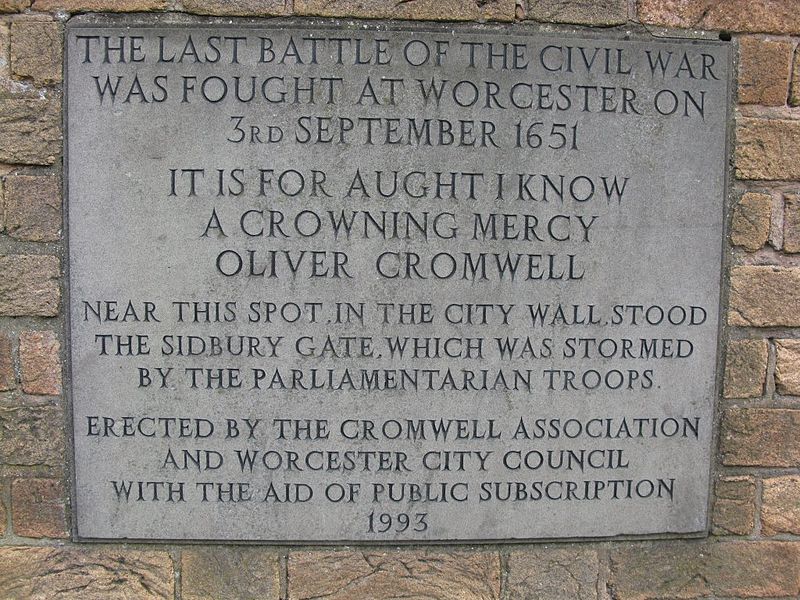
Parliamentarian propaganda depicting Prince Rupert and his dog, Boy, pillaging Birmingham

Then James realised that the prince had made no complaint about the fact that he too was branded with infamy. What was it like to be a man of twenty-three, called to lead tens of thousands of men onto the battlefields of a country not his own, and to have every aspect of his life, character and high ideals dragged in the dirt for more than twelve burdensome months?

The Winter Prince by Cheryl Sawyer (2007)

~

It was Nigel’s experience that in each of his cases there was a moment when the drama took on a third dimension and became fully alive for him, as when on the stage the entrance of a character, the delivery of a key line, or it may be only a single consummate gesture, a moment of stillness or a change in the lighting, grips the spectator so that he is no longer a spectator but a participant deeply involved with the tragedy enacted before him.

The Dreadful Hollow by Nicholas Blake (1953)

~

“Surely we should be standing up to bullying?”

“I’m sorry.”

She rose as anger surged through her. “So, you’re just going to give in?”

“I have no choice.”

“Then how will we ever change people’s attitudes?”

The Sapphire Widow by Dinah Jefferies (2018)

~

“It is really remarkable,” he said, “how quickly this sort of thing becomes all in the day’s work. But I wonder, would the interest last? Suddenly into one’s life comes a romantic and dangerous episode, and one is excited, keyed-up, acknowledging fear, anger – all sorts of relatively unfamiliar emotions. But – do you know? – I believe I should get a little bored if it went on for long.”

The Secret Vanguard by Michael Innes (1940)

~

“There are enough letters,” I said. “But Mrs Bird won’t answer most of them. Some people are in a real pickle, but she says they’re just Unpleasantnesses.”

“She would,” said Mr Collins. “I have to say, it’s all Greek to me. That’s why I stick to fiction. Making things up is somewhat easier than sorting out real life.”

Dear Mrs Bird by AJ Pearce (2018)

~

Jebel Akhdar mountain, Oman

Gradually she became aware of the hugeness of the Earth, and its incomprehensible age. She learned, finally, how small she truly was, how fleeting. It was beautiful, and not at all disheartening. Quite the opposite – she finally felt that she knew who she was, and she knew her place, and she felt totally at peace with both. She felt she could go anywhere and do anything; she felt the world turning, peacefully, resolutely, unendingly. The silence was like a magic spell; it seemed to promise infinite time in which to do all the things she wanted to do.

The English Girl by Katherine Webb (2016)

~

We are all fuel. We are born, and we burn, some of us more quickly than others. There are different kinds of combustion. But not to burn, never to catch fire at all, that would be the sad life, wouldn’t it?

Mothering Sunday by Graham Swift (2016)

~

Favourite books read in March:

The Scarlet Lion, Dear Mrs Bird, Church of Marvels, The Sapphire Widow

Where did my reading take me in March?

Iceland, Algeria, USA, England, Scotland, Oman, Sri Lanka

Authors read for the first time in March:

Sally Magnusson, Isabel Allende, Michael Stewart, Leslie Parry, Cheryl Sawyer, Graham Swift, AJ Pearce

~

Have you read any of these books? What have you been reading in March?