The Chrysalids by John Wyndham

The Chrysalids is the book that was chosen for me in the recent Classics Club Spin. The deadline for posting our Spin book reviews was supposed to be yesterday, but I got confused with the dates and am a day late! Anyway, after enjoying all of the books I’ve previously read by John Wyndham – The Midwich Cuckoos, Chocky and The Day of the Triffids – I had high hopes for this one and wasn’t disappointed. It’s another fascinating, exciting and thought-provoking novel – although not quite what I’d been expecting.

I deliberately tried not to read too much about this book before I started it, so I assumed the Chrysalids must be some sort of monstrous alien beings similar to the Triffids. However, this is not really that kind of book at all; it’s a post-apocalyptic novel exploring the changes in society brought about by an unspecified (though presumably nuclear) disaster known as the ‘Tribulation’. There are no monsters, although some of the characters view their fellow humans that way.

Our narrator, David Strorm, was born many years after the Tribulation in rural Labrador, a part of the world where normal life has resumed to some extent, although the ‘Old People’ have been almost forgotten and their technological advances have been lost in the mists of time. The people of Labrador are living an almost medieval existence, ruled by religious zealots who believe that as God created humans in his image, all human life should conform to a set of strict specifications. Anyone who is found to deviate from this in any way is considered a blasphemy and exiled to the Fringes, a wild and lawless region to the south. Unfortunately, as a result of the nuclear apocalypse, mutations have become very common.

David is still a child when his best friend Sophie is banished to the Fringes after her shoe comes off, revealing a sixth toe. Having witnessed Sophie’s fate, David becomes aware of the importance of keeping his own mutation – the power of telepathy – a secret. A mental abnormality should be easier to hide than a physical one, but the very fact that he and his telepathic friends look just like everyone else makes them a bigger threat to the religious leaders who are determined to identify and drive out every blasphemy. Can David and the others continue to keep their special ability hidden – and what will happen if they get caught?

What makes The Chrysalids so interesting is that although it was published in 1955 and set in some distant point in the future, the themes and ideas it explores are still very relevant to our lives today. Intolerance, bigotry and prejudice have sadly not gone away and there is still a tendency for some groups to judge others for not being ‘people like us’. The Chrysalids raises the interesting question of what being normal actually means and why any of us should have the right to decide whether another person is normal or not. Later in the novel another community is introduced who also consider their own way of life to be superior and to them it’s the religious fundamentalists of Labrador who are seen as primitive and savage.

Like the other Wyndham novels I’ve read, the science fiction elements in this one are really quite understated; the main focus is on the changes in society and in daily life caused by an apocalyptic or paranormal incident. I think this is why I enjoy reading Wyndham so much even though I don’t consider myself a big fan of science fiction in general. However, although I loved most of this book and found it quite gripping, I felt that the message became a bit unclear towards the end, possibly intentionally, with the introduction of that other community (it’s difficult to discuss it properly here while trying to avoid spoilers). Still, I was left with a lot to think about, which is always a good thing, and I wished there had been a sequel, or at least a few more chapters, as it seemed there was a lot more to learn about this world and our characters’ place in it. If you’ve read this book I would love to hear your thoughts!

This is book 31/50 from my second Classics Club list.
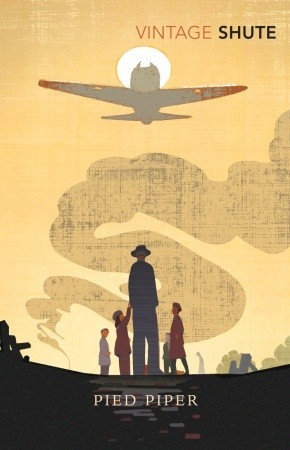
Pied Piper by Nevil Shute

Nevil Shute is an author I’ve been intending to try for a long time. His 1942 novel, Pied Piper, is on my Classics Club list and I decided to also put it on my 20 Books of Summer list to give me some extra motivation to pick it up and read it sooner rather than later! I have no idea whether this was the best Shute novel to begin with – A Town Like Alice and On the Beach are probably better known; however, it turned out to be a good choice for me.

The ‘pied piper’ of the title is John Sidney Howard, an elderly Englishman who goes to France in the spring of 1940 to spend some time fishing, relaxing and trying to come to terms with the death of his son whose plane came down in the Battle of the Heligoland Bight. It may seem a strange time to be taking a holiday in Europe, but Howard believes the situation in France is stable and that he won’t be in any danger. However, when the Nazis begin to advance much more quickly than he expected, Howard decides to return home immediately. His departure is delayed when an English couple staying in the same hotel ask him to take their two young children with him to the safety of England, but soon Howard, accompanied by little Sheila and Ronnie, is boarding the train to Paris for the first stage of his journey.

Of course, things don’t go according to plan and Howard and the children find themselves facing one obstacle after another, including sickness, cancelled trains and German bombing raids. Along the way, Howard collects more lost or orphaned children and together they try to avoid the rapidly advancing German army and make their way to safety.

I usually enjoy novels with World War II settings, but I find it particularly interesting when they were actually written during the war itself. It makes a book feel very different when you know that at the time of writing, the author had no idea what would happen next or how the war would eventually end. It’s intriguing to think of how a 1942 reader may have viewed a book like this compared to those of us who are reading it today with the benefit of hindsight and a knowledge of history.

Another thing which makes Pied Piper different from a lot of other wartime novels is that Shute’s protagonist is so ordinary – not a soldier or a spy or a romantic young lover, but a quiet, unassuming old man who becomes a hero unintentionally through a mixture of circumstance and his own basic decency and humanity. The only link between Howard and the sinister ‘Pied Piper of Hamelin’ (apart from the obvious connection with children) comes when we see Howard making whistles from hazel twigs for his young companions to play with.

Although Howard and the children witness and experience some terrible things during their journey, they also encounter several people who offer kindness and generosity, so the novel shows us both the best and the worst of human nature. The book is structured using a framing narrative where Howard is relating the story of his adventures in France to a friend in a London club during an air raid several weeks into the future. This means we know almost from the first page that Howard has survived to tell the tale, yet there’s still plenty of suspense and I was genuinely afraid for him and for the children at various points throughout the novel!

Which of Nevil Shute’s books should I read next?

~

This is book 7/20 from my 20 Books of Summer list.

~

This is also book 29/50 from my second Classics Club list.

Moll Flanders by Daniel Defoe

This 1722 classic by Daniel Defoe is not a book I was planning to read this year, if at all; I’m not really a fan of 18th century literature (I prefer the Victorians) and I should really be concentrating on the classics on my Classics Club list anyway. Then I noticed that it was being serialised by Pigeonhole in daily instalments and I was tempted – although I ended up just reading it on my own, at my own pace. Although it’s not a particularly long book (by 18th century standards), my progress through it was very slow at first, until I hit a point somewhere near the middle where I became more engaged with the story and then flew through the rest of it.

Considering that this is one of the very earliest novels in the English language, it’s surprisingly readable, although like other early authors, Defoe never uses one word if he can use fifty and doesn’t bother with things like chapter breaks either. However, with a bit of concentration it’s easy enough to follow what is happening and I certainly found reading this book a more enjoyable experience than, for example, Samuel Richardson’s Clarissa!

It’s difficult to know how much I can say about the plot without spoiling it. I find that publishers of classic novels often give away too much on the back cover or in an introduction, but in my reviews I prefer to treat them like any other book and assume that readers know nothing about the story and don’t want me to tell them exactly what’s going to happen. Having said that, the full title of this particular novel, along with Defoe’s own preface, do give quite a detailed outline of the plot, so be aware!

I think I can safely tell you that our narrator, Moll Flanders (not her real name, but one she is given much later on), is born in Newgate Prison to a woman who is convicted of theft and transported to Virginia, leaving Moll to be raised by a foster mother. What follows is the story of Moll’s ‘fortunes and misfortunes’ as she reaches adulthood, has several marriages (some happy and some disastrous), gives birth to many children, most of whom are never mentioned again, falls into poverty and is drawn into a life of crime. Although Moll does some terrible things, whether she is driven to this by necessity or whether she could have chosen a different path is open to interpretation. Either way, she never quite loses her compassion and sense of humour and you can’t help but hope that she’ll find some happiness in the end.

What is certain is that the world Moll lives in is not an easy one for an unmarried, working class woman to navigate. It’s not hard to see why she places so much importance on finding a rich husband and why, when for one reason or another each marriage fails, she searches for other ways to survive. I found it interesting that Defoe chose to write a novel like this, from a female perspective, and that, although there’s obviously a moral to the story, he did seem to have a lot of sympathy with Moll’s situation. It’s also interesting that the novel is actually set in the 17th century rather than the 18th, something I hadn’t even been aware of until I came to the end where we are told that Moll had written this account of her life in the year 1683, at the age of around seventy.

Although I can’t say that I loved this book or that it’s become a favourite classic, I’m pleased I’ve read it. Maybe I’ll read something else by Daniel Defoe one day, but first I really need to concentrate on finishing my Classics Club list!

In a Lonely Place by Dorothy B. Hughes

This is the book that was chosen for me to read in the recent Classics Club Spin – a result I was very pleased with, having loved two other novels by Dorothy B. Hughes, The Expendable Man and Ride the Pink Horse (two of my books of the year in 2020 and 2021 respectively).

Originally published in 1947, In a Lonely Place is set in Los Angeles just after World War II. Dix Steele, who had served as a fighter pilot in the Air Force, is staying in an apartment belonging to an old acquaintance, Mel Terriss, who has gone to Rio for a while. Like many young men who have returned from the war, Dix has been left damaged by his experiences and is taking advantage of the peace and quiet to finish writing his new crime novel. At least, that’s what he tells people. It is quickly made obvious to the reader that the writing is a cover for something else and that Dix is actually spending his time doing something very different.

Deciding to contact a wartime friend, Brub Nicolai, who also lives in LA, Dix is surprised to learn that Brub is now working as a police detective. Brub is delighted to renew their friendship, introducing Dix to his wife, Sylvia, and telling him about the case he is investigating – a series of stranglings that have been taking place across the city. Dix is envious of Brub’s close relationship with Sylvia, which serves as a constant reminder of his own sense of loneliness and isolation. When he meets Laurel Gray, a beautiful young actress who lives in his apartment building, it seems that he has a chance to form a new relationship of his own…if Laurel can avoid becoming the strangler’s next victim.

I had high hopes for this novel and it certainly didn’t disappoint! I’ve actually found it quite a difficult book to write about because I’m not sure what would be considered a spoiler and what wouldn’t. Having said that, there’s not really a lot of mystery involved; we know from very early in the book who the murderer is – the suspense is in waiting to find out how, if and when they will get caught. However, there are still a few surprises and some revelations that don’t come until later in the story. All three of the books I’ve read by Hughes have been so much more than just straightforward crime novels; she takes us right inside the minds of her characters and although they may be damaged, unhappy and not the most pleasant of people, she makes them feel believable and real, if not exactly sympathetic!

This book is wonderfully atmospheric – dark and tense and with the reader, like Dix, wondering who can be trusted and who knows more than they’re admitting to. It’s another great read and I’ll look forward to reading more by Dorothy B. Hughes.

This is book 28/50 read from my second Classics Club list

The Lady of the Camellias by Alexandre Dumas, fils

Translated by Liesl Schillinger

As a fan of the elder Alexandre Dumas, author of The Count of Monte Cristo, The Three Musketeers and many more, I thought it was time I tried the work of his son, Alexandre Dumas fils. His 1848 novel La Dame aux Camélias – often published in English as The Lady of the Camellias or Camille – was on my Classics Club list and when the Club announced another of their ‘dares’ this February (“Simply read a classic book from your #CClist that you classify as romantic, glamorous, sexy or alluring. It could even be a book or author that you are predisposed to love”) I thought this would be a good opportunity to read it!

The lady of the title is Marguerite Gautier, a Parisian courtesan or ‘kept woman’, who is the mistress of several men including a wealthy duke. Her nickname comes from the fact that she is rarely seen without a bouquet of camellias, red on the days of the month when she is unavailable to her lovers, white when she is free again. One evening at the opera, she catches the attention of a young man called Armand Duval. Armand becomes obsessed with Marguerite and although she informs him that he isn’t rich enough to maintain her extravagant lifestyle, he is determined to become her only lover and put an end to her involvement with other men.

We know from the beginning of the novel that Marguerite will die of consumption (tuberculosis), that she will be in debt at the time of her death and that her possessions will be sold at auction. It’s at this auction that our unnamed narrator buys a book belonging to Marguerite with an inscription by Armand Duval. The purchase of the book leads to a meeting between Armand and the narrator during which Armand tells him the tragic story of his relationship with Marguerite.

Despite knowing that the story was not going to end happily and despite not particularly liking either Armand or Marguerite, I still found The Lady of the Camellias quite gripping and difficult to put down. It’s also beautifully written (and beautifully translated from the original French by Liesl Schillinger in the Penguin Classics edition I read). Although I prefer the style of Dumas père, it’s worth remembering that Dumas fils was only twenty-three years old when he wrote this book, basing it on his own relationship with the courtesan Marie Duplessis, which probably explains the immaturity of the young Armand Duval in the novel.

After falling in love at first sight, in the way only characters in 19th century novels do, and before even getting to know Marguerite, Armand decides that he must ‘possess’ her – and then, once he has her, doesn’t trust her and fails to understand or appreciate the sacrifices she is making for him. My sympathies lay much more with Marguerite, although it took me a long time to warm to her. I think it would have helped if we had been given more information on her background, to explain why she was so obsessed with money and jewels and how she had come to live the frivolous life she was leading. Still, her story is very sad and a good example of double standards between men and women.

If you think this story sounds familiar, it has been adapted many times for stage and screen and was the inspiration for Verdi’s opera La traviata and the 2001 film Moulin Rouge.

This is book 27/50 read from my second Classics Club list.

A Bad Business by Fyodor Dostoevsky

Translated by Nicolas Pasternak Slater and Maya Slater

This is the second collection of classic short stories I’ve read from the Pushkin Press Essential Stories series. The first was I Would Prefer Not To by Herman Melville, an author I had never tried before, and I found it a good introduction to his work. In the case of Dostoevsky, I have previously read two of his novels (Crime and Punishment and The Idiot) but was curious to see what his shorter fiction would be like. This collection contains six stories, all in new translations by Nicolas Pasternak Slater and Maya Slater. They are all quite different in subject and style and I think they would give new readers a good idea of what his writing is like, while also being of interest to readers like myself who are only familiar with his full-length novels.

I think my favourite of the six stories was The Crocodile (1865), in which a civil servant, Ivan Matveich, is swallowed alive by a crocodile being exhibited in St Petersburg. There’s not much more to the plot than that, as the rest of the story revolves around the conversations Matveich has with various people from inside the crocodile, but I found it entertaining and surprisingly funny, not something I’ve really associated with Dostoevsky’s work before. It also takes a satirical look at the economic situation in Russia at that time – the German owners of the crocodile refuse to have its stomach slit open to free Matveich because they would be losing their investment, particularly as the crocodile has now increased in value due to becoming so famous!

Conversations in a Graveyard (1873), also published as Bobok, is another satire in which the narrator is sitting in a cemetery after attending a funeral and hears the disembodied voices of the recently buried telling each other their stories. The literary critic Mikhail Bakhtin describes this story as “almost a microcosm of Dostoevsky’s entire creative output,” because it involves many of the themes, ideas and character types that appear in his other work. I probably haven’t read enough of Dostoevsky to be able to fully appreciate this, but I did still find the story interesting – and it reminded me very much of Lincoln in the Bardo!

The title story, A Bad Business (1862), follows a general in the civil service who, after discussing his political ideals with friends, decides to test one of his theories by being nice to people from lower social classes. Unfortunately, when he arrives, uninvited and unwelcome, at the wedding feast of one of his subordinates, things quickly begin to go wrong. A very different type of story is A Meek Creature (1876), about the relationship between a pawnbroker and one of his customers, a girl who pawns items to earn money so that she can advertise in the newspaper for work as a governess. This is a darker story than most of the others in the book and not one of my favourites.

The four stories mentioned so far take up more than 90% of the book, which means that the final two are much shorter. One is The Heavenly Christmas Tree (1876), a sentimental and poignant little story with a fairy tale feel, and the other is The Peasant Marey (also 1876), in which the narrator recalls a childhood memory of being comforted by a peasant after convincing himself there was a wolf in the woods. I liked both of these stories but felt that they suffered from being placed at the end of the collection; I would have preferred the shorter stories to alternate with the novella-length ones to provide more variety.

Although I don’t think any of these are stories I would want to read again, apart from maybe The Crocodile, it was good to have the opportunity to explore Dostoevsky further. I’m hoping to read my copy of The Brothers Karamazov soon.

Thanks to Pushkin Press for providing a copy of this book for review via NetGalley.

Diary of a Pilgrimage by Jerome K. Jerome

I ought, of course, to sit down in front of this diary at eleven o’clock at night, and write down all that has occurred to me during the day. But at eleven o’clock at night, I am in the middle of a long railway journey, or have just got up, or am just going to bed for a couple of hours. We go to bed at odd moments, when we happen to come across a bed, and have a few minutes to spare. We have been to bed this afternoon, and are now having another breakfast; and I am not quite sure whether it is yesterday or to-morrow, or what day it is.

Jerome K. Jerome’s hilarious Three Men in a Boat is one of my favourite novels from the late Victorian period. I have since tried several of his other books – Three Men on the Bummel, The Idle Thoughts of an Idle Fellow and now this one, Diary of a Pilgrimage – hoping to find another one as good, and although I’ve found them slightly disappointing in comparison, they are still amusing and entertaining. His books also tend to be much shorter than the average Victorian classic and are perfect if you need something light and uplifting between longer, more challenging reads.

Diary of a Pilgrimage, first published in 1891, is very similar to the Three Men books in structure and style. Our narrator, J, is off on his travels again, this time on a ‘pilgrimage’ to Germany to see the famous Passion Play at Oberammergau, a performance which has been regularly taking place there since the 17th century. Accompanied by his friend, known only as B, J travels first from London to Dover, then across the English Channel to Ostend and on to their destination by train. Along the way they stay in several hotels, visit some places of interest including Cologne Cathedral and, of course, find themselves in plenty of ridiculous and embarrassing situations.

Only a short section of the book is devoted to the Passion Play itself because, as J tells us, it has already been written about many times before. He spends much more time describing the places they pass through on the journey, the funny things that happen to them and the people they meet – such as the very boring man who never stops talking:

After the dog story, we thought we were going to have a little quiet. But we were mistaken; for, with the same breath with which he finished the dog rigmarole, our talkative companion added:

“But I can tell you a funnier thing than that -”

We all felt we could believe that assertion. If he had boasted that he could tell a duller, more uninteresting story, we should have doubted him; but the possibility of his being able to relate something funnier, we could readily grasp.

But it was not a bit funnier, after all. It was only longer and more involved. It was the history of a man who grew his own celery; and then, later on, it turned out that his wife was the niece, by the mother’s side, of a man who had made an ottoman out of an old packing-case.

A lot of J’s anecdotes involve his struggles to make himself understood in various foreign languages (he finds it particularly difficult to order an omelette) and the cultural differences he notices between Germany and England. The train journey also poses lots of problems, such as buying the right tickets, finding that other passengers have taken the best seats, and trying to interpret confusing timetables:

“Drat this 1.45! It doesn’t seem to go anywhere. Munich depart 1.45, and that’s all. It must go somewhere!”

Apparently, however, it does not. It seems to be a train that starts out from Munich at 1.45 and goes off on the loose. Possibly, it is a young, romantic train, fond of mystery. It won’t say where it’s going to. It probably does not even know itself. It goes off in search of adventure.

“I shall start off,” it says to itself, “at 1.45 punctually, and just go on anyhow, without thinking about it, and see where I get to.”

Diary of a Pilgrimage is not what I would describe as a ‘must-read classic’ but it’s a bit of light-hearted fun, which I think we all need now and then!