City of Dragons by Robin Hobb

This third novel in Robin Hobb’s Rain Wild Chronicles is my favourite of the series so far – although it doesn’t really have a lot of competition, as I was disappointed with the previous two books. If you’re new to Robin Hobb, don’t start with the Rain Wild quartet; they are part of a larger sequence and not only are they not as good as the earlier books, they also fall towards the end of the sequence. You need to begin with the Farseer Trilogy, the Liveship Traders Trilogy and the Tawny Man Trilogy, all of which are excellent!

Anyway, getting back to City of Dragons, it continues the story where the previous novel, Dragon Haven, left off: with our band of stunted, poorly formed dragons and their human keepers within reach of the fabled Elderling city of Kelsingra at last. Separated from the city by the swollen, fast-flowing waters of the Rain Wild River, the group need to make their way across – but only one of the dragons, Heeby, has successfully learned to fly. The magical properties of Kelsingra could restore the dragons to their former glory, but first they need to find a way to get there…

I think the fact that I enjoyed this book more than the first two in the series is mainly due to the wonderful, atmospheric descriptions of Kelsingra. Although most of the dragons and keepers are stranded on the opposite banks of the river, a few of the characters do manage to make trips back and forth to explore the abandoned city. Different characters hope for different things from Kelsingra. Historian Alise Finbok tries to leave the buildings and treasures untouched, determined to make a careful record of everything she finds before word of the discovery begins to spread and traders and scavengers from Bingtown descend upon the city. Rapskal and Thymara, however, part Elderling now themselves, know that Kelsingra is not quite the dead, empty place it may at first appear, and they are able to connect with the memories it holds in a way that Alise cannot:

“Some of the streets she [Thymara] ran through were dark and deserted. But then she would turn a corner and suddenly be confronted by torchlight and merrymakers, a city in the midst of some sort of holiday. She had shrieked the first time, and then she recognized them for what they were. Ghosts and phantoms, Elderling memories stored in the stone of the buildings she passed.”

Although the Kelsingra sections of the book interested me most, the action moves away from the city now and then so that we can catch up with some of the other characters and subplots from earlier in the series: Alise’s estranged husband, Hest, waiting in vain for Sedric to return to Bingtown with dragon parts to cure the invalid Duke of Chalced; Leftrin, captain of the liveship Tarman, who is heading back to Cassarick to claim the keepers’ payment for the expedition; and Malta and Reyn Khuprus, expecting the birth of their first child at any moment. There’s a lot going on in this novel and the way the various storylines begin to converge towards the end sets things up nicely for the fourth and final book, Blood of Dragons, which I hope to read soon.

This is book 6/20 of my 20 Books of Summer.
The Sin Eater by Megan Campisi

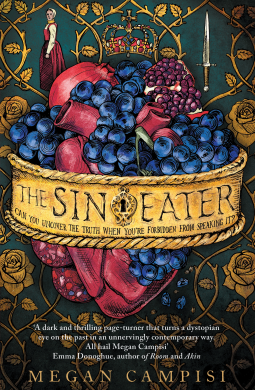
Megan Campisi’s unusual first novel is based around the historical concept of sin eating: the idea that a person close to death could call on a ‘Sin Eater’ to spiritually take on their sins. The dying person would do this by confessing to the Sin Eater, who would then consume a ritual meal consisting of a different type of food to represent each transgression. As you can imagine, this is not a pleasant job and certainly not something most people would want to do…but May Owens, the fourteen-year-old narrator of the novel, has no choice in the matter. After being arrested for stealing a loaf of bread, she is sentenced to live as a Sin Eater for the rest of her life.

With that sentence, everything changes for May. Overnight, she has become a social outcast. She is exiled to live alone on the edge of town and is forbidden to speak or be spoken to, except when listening to a confession. The heavy brass collar she is forced to wear around her neck, marked with an ‘S’, identifies her as someone to be avoided at all costs. It’s a lonely and miserable life, but May is a strong and resilient person and tries to carry out her work to the best of her ability.

Early in the novel, May accompanies another Sin Eater to the royal court to hear the deathbed confession of one of the Queen’s ladies. However, when the ritual meal is prepared, an extra item of food – the heart of a deer – is included, although it does not represent any of the sins confessed by the lady. What does the heart mean and who put it there? When another courtier falls ill and the same thing happens again, May decides to investigate.

By now you’re probably wondering about the time period in which this story is set. Well, it’s Elizabethan England – but not quite. Instead of Queen Elizabeth, Queen Bethany is on the throne, and her half-sister – the previous queen – was not Mary, but Maris. Bethany’s father did have six wives, but he was Harold II rather than Henry VIII. God is The Maker and England is Angland.

Megan Campisi states in her author’s note that the story is ‘spun out of fantasy’ and I can understand that using a fictitious setting rather than a real one would have given her more freedom to tell the story without needing to stick too closely to historical fact. It also gives the novel a bit of a fairy tale feel, as does the way most of the other characters are referred to not by names but by nicknames such as ‘Country Mouse’, ‘Willow Tree’ or ‘Fair Hair’. Sadly, though, I didn’t think any of these intriguing-sounding secondary characters really came to life; May herself was the only one who felt believable. And I’m afraid I found the thinly-disguised parallels with the Elizabethan court irritating; I think the story would have worked just as well set either at the real Elizabethan court or in an entirely fictional world.

Despite not enjoying this book as much as I’d hoped to, I do think the concept was fascinating and I can honestly say that I’ve never read anything quite like it!

Thanks to Pan Macmillan/Mantle for providing a copy of this book for review via NetGalley.

This is book 5/20 of my 20 Books of Summer.

Two from 2019: Priestess of Ishana and Call Upon the Water

I’ve been gradually catching up with my backlog of 2019 reviews throughout January and today I’m going to talk about the final two books I read in December – two books with very different settings and subjects.

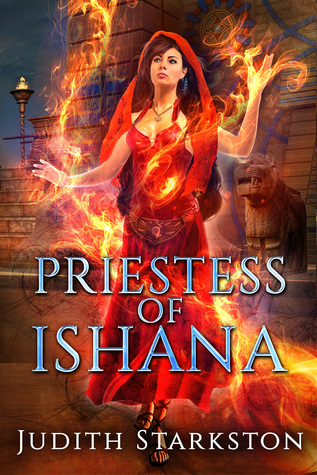
First, Priestess of Ishana by Judith Starkston. Historical fantasy set in the Bronze Age isn’t necessarily something I would usually be drawn to, but as I’ve previously enjoyed Starkston’s Hand of Fire, the story of Briseis from the Iliad, when I was offered a review copy of this one I was happy to give it a try.

The novel opens in the Hitolian city of Lawaza with a curse, a death and whispers of treason and dark magic. Suspicion falls on Hattu, the younger brother of the Great King, who has recently arrived in Lawaza, and he is quickly imprisoned and sentenced to death by the city’s Grand Votary. Tesha, the Grand Votary’s daughter, believes Hattu is innocent and sets out to clear his name, but this brings her into conflict with her father. But this is not the only challenge Tesha faces – as a priestess devoted to Ishana, the goddess of love and war, the people of her city are relying on her to overcome the evil of the Underworld.

The characters are fictional and so is the story, but the world in which the action takes place – the Hitolian Empire – is based on the real Hittite Empire. Tesha herself is inspired by the historical Puduhepa, a priestess of Ishtar (renamed here Ishana), although as I know nothing at all about the history of the Hittite Empire and hadn’t previously heard of Puduhepa, I have no idea how close the parallels are between fact and fiction. I think the setting would have provided an interesting enough story even without the sorcery, evil curses and magical creatures, but I’m not a huge fan of fantasy and other readers might feel differently. I did love the atmosphere, the strong female characters – both Tesha and her sister, Daniti – and the element of mystery. Tesha’s story continues in a sequel, Sorcery in Alpara, which is available now.

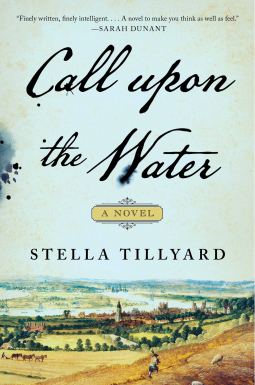
Moving on to Stella Tillyard’s Call Upon the Water, this is another historical novel but one set in a much more recent period – the seventeenth century. It follows the story of Jan Brunt, a Dutch surveyor and mapmaker who arrives in England in 1649, the year of King Charles I’s beheading. Jan is part of a team working on a new engineering project: the draining and development of the Great Level, a large expanse of marsh to the north of Ely in the English Fens. It is here that Jan meets Eliza, an illiterate young Fenland woman with whom he falls in love.

Switching between two time periods and locations – England in 1649 and Nieuw Amsterdam, the Dutch settlement which would later become New York City, in 1664 – and told in two voices, Jan’s and Eliza’s – this is a beautifully written novel and a moving, poignant story. However, I found the pace very, very slow and I struggled to stay interested in the long, detailed descriptions of Jan’s work in draining the marshes and directing the flow of the water. I don’t think I was the ideal reader for this book as I do prefer novels with stronger plots, but I did like Stella Tillyard’s writing and wouldn’t rule out reading another of her books.

Call Upon the Water has also been published as The Great Level but I have used the title of the edition I received to review from Atria Books via NetGalley.

~

Have you read these books? Do either of these subjects interest you?

Dragon Haven by Robin Hobb

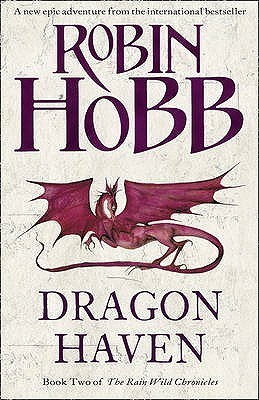
This is the second book in Robin Hobb’s Rain Wild Chronicles series, part of a larger sequence of fantasy novels set in a world known as the Realm of the Elderlings. I have been reading through the sequence in order of publication, beginning with the Farseer Trilogy and then moving on to the Liveship Traders Trilogy and the Tawny Man Trilogy. I started the Rain Wild Chronicles (a quartet rather than a trilogy) earlier this year and so far, after loving all of those previous series, I am quite disappointed with this one. In comparison with the others, I think these books feel less mature and less emotionally powerful, and although they are good enough for me to want to persevere and read all four, I am looking forward to being finished with them so I can start the final trilogy, Fitz and the Fool.

This second Rain Wild novel picks up the story exactly where the previous one ended, which is not surprising as I’m sure I read somewhere that they were originally supposed to be two halves of one long book. At the end of Dragon Keeper, we left our group of dragons and their keepers making the long and difficult journey up the Rain Wild River in search of Kelsingra, the legendary Elderling city now lost in the mists of time. In Dragon Haven the journey continues, with our characters facing a new set of trials and challenges. Who will survive and who will not? Will the dragons ever grow strong enough to fend for themselves? And will they ever find Kelsingra?

To start with the positives, I found myself enjoying the storyline following Sedric and the little copper dragon, Relpda. This surprised me because, based on the first book, Sedric was not a character I had imagined ever liking, but he undergoes a transformation in this book, largely due to the bond he forms with Relpda. And he is not the only one who changes as a result of spending time with the dragons. Without wanting to spoil too much for anyone who hasn’t got this far in the series yet, we learn a lot in this book about the connections between dragons and Elderlings – and are introduced to the intriguing idea that if dragons are coming back into the world, why not Elderlings too? I also enjoyed seeing Leftrin’s liveship, Tarman, take on more personality of his own.

Mainly, though, this book is concerned with the romantic relationships between the various characters and I have to admit, none of this interested me very much, particularly where the teenage dragon keepers were concerned. I didn’t really care whether Jerd was sleeping with Greft and whether Thymara would choose Tats or Rapskal or resist being forced to choose at all. And although I was pleased with the way Alise’s story played out, I found it quite predictable which meant I didn’t become as emotionally invested as I would have liked.

The book does end on a bit of a cliffhanger which has left me feeling more enthusiastic about reading the third book, City of Dragons. I’m hoping it will concentrate more on the dragons, Elderlings and Kelsingra rather than on trying to pair off every character regardless of whether it feels necessary or natural. I will also be interested to see, when I finally move on to Fitz and the Fool, whether I’ll be glad I read the Rain Wild novels or whether I could have missed them out.

The Dark is Rising by Susan Cooper

Since reading Susan Cooper’s Over Sea, Under Stone earlier this year, I have been looking forward to reading the rest of her The Dark is Rising sequence, especially after I was told that Over Sea, Under Stone is usually considered the weakest of the six books. The second book, The Dark is Rising, sounded appropriately dark, so I decided to read it for this year’s R.I.P event. The first thing to say is that although Over Sea, Under Stone was the first to be published, I don’t think it’s essential to read it before starting this one. They are linked by the character of Merriman Lyon and the same overarching theme, but otherwise they are quite separate stories.

The Dark is Rising, published in 1973, is set in the fictional English village of Huntercombe during the Christmas period. The novel opens with Will Stanton celebrating his eleventh birthday on Midwinter Day – 21st December – and wishing it would snow. He gets his wish because snow does soon begin to fall…and keeps on falling, covering the landscape in a thick blanket of white as far as the eye can see. Stepping outside into a world transformed by snow, Will quickly discovers that it has been transformed in other ways as well – the houses and roads of his own time have disappeared, to be replaced by the dense forest of an earlier age.

As Will begins to explore this strange, enchanted land, he learns for the first time that he is one of the Old Ones, destined to join the people of the Light in their ongoing battle against the forces of the Dark. With the help of Merriman Lyon and the mysterious Lady, Will must look for the six Signs of the Light and only when he has collected all six will he be able to ward off the powers of the Dark.

The Dark is Rising is described as a children’s classic, but even reading it as an adult I found it genuinely creepy in places. The villains, particularly the sinister cloaked Rider, are quite menacing and the way the snow keeps falling, day after day – too heavy and too persistent to be natural – adds to the general eeriness. For any tale of the conflict between good and evil to be effective, the evil needs to feel really evil and that is certainly the case here. But although the Light is obviously the ‘good’ side, Will discovers over the course of his quest that sometimes it is necessary to make sacrifices and difficult choices – and that sometimes innocent people will be made to suffer in furthering the cause of the Light.

Will himself could have been a fascinating character – an intriguing mixture of ordinary eleven-year-old boy and wise and powerful Old One – but I didn’t find him as interesting as I would have liked. This is maybe because his quest just seems a little bit too easy – he is led straight to most of the six Signs without really needing to search for them – and so he comes across as somebody to whom things happen rather than somebody who actively makes them happen. I also wondered at first why Susan Cooper had given him so many brothers and sisters (he is the youngest of nine children and I found the number of characters introduced in the opening chapters a bit overwhelming), but the significance of that soon becomes clear.

There are some elements of English folklore incorporated into the plot, such as the legend of Herne the Hunter, and Christmas traditions and customs play a big part in the story too: giving and receiving presents, decorating the tree, singing carols. While this book was a perfect choice for the R.I.P. challenge, I wish I had saved it until December as it would have been a perfect Christmas read. Anyway, I enjoyed it and am looking forward to reading the other books in the series.

This is book #4 read for this year’s R.I.P. event.

The Night Tiger by Yangsze Choo

First of all, this is a quick note to say that I am moving house this week so won’t have much time for blogging for a while – there are just so many other things that need to be done! I have prepared and scheduled some posts in advance, so you probably won’t notice any difference, but I might be slow to respond to comments or to catch up with commenting on your blogs. I’m hoping to get settled in quickly so that things can get back to normal, but meanwhile here is my review of one of last month’s reads, The Night Tiger.

***

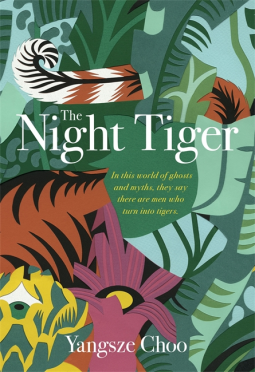
The Night Tiger was a surprise. I had been drawn to it mainly by the colourful cover and the fact that it was set in Malaya (now part of Malaysia), a country I know very little about, but I didn’t really expect to like it very much. I hadn’t read Yangsze Choo’s first novel, The Ghost Bride, because the subject didn’t appeal to me, and it sounded as though this book, like that one, would have a very strong magical realism element – and I’m not much of a fan of magical realism. Well, I was wrong about that; although there are times when the story does veer towards the fantastical, most of it is concerned with simply describing the folklore and superstitions of the Chinese people of Malaya and asking us to accept that some of these things may actually be real.

The story is set in the 1930s and is told from two different perspectives. First there’s Ren, an eleven year-old houseboy whose master, Dr MacFarlane, has recently died. While on his deathbed, the doctor asked Ren to carry out a very special task for him: to find his severed finger and bury it in his grave beside his dead body. This must be done within forty-nine days, otherwise Dr MacFarlane’s soul will be condemned to roam the earth forever. In need of new employment, Ren enters the service of another doctor, William Acton, then begins his quest to locate the missing finger.

Our other main character is Ji Lin, a dressmaker’s apprentice who has been secretly working in a dance hall in Ipoh to earn the money to pay off her mother’s gambling debts. While dancing with a salesman one night, she sees a little glass bottle fall from his pocket and, catching it before it hits the ground, she finds that it contains a shrivelled finger. This gruesome discovery leads Ji Lin to cross paths with Ren and when they each begin to have recurring dreams involving a train journey, it seems that their lives are becoming intertwined in other ways as well.

I enjoyed The Night Tiger much more than I thought I would. The setting is fascinating, of course; I have read two other books set in Malaya (The Garden of Evening Mists by Tan Twan Eng and The Separation by Dinah Jefferies) but they are very different types of books and don’t explore Chinese and Malaysian myths and legends the way this one does. The folklore surrounding the legend of the weretiger was particularly intriguing; there are hints that one could be responsible for the unexplained deaths that have been occurring around the town, and we can either believe that this is true or we can just believe that the characters in the story believe it is true, if that makes sense!

Both main viewpoint characters are easy to like; I felt closer to Ji Lin, because her story is told in the first person whereas Ren’s is told in the third, but I did love Ren too. He often seems very mature for his age – probably because he has been forced to grow up quickly due to his personal circumstances – but at other times he behaves more like the child he still is.

I’m still not sure whether I want to read The Ghost Bride, but I will look out for Yangsze Choo’s next book and see if it appeals.

Thanks to Quercus Books for providing a copy of this book for review via NetGalley.

A Brightness Long Ago by Guy Gavriel Kay

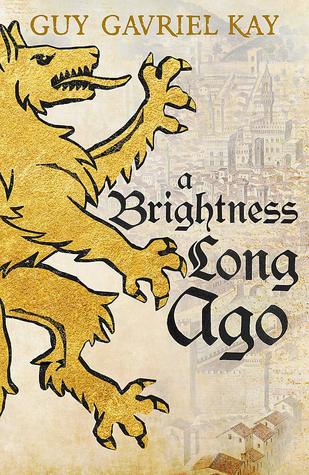
Guy Gavriel Kay’s newest novel, A Brightness Long Ago, is a prequel to 2016’s Children of Earth and Sky but although they are set in the same world and share one or two characters, each book also works as a standalone. I think this is probably my favourite of the two, although I enjoyed both.

Like most of Kay’s novels, A Brightness Long Ago takes place in a land which closely resembles a real historical setting – in this case, Renaissance Italy. Our narrator is Guidanio Cerra of Seressa, a city which, with its lagoon and canals, clearly corresponds to Venice. Guidanio is looking back at events from his past, beginning with his time at the court of Uberto of Mylasia, a cruel tyrant who once ‘sealed an enemy in a cask to see if he might observe the soul escaping when his prisoner died’ and who has become known as the Beast due to his treatment of the young girls and boys he summons to his chamber at night. As the son of a humble Seressan tailor, Guidanio knows it is a great honour to have been given a position at Uberto’s court but he quickly discovers what sort of man he is serving and so he is not at all sorry when the Beast is assassinated one night by the latest young woman who has been brought to his rooms.

Her name is Adria Ripoli, the Duke of Macera’s daughter, and she is acting on the orders of her uncle, Folco Cino, a leader of mercenaries. Having witnessed Adria enter Uberto’s chamber to carry out the assassination, Guidanio helps her to escape before she can be captured. He expects never to see her again, but as chance would have it their paths do soon cross again and Guidanio finds himself drawn into the conflict between Folco Cino and his rival mercenary commander, Teobaldo Monticola, two powerful men whose actions could determine the fate of Batiara (Italy).

A Brightness Long Ago explores some of Kay’s favourite themes, such as chance encounters, the spinning of Fortune’s Wheel, and the idea that the small decisions each of us make every day of our lives could have wider repercussions, affecting not only our own future but the future of others too – in other words, that everything we do matters. These are topics that Kay returns to again and again in his novels but they seemed particularly dominant in this one and that was my only slight criticism of the book – not the ideas themselves, but the way the authorial voice is constantly reminding us that ‘things matter’. I would have preferred a more subtle approach, I think! Anyway, the writing was still as beautiful as I’ve come to expect; as some of you will know, I choose a quotation from every book I read for my end-of-month Commonplace Book posts – I will have a difficult choice when I come to put this month’s post together as almost every sentence in this book was worthy of being quoted!

The 15th century Italian (or Batiaran) setting was already familiar to me from Children of Earth and Sky, but even if you haven’t read that book, if you have any knowledge of Renaissance Italy you will probably be able to draw parallels between some of Kay’s characters and members of the Medici, Borgia and Sforza families, among others. There’s a dramatic horse race – one of the most memorable set pieces in the book – inspired by the real life Palio race which has taken place in Siena for centuries, and the fall of Sarantium (Constantinople) is also covered. The different names Kay uses for these people, places and events, along with the two moons in the sky – one blue and one white – mean this book can be classed as ‘historical fantasy’, but there aren’t really any other fantasy elements in the story at all. That’s not a problem for me, but if you’re new to Guy Gavriel Kay and hoping for something with magic and wizards, I would recommend starting with Tigana instead.

Thanks to Hodder & Stoughton for providing a copy of this book for review via NetGalley.