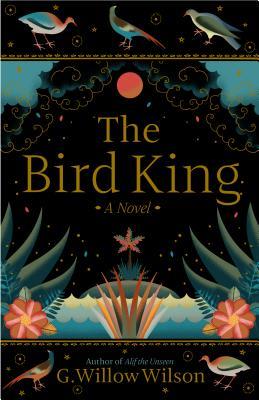
The Bird King by G Willow Wilson

In the 12th century poem The Conference of the Birds, the Persian poet Farid ud-Din Al Attar writes about a group of birds, left without a ruler, who set off on a long journey across the Dark Sea to the land of Qaf in search of their lost king. This legend forms the basis of G Willow Wilson’s The Bird King, an unusual novel which combines history, fantasy, myth and magical realism.

The novel is set in Al-Andalus in 1491, when Muslim-ruled Granada is besieged by the Christian forces of King Ferdinand and Queen Isabella. Our heroine, Fatima, is a Circassian slave in the harem of the Alhambra palace, where she serves as concubine to the Sultan and maid to his mother, Lady Aisha. Fatima’s only real friend in the palace is Hassan, the Sultan’s mapmaker, who possesses a very special skill: he is able to draw maps of places he has never visited and to change reality by adding doors and passages where none existed before.

When representatives of the Spanish Inquisition arrive in Granada on behalf of Queen Isabella, Hassan’s secret ability is revealed and he falls under suspicion as a sorcerer. With the help of Hassan’s magical maps and guided by Vikram, a shape-shifting jinn, Hassan and Fatima flee across Al-Andalus. Knowing that there is no longer a place for them in the world they have left behind, they dream of finding the fabled island of Qaf and the King of the Birds, whose story is starting to feel more and more relevant.

The Bird King is a novel which encompasses lots of fascinating ideas. I’m not sure whether I fully understood everything it was trying to say – the last few chapters feel particularly allegorical – but the central messages of friendship and faith, of tolerance and living together in harmony are clear. The author delivers these messages in a way that seems to arise naturally from the plot and the characters and doesn’t become too heavy-handed. I also loved the concept that the mysterious Qaf could be seen as another version of Avalon in Arthurian legend, or Antillia, the phantom island of Iberian myth, or Shambhala, the mythical kingdom in Tibetan Buddhism: different names, but with similar meanings to people of different cultures.

G. Willow Wilson’s writing is beautiful in places and the settings are vividly described, especially the Alhambra in the opening chapters, but something stopped me from enjoying this book as much as I’d hoped to – and I’m not really sure what it was. Perhaps it was because I found the balance between the fantasy and the historical aspects of the book too uneven; it starts off as an interesting depiction of the fall of Granada and the Inquisition, with only a small amount of magical realism, but by the end of the book the fantasy elements have become so strong that I felt I was reading a different book to the one I was reading at the beginning. Then, although I liked Fatima, I thought the other characters seemed slightly underdeveloped; Hassan’s special gift had the potential to be explored further and I also wanted to know more about Vikram the jinn and his role in the human world.

Still, this is an intriguing and entertaining novel and I would probably read more by G. Willow Wilson. Her previous novel, Alif the Unseen, doesn’t appeal to me but I will look out for any others she writes in the future.
Book 6/50 read for the Historical Fiction Reading Challenge.
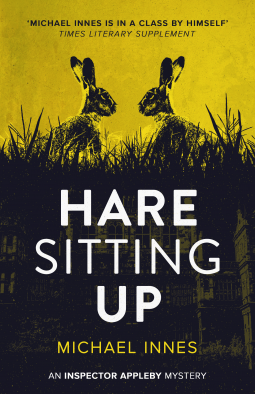
Hare Sitting Up by Michael Innes

Hare Sitting Up was originally published in 1959 and is the eighteenth book in Michael Innes’ Inspector John Appleby series – the good news is that it’s absolutely not necessary to have read the first seventeen before starting this one! I have read a few of the previous books and they do all stand alone; they are also all very different and this one is different again.

The unusual title comes from Women in Love by D H Lawrence:

“You yourself, don’t you find it a beautiful clean thought, a world empty of people, just uninterrupted grass, and a hare sitting up?”

At the time when Innes was writing this novel, which was the era of the Cold War, scientists were developing ways that could make the sort of world Lawrence describes – a world free of human beings – into reality, through means such as nuclear and biological weapons. In Hare Sitting Up, Sir John Appleby is investigating the disappearance of Professor Howard Juniper, a top government scientist who has been conducting secret research into biological warfare. As there’s a chance that Juniper may have taken some of these dangerous substances out of the laboratory with him, it is important that he is found as quickly as possible and with the minimum publicity. Appleby enlists the help of Juniper’s brother Miles, a headmaster at a prestigious boys’ school – and to say any more would start to give too much of the plot away!

This book is more of a thriller than a mystery, although there are elements of both. Due to the short length, once we get past the slow opening chapter, the story moves forward at a steady pace with the action switching between the home of an eccentric ornithologist, an island off the coast of Scotland, and Splaine Croft School, where Miles Juniper works. There’s a great chapter in which Judith, Appleby’s wife, visits the school to look for clues and has to find a way to explore the buildings without attracting suspicion; I like Judith, whom we met earlier in the series, and it was good to see her being entrusted with some investigations of her own.

Reading this novel in the middle of a pandemic made the discussions on the end of humanity and the destruction of the world feel particularly bleak, but the twists and turns which accompany the search for the missing Juniper brother were entertaining and, thankfully, the book was not as depressing as I thought it might be at first! Some parts of the plot were very predictable (I guessed one of the twists very early in the book), but others were very far-fetched and unlikely and, as is often the case with Innes, you have to be prepared to suspend your disbelief. I didn’t like it as much as some of his others, but for a short, quick read I found it quite enjoyable.

Thanks to Agora Books for providing a copy of this book for review via NetGalley.

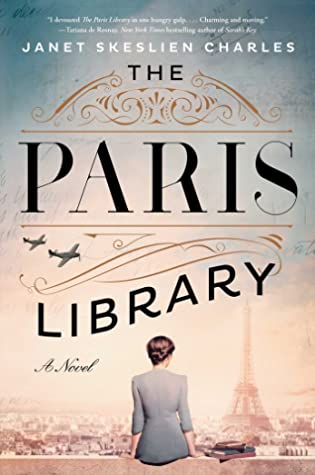
The Paris Library by Janet Skeslien Charles

One aspect of the Second World War that we don’t usually hear much about is the role of books and libraries, so I was immediately drawn to this new novel by Janet Skeslien Charles which tells the story of the American Library in Paris and the people who worked there during the Nazi occupation.

One of the novel’s two main narrators, twenty-year-old Odile, starts working at the library in 1939 at the beginning of the war. With her love of reading and obsession with learning the Dewey Decimal System, it’s Odile’s dream job and she quickly settles in, getting to know the other librarians and the people who come in to borrow books. Her happiness doesn’t last long, however, because soon the Germans cross the Maginot Line and enter Paris. With her twin brother Rémy fighting in the French army, these are difficult and worrying times for Odile, but her priority remains keeping the American Library and its collections safe from the Nazis and ensuring that those less fortunate can continue to find comfort in books.

Our second narrator is Lily, an unhappy twelve-year-old girl growing up in Froid, Montana in the 1980s. She has become intrigued by the reclusive elderly woman who lives next door and when she decides to interview her for a school project, we discover that the woman is Odile. As she gets to know Odile better and uncovers the sequence of events that brought her from Paris to Montana, Lily learns some important lessons that help her to deal with some of the problems in her own life.

There were many things to like about The Paris Library, yet I didn’t really enjoy the book as much as I’d been hoping to. The wartime story was fascinating, but I couldn’t help feeling that the 1980s one was unnecessary; dual timeline novels are very common these days and obviously a lot of people like them, but I often find that one of the two threads is a distraction from the other and adds very little to the novel as a whole. In this case, I felt that Lily’s could have been left out entirely without having much effect on the overall plot. Also, with Lily being such a young narrator, her story revolves around school, her relationships with boys and her best friend, and coming to terms with her widowed father marrying again; it makes the novel feel like YA fiction – which is fine, of course, but not what I was expecting.

I did find all the information on the American Library in Paris very interesting, especially when I discovered that some of the characters in those sections of the book were people who really existed, such as the library director, Dorothy Reeder, who refused to abandon the library when the war began and led the other librarians in a Resistance against the Nazis. I love the fact that the library managed to continue operating throughout the war, in one way or another, with the librarians providing reading material to soldiers and ensuring that books were delivered to Jewish members who were no longer able to visit the library in person.

The Paris Library is worth reading for the wartime storyline, the history and the many references to books I’ve read or would like to read, but if Janet Skeslien Charles had just concentrated on Odile’s story she would have had more space to develop the characters and relationships and I think that would have made it a stronger, more emotional novel.

Thanks to John Murray Press for providing a copy of this book for review via NetGalley.

Book 5/50 read for the Historical Fiction Reading Challenge.
Top Ten Tuesday: Valentine Titles

This week’s Top Ten Tuesday (hosted by That Artsy Reader Girl) is a Valentine’s Day/Love Freebie. I decided to approach this in the same way as my Halloween Top Ten Tuesday and simply list ten words that are often associated with love or Valentine’s Day and find a book I’ve read with each of those words in the title.

Here are the ten books I’ve chosen.

1. The Memory of Love by Aminatta Forna – I think this is still the only book I’ve read set in Sierra Leone. I found it too slow, but beautifully written and a fascinating glimpse of a country I would otherwise have known nothing about.

2. The Language of Flowers by Vanessa Diffenbaugh – This novel tells the story of a girl who grows up in foster care before getting a job as a florist’s assistant and discovering the ‘language of flowers’ – the secret meanings of different types of flower and how they can be used to communicate.

3. The Red Sphinx by Alexandre Dumas – This is a sequel to The Three Musketeers, but with a different set of characters. I loved it – it was one of my books of the year a few years ago!

4. A Sicilian Romance by Ann Radcliffe – I have read several of Ann Radcliffe’s novels and although this one, published in 1790, is not my favourite, it’s still fun to read and has everything you would expect to find in an early Gothic novel!

5. The Obscure Logic of the Heart by Priya Basil – This novel follows the story of two students who fall in love but face obstacles due to their different cultural and religious backgrounds. I enjoyed this book, which I found to be much more than just a love story.

6. Passion by Jude Morgan – I love Jude Morgan’s writing and in this fascinating novel he explores the lives of four women and their relationships with the Romantic poets, Byron, Shelley and Keats.

7. The Fourteenth Letter by Claire Evans – This historical mystery set in 1880s London sounded like exactly my sort of book, but I was disappointed by it and felt that there was no real sense of time and place.

8. Elizabeth the Beloved by Maureen Peters – A short and entertaining novel about Elizabeth of York, Henry VII’s queen. It lacked the depth I prefer in my historical fiction but would probably be a good introduction to the period.

9. Rose Cottage by Mary Stewart – The least suspenseful of Mary Stewart’s romantic suspense novels, this is a lovely, gentle book but not one of my favourites.

10. The Valentine House by Emma Henderson – This enjoyable family saga set in the French Alps is the perfect way to finish my Valentine-themed Top Ten Tuesday!

~

Have you read any of these books? Which other books with love-related words in the title can you think of?

Six Degrees of Separation: From Redhead by the Side of the Road to The Mirror Crack’d from Side to Side

It’s the first Saturday of the month which means it’s time for another Six Degrees of Separation, hosted by Kate of Books are my Favourite and Best. The idea is that Kate chooses a book to use as a starting point and then we have to link it to six other books of our choice to form a chain. A book doesn’t have to be connected to all of the others on the list – only to the one next to it in the chain.

This month we are starting with Redhead by the Side of the Road by Anne Tyler. It’s a book I haven’t read and know nothing about, but here is the description from Goodreads:

Micah Mortimer isn’t the most polished person you’ll ever meet. His numerous sisters and in-laws regard him oddly but very fondly, but he has his ways and means of navigating the world. He measures out his days running errands for work – his TECH HERMIT sign cheerily displayed on the roof of his car – maintaining an impeccable cleaning regime and going for runs (7:15, every morning). He is content with the steady balance of his life.

But then the order of things starts to tilt. His woman friend Cassia (he refuses to call anyone in her late thirties a ‘girlfriend’) tells him she’s facing eviction because of a cat. And when a teenager shows up at Micah’s door claiming to be his son, Micah is confronted with another surprise he seems poorly equipped to handle.

Redhead by the Side of the Road is an intimate look into the heart and mind of a man who sometimes finds those around him just out of reach – and a love story about the differences that make us all unique.

~

I struggled to think of a first link (some months it’s much more difficult than others, particularly if you haven’t read the book), so I’m afraid I’m going to be unimaginative and just link to another book with the word ‘road’ in the title: The Road to Wigan Pier by George Orwell (1). In this non-fiction book, first published in 1937, Orwell writes about the poor living conditions of working-class people in the north of England, with a particular focus on miners and their families. In one chapter, Orwell describes how he went down a coal mine himself to observe the working conditions.

Another book from the 1930s – fictional this time – which is set in a coal mining community is How Green Was My Valley by Richard Llewellyn (2). The story is narrated by Huw Morgan who is looking back on his childhood growing up in the valleys of South Wales, watching his elder brothers go off one by one to join their father in the mines. I loved this poignant and beautifully written novel.

My next link is to another novel set in Wales, but in a much earlier period. Here Be Dragons (3) is the first book in Sharon Penman’s Welsh Princes Trilogy and tells the story of Joanna, daughter of King John of England, and her marriage to Llewelyn ab Iorweth, Prince of Gwynedd. I loved this book and the second one, Falls the Shadow, and was sorry to hear of Sharon Penman’s death a few weeks ago. I must get round to reading the final book in the trilogy soon.

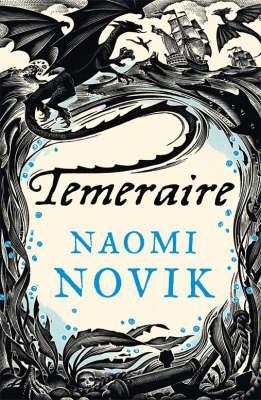
The title ‘Here Be Dragons’ refers to a term used to describe unexplored territories on maps; there are no actual dragons in the story! My next book, however, does involve dragons. Temeraire by Naomi Novik (4) is the first in a series of historical fantasy novels set during an alternate version of the Napoleonic Wars in which dragons provide military support to the British and French navies. I really enjoyed it and loved the relationship between Captain Will Laurence and his dragon, Temeraire, so I don’t know why I still haven’t continued with the second book in the series.

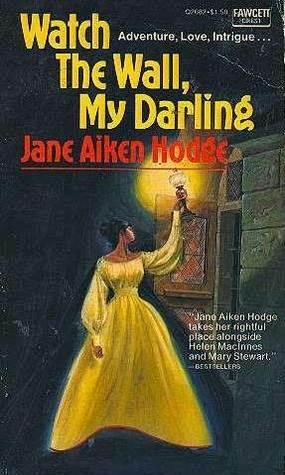
I have read quite a lot of other books set during the Napoleonic Wars but the one I’m going to link to here is Watch the Wall, My Darling by Jane Aiken Hodge (5), a gothic suspense novel from 1966 complete with smugglers, spies, a haunted house and plenty of family secrets! The unusual title, ‘Watch the wall, my darling’, is a line from Rudyard Kipling’s poem, A Smuggler’s Song.

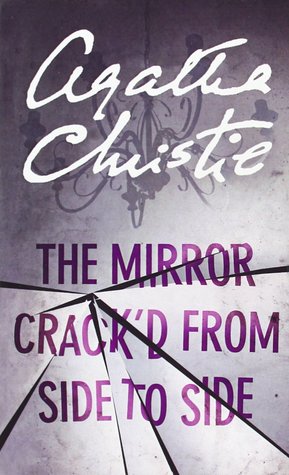
There are many books that have titles inspired by poetry, so I’m going to finish my chain with Agatha Christie’s The Mirror Crack’d from Side to Side (6). The title of this Miss Marple mystery is taken from Tennyson’s The Lady of Shalott – “Out flew the web and floated wide – The mirror crack’d from side to side; ‘The curse is come upon me,’ cried The Lady of Shalott”.

~

And that’s my chain for February. My links have included: the word ‘road’, coal miners, Wales, dragons, the Napoleonic Wars and lines from poems. I have even managed to bring the chain full circle with the word ‘side’ in both the first and last title!

Next month we’re starting with Phosphorescence by Julia Baird.

Rags of Time by Michael Ward

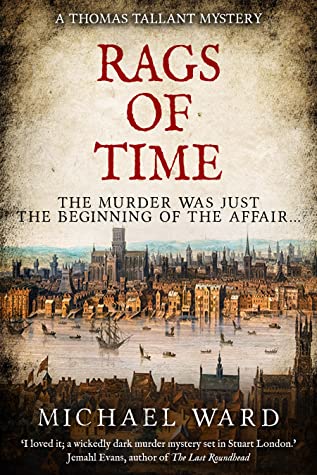
I love a good historical mystery, so I’m pleased to have had the opportunity to read Rags of Time, the first in a new series set in the 17th century during the final years of the reign of Charles I. Based on how much I enjoyed this book, I will certainly be looking out for the next one.

The story begins in 1639 with Tom Tallant, a young spice merchant, returning to London from India only to find that he has become implicated in a murder investigation. Wool merchant Sir Joseph Venell has been found dead in a meadow near his home in Kensington and it seems that Tom is the main suspect. Then another murder takes place, this time in the Tallant household, casting further suspicion on Tom. In order to clear his name, Tom must try to identify the real murderer – and for that he will need the help of Elizabeth Seymour, an intelligent and unusual young woman with an interest in astronomy and an addiction to gambling.

“The murder was just the beginning of the affair”, it says on the front cover of the book, and that is quite true because although Rags of Time at first appears to be a straightforward murder mystery, it soon becomes apparent that the murder is only one aspect of the story and for a while takes second place to an equally fascinating subplot involving a printing press and the distribution of seditious pamphlets. Remember that this is all taking place during an eventful and turbulent period of history, a time of tension between King and Parliament and unrest on the streets:

‘Each day and week we suffer treasonable talk on the street, attacks on our churches, seditious street-preachers, scandalous pamphlets on every corner and finally this…mutinous gangs of Apprentice Boys!’

I loved the recreation of 17th century London; there’s such a strong sense of time and place (without becoming overly descriptive) and with so much going on it’s the perfect backdrop for Tom’s adventures. Yet one of my favourite parts of the story relates to something taking place overseas – the ‘tulip mania’ sweeping Amsterdam in the 1630s and the notion of windhandel, or ‘trading in promises’.

As for the mystery itself, once everything starts to come together towards the end of the book, there are plenty of twists and turns and when the solution was revealed I was completely taken by surprise! I think there were probably a few clues but I didn’t pick up on them and didn’t guess either the culprit or how and why the murders were carried out. Although most of the focus of the novel is on Tom, I was pleased to see that Elizabeth also contributes to the solving of the mystery; I wasn’t sure I would like her at first and it took me a little while to warm to her, but I think she’s a character with a lot of potential, as is Tom himself. I hope to meet them both again soon!

Thanks to the author for providing a copy of this book for review.

Book 4/50 read for the Historical Fiction Reading Challenge.

My Commonplace Book: January 2021

A selection of words and pictures to represent January’s reading:

commonplace book
noun
a book into which notable extracts from other works are copied for personal use.

~

Before he could rise to his feet, Baldwin spoke first. ‘Is there not a danger, my lord count, that Saladin will use this truce to strike at his Muslim enemies – the amirs of Aleppo and Mosul and the Assassins?’

Raymond looked surprised. ‘That is indeed a risk, my liege. But that is always true when truces are made. It is a sad truth that in times of peace, men continue to prepare for war.’

The Land Beyond the Sea by Sharon Penman (2020)

~

Henry will never abdicate. Nor will Marguerite. Nor will Richard be prepared to compromise. All Richard can hope for is to take up the position of Lord Protector again if Henry should slide into mental turmoil. But how is it possible to uncover such a rats’ nest of claim and counter-claim, then re-cover it, allowing it to linger and fester, the rats to grow in strength? A rats’ nest must be destroyed by a fierce ratter, for the good of all but the rats.

The Queen’s Rival by Anne O’Brien (2020)

~

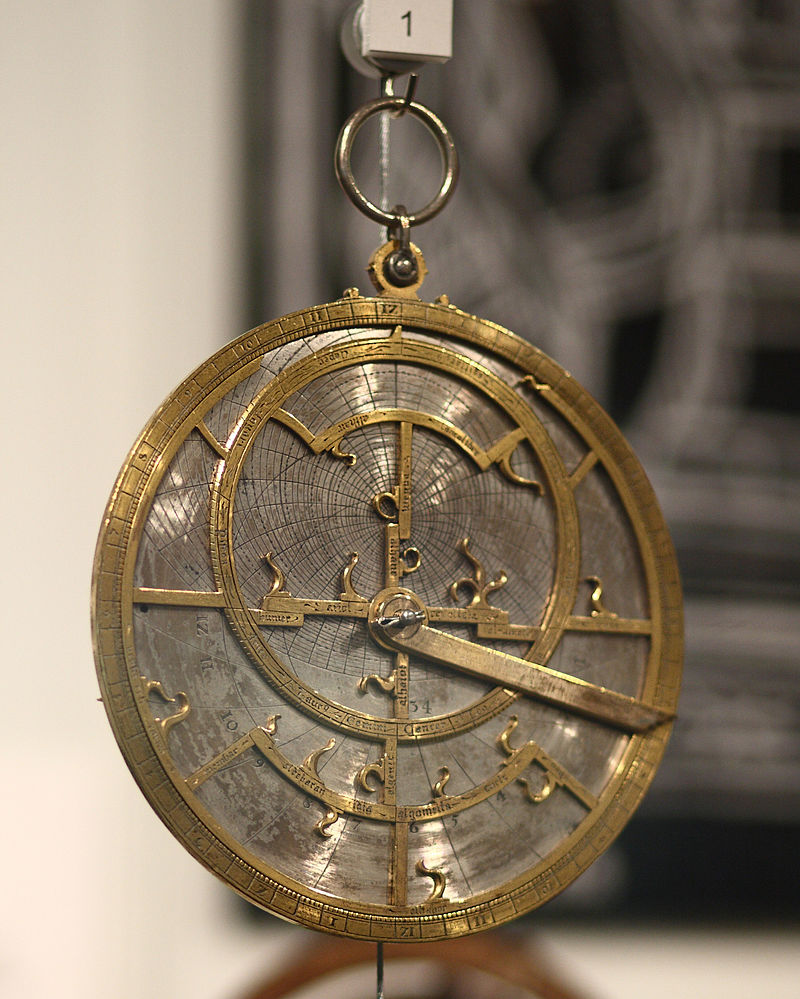
Astrolabe of Jean Fusoris, made in Paris, 1400

As long as science is a human activity, it will have human flaws. In this respect, perhaps the many mistakes of the Middle Ages can teach us some helpful humility, and motivate us to identify opportunities for improvement in our own day.

The Light Ages by Seb Falk (2020)

~

He knew that a man may live in close proximity to things he does not yet see correctly. What he must try to do is to be vigilant and attentive to all that surrounds him, in order to find the path he should follow.

Islands of Mercy by Rose Tremain (2020)

~

“No, I wouldn’t. I wouldn’t tell a soul.”

“People who use that phrase are always the last to live up to it.”

The Body in the Library by Agatha Christie (1942)

~

One day, if you join polite society, you will certainly experience injustice, against which you must be forearmed. The best defence would no doubt be to match insult with insult, calumny with calumny, to fight injustice with injustice, but this way of dealing with iniquity is not within the scope of people like us. So when you are afflicted by it, withdraw and turn in upon yourself. Feed off the substance of your own soul and you will know happiness.

The Manuscript Found in Saragossa by Jan Potocki (1810)

~

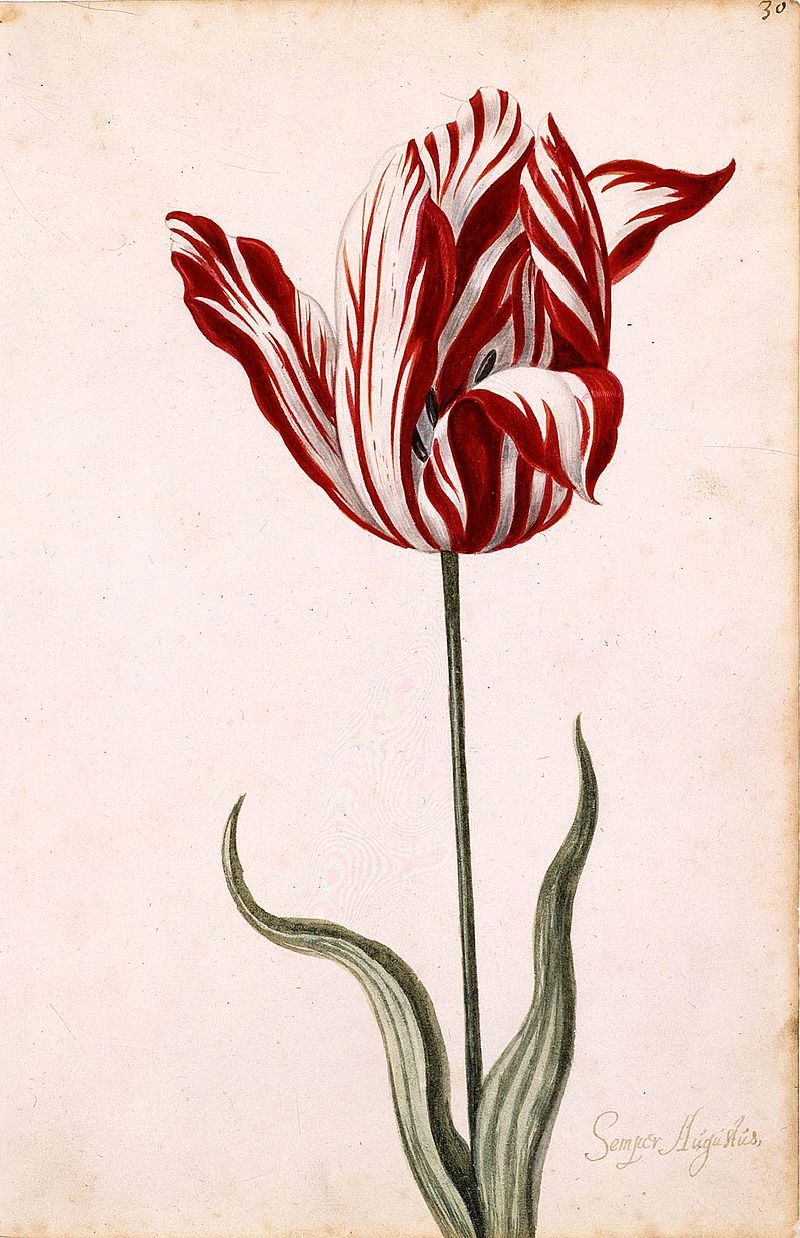
Semper Augustus tulip – anonymous 17th century watercolour

My mother always told me to value the beauty of nature. I remember us spending endless summer days on our hands and knees, studying plants in her garden, she explaining each flower in loving detail. I learned to appreciate the simple perfection of each bloom.

Rags of Time by Michael Ward (2019)

~

“If they condemn you as a sorcerer and burn you for it, then you are, for all practical purposes, a sorcerer, whether you began as one or not. Fear doesn’t need to make sense in order to have consequences.”

The Bird King by G. Willow Wilson (2019)

~

His heart flew upward like the hawk. He felt around him the seamlessness, the one-ness of the world, alive everywhere; only people with their different words for things, their different gods, broke it all to pieces.

The Soul Thief by Cecelia Holland (2002)

~

Frances Griffiths with the alleged Cottingley fairies, 1917

Mrs Hogan noticed the book I was carrying. ‘Black Beauty. One of my favourites. I’m glad to see you’re a keen reader. You can never have too many books or too much laughter in a house. Isn’t that right?’

The Cottingley Secret by Hazel Gaynor (2017)

~

I looked at my cousin and once again couldn’t believe that we shared the same genes.

‘If one person is missing, Marie, the world is lost.’

Ashes by Christopher de Vinck (2020)

~

Favourite books read in January:

The Land Beyond the Sea, The Manuscript Found in Saragossa and Rags of Time

Places visited in January:

The Holy Land, England, Borneo, Spain, Ireland, Denmark, Belgium

New authors read in January:

Seb Falk, Jan Potocki, Michael Ward, G. Willow Wilson, Christopher de Vinck

~

Have you read any of these books? What did you enjoy reading in January?