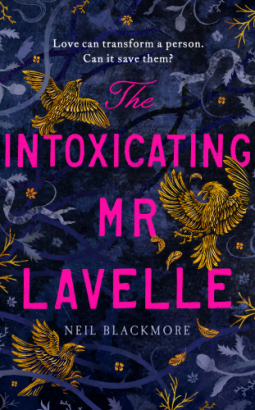
The Intoxicating Mr Lavelle by Neil Blackmore

I was drawn to this book first by the intriguing title. Who is Mr Lavelle and why is he ‘intoxicating’? Now that I’ve met him, I don’t think that’s the way I would choose to describe him; ‘annoying’, ‘rude’ and ‘unpleasant’ are better words, I think. However, I don’t suppose it matters how I feel about him; this is not a book about my own experiences with Mr Lavelle, after all – it’s a book about a young man called Benjamin Bowen and how Mr Lavelle is seen through his eyes. And to Benjamin, Lavelle really does seem to be as dangerously intoxicating as a drug.

Benjamin and his brother Edgar, both in their early twenties as the novel opens, have led sheltered, secluded lives, educated at home by a tutor and discouraged from mixing with other boys. Their Welsh father and Dutch mother want their sons to be accepted by the English upper classes in a way that they never could themselves, and have decided that now, in 1763, it is time to launch Benjamin and Edgar into the world and send them on a Grand Tour across Europe. This is their opportunity to meet ‘People of Quality’, to make impressive new friends and connections and to develop their knowledge of art and culture.

Edgar, desperate to please his parents, does his best to fit in with the people they meet and to give no hint of coming from a family who are ‘in trade’ (Mr Bowen owns a shipping business). Benjamin, on the other hand, is less enthusiastic and when he meets the beautiful, subversive, unconventional Mr Horace Lavelle, he is captivated and quickly finds himself falling in love. Knowing that his relationship with Lavelle could destroy Edgar’s chances and leave their parents’ dreams in ruins, Benjamin must decide whether his own happiness is more important to him.

I found The Intoxicating Mr Lavelle entertaining in parts and, being told from Benjamin’s point of view, written in a style that is usually quite readable and engaging. I say usually, because there are also several passages that feel more like pages from a philosophy textbook than a novel as characters have long discussions on Voltaire or Descartes in the sort of dialogue that doesn’t feel at all natural. In fact, there wasn’t much about this book that did feel convincing to me; I never felt as though I’d been truly submerged in the 18th century setting and the author’s decision to overlook anachronisms didn’t help (he admits in a note at the beginning that the terms Enlightenment and Renaissance weren’t in common use at that time, but he uses them anyway).

I did like the idea of having the Grand Tour as the backdrop for the story, although it would have been nice to have been given more vivid descriptions of the places the brothers visited and the things they saw there. Of course, Benjamin sees very little anyway once Lavelle comes into his life and he begins to disregard the itinerary of museum, art gallery and theatre visits carefully planned for him by his mother. Lavelle, as I’ve said, is someone I didn’t like at all; I can understand why Benjamin, coming from such a sheltered background, may have found his fearless, rebellious attitude exciting, but all I could see was a man who was needlessly cruel and insensitive and who thought it was clever to use crude language and offend and ridicule everyone around him. The author does a good job, though, of showing how easily Benjamin becomes ‘intoxicated’ by Lavelle and how he is made to think differently, as well as depicting some of the challenges faced by men like them in a time when homosexual relationships were not seen as acceptable.

Most of my sympathy was actually reserved for Edgar who wants so desperately to establish himself in society and make his parents proud. I really felt for him as he begins to discover the upsetting truth that no matter how hard he tries, his family’s position means that he will never be fully accepted – and that, as it must seem to him, his own brother is doing his best to embarrass them both and ruin their chances.

I was interested enough in the lives of Benjamin and Edgar to continue reading to the end, but the problems I’ve mentioned – particularly my dislike of Horace Lavelle – left me disappointed with this book overall.

Thanks to Random House Cornerstone for providing a copy of this book for review via NetGalley.

Six Degrees of Separation: From Rodham to Cold Comfort Farm

It’s the first Saturday of the month which means it’s time for another Six Degrees of Separation, hosted by Kate of Books are my Favourite and Best. The idea is that Kate chooses a book to use as a starting point and then we have to link it to six other books of our choice to form a chain. A book doesn’t have to be connected to all of the others on the list – only to the one next to it in the chain.

This month we are starting with Rodham by Curtis Sittenfeld. I haven’t read it, but I know that it’s an alternate history imagining what might have happened if Hillary Rodham had never married Bill Clinton.

However, I have read one of Curtis Sittenfeld’s earlier novels, Prep (1), which follows four years in the life of Lee Fiora, a teenage girl with social anxiety who attends a boarding school in Massachusetts. This seems to be a book that people either love or hate; I think whether or not you enjoy it probably depends on how strongly you can relate to the main character.

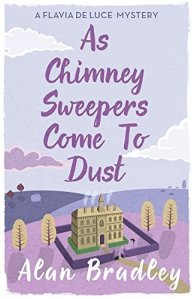
Another girl who goes to boarding school, in Canada this time, is Flavia de Luce in Alan Bradley’s As Chimney Sweepers Come to Dust (2). This is the seventh book in a series of mysteries starring Flavia and in this one she is investigating the disappearances of three girls at Miss Bodycote’s Female Academy. Not my favourite in the series, but I do love the Flavia books overall.

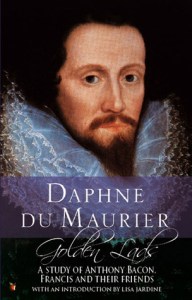
The title of that book comes from the lines from Shakespeare’s Cymbeline: “Golden lads and girls all must, As chimney-sweepers, come to dust.” Another book which also takes its inspiration from the same source is Golden Lads by Daphne du Maurier (3), a biography of two important Elizabethan figures, Francis and Anthony Bacon.

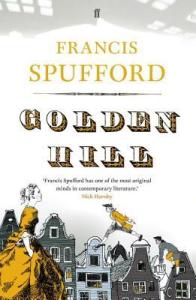
My next link is to another book with the word ‘Golden’ in the title: Golden Hill by Francis Spufford (4). I found this a very entertaining novel set in 18th century New York, in those days still a small community just beginning to expand into the city we know today.

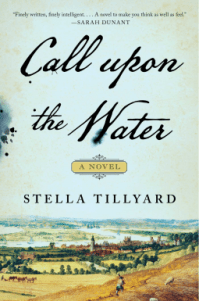
Stella Tillyard’s Call Upon the Water (5) is also set, at least partly, in the same location – but a century earlier, when the settlement was known as New Amsterdam. The rest of the novel is set in England and follows a Dutch engineer working on the draining of the marshlands in the Fens.

Finally, I’m going to link to a book written by another Stella – Stella Gibbons. Gibbons wrote many novels, as well as some short stories and poetry, but the only one I have read is her most famous one, Cold Comfort Farm (6). Because I didn’t enjoy this book as much as I’d hoped to, I haven’t attempted any of her other work yet but maybe I will one day.

~

And that’s my chain for this month! My links included school stories, Cymbeline, the word ‘golden’, old New York and the name Stella. In October, we will be starting with The Turn of the Screw by Henry James – finally a book that I’ve read!

My Commonplace Book: August 2020 – and 20 Books of Summer comes to an end

A selection of words and pictures to represent August’s reading:

commonplace book
noun
a book into which notable extracts from other works are copied for personal use.

~

“Leave it alone? Our very own murder mystery – if it was murder!”

“It was murder, I think. And that’s just why I should leave it alone. Murder isn’t – it really isn’t – a thing to tamper with lightheartedly.”

Sleeping Murder by Agatha Christie (1976)

~

‘Of course I am a hero,’ he said, getting up and laughing very cheerfully. ‘Every man is a hero of his own tale. Surely, Dr Maturin, every man must look on himself as wiser and more intelligent and more virtuous than the rest, so how could he see himself as the villain, or even as a minor character? And you must have noticed that heroes are never beaten. They may be undone for a while, but they always do themselves up again, and marry the virtuous young gentlewoman.’

The Surgeon’s Mate by Patrick O’Brian (1980)

~

She was conscious of a glow of spurious strength, followed by a rush of confidence, as she climbed out of the traitor’s hell into which she had hurled herself.

“Lost causes are the only causes worth fighting for,” she told herself.

The Wheel Spins by Ethel Lina White (1936)

~

Portrait miniature, thought to be Catherine Howard by Hans Holbein c. 1540

She had never stitched so much embroidery. Where once she had done nothing but dance, she could not now bear to have music, for she felt so fragile that it must surely break her. Music evoked joy or sadness; it brought back memories or lifted the soul. She could not take any of that now. She was merely existing, trying not to think too much. When her musicians knocked at her door, she told her women to tell them that it was not the time for dancing.

Katheryn Howard, the Tainted Queen by Alison Weir (2020)

~

People want love. People demand love. They prescribe love. They proscribe it, too. People make mistakes, and people grow afraid, and they fail and hurt each other. Some people talk about love like drunkards, and their words end up meaning nothing. But some people cannot talk about love; it kills them to do so, and with time, passing straight through the hurt itself, we come to see the nature of their love. We come to see how transformative it was, and what an honour it was to have it in our lives.

The Intoxicating Mr Lavelle by Neil Blackmore (2020)

~

“Oh dear,” she said impulsively, “I wish you could be happy.”

…But the hard-eyed Cornishwoman was looking at her with an odd surprised kind of approval. “A perilous wish!” she said. “For where one may be made happy by harmless things, another may find happiness only in hurting. But good may come of it.”

Greenwitch by Susan Cooper (1974)

~

Favourite books read in August:

Sleeping Murder, Greenwitch

New authors read in August:

Neil Blackmore, Ethel Lina White

Countries visited in my August reading:

England, Italy, France, Canada

~

Have you read any of these books? Which books did you enjoy reading in August?

~

This year’s 20 Books of Summer challenge has also come to an end now. I only managed to read 13 of the 20 books on my list, but I hadn’t expected to do much better than that so I’m quite happy!

Here are the books I read, with links to reviews where available:

1. Moonflower Murders by Anthony Horowitz
2. A Time to Die by Hilda Lawrence
3. The Silver Collar by Antonia Hodgson
4. The Honey and the Sting by EC Fremantle
5. Tsarina by Ellen Alpsten
6. The Sin Eater by Megan Campisi
7. When We Fall by Carolyn Kirby
8. Katheryn Howard, the Tainted Queen by Alison Weir
9. The Silken Rose by Carol McGrath
10. Sleeping Murder by Agatha Christie
11. City of Dragons by Robin Hobb
12. The Surgeon’s Mate by Patrick O’Brian
13. Greenwitch by Susan Cooper

Here are the books I didn’t read (although I have started two of them). I will have to make these autumn or winter reads instead of summer ones.

14. These Old Shades by Georgette Heyer
15. The Land Beyond the Sea by Sharon Penman
16. The Green Gauntlet by RF Delderfield
17. Confusion by Elizabeth Jane Howard
18. The Wheel of Fortune by Susan Howatch
19. Daniel Deronda by George Eliot
20. The Horseman by Tim Pears

~

How was your summer reading? Did you take part in 20 Books of Summer – and did you complete your list?

Ready for R.I.P. XV

It’s been a strange summer in many ways and I can’t really say that I’m sorry it’s nearly over. As we move into September and the darker nights and colder weather begin to arrive again, my favourite reading event – R.I.P. (or Readers Imbibing Peril) – is also returning for a fifteenth year.

This year the rules are much more relaxed than usual. There’s no need to officially sign up and there are no levels or targets to aim for. All you need to do to join in is read some spooky, mysterious or suspenseful books in September and October and, if you have Instagram or Twitter, you can follow the event @perilreaders.

Here is a list of some of the possible choices I have on my TBR. I won’t read all of these and could end up reading different books entirely, but I like to have plenty of options.

The Devil and the Dark Water by Stuart Turton
Dead March for Penelope Blow by George Bellairs
The Haunting of Alma Fielding by Kate Summerscale
The Butcher of Berner Street by Alex Reeve
The Silent Companions by Laura Purcell
The Printer’s Coffin by MJ Carter
A Gathering of Ghosts by Karen Maitland
Tombland by CJ Sansom
The Sussex Downs Murder by John Bude
The Mummy Case by Elizabeth Peters
The Grey King by Susan Cooper
Grim Tales by E Nesbit
Ghost Stories of an Antiquary by MR James

Will you be taking part in R.I.P. this year?

Greenwitch by Susan Cooper

Greenwitch is the third novel in Susan Cooper’s The Dark is Rising sequence. I loved the first two books, so I was pleased to find that I enjoyed this one just as much. It brings together characters from both the first book and the second, so I would recommend reading both of those before starting this one, if possible.

The novel opens with the Drew children – Simon, Jane and Barney – whom we met in Over Sea, Under Stone, returning to Trewissick in Cornwall with their Great Uncle Merriman. The Grail, which played such a big part in Over Sea, has been stolen from the British Museum and the children know who is responsible: the forces of the Dark. However, the inscription on the Grail can be of no use to the Dark without the manuscript that will help to decipher it – and the manuscript is lost at the bottom of the sea.

To help the Drews in their quest to recover the Grail and locate the missing manuscript, Merriman has brought along Will Stanton, the boy we first met in The Dark is Rising. But Will doesn’t reveal to the others that he, like Merriman, is one of the Old Ones and working for the forces of Light, so they are left feeling uneasy and resentful about his presence and his relationship with their Great Uncle.

Like the previous books in the series, this is an atmospheric and eerie story, steeped in magic and ancient folklore. The ‘Greenwitch’ of the title is a giant effigy in the form of a woman made of sticks, constructed by the women of Trewissick and sacrificed to the sea in a yearly ritual – not just an inanimate object, but a living being, with a mind of her own. This is referred to as a type of ‘Wild Magic’, or the magic of nature, another element in the ongoing battle between Light and Dark. The Greenwitch holds the key to understanding the Grail, but the children will have to persuade her to give up her secrets before the agents of the Dark get there first.

I found this book as compelling as the first two and read most of it in one day; as a book aimed at younger readers, it’s quite short and the plot moves along at a fast pace, but as an adult there’s still enough depth and complexity to the story and characters to hold my attention. It was good to see the three Drew children again, after they were absent from the last book, and this time I particularly liked the large and important part Jane played in trying to befriend the Greenwitch and defeat the Dark. At first I was disappointed by the children’s hostility towards Will and the way he seemed to have a much quieter, more passive role in this novel after being the central protagonist of the last one, but later I decided that the decision to tell most of the story from the Drews’ perspective was actually quite effective. It made Will appear aloof and otherworldly, in keeping with his position as one of the Old Ones working on behalf of the Light. Still, I found the reluctance of Will and Merriman to confide in the other children quite frustrating, as it would have made things so much easier for them.

There are some wonderful moments and set pieces in this book: the ritual sacrifice of the Greenwitch; the evil that emanates from the paintings produced by the artist of the Dark; Jane watching from her window as magic and madness take hold of the village of Trewissick. Although this is the middle book in the series and so there are still things that haven’t been resolved and things that I don’t quite understand yet, I really enjoyed it and am looking forward to continuing with The Grey King.

This is book 13/20 from my 20 Books of Summer list. Obviously I am not going to complete the list this summer, but I’ve enjoyed most of the books I’ve read, which is the most important thing!

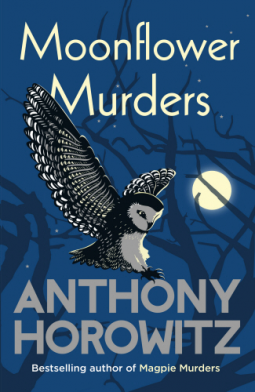
Moonflower Murders by Anthony Horowitz

A few years ago I read Anthony Horowitz’s Magpie Murders, a wonderful, imaginative novel containing a story-within-a-story – the outer one being a crime story set in the contemporary publishing world and the inner one being an entire Golden-Age-style murder mystery featuring a detective called Atticus Pünd. When I finished that book I remember feeling disappointed that there weren’t more Atticus Pünd novels to read, so I was delighted to find that Horowitz’s latest book, Moonflower Murders, is written in the same format.

Both books stand alone so it’s not essential to have read Magpie Murders before starting Moonflower Murders (although there are a few references in this one to the events of the previous book). At the beginning of the novel, we rejoin Susan Ryeland who is now running a small hotel in Crete with her boyfriend, Andreas. It’s not quite the idyllic life Susan had hoped for, though, and just as she is beginning to long for her old career in publishing, two guests approach her with an intriguing proposition.

Their names are Lawrence and Pauline Treherne and they run a hotel of their own in England, where a murder took place eight years ago. Stefan Codrescu, one of the hotel employees, was found guilty of the murder, but the Trehernes’ daughter, Cecily, has always believed him to be innocent. Now Cecily has disappeared, just after telling her parents that she had uncovered a clue in an Alan Conway novel called Atticus Pünd Takes the Case which proves that the wrong man had been charged with the crime. Knowing that Susan was the editor who worked on the Atticus Pünd novels in her publishing days, the Trehernes have come to ask for her help. What was the clue Alan Conway hid within the pages of his novel? Is Stefan innocent or guilty? And what has happened to Cecily?

After several chapters in which Susan begins to investigate the events of eight years earlier and how they could be connected with Cecily’s disappearance, we have the pleasure of reading the whole of Atticus Pünd Takes the Case, a detective novel dealing with the murder of a famous actress. Although this story-within-a-story is enjoyable in its own right, at first it’s not clear how it is linked to the murder at the Trehernes’ hotel, but Susan’s knowledge of how Alan Conway’s mind worked helps her to pick out possible hints and clues. I certainly didn’t manage to solve the mysteries – either the one in the Pünd story or the one in the framing story – myself, but I enjoyed watching everything unfold.

I didn’t love this book quite as much as Magpie Murders, probably because I already knew what to expect so it didn’t feel as original, but it was still hugely entertaining and, like the previous novel, packed with word games and other little puzzles cleverly woven into the text. And of course, as an Agatha Christie fan I adore the Atticus Pünd stories in both books, which are such perfect homages to Christie herself. As we have been told that the fictional author Alan Conway apparently wrote a whole series of Atticus Pünd novels, I hope Anthony Horowitz will give us the opportunity to read at least one more of them!

Thanks to Random House UK for providing a copy of this book for review via NetGalley.

This is book 12/20 from my 20 Books of Summer list.

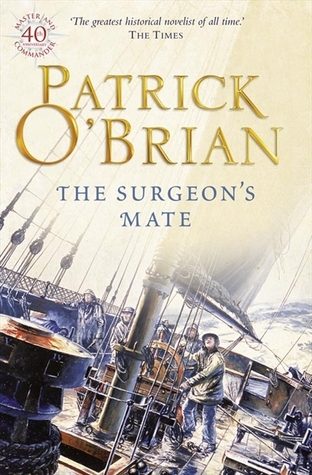
The Surgeon’s Mate by Patrick O’Brian

The Surgeon’s Mate is the seventh novel in Patrick O’Brian’s Aubrey and Maturin series. Every time I review one of these books I say that I’m not going to leave such a long gap before picking up the next one, but then I get distracted and before I know it two or three years have passed by! It was September 2017 when I read the previous book, The Fortune of War, so I was worried at first that I might struggle to get back into the story and was relieved to find that it wasn’t a problem. As soon as I started to read, the events of book six came back to me quite vividly.

If you have not yet met Captain Jack Aubrey and his friend, Dr Stephen Maturin, I would strongly recommend that you start at the beginning with Master and Commander. It will make it so much easier to follow the various storylines, which do continue from one book to the next, and to understand the complex relationships between the characters, particularly the one between Stephen and Diana Villiers.

This seventh novel opens with Jack, Stephen and Diana arriving in Halifax aboard the HMS Shannon following the Royal Navy’s victory over the American ship USS Chesapeake (a real event in the War of 1812). From Canada, they make their way home across the Atlantic to await further instructions. It’s not long before details of their next mission emerge: with his half-Catalan/half-Irish background, Stephen is required to travel to Grimsholm, a heavily fortified island in the Baltic, to persuade the Catalan army there to side with Britain against Napoleon. After seeing the pregnant Diana safely settled in Paris, Stephen accepts the job – on the condition that Jack Aubrey will command the ship on the voyage.

Jack is pleased to have a ship to command once again – and grateful to have an excuse to escape from the various entanglements of his life in England. Not only is he being cheated financially by a man he thought he could trust, he has also received a letter containing some unpleasant news from a woman he met in Halifax. The Baltic mission provides a welcome distraction, then, and at first things seem to be going well. Unfortunately, things then begin to go badly, and after a series of mishaps our heroes find themselves taken prisoner yet again!

I didn’t love this book quite as much as the previous two in the series; in fact, I felt that a lot of time was spent tying up some of the loose ends from those two and perhaps laying the foundations for the next one. There was still a lot to like, though; I enjoyed the sections set in Halifax and later in Paris and the details of Stephen’s work, both as a doctor and natural philosopher and as a spy, are always interesting. There are some funny moments too, although maybe not as many as in some of the earlier books; I loved Jack’s account of how he once played Ophelia in a sailors’ production of Hamlet:

‘Why, there was only one midshipman in the flagship pretty enough for a girl, but his voice was broke and he could not keep in tune neither; so for the part where she has to sing, I put on the dress and piped up with my back to the audience. But neither of us was going to be drowned and buried in real earth, Admiral or no Admiral, so that part fell to a youngster who could not defend himself; and that made three of us, do you see.’

I still struggle with the nautical jargon and the lengthy descriptions of sea battles, but seven books into the series I now know that I don’t really need to follow the battles too closely as long as I can get the basic gist of what has happened and what the outcome is. However, with this particular novel I found the nautical parts more confusing than usual, for some reason. Maybe I’m just out of practice and need to move quickly on to book eight!

This is book 11/20 from my 20 Books of Summer list.