It’s the first Saturday of the month which means it’s time for another Six Degrees of Separation, hosted by Kate of Books are my Favourite and Best. The idea is that Kate chooses a book to use as a starting point and then we have to link it to six other books of our choice to form a chain. A book doesn’t have to be connected to all of the others on the list – only to the one next to it in the chain.

This month we are starting with How to Do Nothing by Jenny Odell. As usual, I haven’t read it, but here is the blurb:
This thrilling critique of the forces vying for our attention re-defines what we think of as productivity, shows us a new way to connect with our environment and reveals all that we’ve been too distracted to see about our selves and our world.
When the technologies we use every day collapse our experiences into 24/7 availability, platforms for personal branding, and products to be monetized, nothing can be quite so radical as…doing nothing. Here, Jenny Odell sends up a flare from the heart of Silicon Valley, delivering an action plan to resist capitalist narratives of productivity and techno-determinism, and to become more meaningfully connected in the process.
I don’t think this is a book I would be interested in reading, but if you’ve read it let me know what you thought.
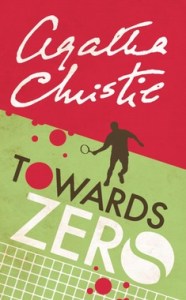

Another word for ‘nothing’ is ‘zero’, so my first link takes me to Towards Zero by Agatha Christie (1), one of only five Christie novels to feature the detective Superintendent Battle. In this book, which I remember enjoying, Battle is investigating the murder of Lady Tressilian in her home by the sea.
Tressilian is also the name of the main character in Rafael Sabatini’s The Sea-Hawk (2). Sir Oliver Tressilian is a gentleman from Cornwall who is betrayed and sold into slavery before being liberated by Barbary pirates who operate from the city of Algiers. I love Sabatini’s books and can highly recommend this one!
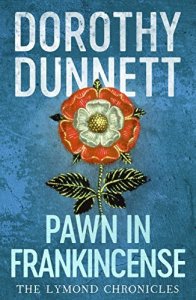
Pawn in Frankincense by Dorothy Dunnett (3) is also set partly in Algiers, as well as several other beautifully described locations around the Mediterranean and North Africa. This, and the other five novels that make up Dunnett’s Lymond Chronicles, are some of my absolute favourites, but if you haven’t read them yet you really need to start with The Game of Kings.
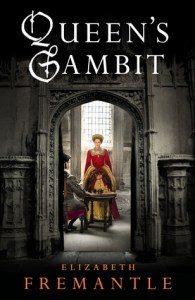

All of the books in the Lymond Chronicles have titles inspired by the game of chess. So does Queen’s Gambit by Elizabeth Fremantle (4), a novel set at the Tudor court and telling the story of Katherine Parr, Henry VIII’s sixth and final wife. The story is told partly from Katherine’s perspective and partly from her maid, Dorothy Fownten’s. Although I think some of Fremantle’s later books are better, I did enjoy this one.
My next link is to another book about a queen – a self-proclaimed queen this time, rather than a real one! Queen Lucia by EF Benson (5) is the first book in Benson’s Mapp and Lucia series; it was my choice for the 1920 Club earlier this year and kept me entertained during the early stages of lockdown when I really needed something fun and light!
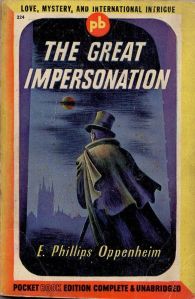
Like Queen Lucia, The Great Impersonation by E Phillips Oppenheim (6) was also published in 1920 and is also a lot of fun to read. It has a very clever plot involving a case of mistaken identities and keeps the reader guessing until the end.
~
And that’s my chain for this month. My links have included synonyms for ‘nothing’, the name Tressilian, Algiers, chess-related titles, queens and the year 1920. In September we will be starting with Curtis Sittenfeld’s latest novel, Rodham.


 She Reads Novels