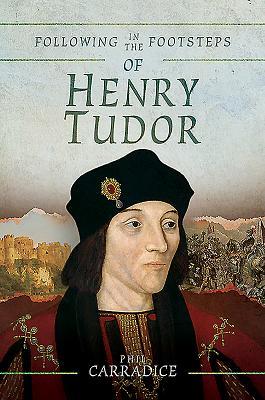
Following in the Footsteps of Henry Tudor by Phil Carradice

As those of you who have been following my blog for a while will probably know, my favourite period of English history is the Wars of the Roses, the conflict that dominated the second half of the fifteenth century as the rival houses of York and Lancaster fought for control of the throne. The Wars of the Roses came to an end shortly after the Battle of Bosworth in 1485, during which Richard III was killed and the victorious Henry Tudor came to the throne as Henry VII. In Following in the Footsteps of Henry Tudor, Phil Carradice looks at Henry’s life from childhood to death, but with a special focus on his journey to Bosworth Field.

Beginning with Henry’s birth at Pembroke Castle in Wales to Margaret Beaufort and Edmund Tudor, Carradice goes on to give us an overview of the period, explaining how the throne changed hands several times between York and Lancaster and describing Henry’s fourteen years in exile under the protection of the Duke of Brittany. In 1485, with Richard III’s reign becoming increasingly troubled, Henry returned to Wales ready to launch his own claim to the English throne. His long march into England at the head of an army – a journey which took more than two weeks – where he would meet Richard on the battlefield at Bosworth, is the main subject of this book.

Carradice goes into a lot of detail on why the place usually described as the site of Henry’s landing in Wales may be incorrect and attempts to establish exactly where he did begin his journey. He then looks at some of the legends that surround the various stages of the march and whether they are likely to be true or not. He draws on primary sources such as The Ballad of Bosworth Field and the chronicles of Polydore Vergil, but also refers to the work of more recent historians and even includes some excerpts from his own interview with a man who decided to mark the 500th anniversary of Bosworth in 1985 by recreating Henry’s march. The one thing that was missing and would have really added to my enjoyment of the book was a map showing the route taken by Henry and his men; there was plenty of other additional material, such as photographs and illustrations, a bibliography and an index, so it’s disappointing that no map was included.

The account of the Battle of Bosworth itself was particularly well written and interesting, giving a good idea of how both Richard and Henry may have felt as they made their preparations and how each of their fates rested on winning the support of Thomas and William Stanley, who waited until the very last minute to enter the battle. The author makes no secret of the fact that his sympathies are with Henry and the Lancastrians rather than with Richard and the House of York – and he gives his reasons for his bias in the prologue at the beginning of the book. However, he does acknowledge some of Richard’s good points, such as his courage on the battlefield and his skill as a soldier, and in general I thought the book was quite fair and balanced – certainly not as biased as others that I’ve read.

As for accuracy, I noticed a few small errors such as a reference to the white rose of Lancaster and red rose of York (it’s the other way round, of course) but I’m sure these were silly mistakes rather than a lack of knowledge from the author. Overall, I found this an enjoyable and informative read; even though it’s a period I have read about many times before, I felt that I was learning new things from it – and I think it would be accessible for readers with little or no knowledge of the period too.

Following in the Footsteps of Henry Tudor is published by Pen & Sword Books as part of their ‘Following in the Footsteps’ series. The other books in the series explore the stories of Edward II, Oliver Cromwell and The Princes in the Tower. Thanks to Pen & Sword for providing me with a copy of this book for review.
Six Degrees of Separation: From Alice’s Adventures in Wonderland to Uprooted

It’s the first Saturday of the month which means it’s time for another Six Degrees of Separation, hosted by Kate of Books are my Favourite and Best. The idea is that Kate chooses a book to use as a starting point and then we have to link it to six other books of our choice to form a chain. A book doesn’t have to be connected to all of the others on the list – only to the one next to it in the chain.

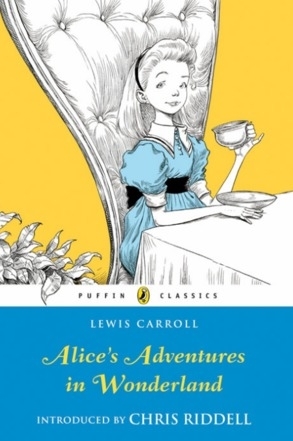
This month we are starting with the children’s classic Alice’s Adventures in Wonderland by Lewis Carroll. It’s not often that I have read the first book in the chain, but this is one that I have read several times, although not for years.

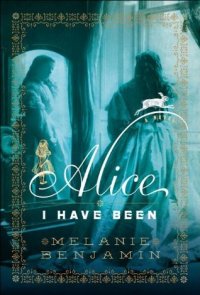
The character of Alice was inspired by a real life child, Alice Liddell. Melanie Benjamin’s novel, Alice I Have Been (1), is a fictional account of Alice Liddell’s life, with a focus on her relationship with Charles Lutwidge Dodgson (Lewis Carroll) and how her connection with his book changed her life forever.

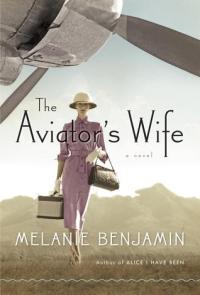
I have read a few of Melanie Benjamin’s other books and enjoyed them. The Aviator’s Wife (2) is my favourite. It tells the story of Anne Morrow Lindbergh, wife of the famous American aviator Charles Lindbergh and later an accomplished aviator in her own right, as well as a successful author.

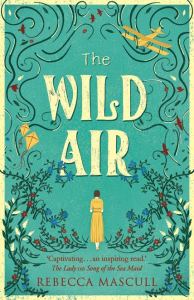
Another novel I’ve read about a female aviator, a fictional woman this time, is The Wild Air by Rebecca Mascull (3). Although I’m not particularly interested in aviation myself, I loved Rebecca Mascull’s book – it really made me appreciate just how brave those early pioneers of flying were.

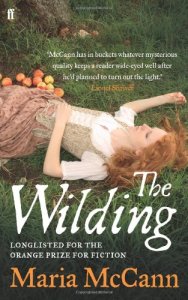
My next link takes the word ‘Wild’ and leads me to The Wilding by Maria McCann (4), a historical mystery set in 17th century England and narrated by a young man who works as a cider-maker.

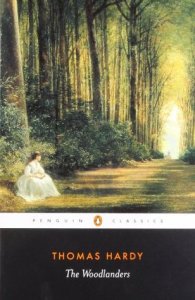
With its recreation of life in a small rural community and the descriptions of orchards and trees and apple-pressing, The Wilding shares some themes with The Woodlanders by Thomas Hardy (5). The Woodlanders is one of my favourite Hardy novels; I loved getting to know the people who built their lives in and around the woods of Little Hintock.

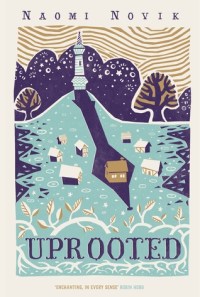
My final link is to another book in which a wood plays an important part in the story: Uprooted by Naomi Novik (6). Uprooted is a fantasy novel set in a village under threat from evil forces gathering in The Wood, a sinister place which is much more than just a collection of trees!

~

Well, that’s my chain for this month, with links including Alice Liddell, female aviators, the word ‘Wild’, apples and woods. Next month we will be starting with Jane Austen’s unfinished manuscript, Sanditon.

My Commonplace Book: October 2019

A selection of words and pictures to represent October’s reading:

commonplace book
noun
a book into which notable extracts from other works are copied for personal use.

~

This is one of the troubles and the wonders of childhood: you imagine things wrongly. And later, when the truth is known – assuming there is an absolute truth – the unwinding of the imagined thing is tangled, because the first image keeps on obstinately breaking through. You’re adrift in mystery and ambiguity.

Rosie: Scenes from a Vanished Life by Rose Tremain (2018)

~

The art of the murderer, my dear Maurot, is the same as the art of the magician. And the art of the magician does not lie in any such nonsense as “the hand is quicker than the eye”, but consists simply in directly your attention to the wrong place. He will cause you to be watching one hand, while with the other hand, unseen though in full view, he produces his effect. That is the principle I have applied to crime.

It Walks By Night by John Dickson Carr (1930)

~

The Milky Way, seen from La Silla Observatory

‘Ah, I perceive you think me weak in the extreme,’ he said, with just a shade of pique. ‘But you will never realize that an incident which filled but a degree in the circle of your thoughts covered the whole circumference of mine. No person can see exactly what and where another’s horizon is.’

Two on a Tower by Thomas Hardy (1882)

~

“Nonsense. Why can’t a painter paint something nice and cheerful to look at? Why go out of your way to look for ugliness?”

“Some of us, mon cher, see beauty in curious places.”

Five Little Pigs by Agatha Christie (1942)

~

‘Quite marvellous,’ the stranger replies with unexpected warmth. Iris feels a rush of love for this unfamiliar human, and for all of the people pressed around her. Everyone, with their worries and their joys and their loves and their frustrations, their tears and dreams and laughter – they are all gloriously alike.

The Doll Factory by Elizabeth Macneal (2019)

~

1898 illustration by John La Farge from the original Collier’s Weekly serialisation.

‘It’s beyond everything. Nothing at all that I know touches it.’

‘For sheer terror?’ I remember asking.

He seemed to say it was not so simple as that; to be really at a loss how to qualify it. He passed his hand over his eyes, made a little wincing grimace. ‘For dreadful — dreadfulness!’

‘Oh, how delicious!’ cried one of the women.

The Turn of the Screw by Henry James (1898)

~

‘Andy is a grower,’ said Jay earnestly. ‘He’s paid to grow things and growing things is what he’d want to do even if he wasn’t paid.’ He laughed, pleased with himself. ‘I call this the Hardie theory of happiness. You’re happy when what you are is the same as what you do.’

The Daughter of Hardie by Anne Melville (1988)

~

‘Taxes are high, Haith. Much higher than in the times of my father. What the King takes in taxes they cannot put on the table to feed their families.’

‘These are troubled times. The costs of Henry’s war in Normandy run high.’

‘You can see why Welsh farmers and tenants might struggle to see the relevance of that for them.’

Conquest: The Drowned Court by Tracey Warr (2017)

~

Large Blue butterfly

‘Remember, my darling, one man’s rubbish might be another man’s gold. But perhaps we are all beachcombers in a way,’ Daddy had said, squinting in the sun. ‘We keep seeking, hoping to find that elusive buried treasure that will enrich our lives, and when we pull up a teapot rather than a gleaming jewel, we must continue to search.’

The Butterfly Room by Lucinda Riley (2019)

~

‘Of the arrows the God of Love possesses, it is Frankness I prefer, because frankness is truly noble,’ said Bernadine. ‘The other arrows – Beauty, Simplicity, Courtesy, Company, Beau-Semblant – are the qualities in a woman that may injure a man’s heart while leaving his pride untouched. That woman may get herself a lover and never open her mouth. But the man who falls in love mostly by the wound of his lover’s frankness is enobled, for he accepts her enumeration of his faults, without doubting the loving spirit in which they are given; and she accepts his frankness in return.’

To Calais, in Ordinary Time by James Meek (2019)

~

Favourite books read in October:

Two on a Tower and The Daughter of Hardie

New authors read in October:

Elizabeth Macneal, James Meek

Countries visited in my October reading:

England, France, Wales, China

~

Have you read any of these books? Which books did you enjoy reading in October?

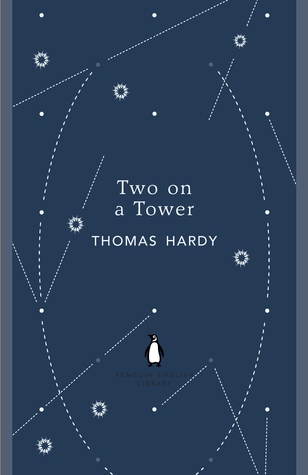
Two on a Tower by Thomas Hardy

This was the book chosen for me in the most recent Classics Club Spin and although it wasn’t one of the books on my list that I was particularly hoping for, I was pleased with the result as Thomas Hardy is one of my favourite Victorian authors. Today is the deadline for posting our reviews and for once I have managed to finish in time!

Two on a Tower was published in 1882 and is one of Hardy’s less well known novels, but that doesn’t mean it isn’t a good one. Although I wouldn’t rank it amongst my top three or four, I still thoroughly enjoyed it. It falls into the group of novels Hardy himself classed as ‘romance and fantasy’ and is set, like many of his other books, in his fictional Wessex. The romantic aspect of the book concerns Lady Viviette Constantine and her relationship with the younger Swithin St Cleeve.

Twenty-year-old St Cleeve lives with his elderly grandmother and dreams of becoming a famous astronomer. He has created an observatory in an old tower on land owned by Lady Constantine and her husband, who is away in Africa. When Lady Constantine meets the young man who is using her tower, she is struck by his beauty and by his passion for his work, and as Swithin introduces her to the wonders of the night sky with its planets and constellations, she becomes aware that she has fallen in love with him. She and Swithin spend more and more time together in their own private world at the top of the tower, hidden away from the prying eyes of society whom, she knows, would disapprove of their relationship – because she is ten years older and belongs to a different social class.

Even after news arrives from Africa of the death of Lady Constantine’s husband, the barriers of age and class still stand in their way. Will she and Swithin ever be able to marry and live together openly? How long will she manage to keep her romance a secret from her scheming brother Louis? And can she fend off the unwelcome attentions of the Bishop of Melchester?

Two on a Tower has a slightly different feel from most of the other Hardy novels I’ve read. It’s quite a gentle story, with none of the truly shocking, tragic scenes that you would find in books like Jude the Obscure and Tess of the d’Urbervilles. That’s not to say there is no drama, because there is, especially at the end – Hardy certainly doesn’t make things easy for Viviette Constantine and Swithin St Cleeve – but what I will remember most from this book are the descriptions of the stars in the night sky and the slow development of the two lovers’ relationship. However, I thought that the sense of place – usually such a strong element of Hardy’s writing – was weaker than usual. Apart from the tower itself, I felt that the surrounding landscape never came to life in the same way as, for example, Egdon Heath in The Return of the Native. It was as if, by concentrating on the wider universe, Hardy had less time to spend on the smaller details of everyday life. Maybe that was intentional; I’m not sure.

As I’ve said, this book hasn’t become a favourite – and I felt less emotionally invested in the central romance than I would have liked, probably because, although I completely believed in Viviette’s love for Swithin, I wasn’t convinced that she really meant much more to him than his telescope did. I was still gripped by their story, though, and overall, I really enjoyed Two on a Tower.

I have four Hardy novels left to read and they are all obscure ones too: The Well-Beloved, A Laodicean, The Hand of Ethelberta and The Trumpet-Major. If you have read them, please let me know which one I should read next!

This is book 14/50 read from my second Classics Club list.

The Turn of the Screw by Henry James

I keep coming across books that are said to have been inspired by or similar to Henry James’ 1898 classic The Turn of the ScrewFlorence and Giles by John Harding, This House is Haunted by John Boyne and The Turn of the Key by Ruth Ware, to name a few – so it seemed ridiculous that I still hadn’t read the book itself. I decided to put it on my list for this year’s R.I.P. challenge, and have finally read it, appropriately just in time for Halloween.

The Turn of the Screw is presented as a ghost story told to a group of friends sitting round the fire at Christmas. It tells of two children left in the care of an uncle after the deaths of their parents. Not wanting to be bothered by his little niece and nephew, the uncle employs a young woman as their governess, giving her strict instructions not to contact him with any complaints or questions and to deal with any problems herself. The governess, who remains unnamed throughout the story, arrives at the family estate, Bly, and gets to know Flora, the younger of her two charges. Flora’s brother, Miles, is away at school but shortly after the governess’s arrival, he returns home, having been expelled. The governess can’t understand this, as Miles, like his sister, appears to be so charming and angelic.

When the governess begins to see two mysterious figures around the grounds of the estate, however, she begins to wonder whether the children are really as innocent as they seem. Learning from the housekeeper that the two figures she has seen closely resemble two previous Bly employees – Miss Jessel and Peter Quint, both of whom are now dead – the governess becomes convinced that she is seeing ghosts. But are the ghosts a figment of her imagination or do they really exist? Are Flora and Miles, as she strongly suspects, secretly aware of them too? And if so, what hold do the ghosts have over the children?

I do wish I’d read this book before now; it was a quick, short read and it would undoubtedly have been better to have read it before reading all those other novels it inspired! Already being familiar with the general outline of the plot before I began did spoil things a little bit, although I still found that some parts of the story were new to me. I didn’t find it particularly scary, which in a way I was pleased about as I live alone and don’t like to be terrified – but I was also slightly disappointed because surely a good ghost story should be scary. Anyway, it was certainly unsettling, mainly because of the ambiguity. Because of the governess’s unreliability as a narrator, we have to decide for ourselves whether the ghosts are real or whether they are not – and there are other questions that are never fully answered either, such as the true nature of the children’s relationship with Jessel and Quint or what exactly Miles said and did to get expelled from school.

This is the second book I’ve read by Henry James and although I found it more entertaining than my first (The Europeans), I don’t think I’m ever going to be a fan of his writing style which I find very dry and difficult to engage with. I’m glad I’ve read this one at last and I will try more of his books, but I’m not expecting him to become a favourite author.

This is book #7 read for this year’s R.I.P. event.

Nonfiction November 2019: Week 1 – Your Year in Nonfiction

I enjoyed taking part in Nonfiction November for the first time last year, so I thought I would join in again this year. This event runs for five weeks, with five weekly discussion topics, giving us a chance to highlight and talk about our non-fiction reads. Our hosts for 2019 are Katie of Doing Dewey, Julz of Julz Reads, Rennie of What’s Nonfiction, Sarah of Sarah’s Book Shelves, and Leann of Shelf Aware.

This week’s topic is:

Week 1: (Oct. 28 to Nov. 1) – Your Year in Nonfiction (hosted by Julz of Julz Reads):

Take a look back at your year of nonfiction and reflect on the following questions – What was your favorite nonfiction read of the year? Do you have a particular topic you’ve been attracted to more this year? What nonfiction book have you recommended the most? What are you hoping to get out of participating in Nonfiction November?

I have read six non-fiction books so far this year and five of them are history, with the other one being an author’s memoir. These are the topics I’m usually drawn to when it comes to non-fiction; I would like to be more adventurous and try something different, but I always find myself coming back to the same sort of books! Here are the links to my reviews, in the order that I posted them:

When Women Ruled the World by Kara Cooney

Margaret Tudor by Melanie Clegg

The Afterlife of King James IV by Keith J. Coleman

Richard III: Fact and Fiction by Matthew Lewis

Decoding the Bayeux Tapestry by Arthur C. Wright

Rosie: Scenes from a Vanished Life by Rose Tremain

Of these, my favourite was Melanie Clegg’s biography of Margaret Tudor, sister of Henry VIII and wife of James IV. I found all of the other books interesting and entertaining too, apart from When Women Ruled the World, which was supposed to be about the lives of female Egyptian pharaohs but turned out to be more concerned with women in modern politics.

As well as the books above, I have almost finished Bookworm by Lucy Mangan, which I’ve been dipping into over the last few weeks, and am halfway through Big Sister, Little Sister, Red Sister by Jung Chang.

I also have the following on my TBR:

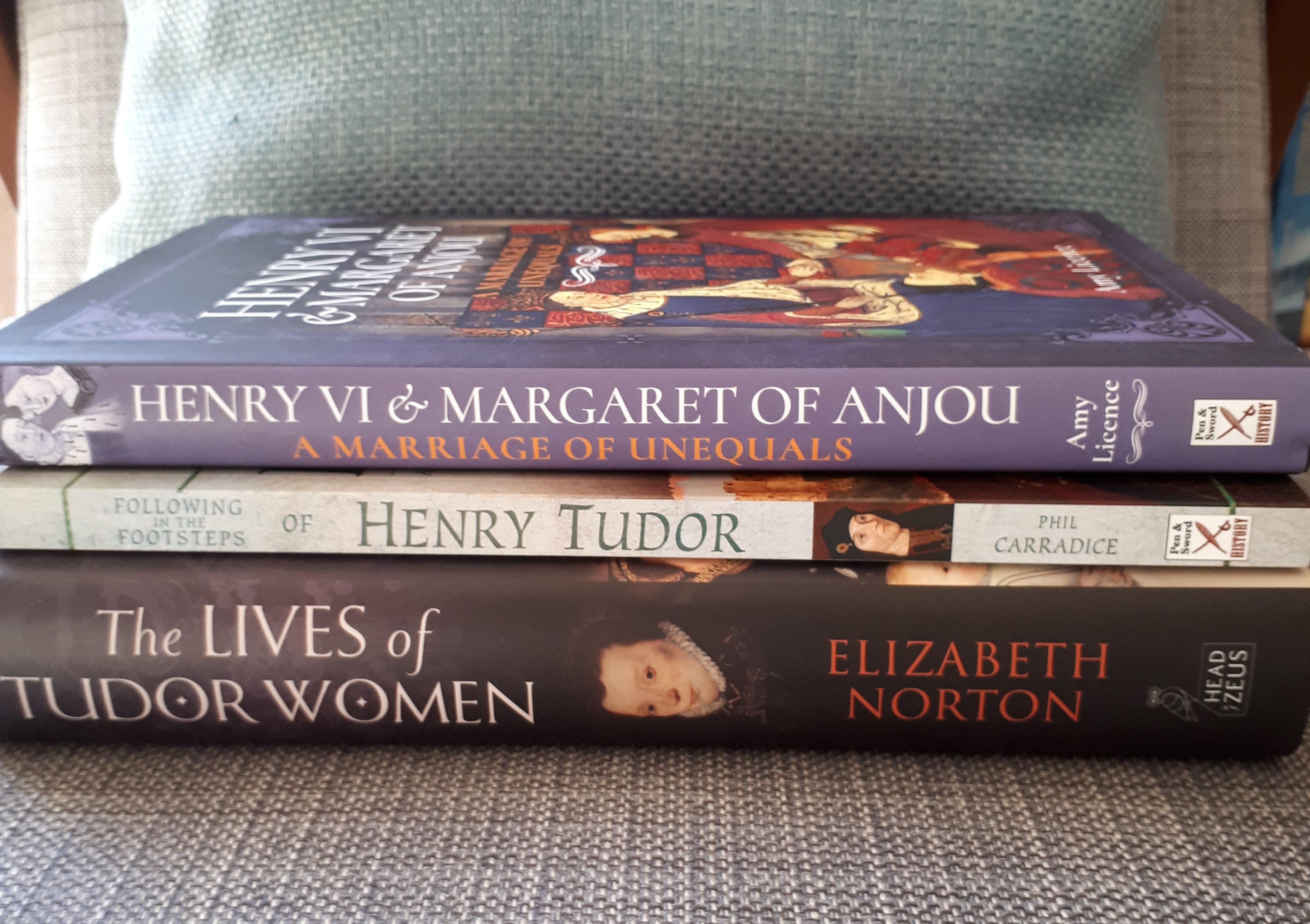
Henry VI and Margaret of Anjou: A Marriage of Unequals by Amy Licence
Following in the Footsteps of Henry Tudor by Phil Carradice
The Lives of Tudor Women by Elizabeth Norton

And on my Kindle:

The Brothers York by Thomas Penn
Elizabeth Widville, Lady Grey by John Ashdown-Hill

To answer the final question above (What are you hoping to get out of participating in Nonfiction November?), I would be happy if I could read at least some of the books above, but I’m also hoping that visiting other participants’ posts will help me to discover other books that I might enjoy and wouldn’t have otherwise thought of picking up.

~

How has your year in non-fiction been? What are the best non-fiction books you’ve read this year?

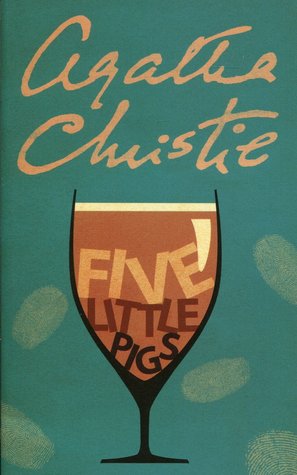
Five Little Pigs by Agatha Christie

This is one of the Christie novels I have been particularly looking forward to reading, as so many people list it amongst their favourites. I had hoped to read it last month as it was September’s selection for the 2019 Read Christie Challenge, but it ended up having to be an October read for me instead.

Published in 1942, Five Little Pigs is one of Christie’s Poirot mysteries, but it is slightly different from the others in that Poirot is trying to solve a crime which took place many years before the novel opens. Carla Lemarchant has received a letter from her mother, Caroline, who has died in prison while serving a life sentence for the murder of her husband, Amyas Crale, sixteen years ago. In the letter, Caroline assures her daughter of her innocence – and because Carla knows that her mother was always a woman who told the truth, she believes her. Hoping to find out what really happened, Carla approaches Hercule Poirot and asks him to investigate.

This is not Poirot’s usual sort of mystery – there is no active crime scene to visit and any evidence is likely to have been lost or destroyed long ago – but he agrees to Carla’s request. He begins by collecting statements from the five people who, other than Caroline, had been present on the day of the murder: the stockbroker Phillip Blake and his reclusive brother Meredith; Elsa Greer, with whom Amyas Crale was thought to be having an affair; the governess Cecelia Williams; and Caroline’s younger sister, Angela, who was just a teenager at the time. If Caroline was innocent, then one of these five must have been the murderer – but will it still be possible to identify the real culprit now that so much time has passed?

I can understand why Five Little Pigs is so highly regarded by Christie fans. The characterisation is excellent; the suspects are well drawn and have believable motives for wanting Amyas dead, and there is evidence of character development too, in the contrast between their present day selves and the people they had been sixteen years earlier. The structure is clever too – the statement each character writes is given in full and although I thought at first that I would find it repetitive reading about the same events five times in a row, that wasn’t really a problem. Each account of that fateful day is slightly different and each one makes us question what we were told in the previous one. It’s only once Poirot has all five accounts in front of him and has spoken to all five of the writers in person that he can piece everything together and solve the mystery.

I enjoyed this book but it hasn’t become a personal favourite and there are other Poirots I’ve liked more. The problem I had with this one was that, although I appreciated the structure and the characters, I didn’t find the mystery itself particularly imaginative or entertaining. I thought The ABC Murders and Dumb Witness both had better plots, to give two examples that I’ve read this year for the Read Christie challenge. Having just caught up with September’s book at the end of October, I am going to skip October’s book for the challenge (a new short story collection, The Last Séance) and will wait to see what November’s choice will be.

And if you’re wondering, the title of Five Little Pigs refers to the fact that the five suspects remind Poirot of the children’s rhyme, “This little piggy went to market, this little piggy stayed at home; This little piggy had roast beef, this little piggy had none; And this little piggy went ‘wee wee wee’ all the way home!”

This is book #6 read for this year’s R.I.P. event.