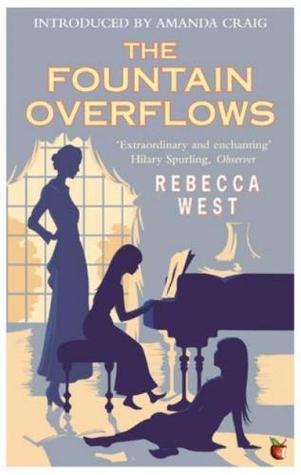
The Fountain Overflows by Rebecca West

Rebecca West is the final author to be celebrated in Jane at Beyond Eden Rock’s Birthday Book of Underappreciated Lady Authors this year. Having previously only read The Return of the Soldier by Rebecca West, I decided to read The Fountain Overflows next as it is one of the books on my Classics Club list. This is the first in a trilogy (the other two – This Real Night and the unfinished Cousin Rosamund – were published posthumously), and although it is a work of fiction, it does apparently draw on the author’s own childhood experiences.

The Fountain Overflows is set in the early 20th century and tells the story of the Aubrey family through the eyes of Rose, one of the children. As the novel opens, the family are preparing for a move from Scotland to London, having only recently returned to Britain from South Africa. The children have become used to changing address on a regular basis due to the fact that their father, a newspaper editor, seems unable to stay in one position for very long. He is irresponsible, unreliable and has a habit of gambling his money away on the stock exchange, but his wife and children love him anyway and hope that this time he can make a success of the job he has been offered and that they will be able to stay in their new home for longer than usual.

The Aubreys are a creative, cultured and highly gifted family – Rose and her twin sister, Mary, are talented pianists; their little brother Richard Quin, as he grows older, discovers an aptitude for the flute; and Cordelia, the eldest, plays the violin. Their mother, Clare Aubrey, had been a concert pianist herself, and it falls to her to see that each of her children receives the correct guidance and tuition to make the most of their abilities. This proves particularly challenging where her eldest daughter is concerned, as thanks to a well-meaning but interfering teacher, Cordelia is led to believe she is much more talented than she really is. I found the Cordelia storyline very moving – it’s obvious from the beginning what is going to happen but it takes a long time to play out and I dreaded the moment when she would inevitably discover the truth.

Although this is a story driven by characters, relationships and family bonds, there is also some drama. There is an episode where Rose and her mother visit the home of Rose’s Aunt Constance and cousin Rosamund, only to find the house apparently haunted by poltergeists. Later in the book, the mother of a friend from school is accused of murder and the Aubreys are drawn into that too. But these incidents, each of which could have formed the entire plot of a different sort of novel, are relatively minor aspects of The Fountain Overflows and no more or less important than many of the other things that happen in Rose’s life.

I loved Rose’s narrative voice; not all authors can write convincingly from the perspective of a child, but Rebecca West certainly does. She really captures the way children think and feel, the things that matter to them and the way they look at the world. But the most engaging character, for me, was Rose’s mother. I admired her for her strength in trying to keep her family and marriage together, seeing that the rent is paid on time, helping others despite her own financial hardship, and providing a stable, loving home for her children when their father couldn’t or wouldn’t.

With such strong, believable characters and such lovely writing, this was a wonderful read. I was sorry to have to leave the family behind at the end, but I’m looking forward to meeting them again in This Real Night.

This is book 10/50 from my second Classics Club list.
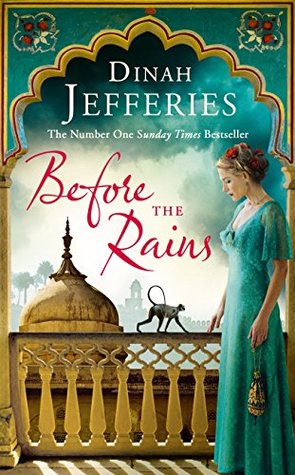
Before the Rains by Dinah Jefferies

Whenever I want a book to transport me to another country and another time, I need look no further than Dinah Jefferies. So far her novels have taken me to Ceylon, Malaya and French Indochina; this one, Before the Rains, is set in Rajputana, India, in the 1930s.

Our heroine, Eliza Fraser, has a passion for photography and hopes to build a career for herself as a photojournalist. When an old family friend and British politician, Clifford Salter, arranges for her to spend a year photographing the royal family of one of India’s princely states, she is both delighted and nervous. India is where she grew up and she still feels a connection to the land and the people, but it is also where, at the age of ten, she witnessed the death of her father in Delhi.

Arriving at the palace where she will live for the next twelve months, Eliza finds that not everyone is happy to have an outsider interfering in their affairs, especially when they discover that she is a widow. Other people, though, are much more welcoming – including Jayant Singh, the younger brother of Prince Anish. When Jay offers to escort Eliza around the countryside in search of subjects for her photographs, she is distressed by the poverty she sees and urges Jay to do something to help his people. In return, Jay helps her to understand the effect British rule has had on India. As they discuss these and other issues and get to know each other better, a friendship forms between them which quickly becomes something more…but Eliza knows that there can only be any future for them if Jay is prepared to defy both his family and the expectations of society.

Like all of Dinah Jefferies’ novels, this one features some lovely descriptive writing, bringing to life the sounds, colours, tastes and smells of India. But along with the beautiful descriptions, there are some brutal, horrifying ones, such as an account of a widow throwing herself onto her husband’s funeral pyre, followed by a discussion of the custom of sati, as well as the fates of unwanted baby girls and of women suspected of witchcraft. For all Eliza had spent her childhood in India, she had been insulated within the British community and it’s only now that she is going out on her excursions with Jay that she feels she is truly starting to understand the country, its history and its people.

Although I loved the setting, I didn’t enjoy this book as much as I enjoyed some of Jefferies’ others, which is mainly due to the fact that I found it predictable and too reliant on coincidences – there were at least two plot twists towards the end that I found completely unconvincing. I also struggled to believe in Eliza’s romance with Jay; I liked both characters, but I thought it seemed too convenient that on arriving at the palace Eliza would immediately catch the eye of a prince. Maybe I should have just been less cynical and more prepared to suspend disbelief.

This is probably my least favourite of Dinah Jefferies’ novels, but I’m still looking forward to reading her new one, The Missing Sister, which will be set in 1930s Burma.

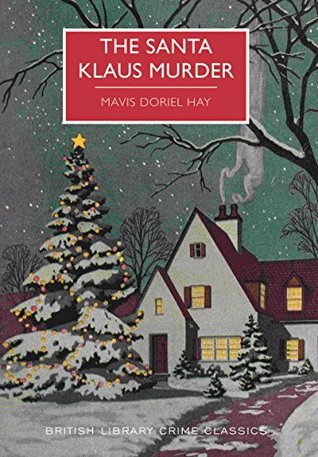
The Santa Klaus Murder by Mavis Doriel Hay

Mavis Doriel Hay wrote three mystery novels during the 1930s, all of which are now available as British Library Crime Classics. This one, The Santa Klaus Murder, sounded as though it would be perfect for the time of year, and of course it was. I enjoyed it, although I found it very similar to Agatha Christie’s Hercule Poirot’s Christmas and Georgette Heyer’s Envious Casca, and not as good as either of those books.

The Santa Klaus Murder is set in and around Flaxmere, a country estate belonging to Sir Osmond Melbury. The novel opens with several first-person accounts written by members of Sir Osmond’s family as they gather at the house to celebrate Christmas and in this way we get to know all of the main characters and learn a little bit about their backgrounds and the relationships between them.

It seems that for many years, Sir Osmond has been trying to control and manipulate the lives of his adult children. His son, George, has the security of knowing that, as the only male heir, his inheritance is safe, but for the four daughters things are much more uncertain. He has already tried to influence, with varying success, the marriages of the three eldest girls – Hilda, Edith and Eleanor – and is now trying to do the same with Jennifer, the youngest. Philip Cheriton, the man Jennifer loves, is attending the Christmas gathering, but Sir Osmond has also invited Oliver Witcombe, whom he would prefer to see as her husband. Jennifer is desperate to marry Philip but needs to find a way to do so without upsetting her father.

We do see a kinder side to Sir Osmond when, on Christmas Day, he asks Oliver to dress up in a Santa Klaus costume and distribute gifts to the family and servants. When the old man is discovered shot dead at his desk in the study that same afternoon, all the clues seem to point towards Santa…but why would Oliver want Sir Osmond dead? Colonel Halstock, the Chief Constable, is brought in to investigate and quickly discovers that almost everyone who spent Christmas at Flaxmere may have had a motive for murder. Could the killer be one of Sir Osmond’s children or one of their partners? What about his pretty young secretary, Grace Portisham, who may be expecting to receive something in his will? Or could it be Ashmore, the family’s old chauffeur, who lost his job at Flaxmere just before Christmas?

Most of the remaining chapters in the book, with one or two exceptions, are narrated by Col. Halstock as he tries to identify the culprit. There’s a lot of discussion of alibis, people’s movements, and the layout of the rooms, so if you enjoy trying to solve those sorts of puzzles – where somebody was at a certain time and what they were doing, or how somebody could have moved from one room to another without being seen – then this is probably the book for you. I didn’t work out who the murderer was, although I had my suspicions, but I did find other parts of the plot easy to predict. As a traditional country house mystery, there wasn’t much that made this book stand out from other books of its genre and era, but as an entertaining and undemanding Christmas read I found it satisfying enough.

Mavis Doriel Hay’s other novels are Murder Underground and Death on the Cherwell, both of which I’m now interested in reading.

Historical Musings #45: My Year in Historical Fiction – 2018

It’s my final Historical Musings post of 2018, which means it’s time for my annual summary of my year in historical fiction! I have kept the same categories as in the previous two years so that it should be easy to make comparisons and to see if there have been any interesting changes in my reading patterns and choices (my 2017 post is here and 2016 is here).

I know the year is not quite over yet, but I like to stick to a weekend in the middle of the month for my Historical Musings posts – and I don’t think I’ll read enough historical fiction in the final two weeks of the year to significantly affect these statistics anyway.

~

Time periods read about in 2018

No big surprises here – this is a very similar picture to last year, with books set in the 19th and 20th centuries making up nearly half of my reading. The 16th and 17th centuries were popular again too (all those Tudor and English Civil War/Restoration books). Apart from Ancient Greece, very early periods of history are still poorly represented in my reading. Recommendations are always welcome!

~

31.2% of the historical fiction authors I read this year were new to me.

Down from 47.3% last year. I’m disappointed I haven’t tried more new authors this year – although it does mean I’ve been enjoying books by favourite authors instead.

Three books I’ve read by new-to-me historical fiction authors in 2018:
Smile of the Wolf by Tim Leach
Dear Mrs Bird by AJ Pearce
By Sword and Storm by Margaret Skea

~

Publication dates of books read in 2018

I’ve been reading a lot of new or recent historical fiction again this year, with the rest spread across the 20th century. Sadly, I haven’t read anything published earlier than 1900 but that could change next year as I do have some older historical fiction on my Classics Club list which I’m looking forward to reading.

~

14.3% of my historical reads in 2018 were historical mysteries.

Up from 9.6% last year – but not a big difference.

Three historical mysteries I’ve enjoyed reading this year:
Traitor by David Hingley
A Morbid Taste for Bones by Ellis Peters
Lamentation by CJ Sansom

~

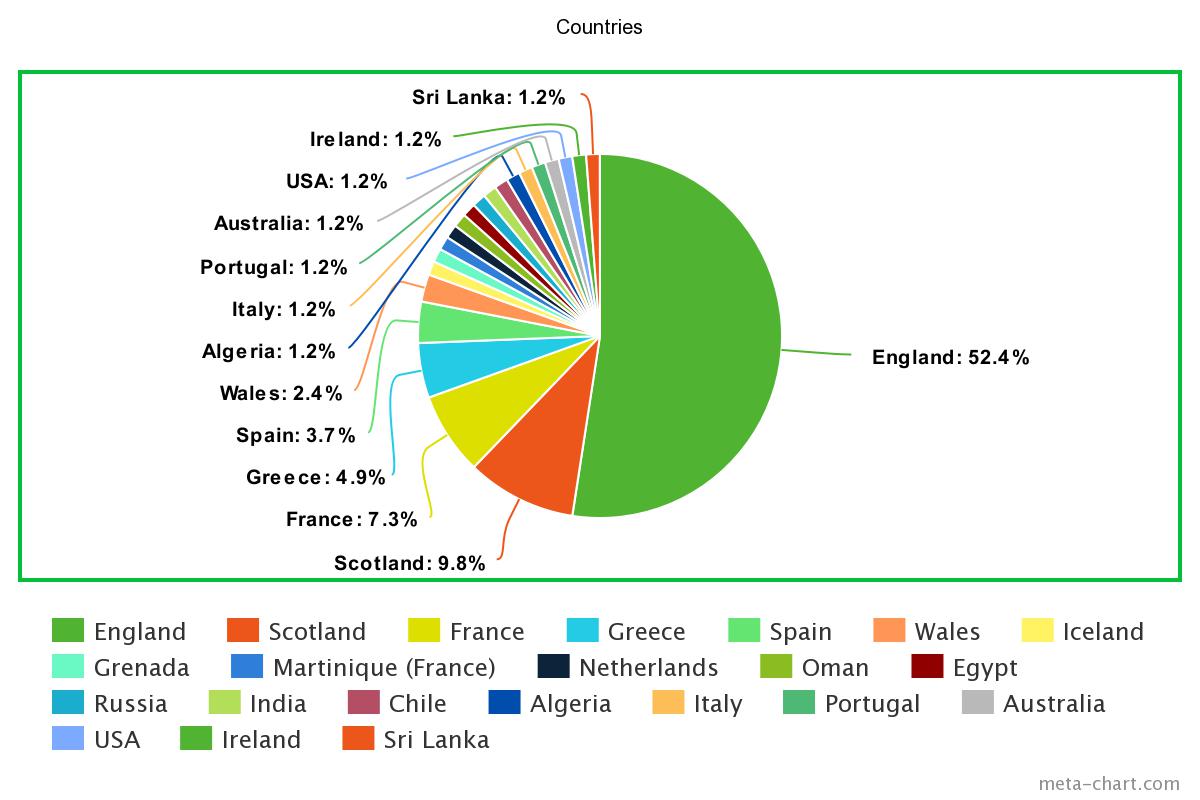
I’ve read historical fiction set in 22 different countries this year.

One more country than last year (if I’m allowed to count Martinique, an overseas territory of France). I’m still finding it difficult to get away from mainly reading books set in my own country, England, but while France and Italy occupied the next two positions in both 2017 and 2016, this year Scotland is in second place with France third and Italy a long way behind.

Three books I’ve read set in countries other than my own:
My Beautiful Imperial by Rhiannon Lewis (Chile and Wales)
The Sealwoman’s Gift by Sally Magnusson (Iceland and Algeria)
The English Girl by Katherine Webb (Oman)

~

Five historical men I’ve read about this year:

William Lilly

Prince Rupert (The Winter Prince by Cheryl Sawyer)
William Marshal (Templar Silks by Elizabeth Chadwick)
Henry Tudor (The Tudor Crown by Joanna Hickson)
René Descartes (The Words in My Hand by Guinevere Glasfurd)
William Lilly (The Magick of Master Lilly by Tobsha Learner)

~

Five historical women I’ve read about this year:

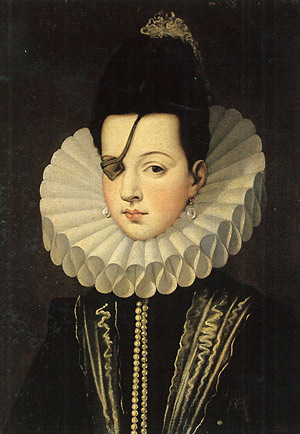
Ana de Mendoza

Jane Seymour (Jane Seymour: The Haunted Queen by Alison Weir)
Elizabeth I (Young Bess by Margaret Irwin)
Ana de Mendoza, Princess of Eboli (That Lady by Kate O’Brien)
St Hilda (The Abbess of Whitby by Jill Dalladay)
Elizabeth Mortimer (Queen of the North by Anne O’Brien)

~

Have you read any good historical fiction this year? Have you read any of the books or authors I’ve mentioned here?

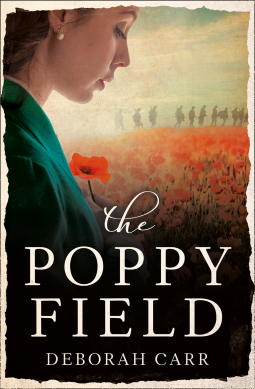
The Poppy Field by Deborah Carr

2018 has been an eventful year in many ways and in November we marked the one hundredth anniversary of the end of the First World War. I picked up Deborah Carr’s new novel, The Poppy Field, to read over the centenary weekend, but I’ve since fallen behind with my reviews, which is why I’m only posting about it now.

The Poppy Field has two narratives, one set in 2018 and the other in 1916-18. First, in the present day, we meet Gemma, a British trauma nurse who has taken some time away from her stressful job to work on the renovation of a farmhouse in Doullens, in Northern France. Her father has recently inherited it and wants to get it into a good enough condition to be able to sell. With the help of Tom, a man she meets in Doullens who offers to assist with the building work, Gemma begins the long and difficult task of restoring the house to its former beauty. During the refurbishment, they discover a bundle of old letters dating back to World War I, written by an Alice Le Breton, and as soon as Gemma settles down to start reading them, she becomes obsessed with finding out how Alice’s story will end.

The other thread of the novel follows Alice, a young woman from Jersey in the Channel Islands, who volunteers as a VAD nurse at a casualty clearing station near Doullens during the war. Working conditions at the station are challenging and often horrifying, as wounded soldiers are brought in from the front line and the doctors and nurses do their best to save lives with the limited medication and equipment available to them. In the midst of so much pain and suffering, Alice is still able to find some happiness when she falls in love with one of her patients – but in times of war life is uncertain and Alice knows that her dreams could be shattered in an instant.

Although Alice and Gemma are very different people, there are many parallels between their stories – they are both nurses, they have both reached important turning points in their lives, and they have both found themselves in the same part of France. They also each become involved in a romance, but while I found Alice’s very moving (as wartime romances usually are), I thought Gemma’s was less convincing and very predictable. She meets the man who will become her love interest almost as soon as she arrives in France and there’s no real suspense involved in wondering whether they will end up together or not. Gemma’s whole storyline felt like little more than a frame for Alice’s, but I find that’s often the case with dual-time period novels and I almost always prefer one narrative over the other.

Although I’d hoped for more from this book, I did still enjoy it, particularly the historical sections and the details of Alice’s nursing work. The two separate threads of the story tie together nicely towards the end and the novel as a whole is an interesting and poignant read.

Thanks to HarperImpulse for providing a copy of this book for review via NetGalley.

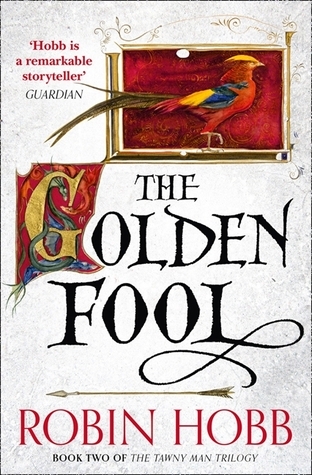
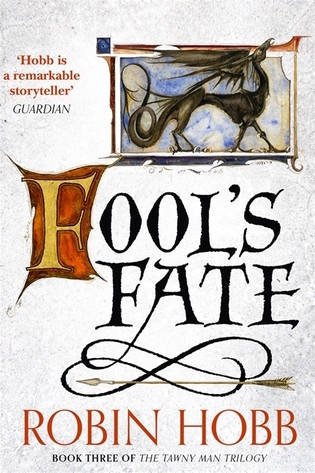
Thoughts on finishing The Tawny Man Trilogy (The Golden Fool and Fool’s Fate)

After reading Fool’s Errand a few months ago, I knew I didn’t want to wait too long before reading the other two books in Robin Hobb’s Tawny Man Trilogy; on the other hand, I didn’t want to read them too quickly because then it would all be over and I wouldn’t have them to look forward to anymore (I’m sure I’m not the only one who feels that way about long-anticipated books). Once I started reading The Golden Fool, though, I had to keep going until I’d reached the end of the trilogy. I cared too deeply about the characters to abandon them while I read other books.

Before I go any further, I will give my usual advice that if you are new to Robin Hobb, the place to start is the Farseer Trilogy, which begins with Assassin’s Apprentice. After that, you should read The Liveship Traders Trilogy – it’s not completely necessary but I strongly recommend it as it will give you a better understanding of the world Hobb has created – and then move on to Fool’s Errand. If you have not yet read all of those books, you will come across spoilers for them in the rest of this post (it would be impossible for me to avoid them).

First, The Golden Fool. As the middle book in the trilogy, this one is neither as tightly plotted as the first nor as epic as the third. Its main function seems to be to tie up some of the storylines begun in the first book (such as Laudwine and the Piebalds), while setting the scene for the quest that will form the basis of the final book. The foundations of this quest are laid during negotiations for Prince Dutiful’s betrothal to an Outislander princess, the Narcheska Elliania. Dutiful’s mother, Queen Kettricken, intends this marriage to form a lasting alliance between the Six Duchies and the Outislands, but it seems that things aren’t going to go quite as smoothly as she’d hoped. Before the Narcheska will agree to marry the prince, she insists that he will have to prove himself worthy…by bringing her the head of the black dragon Icefyre, who lies in a glacier on a distant ice-covered island.

To help Dutiful prepare for his mission, Fitz – still posing as Tom Badgerlock, servant to the nobleman Lord Golden (the Fool) – reluctantly agrees to take on the role of Skillmaster, tutoring the prince in the Farseer magic known as the Skill. The importance of creating a coterie for Dutiful – a circle of those gifted in the Skill who will offer support and strength to the prince – is clear, but at present Fitz has other things on his mind. His adopted son, Hap, is in love with a girl from Buckkeep Town whose parents strongly disapprove of the match, and Hap risks losing his apprenticeship as a result. Meanwhile, his daughter Nettle, with whom he is linked through the Skill, is being visited in her dreams by a blue dragon; Kettricken and Chade want her brought to the safety of Buckkeep Castle and raised as befits a Farseer heir, but Fitz disagrees…

Worst of all, the friendship between Fitz and the Fool, which has endured for so many years, comes under threat when a delegation from Bingtown arrives. Among them is a certain woman called Jek, who will be remembered by readers of the Liveship Traders, and who seems to be under a misapprehension about the Fool. And this is one of several points in the novel where I was glad I had resisted the temptation to go straight from the Farseer Trilogy to the Tawny Man – this particular scene would have made far less sense otherwise. Even with my understanding of what it was all about, I found this a difficult and uncomfortable scene to read – it’s never nice to see people who care so much about each other hurting each other so badly.

Fool’s Fate picks up the story in the middle of the preparations for Dutiful’s journey to the Outislands where he must hunt down and behead the dragon Icefyre. Along with his old mentor Chade, and the difficult but strongly-Skilled Thick, Fitz is accompanying the prince on his voyage but insists that the Fool, who has predicted his own death on the icy island of Aslevjal, must stay behind. Can the future really be changed as easily as that – or will fate refuse to be defied?

This is the book where the significance of everything we’ve learned in the previous eight novels regarding dragons, Elderlings, White Prophets and Catalysts finally starts to become clear and I found the ‘quest’ element of the novel more compelling than the one in the final Farseer novel, Assassin’s Quest – although, having said that, there are some direct links between the two and, remembering that earlier quest, I enjoyed the brief glimpses we are given of Girl on a Dragon and Verity as Dragon! This is such a visual book too; some of the scenes involving Icefyre, the glaciers of Aslevjal and the Elderling ruins beneath the ice are described so vividly, I almost felt as though I was watching them unfold on film. We also see both the Skill and the Wit being used in new and fascinating ways.

As the final book in the Tawny Man Trilogy and, until the publication of the Fitz and the Fool Trilogy in 2014 (which I still have to look forward to), the final book about Fitz, there are a lot of loose ends to tie up and a lot of ongoing storylines to be resolved. I think whether or not you will be satisfied with these resolutions will depend on how you feel about the characters concerned. Although one of Fitz’s relationships is given a happy ending, it comes at the expense of at least two others – and because I had felt much more closely engaged with the latter two characters than with the former, I found it a very bittersweet conclusion to Fitz’s story.

As usual, coming to the end of one of Robin Hobb’s trilogies has left me feeling bereft. I’m planning to start her Rain Wild Chronicles soon, but I’m wondering where the novella The Wilful Princess and the Piebald Prince fits in and whether I should maybe read that first.

Nonfiction Mini-Reviews: A Tudor Christmas and Henry VII

I didn’t have time last month to write about all of the books I read for Nonfiction November, so I’m combining the final two into one post today, which I think is quite appropriate as they are both Tudor related!

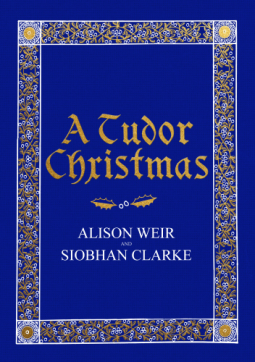
First, A Tudor Christmas. If you haven’t finished your Christmas shopping yet, this lovely little book by historian and novelist Alison Weir and her co-author Siobhan Clarke, a guide for Historic Royal Palaces, could be the perfect gift for any history lovers in your life (or for yourself, at any time of year, of course).

Divided into twelve sections to represent each of the twelve days of Christmas, the book takes us through the origins of many of our favourite Christmas traditions, as well as some that were popular in Tudor times but have disappeared over the years. The text is interspersed with recipes, poems, carols and illustrations, so if you don’t want to read it straight through from beginning to end, you could just pick it up and read a page or two whenever you have a few spare moments over the festive period. This is much shorter than the other non-fiction books I’ve read by Alison Weir and obviously doesn’t have the same level of depth, but even so she and Clarke manage to cover a large amount of material, touching on almost every aspect of Christmas you could think of.

I enjoyed reading about the various ways in which St Stephen’s Day/Boxing Day was celebrated in different parts of Europe, ranging from hunting the wren and taking beribboned horses to be blessed by the priest, to distributing alms to the poor. There’s a discussion of when the turkey was first introduced to England, a fascinating chapter about the typical games that would be played at home or at court, and some eye-opening accounts of how much money Henry VIII would spend on celebrating Christmas. There are also descriptions of earlier traditions such as the burning of the yule log and the origins of holly, ivy and mistletoe being used as decorations and, although I would have preferred a tighter focus on the Tudor period itself (which is what I’d expected from the title), I did find the whole book an interesting and worthwhile read.

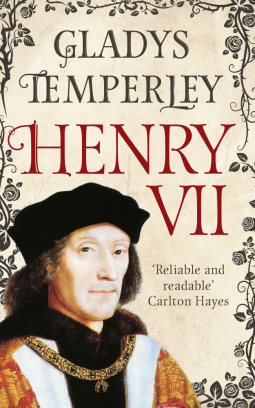
From a Tudor Christmas to a Tudor king…Henry VII by Gladys Temperley is a biography of the first Tudor monarch who reigned from 1485 to 1509. Originally published in 1914 (and reissued more recently by Endeavour Compass), it does feel a bit dated and dry in places, but I still found it perfectly readable.

I started to read this book shortly after finishing The Tudor Crown by Joanna Hickson, a fictional account of Henry’s life before he became king, so I was particularly interested in the earlier sections which gave the facts behind some of the episodes which were featured in the novel such as Henry’s time in exile and preparations for his return to England at the head of an army. However, all of this is passed over very quickly, to be followed by a much longer section on the rebellions, conspiracies and pretenders to the throne – including Perkin Warbeck and Lambert Simnel – that repeatedly threatened Henry’s reign. As Temperley says, “He trusted few men, suspected many. He had plunged too early into the bitter waters of adversity, and as a fugitive exile, eating the bread of dependence at the courts of France and Brittany, had learnt to watch and school himself until repression had killed all spontaneity.”

Henry VII isn’t one of my favourite kings, but Gladys Temperley seems to have a lot of respect and admiration for him, which I think is a good thing – as long as it doesn’t lead to too much bias, I always think it’s better when an author likes and is genuinely passionate about their subject. Temperley highlights many of Henry’s lasting achievements, such as his ‘Mercantile System’, a policy which aimed to increase foreign trade and improve England’s economy, and the steps he took towards reforming the country’s judicial system.

The book feels thoroughly researched; there are footnotes throughout the text, three appendices giving more information on The Star Chamber, Perkin Warbeck and Juana of Castile, and a very impressive bibliography. You do need to remember, though, that this is a very old biography and that what we know of history is constantly evolving. For a more modern look at Henry VII, I recommend Winter King by Thomas Penn.