 Welcome to my monthly post on all things historical fiction. This month’s topic is something which occurred to me while I was in the middle of one of my recent reads, The Clockmaker’s Daughter by Kate Morton. Given that there are only one or two scenes in which the clockmaker actually appears, very few details on the science of clockmaking, and little relevance to the fact that one of the characters is the daughter of a clockmaker, I wondered why that particular title was chosen. Was it an allusion to the role of time in the story or is it just that books with titles which follow the format The __’s Daughter or The __’s Wife are easy to market?
As well as The Clockmaker’s Daughter, in the last two years I have also read The Witchfinder’s Sister by Beth Underdown, The Pharmacist’s Wife by Vanessa Tait, The Cursed Wife by Pamela Hartshorne, The Coroner’s Daughter by Andrew Hughes, Warwyck’s Wife by Rosalind Laker, and The Tea Planter’s Wife and The Silk Merchant’s Daughter, both by Dinah Jefferies. In that same period, the only book I’ve read with an equivalent ‘male’ title is Jean Teulé’s The Hurlyburly’s Husband. With the exception of Warwyck’s Wife, these are all recently published books and it does seem to me that it has been a growing trend.
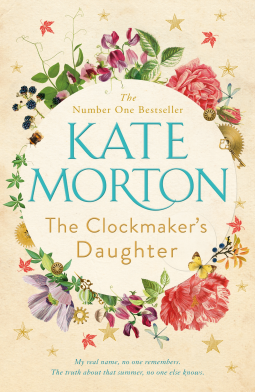 It’s easy enough to see why these are popular titles for historical fiction in particular. Historically, a woman would not, in most cases, have had the opportunity to be a clockmaker, a pharmacist or a coroner, but she could certainly be the wife or the daughter of one. And of course, some books are specifically about a woman’s experience of being a man’s wife or daughter or sister, which in previous decades or centuries could be very different from modern day experiences. In that case, it’s probably less important to tell us what it was like to be a husband, a son or a brother, as men in those times tended to have so much more freedom than women anyway. But where a book is not specifically about being a wife, daughter or sister, as with The Clockmaker’s Daughter, is there no other way the woman could be defined instead of by her relationship to a man?
I would love to hear your thoughts on this. Why do you think there are so many books with titles like these? What are your favourite Wife, Daughter or Sister novels? You may also be interested in this article in which the author Emily St. John Mandel posts a detailed analysis of books with ‘Daughter’ titles and looks at the possible reasons why these titles are so popular with publishers, booksellers and readers.


 She Reads Novels