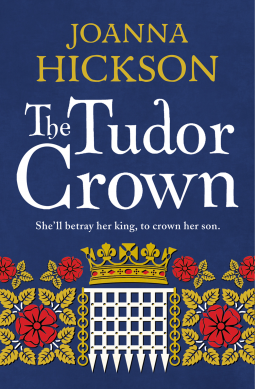
The Tudor Crown by Joanna Hickson

The Wars of the Roses – the 15th century series of conflicts between the House of York and the House of Lancaster – is one of my favourite periods of history to read about, partly because there are so many different ways in which the people and events of the time can be interpreted. Although I’ve read a few Wars of the Roses novels that take a more objective view of the period, authors – and readers – tend to be biased towards one side or the other. My personal preference is for York, but Joanna Hickson’s new novel The Tudor Crown is written from a decidedly Lancastrian perspective and shows both Henry Tudor and his mother, Margaret Beaufort, in a much more positive light than usual.

The Tudor Crown is a sequel to First of the Tudors and picks up where that book left off, but it does stand alone perfectly well so if you haven’t read the previous novel that shouldn’t be a problem. The story begins in 1471, just after the Lancastrians have been defeated at the Battle of Tewkesbury. With both Henry VI and his heir, the Prince of Wales, dead, and the Yorkist king, Edward IV, back on the throne of England, the Lancaster hopes seem to be in ruins. As one of the remaining Lancastrian claimants, young Henry Tudor’s life is now in danger and, accompanied by his Uncle Jasper, the Earl of Pembroke, he flees the country and takes refuge in Brittany. And here he must stay, for almost fourteen years, biding his time and trying to build up the support he will need to one day return to England and take the throne he believes is his.

Meanwhile, Margaret Beaufort, Henry’s mother, has been left widowed following the death of her husband at the recent Battle of Barnet and has married again, this time to Thomas Stanley. She returns to court where she serves the wives of first Edward IV, then Richard III, but she has still not given up hope of Henry becoming king and continues to work tirelessly on his behalf. If only she could persuade Thomas Stanley to help her…but Stanley has been walking a tightrope between York and Lancaster for years and won’t make a final decision until he is sure victory is within reach.

The Tudor Crown is written partly from Henry’s point of view and partly from Margaret’s, with the chapters alternating between the two. I found the Henry chapters the most interesting because I have never read about his time in exile in so much depth before. I was pleased to read in Joanna Hickson’s Author’s Note that most of the people Henry met during this time really existed. She does invent a romance for him with the fictional Catherine de Belleville, but I didn’t mind that as factual information on Henry’s exile is quite limited and if the author hadn’t used her imagination to fill in some of the gaps this wouldn’t have been much of a story. I loved the descriptions of the various places Henry visited and stayed at in Brittany, such as the Château de l’Hermine in Vannes (again a real place, but which sadly no longer exists in its original form). The Margaret chapters held less appeal for me simply because I am much more familiar with the events taking place in England during that period.

Both characters are portrayed with sympathy and understanding; in fact, I think Joanna Hickson might be the first author who has succeeded in actually making me like Henry (or Harri, as she refers to him, using a Welsh version of his name). He feels very human in this book and I almost found myself supporting him in his attempts to become king – although I still couldn’t bring myself to side with him against Richard at the Battle of Bosworth or to accept that Richard was responsible, beyond doubt, for the deaths of the Princes in the Tower. I think there is plenty of doubt, which is why it is still being discussed and debated more than five hundred years later.

This is Joanna Hickson’s third book about the Wars of the Roses, following Red Rose, White Rose and First of the Tudors (her other two novels, The Agincourt Bride and The Tudor Bride are set in the period just prior to this). She mentioned in her Author’s Note that she is planning to write about Margaret Beaufort again in her next novel, so I will look forward to that one.

Thanks to HarperCollins for providing a copy of this book for review via NetGalley.
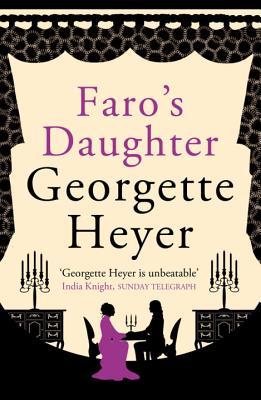
Faro’s Daughter by Georgette Heyer

I am continuing to work, very slowly, through Georgette Heyer’s novels, though not in any particular order – just reading them as I come across them. As I discovered in the comments section of my Historical Musings post on Heyer last month, I seem to have read very few of the books most people name as favourites – books like Cotillion, The Grand Sophy and These Old Shades. I will get to them eventually, but for now I’m posting my thoughts on my latest Heyer read, Faro’s Daughter.

Published in 1941, Faro’s Daughter is one of Heyer’s Georgian novels, set slightly earlier than the Regency period for which she is best known. Our heroine is Deborah Grantham, a young woman who has lived with her aunt, Lady Bellingham, since being orphaned several years earlier. Finding herself struggling financially, Lady Bellingham, who has always enjoyed hosting card parties, has decided to open a gaming house in order to make ends meet. The intelligent and quick-witted Deb presides over the gaming tables and naturally attracts a lot of attention from the men who come to gamble. One of these is Adrian, Lord Mablethorpe, who is five years younger than Deb and convinced that he is in love with her.

Adrian is heir to a fortune and Lady Mablethorpe is horrified at the thought of her son marrying a woman from a gaming house. Luckily, there are still a few months until he comes of age and receives his inheritance, so she enlists the help of her nephew, Max Ravenscar, to ensure that the marriage is prevented. Visiting Lady Bellingham’s establishment to see Deb for himself, Max is surprised to find that she is not at all the common, vulgar woman he had been led to believe. He keeps his promise to his aunt, however, and offers Deb a bribe to stay away from Adrian, but Deb is so offended by this insult that she decides not to inform Max that she never had any intention of marrying Adrian in the first place – it will be much more satisfying to make him suffer for a while!

Like most of Heyer’s novels, this is an entertaining read with a lively plot involving card games, a curricle race, visits to Vauxhall Gardens, and even several kidnappings. It hasn’t become a favourite, though, and that’s because I just never quite managed to like either Max or Deb. Max annoyed me with his constant name-calling and failure to see through any of Deb’s schemes, and while I could appreciate Deb as a clever and resourceful heroine, I couldn’t warm to her either.

Heyer’s romances seem to be divided into a few general types and the ones like this or Regency Buck, to give another example, where the hero and heroine are engaged in a war of words and battle of wits, appear to be the ones I like least. I usually prefer the books where the romance develops from friendship and mutual liking or with a newly married couple learning to love each other. This isn’t necessarily the case when I read books by other authors, but it seems to be true of my experience with Heyer!

This book was a slight disappointment for me, then, although I did still find things to enjoy. Maybe it was just the wrong choice of Heyer at the wrong time, as I couldn’t help comparing it to my last one, The Corinthian, which I found a complete delight to read. I can’t love them all, though, and at least I still have many more unread Heyer novels to look forward to.

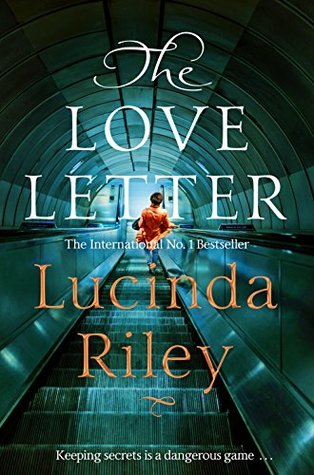
The Love Letter by Lucinda Riley

I have been enjoying following Lucinda Riley’s Seven Sisters series over the last few years and am looking forward to starting the newest book, The Moon Sister, which is due to be published later this year. The Love Letter is not part of that series, though – it’s a reissue of one of her earlier novels, first published in 2000 as Seeing Double under the name of Lucinda Edmonds. As explained in the brief Author’s Note which opens the novel, Seeing Double was not a success on its original release, probably because of poor timing – it wasn’t long since the death of Princess Diana in 1997 and the plot involves a scandal within a fictional British royal family. Lucinda and her publisher obviously feel that enough time has now passed to give the book a second chance and a new look and title.

The Love Letter is set in 1996 and begins with young journalist Joanna Haslam reporting on the funeral of Sir James Harrison, one of the most famous actors of his generation, who has died at the age of ninety-five. The funeral is a star-studded affair, attended by celebrities including Harrison’s granddaughter Zoe, a successful actress in her own right, and his film-producer grandson Marcus. The service has only just begun when Rose, an elderly woman sitting beside Joanna, is suddenly taken ill. Joanna offers to accompany the old lady home in a taxi, unaware that by doing so she is taking the first step in a sequence of events that could destroy the British establishment. Within days Rose is dead, but not before sending Joanna a letter, the contents of which hold clues to a shocking secret that some very powerful people will stop at nothing to keep concealed.

This is a very different sort of book from Lucinda Riley…a combination of spy thriller, mystery and romance. I have to admit, I found the plot a bit far-fetched and not always very plausible, but it’s certainly a page-turner – it was difficult to stop reading until I had found out what the letter meant and what the secret was. I did manage to work some of it out for myself (especially as we are told in the Author’s Note before we even start reading that the story is going to involve members of the royal family), but not all of it, because new pieces of the puzzle are being revealed right up to the end of the novel. For a book with six hundred pages, it’s a quicker read than you might expect and a lot of fun to read too, with some surprising plot twists and characters who aren’t quite what they seem.

Unlike the Seven Sisters novels with their dual timeline stories, The Love Letter is set entirely in the modern day (although events from the past provide the answers to the mystery). Having said that, I suppose 1996 is not exactly the ‘modern day’ anymore and the absence of recent technology from the characters’ lives does set the story firmly in its time period. As for the implications for the royal family, I don’t think people would be too bothered by a novel like this today, but I can see why it might have been controversial on publication eighteen years ago.

I think one of Lucinda Riley’s strengths as a writer is in creating characters the reader can really care about and like – and there are several of those in this novel. I loved Joanna from the beginning; she’s such an ordinary, down-to-earth person with the sort of hopes, ambitions and problems that are easy to identify with. I also liked Zoe, who is embroiled in a secret and possibly dangerous love affair, and I became very fond of her brother Marcus too. The only one of the main characters I didn’t warm to was Simon, Joanna’s best friend, although I did have some sympathy with the internal conflicts he faced in trying to choose between his job and his friendships.

The developments towards the end of the book became a bit too dramatic for me, but I was happy with the final few twists which led to the conclusion I’d been hoping for. I’m looking forward to getting back to the Seven Sisters – I have a copy of The Moon Sister which I’m planning to read soon – but The Love Letter made an interesting change.

Thanks to Pan Macmillan for providing a copy of this book for review.

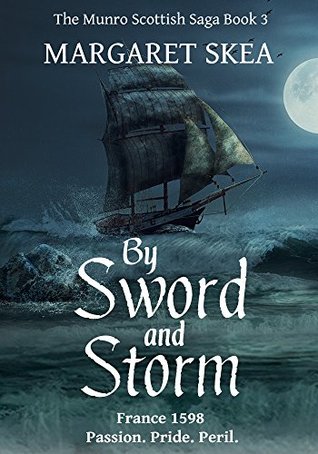
By Sword and Storm by Margaret Skea

This is the third novel in Margaret Skea’s Munro Scottish Saga set in 16th century Scotland and France and based on the history of a clan feud known as the Ayrshire Vendetta. I haven’t read the first two, Turn of the Tide and A House Divided, but that didn’t affect my enjoyment of this third book.

The novel opens in 1598 with Adam Munro, a colonel in the Scots Gardes, living in France with his wife Kate, who has skills as a healer, and their three children, Robbie, Maggie and Ellie. One of the functions of Adam’s regiment is to provide protection to Henri IV of France and when Adam saves the king’s life while risking his own in the process, the Munro family are rewarded with an invitation to come and live at the French court.

In Scotland, meanwhile, the feud between the Cunninghames and Montgomeries is supposedly at an end and the Scottish king, James VI, has banned unauthorised duelling. Most of the family members are trying to keep the peace, but two of them – Hugh Montgomerie and William Cunninghame – are still not prepared to let things rest. The Scottish storyline and the French one alternate throughout the book, eventually coming together as the novel heads towards its conclusion.

By Sword and Storm is a mixture of fact and fiction; many of the characters are real historical figures while others come from the author’s imagination – if you want to know who really existed and who didn’t, there’s a character list at the beginning of the book. Apart from the storylines involving the fictional characters, the novel is grounded in historical fact and has obviously been well researched. I loved the portrayal of life at the court of France, where Kate gets to know the king’s mistress, Gabrielle d’Estrées, and I sympathised with Maggie, who longs to study medicine and despite being given opportunities in France that would not have been open to her in Scotland, still faces obstacles because of her sex.

The political and religious situation in France at that time also plays a part in the story. At the beginning of the novel we see Henri IV issuing the Edict of Nantes, bringing the French Wars of Religion to an end and giving the Huguenots more freedom. However, it is still not safe for people in Paris to worship as they wish, as Kate and Adam’s son, Robbie, discovers when he becomes romantically involved with a Huguenot girl. I think Margaret Skea does a good job of showing the many dangers of 16th century life, not only where religion was concerned, but also for pregnant women before and during childbirth, patients with the sort of illness or injury that could be easily treated today, and anyone who had to travel by ship. It’s a period I love to read about but would not have liked to have lived through!

I really enjoyed By Sword and Storm. I liked the characters and even though I hadn’t been with them from the beginning, I found it easy enough to jump into their story and follow what was happening. Although this was meant to be the third in a trilogy, at the end of the novel I felt that there was still scope for more, so I was pleased to find that Margaret Skea has said she may return to this story again in the future.

Thanks to the publisher Corazon Books for providing a copy of this book for review.

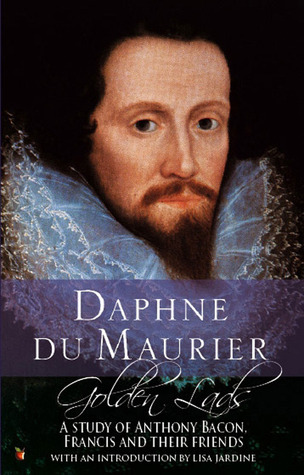
Golden Lads by Daphne du Maurier

When I was making my list for this year’s R.I.P. challenge last week, I remembered that one of the books I read for last year’s R.I.P. was Alan Bradley’s Flavia de Luce mystery As Chimney Sweepers Come to Dust. The title was from Shakespeare’s Cymbeline: “Golden lads and girls all must, As chimney-sweepers, come to dust” – the same lines that inspired the title of Daphne du Maurier’s Golden Lads: A Study of Anthony Bacon, Francis and Their Friends, a book I’ve been interested in reading for a while. Having been reminded of it, I picked it up and started reading, knowing that I have to be in the right mood for non-fiction.

Golden Lads was published in 1975 and was followed a year later by a second volume, The Winding Stair: Francis Bacon, His Rise and Fall, which I may or may not read at some point. I love Daphne du Maurier and since discovering Rebecca as a teenager, I have read almost all of her novels and most of her short story collections, but only one of her non-fiction books, The Infernal World of Branwell Brontë. I remember finding the Brontë biography almost as readable as her fiction, so I hoped this book would be the same. And it is certainly very readable – it only took a few days to read and was quite a page-turner at times, probably because, as stated in the introduction, du Maurier was writing this book with ‘her sort of reader’ in mind.

Anthony Bacon (born in 1558) and his younger brother Francis (born in 1561) were the sons of Sir Nicholas Bacon, who was Elizabeth I’s Lord Keeper of the Great Seal and one of the most powerful men in England. Their mother, Anne Cooke, was the sister-in-law of the Lord High Treasurer William Cecil, Elizabeth’s most trusted adviser. With such impressive family connections, the Bacon brothers were well placed to develop glittering careers of their own, but for Anthony that never quite happened, and for Francis not as quickly as he’d hoped.

After attending Cambridge University together at the ages of fifteen and twelve, their lives went in different directions with Francis entering Gray’s Inn as a lawyer while Anthony spent several years in Europe building up a network of contacts to send intelligence back to Elizabeth’s spymaster, Sir Francis Walsingham. During this period he became a friend of Henri of Navarre (later Henri IV of France) and the French essayist Montaigne. I was intrigued to find that another of his friends was Antonio Perez, whom I met just a few weeks ago in That Lady by Kate O’Brien! On his return to England in 1592, however, Anthony seems to have kept a low profile, which du Maurier explains as being as a result of his increasingly poor health (he suffered from gout and possibly other illnesses as well) but also due to a scandal which took place during his time in Montauban and for which du Maurier found new evidence in the form of archival records.

Francis is the best known of the Bacon brothers today, but most of the accomplishments in science, politics, philosophy and literature for which he is remembered are not discussed in Golden Lads as this book concentrates more on Anthony and only covers the period up to 1601. I didn’t mind this as I knew nothing at all about Anthony and was glad to have the opportunity to learn something new, but I didn’t feel that I got to know Francis very well at all. For that, I will obviously need to read The Winding Stair – although I’m not sure if or when I will get round to reading that book.

I found a lot to like about Golden Lads. As I’ve said, du Maurier’s writing style makes it easy to read and it’s obvious that she is enthusiastic about her subject. She includes extracts from letters and occasional bits of dialogue written in play format, which adds some variety, but readers who are hoping for an academic, scholarly biography might be disappointed as not everything is fully referenced (although she does include a bibliography and list of sources at the back of the book). I thought the first half of the book, which covers the Bacons’ early lives, was very enjoyable, but in the second half the focus switches to Robert Devereux, the Earl of Essex, and his military exploits in Cadiz and Ireland and this is where I started to get bored. I have read about Essex before and although I understand the important role he played in the lives of Anthony and Francis Bacon, I didn’t really want to read about him again in so much detail.

Golden Lads will not be a book for everyone, but I can definitely recommend it to readers who are particularly interested in Elizabethan England. I enjoyed it overall, but I’m not sure if I enjoyed it enough to want to continue with The Winding Stair. Has anyone read it – or any of du Maurier’s other non-fiction?

20 Books of Summer 2018 – The End

This is the last day of this year’s 20 Books of Summer challenge hosted by Cathy at 746 Books. It’s the second time I’ve participated and although I haven’t been completely successful with it, I’ve still enjoyed taking part. It’s a simple idea – to make a list of twenty books at the start of the summer and then read them between 1st June and 3rd September – but not that easy when you keep getting distracted by other books! I’ve read more than twenty books this summer, but only fifteen that were on my original list.

Here are the fifteen books in the order I read them, with links to my reviews:

1. For the Immortal by Emily Hauser
2. The Poison Bed by EC Fremantle
3. A Game of Hide and Seek by Elizabeth Taylor
4. Desperate Remedies by Thomas Hardy
5. The Story Keeper by Anna Mazzola
6. My Beautiful Imperial by Rhiannon Lewis
7. The King’s Witch by Tracy Borman
8. Don’t Look Now and Other Stories by Daphne du Maurier
9. Post of Honour by RF Delderfield
10. Fool’s Errand by Robin Hobb
11. Lamentation by CJ Sansom
12. The Silence of the Girls by Pat Barker
13. The Way of All Flesh by Ambrose Parry
14. Marking Time by Elizabeth Jane Howard
15. Elizabeth and Her German Garden by Elizabeth von Arnim

I enjoyed all of these, especially Desperate Remedies, Post of Honour, Fool’s Errand, Lamentation and Marking Time.

And here are the books I didn’t have time for:

16. The Bull from the Sea by Mary Renault
17. Tapestry of War by Jane MacKenzie
18. Fortune’s Fool by David Blixt
19. The Wardrobe Mistress by Patrick McGrath
20. The Craftsman by Sharon Bolton

I’m still planning to read those books – in fact, I’m halfway through The Bull from the Sea now – but they will have to be autumn reads instead of summer ones.

Did you take part in 20 Books of Summer this year? How did you do?

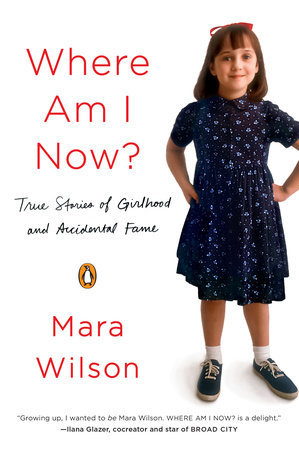
Six Degrees of Separation: From Mara Wilson to Edgar Allan Poe

It’s the first weekend of a new month which means it’s time for another Six Degrees of Separation, hosted by Kate of Books are my Favourite and Best. The idea is that Kate chooses a book to use as a starting point and then we have to link it to six other books of our choice to form a chain. A book doesn’t have to be connected to all of the others on the list – only to the one next to it in the chain.

This month we begin with Where Am I Now? by Mara Wilson. When I first saw that this was the starting point for the chain, I struggled to think of who Mara Wilson was, but I discovered she was the child actress in Mrs Doubtfire and Matilda.

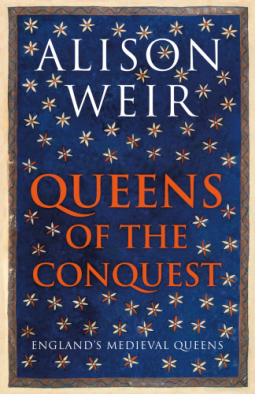
Roald Dahl’s Matilda is a great children’s book, but that’s not the book I’m going to choose for my first link. Instead I’m going to link to a non-fiction book about not just one Matilda, but four – Matilda of Flanders, Matilda of Scotland, Matilda of Boulogne and the Empress Matilda (sometimes known as Maud). The lives of these four medieval queens are explored in Alison Weir’s Queens of the Conquest.

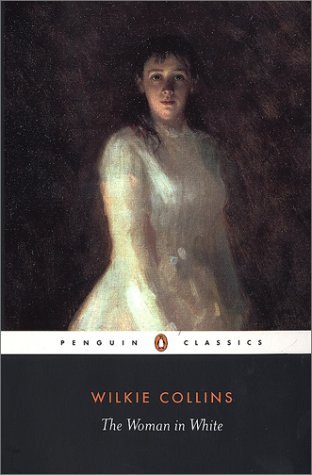
One of the anecdotes I remember reading about Empress Matilda involves her escape from Oxford Castle during a siege wearing a white cape as camouflage against the snow. Thinking of women dressed in white leads me, quite obviously, to The Woman in White by Wilkie Collins.

The Woman in White is one of my favourite Victorian novels and the intelligent, resourceful Marian Halcombe is one of my favourite heroines. Another Victorian novel with a strong and memorable, though very different, female protagonist is Vanity Fair by William Makepeace Thackeray.

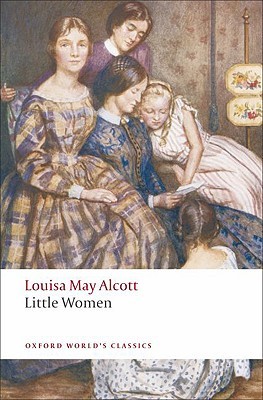
It’s been a long time since I last read Little Women by Louisa May Alcott, but it’s a book I loved when I was younger and read over and over again. I was sure I could remember a chapter with ‘Vanity Fair’ in the title, so I checked my old copy and yes – Chapter 9: Meg Goes To Vanity Fair. It’s amazing the things you remember!

Louisa May Alcott is one of several historical figures to appear as a character in Mrs Poe by Lynn Cullen, a novel telling the story of the poet Frances Sargent Osgood. Frances is known to have exchanged a series of romantic poems with Edgar Allan Poe and this book explores their relationship.

And that brings me to my final link: The Complete Tales and Poems of Edgar Allan Poe. I chose a selection of stories from the book to re-read last Halloween and I’m thinking about doing the same this year.

That’s my chain for this month! Have you read any of these books?

Next month we will be starting with The Outsiders by S. E. Hinton.