The Heart of Midlothian by Sir Walter Scott

The Heart of Midlothian In 2012 I read my first Walter Scott novel, Ivanhoe, and was surprised by how much I enjoyed it. Having found Scott less difficult to read than I’d expected, I decided to add another of his books to my Classics Club list and something drew me to this one – possibly memories of the Scottish football results being announced on the television on a Saturday afternoon (Heart of Midlothian is the name of an Edinburgh team).

The novel – which predates the football team, being published in 1818 – takes its title from the Old Tolbooth Prison in Edinburgh, which was in the heart of the county of Midlothian. Scott based his plot on two real historical events: the Porteous Riots of 1736 and the story of a young woman who walked all the way to London to obtain a royal pardon for her sister who had been wrongly charged with infanticide. In Scott’s version, the young woman’s name is Jeanie Deans and she lives on a dairy farm at St Leonard’s Crags with her father, Davie, a strict Cameronian (a Presbyterian faction).

Jeanie’s younger sister, Euphemia – known as Effie – is in the Tolbooth facing the death penalty, having been accused of giving birth in secret and murdering her newborn child. Jeanie is sure Effie is innocent, but with no witnesses to the pregnancy or the birth and no way to prove what happened to the baby, she is guilty in the eyes of the law. If Jeanie would only tell the court that she had known her sister was pregnant, Effie could be freed, but she is unwilling to tell a lie and instead she decides to go to London to ask Queen Caroline for a pardon. Armed with a letter of introduction to the Duke of Argyll and some money borrowed from an admirer, the Laird of Dumbiedikes, Jeanie sets off on foot to save her sister’s life.

The first half of the novel sets the scene, describing a riot that breaks out in Edinburgh during a protest over the hanging of two smugglers. When Captain John Porteous orders the city guard to fire into the crowd, causing the deaths of several people, he himself is imprisoned in the Tolbooth. The prison is then stormed by a mob and Porteous is lynched and killed. These events become entwined with Effie’s story and provide the historical backdrop for the novel. The second half of the book concentrates on Jeanie’s journey to London, which includes encounters with some characters we previously met in Scotland: George Robertson, the father of Effie’s child; and Meg Murdockson and her mentally ill daughter, Madge Wildfire, two women who could hold the key to the mystery of the missing baby.

Well, The Heart of Midlothian was not the relatively easy read that Ivanhoe was! I found it much more challenging, for several reasons. First, as the novel is set mainly in Scotland, the dialogue is written almost entirely in Scots. I wouldn’t normally have a problem with this, but added to the fact that the book was written in the early 1800s, it did slow down the pace of my reading quite a lot. I find that whenever a book uses a large amount of dialect – even one you’re familiar with – a little more effort is required to read it and that was definitely the case here. If you think you might struggle with the dialect, I would recommend choosing an edition of the book with a good glossary!

Also, unlike Ivanhoe, which is a medieval adventure story packed with sword fights, sieges, villainous knights and feuding noblemen, this is a very different type of novel. While Jeanie’s personal story was gripping, I have to admit I had very little interest in the long passages describing the religious situation in eighteenth century Scotland and the discussions between Jeanie’s father, Davie Deans, and his neighbours on their different moral beliefs. I also thought the plot relied too heavily on coincidence, with Jeanie meeting people from her own small community in Scotland hundreds of miles away in England – and I felt that the final few chapters of the book were unnecessary as the story had already reached a more natural ending point.

I did enjoy parts of The Heart of Midlothian, though. Jeanie is a strong heroine who behaves with honesty and integrity throughout the novel, and although some of her choices were frustrating, I did like her. There is a romantic interest for Jeanie too – the schoolmaster, Reuben Butler – but this only forms a small part of the story. I was also interested in the descriptions of eighteenth century life and the relationship between Scotland and England in the years following the union of 1707. And there are plenty of memorable scenes, from the storming of the Tolbooth near the beginning to Jeanie’s meeting with Queen Caroline, wife of George II, towards the end.

I certainly didn’t love this book the way I loved Ivanhoe, but I’ll still read more of Scott’s novels and will hope that the next one I pick up is more to my taste than this one was!
Looking back, looking forward: September 2015

September has been a good month for me in terms of reading (I’ve read eleven books and enjoyed most of them) but less productive where blogging is concerned. I’ve only written about five of those eleven books and hope I can catch up in October before I get too far behind. I have a week off work coming up so that should help. September was also a lucky month – I won a new Kobo Glo HD in a NetGalley Prize Draw which I couldn’t even remember entering. I don’t usually win anything so that was a nice surprise!

Let’s look back at September before looking forward to October…

Favourite books this month:

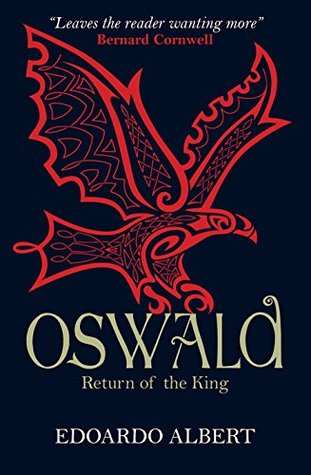
Oswald

Oswald: Return of the King by Edoardo Albert

This is the second book in Edoardo Albert’s Northumbrian Thrones trilogy and I loved it as much as the first. I don’t want to say too much about it here as I’m hoping I’ll be ready to post my thoughts very soon!

The Last Queen

The Last Queen by C.W. Gortner

I didn’t know what to expect from this book as I’ve never read any of C.W. Gortner’s historical fiction before, but I was very impressed by this moving story of Juana of Castile. Again, further thoughts will follow soon.

Read and reviewed this month:

Glorious Apollo by E. Barrington
April Lady by Georgette Heyer
Nelly Dean by Alison Case
What Angels Fear by C.S. Harris
The Return of the Native by Thomas Hardy

Also read this month but not yet reviewed:

The Taming of the Queen by Philippa Gregory
The Heart of Midlothian by Sir Walter Scott
The Queen’s Man by Sharon Penman
The Moor’s Account by Laila Lalami – review will appear in the next issue of Shiny New Books

Looking forward to October:

As the nights continue to get darker and Halloween approaches, I’m looking forward to reading more books for this year’s RIP challenge. I’ve only read two so far (What Angels Fear and The Queen’s Man, both mentioned above) but I’m in the middle of a third – Footsteps in the Dark by Georgette Heyer.

I’m taking part in A More Diverse Universe, which is hosted by Aarti of Booklust and begins this Sunday. I’m still trying to decide what to read, but some possibilities are A God in Every Stone by Kamila Shamsie, The Japanese Lover by Isabel Allende and Flood of Fire by Amitav Ghosh.

I also still need to read my Classics Spin book, The Glass-Blowers by Daphne du Maurier. I have just over three weeks left to read it if I’m going to meet the deadline!

How was your September reading? Do you have any plans for October?

The Return of the Native by Thomas Hardy

The Return of the Native Egdon Heath, part of Hardy’s fictional Wessex, is a wild and haunting place, steeped in history and superstition. Many of the people who live and work there love the heath and appreciate its beauty, but there are some – including Eustacia Vye – who find the loneliness oppressive. Eustacia, who lives with her grandfather in an isolated cottage on the heath, is desperately looking for a way to escape and believes she has found it in Clym Yeobright.

Clym is the returning native of the title, home for Christmas from Paris where he has been working as a diamond merchant. Clym, who dislikes the diamond trade, is planning to stay at home and become a schoolmaster, but Eustacia sets her sights on marrying him in the hope that she can persuade him to take her back to Paris. After all, there is nothing to keep her on Egdon Heath now that her former lover, the innkeeper Damon Wildeve, has married Clym’s cousin, Thomasin.

Clym’s mother, Mrs Yeobright, is opposed to the idea of both marriages – her son’s with Eustacia and her niece’s with Wildeve – but although she reluctantly accepts Thomasin’s decision, a series of misunderstandings and disagreements damages her relationship with Clym and this will have tragic consequences.

I have mentioned five of the novel’s six main characters so far: the sixth is Diggory Venn, a reddleman (a seller of red ochre, which farmers use to mark their sheep). Diggory is in love with Thomasin and remains quietly devoted to her even after she marries Wildeve. The lives of these six people will draw closer together, with the actions of each one impacting on all of the others. For some, there will be a happy ending, but for others there will be only unhappiness and tragedy.

The Return of the Native was Thomas Hardy’s sixth published novel and first appeared as a serial in 1878. I’ve read almost half of his novels now and always enjoy my visits to Wessex and my glimpses of rural life in the 19th century. This book has a very memorable and atmospheric setting, with the heath itself being at the centre of the story. The way in which the lives of the characters are shaped by the heath is one of the driving forces of the plot, particularly as Clym and Eustacia have such different feelings about it:

Take all the varying hates felt by Eustacia Vye towards the heath, and translate them into loves, and you have the heart of Clym.

A common theme in Hardy’s novels is the progress of the industrial revolution and nostalgia for a way of life that, even in Hardy’s day, was rapidly disappearing. An example of this in The Return of the Native is the character of Diggory Venn, the reddleman, whose skin and clothes are stained with the red dye that he sells.

The traveller with the cart was a reddleman — a person whose vocation it was to supply farmers with redding for their sheep. He was one of a class rapidly becoming extinct in Wessex, filling at present in the rural world the place which, during the last century, the dodo occupied in the world of animals. He is a curious, interesting, and nearly perished link between obsolete forms of life and those which generally prevail.

We also meet some of the local people who live on Egdon Heath – many of whom work as furze (gorse) cutters. These characters provide some moments of comedy and also allow Hardy to explore some of the superstitions, customs and traditions of the region (one of the most memorable scenes occurs near the beginning of the book when dozens of bonfires are lit all around the heath).

As I mentioned above, not all of the characters in the novel are rewarded with a happy ending – but this is something you have to be prepared for with Hardy. The story does finish on a more positive note, although it was interesting to read the footnote at the end explaining that the ending was originally going to be slightly less positive and was changed during the serialisation of the novel.

I loved The Return of the Native, though not as much as some of the other Hardy novels I’ve read. I have one more to read on my Classics Club listThe Woodlanders – which I’m looking forward to reading.

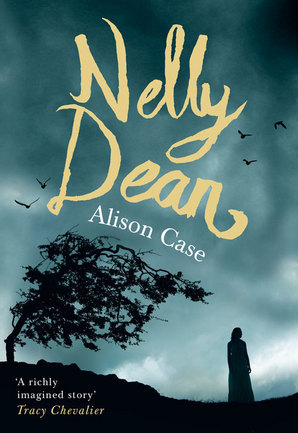
Nelly Dean by Alison Case

Nelly Dean I have always loved Wuthering Heights by Emily Brontë. Not everyone does, I know – it seems to be a book that people either love or hate – but ever since I first read it at the age of twelve it has remained one of my favourites. That’s why, when I heard about Alison Case’s new book, Nelly Dean, I knew I wouldn’t be able to resist reading it despite my usual dislike of prequels, sequels and re-tellings of classic novels.

Nelly Dean, as those of you who have read the Brontë novel will remember, was the housekeeper at Thrushcross Grange who entertained Mr Lockwood with the story of Cathy, Heathcliff and the other inhabitants of Wuthering Heights. This new novel is written in the form of a letter to Mr Lockwood in which Nelly tells the parts of the story that weren’t told or that were brushed over in Wuthering Heights.

Nelly begins by talking about her childhood and her relationship with her parents. To keep her away from her abusive father, her mother is happy for her to spend most of her time at Wuthering Heights with the Earnshaw children, Hindley and Cathy. Later, Nelly becomes housekeeper for the Earnshaws, but by this time life at Wuthering Heights is changing significantly. First, Mr Earnshaw comes home from a trip to Liverpool with an orphan boy called Heathcliff, and then Hindley – with whom Nelly is falling in love – goes away for several years and breaks her heart when he returns.

The rest of the novel follows Nelly as she struggles with her feelings for Hindley and her own change of status in the Earnshaw household from friend to servant. The major events of Wuthering Heights are covered, but in far less detail than in the original; Heathcliff and Cathy are pushed into the background so that the focus is on Nelly and her personal story. And this, I think, is why I had a problem with this book. There’s a reason why Emily Brontë chose to write about Heathcliff and Cathy rather than Nelly: it’s because Nelly’s story is just not as interesting. The novel started off promisingly enough but by the time I’d read several chapters devoted to Nelly’s attempts to find a wet nurse for baby Hareton, I was bored. Even the hints of a shocking family secret in Nelly’s past failed to interest me, mainly because it was far too easy to guess what that secret was.

There were things that I liked, of course. I liked the overall concept of the book – the idea of taking a beloved classic and reading between the lines to fill in the gaps and to bring a new interpretation to a well-known story. I liked Nelly herself; she is much easier to warm to than the Nelly of Wuthering Heights, and while the original character can be seen as an unreliable narrator, there’s a sense that this Nelly is being more open and honest with the reader. And I liked some of the minor characters, particularly Bodkin (Robert Kenneth), the doctor’s son who befriends Nelly. But the novel lacked the drama and the Gothic atmosphere I associate with Wuthering Heights and, although it was well written, there was none of the passion I admire so much in Emily Brontë’s writing.

Having finished this book and written my review, I decided to have a look and see what other readers thought of it. It seems that most people loved Nelly Dean and some even prefer it to Wuthering Heights, so I am clearly in the minority and wouldn’t want to put anyone off trying it for themselves. I couldn’t help feeling that I would have enjoyed this novel more if it had been presented as an original work of historical fiction with the names of the characters changed and the references to Wuthering Heights removed. The Victorian period is a big favourite of mine and if Alison Case decides to write a second book set in that era – one that is not based on another book – I will happily read it.

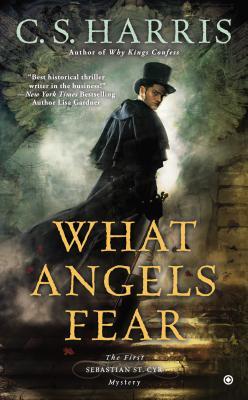
What Angels Fear by CS Harris

What Angels Fear When I made my list for this year’s RIP challenge, I decided to give priority to books I’ve been wanting to read for a while rather than search out new titles. What Angels Fear, the first in CS Harris’ Sebastian St. Cyr mystery series, is one of those books. I can’t remember where I first heard about this series but I know it has been recommended to me several times over the last few years and did sound like something I would enjoy. There are now ten books in the series, which is slightly overwhelming, especially as I’m already in the middle of so many other series, but I thought it was time I at least gave the first one a try.

What Angels Fear is set in London in 1811. With King George III suffering from mental illness, the Prince of Wales is preparing to start his period as Regent and members of the two main political parties, the Whigs and the Tories – who are strongly divided over issues such as Britain’s role in the Napoleonic Wars – are hoping to gain positions of power and influence in the newly-established Regency.

At the beginning of the novel, Sebastian St. Cyr, Viscount Devlin, returns from fighting a duel to discover that he has become a suspect in a murder investigation. A beautiful young actress, Rachel York, has been found dead on the steps of a church altar and evidence found at the scene has implicated Sebastian. Determined to clear his name, Sebastian decides to investigate the murder himself. As he delves deeper into the circumstances surrounding Rachel’s death, more and more people are drawn into the mystery, including a French spy, an Italian artist and a London street urchin, as well as some of the country’s top politicians and even members of Sebastian’s own family.

I’m pleased to say that I enjoyed What Angels Fear enough to want to read the next book in the series. I didn’t love it, but I found it very entertaining with a good mixture of mystery, political intrigue and romance (Sebastian’s love interest in this book is an actress whose stage name is Kat Boleyn). Harris captures the atmosphere of the Regency period very well, although I occasionally came across a choice of word that didn’t feel quite right. It was probably a mistake to read this book immediately after finishing April Lady as there are few authors who bring the Regency to life as convincingly as Georgette Heyer!

I haven’t really warmed to Sebastian yet, but I’m hoping that will eventually happen if I continue with the series. He is certainly an intriguing character: Harris gives him an interesting past, with five years spent in the army, some family secrets which are only hinted at in this book, and some unusual abilities (he has quick reflexes and very acute eyesight and hearing, which according to the author’s note are signs of Bithil Syndrome, although I couldn’t seem to find out whether this is a real condition or not). Because so many things are left unresolved at the end of this first novel, I’m sure there’s still a lot more to learn about Sebastian and I’m curious to see how his character develops.

What Angels Fear was a good start not only to my reading for the RIP challenge, but also to a new series. Now I’m looking forward to the second Sebastian St. Cyr novel, When Gods Die.

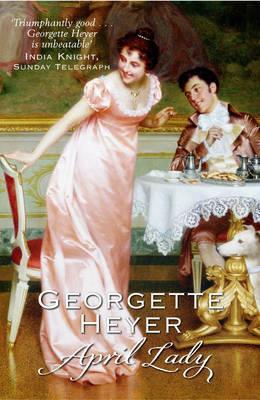
April Lady by Georgette Heyer

April Lady I first tried to read April Lady five years ago but didn’t get very far with it, so when it was one of the ten books I chose at random for my Ten from the TBR project I didn’t feel very enthusiastic about trying it again. It seems, though, that it had probably just been the wrong book at the wrong time (I was very new to Heyer then and had previously only read The Talisman Ring) and on my second attempt I found it much more enjoyable.

April Lady is one of Heyer’s Regency romances – although the couple in this novel are already married at the beginning of the book and the romantic aspect of their story centres around learning to love and trust each other. Nell Irvine, our heroine, is only seventeen when she marries the Earl of Cardross in what she believes to be a marriage of convenience. Nell does love her husband, but he is much older than she is and – as her new sister-in-law informs her – he has had a mistress until very recently, so Nell isn’t sure exactly why he has chosen to marry her.

Cardross (Giles) is also very rich, but his new wife has no experience of managing money and quickly finds herself in trouble. Cardross helps her to pay off her debts, but when Nell discovers another outstanding dressmaker’s bill that she had forgotten about she decides to keep it hidden from her husband. She is sure he will be angry with her and the last thing she wants is for him to think she only married him for his money. To make matters worse, Nell has also been giving money to her brother, Dysart, to cover his gambling debts and she knows Giles won’t be happy about that either!

April Lady follows Nell as, with the help of Dysart, she tries to obtain the three hundred pounds she needs to pay the dressmaker – while ensuring that her husband is kept in blissful ignorance. It’s obvious to the reader from the beginning that Giles does love Nell and that all they need to do is talk to each other, but each is unaware of the other’s feelings and their lack of communication leads to a whole series of misunderstandings. But Nell is not the only woman with a secret in the Cardross household. Her young sister-in-law, Letty, is determined to marry the man she loves, Jeremy Allandale…but Giles disapproves. Will Letty be tempted to elope against her brother’s will?

This book reminded me very much of an earlier Heyer novel, The Convenient Marriage, which I read about a year ago. It seemed to me that the characters of Nell, Cardross and Dysart (and the relationships between them) were very similar to Horry, Rule and Pelham in The Convenient Marriage and large parts of the plot were almost the same too, right down to a scene in which Nell’s carriage is held up by highwaymen on the way to a ball. However, I didn’t find April Lady as entertaining to read as The Convenient Marriage; the dialogue wasn’t as funny and although Nell didn’t annoy me as much as Horry did, I preferred Rule to Cardross and Pelham to Dysart. Maybe I would have felt differently about this book if it had been the one I’d read first, as I found it difficult not to make comparisons.

I did enjoy April Lady but I didn’t love it and I wouldn’t rank it very highly on my list of Heyer novels read so far. I still have plenty of her books left to read, though, including some that I’m particularly looking forward to as I know they’re big favourites with Heyer fans. I’m also wondering if I could find time to read another one of her mysteries before the end of October for this year’s RIP challenge, having enjoyed Envious Casca a few years ago.

Historical Musings #6: Non-Fiction

Historical Musings As my previous Historical Musings posts have all concentrated on historical fiction, I thought it would make a nice change to discuss historical non-fiction this month. As you can probably guess from the title of my blog, I would rather be reading a novel than any other type of book, but I have been making an effort lately to read more non-fiction and some of the books I have read in the last few months include She-Wolves by Helen Castor, a book on the lives of four medieval queens; An Accidental Tragedy by Roderick Graham, a biography of Mary, Queen of Scots; and Rebellion by Peter Ackroyd, the third volume of his History of England series (this one covers the English Civil War and the Restoration).

I find most periods of history interesting, but I tend to be drawn to subjects that I’ve previously read about in historical fiction. I picked up She-Wolves, for example, after reading Colin Falconer’s novel, Isabella, because I wanted to know more about Isabella of France. Similarly, I chose to read Blood Sisters by Sarah Gristwood and The Hollow Crown by Dan Jones to add to the knowledge of the Wars of the Roses I have gained by reading fiction. It can be fun and often quite enlightening to read a factual account of a character or an event I’m only familiar with through fiction and to see how closely (or not) the fictional version had followed historical fact.

However, it’s not very often that I finish reading a work of non-fiction feeling as satisfied as I would have done at the end of a novel. The only non-fiction book I can think of that I truly loved and that I connected with emotionally in the same way I would with fiction was Wild Swans by Jung Chang. Of course, Chang was writing about her own experiences and those of her family so although Wild Swans can still be considered historical (it covers a whole century of Chinese history) it is in a different category from the other books I’ve mentioned so far in this post – and in general, I just don’t find non-fiction as engaging as fiction.

My questions for you this month, then, are these:

Do you enjoy reading non-fiction or do you prefer to gain historical knowledge through fiction? Do you choose your non-fiction reads based on subject or author (or both)? Which historical non-fiction books and authors are your favourites?