The Secret Life of Wilkie Collins by William M. Clarke

The Secret Life of Wilkie Collins After reading The Frozen Deep recently, my interest in Wilkie Collins was reawakened and I decided it was time to read the biography I bought when I was in the middle of my Collins obsession a few years ago. There were not many to choose from at that time and this one sounded like the best available. I ordered a copy, but by the time it arrived I had moved on to other authors and didn’t feel like reading it anymore. Since then, one or two other biographies have been published which sound more appealing than this one, but it made sense to read the one I already own rather than buying a new one.

The Secret Life of Wilkie Collins was first published in 1988, although the edition I have was revised in 1996. The author, William M. Clarke, is married to Wilkie Collins’ great-granddaughter, Faith Elizabeth Dawson, and maybe because of this connection, the focus of the book is on Wilkie’s private life and relationships with his family and friends rather than on his work. Clarke does attempt to show us the circumstances surrounding the writing of most of Collins’ books, plays and stories and what may have inspired them, but he doesn’t often go into any detailed analysis of these.

After a brief introduction, the book follows Wilkie’s life in chronological order, beginning with his birth in January 1824. Wilkie was the eldest son of the Royal Academy landscape painter William Collins and his wife, Harriet Geddes, who was also from a family of artists. The first few chapters describe Wilkie’s early childhood, some of which was spent in France and Italy and the rest in London. I found this the least interesting section of the book, but it does show us some of the influences Wilkie was exposed to from an early age which would have had an impact on his future career (an appreciation of Italian art, for example, and familiarity with all the writers, poets and authors who were part of his father’s social circle including William Wordsworth, Samuel Taylor Coleridge and John Constable). I also enjoyed reading about Wilkie’s school days and how one of the older boys bullied Wilkie into telling stories late at night!

Clarke then takes us through Collins’ adult life, including his friendship with Charles Dickens, his battle with rheumatic gout (an illness he suffered from for many years), his six-month reading tour of America, and his addiction to laudanum and his unsuccessful attempts to withdraw from it. I’ve mentioned that Clarke doesn’t spend much time discussing Wilkie’s writing, but I did find it interesting to read his thoughts on the effects of laudanum and how in the later stages of his career it may have affected Wilkie’s ability to write descriptions of visual landscapes and construct the intricate plots he was famous for.

There are also some accounts of Collins’ travels with Dickens and I enjoyed reading about these, especially their walking tour of the Lake District (which reminds me that I still haven’t read The Lazy Tour of Two Idle Apprentices). It seemed Dickens disapproved of his daughter, Kate, marrying Wilkie’s younger brother, Charles Collins, and this put a strain on their friendship in later years.

But it’s Wilkie’s romantic relationships that are given the most attention, which is understandable as this book is supposed to be about his ‘secret life’. Wilkie never married but was in long-term relationships with two different women, Caroline Graves and Martha Rudd. He lived openly with Caroline and Harriet, her daughter from a previous marriage, while having three children with Martha, whose household he established at a separate address. Each woman was aware of the other and their children even visited each other. I’m sure neither woman could have been very happy with the position they were in but it seems they were both prepared to accept it as this arrangement continued for more than twenty years! Caroline did leave him briefly to marry another man (Wilkie actually attended the wedding) but returned several years later. Collins does seem to have genuinely cared about both of his families but this sort of behaviour must have been scandalous by Victorian standards (and not very admirable by modern standards either) and led to his sister-in-law, Kate, describing him as “as bad as he could be, yet the gentlest and most kind-hearted of men”.

Wilkie’s life was fascinating to read about, but I can’t really say that I enjoyed this book as I found Clarke’s writing style quite dry and boring. This is a book I’ve been dipping into over the last few weeks and reading a few pages at a time rather than ever feeling a compulsion to sit down and read it from cover to cover. It has clearly been thoroughly researched with lots of quotes from Collins himself and from people close to him (references are provided), and there’s plenty of supplementary material – notes, photographs, family trees, bibliography and several appendices, including an analysis of Wilkie’s bank accounts (Clarke’s unique position as the husband of one of Wilkie’s descendants meant he could access this information) but I think I would have been more interested in a book with more balance between Collins’ private life and his writing.

I’m going to finish this post with a question: do you like reading biographies of your favourite authors or do you think knowing too much about an author’s personal life can affect your enjoyment of their work?

The Plantagenets by Dan Jones

The Plantagenets As someone who has always read mainly fiction, I have been making an effort to read more non-fiction. The type of non-fiction books I find myself drawn to tend to be books about history or biographies of historical figures; I’ve read a few of these recently and The Plantagenets by Dan Jones is one of the best I’ve read. It’s a very long book at almost 700 pages but as the book covers two centuries of history that’s not surprising!

The book begins in the year 1120 with the wreck of the White Ship in which King Henry I lost his only son and heir. This led to the period of English history known as The Anarchy, a civil war with the country divided between supporters of Henry’s daughter, Matilda, and of his nephew, Stephen. It was the son of Matilda and her husband, Geoffrey of Anjou, the future Henry II, who was England’s first Plantagenet king. Dan Jones tells the story of not only Henry II’s reign, but the reigns of all the Plantagenets who followed, up to and including Richard II who was deposed in 1399. Of course there were several more Plantagenet kings after Richard II, but Jones does explain why he chose to end the book at this point.

I love reading about the Plantagenets and find them far more interesting than the Tudors. However, I have to admit that most of my knowledge of them comes from reading historical fiction and while I certainly think it’s possible to learn through fiction, it was good to have the opportunity to read a factual account of the period. Actually, I found this book almost as entertaining and compelling as a novel anyway; Dan Jones does a great job of making the historical figures he’s writing about come to life and conveying the drama of some of the most important events of their reigns. Instead of just telling us that Henry I’s son died in a shipwreck, for example, he describes the sails of the ship billowing in the wind, the shouts of the crew and the freezing water pouring into the ship. This makes the book very readable, though despite it not being too academic it still feels thoroughly researched and I never had any reason to doubt the accuracy.

Before beginning this book, there were some Plantagenet kings whose lives I was more familiar with than others. I found that I already had quite a good knowledge of Henry II and his relationships with his wife, Eleanor of Aquitaine, his sons and daughters, the knight William Marshal and the Archbishop of Canterbury, Thomas Becket. And I knew the basic facts about Richard I (the Lionheart) and his crusades, and about his brother, King John. The story of the final king featured in the book, Richard II, was also familiar to me, but I had less knowledge of the others in between – Henry III and the three Edwards (I, II and III). I enjoyed learning about Simon de Montfort’s rebellion during the reign of Henry III, the 1326 invasion of England by Queen Isabella and Roger Mortimer, and the possible fate of Edward II, all subjects I had previously known very little about.

The Plantagenets would be a great choice for any history lover looking for an accessible introduction to a fascinating time period. I’m hoping for a second volume covering the 15th century and the Wars of the Roses.

I received a copy of this book from Netgalley for review.

Coming Up for Air by George Orwell

Coming Up for Air I think I need to start this post with an apology to George Orwell because like many people, I read Animal Farm and Nineteen Eighty-Four as a teenager and assumed I’d read everything by Orwell that was worth reading. I was obviously wrong because Coming Up for Air is a great book, though very different from his two most famous novels. In a way, though, I’m glad I’ve waited until now to read it because I’m not sure I would have appreciated it as much when I was younger.

Coming Up for Air was published in 1939 and tells the story of George Bowling, a forty-five-year-old insurance salesman who is bored with his dreary, middle-class existence. Married with two children, George’s biggest worries are his mortgage, his weight and the risk of losing his job, but with Europe on the brink of war he knows that the monotony of his life could be about to change. On the day that he receives a new set of false teeth, George takes a trip into London where he sees a poster that triggers memories of his childhood and Lower Binfield, the small, peaceful town where he grew up. George is tempted to return to Lower Binfield for the first time in years, but if he goes back now, what will he find?

Based on the other two books I’ve read, this is not really the type of book I would have expected from George Orwell. However, there are some similarities with Nineteen Eighty-Four in Orwell’s surprisingly accurate predictions of the future. Reading this book gave me an eerie feeling, knowing that it was being written just before the beginning of the Second World War, when the author could have had no real knowledge of what was to come, yet anticipating the changes that would soon be upon the nation.

“I can feel it happening. I can see the war that’s coming and I can see the after-war, the food-queues and the secret police and the loudspeakers telling you what to think. And I’m not even exceptional in this. There are millions of others like me.”

My favourite part of the book was the long section in the middle where George looks back on his childhood in Lower Binfield at the turn of the century. This whole section is a lovely nostalgic portrait of an England that is now gone forever…that had already gone by 1939, destroyed by the First World War.

“1913! My God! 1913! The stillness, the green water, the rushing of the weir! It’ll never come again. I don’t mean that 1913 will never come again. I mean the feeling inside you, the feeling of not being in a hurry and not being frightened, the feeling you’ve either had and don’t need to be told about, or haven’t had and won’t ever have the chance to learn.”

The novel doesn’t have a lot of plot, but that wasn’t a problem; I didn’t find it slow at all. There’s not much dialogue either, as we spend the whole book inside George’s head with his thoughts and memories. Despite this, I found the book completely engrossing. The only time I got bored was with George’s long and enthusiastic description of fishing, his favourite hobby until the age of fifteen. But even this was steeped in nostalgia:

“The very idea of sitting all day under a willow tree beside a quiet pool — and being able to find a quiet pool to sit beside — belongs to the time before the war, before the radio, before aeroplanes, before Hitler.”

George’s actions and opinions are not always very admirable and his views on the women in his life leave a lot to be desired, but despite his flaws, I couldn’t actually dislike him. He’s so ordinary; not a hero, but a real human being with good points and bad points. He has a wryly funny, self-deprecating narrative style which saves the book from becoming too depressing, though overall I found this a sad and poignant story rather than a humorous one. I don’t know much about Orwell’s own life, but I’m sure this book must have been autobiographical to some extent.

I loved Coming Up for Air and will certainly consider trying another of Orwell’s books.

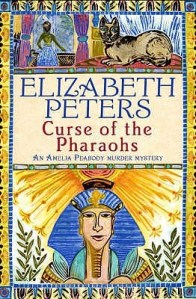
The Curse of the Pharaohs by Elizabeth Peters

Curse of the Pharaohs This is the second book in Elizabeth Peters’ Amelia Peabody series. I read the first one, Crocodile on the Sandbank, two years ago in January 2012 and enjoyed it, so I’m not sure why it has has taken me so long to get round to reading this one.

The Curse of the Pharaohs is set in the late Victorian period and begins five years after the previous book ended. Amelia is happily married to the archaeologist Radcliffe Emerson and they now have a young son, Ramses. Despite longing to return to their work in Egypt, Amelia and Emerson have spent most of the last five years at home in England because they’re unable to agree on what to do about Ramses. But when Lady Baskerville, an old friend of Emerson’s whose husband has recently died, asks Emerson to continue Lord Baskerville’s excavation of an Egyptian tomb, he and Amelia are unable to resist. To make things even more interesting, there are suspicious circumstances surrounding Lord Baskerville’s death – and a possible link with an ancient pharaoh’s curse.

Leaving Ramses with his aunt and uncle, Amelia and Emerson head for Egypt where they begin the exciting task of excavating the pharaoh’s tomb, but soon there are more deaths and more attacks, often accompanied by sightings of a mysterious woman dressed in white. Amelia is now convinced that Lord Baskerville was murdered and that the murderer must be one of the people she and Emerson have met since their arrival in Luxor: the Irish Daily Yell reporter Kevin O’Connell maybe, or could it be Madame Berengaria, who believes she is the reincarnation of an Egyptian Queen, the rich American Mr Vandergelt, or even Lady Baskerville herself?

Beyond the actual mystery – which I found stronger and more complex than the one in the first book – there are two things I particularly liked about this book (and they are the same things I liked about the previous one). The first is the setting. Egypt is always fascinating to read about! I like the fact that although Peters herself has a PhD in Egyptology, she doesn’t go too deeply into the technical details of the subject, so that even those of us who know very little about Egyptian pharaohs, hieroglyphs or archeological digs can follow what’s happening and share in the enthusiasm Amelia and Emerson have for their work.

The second thing I love is Amelia’s narrative voice. From other people’s reviews of books in this series it seems that a lot of readers find Amelia’s strong, opinionated personality very off-putting at first. Luckily that hasn’t been a problem for me; it only took two or three chapters of Crocodile on the Sandbank for me to get used to her and start to warm to her. I think her practical, no-nonsense style fits perfectly with the entertaining plots and the ridiculous situations she finds herself in.

I enjoyed this second book as much as the first, although I did find the two very similar and while I’m looking forward to the third, The Mummy Case, I am concerned that they might lose their appeal unless I try to space them out. However, I have another sixteen or seventeen books to go, I think, so I’ll try not to let too much time go by before picking up book three! I can’t wait to get to know Ramses better in future books. He’s still just a lisping baby in this book but I’m looking forward to him being old enough to join Amelia and Emerson in their adventures!

The Frozen Deep by Wilkie Collins

The Frozen Deep I love Victorian literature and if I had to choose a favourite Victorian author it would probably be Wilkie Collins. The Woman in White was the first book of his that I read, in 2006, and within a year I had also read The Moonstone, Armadale and No Name. Since then I’ve read several of his lesser-known books, most of which I’ve reviewed on this blog, and while they weren’t as good as his ‘big four’ novels, I still found something to enjoy in all of them. Sometimes you can have too much of a good thing, though, and it’s now been a few years since I’ve felt like reading any of Wilkie’s books. But when the Estella Society announced their Wilkie in Winter event I decided to join in and read one of the titles I hadn’t already read, The Frozen Deep.

The Frozen Deep is a novella which Collins based on a play he had written, with the help of Charles Dickens, in 1856. The story was inspired by reports of a voyage to the Arctic led by Sir John Franklin in 1845 during which the members of the expedition disappeared without trace.

At the beginning of the book we meet Clara Burnham who is saying goodbye to the man she loves, Frank Aldersley, whose ship is leaving the next day in search of the Northwest Passage. However, another man is also in love with Clara. His name is Richard Wardour, and when he discovers that she has become engaged to somebody else, he vows to take his revenge on the man he believes has stolen her from him. Clara, who is gifted with the Second Sight, is convinced that Richard will succeed in finding and destroying Frank – and when she learns that Richard has also joined the same Arctic voyage she becomes even more afraid.

I really enjoyed reading The Frozen Deep. It’s not one of Collins’ best books, but I hadn’t expected it to be so I wasn’t disappointed and with less than one hundred pages it was perfect for those busy days just before Christmas when I was looking for something quick and entertaining to read. But while I was impressed that Collins could tell such a compelling story in so few pages, I do think there was the potential for it to have been expanded into a full-length novel. I would have liked more details of the Arctic expedition itself and the experiences of the men left stranded by the ice-bound ships. And I thought Richard Wardour could have been a fascinating character, if only there had been time to explore his thoughts and emotions in more depth.

Although this book wasn’t without some flaws, I thought it was very enjoyable and I’m hoping to find time soon to read (or re-read) another of Collins’ books.

A new reading year begins…

Image courtesy of pamsclipart.com Happy New Year!

I did have a book review scheduled for today (still trying to catch up on a backlog of books read near the end of 2013) but as most other bloggers are posting about their plans and resolutions for 2014 today, I decided to do the same and keep my scheduled post for tomorrow instead. And this will probably be the easiest post I write all year, because I don’t actually have a lot of reading or blogging plans for the year ahead! I have signed up for two reading challenges – the Historical Fiction challenge, which is never a difficult one for me as I read so much historical fiction anyway, and the What’s in a Name? challenge, for which I already have my five choices in mind and will be starting the first one soon. Other than that, I have avoided the temptation to commit myself to any more year-long challenges or projects. One thing I’ve learned during my four years of blogging is that I’m happiest when I can choose to read exactly what I want to read and when I want to read it – and that’s what I would like to do in 2014.

The Classics Club However, one reading event that does fit in with my plans for this month is the first of the Classics Club’s Twelve Months of Classic Literature. Each month, the club will be hosting a month of themed reading based on a different literary period or movement. The theme for January is William Shakespeare and his contemporaries, which is perfect for me as I’m starting a FutureLearn course on Hamlet later this month. I’ll be re-reading Hamlet in January, then, but beyond that I’ll be looking forward to seeing what other Classics Club members are reading for the event.

I do have one other goal for 2014, in terms of blogging: I will be trying to write about every book I read within two or three days of finishing it. I hate being behind with my reviews and would like to avoid any more situations like this, where I’m starting a new month with five books from the previous month still to write about!

Do you have any exciting reading or blogging plans for 2014?

Best Books of 2013

Bloggers’ end-of-year posts have been appearing for a few weeks now and I’ve enjoyed reading them, but I like to leave compiling my own list until the end of December as there’s always a chance I might read something wonderful in the final days of the year. With only two days to go now, I know I won’t be finishing any more books in 2013 so I thought it would be safe to post my list today! And here they are: my favourite books of the year, in alphabetical order.

Aurora Floyd

Aurora Floyd by Mary Elizabeth Braddon

(Read in March)

From my review: “Aurora Floyd, like Lady Audley’s Secret, is a Victorian sensation novel which means you can expect a story filled with mystery, murder and family secrets…It has been a few years since I last read anything by Mary Elizabeth Braddon and I had forgotten how much I like her writing.”

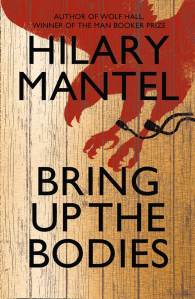
Bring up the Bodies

Bring up the Bodies by Hilary Mantel

(Read in July)

From my review: “By allowing us to follow events through Cromwell’s eyes, Mantel makes what to many of us is a familiar story feel like a fresh and interesting one – and in a world already filled with Tudor novels this is a real accomplishment!”

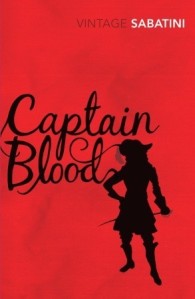
Captain Blood

Captain Blood by Rafael Sabatini

(Read in July)

From my review: “With my general dislike of books set on ships I thought the seafaring elements might be too much for me. I was wrong. Captain Blood is another wonderful book…I recommend giving it a try even if pirate stories don’t sound appealing to you, as it’s worth reading this one just to meet Peter Blood!”

Far from the Madding Crowd

Far from the Madding Crowd by Thomas Hardy

(Read in May)

From my review: “Of all the Hardy novels that I’ve read, with the possible exception of Under the Greenwood Tree, this is the most pastoral, with lots of beautiful descriptions of the countryside and lots of information on farming and agriculture. I should now be able to shear sheep, hive bees, forecast the weather by watching the movements of slugs and toads, and deal with a fire in a hayrick! (Well, maybe not.)”

The Golem and the Djinni

The Golem and the Djinni by Helene Wecker

(Read in August)

From my review: “As a first novel, The Golem and the Djinni was a very ambitious one but everything worked perfectly. There were so many things about this book that impressed me – the beautiful writing, the clever plot, the blending of fantasy with historical fiction, and most of all, the wonderful characterisation of both Chava and Ahmad.”

The Iron King

The Iron King by Maurice Druon

(Read in February)

From my review: “Originally published in the 1950s, this is the first in the seven-volume “Accursed Kings” series and tells the story of a fascinating period of French history. The Iron King was one of the most entertaining historical fiction novels I’ve read for a while…with a plot involving murder, torture, poisonings, court intrigue, and family feuds, there was always something happening.”

King Hereafter

King Hereafter by Dorothy Dunnett

(Read in June)

From my review: “King Hereafter is set in eleventh-century Orkney and Scotland (known at that time as Alba) and is based around the idea that Macbeth, the historical King of Alba, and Thorfinn, Earl of Orkney, were the same person…Although the Lymond Chronicles are still my favourites, I can definitely see why some people would consider this Dorothy Dunnett’s best book. It’s amazingly detailed and well-researched, as well as being a very powerful and emotional story.”

Life After Life

Life After Life by Kate Atkinson

(Read in April)

From my review: “Life After Life is a very clever, complex novel; I was so impressed by it! With such an unusual and complicated plot it could have been a disaster, but it wasn’t; I thought everything worked perfectly and although I found it confusing at first, after the first few chapters I knew I was going to love the book.”

Like This For Ever

Like This, For Ever by S.J. Bolton

(Read in April)

From my review: “I found the mystery very difficult to solve – there were several times when I was convinced I knew who the murderer was, only to be proved wrong, wrong and wrong again! I was completely taken by surprise by most of the plot twists (and there are a lot of them). I should have remembered that nothing is ever as it seems in a Bolton novel and if things appear too obvious, it’s usually because they are.”

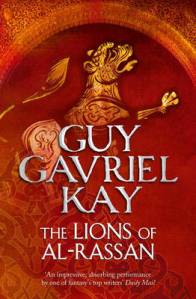
The Lions of Al-Rassan

The Lions of Al-Rassan by Guy Gavriel Kay

(Read in August)

From my review: “Although this novel is set in a fictional land, the parallels with a real period of history made me feel that I was gaining a better understanding of medieval Spain. But as well as the history, there’s also a lot of drama and excitement throughout the novel…What I really loved about this book, though, was the portrayal of the three main characters and the relationships between them.”

The Midwich Cuckoos

The Midwich Cuckoos by John Wyndham

(Read in October)

From my review: “I wasn’t sure what to expect from this book, but The Midwich Cuckoos was probably the perfect type of science fiction for me – instead of being filled with too much action or violence, it’s a subtle, thought provoking portrayal of a small, seemingly normal community trying to cope with something that is threatening their way of life.”

The Painted Veil

The Painted Veil by W Somerset Maugham

(Read in March)

From my review: “I really didn’t expect to love this as much as I did. I’m so pleased to find that I was wrong! The Painted Veil is one of the best books I’ve read so far this year. I found Maugham’s writing much easier to read than I had thought it might be, but also filled with beauty, poignancy and emotion.”

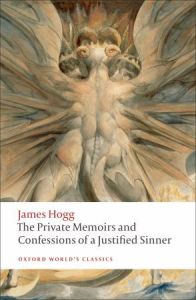
The Private Memoirs and Confessions of a Justified Sinner

The Private Memoirs and Confessions of a Justified Sinner by James Hogg

(Read in January)

From my review: “This, his most famous novel, is part horror story, part murder mystery and part gothic fiction, but it also incorporates elements of religion, Scottish folklore, the supernatural and even some humour and satire…this is one of the most fascinating and original classics I’ve read and I can’t believe it isn’t better known.”

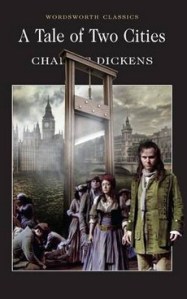
A Tale of Two Cities

A Tale of Two Cities by Charles Dickens

(Read in November)

From my review: “This is the sixth Dickens novel I’ve read and my favourite so far. I think part of the reason I loved this book so much was that in many ways it was very different from the others I’ve read… I don’t want to say too much and spoil the story for anyone who hasn’t read it yet, but the ending is heartbreaking. This is the first Dickens novel that has made me cry!”

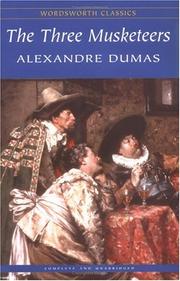
The Three Musketeers by Alexandre Dumas (re-read)

(Read in March)

From my review: “I love Alexandre Dumas and although The Three Musketeers is not my favourite of the novels of his that I’ve read I still think it’s a wonderful book with some great characters. I had forgotten enough so that I could be surprised by the twists and turns of the plot, but remembered just enough to be able to look forward to some of my favourite parts.”

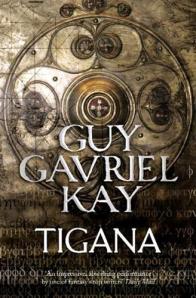
Tigana by Guy Gavriel Kay

Tigana by Guy Gavriel Kay

(Read in June)

From my review: “This is the first book by Guy Gavriel Kay I’ve read, although I’ve been aware of his books for years and am now annoyed with myself for waiting so long to actually read one! I loved Tigana – not unreservedly, but enough to make it one of my books of the year so far.”

Twenty Years After

Twenty Years After by Alexandre Dumas

(Read in September)

From my review: “I found Twenty Years After a much more complex book than The Three Musketeers…but there’s still plenty of swashbuckling adventure and I definitely thought this book was just as much fun to read as the first one. As I expected, Twenty Years After has definitely been one of my most enjoyable reads of the year! The Vicomte de Bragelonne awaits…”

***

Have you read any of these books? What are the best books you’ve read this year?

This will be my final post of 2013 so I’d like to wish you all a Happy New Year!