My Commonplace Book: August 2022

A selection of words and pictures to represent August’s reading:
commonplace book
noun
a book into which notable extracts from other works are copied for personal use.

~

At countless crossroads, the future becomes the past and an infinite number of possibilities die as an infinite number are born.

Fool’s Quest by Robin Hobb (2015)

~

‘In my experience,’ he told me, ‘if you run away from a thing just because you don’t like it, you don’t like what you find either. Now, running to a thing, that’s a different matter, but what would you want to run to? Take it from me, it’s a lot better here than it is most places.’

The Chrysalids by John Wyndham (1955)

~

The Lupanar, Pompeii

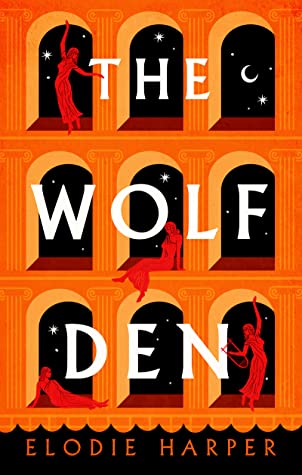
“When you see a bird flying,” she says, “that moment when it chooses to swoop lower or soar higher, when there’s nothing but air stopping it, that’s what freedom feels like.” She pauses, knowing that this isn’t the whole truth. The memory she tries to keep buried, the agony of her last day as a free woman rises to the surface. “But hunger feels the same, Fabia. Whether you are slave or free, hunger is the same.”

The Wolf Den by Elodie Harper (2021)

~

At times, circumstances conspire to make us believe the lies we tell ourselves. Everything – the weather, the season, the fall of light – sets the stage for our play; we find ourselves, instead of acting, becoming the characters, moving into a reality in which we’re inseparable from our roles.

The Flight Portfolio by Julie Orringer (2019)

~

Not knowing the truth was like leaving a book half read.

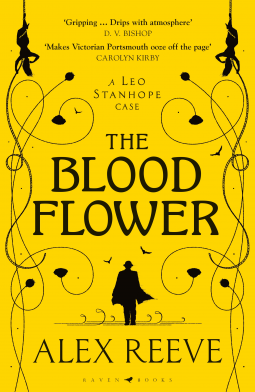
The Blood Flower by Alex Reeve (2022)

~

“Why do you decry the world we live in? There are good people in it. Isn’t muddle a better breeding ground for kindliness and individuality than a world order that’s imposed, a world order that may be right today and wrong tomorrow? I would rather have a world of kindly, faulty human beings, than a world of superior robots who’ve said goodbye to pity and understanding and sympathy.”

Destination Unknown by Agatha Christie (1954)

~

Florence Nightingale, an angel of mercy. Scutari hospital 1855

‘There is always a crisis of some kind in a hospital. Can’t you see? That’s why I so want to work here. I want to intervene at the point in people’s lives where they most need me.’

The Rose of Sebastopol by Katharine McMahon (2007)

~

“And what, finally, has he done with it?”

“Left it all to the nation.”

“Of all the dull and undeserving -”

“Precisely. He held the economic view that money paid to the nation in any form, taxes or gifts, was always wasted and did nobody any good, and he wanted to do nobody any good. At one time he thought of putting up shower baths in the North Pole or Turkish ones in the Sahara, but then he dropped that as being childish.”

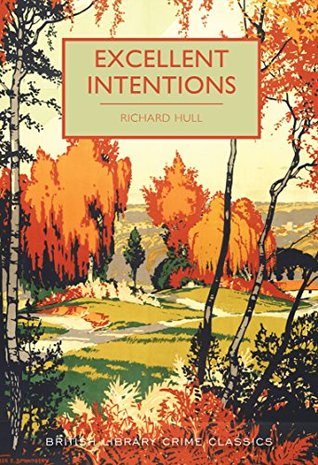
Excellent Intentions by Richard Hull (1938)

~

If at this point Louisa plumbed her professional nadir, there is always this about a nadir, that any subsequent motion must inevitably be upwards.

Something Light by Margery Sharp (1960)

~

Favourite books read in August:

Fool’s Quest, The Rose of Sebastopol and The Wolf Den

Authors read for the first time in August:

Elodie Harper, Katharine McMahon

Places visited in my August reading:

The fictional Realm of the Elderings, post-apocalyptic Canada, France, Morocco, England, Ancient Rome, Crimea, Turkey

~

Reading notes: This month I’ve been concentrating on trying to finish my 20 Books of Summer list. This is the last day of the challenge, so I’ll be posting a summary soon. Although I didn’t manage to read all twenty books on my list, I came very close this year and am quite happy with that result!

Tomorrow marks the start of another of my favourite reading events – R.I.P! This involves reading mysteries, thrillers, ghost stories and anything else dark, spooky or suspenseful. I’ll be posting my list of potential reads in the next few days.

Did you read any good books in August? Do you have any plans for your September reading?
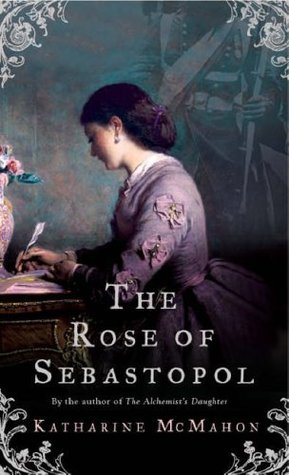
The Rose of Sebastopol by Katharine McMahon

When I put my list together for this year’s 20 Books of Summer, I tried to include a mixture of new releases I was excited about reading and older books that had been on my TBR for a long time. The Rose of Sebastopol is one that I bought back in 2010 from my favourite bookshop, Barter Books, and has been waiting on my shelf for twelve years! If I’d known I was going to enjoy it so much I would certainly have made time for it before now.

The novel opens in 1855 with our narrator, Mariella Lingwood, arriving in Italy to visit her fiancé, Henry Thewell, a surgeon who has recently been stationed in Crimea where war is continuing to rage between Russia and the allied forces of France, Britain, Turkey and Sardinia. Having become seriously ill, Henry has left the battlefields and is recuperating in the Italian town of Narni. Their reunion doesn’t go as planned, however, when the feverish Henry mistakes Mariella for her cousin, Rosa – and she discovers that throughout his illness he has been calling Rosa’s name.

Rosa had left England for the Crimean peninsula several months earlier hoping to join Florence Nightingale’s team of nurses. At first she had kept her family informed as to her whereabouts, but then her letters stopped coming. Unable to learn any more from Henry other than that he and Rosa had met in the Crimea and that Rosa is now missing, Mariella sets off for the war zone herself, determined to find her lost cousin and to hear the truth about her relationship with Henry.

Mariella is an unlikely heroine to be undertaking such an epic journey. Coming from a comfortable middle class background, she has led a very sheltered life and so far her only involvement in the war has been sticking maps and newspaper cuttings into a scrapbook. She represents the Victorian ideal – quiet, obedient, devoted to her parents and conforming to society’s expectations in every way – but for most of the book, I found her very unlikeable. Not only does she lack personality, she’s also quite selfish – probably a product of her upbringing as she has never been encouraged to show any real empathy for people less fortunate than herself.

In contrast, Rosa is a much more engaging character – strong, courageous, determined to achieve her ambition of becoming a nurse and making a difference to people’s lives. I think most authors would have chosen to tell Rosa’s story rather than Mariella’s, so I was intrigued by Katharine McMahon’s decision to write from the perspective of the boring, uninteresting Mariella who, until Rosa disappears, seems content to sit at home with her needlework. Of course, there’s some character development eventually and the journey across Europe does begin to gradually change Mariella’s outlook on life, but it’s always Rosa who drives the plot forward despite being physically absent for most of the novel. Similarly, it seemed at first that Henry would be the main male love interest in the book, but the real hero turns out to be someone unexpected. I was impressed by the way McMahon has us thinking we know which characters we’re supposed to like or dislike, then turns everything around and makes us think again.

This is possibly the first novel I’ve read with the Crimean War as the setting. I’ve read other books set in that time period where the war has been referred to, but I can’t think of any that have actually taken us to the heart of the action – Florence Nightingale’s base at the hospital in Scutari, the sites of the Battle of Balaclava and the Battle of Inkerman, and the besieged city of Sebastopol (or Sevastopol as we would normally call it now). McMahon doesn’t try to portray the war in any kind of romantic way, concentrating instead on the mistakes made by the British and French commanders and the terrible human cost, with large numbers of deaths and casualties. The idea of allowing women to nurse wounded soldiers was very new at that time and we see how some of the women volunteering to join Florence Nightingale were turned down because they were too young or too attractive; they had to meet a strict set of criteria because everything they did would be reported in the British media and Nightingale wanted nothing to damage the reputation of the nursing team she had put together.

I really enjoyed this book and if any of you have read any others set during the Crimean War I would love to hear about them.

This is book 18/20 from my 20 Books of Summer list.

This is book 46/50 read for the Historical Fiction Reading Challenge 2022.

The Wolf Den by Elodie Harper

I wasn’t expecting to enjoy The Wolf Den as much as I did. A book about prostitutes in a Pompeii brothel didn’t sound very appealing to me, particularly as Ancient Rome has never been one of my favourite settings for historical fiction, yet it has turned out to be one of the best books I’ve read from my 20 Books of Summer list this year. Once I got into the story I found it difficult to put down and am looking forward to reading the second book (this is the first in a planned trilogy).

Set in 74 AD, just a few years before Pompeii will be destroyed by the eruption of Mount Vesuvius, this is the story of Amara, the daughter of a doctor from the Greek town of Aphidnai, who is sold into slavery after her father’s death. Following a series of misfortunes she has ended up at the notorious Wolf Den brothel owned by the moneylender Felix. Amara and her fellow She-Wolves are treated as commodities, existing only to give pleasure to their clients and to make money for Felix. The women have lost not only their freedom but also their identities and even their original names. It’s a miserable life, but Amara finds some comfort in the friendships she has formed with the other prostitutes.

The women working at the Wolf Den come from a diverse range of backgrounds – from Greece, from Carthage or from Egypt, abandoned at birth, taken captive by slave traders or, like Amara, sold off by their own families. There are just five of them at the beginning of the book – Amara, Victoria, Dido, Cressa and Beronice – although more will arrive later as Felix continues to make ‘investments’ in his business. Each of the five, despite some clients seeing them as interchangeable, has her own distinctive personality and her own way of coping with the situation she has found herself in. Not all of the women can remember life before the brothel, but Amara can and she’s determined to regain her freedom.

This is the first book I’ve read set in Pompeii (I do have a copy of Robert Harris’ Pompeii somewhere, which I’ll get round to eventually) and I loved following Amara around the bustling, vibrant city, going into the shops, taverns and bathhouses, taking part in the Vinalia festivities and watching the gladiators in the amphitheatre. We also see inside the beautiful villas owned by Pompeii’s rich and powerful when Amara and Dido are booked to entertain at private parties and get a glimpse of the lives that could have been theirs under different circumstances. Although most of the characters in the book are fictional, the Roman author, naturalist and military leader Pliny the Elder makes an appearance and has an important role to play in the plot. Finally, real pieces of graffiti found in the ruins of Pompeii are used in the chapter headings, adding some further historical authenticity to the story.

The Wolf Den is not always an easy book to read; the nature of the story means there are some quite graphic descriptions of both the women’s work within the brothel and the violence they are often subjected to by the men who pay for their services. Elodie Harper doesn’t shy away from having bad things happen to her characters, but there’s some warmth and humour in the novel too, as well as the beginnings of a romance between Amara and another slave. I can’t wait to read The House with the Golden Door to see how the story continues.

This is book 17/20 from my 20 Books of Summer list.

This is book 45/50 read for the Historical Fiction Reading Challenge 2022.

Excellent Intentions by Richard Hull

Richard Hull’s The Murder of My Aunt is one of the best books I’ve read from the British Library Crime Classics series. I’ve since read some of his others, available from a different publisher (Agora Books) and apart from Left-Handed Death, which was quite entertaining, they were disappointing in comparison. I hoped for better things from Excellent Intentions, another BLCC book. If nothing else, it has a lovely autumnal cover!

First published in 1938, Excellent Intentions begins in the courtroom. We know that someone is on trial for murder – but who is it? We will have to wait until the end of the book to find out; it’s a clever and unusual structure, with the details of the crime unfolding through a series of flashbacks as the witnesses provide the evidence and the jurors listen to the cases put forward by prosecution and defence. This format works very well as it allows us to see the story from lots of different angles and look for clues that will help us to guess who it is that has been accused.

We do know that the victim is Henry Cargate, a rude and unpleasant man who has made himself very unpopular since moving into the ‘big house’ in the village of Scotney End. On the day of his death a problem with his car forces him to take a train into town and just as the train leaves the station he is seen by another passenger to take a large pinch of snuff. Seconds later he is dead. As Cargate was known to have a weak heart, it is at first assumed that he has died of natural causes – until his snuff is found to have been laced with potassium cyanide, bought by the victim himself to destroy a wasps’ nest.

Because Cargate is such a horrible man – a man who ‘wanted to do nobody any good’ – there are plenty of people who could have had a reason for wanting him dead. However, there are only four who could have had access to the snuffbox and the poison, both of which were kept in Cargate’s own study. There’s Mr Yockleton, the vicar, whom Cargate had accused of stealing an emerald the day before the murder; Raikes the butler and Miss Knox Forster, the secretary, both members of Cargate’s household; and finally, Andrew Macpherson, a dealer in stamps. Cargate is a keen stamp collector and he and Macpherson had recently had a disagreement over whether some of the stamps in his collection were fakes. I should warn you here that we learn a huge amount about different types of stamps and their colours, markings and perforations, which you may or may not find interesting!

Any of these four people could have committed the murder, but only one has been accused and it’s up to the jury to decide whether this person really is the culprit. As the trial continues, we hear how Inspector Fenby, the detective investigating the crime, has decided who he thinks was responsible – and this is where I started to lose interest a little bit. There’s a lot of focus on alibis, timings, the positions of the snuffbox and the poison on Cargate’s desk, and who could have been in certain rooms during certain periods without being seen. This is never my favourite kind of mystery as I find it difficult to keep all of these things straight in my mind; I tend to prefer books that concentrate more on the motives of the characters and less on the technicalities of the crime.

I loved the ending, though. Even after we find out who it is that’s on trial, there’s another twist to come! This was an entertaining read overall and I would still like to read Keep It Quiet and Murder Isn’t Easy, the only other two Hull novels currently in print that I haven’t read yet.

This is book 16/20 from my 20 Books of Summer list.

The Mirror and the Light by Hilary Mantel

At last! I bought this book shortly after its release in March 2020 with every intention of reading it then, but with the start of the pandemic and our first lockdown, I got distracted and had to put it aside until I was able to give it the attention it deserved. After that, there always seemed to be other books that needed to be read first or that seemed more immediately appealing, so The Mirror and the Light has been languishing on the shelf until I decided to put it on this year’s 20 Books of Summer list.

The Mirror and the Light is, of course, the final part of Hilary Mantel’s Thomas Cromwell trilogy, completing the story begun in Wolf Hall and Bring Up the Bodies. At almost 900 pages in my edition, it’s also the longest of the three books. It covers a relatively short period of time, from May 1536 to July 1540, which shows how much detail the book goes into. If you’re looking for a completely immersive reading experience, this is it – and for that reason, I would strongly recommend starting with the first book and reading the trilogy in order.

The novel opens in the aftermath of Anne Boleyn’s beheading. Thomas Cromwell, chief minister to Henry VIII, has achieved what he set out to achieve – Anne, who has failed to give the king a male heir, is gone; the four men he believes to have insulted his old master and mentor, Thomas Wolsey, have also been executed; and Jane Seymour, formerly of Wolf Hall, has taken Anne’s place as Henry’s new queen. Cromwell, now Lord Privy Seal, has risen high in the king’s favour, but there is still more work to be done: there are foreign ambassadors to deal with, tensions between various court factions to navigate, conspiracies to stamp out, more marriages to arrange, and the moods of an increasingly temperamental and unpredictable Henry VIII to handle.

We servants of the king must get used to games we cannot win but fight to an exhausted draw, their rules unexplained. Our instructions are full of snares and traps, which mean as we gain we lose. We do not know how to proceed from minute to minute, yet somehow we do, and another night falls on us in Greenwich, at Hampton Court, at Whitehall.

Then, disaster strikes again. Jane Seymour dies, just days after giving birth to Henry’s long-awaited legitimate male heir. Cromwell will have to find yet another new wife for the king, but one mistake could give his rivals all the ammunition they need to bring about his downfall. History tells us what will happen next and Mantel follows the history very closely as she has done from the beginning; we know how the story will end and so there is no real suspense – but there is still plenty of tension and a sense of foreboding as things begin to go wrong for Cromwell and the book heads towards its inevitable conclusion.

This book is as exquisitely written as the previous two books in the trilogy, but of the three I think I enjoyed this one the least. I seem to have said this about a lot of books recently, but I don’t think it really needed to be quite so long. The middle book, Bring Up the Bodies, was the one that worked best for me, precisely because it was shorter and more tightly focused (on the demise of Anne Boleyn). The Mirror and the Light kept me gripped at the beginning and the end, but there were times in the middle when the pace felt so slow I found myself struggling to concentrate. Maybe Hilary Mantel couldn’t bear to say goodbye to Cromwell and wanted to delay the moment for as long as possible! If so, I don’t blame her because that moment when it comes is as moving and poignant as you would expect.

Although I was expecting Cromwell’s fall from grace, I was still surprised by how quickly and suddenly it happened. One minute we hear that he has been made Earl of Essex by the king, then literally just a few pages later he is being arrested and taken to the Tower of London. What makes it so sad is that Cromwell himself is not really surprised at all. He has known all along how precarious his position is at court in a world where life and death can depend on the whim of one man – Henry VIII, “the mirror and the light of all other kings and princes in Christendom”.

Now that I’ve finished this book, I’m looking forward to reading A Place of Greater Safety, Hilary Mantel’s French Revolution novel.

This is book 15/20 from my 20 Books of Summer list.

This is book 44/50 read for the Historical Fiction Reading Challenge 2022.

The Blood Flower by Alex Reeve

The Blood Flower is the fourth book – and sadly, the last – in Alex Reeve’s Leo Stanhope mystery series. I’ve been following this series since the first book was published and am sorry there won’t be any more to look forward to, but the author has stated that he has achieved what he set out to achieve with these novels and is ready to move on to other things.

The four novels in this series all work as standalone mysteries, but if you want to get to know Leo properly and understand his history and relationships with the other characters, I would recommend starting with The House on Half-Moon Street and reading the books in order if you can.

In The Blood Flower, set in the late Victorian period, Leo and his wife, Rosie, are heading for the south coast of England, where Leo, in his position of journalist with a London newspaper, has been asked to cover a murder case in Portsmouth. Rosie’s sister, Viola, happens to live in Portsmouth with her husband and Leo is looking forward to seeing them for the first time – but Rosie seems strangely reluctant for him to meet his in-laws. He doesn’t have too much time to wonder about this, however, because work must come first and soon Leo is being updated by the local police on the deaths of two young people, both found by the Portsmouth docks with their throats slit.

When Sergeant Dorling dismisses the two victims as misfits and outcasts and seems more concerned with how Leo is planning to portray the police in his newspaper article, Leo knows that if the murderer is going to be brought to justice he will have to solve the mystery himself. His investigations lead him to the notorious Papaver nightclub and a circus at the New Hippodrome theatre in search of the mysterious Blood Flower which seems to have played a part in both murders. But Leo has a secret of his own: he was born and raised as Charlotte Pritchard, before leaving his old life behind to live as the man he knows he really is. Only his closest friends know he is transgender, but if this information falls into the wrong hands he could find himself in serious danger.

I think this is the best book in the series; I enjoyed it even more than the last one, The Butcher of Berner Street. The Portsmouth setting makes a nice change from the Victorian London of the previous three books and Alex Reeve brings it vividly to life, with a contrast between the tourist areas with their colourful beach huts, bathing machines and shops selling postcards, and the darker side of the city which is where most of the story is played out. It was good to meet some of Leo’s old friends again – the actor Peregrine Black; Alfie the pharmacist and his young daughter, Constance; the elderly Jacob and his wife, Lilya – but moving the action away from London also allows Leo to meet lots of new people. Of the new characters, one I found particularly interesting was Olga Brown, or Miss La La, a black acrobat from Prussia and a real historical figure (her portrait was painted by Edgar Degas).

Leo himself continues to be a very likeable and engaging narrator, liable to make mistakes or say and do the wrong thing, but that only makes him feel more human. His transgender status is just one part of who he is and never really dominates the story; this, like the other books in the series, is a mystery novel first and foremost and the mystery is always at the centre of the plot. It’s quite a complex one and there are some interesting twists and turns towards the end as we discover what the Blood Flower is and who was responsible for the murders. Once the mystery was solved, I was sorry to have to say goodbye to Leo and his friends but I respect the author’s decision to move on and will be interested to see what he writes next!

Thanks to Raven Books for providing a copy of this book for review via NetGalley.

This is book 43/50 read for the Historical Fiction Reading Challenge 2022.

Haven by Emma Donoghue

I’ve read four books by Emma Donoghue now and each one has been completely different from the one before! Haven is a particularly unusual novel and even after finishing it I’m still not quite sure what I really think of it.

The setting is 7th century Ireland and the novel begins with a stranger arriving at the monastery of Cluain Mhic Nóis on the banks of the River Shannon. His name is Artt and he claims to have had a dream, a vision sent by God:

‘An island in the sea. I saw myself there. As if I were a bird or an angel, looking down on the three of us.’

‘Three?’

‘I was with an old monk, and a young one.’ The Abbot shows no sign of understanding him. ‘The dream is an instruction to withdraw from the world. To set out on pilgrimage with two companions, find this island, and found a monastic retreat.’

Artt persuades the Abbot to let him take a small boat and go in search of the island, accompanied by two other monks: the elderly Cormac, who came to religion late in life after losing his loved ones to plague, and Trian, a young man given to the monastery by his parents as a child. The three monks set off in the boat and eventually come to the uninhabited rocky island of Skellig Michael, where they prepare to live in seclusion together for the rest of their lives.

There’s really not much more to the plot than that, but what could have been an extremely boring book is surprisingly absorbing in the hands of Emma Donoghue. I found it interesting to see how the three men set about establishing their own little settlement on the island and how different their views were on what is necessary for survival. Skellig Michael is a harsh, remote and inhospitable place; looking at photos, I can’t imagine what it would have been like to live there, but monks (not the ones in the novel, who are fictional) really did build a monastery there. It’s now a UNESCO World Heritage Site and was used as a location for two of the recent Star Wars films.

Cormac, the most practical of the three, believes that their immediate priority should be to build shelter for themselves ready for the winter, but Artt – or ‘the Prior’ as he now calls himself – insists that there will be time for this later and that their time should first be spent on constructing an altar, a chapel and a stone cross. Meanwhile Trian is kept busy fishing and capturing the puffins and other seabirds that will provide them with meat and eggs, as well as fuel and fat for candles. I should tell you that there are a lot of graphic descriptions of gutting fish and killing birds, which I felt became repetitive and excessive – but I think maybe Donoghue has a message here for us, a warning regarding humans’ destruction of the environment and the wildlife that shares our planet:

But Trian struggles to believe that such a variety of lightsome and beautiful birds have formed in their translucent ovoid caskets, broken out of them, walked, cried out to their brethren, taken flight, over and over for these thousands of years…all so Trian can now fling them down to flame and char on a cooking fire.

I disliked Artt more and more as the story progressed and he became increasingly fanatical and adamant that ‘God would provide’, refusing to listen to the concerns of the other two monks. I also found my attention wandering whenever Cormac began to tell one of his many stories about the saints. The ideal reader for this book would have a much stronger interest in Christianity than I do, I think! There’s a revelation near the end which I had suspected all along, and although it came as no surprise to me, it does provide a turning point in the story – but just as things were starting to get exciting, the book ended. It’s a strange novel, as I said, and won’t necessarily appeal to people who’ve enjoyed Emma Donoghue’s other books (it’s nothing like the other three I’ve read – Room, Frog Music or The Wonder), but it’s a short, quick read and worth picking up if anything I’ve said about it has piqued your interest!

Thanks to Picador for providing a copy of this book for review via NetGalley.

This is book 14/20 from my 20 Books of Summer list.

This is book 42/50 read for the Historical Fiction Reading Challenge 2022.