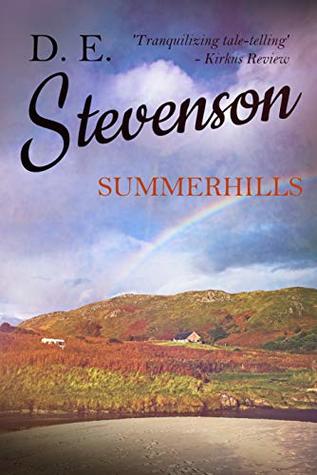
Summerhills by D.E. Stevenson

Summerhills, first published in 1956, is the second book in D.E. Stevenson’s Ayrton family trilogy which began with Amberwell. I knew it had been a few years since I read the first book but was shocked to find that it was actually more than six years! I was worried that I’d left it so long I would struggle to get back into the story, but that turned out to not be a problem; although I could barely remember what happened in Amberwell, Stevenson provides enough of a recap in the opening chapters that I could easily pick up all the threads again.

The book begins with Roger Ayrton, now an officer in the Army, returning to his family home in Scotland for a visit. The house, Amberwell, is where Roger and his brothers and sisters grew up before the outbreak of World War II and it still holds a special place in his heart. Some of the family have moved on, but Amberwell is still home to Roger’s stepmother and his younger sister Nell, who has been taking care of his son, Stephen, since his wife’s death. Stephen is now eight years old and Roger thinks it’s time he was sent away to school, but Nell objects, wanting him to stay close to home. As there are no suitable schools near Amberwell, Roger comes up with what he thinks is the perfect plan – he’ll open a school of his own!

At first it seems that the creation of the school – which becomes known as Summerhills – is going to be the main focus of the book, but the plot soon branches off into several different directions. Roger finds himself unexpectedly falling in love, as does Nell, while his youngest sister, Anne, whose first marriage ended unhappily is trying to move on from her traumatic past and has become housekeeper to an elderly neighbour. A new cook arrives at Amberwell, adding a touch of humour to the story, and there’s also a new governess, Georgina Glassford, who enjoys running and is always looking for someone to time her mile. Although most of the main characters in the book are very likeable, I did find their treatment of Georgina very unkind, particularly as their dislike of her seems to be based on the fact that she wears trousers and gets up early to exercise.

I enjoyed the glimpse of life in post-war Scotland – even though the lifestyles of the Ayrton family seem largely unchanged thanks to Roger receiving a large inheritance on his wife’s death, all around them other once-wealthy families are having to sell their country houses as they can no longer afford to maintain them or pay for servants. This is how Roger manages to acquire a large house to convert into a school (of course there’s no question of an Ayrton boy being sent to an ordinary day school – it must be a boarding school – and there’s no mention of the girls being allowed to go either). At least he does promise to charge reduced fees so that less fortunate boys can attend and gives the job of headmaster to his friend Arnold Maddon (one of my favourite characters), who has lost a foot during the war and has been struggling to find work.

I would have liked Anne’s storyline to have had a proper conclusion – it was left very open-ended – and I was sorry that we saw very little of the other Ayrton sister, Connie, and nothing at all of their brother Tom, who has become a doctor. There’s also a strange subplot in the middle of the book where Roger goes to Rome in search of Aunt Beatrice; I couldn’t really see the point of this as it didn’t have much relevance to the rest of the novel. Still, Stevenson’s writing style is so readable that even pointless episodes like this are quite enjoyable. There is a third novel, Still Glides the Stream, which is described as the final book in the Ayrton trilogy, but seems to be about a completely different family. Have any of you read that one?

This is book 5/20 from my 20 Books of Summer list.
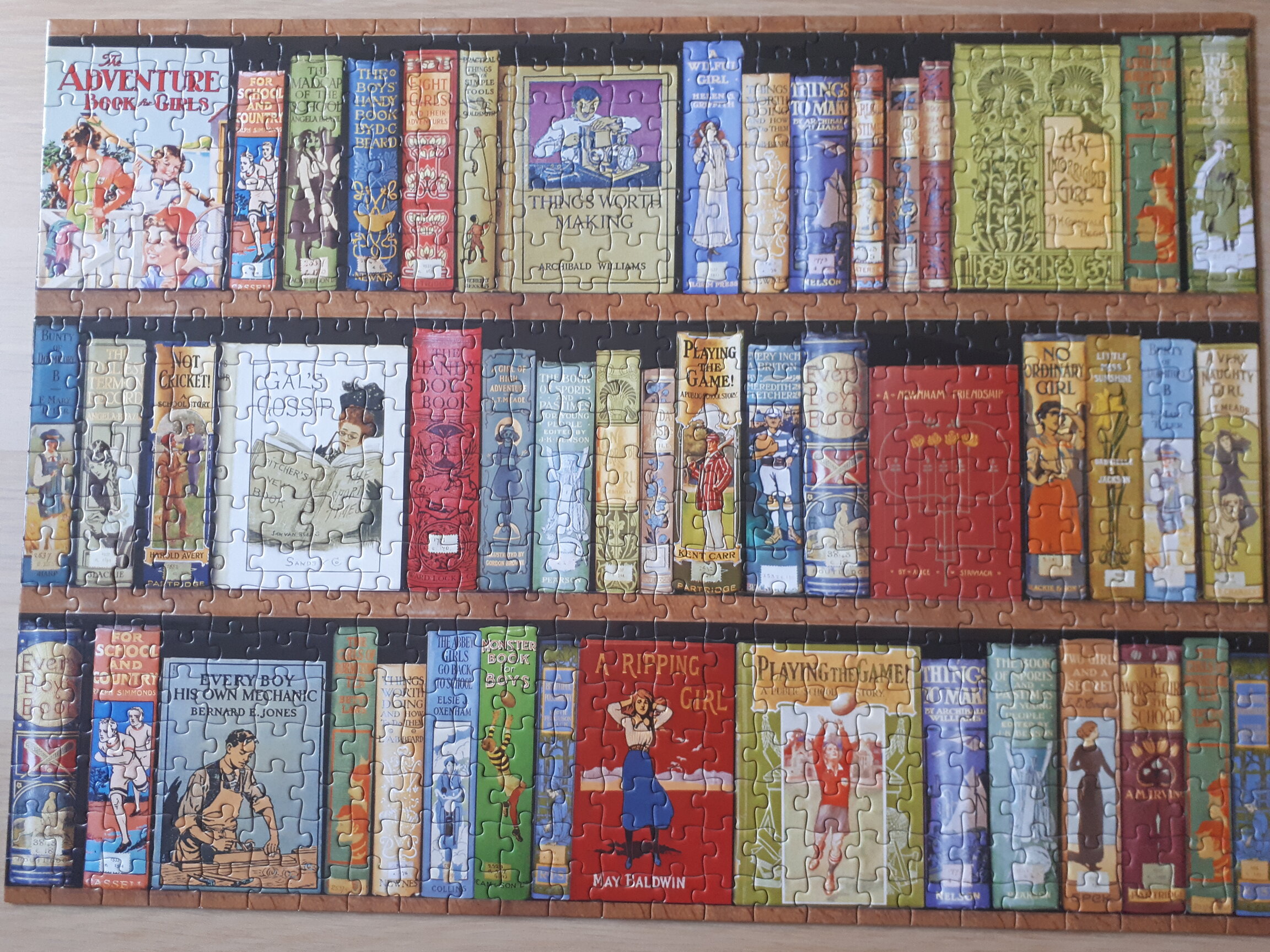
A Reader’s Delight – Jigsaw Puzzle

I don’t do jigsaw puzzles very often these days, but I do enjoy them and thought I would share with you one that I completed recently. It’s called A Reader’s Delight and the picture shows vintage children’s books from the Bodleian Library collection.

While I was working on the jigsaw, I found some of the titles of the books quite amusing and others quite sexist (but very much of their time; none of these are modern books).

For the boys we have Every Boy His Own Mechanic by Bernard E. Jones, The Boy’s Handy Book by D.C Beard and The Monster Book for Boys, while the books for girls include An Incorrigible Girl by M.H. Cornwall Legh (published by the Religious Tract Society in 1899 apparently), A Very Naughty Girl by L.T. Meade and A Wilful Girl by Helen Griffith. On the other hand, we do have The Adventure Book for Girls and Eight Girls and their Adventures…and I was particularly intrigued by Things Worth Doing and How to Do Them by L. and A.B. Beard. I’ve discovered that it’s available on Project Gutenberg – a collection of crafts and other activities aimed at girls.

There are lots of school stories here as well – Bunty of Dormitory B, The Jolliest Term on Record, The Abbey Girls Go Back to School. The ones for boys seem to concentrate on sport – Playing the Game: A Public School Story by Kent Carr, Not Cricket: A School Story by Harold Avery, For School and Country by Ralph Simmonds.

Have you read or heard of any of these books? I wonder what children would think of them today!

The White Hare by Jane Johnson

‘Once you’ve lived in this valley, you’ll never be free of it. Its uncanny beauty gets inside you, right into the marrow. It has its own climate, its own peculiar character. In the same way as people can draw you in and repel you at the same time; both beguile and frighten you.’

I love Jane Johnson’s books; they always have such fascinating settings – 17th century Morocco in The Sultan’s Wife, 15th century Spain in The Court of Lions, and the author’s native Cornwall in The Tenth Gift. She returns to Cornwall again for her new novel, The White Hare, a book steeped in the myths and legends of that region of England.

The novel begins in 1954, with Mila Prusik, her mother Magda and five-year-old daughter Janey arriving at White Cove near Eglosberyan on the Cornish coast. Having left Poland for England during World War II, the family had been settled in London until a disastrous relationship with a married man left Mila desperate to make a fresh start. She and Magda have bought a neglected old house in the Cornish countryside and are planning to restore it to its former glory and turn it into a guest house. However, not everyone is happy to see the house under new ownership and the Prusiks receive a hostile welcome.

As Mila and her mother begin their restoration work, they hear hints from their neighbours that the house has a sinister past and should be left alone. The two women think this is nonsense and continue with their plans, but Mila becomes increasingly concerned about the changes in Janey’s behaviour – particularly her obsession with Rabbit, a stuffed toy that seems to have a mind of its own. How is all of this related to sightings of the legendary White Hare and to the strange symbols and carvings Mila finds all over the house and its grounds?

The White Hare is one of the most atmospheric books I’ve read for a while, not just because of the supernatural aspects – which are subtle, ambiguous and unsettling – but also because of the way the setting is so beautifully described. As Jane Johnson explains in her author’s note, the town of Eglosberyan and its valley are not real but are inspired by several real places. I could picture the white house surrounded by dark woodland, the stream tumbling between mossy rocks, the lonely beach framed by granite cliffs – they are all brought so vividly to life.

I also found it interesting to follow the relationship between Mila and Magda. When they first arrive in Cornwall, Mila is timid and submissive, allowing herself and Janey to be bullied by the hard and domineering Magda, but both characters do grow and change throughout the novel as the valley works its magic on them. There’s also a love interest for Mila, but although I did like him I felt that this part of the story took too much of a dramatic turn towards the end. Still, this is a very enjoyable novel and, while it’s quite different from the other Jane Johnson books I’ve read, being set entirely in one period and not as far into the past, I liked it just as much.

I still have three novels by Jane Johnson left to read: The Sea Gate, The Salt Road and Pillars of Light. If you’ve read any of them, please help me decide which I should read next!

Thanks to Head of Zeus for providing a copy of this book for review via NetGalley.

The Colour Storm by Damian Dibben

Damian Dibben’s previous novel, Tomorrow, was a fascinating and unusual story of an immortal dog searching for his master across two centuries (it was better than it sounds, honestly!). I was curious to see what his next book, The Colour Storm, would be like, but it turns out that it’s a much more conventional historical novel this time. It’s also a very good one; although the subject reminded me of another of my recent reads, The Fugitive Colours by Nancy Bilyeau, the setting gives it a very different feel.

The Colour Storm is the story of the Italian painter Giorgio Barbarelli, who lived and worked in Venice during the Renaissance. He was a real person, as are many of the other characters in the novel, and you may already be familiar with his paintings – if not, you can easily find images online of some of the pieces attributed to him which will give you an idea of the quality of his work.

At the beginning of the novel, Barbarelli – or ‘Zorzo’ as he is called throughout the book – is finding life difficult. Work is becoming hard to find, the competition from other artists is fierce and Zorzo’s debts are increasing. He’s responsible not only for himself, but also for his team of young apprentices and assistants, so he urgently needs to find some way of gaining commissions from rich clients. An opportunity arises when a wealthy German merchant, Jakob Fugger, arrives in Venice and is said to be looking for an artist to paint an altarpiece for St Peter’s Basilica. When Zorzo hears that Fugger also possesses a new colour, a pigment known as ‘prince orient’, he becomes even more determined to bring himself to the merchant’s attention.

In an attempt to win Fugger’s favour, Zorzo agrees to paint a portrait of his wife, Sybille – but as he becomes closer to Sybille, he finds that he has become involved in a conspiracy which could have huge implications for the people of Europe. And then, while Zorzo is still considering his next move, a new threat arrives in Venice…the plague:

Only the poorest folk, who have no choice but to go to work, are continuing as normal, but they’re wary, treading more carefully than usual. Many cover their faces with their sleeves or improvised masks and everyone keeps their distance. From behind closed windows and shutters, Zorzo’s aware of families pressed together, restless shadows, watching and fretting as to whether this episode will pass – as most do – without significant horror, or if this one will be severe.

Still very relevant, isn’t it? The plague plays a part in the later stages of the novel, but before that we follow the story of Zorzo’s search for the prince orient and his entanglement with Jakob and Sybille (also real historical figures). We are given some insights into the workings of an artist’s studio in Renaissance Venice and there are appearances by other famous names from the art world, including Bellini, Titian, Michelangelo and Leonardo da Vinci. By focusing on the dark side of life in 16th century Venice, Dibben creates plenty of atmosphere, and although the parts of the book that concentrate on Zorzo’s relationships with Sybille and her husband interested me less, I found this an enjoyable read overall.

Thanks to Michael Joseph for providing a copy of this book for review via NetGalley.

This is book 4/20 from my 20 Books of Summer list.

This is book 30/50 read for the Historical Fiction Reading Challenge 2022.

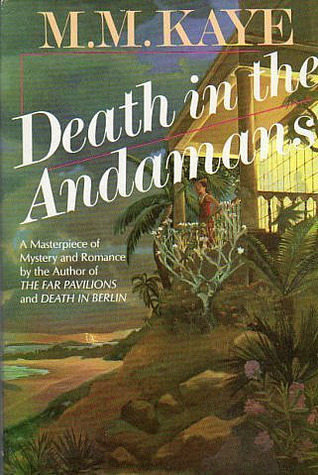
Death in the Andamans by M. M. Kaye

This is the sixth and final book in M.M. Kaye’s Death In… series. I’ve now read all of them and although this one, Death in the Andamans, is not my favourite it’s another that I’ve enjoyed. If you’re new to these books, don’t worry about reading them in order – they are all completely separate, standalone novels, the only connection between them being that they’re all murder mysteries featuring a young female protagonist and set in countries the author had personally visited.

Copper Randall is working as a typist in a London office when she receives an unexpected inheritance from an uncle and decides to spend some of the money on a visit to the Andaman Islands in the Indian Ocean. Her friend, Valerie Masson, is the stepdaughter of the Chief Commissioner there and has invited Copper to stay with them at Government House on Ross Island, the administrative capital of the Andamans (at this time, the Andamans, like the rest of India, are still under British control). Copper arrives just in time for Christmas and, on Christmas Eve, attends a picnic with the other British people on the island – a community which includes Valerie’s fiancé Charles and his friend Nick, who has become Copper’s own love interest.

As the picnic breaks up and the group begin to return home, some by road and some by boat, they are caught in a sudden, violent storm. One of the party is swept overboard and presumed drowned, but as the others reach the safety of Government House and take shelter there, they start to wonder whether it really was an accidental death. Cut off from the rest of the islands by the weather, Copper and her friends must try to identify the murderer before they have a chance to kill again.

There are plenty of suspects, the most obvious being the dead man’s cousin, who stands to inherit his coconut plantation if no will is found. But of course, there are other people who also had the opportunity, although their motives are less clear. There are lots of clues, lots of red herrings and lots of creeping around in the middle of the night listening to footsteps and creaking floorboards (this sort of scene seems to be a speciality of Kaye’s, appearing several times in almost every book in the series!). I didn’t solve the mystery, although the culprit was one of several people I had suspected throughout the novel. Once the villain was revealed, though, I felt that the conclusion was too drawn-out with various characters taking turns to give explanations and tie up loose ends.

Like most of the other Death In… books, this one provides a snapshot of the British Empire in its final days, although she doesn’t really explore the local politics or the effects of colonialism here the way she does in Death in Kashmir or Death in Kenya. You do have to put up with some of the attitudes of the time – the sense of entitlement, the dismissal of the local people as superstitious and uneducated, as well as some sexism with Copper and Valerie’s two boyfriends, Nick and Charles, determined to keep the women out of danger. Charles also has an irritating habit of speaking like someone from a PG Wodehouse novel (deliberately – we are told that he’s been modelling his conversation on the books he’s found in the library, ‘an institution that would appear to have been last stocked during the frivolous twenties by a fervent admirer of such characters as Bertie Wooster’.).

However, the descriptions of the Andaman Islands are beautiful: the breeze ‘whispering through the mango trees’, the ‘tall, feathery clusters of bamboo’, the beach with its ‘clear, glassy water that shivered to a lace of foam about the dark shelves of rock’. Kaye really excels at creating a strong sense of place – I think only Daphne du Maurier and Mary Stewart are as good! The way she describes the approach of the storm, with its torrential rain and hurricane-force winds is particularly dramatic.

In her author’s note, Kaye describes how she came to write this novel; it was inspired by a visit to the Andamans in the 1930s, when her friend’s father was posted there as Chief Commissioner (the character of Valerie is clearly based on the friend). However, due to the outbreak of World War II, the book didn’t get published until 1960 – originally under the title of Night on the Island and then again in 1985 as Death in the Andamans. This explains why the novel feels much older than the publication date would suggest.

Not the best book in the series, then, but still an entertaining read.

This is book 3/20 from my 20 Books of Summer list.
Historical Musings #73: Walter Scott Prize winner and project progress report

Welcome to this month’s post on all things historical fiction!

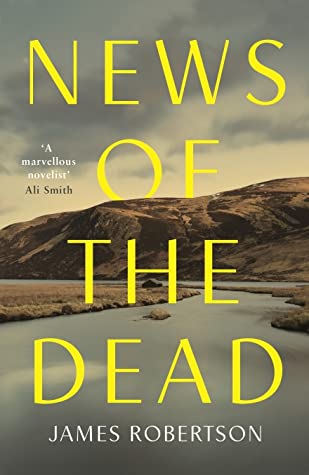
The winner of this year’s Walter Scott Prize for Historical Fiction was announced yesterday at the Borders Book Festival. Congratulations to James Robertson and News of the Dead!

There were only four titles on the shortlist this year and I have managed to read two and a half of them. The two are Rose Nicolson and Fortune and the half is The Magician, which I’m hoping to finish soon. Typically, News of the Dead is the only one I haven’t had time to get to yet.

The 2022 shortlist:

Rose Nicolson by Andrew Greig
News of the Dead by James Robertson
Fortune by Amanda Smyth
The Magician by Colm Tóibín

Have you read any or all of these books? Which one do you think should have won?

As some of you will know, I’m attempting to read all of the shortlists since the Walter Scott Prize began back in 2010, but my progress with this seems to have stalled recently. Kay, who blogs at What Me Read and is working on the same project, is doing much better than I am and has almost finished! I am keeping track of all my Walter Scott Prize reads here but thought it might be interesting to take a more detailed look at what I’ve read and not read so far. Below you can see my progress with the 2010-2015 shortlists; I’ll save the 2016-2022 lists for next month’s Historical Musings post.

2010

READ:

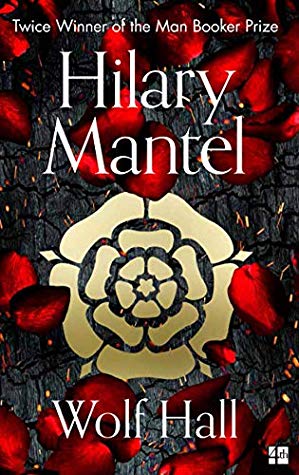
Wolf Hall by Hilary Mantel (winner)
Stone’s Fall by Iain Pears
Lustrum by Robert Harris

STILL TO READ:

Hodd by Adam Thorpe
Sacred Hearts by Sarah Dunant
The Glass Room by Simon Mawer
The Quickening Maze by Adam Foulds

It would be difficult to argue with Wolf Hall as the winner here, but I also loved Lustrum and Stone’s Fall – in fact, all three made it onto my books of the year lists in the years when I read them. Of the remaining books, I’m particularly looking forward to the Sarah Dunant as I enjoyed one of her others.

2011

READ:

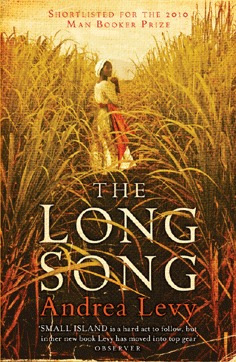
The Long Song by Andrea Levy (winner)
Ghost Light by Joseph O’Connor
Heartstone by C. J. Sansom

STILL TO READ:

To Kill A Tsar by Andrew Williams
C by Tom McCarthy
The Thousand Autumns of Jacob de Zoet by David Mitchell

I did enjoy 2011’s winner, The Long Song, but as a Shardlake fan I preferred Sansom’s Heartstone. Ghost Light was interesting, but I didn’t really get on very well with the writing style.

2012

READ:

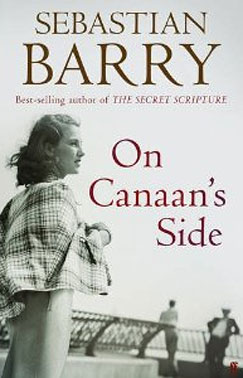
On Canaan’s Side by Sebastian Barry (winner)
The Sisters Brothers by Patrick deWitt
Pure by Andrew Miller

STILL TO READ:

The Quality of Mercy by Barry Unsworth
Half-Blood Blues by Esi Edugyan
The Stranger’s Child by Alan Hollinghurst

I loved On Canaan’s Side – Sebastian Barry writes so beautifully. But then, I loved The Sisters Brothers as well; I never expected to find a Western so enjoyable! Andrew Miller’s Pure was an atmospheric read, but I didn’t like it as much as the other two.

2013

READ:

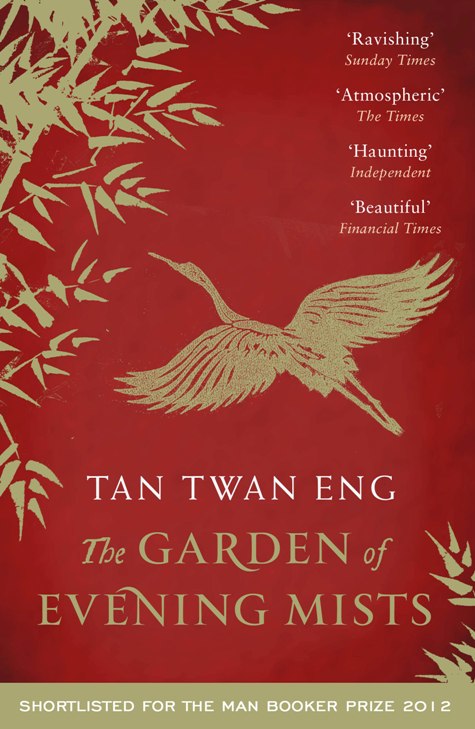
The Garden of Evening Mists by Tan Twan Eng (winner)
The Daughters of Mars by Thomas Keneally
Bring Up the Bodies by Hilary Mantel
The Streets by Anthony Quinn
Merivel: A Man of His Time by Rose Tremain

STILL TO READ:

Toby’s Room by Pat Barker

I’ve read five out of the six books on the 2013 list. The Garden of Evening Mists is another beautiful book and a worthy winner, but my vote would probably have gone to Bring Up the Bodies. I only need to read Toby’s Room now, but I know it’s a sequel to Life Class so would prefer to read that one first.

2014

READ:

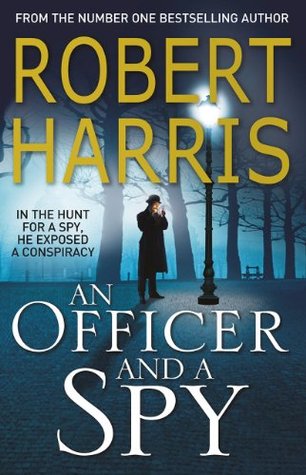
An Officer and a Spy by Robert Harris (winner)
Life After Life by Kate Atkinson
The Luminaries by Eleanor Catton
Harvest by Jim Crace
Fair Helen by Andrew Greig

STILL TO READ:

The Promise by Ann Weisgarber

This is a great shortlist! An Officer and a Spy is wonderful (one of my favourites by Robert Harris), but I also really enjoyed the other four that I’ve read, particularly Life After Life and Fair Helen. The Promise doesn’t sound as appealing to me and I haven’t rushed to read it, but will try to get to it soon so I can complete the 2014 list.

2015

READ:

Arctic Summer by Damon Galgut
The Lie by Helen Dunmore
A God in Every Stone by Kamila Shamsie

STILL TO READ:

The Ten Thousand Things by John Spurling (winner)
The Zone of Interest by Martin Amis
Viper Wine by Hermione Eyre
In the Wolf’s Mouth by Adam Foulds

I haven’t done very well with the 2015 shortlist. I’ve only read three of the seven books and wasn’t all that impressed with any of them. I liked parts of The Lie, but it’s not a favourite Helen Dunmore book, and A God in Every Stone was interesting, but I suspect it wasn’t the best Shamsie novel I could have started with. Arctic Summer wasn’t my sort of book at all and has put me off trying anything else by Damon Galgut. I hope for better things from the other four books on the shortlist, when I get round to reading them!

~

And that’s an update on my progress with the 2010-2015 shortlists! In next month’s Historical Musings post I’ll look at the lists from 2016-2022.

Have you read any of these books? Do you agree with the winners?

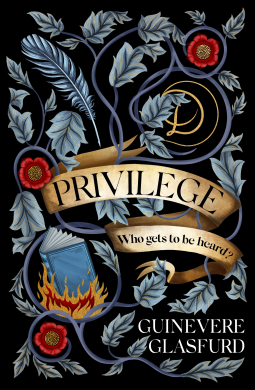
Privilege by Guinevere Glasfurd

I enjoyed both of Guinevere Glasfurd’s previous novels, The Words in My Hand and The Year Without Summer, so I hoped for good things from her latest novel which sounded just as intriguing as the other two. The title Privilege could refer to all sorts of things, but in this case it’s a reference to the system in pre-Revolutionary France where publishers had to obtain a ‘royal privilege’ before a book could be published.

The novel begins in Rouen in 1749, where Delphine Vimond is being raised by her father, having lost her mother at an early age. Delphine’s father runs a pottery, but he is also a collector of books and Delphine inherits from him a love of literature and a desire for learning. Finding the key to his library, she discovers a whole new world of adventure and knowledge in the pages of his books. However, when a volume by Milton on the killing of kings is found in his possession, Delphine understands for the first time that not all books are seen as appropriate and that some are even forbidden.

Meanwhile, in London, we meet Chancery Smith, an apprentice printer. A box of papers from Paris signed only with the letter ‘D’ has been received at the print shop and Chancery is given the job of visiting France to try to identify this mysterious author. It’s not going to be an easy task – as the papers contain potentially dangerous writings, Chancery must avoid letting them fall into the hands of the censors who would see the papers destroyed and the courier punished. On arriving in Paris, his path crosses with Delphine Vimond’s and together they set off in search of ‘D’, while trying to stay one step ahead of the royal censor, Henri Gilbert, and his spies.

Privilege is a thought-provoking read, exploring issues such as censorship, the power of the monarch, and the freedom – or lack of it – to write and think about topics that matter to us. Before reading this novel I didn’t really know how the ‘royal privilege’ system worked and how it lead to books written in France having to be published in other countries and smuggled back in, so I found that aspect of the story fascinating. I also picked up lots of other snippets of information on the early publishing industry along the way – I had never heard of France’s ‘blue library’, for example.

I found the mystery/thriller aspect of the novel slightly less successful, maybe because the identity of the unknown author seemed too obvious. Still, with two engaging protagonists in Delphine and Chancery, as well as a strong cast of secondary characters, and with such an interesting subject at the heart of the story, it’s a book that I enjoyed reading.

Thanks to John Murray Press for providing a copy of this book for review via NetGalley.

This is book 29/50 read for the Historical Fiction Reading Challenge 2022.