The Illumination of Ursula Flight by Anna-Marie Crowhurst

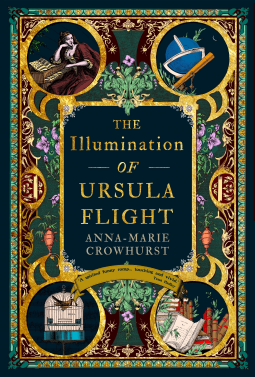
Yet another new historical fiction novel with a colourful, eye-catching cover! This one looks like an illuminated manuscript, which is quite appropriate, not just because of the title but also because our heroine, Ursula Flight, has a deep love of books, language and the written word.

Ursula is born in December 1664, on the same night that a great comet appears in the sky. It is believed to be an ill omen, bringing with it bad luck and disaster, but for Ursula’s father this is a time to rejoice and to thank God for the safe delivery of his daughter. As Ursula grows into an intelligent and curious young woman, he decides to educate her himself, sharing with her his knowledge of astronomy, Latin and Greek, mathematics, science and literature. At the age of fifteen, however, everything changes: Ursula is married off to the wealthy Lord Tyringham, who is much older and who has different ideas of how a woman should behave.

It is not a happy, loving marriage, but Ursula is able to find solace in her writing – or her scribbling, as her friends call it – and this provides a way for her to express herself and to cope with the difficulties she encounters in her new life. There is nothing she wants more than to write plays and see them performed on stage but, despite her talent and enthusiasm, Ursula will find that this is still very much a man’s world.

Things do not always go smoothly for Ursula and she faces a series of challenges, obstacles, trials and disappointments both in her personal life and in her attempts to establish a career for herself. Told in a different way, it could have been a rather depressing story, but Ursula’s narrative voice is so strong and warm and witty that the novel never becomes too dark. Her sparkling personality suits the lively writing style and the imaginative format of the book.

I am not always a fan of novels that are written in an unusual or unconventional way, but I could still admire the playfulness and creativity of Ursula Flight. Chapters are given titles like In which I am born under inauspicious circumstances and In which I assert my independence at three years old, while Ursula’s narrative is interspersed with other examples of her writing: letters and lists, diary entries, personal notes to herself, definitions of words and even whole scenes from some of her plays. These all provide us with valuable insights into her state of mind or way of life, while also being quite funny at times; I expect Ursula found that writing about certain episodes of her life in this way made it easier to deal with them.

The Illumination of Ursula Flight is an entertaining read; it’s maybe a little bit lighter than I would have preferred, but it’s fun and different. I would probably recommend it to people who have enjoyed books like Dark Aemilia, The Mermaid and Mrs Hancock and Restoration.

Thanks to Atlantic Books for providing a copy of this book for review via NetGalley.

The Winter Prince by Cheryl Sawyer

After reading Charles Spencer’s biography Prince Rupert: The Last Cavalier a year or two ago, I mentioned that I wanted to read more books, either fiction or non-fiction, about Rupert of the Rhine, surely one of the most interesting and colourful characters of the English Civil War and Restoration period. The suggestion I was particularly drawn to was The Stranger Prince by Margaret Irwin, but with another of Irwin’s books already unread on my shelf (The Galliard) I wanted to read that one first before buying another one. Meanwhile I came across The Winter Prince by Cheryl Sawyer and decided to give it a try.

The Winter Prince is the first in a trilogy which continues with Farewell, Cavaliers and The King’s Shadow. It opens in 1642 with conflict building between King Charles I and his Parliament. When Mary Villiers is informed by her husband, the Duke of Lennox and Richmond, that the King is planning to arrest five members of Parliament in the House of Commons, she thinks she is doing the right thing by warning the five men of his intentions. Mary is a royalist – the Duke is one of the King’s closest advisers – but she believes it will send out the wrong signal if the men are arrested.

Around this time, the King’s nephew, Prince Rupert, arrives on England’s shores having recently been released from imprisonment in Germany. Charles needs all the loyal support he can get and, when civil war does inevitably break out, Rupert (accompanied by his beloved white poodle, Boy) is given the task of leading the Royalist cavalry. Mary Villiers was only fourteen the last time Rupert had come to Charles’s court and they don’t have very fond memories of each other. Meeting again now, as adults, they are instantly drawn to each other and a friendship quickly forms which could develop into something more – except that Mary is already married and Rupert is her husband’s friend.

The Winter Prince is written partly from Mary’s perspective and partly from Rupert’s. There is no actual evidence to prove that they were involved in a romantic relationship, but there are rumours to suggest that it may have happened and Cheryl Sawyer expands on this to create a romance for Rupert and Mary that runs throughout the novel. Because Rupert is away with the army so much of the time and because Mary doesn’t want to hurt her husband (whom she likes but doesn’t love), our hero and heroine don’t often have the opportunity to be together which makes the occasions when they do meet more significant. For me, though, there was something slightly lacking in the romantic aspect of the story. Although Cheryl Sawyer’s writing is very good in other ways, I thought the characters felt a little bit lifeless and because I couldn’t fall in love myself with her version of Rupert I couldn’t entirely believe in Mary’s feelings for him and his for her.

As far as I could tell, the book had been well researched, although as I am definitely not an expert on Prince Rupert or Mary Villiers (or this period in general) it’s hard for me to judge the historical accuracy. I did notice that on the first page the king is referred to as Charles the First whereas at the time he would have been simply King Charles as at that point there had not been a second, but I didn’t pick up on anything else like this. I just don’t have the knowledge to be able to comment, though. Anyway, it is not a light or fluffy novel – in fact, I felt as though I was being overloaded with information at times.

The romance is only one element of the novel; a large part of the book is also devoted to the Civil War itself and there are pages and pages of detailed descriptions of each battle, the tactics and strategies used and the role played by Rupert and his cavalry. I struggled to stay interested through these long military accounts, but this was probably my fault rather than the fault of the author as it’s not very often that I do enjoy reading battle scenes!

My feelings about this book were mixed, then, but it was good to have an opportunity to learn a little bit more about Rupert. I probably won’t read the other books in this trilogy, but I do still want to read Margaret Irwin’s The Stranger Prince.

This book counts towards this year’s What’s in a Name? Challenge: A title containing a season.

The Fire Court by Andrew Taylor

This is the second in Andrew Taylor’s new historical mystery series set during and after the Great Fire of London. The first book, The Ashes of London, set in 1666, deals with the Fire itself and the devastation it causes, as well as introducing us to our protagonists – James Marwood, son of a Fifth Monarchist, and Cat Lovett, daughter of a regicide involved in the execution of King Charles I. It’s not completely necessary to have read The Ashes of London before beginning The Fire Court as they both work as standalone mysteries, but I would still recommend it.

In The Fire Court, we watch as London begins to rebuild in the aftermath of the Great Fire. With so much of the city destroyed, so many homes and businesses burned to the ground, there’s a lot of rebuilding to be done! Naturally, this gives rise to disputes between landlords and tenants, and disagreements as to how land should be redeveloped and who is responsible for paying for it. A special court is established to deal with all of this: the Fire Court.

At the beginning of the novel, James Marwood’s elderly father dies after falling beneath the wheels of a wagon in a London street, but not before he has time to tell James about a horrific discovery he made in one of the chambers of the Fire Court – the body of a murdered woman, with blood on her yellow gown. At first, Marwood dismisses these claims as the ramblings of an old, ill man, but when he begins to investigate he comes across some clues which suggest that maybe his father was telling the truth after all.

Marwood wants to find out more, but it seems that his employers – Joseph Williamson, the Under-Secretary of State, and William Chiffinch, Keeper of the King’s Private Closet – would prefer him to leave things alone. He can’t walk away now, though; he’s already much too deeply involved. Others have become caught up in the mystery too, among them Cat Lovett who, following the events of the previous novel, is now living in the household of her cousin Simon Hakesby, the architect – and another young woman, Lady Jemima Limbury, whose marriage, it appears, is based on lies and deceit. All of these people have a part to play in the mystery that unfolds and none of them know who to trust.

I enjoyed The Ashes of London, but I thought The Fire Court was even better. The plot was a complex, interesting one and with the focus on lawyers and court cases, it reminded me at times of CJ Sansom’s Shardlake novels, which I love. Being the second book in the series, I felt that both main characters – Marwood and Cat – are starting to feel more fully developed now. I sympathised with Marwood’s conflicting feelings for his father and the dilemma he faces when he is forced to choose between his two masters, Williamson and Chiffinch. As for Cat, she continues to be in a dangerous position should her true identity be discovered, so she has taken the name Jane Hakesby and is pretending to be her cousin’s servant. In her situation, you would think it would be a good idea to keep a low profile, but with her courageous and fiery personality, she does nothing of the sort! I really like the way the relationship between Marwood and Cat is progressing; it has taken a while, but they are beginning to trust each other and work together.

There are some interesting secondary characters in this book too, ranging from Marwood’s servant, Sam, who lost a leg in the wars against the Dutch, to the sinister Lucius Gromwell, in whose room the murdered woman was found. I particularly enjoyed reading about Jemima Limbury: her background and lifestyle are very different from Cat’s but the situation in which she finds herself is no easier to endure.

I’m looking forward to reading more books about James Marwood and Cat Lovett – and am assuming that there are going to be more, as they are being marketed as ‘a series’ which would suggest that there won’t just be two! Meanwhile, I still need to read my copy of Bleeding Heart Square, the only historical mystery by Taylor that I still haven’t read!

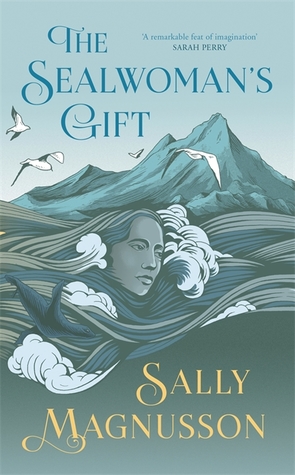
The Sealwoman’s Gift by Sally Magnusson

This is a beautifully written novel based on a little known historical event: the 1627 raid by Barbary pirates on Iceland’s Westman Islands. Around four hundred Icelanders were taken in captivity to Algiers to be sold at the slave markets, among them the priest Ólafur Egilsson, his pregnant wife Ásta Thórsteinsdottir, and two of their children. We know from historical records that Ólafur was released and sent to Denmark to petition the Danish king (Iceland’s ruler in those days) in the hope that he would provide the ransom to free his subjects. His story was preserved in a memoir describing his capture and the voyage there and back, but the story of Ásta, who was not allowed to accompany him on the journey home, has been lost to history.

In The Sealwoman’s Gift, Sally Magnusson has given a voice to Ásta, a woman who, like so many others in centuries gone by, has been ignored and forgotten by history. As we know little or nothing about what happened to Ásta and the other women and children after their arrival on the shores of Algeria, this gives the author the freedom to create an interesting, realistic and believable story to fill in the gaps. She writes with sensitivity and understanding as she describes Ásta’s pain at being separated from her husband and children, her changing feelings for the man who buys her – Ali Pitterling Cilleby – and the agonising decision she eventually has to make.

There’s a lot for Ásta to adjust to in her new life; Algeria and Iceland couldn’t be more different, with very different climates, customs, foods, languages and religions. The religious difference is one of the most difficult for Ásta to accept – as the wife of a Lutheran minister, the possibility of her children having to convert to Islam is not easy for her to come to terms with. We also follow Ólafur on his return to Heimaey in the Westman Islands and see both the short-term and long-term effects the raids have had on the community. With such a small population to begin with, the loss of several hundred of their people has a big impact; it seems that almost everyone has lost a husband or wife, a child or a parent or a friend.

Iceland has a strong tradition of storytelling and some of these myths, legends and sagas are woven into the novel as Ásta finds some solace in remembering the stories of her homeland and narrating them to her master and his wives. This is another aspect of the book that I liked; you can learn a lot about a country from its stories and its folklore.

Sally Magnusson (who is the daughter of the television presenter Magnus Magnusson) has previously written several non-fiction books, but this seems to be her first novel. I liked her writing, apart from the fact that she chose to write in the present tense. I’m really not a fan of present tense and in this case I found it distracting and distancing, which I’m sure is not what the author intended. It’s down to personal taste, I suppose – you either have a problem with it or you don’t. I also thought that, while Ásta, Ólafur and the other Icelandic people are strong, interesting characters, the characters they meet in Algiers feel less well developed. If I’d had a stronger feeling for Cilleby, for example, as a person, I think I would have found the later stages of the story more emotional.

These are just small criticisms and, as I’ve said, are probably just due to my tastes as a reader rather than the book itself, which is getting great reviews and really is a fascinating read.

Thanks to Two Roads for providing a copy of this book for review via NetGalley.

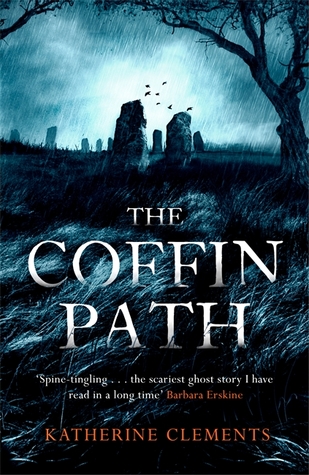
The Coffin Path by Katherine Clements

This is Katherine Clements’ third novel set in 17th century England, but it has a different feel from the previous two. Rather than being a straight historical novel like The Crimson Ribbon and The Silvered Heart, The Coffin Path is a ghost story with a lonely rural setting and this time there is much less focus on the political and social events of the period.

It’s 1674 and there are signs that spring is on its way to the Yorkshire moors. The first lamb of the season is about to make its appearance, but it is a difficult birth and requires human assistance. Mercy Booth of Scarcross Hall, who farms the land and tends the sheep for her elderly father, helps to deliver the lamb into the world but its mother dies in the process – the first of several bad omens. Next, three ancient gold coins go missing from her father’s collection and reappear in unexpected places – and then Mercy begins to hear noises coming from a disused bedchamber upstairs.

Around this time, a stranger arrives looking for work. His name is Ellis Ferreby and although the local people are slow to trust him, he soon proves himself to be a good shepherd and a reliable worker. Ellis, however, is a man with secrets and it seems that he could have reasons of his own for coming to Scarcross Hall.

We slowly get to know both Mercy and Ellis as their stories alternate with each other throughout the novel. We hear what Mercy’s life has been like, growing up without a mother, with only her eccentric father, Bartram, and the servants for company – and we learn of her hopes for the future, which centre around the knowledge that one day, as her father’s only heir, she will inherit her beloved Scarcross Hall. As for Ellis, his background is shrouded in mystery and the truth about both his past and his purpose in being at Scarcross is only revealed later in the novel.

The 17th century is obviously a period which interests Katherine Clements and of which she has a lot of knowledge: The Crimson Ribbon was the story of a servant in the household of Oliver Cromwell, while The Silvered Heart was about a highwaywoman in the aftermath of the English Civil War. The Coffin Path is set just a few decades after those two books yet I felt that the story would have worked just as well if it had been set in almost any other period, either an earlier century or a later one. Although the effects of the recent Civil War do still linger in the lives of our characters, this only has any real significance towards the end of the book – otherwise, perhaps because Scarcross Hall is so isolated from the wider world, there is a general feeling of timelessness.

However, what the novel lacks in sense of time is made up for in sense of place. There are some wonderful descriptions of the moors surrounding Scarcross Hall, bringing to life this harsh but beautiful landscape. We also explore some of the old traditions and beliefs which survive in this remote part of England: the White Ladies is an ancient stone circle which the villagers associate with evil, while the Coffin Path of the title refers to the old track down which coffins would be carried from the moors to the church for burial. It’s no wonder that in a place like this, people like Ellis and Mercy are viewed with suspicion and distrust – Ellis because he is an outsider and Mercy because she is an independent, unconventional woman, still unmarried in her thirties and doing ‘a man’s work’ on the farm.

I enjoyed following the personal stories of both main characters and I liked the supernatural elements too: they were suitably eerie, but at the same time subtle enough to keep me wondering whether there really were ghosts involved or whether something else was happening. My only problem with the book (other than the fact that, like many novels these days, it is written in present tense) was that there were times when the plot seemed to be moving forward very slowly. It didn’t help that the first few chapters are devoted to describing, in great detail, the birth of a lamb; I would have preferred a stronger opening to pull me straight into the story.

Of the three books by Katherine Clements I have read, I think I liked both of the others better than this one, but it’s good to see that she has tried something slightly different here. What will she write next, I wonder?

Thanks to Headline for providing a copy of this book for review via NetGalley.

A Falling Star by Pamela Belle

The third book in Pamela Belle’s Wintercombe series moves on to the next generation of the St Barbe family. Having enjoyed both Wintercombe and Herald of Joy last year, I decided to wait a little while before beginning A Falling Star; I think that was the right decision as it meant I could approach it with a mind open to meeting new characters and embarking on new storylines, rather than just wanting more of Silence and Nick.

A Falling Star is set in the 1680s, several decades after Herald of Joy ended. It opens with the return to Wintercombe of Sir Alexander St Barbe, who has been living in exile in the Low Countries but has come home to take up his inheritance following his father’s death. Alexander (or Alex as we will now call him) brings with him a reputation for drunkenness and debauchery, but this doesn’t deter his cousin Louise, another new arrival at Wintercombe. Louise, who was brought up in France, has been sent to England in the hope that she will find a nice Protestant husband there. Alex is presumably not the sort of man her mother has in mind, but Louise is instantly drawn to him and it seems that the attraction is mutual.

Not everyone is pleased to have Alex home, though. Another cousin, Charles St Barbe, still hasn’t given up hope of inheriting Wintercombe himself. After all, he had been helping Alex’s father to run the estate for several years, and unless Alex can produce a legitimate child of his own, Charles is the next heir. If only Alex had stayed away, Wintercombe could have been his. Unfortunately, Alex does nothing to endear himself to Charles and what begins as a natural resentment quickly develops into hatred. Outside the walls of Wintercombe, meanwhile, rebellion is brewing as the Duke of Monmouth prepares to launch his attempt to overthrow James II. There’s a lot of support for Monmouth’s cause throughout Somerset and its neighbouring counties, but which side will the St Barbes choose?

I have read about the Monmouth Rebellion before, but it has only been touched on briefly in other novels I’ve read. This is the first fictional account I’ve read that has gone into so much detail and I found it all fascinating, from the views of the people of South West England and their reasons for supporting (or not supporting) the Duke, to the descriptions of the battles and the fate of the men who fought in them. Because two of Silence’s grandchildren – Bram and Ben – are directly involved, the reader is pulled into the heart of the action rather than just hearing about events from a distance.

We do see quite a lot of Silence and a little bit of Nick as well, but this is definitely the story of the younger generation. If you have read the previous books, you will remember that Silence and Nick had quite a few children and stepchildren between them – and now those children each have families of their own. I felt slightly overwhelmed by the number of new characters at first, and the relationships between them, but it quickly became clear which ones were going to have a significant role in the story and which I didn’t need to worry about too much. I have already mentioned Bram and Ben, Louise, Alex and Charles, all of whom are interesting characters in their different ways; the other St Barbe cousin with an important part to play is Phoebe, Alex’s sister. I loved Phoebe, whose strength of character more than makes up for her physical weaknesses.

The way the book ends sets things up nicely for the finale, Treason’s Gift, which I’m sure I’ll be reading soon!

Traitor by David Hingley

This is the third in a series of novels featuring Mercia Blakewood, a 17th century Englishwoman recruited by Charles II to carry out secret missions on his behalf. If you think that sounds far-fetched, it is worth noting that while Mercia is a fictional character, the King really did employ female spies, among them the playwright and novelist Aphra Behn. I haven’t read Mercia’s earlier adventures, but Traitor sounded so intriguing that I jumped at the chance to read it despite my usual preference for starting a series at the beginning.

The novel opens in 1665 and even without having read the previous novels, I quickly picked up all the background information I needed to be able to understand and follow the story. I discovered that Mercia’s father has been branded a traitor and executed following the English Civil War. His manor house has ended up in the possession of Mercia’s uncle, Sir Francis, but Mercia has not given up hope of regaining it, hence her desire to win the King’s favour.

At the beginning of the novel she has arrived back in England from America where she had been sent on a quest for the King and became caught up in the capture of New Amsterdam, now renamed New York. She has barely set foot on the shore when she receives a summons from Charles’ mistress, Barbara Palmer, Lady Castlemaine, who explains her next task to her. The country is now at war with the Dutch and it seems that someone close to the War Council is passing on secrets to the enemy. Mercia’s task is to identify the spy – a woman using the code name Virgo – but her investigations could endanger her own life as well as her young son’s.

I love books set in the seventeenth century but while I’ve read quite a lot about subjects such as the Civil War, the restoration of Charles II, the plague and the Great Fire of London, the specific setting for this novel – the Second Anglo-Dutch War – is something I’ve come across less often. Although the focus is on Mercia’s personal mission and her efforts to uncover the spy, the war provides an interesting backdrop for the story.

Mercia is a strong heroine and despite not having read the first two books in which she appears, I felt that I knew her well by the end of the novel. Other characters who stood out for me were Nicholas Wildmoor, the servant who has accompanied Mercia to and from America, and One-Eye, a sinister old woman who runs a ring of smugglers. There are also five suspects who could each be Virgo and although some of these characters are less developed than others, they are representative of different opinions and different positions in society. Helen Cartwright, for example, is delighted with the black boy, Tacitus, whom she receives as a gift and uses as a sort of fashion accessory, whereas Lavinia Whent has seen the results of slavery first hand in Barbados and has returned with more progressive ideas. Mercia herself is modern enough in her views to make her easy for a modern reader to like and identify with, but not so much that she feels entirely out of place in the seventeenth century either.

The mystery element of the novel worked well. I didn’t guess who Virgo was, although I did have my suspicions as to who else might be involved and wanted to scream at Mercia not to trust anybody! Along the way there’s plenty of suspense as both Mercia and Nicholas get themselves into some difficult and dangerous situations.

This was the first book I finished in 2018 but I have held back my review until now so I could take part in the Traitor blog tour. Other stops on the tour are shown in the image below. As I’ve said, I prefer to read a series in the correct order, but I enjoyed this book so much I think I’ll have to go back and read Birthright and Puritan now!

Thanks to Allison & Busby for providing a copy of Traitor for review.