The Cautious Traveller’s Guide to the Wastelands by Sarah Brooks

It’s 1899 and passengers are boarding the Trans-Siberian Express, a twenty-carriage luxury train which will take them from Beijing to Moscow in time to attend the Great Exhibition. The four thousand mile journey will travel through the Wastelands, an abandoned wilderness where the landscape and wildlife seem to be undergoing strange changes and mutations. Since the changes were first recorded several decades earlier, Walls have been built to separate the Wastelands from the rest of Russia and China and passengers are not allowed to leave the train in the area between the Walls. On the previous journey, something went wrong: the glass in the windows cracked, exposing the train to the dangers of the Wastelands. The Trans-Siberian Company blamed the glassmaker and have assured passengers that the train is now safe, but doubts still remain.

The story of the 1899 Trans-Siberian crossing is told from the perspectives of several of the passengers. First, there’s Marya Petrovna, who has boarded the train under a false name and disguised as a mourning widow. At first we don’t know who Marya is or why she is hiding her identity, but we do know that she believes an injustice has been done and has come on this journey in search of answers. Then there’s Dr Henry Grey, an English naturalist whose latest theories have been disproved and who hopes to restore his reputation by studying the Wastelands. Finally, Zhang Weiwei is a sixteen-year-old girl known as ‘the child of the train’ because she was born in the Third Class sleeping car and has spent her whole life travelling backwards and forwards on the train. There are many other people onboard the train, but these are the central three around whom the novel revolves.

The Cautious Traveller’s Guide to the Wastelands is an unusual, imaginative novel and there were many things I enjoyed about it. I’ve read several other books set on trains, but usually, even in Murder on the Orient Express, the train simply provides a way of bringing a group of people together in close confines or of getting them from one destination to another. In this book, the train itself is an important part of the story and could even almost be viewed as another character. Sarah Brooks’ worldbuilding is very impressive; the novel has been compared to Susanna Clarke’s Piranesi and Erin Morgenstern’s The Night Circus and it did make me think of the latter in particular. So much attention to detail goes into describing the various carriages and compartments, the history of the train and its earlier crossings, and the fictional travel guide which gives the novel its name. The Wastelands themselves are less clearly described and although it’s suggested that life there has become tainted in some way, we don’t really know how or why, and much of the mystery still remains at the end of the book, which I’m sure was deliberate – but quite frustrating!

However, I felt that the setting and atmosphere came at the expense of the plot. The pace was very slow, with more than half of the novel devoted to setting the scene and introducing the characters, and it seemed to end just as things were starting to happen. I also would have preferred an explanation for what was happening in the Wastelands and was left wondering what we were intended to take away from the book. Was there a message in there about climate change and the environment – or migration, with walls being built to keep people out (or in)? I think we’re definitely supposed to question whether it’s best to travel cautiously or curiously, embracing change or turning away from it.

The Cautious Traveller’s Guide… is a fascinating alternate history novel, then, with lots to think about and debate. I didn’t find it completely satisfying, but I’m sure the right reader will love it.

Thanks to Orion Publishing Group for providing a copy of this book for review via NetGalley.

This is book 6/20 of my 20 Books of Summer 2024.
The Fox Wife by Yangsze Choo

The famous scholar Ji Yun, who was obsessed with foxes, said: Humans and things are different species, and foxes lie between humans and things; darkness and light take different paths, and foxes lie in between darkness and light.

Like Yangsze Choo’s previous two novels, The Ghost Bride and The Night Tiger, The Fox Wife is a fascinating blend of history, fantasy and folklore. It takes as its premise the idea that fox spirits, who play a large role in Chinese and Japanese mythology, really exist and can take on the appearance of human beings.

Beginning in Manchuria in the winter of 1908, one thread of the novel follows Bao, an elderly private detective who has been called in to investigate the death of a young woman. The woman’s body was found frozen in the doorway of a restaurant and people are already starting to whisper that she was lured to her death by foxes. Ever since he visited a shrine to a fox god as a child, Bao has been blessed, or maybe cursed, with the ability to detect truth from lies. Now, he hopes he can use that gift to find out what happened to the woman found dead in the cold.

In chapters that alternate with Bao’s, we meet Snow, or Ah San, a white fox spirit who is searching for the man she blames for the death of her daughter two years earlier. Snow has taken the form of a human woman and joined the household of a Chinese medicine seller. In her position as maid, she is able to accompany the family on a trip to Japan where she hopes for an opportunity to take her revenge.

At first, the two threads of the novel are very separate; Bao’s story is written in the third person and focuses on his investigations, with some flashbacks to his childhood; Snow’s narrative is in first person, giving it a more intimate feel. Eventually, their paths begin to converge, producing some interesting plot twists and revelations. We also find that there’s not just one fox in this story, but who are the others and what is their relationship with Snow? It takes a long time for everything to unfold and for a while in the middle of the book I thought it was starting to drag, but the pace does pick up again towards the end.

My knowledge of Chinese folklore is sadly very limited, so I enjoyed learning more about the significance of fox spirits, their characteristics and powers, and some of the myths and folktales that have been told about them. With the novel being set partly in Japan as well as in China, we also see how similar myths and legends about foxes cross over into Japanese culture. It’s all very fascinating, and whenever my attention was starting to wane due to the slow, meandering plot, there would be another passage about foxes that would grab my interest again.

I had mixed feelings about The Fox Wife, then, but I’m pleased to have had the opportunity to learn something new! It’s definitely worth considering this one – and Yangsze Choo’s others – if you have any interest in Chinese myth.

Thanks to Quercus Books for providing a copy of this book for review via NetGalley.

Book 6/50 for the Historical Fiction Reading Challenge 2024

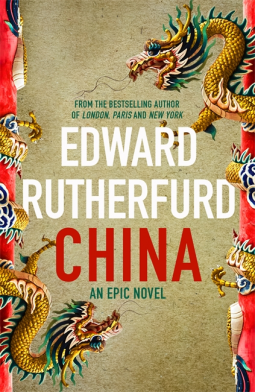
China by Edward Rutherfurd

I loved this! It’s been a long time since Edward Rutherfurd’s last novel was published (Paris in 2013), but China is so good I think it’s definitely been worth the wait. It’s slightly different from his earlier novels – all of which I have read and enjoyed – because whereas those previous books follow the history of a country, city or region over a period of many centuries, this one covers a much shorter period, telling the story of China in the 19th century. At nearly 800 pages, that decision to concentrate only on one century allows for more character development and more time spent exploring each historical event or incident in detail.

Beginning in 1839, the first few sections of the novel deal with the First Opium War, taking us through the complicated background to this conflict from the perspectives of several different characters: Shi-Rong, secretary to Commissioner Lin, the man responsible for trying to end the illegal import of opium into China; John Trader, a British merchant who has become involved in the opium trade to improve his financial situation so that he can marry the woman he loves; Nio, a Chinese pirate and opium smuggler; and John’s cousin Cecil Whiteparish, who is a missionary. This range of viewpoints helps to build a full picture of the events leading to the Opium Wars and what happens in the aftermath. These characters and their families appear again and again throughout the novel as the years go by and they are drawn into other key events such as the Taiping Rebellion and the Boxer Uprising.

In a novel of this length, it was inevitable that I would find some parts much more interesting than others – for example, the chapters involving Nio’s adopted sister Mei-Ling who makes the decision to have her little girl’s feet bound while her husband is in America working on the railroads were particularly compelling. However, my favourite sections of the book were those narrated by ‘Lacquer Nail’, a eunuch in the service of the Empress Dowager Cixi. I’m not sure whether it’s because Lacquer Nail is the only character whose story is told in the first person instead of third, but he really comes to life in a way that some of the others don’t. I could have read a whole book about his adventures alone.

Like all of Rutherfurd’s novels, this one is clearly the result of a huge amount of research; as well as the coverage of major political and military events, we are given lots of fascinating little snippets of information on Chinese folklore, crafts such as calligraphy and pottery, and the details of the tea ritual and other traditions. There are also some beautiful descriptions of the various locations in which the action takes place, including Guangzhou (Canton), Hong Kong, Macao and, in Beijing, the Forbidden City and the Summer Palace. I think anyone with even the slightest curiosity about China, its history, geography and people, will find a lot to interest them in this book – just be aware that it’s quite a commitment and will take a while to get through, even for the fastest of readers!

If China doesn’t appeal, I can highly recommend almost any of Edward Rutherfurd’s other books, particularly Sarum, Russka and his two novels about Ireland.

Thanks to Hodder & Stoughton for providing a copy of this book for review via NetGalley.

Book 27/50 read for the 2021 Historical Fiction Reading Challenge.

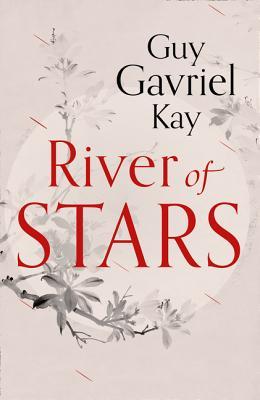
River of Stars by Guy Gavriel Kay

River of Stars is a sequel to an earlier novel by Guy Gavriel Kay, Under Heaven, but being set several centuries apart, the two books stand alone and it’s not essential to read them in order. However, the world Kay creates in this novel has been shaped by the events of the previous one, so that’s something worth bearing in mind.

The world to which I’m referring is a thinly disguised version of China during the time of the Song Dynasty – or Twelfth Dynasty, as it is called in the novel. Since the fall of the glorious Ninth Dynasty, described in Under Heaven, Kitai (the name given to China) has been in decline; their Fourteen Prefectures have been lost to barbarians from the northern steppes, and their once mighty empire is no more. With the army greatly weakened, military decisions are now made by government ministers while bad news is hidden from the emperor who immerses himself in poetry, calligraphy and the creation of a magnificent garden.

As the story of this fallen empire unfolds, we are introduced to a large number of characters. Two of the most prominent are Ren Daiyan, who believes his purpose in life is to reclaim the lost Fourteen Prefectures and restore Kitai to its former glory, and Lin Shan, a woman who writes poetry and thinks for herself, at a time when women are not expected to do either of those things. The paths of Ren Daiyan and Lin Shan cross now and then and their actions carry the story towards its conclusion, but along the way we meet an assortment of emperors and barbarians, prime ministers and war-leaders, diplomats and poets, some of whom have a big part to play in the story and some a small one, but all are significant in one way or another.

Although Kay’s novels are usually described as historical fantasy, most of them have very few traditional elements of fantasy – in this particular book I only noticed two or three, including an encounter with a fox-woman and a few mentions of ghosts. His books are much closer to historical fiction, which is probably one of the reasons why I enjoy them so much (along with the beautiful, lyrical writing). Before starting this one, I knew nothing at all about the Song Dynasty, so despite Kay’s renaming of people and places, it’s good to know that I now have at least a small amount of knowledge of the period, of the Disaster of Jingkang and the Jin-Song Wars.

River of Stars is a fascinating novel and one that requires some patience; it’s not a book that you can rush through, as every character, every conversation, every decision could be important later on. In case we might be in danger of forgetting this, Kay gives us frequent reminders:

It was possible for people to enter your life, play a role, and then be gone. Although if you could sit on a horse in a wood under dripping leaves years after and think about them, about things they’d said, were they really lost?

And:

He ought to feel sympathy. He didn’t. You said certain things, damaged someone’s life, and your own fate might take a different course because of it.

However, although this is an impressive novel and I did enjoy it, I think his two books set in China are my least favourites so far. The characters in them just didn’t seem to come to life for me the way they did in books like Tigana and The Lions of Al-Rassan and I think the constant foreshadowing and discussions of fate and consequences made me too aware of the structure of the novel rather than allowing me to become completely immersed in the story. At least I still have plenty of Kay’s earlier books left to look forward to: The Fionavar Tapestry trilogy, Ysabel, The Sarantine Mosaic duology and A Song for Arbonne.

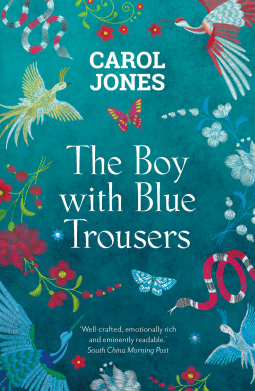
The Boy with Blue Trousers by Carol Jones

I love learning about the histories and cultures of different countries, so I was pleased to find that Australian author Carol Jones’ new novel, The Boy with Blue Trousers, is set in not one location but two – the mulberry groves of China and the goldfields of Australia – and introduces us to two women leading very different lives.

In 1850s China, seventeen-year-old Little Cat is growing up in a small village on the Pearl River Delta. Like the other girls in her community, she spends her days picking mulberry leaves and teasing out the threads from silkworm cocoons to produce reels of silk. It’s hard work, but it is the only life Little Cat has known and, now that she is approaching adulthood, she is growing nervous about what the future may hold. What sort of marriage will the matchmaker arrange for her? Will her husband and his family be kind? Will she have to go and live in another village far away from her own?

In the end, though, none of these things matter to Little Cat, because a disastrous encounter with the village headman, Big Wu, forces her to flee the country in fear of her life. Disguised as a boy, she embarks on a ship bound for Australia where she will join the hundreds of men heading there from China who are hoping to make their fortune in the goldfields.

Meanwhile, another young woman, Violet Hartley, has recently arrived in Australia. Violet, a governess, is trying to escape from her own past in England, and Australia seems like a place full of opportunities. When her first job, looking after two small children, proves to be not quite what she’d hoped for, she decides to accompany the Chinese immigrants on their journey – a decision that leads to her path crossing with Little Cat’s and tying the two separate threads of the story together.

The Boy with Blue Trousers is written in the form of two alternating narratives, so that we spend one or two chapters with Little Cat before switching to Violet for a while and then back again. This allows us to get to know both characters equally well and to see how, although they are living in very different environments, they face similar struggles as unconventional, independent women who don’t conform to the expectations of their respective societies. I have to admit, I didn’t like Violet at all; while I did have sympathy for her situation and the loss of her reputation following an affair with a married man in England – unfair when the man involved didn’t suffer in the same way – I just didn’t find her a very appealing character, especially in comparison to Little Cat, whom I loved.

I had a few problems with this book – apart from not liking Violet, I thought the way in which her story came together with Little Cat’s and the reaction they had to each other felt odd and unconvincing – but I was impressed by the sense of place Carol Jones creates. I particularly liked the descriptions of the mulberry trees, river banks, alleys and courtyards of Sandy Bottom Village, Little Cat’s home in the Pearl River Delta, but the coastal landscape of Robetown in South Australia is also beautifully portrayed.

Carol Jones is not an author I’ve come across until now, but I see she has written another novel, The Concubine’s Child, set in Malaysia, which also sounds interesting. If any of you have read that one, let me know what you thought.

Thanks to Head of Zeus for providing a copy of this book for review via NetGalley.

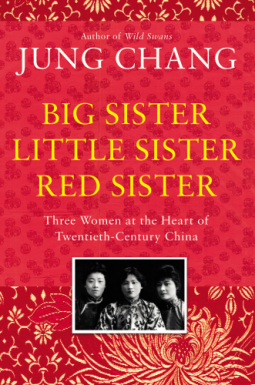
Big Sister, Little Sister, Red Sister by Jung Chang

Jung Chang’s Wild Swans is one of the best non-fiction books I’ve ever read, so when I saw her new biography, Big Sister, Little Sister, Red Sister, available on NetGalley, I knew I wanted to read it. As the title suggests, this is the story of three sisters – the Soong Sisters – who were at the heart of twentieth century Chinese politics. Like Wild Swans, it gave me some fascinating insights into a country whose history I know very little about, but unlike Wild Swans, the author has no personal connection with the women she is writing about and I thought that made it a much less immersive and powerful read.

Despite their important roles in Chinese history, I’m ashamed to say that I had never heard of the three Soong Sisters before reading this book. In case anyone else hasn’t heard of them either, here’s a quick introduction:

‘Big Sister’ Ei-ling, born in Shanghai in 1888, was the eldest daughter of Charlie Soong and Ni Kwei-tseng. Through her marriage to the banker H.H. Kung – who later became Minister of Finance in the Nationalist government – Ei-ling was one of China’s richest women.

‘Little Sister’ May-ling was the youngest of the three. As the wife of Chiang Kai-shek, who was chairman of the Nationalist party (the Kuomintang) and later President of the Republic of China, May-ling was China’s First Lady. With her American education and excellent command of the English language, she provided a link between Chinese and Western cultures.

In the middle was Ching-ling, or ‘Red Sister’. In 1915, she married the much older Sun Yat-sen, the revolutionary leader who helped to overthrow the Qing Dynasty. After Sun’s death, Ching-ling’s continued involvement in left wing politics and her support for the Communist Party often put her in direct opposition to Big and Little Sister.

The book takes us through the lives of all three of these women from birth to death, comparing the different paths they choose to follow and describing their achievements and their influence on Chinese politics and society. Rather than devoting a separate section of the book to each sister, Chang jumps from one to the other and back again, moving forward chronologically over a period of more than a hundred years. As this is the first time I’ve read about the Soong sisters I’ve no idea how they are usually portrayed, but it seemed to me that Chang’s account was quite fair and balanced, showing sympathy for all three women but an awareness of their faults and weaknesses as well.

I found Ei-ling the least interesting to read about. With her wealth and position, there’s a sense that she is very detached from the realities of life, although she does come across as a generous and dutiful sister who tries to help her younger siblings in any way she can. May-ling is more appealing; although she is depicted as ambitious and sometimes extravagant, she also seems warm and compassionate, with a genuine interest in carrying out humanitarian work. But it was Ching-ling who intrigued me the most, with her unwavering dedication to the communist cause that sets her apart from her sisters and creates divisions in the family that never really heal. Was she, as one observer says, ‘most responsive and likeable, quiet and poised but misses nothing’ or was she, in the words of another, ‘basically a cold, hard, ruthless woman who knows what she wants and how to get it’?

Although the three Soong sisters all found themselves in positions of influence and power, these positions initially came about because of the men they chose to marry and that, for me, was one of the problems with this book. Almost as much time was spent describing the lives and careers of Sun Yat-sen, Chiang Kai-shek and H.H. Kung as was spent on May-ling, Ei-ling and Ching-ling, who were supposed to be the subjects of the book. Overall, it felt more like a general political history of twentieth century China than a biography of three specific people. I found it a much more challenging read than Wild Swans, which was as gripping as fiction, and it has taken me more than a month to finish it as there was just so much information to take in and digest. I can’t pretend that I am now an expert on Chinese politics, but I do feel that I learned a lot from this book and although it was a struggle at times, I’m glad I persevered and finished it!

Thanks to Jonathan Cape for providing a copy of this book for review via NetGalley.

Under Heaven by Guy Gavriel Kay

I am looking forward to reading Guy Gavriel Kay’s new novel, A Brightness Long Ago, which will be published in May, but before starting that one I wanted to finally read a different book by Kay which has been on my shelf unread for a few years now. That book is Under Heaven, the first of two novels (the second is River of Stars) inspired by two different Chinese dynasties, Tang and Song.

Kay writes a type of historical fantasy where the emphasis is usually more on the historical than the fantasy. With most of his novels, I at least have a little bit of familiarity with the period on which his setting is based (Renaissance Italy, medieval Spain, the Vikings etc) but the setting of Under Heaven – a fictionalised Tang China – is one I’ve never read about before and of which I have absolutely no knowledge. That made this particular book a slightly more challenging read for me than the others I’ve read by Kay, but it has also left me wanting to know more about the real history of China during this period.

In the book, China is referred to as Kitai, with Tagur (Tibet) to the west. The novel opens with Shen Tai travelling to the battle site of Kuala Nor, where his father, an army general, once led the Kitan to victory against the enemy Taguran. Now his father is dead and Tai plans to spend the two year mourning period laying to rest the bones of the forty thousand dead, both Kitan and Taguran. It seems an impossible task, but Tai is determined to try anyway:

There were too many. It was beyond hope to ever finish this: it was a task for gods descending from the nine heavens, not for one man. But if you couldn’t do everything, did that mean you did nothing?

To acknowledge his efforts, the Empress of Tagur, once a Kitan princess, promises him two hundred and fifty magnificent Sardian horses as a reward – but Tai is not as delighted as you might expect him to be at receiving such a lavish gift. As he knows, ‘You gave a man one of the Sardian horses to reward him greatly. You gave him four or five of those glories to exalt him above his fellows, propel him towards rank – and earn him the jealousy, possibly mortal, of those who rode the smaller horses of the steppes.’ Imagine the danger a man could be in who possesses not just four or five but two hundred and fifty of these legendary animals! This is a life-changing moment for Tai and on his return journey to the imperial capital of Xinan he finds that he has become the centre of attention, with various factions at court all vying to take possession of the horses for themselves. These include An Li, a powerful military leader; Wen Zhou, the Prime Minister; and Wen Jian, the ‘Precious Consort’ of the elderly Emperor Taizu.

In a parallel storyline, Tai’s sister Li-Mei is being sent north beyond the Long Wall to Bogü (possibly Mongolia) where she is to marry the son of the Bogü leader. Marriage to a barbarian is not what Li-Mei had in mind for herself, but a chance to escape this fate comes when she is rescued by the mysterious Meshag, who takes her across the steppes on a journey as eventful and dangerous as Tai’s.

Kay’s female characters are always strong and interesting and I enjoyed following Li-Mei’s story as much as Tai’s. I’ve already mentioned Wen Jian, the emperor’s consort, who is a match for any of the men when it comes to manoeuvring her way through court politics, but my favourite of the women in the novel is Wei Song, the Kanlin warrior who is sent to protect Tai and takes her duties very seriously, even if it means putting her own life at risk. Of the male characters, apart from Tai himself, I particularly liked Bytsan sri Nespo, his Taguran friend who brings him the message about the Sardian horses, and Sima Zian, the famous poet who accompanies him to Xinan and becomes one of the few men he can trust.

Poetry runs through the novel, as does superstition, myth, legend and political intrigue – but there are only one or two small elements that you could really describe as fantasy (mainly at the beginning, with the ghosts of Kuala Nor – ‘outside in all seasons, moonlit nights and dark, as soon as the sun went down’). Most of the other Guy Gavriel Kay novels I’ve read are set in a world with one white moon and one blue, but the world of Under Heaven has only one (he makes a point of telling us that the poet Sima Zian has often dreamed of having another moon to write about). I’m curious to know why he decided to set this one in a different world to the others, especially as we were back to the two moons again in his most recent book, Children of Earth and Sky.

I will have to find out more about the Tang Dynasty and the An Shi Rebellion, but I’m also looking forward to reading River of Stars which is set four hundred years later, during the Song Dynasty. First, though, on to A Brightness Long Ago!