Nonfiction November: Week 3 – Book Pairings

Here’s this week’s topic for Nonfiction November:

Week 3 (11/11-11/15) Book Pairings: This week, pair up a nonfiction book with a fiction title. Maybe it’s a historical novel and the real history in a nonfiction version, or a memoir and a novel, or a fiction book you’ve read and you would like recommendations for background reading. Or two books on two different areas have chimed and have a link. You can be as creative as you like! (hosted by Liz at Adventures in Reading, Running and Working from Home).

The nonfiction title:

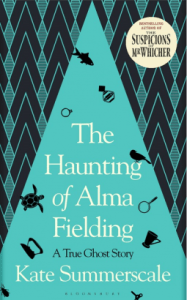
The Haunting of Alma Fielding by Kate Summerscale

Because I’m currently reading Kate Summerscale’s new book, The Peepshow, I decided to focus on her previous book, The Haunting of Alma Fielding, which was published in 2020. Here’s how I described the book in my review:

Like Summerscale’s others, this is a non-fiction book based on a true story, in this case the story of an ordinary thirty-four-year-old woman, Alma Fielding, who becomes the centre of paranormal activity in her London home. The book follows Nandor Fodor of the International Institute for Psychical Research as he investigates Alma’s claims, desperately hoping that this time – after being disappointed by a long line of frauds – he has finally come across a genuine haunting.

At first, having witnessed for himself the smashed glasses, spinning teacups, moving furniture and broken eggs, Fodor is convinced that a poltergeist is at work in the Fielding household. The more he learns about Alma’s abilities, which include producing live animals out of thin air and transporting herself from one area of London to another, the more intrigued he becomes…until, eventually, he begins to have doubts. Is this a real paranormal phenomenon he is investigating or is Alma haunted by something very different?

The fiction titles:
I couldn’t decide on just one book to pair with the Kate Summerscale, so I’ve picked three of them:

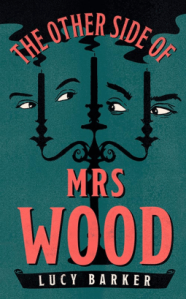
The Other Side of Mrs Wood by Lucy Barker is set in Victorian London and is the story of a fraudulent but successful medium who, like Alma Fielding, is able to ‘apport’ (transport by spiritual means) herself and other objects.

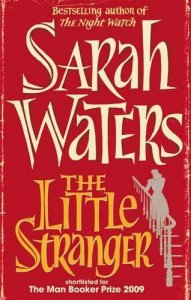
The Little Stranger by Sarah Waters also features a house – Hundreds Hall in Warwickshire – that appears to be haunted by a poltergeist. Is the ghost real or is there a more rational explanation?

In Spitting Gold by Carmella Lowkis, two sisters in 19th century Paris trick grieving victims out of their money by convincing them they are being haunted by departed family members – and then promising to lay the ghosts to rest.

~

Have you read any of these books? What else would you pair with The Haunting of Alma Fielding?
Nonfiction November: Week 1 – My year in nonfiction

November is always a very busy time in the book blogging calendar and one of the many reading events taking place is Nonfiction November – which actually begins today, while we’re still in October, because of the way the dates fall this year.

Nonfiction has never formed a big part of my reading, but I find that taking part in this event helps me to focus on the few nonfiction books I’ve read and the many I would like to read, so it’s still worth trying to join in, I think! Each week throughout November, one of the challenge hosts (there are five) will post a different topic for us to discuss. I doubt I’ll have time to post every week, but the first topic is an easy one:

Week 1 – Your Year in Nonfiction: Celebrate your year of nonfiction. What books have you read? What were your favorites? Have you had a favorite topic? Is there a topic you want to read about more? What are you hoping to get out of participating in Nonfiction November?
(Hosted by Heather of Based on a True Story)

I’ve read even less nonfiction than usual this year, which is disappointing, although in my defence I’ve also been reading Rebecca West’s very long travelogue, Black Lamb and Grey Falcon, throughout the year in addition to the books listed below:

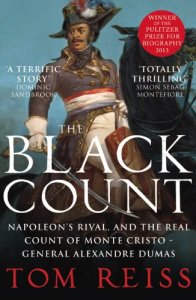
The Black Count by Tom Reiss – A biography of General Thomas-Alexandre Dumas, father of the French author Alexandre Dumas.

The Angel Makers by Patti McCracken – A book about a group of female serial killers in a Hungarian village who murdered over a hundred men between 1914 and 1929.

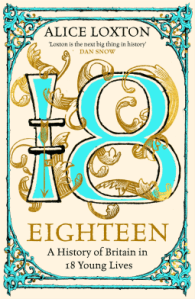
Eighteen: A History of Britain in 18 Young Lives by Alice Loxton – A fascinating look at eighteen historical figures, with a focus on how their first eighteen years shaped the rest of their lives.

Most of the nonfiction I tend to read is biography, history or true crime, so I haven’t been very adventurous this year! I enjoyed all of these books, though, particularly Eighteen and The Angel Makers.

This November I’m planning to read another true crime book, The Peepshow by Kate Summerscale.

Do you like to read nonfiction? Will you be joining in with Nonfiction November this year?

Nonfiction November Week 4: Stranger than Fiction

I haven’t managed to take part in all of the weekly posts for this year’s Nonfiction November, but I particularly wanted to join in with this one – an intriguing new topic for 2021.

Week 4: (November 22-26) – Stranger Than Fiction with Christopher at Plucked from the Stacks: This week we’re focusing on all the great nonfiction books that *almost* don’t seem real. A sports biography involving overcoming massive obstacles, a profile on a bizarre scam, a look into the natural wonders in our world—basically, if it makes your jaw drop, you can highlight it for this week’s topic.

~

One book came to mind as soon as I saw this week’s topic…

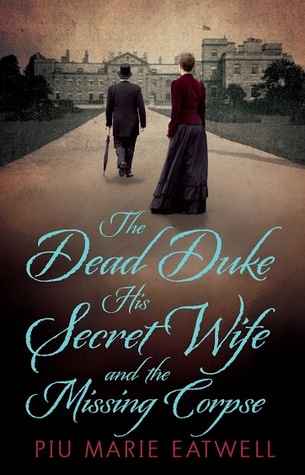
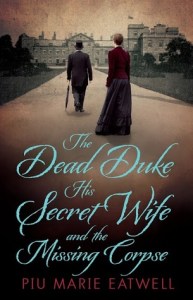
The Dead Duke, His Secret Wife and the Missing Corpse by Piu Marie Eatwell

Here’s what it’s about:

In The Dead Duke, His Secret Wife and The Missing Corpse, Piu Marie Eatwell gives a thoroughly researched account of one of the most bizarre legal cases of the Victorian and Edwardian eras. In 1897, Anna Maria Druce approached the courts to request the exhumation of her father-in-law’s grave. She sensationally claimed that her father-in-law, T.C. Druce, was actually the 5th Duke of Portland and had been leading a double life until deciding to kill off his alter ego. Druce had faked his own death, she said, and if his coffin was opened it would be found to be empty. This would leave Anna Maria’s son as the true heir to the Portland fortune. This was only the beginning of a fascinating legal battle that would continue for years, attracting a huge amount of media attention and capturing the imaginations of the public.

And here are my thoughts, taken from my review originally posted in 2015:

With tales of secret wives and illegitimate children, fraud and forgery, stolen evidence and unreliable witnesses, lies and deception and double identities, this could have been the storyline of a Wilkie Collins or Mary Elizabeth Braddon novel (and Eatwell does draw some parallels with the lives and works of these authors and others). As a fan of Victorian sensation novels, it’s not surprising that I enjoyed this book so much.

I particularly loved reading about the eccentric lifestyle of the 5th Duke of Portland. Becoming increasingly reclusive in his later years, he rarely went out in daylight and constructed a labyrinth of underground tunnels beneath his estate. He often wore six coats at the same time, had a large collection of wigs and only ate in the mornings and evenings. His alleged alter ego, T.C. Druce, who ran a London department store, was said to have some similar habits, which added some support to the theory that the two men were one and the same.

I was impressed with the huge amount of research the author must have carried out while she was writing this book, drawing on newspaper articles, letters, photographs, census records and other documents to build up a full and balanced picture of the case. Every time a new character is introduced we are given details of their family history, personal background, appearance and personality, all of which helps to bring them to life rather than being just names on the page. Further notes are provided at the back of the book, along with a list of primary and secondary sources.

In the final three chapters, set in 2013, Piu Marie Eatwell describes some of the new evidence she was able to discover during her investigations and her enthusiasm for the subject really shines through here. It must have been a fascinating book to research and it was certainly a fascinating book to read!

~

Have you read this book – or any other non-fiction books that are ‘stranger than fiction’?

Nonfiction November Week 1: My Year in Nonfiction

November is always a busy time in the book blogging world and one of the many reading events taking place this month is Nonfiction November. Non-fiction doesn’t form a large part of my reading, but I find that taking part in this event helps me to focus on the non-fiction I’ve read and would like to read, so it’s still worthwhile for me. Each week throughout November, one of the challenge hosts will post a different topic for participants to discuss. I probably won’t have time to join in with all of them, but this week’s topic is an easy one:

Week 1: (November 1-5) – Your Year in Nonfiction with Rennie at What’s Nonfiction: Take a look back at your year of nonfiction and reflect on the following questions – What was your favorite nonfiction read of the year? Do you have a particular topic you’ve been attracted to more this year? What nonfiction book have you recommended the most? What are you hoping to get out of participating in Nonfiction November?

So far this year I have read the following six non-fiction books, a mixture of history, science, biography and self-help:

The Light Ages by Seb Falk – a look at the progress of science, philosophy and invention in the medieval period

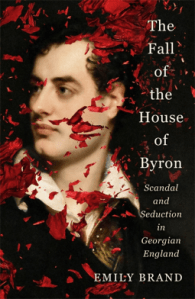
The Fall of the House of Byron by Emily Brand – a biography of the ancestors of the poet Lord Byron.

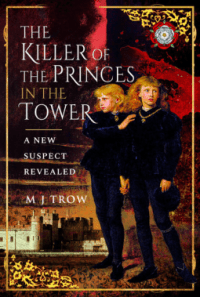
The Killer of the Princes in the Tower by MJ Trow – a new solution to one of history’s greatest unsolved mysteries.

The Haunting of Alma Fielding by Kate Summerscale – the story of a woman who claims to be experiencing paranormal events in her London home.

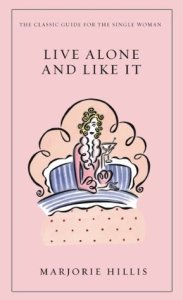
Live Alone and Like It by Marjorie Hillis – a 1930s guide for single women who live alone.

Myself When Young by Daphne du Maurier – the memoir of one of my favourite authors.

Of these, I think the book I enjoyed most was probably Live Alone and Like It. For a book published in 1936, a lot of the advice is still surprisingly relevant today!

This month, although I do have several other non-fiction books on my TBR, I’m going to concentrate on finishing a very long book I started a few weeks ago – Powers and Thrones by Dan Jones.

Are you taking part in Nonfiction November this year?

Nonfiction November Week 3: Be (and ask) the Expert – Victorian true crime

For Week 3 of Nonfiction November, the topic is as follows:

Week 3: (Nov 11 to 15) – Be the Expert/Ask the Expert/Become the Expert (hosted by Doing Dewey)

Three ways to join in this week! You can share 3 or more books on a single topic that you’ve read and can recommend (be the expert); you can put the call out for good nonfiction on a specific topic that you’ve been dying to read (ask the expert); or you can create your own list of books on a topic that you’d like to read (become the expert).

~

I don’t read enough non-fiction to be able to call myself an expert on any topic, but here are three books I’ve read on Victorian true crimes. I enjoyed them all, particularly the third one.

Murder by the Book by Claire Harman

This book looks at some possible links between the murder of Lord William Russell in London in 1840 and the influence of the popular crime novels of the time known as ‘Newgate Novels’. In particular, Harman discusses the book Russell’s murderer was thought to have been reading just before committing the crime: Jack Sheppard by William Harrison Ainsworth. I was disappointed by the true crime aspects of this book, but loved learning more about the Newgate Novels!

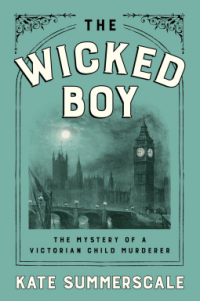
The Wicked Boy by Kate Summerscale

This book is on a very similar subject. It deals with a murder committed by a thirteen-year-old boy in London’s East End in 1895 and how blame was placed on the availability of cheap adventure novels, or ‘penny dreadfuls’ as they were known. I’ve also read and enjoyed Kate Summerscale’s more famous The Suspicions of Mr Whicher, an account of the Road Hill House Murder of 1860.

The Dead Duke, His Secret Wife and the Missing Corpse by Piu Marie Eatwell

This fascinating book explores the life of the eccentric, reclusive 5th Duke of Portland and the sensational claim of Anna Maria Druce that the Duke was actually the alter ego of her father-in-law, T.C. Druce. The story is as bizarre as the title would suggest and involves secret wives and illegitimate children, fraud and forgery, stolen evidence and unreliable witnesses, lies and deception and double identities. I loved it!

~

Now I’m going to ‘Ask the Expert’…

Have you read any of these books – or any other books about Victorian true crimes? Which ones would you recommend?

Nonfiction November: Week 2 – Book Pairings

For Week 2 of Nonfiction November, the topic is as follows:

Week 2: (Nov 4 to 8) – Fiction / Nonfiction Book Pairing (hosted by Sarah’s Bookshelves)

This week, pair up a nonfiction book with a fiction title. It can be a “If you loved this book, read this!” or just two titles that you think would go well together. Maybe it’s a historical novel and you’d like to get the real history by reading a nonfiction version of the story.

I have chosen three of the non-fiction books I’ve read so far this year and paired each of them with a novel that I think is a good match.

~

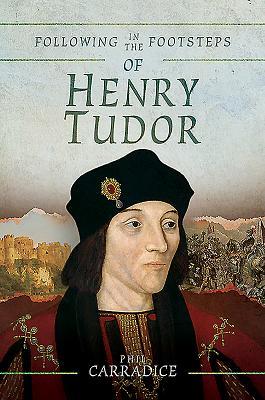
Following in the Footsteps of Henry Tudor by Phil Carradice/The Tudor Crown by Joanna Hickson

Earlier in the week, I reviewed this new biography of Henry VII which focuses on his years in exile and his march to the battlefield at Bosworth in 1485 where he would defeat Richard III and become king of England. A good fictional accompaniment would be Joanna Hickson’s The Tudor Crown, which covers the same period. Although my own sympathies tend to be with Richard III and the House of York, Hickson almost managed to make me like Henry Tudor!

~

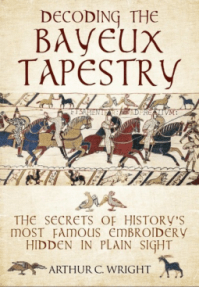
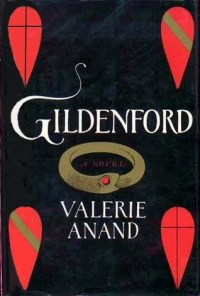
Decoding the Bayeux Tapestry by Arthur C. Wright/Gildenford by Valerie Anand

We know that the Bayeux Tapestry tells the story of the Norman Conquest and Battle of Hastings, but Arthur C. Wright’s book looks at the often-ignored images in the margins of the Tapestry and discusses what they add to our knowledge of the period. A fiction title which goes well with this book is Gildenford by Valerie Anand as it’s set in the years just prior to the Conquest. I have the second book in the series, The Norman Pretender, ready to read soon.

~

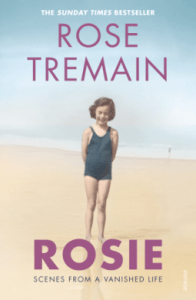
Rosie: Scenes from a Vanished Life by Rose Tremain/The Gustav Sonata by Rose Tremain

Another of my recent non-fiction reads was the author Rose Tremain’s childhood memoir, Rosie. In the book, Tremain talks about her memories of visiting Switzerland at the age of seven and later being sent to ‘finishing school’ there. Her 2016 novel, The Gustav Sonata, is set in Switzerland, which I think makes these two books a good pair.

~

Can you think of any good fiction/non-fiction book pairings?

Following in the Footsteps of Henry Tudor by Phil Carradice

As those of you who have been following my blog for a while will probably know, my favourite period of English history is the Wars of the Roses, the conflict that dominated the second half of the fifteenth century as the rival houses of York and Lancaster fought for control of the throne. The Wars of the Roses came to an end shortly after the Battle of Bosworth in 1485, during which Richard III was killed and the victorious Henry Tudor came to the throne as Henry VII. In Following in the Footsteps of Henry Tudor, Phil Carradice looks at Henry’s life from childhood to death, but with a special focus on his journey to Bosworth Field.

Beginning with Henry’s birth at Pembroke Castle in Wales to Margaret Beaufort and Edmund Tudor, Carradice goes on to give us an overview of the period, explaining how the throne changed hands several times between York and Lancaster and describing Henry’s fourteen years in exile under the protection of the Duke of Brittany. In 1485, with Richard III’s reign becoming increasingly troubled, Henry returned to Wales ready to launch his own claim to the English throne. His long march into England at the head of an army – a journey which took more than two weeks – where he would meet Richard on the battlefield at Bosworth, is the main subject of this book.

Carradice goes into a lot of detail on why the place usually described as the site of Henry’s landing in Wales may be incorrect and attempts to establish exactly where he did begin his journey. He then looks at some of the legends that surround the various stages of the march and whether they are likely to be true or not. He draws on primary sources such as The Ballad of Bosworth Field and the chronicles of Polydore Vergil, but also refers to the work of more recent historians and even includes some excerpts from his own interview with a man who decided to mark the 500th anniversary of Bosworth in 1985 by recreating Henry’s march. The one thing that was missing and would have really added to my enjoyment of the book was a map showing the route taken by Henry and his men; there was plenty of other additional material, such as photographs and illustrations, a bibliography and an index, so it’s disappointing that no map was included.

The account of the Battle of Bosworth itself was particularly well written and interesting, giving a good idea of how both Richard and Henry may have felt as they made their preparations and how each of their fates rested on winning the support of Thomas and William Stanley, who waited until the very last minute to enter the battle. The author makes no secret of the fact that his sympathies are with Henry and the Lancastrians rather than with Richard and the House of York – and he gives his reasons for his bias in the prologue at the beginning of the book. However, he does acknowledge some of Richard’s good points, such as his courage on the battlefield and his skill as a soldier, and in general I thought the book was quite fair and balanced – certainly not as biased as others that I’ve read.

As for accuracy, I noticed a few small errors such as a reference to the white rose of Lancaster and red rose of York (it’s the other way round, of course) but I’m sure these were silly mistakes rather than a lack of knowledge from the author. Overall, I found this an enjoyable and informative read; even though it’s a period I have read about many times before, I felt that I was learning new things from it – and I think it would be accessible for readers with little or no knowledge of the period too.

Following in the Footsteps of Henry Tudor is published by Pen & Sword Books as part of their ‘Following in the Footsteps’ series. The other books in the series explore the stories of Edward II, Oliver Cromwell and The Princes in the Tower. Thanks to Pen & Sword for providing me with a copy of this book for review.