Six Degrees of Separation: From Passages to The Venice Train

It’s the first Saturday of the month, which means it’s time for another Six Degrees of Separation, hosted by Kate of Books are my Favourite and Best. The idea is that Kate chooses a book to use as a starting point and then we have to link it to six other books of our choice to form a chain. A book doesn’t have to be connected to all of the others on the list – only to the one next to it in the chain.
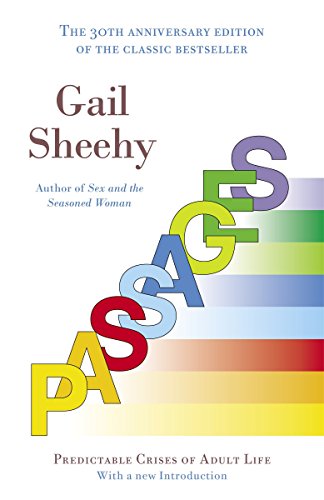
This month we’re starting with Passages by Gail Sheehy, a bestselling self-help title from the 1970s. I haven’t read this book and doubt I ever will, but here’s what it’s about:

At last, this is your story. You’ll recognize yourself, your friends, and your loves. You’ll see how to use each life crisis as an opportunity for creative change – to grow to your full potential. Gail Sheehy’s brilliant road map of adult life shows the inevitable personality and sexual changes we go through in our 20s, 30s, 40s, and beyond. The Trying 20s – The safety of home left behind, we begin trying on life’s uniforms and possible partners in search of the perfect fit. The Catch 30s – illusions shaken, it’s time to make, break, or deepen life commitments. The Forlorn 40s – Dangerous years when the dreams of youth demand reassessment, men and women switch characteristics, sexual panic is common, but the greatest opportunity for self-discovery awaits. The Refreshed (or Resigned) 50s – Best of life for those who let go old roles and find a renewal of purpose.
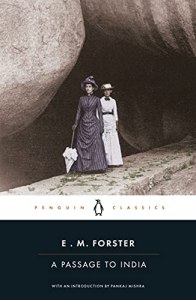
I couldn’t think of any way to link this book to anything else I’ve read so instead I’m linking to a book I haven’t read yet, but do have on my TBR – A Passage to India by EM Forster (1). So far I’ve only read Howards End and A Room With a View by Forster and although I enjoyed them both I still haven’t got round to trying any of his others. His 1924 novel set in India during the time of the British Raj will probably be the next one I read.

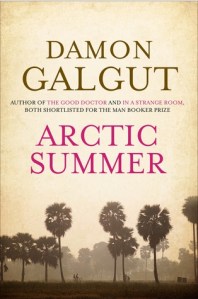
Damon Galgut’s Arctic Summer (2) is a fictional biography of Forster, concentrating on the time in his life when he was working on A Passage to India. I liked Galgut’s writing and the descriptions of India and Egypt, but otherwise found this book boring. I think my lack of familiarity with Forster’s life and work was partly to blame – all the more reason to read more of his books sooner rather than later – but I also felt that Galgut chose to focus too heavily on Forster’s sexuality and romantic relationships, which just didn’t interest me very much.

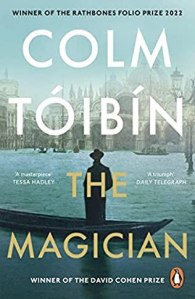
The Magician by Colm Tóibín (3) is another novel about the life of an author, in this case Thomas Mann. Again, my knowledge of Mann and his work is limited (I’ve only read Death in Venice and some of his short stories), but I’d seen a lot of praise for this book so tried it anyway. The book takes us through Mann’s childhood in Germany, his marriage, his experiences during World War II and his later years in Los Angeles and Switzerland. I found it interesting but didn’t connect with it on an emotional level and I prefer the way Tóibín writes about fictional characters.
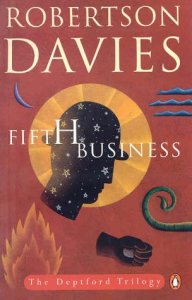
The title of the Toibin novel makes me think of a book featuring a character who becomes a magician: Fifth Business by Robertson Davies (4). This is the first book in Davies’ Deptford Trilogy and although I enjoyed it, I still haven’t read the other two. Fifth Business is narrated by Dunstan Ramsay, who grows up in the small Canadian town of Deptford. Dunstan suffers from guilt after ducking to avoid a snowball with a stone in it which hits a pregnant woman instead and almost everything that happens to him from this point on can be traced back to that incident.

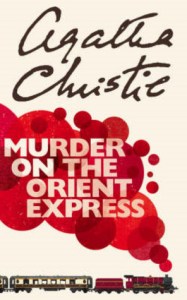
Another book in which snow plays a significant part in setting the plot in motion is Murder on the Orient Express by Agatha Christie (5). Hercule Poirot is a passenger on the Orient Express when the train comes to a stop in a heavy snowfall. When a man is found stabbed to death in his compartment, it seems clear that the murderer must be among the other passengers on the train. I already knew the solution before I started this book, but that didn’t stop me from enjoying it and I can see why it’s one of Christie’s most popular mysteries.

Christie has written several other novels set on trains, but I have chosen to end my chain with one by a different author: The Venice Train by Georges Simenon (6). This is one of Simenon’s standalone thrillers, which he described as romans durs or ‘hard novels’. On a train journey from Venice to Paris, Justin Calmar finds himself left with a briefcase belonging to another passenger and, unable to resist the temptation, breaks the locks and looks inside. The rest of this dark and suspenseful novel explores the psychological effects on Justin caused by the contents of the case.

And that’s my chain for March. My links included: the word ‘passage’, EM Forster, novels about authors, magicians, snow and trains. I like to look back and see whether I’ve made the chain come full circle, but the only connection I can find between the last and first book is the theme of journeys – The Venice Train deals with a physical journey and Passages with a journey through life.

In April we’ll be starting with Bruce Springsteen’s autobiography, Born to Run.

Six Degrees of Separation: From Trust to Fire

It’s the first Saturday of the month, which means it’s time for another Six Degrees of Separation, hosted by Kate of Books are my Favourite and Best. The idea is that Kate chooses a book to use as a starting point and then we have to link it to six other books of our choice to form a chain. A book doesn’t have to be connected to all of the others on the list – only to the one next to it in the chain.
This month we’re starting with Trust by Hernan Diaz. Here’s what it’s about:

Trust by Hernan Diaz is a sweeping, unpredicatable novel about power, wealth and truth, told by four unique, interlocking voices and set against the backdrop of turbulent 1920s New York. Perfect for fans of Succession.

Can one person change the course of history?

A Wall Street tycoon takes a young woman as his wife. Together they rise to the top in an age of excess and speculation. But now a novelist is threatening to reveal the secrets behind their marriage, and this wealthy man’s story – of greed, love and betrayal – is about to slip from his grasp.

Composed of four competing versions of this deliciously deceptive tale, Trust brings us on a quest for truth while confronting the lies that often live buried in the human heart.

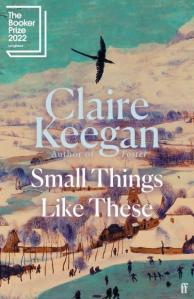
I haven’t read Trust and couldn’t find anything in the blurb to inspire my first link. I do know that it was longlisted for last year’s Booker Prize and I have read two of the other books on that list: Booth by Karen Joy Fowler, and the one I’m going to link to here, which is Small Things Like These by Claire Keegan (1). I read this beautifully written little book which touches on the scandal of Ireland’s Magdalene Laundries for last year’s Novellas in November.

My next book also has the word ‘small’ in the title. A Small Circus by Hans Fallada (2) was originally published in 1931 but I read it in a new edition translated from German to English by Michael Hofmann. It explores political tensions and corruption in a small town in Germany. I had previously read Fallada’s wonderful Alone in Berlin which I absolutely loved, so I was disappointed to find that I didn’t like this one much at all.

Another Fallada novel I did love is Little Man, What Now? (3). It tells the story of a young newly-married couple struggling to survive in the harsh economic climate of 1930s Germany. I found the two protagonists completely endearing and their story both funny and moving. This book is also now available in a Michael Hofmann translation, but I was very happy with the edition I read, with an earlier translation by Susan Bennett.

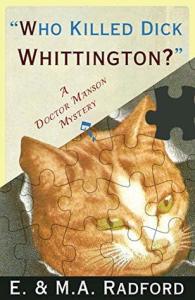
I think I have used novels with questions in the title in a previous Six Degrees post, but I’m going to do it again and link to Who Killed Dick Whittington? by E and MA Radford (4). Published by Dean Street Press, this is one of a series of detective novels written by a husband and wife team. This book, first published in 1947, involves a murder during a production of Dick Whittington where suspicion falls on the actor playing the Cat. A good choice if you like mysteries with theatrical settings.

Another book with a ‘cat’ that isn’t a real cat is The Ashes of London by Andrew Taylor (5). This is the first in a series of excellent historical mysteries set during and just after the Great Fire of London in 1666. The main characters are James Marwood and Cat (Catherine) Lovett. They are great books and I have just finished reading the newest one, The Shadows of London, which is published in the UK in March.

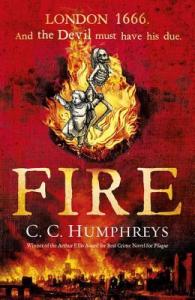
Fire by CC Humphreys (6) is also about the Great Fire of London. I was afraid at first that it might be too similar to the Andrew Taylor book, but I found the two to be quite different. This novel is the second in a series of entertaining historical thrillers following the adventures of reformed highwayman Captain Coke and ‘thief-taker’ Pitman. I also enjoyed the first book, Plague.

~

And that’s my chain for February! My links included: The Booker Prize longlist, the word ‘small’, Hans Fallada books, questions in titles, cats that aren’t real cats and the Great Fire of London. Have I brought the chain full circle? Well, both my first and last books have one-word titles, so I’m happy with that!

In March, we’ll be starting with Passages by Gail Sheehy, a self-help title from the 1970s.

Six Degrees of Separation: From Beach Read to A Hero of Our Time

It’s the first Saturday of the month – and of the year – which means it’s time for another Six Degrees of Separation, hosted by Kate of Books are my Favourite and Best. The idea is that Kate chooses a book to use as a starting point and then we have to link it to six other books of our choice to form a chain. A book doesn’t have to be connected to all of the others on the list – only to the one next to it in the chain.

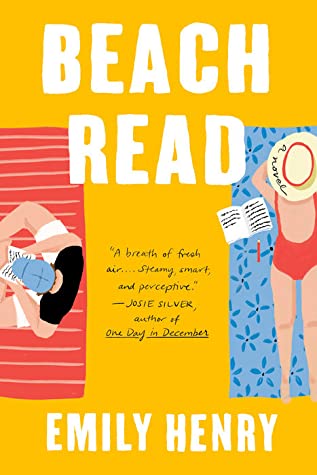
This month we’re starting with Beach Read by Emily Henry. It’s not a book I’ve read or plan to read, but here’s what it’s about:

Augustus Everett is an acclaimed author of literary fiction. January Andrews writes bestselling romance. When she pens a happily ever after, he kills off his entire cast.

They’re polar opposites.

In fact, the only thing they have in common is that for the next three months, they’re living in neighboring beach houses, broke, and bogged down with writer’s block.

Until, one hazy evening, one thing leads to another and they strike a deal designed to force them out of their creative ruts: Augustus will spend the summer writing something happy, and January will pen the next Great American Novel. She’ll take him on field trips worthy of any rom-com montage, and he’ll take her to interview surviving members of a backwoods death cult (obviously). Everyone will finish a book and no one will fall in love. Really.

~

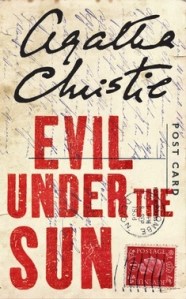
My first link this month is to Evil Under the Sun by Agatha Christie (1), a novel set on a beach. Published in 1941, this is a Poirot mystery which takes place on a private island belonging to the Jolly Roger Hotel. When a woman is found murdered on the island, almost all of the other guests become suspects – but luckily Hercule Poirot is also staying at the hotel and is able to begin investigating immediately!

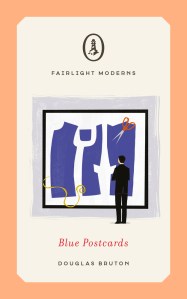
My copy of Evil Under the Sun has a postcard on the front cover, which reminds me of a book I read just a few months ago: Blue Postcards by Douglas Bruton (2). Set in Paris and weaving together three different narratives, this is a very unusual novella. It’s written in the form of five hundred numbered paragraphs – and each one contains the word ‘blue’! Very cleverly done, but not really a book for me.

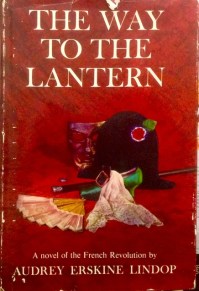
Paris is always an interesting and atmospheric setting. One of my favourite books set in Paris during the time of the French Revolution is The Way to the Lantern by Audrey Erskine Lindop (3). Audrey Erskine Lindop wrote more than a dozen novels between 1954 and 1978 and sadly all of them are now out of print, despite being successful at the time and, in some cases, adapted into films. I keep hoping her books will be picked up again by a publisher, but no luck yet!

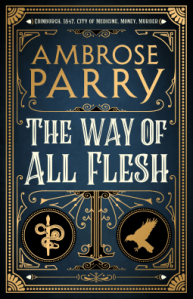
My next link is to another book with a title beginning with the words ‘the way’: The Way of All Flesh by Ambrose Parry (4). The name Ambrose Parry is actually a pseudonym for the husband and wife team Chris Brookmyre and Marisa Haetzman, who worked together on this historical mystery set in the medical world of 19th century Edinburgh. There are currently three books in the series; I’ve enjoyed all of them and am hoping for a fourth.

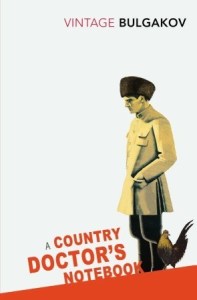
I’ve read lots of novels with a medical theme, but the first one that comes to mind is The Country Doctor’s Notebook by Mikhail Bulgakov (5), which I read in an English translation by Michael Glenny. This is a collection of semi-autobiographical short stories based on Bulgakov’s own experiences of working at a small village hospital between 1916 and 1918. I loved this book, although it’s completely different from The Master and Margarita, the only other Bulgakov novel I’ve read so far (and also loved).

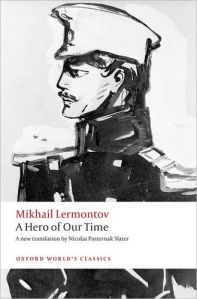
Another author who shares a name with Mikhail Bulgakov is Mikhail Lermontov, who wrote A Hero of Our Time (6). This entertaining Russian classic was published in 1840 and consists of five stories which combine to produce a portrait of a young army officer, the flawed but fascinating Grigory Pechorin. I really enjoyed it and can recommend Nicolas Pasternak Slater’s translation.

~

And that’s my first chain of the year! My links included: beaches, postcards, Paris, ‘the way’, doctors and the name Mikhail.

In February we’ll be starting with Trust by Hernan Diaz.

Six Degrees of Separation: From The Snow Child to Murder Under the Christmas Tree

It’s the first Saturday of the month which means it’s time for another Six Degrees of Separation, hosted by Kate of Books are my Favourite and Best. The idea is that Kate chooses a book to use as a starting point and then we have to link it to six other books of our choice to form a chain. A book doesn’t have to be connected to all of the others on the list – only to the one next to it in the chain.

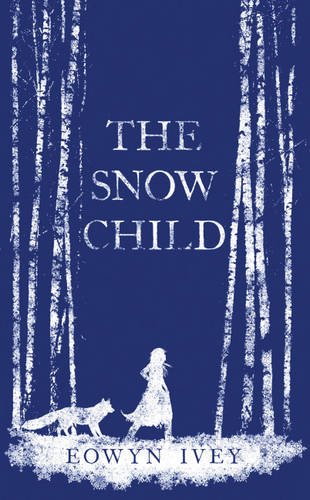
This month we’re starting with The Snow Child by Eowyn Ivey. I read this when it was first published and found it a beautiful, magical story – a perfect winter read.

A bewitching tale of heartbreak and hope set in 1920s Alaska, Eowyn Ivey’s THE SNOW CHILD was a top ten bestseller in hardback and paperback, and went on to be a Finalist for the Pulitzer Prize.

Alaska, the 1920s. Jack and Mabel have staked everything on a fresh start in a remote homestead, but the wilderness is a stark place, and Mabel is haunted by the baby she lost many years before. When a little girl appears mysteriously on their land, each is filled with wonder, but also foreboding: is she what she seems, and can they find room in their hearts for her?

Written with the clarity and vividness of the Russian fairy tale from which it takes its inspiration, The Snow Child is an instant classic.

~

Despite having read the first book, which often makes things easier, I struggled to get started this month. I tried linking The Snow Child to other books based on Russian fairy tales, to other books set in winter and to books with snow in the title, but in each case I only got two or three links along the chain before getting stuck. Eventually, I decided to start with a link to another book with ‘child’ in the title: A Word Child by Iris Murdoch (1). I really enjoyed this story of Hilary Burde, a London office worker who thinks he has arranged everything in his life just as he wants it, until a face from the past arrives and throws everything into disarray.

The Hilary in A Word Child is a man; a female character who shares the same name is Hilary Craven in Destination Unknown by Agatha Christie (2). This is one of Christie’s standalone thrillers and is set in Morocco, first in Casablanca and Fez and then in the High Atlas Mountains. Hilary finds herself agreeing to impersonate a dying woman so that she can go in search of the woman’s husband, a scientist who has disappeared without trace. I found this book entertaining but too far fetched and bizarre to be a favourite Christie.

The Country of Others by Leïla Slimani (3) is also set in Morocco. The book was written in French and is available in an English translation by Sam Taylor. It tells the story of Mathilde, a young woman from France who marries a Moroccan soldier at the end of WWII and goes to live with him in Meknes. The book describes how she struggles to settle into her new home and tries to find a place for herself in this ‘country of others’.

I seem to have read a lot of books translated into English from French – probably more than from any other language. One of these is The Princess of Cleves, or La Princesse de Clèves to give it its French title. This classic novel was first published anonymously (and translated anonymously too) in 1678, but was later believed to be the work of Madame de Lafayette. It’s set at the royal court of Henri II and is said to be one of the earliest psychological novels.

Thomas Hardy’s Under the Greenwood Tree (5) was also originally published anonymously. Set in the small village of Mellstock in Wessex, it follows the romance between Dick Dewy and Fancy Day and is a beautiful portrayal of rural life as one season turns into the next. This is an unusually cheerful, uplifting book for Hardy; I often recommend it to people who find him too bleak and depressing!

From under one tree to under another! I think I’ve used Murder Under the Christmas Tree (6) in a previous Six Degrees chain, but it’s too good a link not to use again here. Edited by Cecily Gayford, this is a collection of Christmas-themed short stories from classic and modern crime authors, ranging from Dorothy L. Sayers and John Dickson Carr to Val McDermid and Ian Rankin.

~

And that’s my chain for this month! My links have included: ‘child’ titles, the name Hilary, Morocco, French translations, books published anonymously and ‘under the tree’.

In January we’ll be starting with Beach Read by Emily Henry. Will you join us?

Six Degrees of Separation: From The Naked Chef to Hotel on the Corner of Bitter and Sweet

It’s the first Saturday of the month which means it’s time for another Six Degrees of Separation, hosted by Kate of Books are my Favourite and Best. The idea is that Kate chooses a book to use as a starting point and then we have to link it to six other books of our choice to form a chain. A book doesn’t have to be connected to all of the others on the list – only to the one next to it in the chain.

This month, we’re starting with The Naked Chef by Jamie Oliver.

The Naked Chef teaches you how to make beautiful dishes from scratch, whether you’re cooking for guests or simply enjoying good food with your family. Host a dinner party your friends won’t forget with light Vegetable Tempura, followed by melt-in-the-mouth spiced Slow-Cooked Lamb Shank. Or why not try the Chilli, Tomato, Oregano and Pancetta Pizza; perfect for getting the family stuck in.

This book has something for everyone – from those who want great food but want to keep it simple, to those who work for a living and don’t have time to spend all evening cooking. The Naked Chef is all about giving people confidence and getting them to feel at ease in the kitchen, with the help of Jamie Oliver, even if they have never tried cooking before!

I don’t own this book and am not likely to, particularly as I’m a vegetarian (I know he has written another one, Veg), but I thought it was an interesting starting point for this month’s chain.

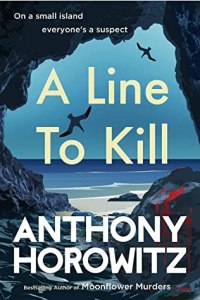
When I saw that we were going to be starting with the Jamie Oliver book, I thought immediately of a novel I read just this summer that features a celebrity chef: A Line to Kill by Anthony Horowitz (1), the third in the Hawthorne and Horowitz mystery series, in which the author uses himself as one of the protagonists. This book revolves around a murder during a literary festival on the island of Alderney and the chef character – Marc Bellamy – is one of the suspects. Horowitz is attending the festival with the detective Daniel Hawthorne and the two reluctantly team up again to investigate the murder.

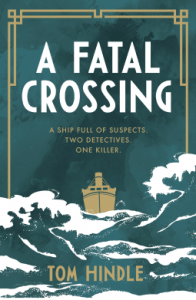
Daniel Hawthorne and Anthony Horowitz have had a difficult and uncomfortable working relationship throughout the series. The relationship between the narrator and the detective in A Fatal Crossing by Tom Hindle (2) – a murder mystery set on board a cruise ship in the 1920s – struck me as very similar, with the detective, James Temple, being a bad-tempered and hostile man who resents the attempts of the bumbling ship’s officer Timothy Birch to help him solve the crime. This was Tom Hindle’s first novel and I really enjoyed it; I’m looking forward to reading his new one, The Murder Game, which is out in February.

The Woman in Cabin 10 by Ruth Ware (3) is another crime novel set on a ship. A journalist, Lo Blacklock, goes on a cruise around the Norwegian fjords to see the Northern Lights and is convinced that someone has fallen overboard when she hears a scream and a splash from the next cabin, Cabin 10. When the cabin door is opened the room is empty with no sign that anyone had ever been staying there – yet Lo had met the woman in Cabin 10 earlier that very evening. I found this book quite enjoyable, but too drawn out towards the end.

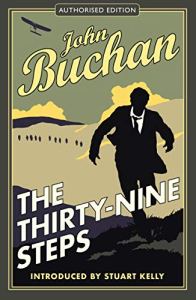
There are lots of books with numbers in their titles, but the one I’m linking to here is John Buchan’s The Thirty-Nine Steps (4). In this classic adventure/espionage novel, Richard Hannay goes on the run across the Scottish countryside after becoming mixed up in a plot to assassinate a Greek politician. I didn’t love this book – I thought it was entertaining at the beginning, but eventually became too repetitive as Hannay makes one last-minute escape after another. I do still want to read more of Buchan’s novels but I’m not sure whether I’ll continue with the others in the Hannay series or try something different.

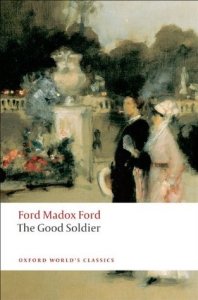
The Thirty-Nine Steps was published in 1915. Another book I’ve read from that same year is The Good Soldier by Ford Madox Ford (5). Despite being published during the war and having the word soldier in the title, this is not actually a war novel, which I remember finding surprising! It’s the story of two couples, one British and one American, who meet at a German spa town in 1904. A clever, interesting novel with an intriguingly unreliable narrator, but not a book that I particularly enjoyed.

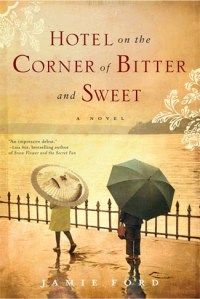
The name Ford leads me to my final book: Jamie Ford’s Hotel on the Corner of Bitter and Sweet (6). This novel is set in Seattle and follows the story of a Chinese-American boy whose Japanese-American friend, Keiko, is sent to an internment camp with her family during World War II. I found the story both heartbreaking and heartwarming, without becoming overly sentimental. Also, the words ‘bitter’ and ‘sweet’ are tastes, which provides a link back to The Naked Chef at the beginning of this month’s chain. Jamie Ford and Jamie Oliver both share a name as well!

~

And that’s my chain for this month! My links have included: celebrity chefs, unlikely detective duos, mysteries set at sea, numbers in titles, the year 1915 and the name Ford.

In December we’ll be starting with The Snow Child by Eowyn Ivey.

Six Degrees of Separation: From Notes on a Scandal to The Surgeon’s Mate

It’s the first Saturday of the month which means it’s time for another Six Degrees of Separation, hosted by Kate of Books are my Favourite and Best. The idea is that Kate chooses a book to use as a starting point and then we have to link it to six other books of our choice to form a chain. A book doesn’t have to be connected to all of the others on the list – only to the one next to it in the chain.

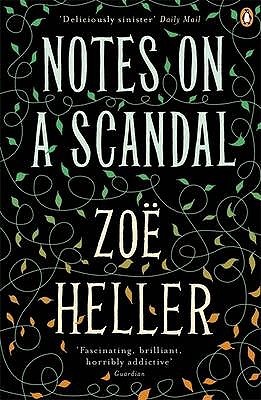
This month we’re starting with Notes on a Scandal by Zoë Heller. Here’s what it’s about:

Schoolteacher Barbara Covett has led a solitary life until Sheba Hart, the new art teacher at St. George’s, befriends her. But even as their relationship develops, so too does another: Sheba has begun an illicit affair with an underage male student. When the scandal turns into a media circus, Barbara decides to write an account in her friend’s defense—and ends up revealing not only Sheba’s secrets, but also her own.

I haven’t read Notes on a Scandal and it doesn’t really appeal, so I’ve been looking at some reviews to try to find inspiration for that all-important first link. The only thing that struck me is that Sheba’s full name is Bathsheba Hart – and I immediately thought of another fictional character with that name, Bathsheba Everdene in Far from the Madding Crowd by Thomas Hardy (1). It’s not one of my favourite Hardy novels but I did enjoy it. It’s less tragic than some of his others and has a wonderful hero in Gabriel Oak.

My next link is to another novel with the word ‘far’ in the title. The Booker Prize-nominated Far to Go by Alison Pick (2) is the story of a Jewish family, the Bauers, living in the former Czechoslovakia in the 1930s. With the German annexation of the Sudetenland in 1938, the Bauers send their six-year-old son to Britain on the Kindertransport. I found this an interesting and moving novel, particularly as I had never read about the Kindertransport in fiction before.

Another book with a Czech setting is Melmoth by Sarah Perry (3). This dark and atmospheric Gothic novel set in modern-day Prague explores the story of Melmoth the Witness (an imaginary legend which Perry has loosely based on the Charles Maturin classic Melmoth the Wanderer). Through a sequence of stories-within-stories, we see how the Melmoth legend has touched the lives of people throughout history. I enjoyed it, but preferred Perry’s previous novel, The Essex Serpent.

The protagonist in Melmoth is called Helen, which is also my name, as well as the name of the heroine of Anne Brontë’s The Tenant of Wildfell Hall (4). The main part of the story unfolds through the diary of Helen Huntingdon, the ‘tenant’ of the title, who describes how she tries to escape from her marriage to an abusive alcoholic husband. Critics at the time considered the novel shocking and ‘coarse’, but I loved it and I’m sorry that Anne Brontë never seems to get as much attention as her sisters, Charlotte and Emily!

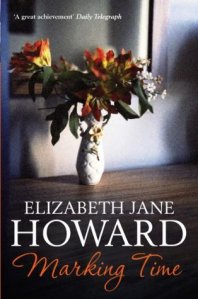
There are a lot of books that are written completely or partially in the form of a diary, but the one I’m going to link to here is Marking Time by Elizabeth Jane Howard (5). Set in the early years of World War II, this is the second book in Howard’s series, the Cazalet Chronicles. The story is told from the perspectives of several members of the Cazalet family, including the teenage Clary, who records her thoughts and observations in her diary. I enjoyed this and really need to continue with the third book soon; I just hope I can remember enough of the first two books to be able to pick up the threads of the story again.

Another series I’m in the middle of is Patrick O’Brian’s Aubrey and Maturin series. I never thought I would like these books as they’re set mainly at sea and I usually struggle with anything nautical, but I’ve found that it doesn’t matter too much if I don’t understand all the naval terms and sea battles; the quality of the writing and the central relationship between the main characters, Jack Aubrey and Stephen Maturin, make up for that! The Surgeon’s Mate (6) was the last one I read and is the seventh book. With a total of twenty-one books in the series, I still have a long way to go!

~

And that’s my chain for this month. My links have included: the name Bathsheba, the word ‘far’, Prague, fictional Helens, diaries and series-in-progress.

In November we’ll be starting with The Naked Chef by Jamie Oliver.

Six Degrees of Separation: From Elizabeth and Her German Garden to Stormy Petrel

It’s the first Saturday of the month which means it’s time for another Six Degrees of Separation, hosted by Kate of Books are my Favourite and Best. The idea is that Kate chooses a book to use as a starting point and then we have to link it to six other books of our choice to form a chain. A book doesn’t have to be connected to all of the others on the list – only to the one next to it in the chain.

This month we’re starting with the book that finished last month’s chain! This will be different for everyone, but in my case it’s Elizabeth and Her German Garden by Elizabeth von Arnim.

From my review:

Published in 1898, the book has an autobiographical feel and is written in the form of a diary in which the narrator, Elizabeth, takes us through a year in her life, describing her love for the garden of her home in northern Germany and the changes she sees as the seasons go by.

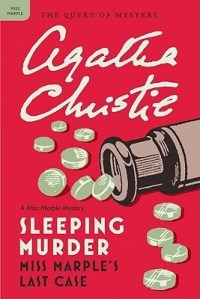
There were so many different options I could have chosen for my first link – diaries, Germany, the name Elizabeth – but while I was trying to decide I came across this quote from Sleeping Murder by Agatha Christie (1):

Gardening was her passion. Her favourite literature was bulb catalogues and her conversation dealt with primulas, bulbs, flowering shrubs and alpine novelties.

The character being described here is Dolly Bantry. It sounds as though she would get along well with Elizabeth! Dolly Bantry appears in several of Christie’s other Miss Marple novels, including The Body in the Library and The Mirror Crack’d From Side to Side, but only has a small part to play in Sleeping Murder, which is one of my favourite Marples. I love the eerie atmosphere Christie creates in this book.

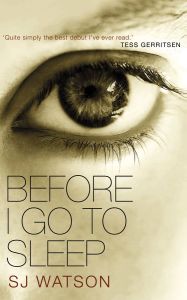
Next, I’m linking to another book with a sleepy title: Before I Go to Sleep by SJ Watson (2), a psychological thriller in which a woman wakes every morning to find she has lost her memory and doesn’t recognise the man who says he is her husband. This wasn’t really my usual sort of read but I found it completely gripping, as well as very unsettling – poor Christine was in such a frightening and vulnerable position.

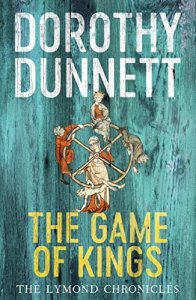
Near the beginning of The Game of Kings by Dorothy Dunnett (3) a character is suffering from amnesia, but is he genuine or is he pretending? As with so many things in Dunnett’s Lymond Chronicles, we can’t be sure. In fact, we aren’t even told the character’s name in this scene and have to work out for ourselves who he is. Set in 16th century Scotland, this is one of my favourite books (and series); it can be challenging for a first-time reader, but so rewarding when you reach a certain point where everything – sort of – begins to make sense!

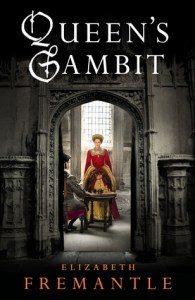
Chess is often described as ‘the game of kings’ and all six of the Lymond Chronicles have titles that refer to chess pieces or moves. Another book with a chess-related title is Queen’s Gambit by Elizabeth Fremantle (4) – not to be confused with the recent Netflix series, which is something completely different! This Queen’s Gambit is the story of Katherine Parr, Henry VIII’s sixth and final wife. Katherine may not have had such a dramatic life as some of the other queens, but I find her the most likeable and I enjoyed this book.

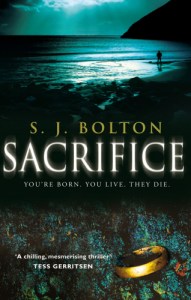
Elizabeth Fremantle’s last few books have been published under the name E.C. Fremantle. An author who went from using her initials to using her full name is SJ Bolton, now publishing as Sharon Bolton. I love her books, particularly her Lacey Flint series and her early standalones, which have stronger Gothic elements than her later ones. The first of these I read was Sacrifice (5), a dark and mysterious murder mystery set in Shetland. I really enjoyed the way Bolton incorporated Norse myths and legends into the plot.

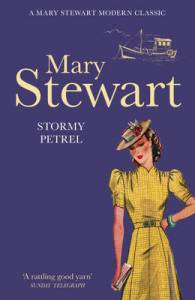
From Shetland to another Scottish island for my final link. Stormy Petrel by Mary Stewart (6) is set in the Hebrides on the island of Moila, which I believe is fictional but so vividly described I’m sure she must have based it on a real place. Published in 1991, this was one of Stewart’s final novels and like her other later books (Rose Cottage and Thornyhold) it has a gentler feel than her earlier, more suspenseful ones.

~

And that’s my chain for this month! My links have included gardens, sleeping, amnesia, chess-related titles, authors using their initials and Scottish islands. In October we’ll be starting with Notes on a Scandal by Zoë Heller.