Classics Club List #3

classicsclub I recently completed my second Classics Club list (which I wrote about last week) and am now ready to post a new one. For any of you who are not familiar with the Classics Club, the idea is to make a list of at least fifty classics and read them within a five year time period. In reality, both my first and second lists took longer than that, but five years is the aim!

As I’ve already included a lot of the better known classics on my first two lists, I’ve had to search slightly harder for books to put on this one and a lot of these are lesser known titles by classic authors. You may be questioning whether some of them are really classics, but the rules of the Classics Club allow us to define classics in any way we choose, as long as the book is at least twenty-five years old. I’ve mostly avoided re-reads apart from the two Shakespeare plays – I chose those two because I have some modern retellings on the TBR and thought it would be interesting to re-read the original play first.

Here’s my list of 50 books with an estimated finish date of 16th January 2031:

1. Dandelion Wine by Ray Bradbury
2. The Baron in the Trees by Italo Calvino
3. Shadows on the Rock by Willa Cather
4. The Evil Genius by Wilkie Collins
5. Little Dorrit by Charles Dickens
6. The Old Curiosity Shop by Charles Dickens
7. The Women’s War by Alexandre Dumas
8. Iron Gustav by Hans Fallada
9. The Dancing Bear by Frances Faviell
10. A Harp in Lowndes Square by Rachel Ferguson
11. Mary Barton by Elizabeth Gaskell
12. Brighton Rock by Graham Greene
13. The Hand of Ethelberta by Thomas Hardy
14. The Go-Between by L.P. Hartley
15. The Scarlet Letter by Nathaniel Hawthorne
16. The Talented Mr Ripley by Patricia Highsmith
17. The Bamboo Blonde by Dorothy B. Hughes
18. The Sundial by Shirley Jackson
19. Day of the Arrow by Philip Loraine
20. The Moon and Sixpence by W Somerset Maugham
21. The Blue Castle by LM Montgomery
22. The Black Prince by Iris Murdoch
23. Lord Tony’s Wife by Baroness Orczy
24. Down and Out in Paris and London by George Orwell
25. No Fond Return of Love by Barbara Pym
26. The Persian Boy by Mary Renault
27. The Circular Staircase by Mary Roberts Rinehart
28. The Marquis of Carabas by Rafael Sabatini
29. The Hearth and Eagle by Anya Seton
30. Othello by William Shakespeare
31. King Lear by William Shakespeare
32. The Fortnight in September by R.C. Sherriff
33. A Town Like Alice by Nevil Shute
34. The Prime of Miss Jean Brodie by Muriel Spark
35. The Grapes of Wrath by John Steinbeck
36. Travels with a Donkey in the Cevennes by Robert Louis Stevenson
37. My Brother Michael by Mary Stewart
38. Judith by Noel Streatfeild
39. The Lantern Bearers by Rosemary Sutcliff
40. Mrs Palfrey at the Claremont by Elizabeth Taylor
41. Brat Farrar by Josephine Tey
42. The Duke’s Children by Anthony Trollope
43. The Way We Live Now by Anthony Trollope
44. Lolly Willowes by Sylvia Townsend Warner
45. The War of the Worlds by HG Wells
46. The Rose and the Yew Tree by Mary Westmacott
47. A Woman of No Importance by Oscar Wilde
48. The Kraken Wakes by John Wyndham
49. Trouble With Lichen by John Wyndham
50. La Curée by Émile Zola

I’m looking forward to getting started with this, but I do have a question for those of you who are Classics Club members. I’m sure I’ll want to read other classics that I haven’t included here, so what do you usually do in that situation? Do you replace one of the titles on your list or do you just read it in addition to the listed titles? With my previous lists, I’ve swapped out a few books but have mainly just read lots of extra ones that weren’t listed. How much swapping do the rest of you tend to do? Maybe that’s why I never seem to finish within five years!

Have you read any of these books? What should I read first?
Completing my second Classics Club list!

classicsclub Some good news to start the new year – I’ve completed my Classics Club list at last! Yesterday I reviewed my 50th and final book, The Silver Branch by Rosemary Sutcliff, and now it’s time to think about posting a new list. Before I do that, though, I want to look back at the list I’ve just finished.

The Classics Club was launched in 2012 with the aim of uniting people who like to read and blog about classic literature. The idea is to make a list of fifty or more classics you want to read within a five year time period. I finished my first list of 100 books in October 2017 – you can see the complete list, with links to my reviews, here. I then started again with a second list (just 50 books this time) and for some reason, even though it was shorter, it has ended up taking a lot longer to complete than the first.

Here are the books I read for my second Classics Club list:

1. Death Comes for the Archbishop by Willa Cather
2. Jezebel’s Daughter by Wilkie Collins
3. The New Magdalen by Wilkie Collins
4. Dombey and Son by Charles Dickens
5. Nicholas Nickleby by Charles Dickens
6. La Dame aux Camelias by Alexandre Dumas fils
7. Castle Dor by Daphne du Maurier
8. Don’t Look Now and Other Stories by Daphne du Maurier
9. Farewell the Tranquil Mind by RF Delderfield
10. Moonfleet by John Meade Falkner
11. Nightmare in Berlin by Hans Fallada
12. Tales from the Underworld by Hans Fallada
13. Black Narcissus by Rumer Godden
14. The End of the Affair by Graham Greene
15. The Black Lake by Hella S. Haasse
16. In a Dark Wood Wandering by Hella S Haasse
17. Desperate Remedies by Thomas Hardy
18. A Laodicean by Thomas Hardy
19. The Trumpet-Major by Thomas Hardy
20. Two on a Tower by Thomas Hardy
21. Strangers on a Train by Patricia Highsmith
22. The Life and Opinions of the Tomcat Murr by ETA Hoffmann
23. The Crowded Street by Winifred Holtby
24. Goodbye Mr Chips by James Hilton
25. Random Harvest by James Hilton
26. Rogue Male by Geoffrey Household
27. In a Lonely Place by Dorothy B Hughes
28. Ride the Pink Horse by Dorothy B Hughes
29. The Europeans by Henry James
30. A Pin to See the Peepshow by F Tennyson Jesse
31. Dubliners by James Joyce
32. How Green Was My Valley by Richard Llewellyn
33. That Lady by Kate O’Brien
34. The Elusive Pimpernel by Baroness Orczy
35. I Will Repay by Baroness Orczy
36. The Scottish Chiefs by Jane Porter
37. The Manuscript found in Saragossa by Jan Potocki
38. Fire from Heaven by Mary Renault
39. Bardelys the Magnificent by Rafael Sabatini
40. St Martin’s Summer by Rafael Sabatini
41. Pied Piper by Nevil Shute
42. The Black Arrow by Robert Louis Stevenson
43. The Silver Branch by Rosemary Sutcliff
44. A Game of Hide and Seek by Elizabeth Taylor
45. Wild Strawberries by Angela Thirkell
46. High Rising by Angela Thirkell
47. The Prime Minister by Anthony Trollope
48. The Fountain Overflows by Rebecca West
49. The Chrysalids by John Wyndham
50. The Fortune of the Rougons by Émile Zola

~

I enjoyed nearly all of these books, but if I had to pick some favourites they would be Random Harvest, In a Lonely Place, How Green Was My Valley and In a Dark Wood Wandering.

I hope to post my new list later in the month!

Celebrating 10 years of The Classics Club!

It’s The Classic Club Blog’s 10th birthday – or it was earlier this week – and to celebrate they have put together a questionnaire for members to answer. I love being part of the club (you can find out more about it and see my current list of classic reads here), so I was happy to attempt to answer the questions. There are ten, but I’ve chosen to focus on seven of them.

1. When did you join the Classics Club?

My post announcing that I was joining the Classics Club appeared in March 2012. This confused me because obviously that would have meant the 10th birthday was in March of this year…then I remembered that the club was originally hosted on the personal blog of the founding member, Jillian. Obviously we are celebrating the birthday of the Classics Club Blog this month, rather than the beginning of the club itself!

It’s interesting looking back at the list of planned reads I posted when I joined the club. There were 50 books on the list (which I later expanded to 100), and quite a few (10 in fact) that I never actually read but replaced with other titles. I’ve now moved onto a second list of 50 books but still haven’t included any of those unread books on it. Maybe one day!

2. What is the best classic book you’ve read for the club so far? Why?

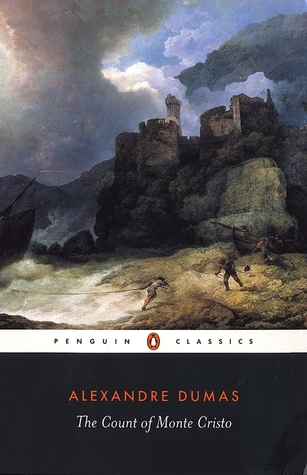
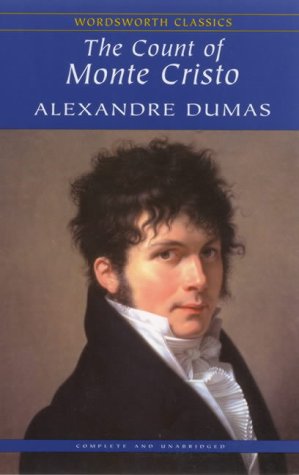
There are many great books I’ve read for the Classics Club – too many to name them all here – but my favourite is one that was actually a re-read for me: The Count of Monte Cristo by Alexandre Dumas. I can’t describe how much I love this book in just a few words, so will direct you to my review if you want to know more. Despite the length (over 1000 pages), it’s such an exciting story that every time I read it I wish it would never end – and Edmond Dantès is one of my favourite characters in all of literature!

3. What is the first classic you ever read?

This is a difficult question for me to answer because I honestly can’t remember! As a child, I read a lot of children’s classics: The Secret Garden, The Hobbit, Black Beauty, the Narnia books, The Wind in the Willows, Watership Down, and many others. I also had a lovely illustrated edition of A Christmas Carol. I think Wuthering Heights was probably my first ‘adult’ classic, followed by things like To Kill a Mockingbird and Pride and Prejudice.

4. What is the most challenging one you’ve ever read, or tried to read?

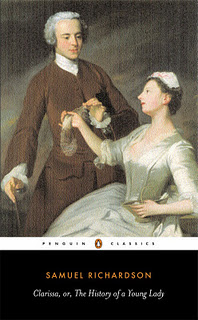
That’s another difficult one to answer because books can be challenging in different ways. I’m going to highlight one that I did manage to finish, but struggled with at times – Samuel Richardson’s 1500+ page novel, Clarissa. It wasn’t necessarily the length of the book that bothered me (The Count of Monte Cristo is almost as long) and I didn’t really have a problem with the 18th century writing style either. The thing that made it challenging for me was the pace and the repetitiveness – the way hundreds of pages could go by without the plot moving forward at all. It took me a whole year to read it, first as part of a group read then on my own after I abandoned the group schedule, but when I reached the end I felt a real sense of accomplishment.

5. Favourite movie adaptation of a classic? Least favourite?

This is an easier question to answer! My favourite would have to be the 1940 adaptation of Rebecca with Joan Fontaine and Laurence Olivier. I love the du Maurier novel it’s based on and it’s one of the few examples I can think of where the film is as good as the book. I would find it hard to single out a least favourite, but I tend not to like adaptations that diverge too much from the original novel (assuming that I’ve read the book first, that is). It annoys me when whole chunks of plot are left out or the ending has been completely changed or a character I loved in the book doesn’t appear at all in the film.

6. Has there been a classic title you expected to dislike and ended up loving? Respecting? Appreciating?

Yes, lots! I have often been – and continue to be – surprised by classics! For example, I’ve never considered myself to be much of a science fiction fan, but gave John Wyndham’s The Midwich Cuckoos a try back in 2013 and loved it. I’ve since enjoyed two of his other books and am currently reading another, The Chrysalids. I didn’t expect to like John Steinbeck or W Somerset Maugham either, but ended up loving East of Eden and The Painted Veil, respectively.

7. Classic/s you are DEFINITELY GOING TO MAKE HAPPEN next year?

My answer to that is everything on my current Classics Club list that I don’t manage to read this year! I had set myself a target of finishing the list by this November, but with twenty out of the fifty books still to read I don’t think that’s at all likely.

~

Are you a member of The Classics Club? If so, have you completed this questionnaire? I would love to read your answers.

The Classics Spin Number is…

4!

The result of the latest Classics Spin has been revealed today – and I’m happy with the book I’ll be reading!

The idea of the Spin was to list twenty books from my Classics Club list, number them 1 to 20, and the number announced by the club today (Friday) represents the book I have to read before 31st December 2017. The number that has been selected is 4, which means the book I need to read is…

Death Comes for the Archbishop by Willa Cather

I’m pleased with this as I’ve only read two books by Willa Cather so far and have been wanting to read more.

~

Did you take part in the Classics Spin? What will you be reading?

Classics Club List #2 – and another Classics Spin!

I mentioned last week that I had finished my current Classics Club list and would probably be posting a second one…and here it is! I have decided to list 50 books this time rather than 100 as that will give me more flexibility and more time to read other books as well. We have five years to complete our lists, so as I’m starting from today that means my finish date will be 14th November 2022 – how far away that seems! I’ve included a mixture of books that I’m hoping will be fun to read, books that sound much more challenging and books that I know very little about but are by authors I’ve wanted to try for a while.

~

1. The Black Sheep by Honoré de Balzac
2. The Long Ships by Frans G Bengtsson
3. The White Guard by Mikhail Bulgakov
4. Death Comes for the Archbishop by Willa Cather
5. Jezebel’s Daughter by Wilkie Collins
6. Dombey and Son by Charles Dickens
7. Nicholas Nickleby by Charles Dickens
8. The Brothers Karamazov by Fyodor Dostoevsky
9. La Reine Margot by Alexandre Dumas
10. Chicot the Jester by Alexandre Dumas
11. Castle Dor by Daphne du Maurier
12. Don’t Look Now and Other Stories by Daphne du Maurier
13. Daniel Deronda by George Eliot
14. Moonfleet by John Meade Falkner
15. The Brontes Went to Woolworths by Rachel Ferguson
16. The Fifth Queen by Ford Madox Ford
17. A Passage to India by E.M. Forster
18. Black Narcissus by Rumer Godden
19. Claudius the God by Robert Graves
20. Desperate Remedies by Thomas Hardy
21. Two on a Tower by Thomas Hardy
22. In a Dark Wood Wandering by Hella S Haasse
23. The Crowded Street by Winifred Holtby
24. Goodbye Mr Chips by James Hilton
25. The Galliard by Margaret Irwin
26. The Europeans by Henry James
27. How Green Was My Valley by Richard Llewellyn
28. The Betrothed by Alessandro Manzoni
29. Of Human Bondage by W Somerset Maugham
30. The Corn King and the Spring Queen by Naomi Mitchison
31. That Lady by Kate O’Brien
32. The World is Not Enough by Zoe Oldenbourg
33. I Will Repay by Baroness Emmuska Orczy
34. The Scottish Chiefs by Jane Porter
35. Jane and Prudence by Barbara Pym
36. The Cloister and the Hearth by Charles Reade
37. Fire from Heaven by Mary Renault
38. Bardelys the Magnificent by Rafael Sabatini
39. Sandokan: The Tigers of Mompracem by Emilio Salgari
40. The Pirate by Sir Walter Scott
41. The Turquoise by Anya Seton
42. The Grapes of Wrath by John Steinbeck
43. The Black Arrow by Robert Louis Stevenson
44. A Game of Hide and Seek by Elizabeth Taylor
45. High Rising by Angela Thirkell
46. The Prime Minister by Anthony Trollope
47. The Duke’s Children by Anthony Trollope
48. The Fountain Overflows by Rebecca West
49. The Chrysalids by John Wyndham
50. Germinal by Emile Zola

What do you think? Have you read any of these?

~

I am just in time to take part in the latest Classics Club Spin! The idea of the spin is to choose twenty unread books from your Classics Club list and number them from 1-20. On Friday 17th November, the Classics Club will choose a number and that is the book you need to read before the end of the year.

As I haven’t read any of the books on my new list yet, I’m just going to use the first twenty books above as my Spin list. If I get #10 I will probably read #9 instead as they are part of a series, but otherwise I don’t mind which number comes up. Now I just need to wait until Friday to find out what I’ll be reading!

The Classics Club: Looking back

I joined the Classics Club in March 2012 with the aim of reading sixty classics in five years. Over time, my list changed and grew, I removed books I no longer felt like reading, added other books and ended up with a list of one hundred. A few weeks ago I finished the last of those hundred classics (a re-read of my favourite Dumas novel, The Count of Monte Cristo) – seven months past my deadline, which would have been March of this year, but I really enjoyed working through my list, which I think is all that matters! Taking part in the Classics Club has definitely been a rewarding experience: I have participated in monthly memes, had fun with Classics Spins, joined in with the Women’s Classic Literature Event and, most importantly, discovered lots of new books, authors, blogs and bloggers.

You can see my complete Classics Club list here, with links to my reviews, but here are some of my highlights from the last five years (and seven months):

* Finishing Anthony Trollope’s Chronicles of Barsetshire and starting his other series, the Pallisers.

* Discovering that Louisa May Alcott wrote sensation novels.

* Tackling some very long books: Don Quixote, Kristin Lavransdatter, War and Peace and Clarissa!

* Enjoying Alexandre Dumas’ complete series of D’Artagnan novels.

* Revisiting Jane Eyre, Wuthering Heights, Emma and Rebecca.

* Moving out of my comfort zone and reading some plays.

* Being pleasantly surprised by John Steinbeck, John Wyndham and Somerset Maugham, three authors I hadn’t expected to like.

* Deciding that A Tale of Two Cities is my favourite Dickens novel.

* Loving all four Rafael Sabatini books on my list!

A few of you have asked whether I will be putting another Classics Club list together. I think the answer is probably yes, although I haven’t decided what form my second list will take, how many books will be on it or which books and authors will be included. I’ll let you know if and when the list is ready!

The Count of Monte Cristo by Alexandre Dumas (re-read)

When I joined the Classics Club in 2012 and put together the list of books I wanted to read, I decided that, whichever order I read the others in, I would save my re-read of The Count of Monte Cristo until last. It’s one of my favourite books (I had already read it twice) and I thought it would be something to look forward to, even if some of the other classics on my list turned out to be disappointing.

Picking it up to start reading for the third time, I did have a few doubts – there’s always a chance that a book you once loved might have lost its magic – but of course I needn’t have worried. The opening line (“On the 24th of February 1815, the lookout at Notre-Dame de la Garde signalled the arrival of the three-master Pharaon, coming from Smyrna, Trieste and Naples”) is hardly the most scintillating or memorable in literature but reading it, knowing what is to come, gives me the same feeling as when I re-read the first line of other favourite books, such as Rebecca (“Last night I dreamt I went to Manderley again”), Jane Eyre (“There was no possibility of taking a walk that day”) or Watership Down (“The primroses were over”).

Anyway, back to The Count of Monte Cristo! Our hero, or anti-hero (he can be considered to be both), is Edmond Dantès, a young sailor who, at the beginning of the novel, feels that he is the luckiest man in the world. Not only is his marriage to the beautiful Mercédès approaching, but following the death of his captain, he is also about to be given a ship to command. Things couldn’t be better…until the day of his wedding, when he is arrested on suspicion of conspiring against the king with the exiled Napoleon Bonaparte. Of course, Edmond has done nothing of the sort – it is all part of a plot by his jealous shipmate, Danglars, and his rival for Mercédès’ love, Fernand Mondego.

A third man, Villefort, has reasons of his own for wanting Dantès imprisoned and safely out of the way, so with these three enemies ranged against him, Edmond is thrown into a dungeon in the Château d’If where he remains for the next fourteen years. Although he does eventually find a way to escape, his life has been ruined: all of his hopes and dreams have been destroyed, Mercédès is lost to him and he can never get back the years of his youth that have been stolen from him. Vowing to punish his enemies for what they have done, Edmond transforms himself into the Count of Monte Cristo and launches an intricate and carefully planned system of revenge.

The events I have described above take up only a relatively small section of the novel; most of the book is devoted to following the Count as he sets his plans into action. It takes a long time before he begins to see results, but if there is one thing he has learned in prison it is how to be patient – and so he is prepared to spend years devising the perfect methods of revenge. This means the reader is faced with a series of seemingly unrelated subplots and a huge cast of characters; it can be quite overwhelming on a first read, but when you’re reading for the second or third time you can appreciate how things that appear to be irrelevant actually have great significance. This time round, without the same urgency to turn the pages to ‘see what happens next’, I was able to read at a slower pace and enjoy some of the episodes I had previously seen as unnecessarily long digressions, such as Franz and Albert’s adventures in Rome, La Carconte and the diamond ring, and the story of the bandit Luigi Vampa.

Does the Count achieve his aims – and is he happy with the final outcome? I’m not going to tell you (and if you haven’t read the book I’m sure you don’t want me to) but I will say that he does have some doubts along the way, particularly when he discovers that innocent people he never intended to hurt have also become caught up in his web of revenge. “What a fool I was,” said he, “not to tear my heart out on the day I resolved to avenge myself”. I always find it sad to see how he has changed as a result of his imprisonment – when we first meet him again after his escape from the Château d’If, the lively, optimistic young man has disappeared, to be replaced by someone much more cynical and bitter – but towards the end of the book there are signs that the old Edmond is still there, beneath the surface. Most people think of this as a revenge novel, which it certainly is, but we should remember that the Count also takes care to help and reward the friends who stayed loyal to him throughout everything.

Although The Count of Monte Cristo was published around the same time as Dumas’ d’Artagnan series, I think this is a much more mature novel, dealing with serious issues and raising some thought-provoking questions. There are moments of reflection and philosophy like this:

“The friends that we have lost do not repose in the bosom of the earth, but are buried deep in our hearts, and it has been thus ordained that we may always be accompanied by them.”

And this:

“It is the way of weakened minds to see everything through a black cloud. The soul forms its own horizons; your soul is darkened, and consequently the sky of the future appears stormy and unpromising.”

And this:

“Joy to hearts which have suffered long is like the dew on the ground after a long drought; both the heart and the ground absorb that beneficent moisture falling on them, and nothing is outwardly apparent.”

The novel takes the reader through a range of emotions, from anger to pity to frustration to sadness (some of Edmond’s scenes with a certain other character always bring tears to my eyes, thinking of everything he has lost and can never regain). As always with Dumas, though, you can expect an exciting and entertaining read, so there are also murders, poisonings, court cases and duels, thefts, anonymous letters, illegitimate children and searches for buried treasure. Not everything that happens feels entirely realistic and you do need to suspend disbelief now and then, but I don’t mind that when a book is so enjoyable to read.

I haven’t said very much about the other characters in the book (and apart from Edmond Dantès himself, whom I have always found fascinating and complex), I have to admit that most of them don’t have a lot of depth. There are two, however, that I do particularly love. The first is the Abbé Faria, a fellow prisoner of Edmond’s in the Château d’If, an extraordinary man who acts as inspiration, adviser and teacher to Edmond and without whom he would have lost the will to live. The other is Monsieur Noirtier, an elderly man who has been left unable to walk and talk, but who devises an unusual form of communication and forms a special bond with his granddaughter, Valentine.

There is so much more I would like to say about this wonderful book, but I would have to give spoiler warnings, and I think this post is long enough now anyway! I will leave you to read The Count of Monte Cristo for yourself, if you haven’t already. I know the length of the book can seem off-putting, but I wouldn’t recommend reading an abridged edition as the story is so complex I think you would be missing out on a lot.

This is book 100/100 read for the Classics Club, which means I have now completed my list! I’ll be posting a summary of my Classics Club experience soon.