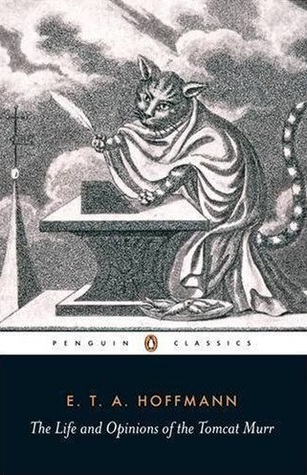
The Life and Opinions of the Tomcat Murr by ETA Hoffmann

Translated by Anthea Bell

Last year I read a book based on ETA Hoffmann’s The Nutcracker and although I wasn’t impressed, it left me longing to read something by Hoffmann himself. I wasn’t sure whether I really wanted to read The Nutcracker, so I decided to see whether one of his other books appealed to me more. That’s how I came across his 1819 novel, The Life and Opinions of the Tomcat Murr, which sounded absolutely fascinating!

This very unusual novel could almost be described as two books in one. First of all, it’s the autobiography of Murr, an exceptionally intelligent tomcat who lives with the magician and alchemist Master Abraham. As a kitten he secretly teaches himself to read and write and proceeds to educate himself from his master’s library. Having had a series of adventures, he decides it’s time to write his memoirs…but his pages accidentally become mixed up with pages from a very different book:

When Murr the cat was writing his Life and Opinions, he found a printed book in his master’s study, tore it up without more ado, and, thinking no ill, used its pages partly to rest his work on, partly as blotting paper. These pages were left in the manuscript – and were inadvertently printed too, as if they were part of it.

This other book turns out to be a biography of Kapellmeister (conductor) Johannes Kreisler, a musical genius and friend of Master Abraham’s. Kreisler’s story unfolds alongside Murr’s, with a few pages of one followed by a few pages of the other, often breaking off mid-sentence as the end of the page is reached. Murr’s sections are marked with ‘M. Cont’ while Kreisler’s are headed ‘W.P.’ (Waste Paper). However, despite the Kreisler biography being printed on ‘waste paper’ and seemingly finding its way into Murr’s book by chance, the two stories are linked by the character of Master Abraham and, towards the end, there are hints of a much stronger connection between the two.

I found Murr’s story great fun to read. He has a strong and unique narrative voice, being vain, precocious and over-confident, but still with the qualities of the cat he is and always will be – he has an instinctive wariness of dogs and is easily tempted by a bowl of milk. His memoirs are told in chronological order, describing his kittenhood, his self-education, his romance with a beautiful female cat and his uneasy but close friendship with Ponto the poodle, who is less well-read but wiser in the ways of the world.

Kreisler, by contrast, is a very different personality – quiet, nervous and melancholic. His story becomes very convoluted, being intertwined with the lives of German royalty as he finds himself at the fictitious court of Prince Irinaeus of Sieghartshof and is drawn to two young women, Princess Hedwiga and her friend Julia Benzon. I found this much less interesting to read than Murr’s story, although if I’d had more knowledge of early 19th century German society and its intricacies it’s possible that I would have appreciated it more. At times I struggled to stay engaged with the Kreisler sections of the book and found myself looking forward to rejoining Murr. I’ve read that Hoffmann apparently based Kreisler on himself and used him as a character in several of his other books – and again, maybe if I’d know more about Hoffmann himself this would have had more significance for me.

My Penguin Classics edition of the novel contains two volumes of The Tomcat Murr which were published between 1819-1821. Sadly, Hoffmann died in 1822 and a planned third volume was never completed. That’s not really a problem, because the second volume does have quite a satisfactory ending, but there are still a lot of loose ends that aren’t tied up and it’s slightly frustrating not knowing how the story would have concluded! If you’re interested in reading the book, I can recommend this particular edition – the translation by Anthea Bell is very readable and there’s an excellent introduction by Jeremy Adler (best read after finishing the book), as well as notes and suggestions for further reading.

Have you read this or anything else by Hoffmann? I would love to hear your thoughts!

This is book 34/50 from my second Classics Club list and also counts towards this year’s German Lit Month hosted by Lizzy’s Literary Life

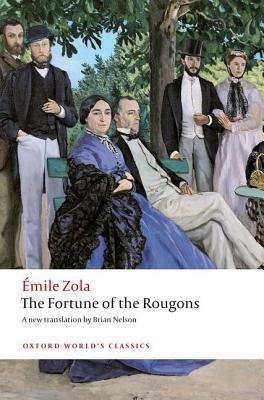
The Fortune of the Rougons by Émile Zola

La Fortune des Rougon, originally published in French in 1871, is the first novel in Émile Zola’s twenty-volume Les Rougon-Macquart cycle. It’s also the book selected for me in the recent Classics Club Spin and the edition I read is an English translation by Brian Nelson.

I’ve already read one of the later books from the cycle – The Ladies’ Paradise – but rather than continue picking them out at random, I thought it might be more sensible to go back to the beginning of the series and try to read them in order. I was a bit hesitant about reading this first book, however, because it sounded as though it was mainly concerned with setting things up for the rest of the series – and that was the case, up to a point, but I found that there was still enough plot to make this an interesting novel in its own right.

The Fortune of the Rougons is set in the fictional French town of Plassans and opens on a Sunday night in December 1851 with two young lovers, Silvère and Miette, joining up with an army of insurgents. It’s the eve of Louis Napoleon’s coup d’état which will result in the formation of the Second Empire under Napoleon III. Silvère wants to give his support to the Republicans who are opposing the coup and thirteen-year-old Miette finds herself coming along to carry the flag.

We then leave Silvère and Miette behind for a while so that Zola can take us back several generations and introduce us to Adelaide Fouque who, through her marriage to the peasant Rougon and a later relationship with the alcoholic smuggler Macquart, is the ancestor of most of the other major characters in the novel. He then follows the lives of Adelaide’s three children – her eldest son, Pierre Rougon, and his illegitimate half-brother and sister, Antoine and Ursule Macquart – as they grow into adults and embark on a family feud. Finally we meet Adelaide’s grandchildren (of whom Silvère is one) and see how they all fit into the events of the formation of the Second Empire.

Once Pierre, Antoine and Ursule have married and had children of their own, the number of characters in the novel quickly multiplies and I’m glad my copy of the book included a family tree as I found myself constantly needing to refer to it. The Rougon-Macquart family are largely an unpleasant group of people – Pierre Rougon tricks his mother into signing over her house to him, depriving his brother of his inheritance, while Antoine Macquart is a violent, aggressive drunk – but there are still some characters with traits I could admire and some I could pity. It seems that Zola’s aim in writing the series was to explore the effects of heredity, so in this book the legitimate Rougon branch of the family are shown to be scheming, avaricious social-climbers while the Macquarts, descended from a rogue, are leading miserable, sordid lives.

The history of the coup d’état and the Second Empire is quite complicated, particularly if, like me, you come to the book with no prior knowledge of these events. With Plassans (based on Aix-en-Provence, where Zola himself grew up) being so far from the action, information comes to the Rougons via the eldest son, Eugène, who lives in Paris, and the people of the town gather in the Rougons’ yellow drawing room to discuss the latest developments. This keeps the reader at a bit of a distance and it took me a while to get everything straight in my head, but later in the book when we rejoin Silvère and Miette marching with the army we get a little bit closer to some of the action.

I didn’t really love The Fortune of the Rougons, but there were parts that I enjoyed very much and I’ll look forward to meeting some of the characters again in the other books in the cycle. I wish I had read this one before jumping straight into The Ladies’ Paradise as I would then have had more understanding of Octave Mouret’s background (he is another descendant of Adelaide Fouque).

Have you read any of the Rougon-Macquart novels? Did you read them in order or at random and do you think it makes any difference?

This is book 33/50 from my second Classics Club list.

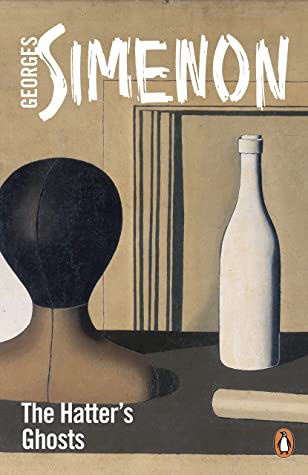
The Hatter’s Ghosts by Georges Simenon (tr. Howard Curtis)

This standalone novel by Belgian author Georges Simenon was originally published in 1949 as Les Fantômes du chapelier and is now available from Penguin Classics in an English translation by Howard Curtis. Although Simenon is better known for his series of Maigret detective novels, he also wrote many books like this one – short psychological thrillers, some of which he referred to as romans durs, or ‘hard novels’. I have read a few of them and my favourite so far has been The Venice Train; this one has some similar plot elements, but is a much darker story.

The novel is set in La Rochelle during a wet and miserable December. It has been raining for twenty days, ever since an old lady was found murdered near the canal. Since then, more bodies have been discovered, all of them elderly women and all of them strangled with a cello string. The newspapers are full of speculation over who the murderer might be, but the reader knows from the opening pages exactly who is responsible – and so does the tailor Kachoudas, who has seen something that has convinced him of the killer’s identity. As the rest of the story unfolds, we are kept wondering whether Kachoudas will go to the police or whether he’ll be the murderer’s next victim.

Although we know from the beginning who the culprit is, there’s still a sense of mystery because we have no idea why he has set out to kill so many women and how he has chosen his victims. The truth is eventually revealed and we discover exactly what is going on behind closed doors, but as this is just a short novel (as many of Simenon’s seem to be), I can’t really go into the plot in any more detail without spoiling it. Anyway, the mystery is only one aspect of the story; the real interest is in following the thought processes of the murderer as he tries to justify his actions to himself and deal with his conflicted thoughts and emotions. I was reminded very much of In a Lonely Place by Dorothy B. Hughes, another novel where we know the killer’s identity from the beginning and spend the rest of the book inside his mind, wondering whether he will give himself away.

The Hatter’s Ghosts is an atmospheric, unsettling novel and I loved the descriptions of the dark, rainy streets of La Rochelle. The Howard Curtis translation is clear and accessible and feels quite modern, while also preserving the tone of the 1940s. If you’re new to Simenon, or have only read his Maigret books, I can definitely recommend any or all of the romans durs I’ve read so far – as well as this one and The Venice Train, I have read The Man from London and The Strangers in the House and am looking forward to investigating some of his others.

Thanks to Penguin Classics for providing a copy of this book for review via NetGalley.

Book #2 read for R.I.P. XVII

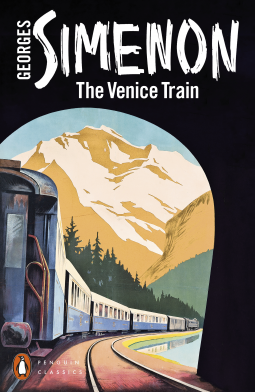
The Venice Train by Georges Simenon (trans. Ros Schwartz)

This is one of Georges Simenon’s many psychological thrillers, which he described as romans durs or ‘hard novels’. I’ve read two of his others – The Man from London and The Strangers in the House – and have enjoyed both, so was looking forward to reading this one. First published in 1965 as Le Train de Venise, it has just been reissued by Penguin Classics in a new English translation by Ros Schwartz.

The novel begins with Justin Calmar boarding a train in Venice to return to his home in Paris after a family holiday. His wife and two young children will follow in a few days’ time. During the journey, another passenger engages Justin in conversation and he finds himself agreeing to deliver a briefcase to an address in Lausanne when the train stops at the station there. However, things don’t go according to plan and Justin ends up returning to Paris with the case still in his possession. Unable to resist the temptation, he breaks the locks and looks inside…and what he finds there will change his life forever.

I won’t say too much more about the plot because I wouldn’t want to spoil the suspense of wondering what is inside the case and what Justin will decide to do with it. This is a very short book (176 pages in the paperback version) and for the first half, the tension builds and builds. It would have made a perfect Alfred Hitchcock film! It’s not a crime novel, however, so don’t go into it expecting one; the mystery is never fully explained or resolved, it ends abruptly and we are left with lots of unanswered questions. The events on the train are simply a starting point for Simenon to explore the psychological effects on Justin Calmar as he battles with nerves, guilt and paranoia, lying to his wife and his friends and finding that each lie leads to another.

The second half of the book isn’t quite as strong as the first and I do wish we’d had answers to at least some of those questions, but this is a fascinating and compelling story – my favourite by Georges Simenon so far.

Although I was slightly disappointed that only the first few pages of the book are actually set in Venice – the rest either on the train or in Paris – I wasn’t too disappointed because Paris is, of course, a great setting as well. And as Thyme for Tea and Readerbuzz are hosting their annual Paris in July event this month, the timing couldn’t be better!

Thanks to Penguin Classics for providing a copy of this book for review via NetGalley.

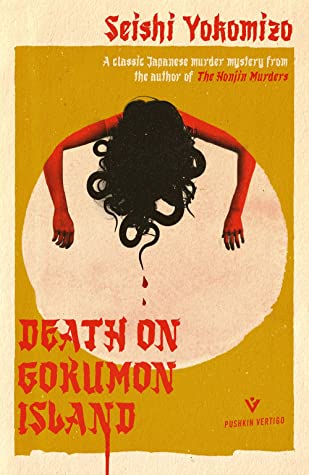
Death on Gokumon Island by Seishi Yokomizo (Trans. Louise Heal Kawai)

The second book I’ve read from my 20 Books of Summer list is this 1948 Japanese mystery novel, now available in an English translation. This is the fourth book in Yokomizo’s Kosuke Kindaichi series to be published in English by Pushkin Press, but actually the second in original publication order. It works as a standalone, with a few references to Kindaichi’s first case, The Honjin Murders, so you could easily start with this one if you wanted to.

Death on Gokumon Island is set in 1946, just after the end of the Second World War, and nearly ten years after the events of The Honjin Murders. Kosuke Kindaichi is on his way to the strangely named Gokumon – or ‘Hell’s Gate’ – Island to deliver the sad news of his army friend Chimata Kito’s death. Kindaichi knows this will be a difficult task, but what really worries him is a prediction made by the dying man that his three half-sisters, who all live on the island in the family home, are going to be murdered.

Arriving on Gokumon Island, Kindaichi gets to know the members of the Kito household, including Chimata’s father who is said to be mad and kept locked up behind bars, as well as another rival branch of the family who live nearby and would benefit from deaths in the main Kito family. The scene is set for a classic murder mystery – and it’s not long before the first murder does take place. Kindaichi begins to investigate, but the islanders are suspicious of newcomers and are reluctant to answer questions.

I struggled to get into this book at first; I felt that we were being introduced to a lot of characters all at once and it was difficult to distinguish between them. I’ve found that with all of the Japanese mysteries I’ve read the authors seem to be more concerned with puzzle-solving than with character development, although Yokomizo is better in that respect than some of the others. After a few chapters I had settled into the story and began to enjoy it. It was good to see more of Kosuke Kindaichi than we did in The Village of Eight Graves; he’s quite endearing with his nervous stammer and head-scratching and the way he makes mistakes and isn’t afraid to admit to them.

Louise Heal Kawai’s translation is clear and easy to read (she also did the translation for The Honjin Murders, although not Eight Graves, which was translated by Bryan Karetnyk). I’m sure Japanese must be a difficult language to translate into English and I do wonder if any nuance is lost along the way, but I was impressed by the way she managed to capture the meaning of the wordplay, poetry and haikus that form part of the plot. I felt I was learning quite a lot about Japanese culture, as well as post-war life in a country that had been on the losing side.

This book has been compared with Agatha Christie’s And Then There Were None, but I don’t think they have much in common other than that they are both mysteries set on islands. This is a very different sort of island, for a start – unlike Christie’s, it’s inhabited, with a fishing community, a mayor, doctors, priests and barbers (to name just some of the characters we meet) – and although there may be a few similarities in the way the murders are carried out, the solution is completely different. It’s a solution I didn’t manage to guess at all; I was convinced I had picked up on an important clue halfway through but it turned out to be a red herring!

Now I need to find time to read The Inugami Curse, the other Yokomizo book currently available in English.

Thanks to Pushkin Vertigo for providing a copy of this book for review via NetGalley.

This is book 2/20 from my 20 Books of Summer list.

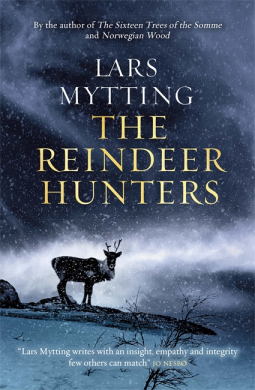
The Reindeer Hunters by Lars Mytting

Translated by Deborah Dawkin.

This is the second book in Norwegian author Lars Mytting’s Sister Bells trilogy. I loved the first, The Bell in the Lake, so was looking forward to visiting the village of Butangen again and finding out how the story would continue.

The Reindeer Hunters begins in 1903, more than twenty years after the events of the first novel. Kai Schweigaard, once a newcomer to Butangen, has settled into his role as village pastor, but is still haunted by memories of Astrid Hekne, the woman he had hoped to marry. He also feels guilt over his involvement in the removal of the two bells which once hung in the bell tower of the local church, commemorating Gunhild and Halfrid Hekne, the conjoined twin sisters who were two of Astrid’s ancestors. When Kai hears about a legendary tapestry woven by the sisters – the Hekne Weave – he sets out to search for it, hoping in some way to make amends for what happened in the past.

In the hills just outside Butangen, Astrid’s son Jehans is leading a lonely life, supporting himself through fishing and hunting, having withdrawn from the rest of the community. One day he finds himself in dispute with another hunter when they both claim to have shot the same reindeer, but this marks a turning point in Jehans’ life as he gets to know the other hunter, an Englishman called Victor Harrison, and an uneasy friendship begins to develop.

This, like the first book, is beautifully written and translated. The setting – a remote Norwegian village steeped in superstition and tradition – is vividly described, making this the kind of historical novel where you can become truly immersed in another time and place. Towards the end of the book, though, we see that scientific progress and new technology are finding their way even to Butangen in the form of electricity, improved travel and advances in dairy farming. Events in the wider world also touch the lives of our characters, including the dissolution of the Norway-Sweden union, the First World War and, finally, the flu pandemic of 1918:

There, on the church steps, Schweigaard had put all his accumulated knowledge into his advice. Mass was cancelled indefinitely. Auctions and public dances were best avoided. Folk ought not to visit other villages. They should maintain a distance from strangers. And always veer on the side of prudence.

I enjoyed reading about Kai Schweigaard’s daily life, his duties as pastor and his relationships with the other villagers and I was completely absorbed in his search for the Hekne Weave and what it might reveal. I was much less interested in the details of Jehans’ hunting and fishing expeditions and, later, Victor’s work as a pioneer of aviation, although other readers will probably find those things more enjoyable than I did! For this reason, I didn’t like this book as much as the first and every time the perspective switched to Jehans or Victor, I found myself wanting to return to the village and continue with Kai’s storyline. I did, however, come to love one of the new characters, Kristine, a young woman who doesn’t have an easy life but displays an inner strength and determination that I really admired.

I’ll be looking out for the final book in this trilogy and will be interested to see where the story will go next.

Thanks to Quercus Books, MacLehose Press for providing a copy of this book for review via NetGalley.

This is book 10/50 read for the Historical Fiction Reading Challenge 2022.
A Bad Business by Fyodor Dostoevsky

Translated by Nicolas Pasternak Slater and Maya Slater

This is the second collection of classic short stories I’ve read from the Pushkin Press Essential Stories series. The first was I Would Prefer Not To by Herman Melville, an author I had never tried before, and I found it a good introduction to his work. In the case of Dostoevsky, I have previously read two of his novels (Crime and Punishment and The Idiot) but was curious to see what his shorter fiction would be like. This collection contains six stories, all in new translations by Nicolas Pasternak Slater and Maya Slater. They are all quite different in subject and style and I think they would give new readers a good idea of what his writing is like, while also being of interest to readers like myself who are only familiar with his full-length novels.

I think my favourite of the six stories was The Crocodile (1865), in which a civil servant, Ivan Matveich, is swallowed alive by a crocodile being exhibited in St Petersburg. There’s not much more to the plot than that, as the rest of the story revolves around the conversations Matveich has with various people from inside the crocodile, but I found it entertaining and surprisingly funny, not something I’ve really associated with Dostoevsky’s work before. It also takes a satirical look at the economic situation in Russia at that time – the German owners of the crocodile refuse to have its stomach slit open to free Matveich because they would be losing their investment, particularly as the crocodile has now increased in value due to becoming so famous!

Conversations in a Graveyard (1873), also published as Bobok, is another satire in which the narrator is sitting in a cemetery after attending a funeral and hears the disembodied voices of the recently buried telling each other their stories. The literary critic Mikhail Bakhtin describes this story as “almost a microcosm of Dostoevsky’s entire creative output,” because it involves many of the themes, ideas and character types that appear in his other work. I probably haven’t read enough of Dostoevsky to be able to fully appreciate this, but I did still find the story interesting – and it reminded me very much of Lincoln in the Bardo!

The title story, A Bad Business (1862), follows a general in the civil service who, after discussing his political ideals with friends, decides to test one of his theories by being nice to people from lower social classes. Unfortunately, when he arrives, uninvited and unwelcome, at the wedding feast of one of his subordinates, things quickly begin to go wrong. A very different type of story is A Meek Creature (1876), about the relationship between a pawnbroker and one of his customers, a girl who pawns items to earn money so that she can advertise in the newspaper for work as a governess. This is a darker story than most of the others in the book and not one of my favourites.

The four stories mentioned so far take up more than 90% of the book, which means that the final two are much shorter. One is The Heavenly Christmas Tree (1876), a sentimental and poignant little story with a fairy tale feel, and the other is The Peasant Marey (also 1876), in which the narrator recalls a childhood memory of being comforted by a peasant after convincing himself there was a wolf in the woods. I liked both of these stories but felt that they suffered from being placed at the end of the collection; I would have preferred the shorter stories to alternate with the novella-length ones to provide more variety.

Although I don’t think any of these are stories I would want to read again, apart from maybe The Crocodile, it was good to have the opportunity to explore Dostoevsky further. I’m hoping to read my copy of The Brothers Karamazov soon.

Thanks to Pushkin Press for providing a copy of this book for review via NetGalley.