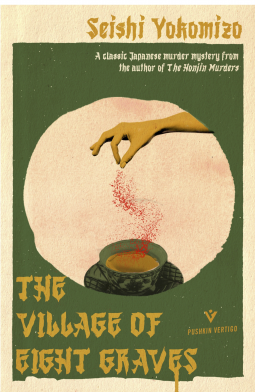
The Village of Eight Graves by Seishi Yokomizo – trans. Bryan Karetnyk

Over the last few years I have discovered several Japanese crime authors – including Soji Shimada and Yukito Ayatsuji – thanks to Pushkin Press making them available in English translations, but the one who has impressed me the most is Seishi Yokomizo. I really enjoyed The Honjin Murders, one of his many books to feature the detective Kosuke Kindaichi; I didn’t like The Village of Eight Graves, another from the same series, quite as much, but it’s still an entertaining read.

First published in 1950, the novel is set in the small Japanese village of Eight Graves where, centuries earlier, eight samurai were brutally murdered, bringing down a curse upon the village and giving it its sinister-sounding name. In the 1920s the curse struck again when a village leader went on a violent killing spree. Now, twenty-five years later, our narrator Tatsuya Terada, a young man who has been raised in Kobe by his mother and stepfather, is informed by a lawyer that his real father was the man responsible for those terrible murders. It seems that Tatsuya is now the heir to the family estate and must return to Eight Graves to claim his inheritance – but before he has even left Kobe he receives an anonymous letter warning him to stay away.

On his arrival in Eight Graves, Tatsuya finds that most of the other villagers are hostile and unwelcoming, believing that his presence will bring bad luck and tragedy to the village yet again. And so, when more murders begin to take place, suspicion immediately falls on Tatsuya – but as he is our narrator, we know that he is innocent. Or is he? Kosuke Kindaichi is called in to investigate, but at the same time Tatsuya is carrying out investigations of his own to find the real culprit and clear his own name.

Unlike in The Honjin Murders, where the untidy and unassuming Kindaichi plays a big role in the story, in this book we hardly see him at all. Almost as soon as he arrives in Eight Graves he disappears into the background again. We know that he is working on solving the mystery, but we don’t actually watch him doing it because we stick exclusively with Tatsuya’s narration and he and Kindaichi have very little interaction until nearer the end of the book. This makes this one less of a detective novel and more of a thriller or adventure novel, as Tatsuya explores the village alone looking for clues and stumbling into danger.

Yokomizo creates a wonderful atmosphere in this book with Tatsuya’s investigations leading him into networks of tunnels, caves with stalactites, and underground lakes and caverns. The legend of the eight murdered samurai is also incorporated into the story, along with a search for hidden treasure said to be buried somewhere within the village and a rivalry between two branches of Tatsuya’s family: the ‘House of the East’ and the ‘House of the West’. It’s an entertaining novel and there’s always something happening – but I did think the parts where Tatsuya is wandering around in the caves and tunnels became a little bit tedious. The absence of Kosuke Kindaichi for most of the book was also disappointing and I think I would have preferred a more conventional detective novel with the focus on solving the mystery rather than on treasure hunting.

Still, this book was fun to read and I loved the setting. Now I need to read the other Yokomizo novel currently available in English: The Inugami Curse.

Thanks to Pushkin Vertigo for providing a copy of this book for review via NetGalley.
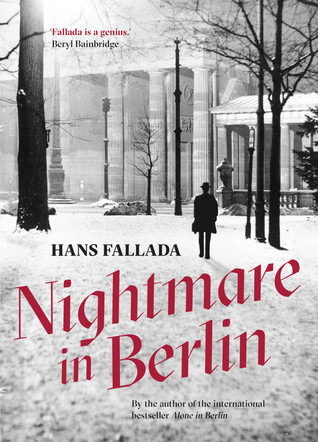
Nightmare in Berlin by Hans Fallada

The war had destroyed everything, and all that was left to him were the ruins and the ugly, incinerated detritus of former memories.

For this year’s German Literature Month, hosted by Lizzy and Caroline, I decided to read a book by one of my favourite German authors, Hans Fallada. Nightmare in Berlin was one of his final novels, written just before his death in 1947, and although I don’t think it’s as good as some of his others – particularly Alone in Berlin and Little Man, What Now? – I did find it an interesting and powerful read. This 2016 translation by Allan Blunden is the first time the book has been made available in English.

Nightmare in Berlin begins in the spring of 1945, just as the war ends and the Red Army march into Berlin. Dr Doll, who had been a successful author before the war, and his much younger wife Alma, live in a small rural town and, unlike most of their neighbours, choose to welcome the Soviet troops into their home. Doll is rewarded by being appointed mayor of the town, but soon finds that he is being viewed with suspicion and resentment by his fellow Germans. Eventually, they decide that it’s time to move back to Berlin, having fled from the city to the countryside during the war. When they arrive in Berlin, however, they discover that someone else has moved into their apartment and that it’s going to be much harder than they’d expected to pick up the threads of their old life.

As Doll sets out to look for help in finding somewhere to live and in getting medical treatment for his wife’s injured leg, he is struck by the greed and selfishness of many of the people he encounters, who think nothing of cheating other Germans to get what they want. Disillusioned and depressed, Doll is overcome with shame and apathy, beginning to despair for Germany’s future.

In this time of the country’s collapse and defeat, no feelings last for long; the hatred passed away, leaving only emptiness, deadness, and indifference behind, and people seemed remote, out of reach.

Although this is obviously quite a bleak novel, it does have its more uplifting moments: there are times when Doll is shown some kindness and compassion, restoring his faith in human nature at least temporarily. The relationship between Doll and Alma is portrayed as a warm and loving one, so that no matter what is going on around them, they know they can always rely on each other. However, the Dolls are also both reliant on drugs, taking morphine and sleeping pills to escape from reality and get through the day, and the middle section of the novel follows their experiences in the hospitals and sanatoriums where they are being treated for their addictions. This part of the book was of much less interest to me (I wanted to see more of post-war Berlin, rather than the inside of a hospital) and I felt that it seemed to come out of nowhere – drugs were never mentioned until the Dolls left their rural town to return to Berlin and yet they had apparently both been addicts for a long time.

Nightmare in Berlin seems to be a very autobiographical novel. Hans Fallada (born Rudolf Wilhelm Friedrich Ditzen) struggled with morphine addiction himself, as did his younger second wife, Ursula Losch. Like Dr Doll, he was appointed mayor of a small country town shortly after the Soviet invasion and then spent the remainder of his life going in and out of hospital. I think the book might have worked better as non-fiction rather than a novel, but maybe Fallada found it easier to write about his own experiences by disguising them as fiction. Still, this is a fascinating novel and worth reading for the insights it offers into the mood of the German people in the aftermath of the war.

This is book 24/50 from my second Classics Club list.

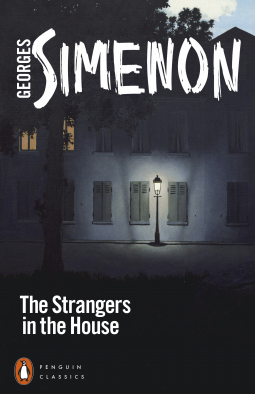
The Strangers in the House by Georges Simenon

Since enjoying my first Georges Simenon book, The Man from London, last year, I’ve been looking forward to reading more. I had intended to try one of his Maigret books next, but the opportunity to read this one came up first; it’s a new Penguin Classics edition of a novel originally published in 1940, The Strangers in the House, and is translated by Howard Curtis. Unfortunately, at 224 pages in the paperback version, it’s just slightly too long to count towards Novellas in November!

The Strangers in the House is one of the many standalone novels written by Simenon that are described as romans dur, or ‘hard novels’. I’m not entirely sure what that term means, but as far as I can tell, it refers to the dark, noirish atmosphere, and the hard, bleak lives that the characters are leading. And the life of our protagonist, Hector Loursat, is certainly bleak! Once a successful lawyer, he fell into a depression when his wife left him eighteen years earlier and turned to alcohol for comfort. Since then, he has spent his time sitting alone with his books and a constant supply of red wine, living in the same house as his daughter Nicole, but barely aware of her presence.

Loursat’s miserable, solitary existence continues until, one night, he hears a gun being fired inside the house and discovers a dead body in one of the bedrooms. When Nicole and her friends become implicated in the murder investigation, Loursat is forced to acknowledge that his daughter is now a stranger to him…or is it in fact Loursat himself who is the stranger in the house?

There’s a detective fiction element to this novel, as Loursat sets out to uncover the truth behind the murder. When suspicion falls on Nicole’s lover, he agrees to defend the young man in court and finds that getting involved in the legal profession again gives him some purpose in life. However, although we see Loursat speaking to the suspects, getting to know Nicole’s circle of friends and learning all he can about the victim, this is not a conventional mystery novel and not one that the reader has much chance of being able to solve. If you’re expecting a story with clever twists and surprises you’ll be disappointed; even the court scenes which take up about half of the book lack suspense.

The book is much more successful as a psychological study of a lonely, reclusive man who is forced to confront his own behaviour and gradually engage with the people and things he has neglected for years. Watching Loursat’s reawakening as he becomes aware of the things that have been going on in his own house without his knowledge is fascinating. Whether or not he finds redemption and whether it’s too late to repair the damage to his relationship with Nicole I will leave you to discover for yourself, if you read the book. All I will say is that Simenon’s storytelling is realistic, unsentimental and ‘hard’.

Have you read this or any of Georges Simenon’s other books? Which can you recommend?

Thanks to Penguin Classics for providing a copy of this book for review via NetGalley.
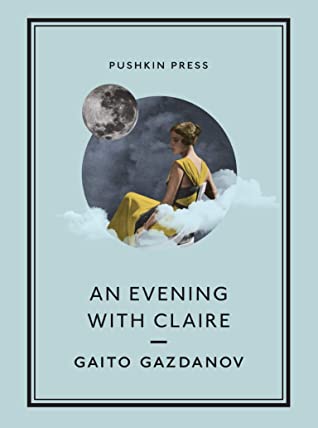
An Evening with Claire by Gaito Gazdanov – Translated by Bryan Karetnyk

When An Evening with Claire was originally published in 1930, Russian author Gaito Gazdanov was living in Paris and hadn’t seen his home country for nearly a decade. This, his first novel, was a success for Gazdanov, bringing him to the attention of other émigré writers, and now that I’ve read it I can understand why. It’s not my usual sort of book but I was drawn to it because I’ve enjoyed other books which have been reissued by Pushkin Press recently and because, apart from Mikhail Bulgakov and Boris Pasternak, I can’t think of any other 20th century Russian authors that I’ve read. This new edition has an introduction by Bryan Karetnyk, who is also responsible for the excellent English translation, which I found very readable.

The novel opens with our narrator, Kolya, in Paris spending an evening with Claire while her husband is away from home. Although we know very little about Kolya’s relationship with Claire at this stage, we do learn that he first met her ten years ago and has been in love with her ever since. However, they have spent most of that time apart and have only now been reunited. Later that evening, while Claire is asleep, Kolya remembers their first meeting, along with many of the other significant moments in his past. As he continues to remember and reminisce, the story of his life begins to take shape: his childhood, his schooldays, his relationships with family members and his experiences during the Russian Revolution and the Civil War that followed.

We actually see very little of Claire herself and I never really felt that I knew her or understood the sort of person she was, but that didn’t matter too much because the main part of the novel concentrates on Kolya’s own history as it unfolds through a chain of memories. His love for the absent Claire is always there and can be seen as a symbol of hope as he dreams of meeting her again one day. I enjoyed the first half of the novel, which includes anecdotes from Kolya’s childhood and his education at a strict military school and gymnasium, but the second half is more interesting as he begins to remember his time serving with the White Army in the Russian Civil War. It all feels very autobiographical and although I don’t know much about Gaito Gazdanov, I’m sure he must have been drawing on some of his own personal experiences and feelings in the writing of this novel.

At just over 200 pages in this edition, An Evening with Claire is a very short novel, but I thought it was the right length for the story being told. In general, I prefer books with more plot and this one has very little, but while this might have been a problem for me in a longer novel, there was just enough here to interest me and hold my attention throughout those 200 pages. This may sound like a strange comparison, but I was reminded of one of my other recent reads, Goodbye Mr Chips, another short book published in the same decade in which a man is looking back on episodes from earlier in his life. They share a focus on the power of memory, recollections of better days and regret for a disappearing world – which are also the reasons why I think An Evening with Claire would have resonated so much with other Russian émigrés of the 1930s. I would be happy to read more by Gazdanov and I see there are four of his other books available in English from the same publisher.

Thanks to Pushkin Press for providing a copy of this book for review via NetGalley.

Historical Musings #68: Historical fiction in translation

Welcome to this month’s post on all things historical fiction.

August was Women in Translation Month, a popular event in the book blogging calendar, and although I was only able to join in with one book – The Country of Others by Leïla Slimani, set in Morocco in the 1940s and 50s – I thought it would be interesting for this month’s Musings to look at some of the other historical fiction novels I have read in translation. I’ve read plenty of older classics, many of which I’ve reviewed on my blog, but sadly very few recent books published within the last ten years or so. Here is everything I could find in my blog archives, although I might have missed one or two (and for the purposes of this list, I am referring to books that have been translated from their original language into English, not from English into other languages):

French to English:

Maurice Druon – The Accursed Kings series (translated by Humphrey Hare)
Alexandre Dumas – The Three Musketeers and sequels (translated by William Barrow); The Black Tulip (Franz Demmler); The Red Sphinx (Lawrence Ellsworth)
Victor Hugo – The Hunchback of Notre-Dame (translated by Isabel F. Hapgood); Les Miserables (Norman Denny)
Madame de Lafayette – The Princess of Cleves (unknown translator)
Robert Merle – The Brethren (translated by T Jefferson Kline)
George Sand – Mauprat (translated by Stanley Young)
Olivier Barde-Cabuçon – Casanova and the Faceless Woman (translated by Louise Rogers Lalaurie)
Leïla Slimani – The Country of Others (translated by Sam Taylor)

Italian to English:

Umberto Eco – The Name of the Rose (translated by William Weaver)
Giuseppe Tomasi di Lampedusa – The Leopard (translated by Archibald Colquhoun)

German to English:

Oliver Pötzsch – The Beggar King (translated by Lee Chadeayne)

Norwegian to English:

Lars Mytting – The Bell in the Lake (translated by Deborah Dawkin)
Sigrid Undset – Kristin Lavransdatter (translated by Tiina Nunnally)

Catalan to English:

Rafel Nadal Farreras – The Last Son’s Secret (translated by Mara Faye Lethem)

Spanish to English:

Isabel Allende – The Japanese Lover (translated by Nick Caistor and Amanda Hopkinson); A Long Petal of the Sea (Caistor and Hopkinson)

Russian to English:

Boris Pasternak – Doctor Zhivago (translated by Max Hayward and Manya Harari)
Leo Tolstoy – War and Peace (translated by Pevear and Volokhonsky)

Dutch to English:

Hella S Haasse – In a Dark Wood Wandering (translated by Lewis C Kaplan)
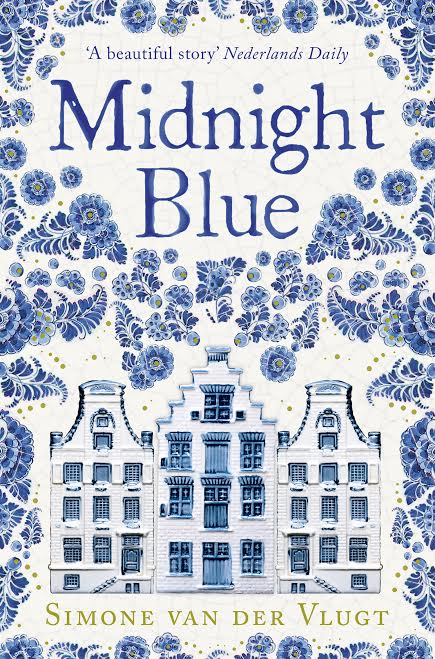
Simone van der Vlugt – Midnight Blue (translated by Jenny Watson)

~

Have you read any of these? Can you recommend any other historical fiction novels in translation, particularly anything recent?

There’s a Goodreads list here with 295 books and an interesting article here on the particular challenges of translating historical fiction.

~

My current historical reading:

I have just finished two novels, both long ones which have occupied most of my reading time for the last couple of weeks: Katharine Parr, the Sixth Queen by Alison Weir and Daughters of War by Dinah Jefferies. I’m also in the middle of an even longer non-fiction book, Powers and Thrones by Dan Jones, which is fascinating but has a lot of information to take in and absorb. As I wanted something lighter to read alongside this, I have just started The Mummy Case by Elizabeth Peters, the third book in her Amelia Peabody mystery series featuring a female Victorian Egyptologist. It will count towards the RIP XVI challenge. After this, I have review copies of two new September releases which I would like to read before the end of the month: The Royal Game by Anne O’Brien and A Marriage of Lions by Elizabeth Chadwick.

New to my historical TBR in the last few weeks:

The Splendour Before the Dark by Margaret George, the sequel to The Confessions of Young Nero, which I read a few years ago, and Pour the Dark Wine by Deryn Lake, a novel about the Seymour family (the ebook was free on Amazon last week). Also, The Vanished Days by Susanna Kearsley and Theatre of Marvels by Lianne Dillsworth, both via NetGalley and due to be published in 2022.

~

Have you read any good historical novels lately? And what are your thoughts on historical fiction in translation?

The Country of Others by Leïla Slimani

I’ve never read anything by Leïla Slimani until now, but her latest book, The Country of Others, sounded appealing to me – and as it’s translated from French, it means I can contribute to this year’s #WITMonth (Women in Translation Month).

Originally published as Le pays des autres and available now in an English translation by Sam Taylor, the novel is set in France and Morocco during the 1940s and 50s. Mathilde is a young woman from the Alsace region of France who, in the final years of World War II, falls in love with a Moroccan soldier, Amine, who has been fighting for the French. Bored with her life and looking for adventure, Mathilde marries Amine and moves with him to Meknes in Morocco where he has inherited some farmland. Here, as she struggles to settle into her new home, Mathilde begins to think she has made a huge mistake; this is certainly not the romantic, idyllic life she’d imagined herself leading. Loneliness, hostile neighbours, financial difficulties, an unhappy, abusive husband and political upheaval as Morocco tries to gain independence from France are just some of the problems Mathilde has to deal with.

Mathilde finds that the other French people in Meknes look down on her for marrying a Moroccan Muslim, while Amine’s Moroccan friends are suspicious of his white, European, Catholic wife. It’s not an easy situation for Amine either and he becomes torn between admiration for Mathilde and embarrassment at her refusal to behave the way he believes a woman should, which leads to some unpleasant scenes of domestic violence and cruelty. The novel is written from the perspectives of both Mathilde and Amine, as well as several more characters, all of whom are trying to find a place for themselves in this ‘country of others’: these include Aïcha, Mathilde and Amine’s daughter, who is aware that her mixed race makes her different from the other children at school; Selma, Amine’s teenage sister, a young woman who feels trapped in this male-dominated society and is desperate for freedom; and Omar, their brother, a fierce and violent man who has joined the fight for Moroccan independence and wants the French out of his country.

Although I did have a lot of sympathy for the circumstances in which most of the characters found themselves, many of them were such unlikeable people I found myself less moved by their stories than I would have expected. It didn’t help that the book is written in a strangely detached, passionless style, which I suppose is appropriate for the bleak and miserable events that are being described, but didn’t enable me to form any real emotional connection with any of the characters, not even Mathilde or Aïcha. Sometimes I almost felt that I was reading a work of non-fiction rather than a novel – and in fact, I discovered when I was halfway through the book that it’s the first in a planned trilogy drawing on Slimani’s own family history, which probably explains why it felt like a memoir.

Despite not particularly enjoying or even liking this book, I still found it interesting. I wasn’t really prepared for something so relentlessly depressing and completely without hope and I probably won’t continue with the other two books, but I do feel that I learned a lot from this one – about the challenges faced by interracial couples, the place of women in 1940s Moroccan society, and the political situation as the country moved towards independence. This was a worthwhile read, but I don’t think Slimani is an author for me.

Book 36/50 read for the 2021 Historical Fiction Reading Challenge.

The Decagon House Murders by Yukito Ayatsuji

This Japanese murder mystery was originally published in 1987 and is now available from Pushkin Vertigo in an English translation by Ho-Ling Wong. Having recently read two other reissued Japanese classic mysteries, The Honjin Murders by Seishi Yokomizo and Murder in the Crooked House by Soji Shimada, I jumped at the chance to read this one, especially when I saw comparisons with one of my favourite Agatha Christie novels, And Then There Were None.

After a brief prologue, the book begins with seven students, all members of their university Mystery Club, arriving on the lonely island of Tsunojima, where they are planning to spend the week. It’s the perfect location for a group of crime lovers because a series of unsolved murders took place there the year before, so the students are looking forward to exploring the island and using their skills as amateur detectives to investigate the mystery. Soon after their arrival, however, they discover that someone is planning to murder them one by one – but is the killer one of the seven or is someone else hiding on the island?

This is an interesting novel and a quick one to read; although it takes a while to get started, the pace rapidly picks up once the first murder takes place. The action switches between the island and the mainland, where Kawaminami, an ex-member of the Mystery Club, is carrying out some investigations of his own, having received a letter which leads him to question what really happened on Tsunojima Island the year before. The alternating narratives add some tension to the story as we wait to see whether Kawaminami will solve the mystery before everyone on the island is dead.

The similarities with And Then There Were None were obvious as soon as I started to read, but sadly this book doesn’t come close to the brilliance of the Christie novel – and the eventual solution and motive are quite different anyway. However, it’s clear that Yukito Ayatsuji must have been an admirer of Golden Age crime novels and he pays homage to them in various ways all the way through the book. The seven members of the Mystery Club have all taken the names of classic crime writers and are known as Ellery, Agatha, Leroux, Carr, Van Dine, Poe and Orczy, while Kawaminami’s nickname is Conan – or sometimes Doyle!

The characters themselves, though, never really come to life at all and feel interchangeable, with very little to differentiate one from another. This leads to a lack of emotional involvement and I found that I didn’t really care who was murdered or who the culprit was. I felt completely detached from what was happening and although I could appreciate the cleverness of the plot, it wasn’t a story that I could become fully absorbed in. To be fair, this seems to be typical of Japanese mystery novels in general, particularly the subgenre known as honkaku, of which this book is said to be a classic example. Honkaku books have been described as traditional plot-driven ‘puzzle mysteries’ with complex solutions and appear to be less concerned with character development.

Still, I found things to enjoy in this novel. The revelations at the end took me completely by surprise and, if I hadn’t had so many other books waiting to be read, I would have been tempted to go back and re-read at least the first few chapters to see how I could have missed the clues. And I loved the descriptions of the Decagon House, the building in which the students stay during their time on the island – a decagonal building with decagonal rooms, decagonal tables and even decagonal cups!

Thanks to Pushkin Vertigo for providing a copy of this book for review via NetGalley.