My Commonplace Book: April 2026

A selection of quotes and pictures to represent April’s reading:

commonplace book
noun
a book into which notable extracts from other works are copied for personal use.

~

But it was only in epic tragedies that gloom was unrelieved. In real life, tragedy and comedy were so intermingled that when one was most wretched ridiculous things happened to make one laugh in spite of oneself.

A Civil Contract by Georgette Heyer (1961)

~

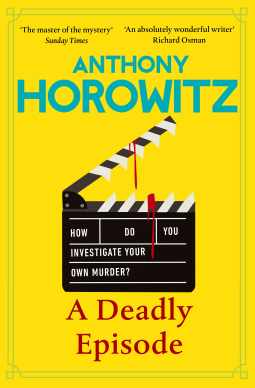
For that matter, why would anyone bother to read a mystery novel if they had any doubts about the man who was leading them to a solution? It’s a simple rule. Detectives have to be infallible. If not, readers will never trust them again.

A Deadly Episode by Anthony Horowitz (2026)

~
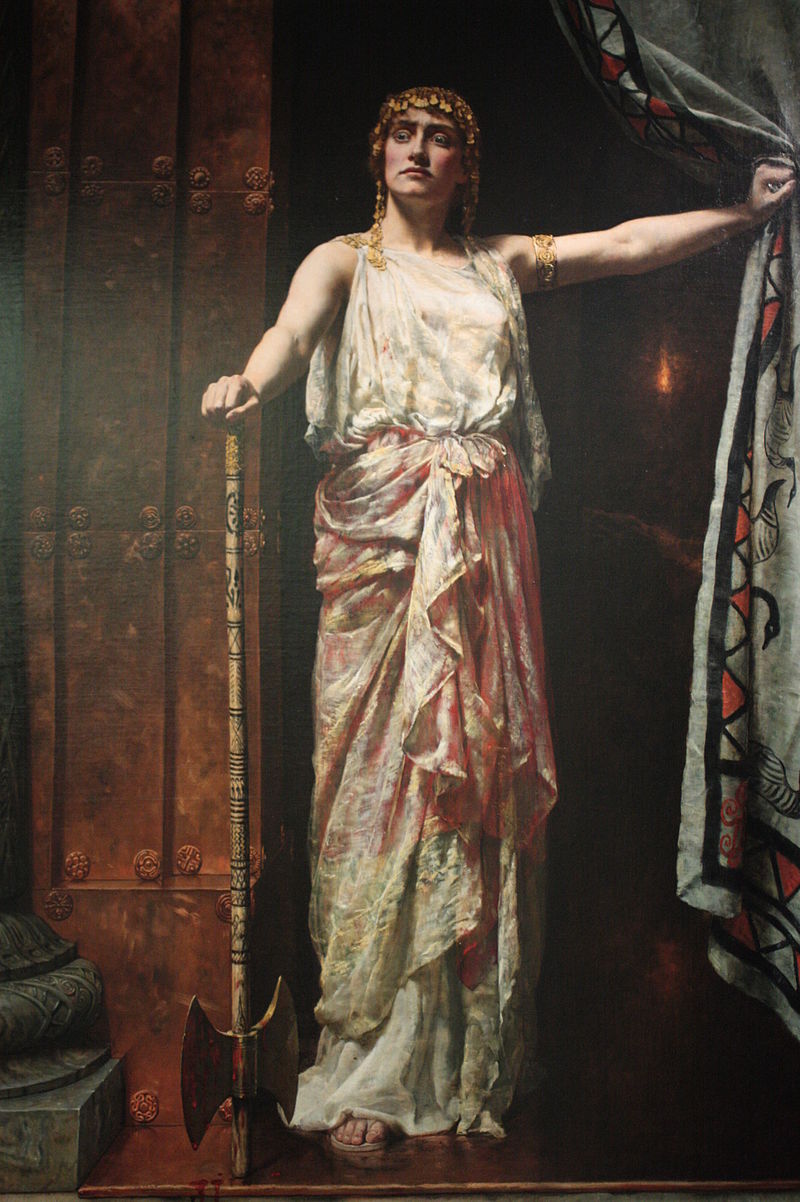
Clytemnestra, by John Collier, 1882

‘Danger, yes, always,’ the goddess says. ‘Danger and doom and death, but also victory. It might be hard to tell the four apart, from where you stand. An ant caught on a thread cannot discern the loom’s grander design – yet it can change the pattern with its presence.’

Vile Lady Villains by Danai Christopoulou (2026)

~

“One’s prime is elusive. You little girls, when you grow up, must be on the alert to recognise your prime at whatever time of your life it may occur. You must then live it to the full.”

The Prime of Miss Jean Brodie by Muriel Spark (1961)

~

The idea of the inexplicable meant nothing to them; they did not need it. So much that was inexplicable – for example, the phases of the moon – lay around them that they simply accepted it as part of their lives.

Tales from Watership Down by Richard Adams (1996)

~
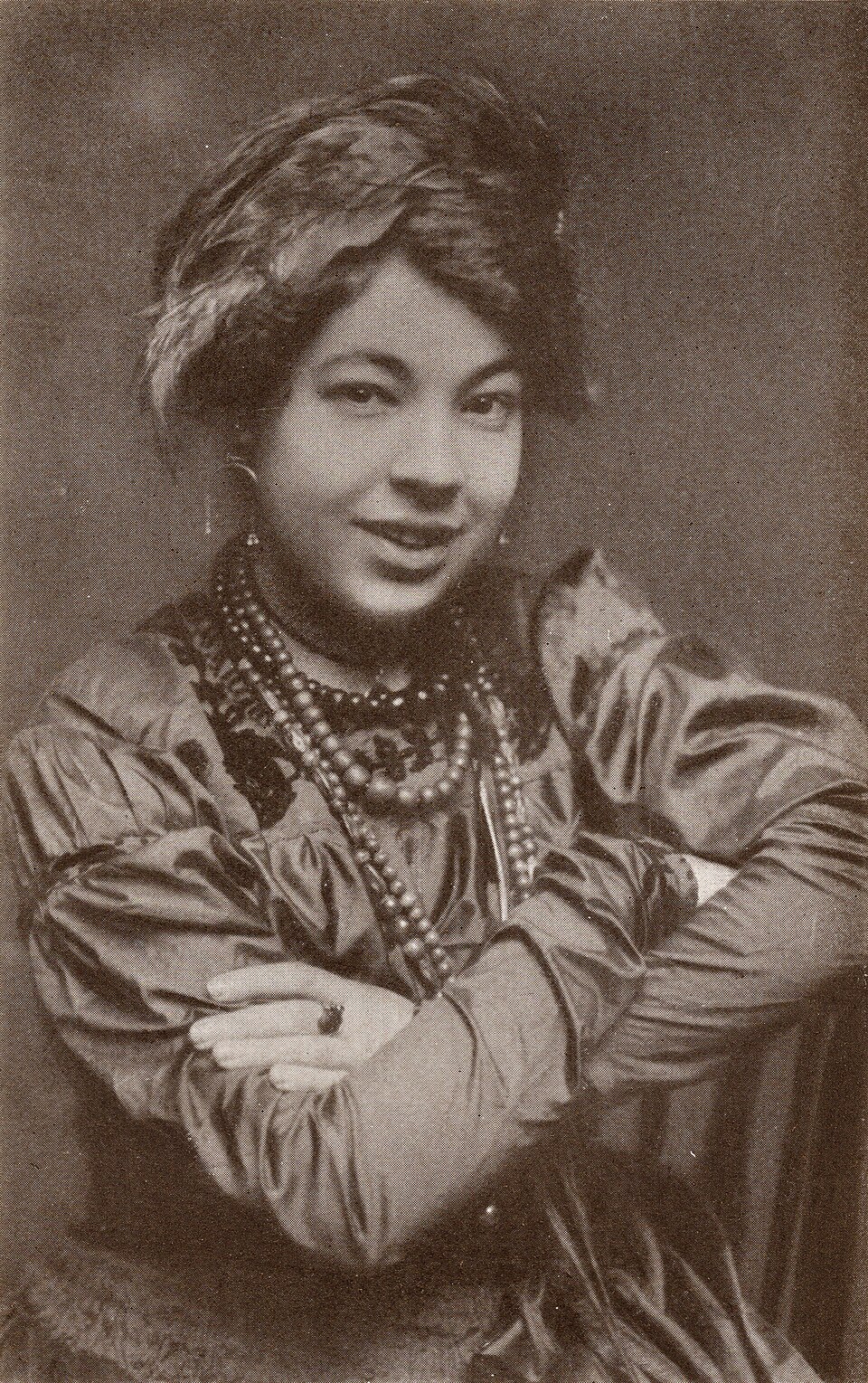
Pamela ‘Pixie’ Colman Smith from the October 1912 issue of The Craftsman magazine.

A surge of joy flows through me. I realise how much I’ve wanted someone else to know. Love feels real with a witness.

Pixie by Jill Dawson (2026)

~

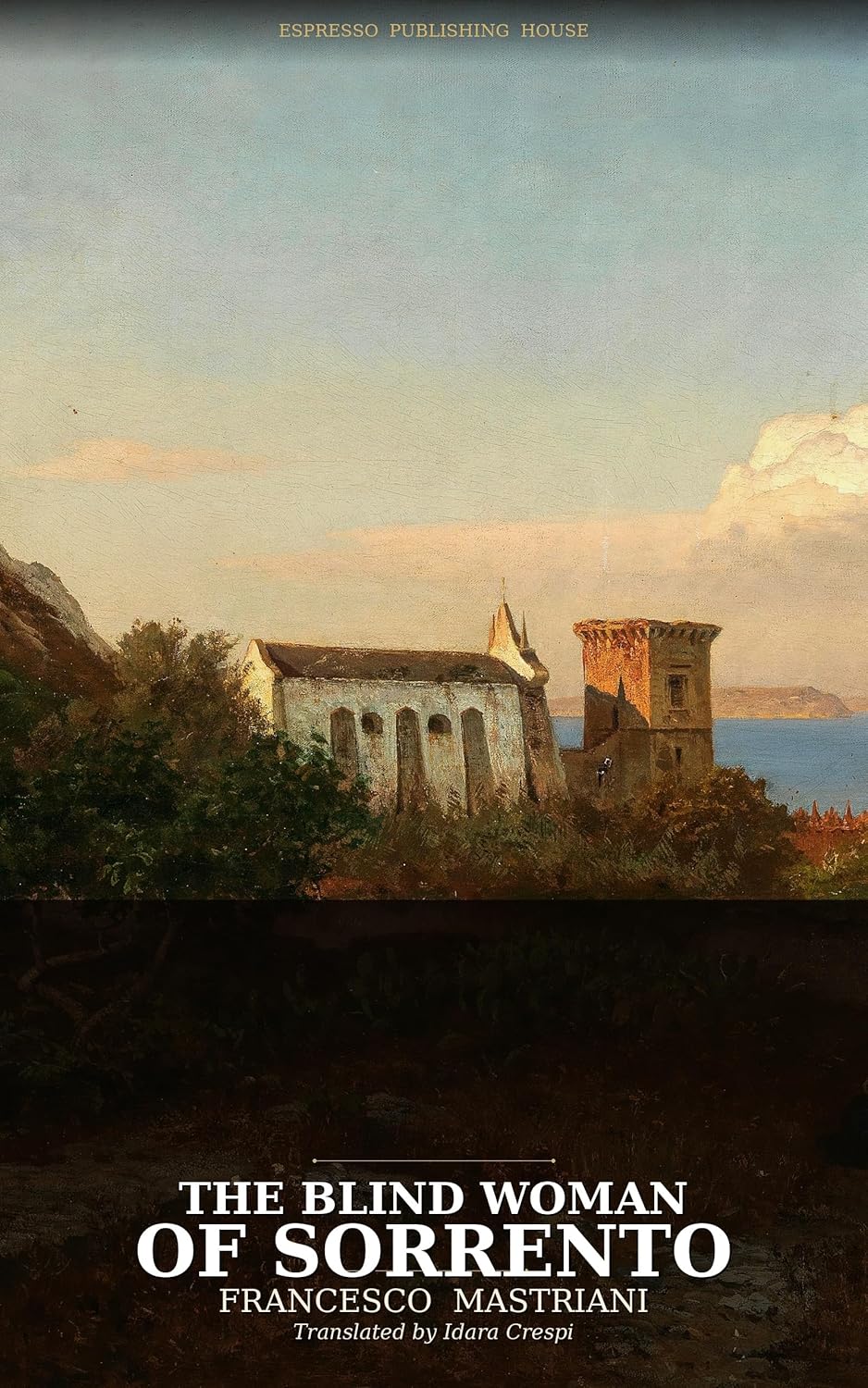
Only the tone of his voice had remained distinct and clear within her…and a voice is to the blind what artificial light is to other people: it is sufficient to detach in a certain manner the shadows and the reliefs of an individual’s soul.

The Blind Woman of Sorrento by Francesco Mastriani (1852)

~

“I asked you to solve my problem for me,” said Maria-Pia, slowly. “That was a foolish thing to do. Nobody can solve problems for other people.”

Dead Men Don’t Ski by Patricia Moyes (1959)

~

Human happiness is rarely in the best of circumstances without shadows, and an almost pure happiness can be a terror to itself.

The Black Prince by Iris Murdoch (1973)

~

Favourite books read in April:

A Deadly Episode, The Blind Woman of Sorrento and Pixie

Authors read for the first time in April:

Muriel Spark, Danai Christopoulou, Francesco Mastriani, Patricia Moyes

Places visited in my April reading:

England, Scotland, US, Jamaica, Italy

~

Reading notes: I started the month with two books for 1961 Club – I enjoyed the Heyer and although I didn’t love my first experience with Muriel Spark, I do intend to try more of her books. The rest of my April reading consisted of some NetGalley review copies, a lost Italian classic, a sequel to a childhood favourite and the Iris Murdoch novel I had started to read in March! In May (can you believe it’s May already?) I’ll be joining in with the Read Christie challenge which I’ve neglected for the last few months, but otherwise I don’t have many plans.

How was your April? What will you be reading in May?
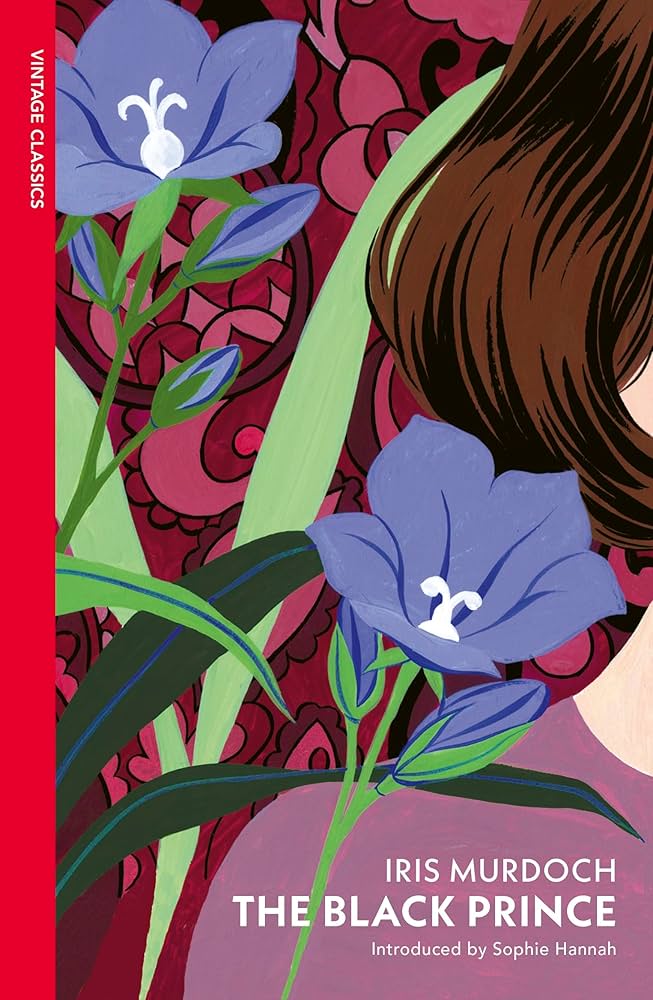
The Black Prince by Iris Murdoch

I’ve read very little of Iris Murdoch’s work – her Booker Prize winner The Sea, The Sea many years ago, which I can barely remember but know I struggled with, and a lesser known novel, A Word Child, which I really enjoyed. When picking another book by Murdoch for my new Classics Club list, then, I had plenty to choose from and decided on The Black Prince almost at random. I started to read it in March for Reading Ireland Month (although the book is set in England, Murdoch is an Irish author) but I had too many other books needing to be read at that time, so I put it aside and came back to it last week.

Published in 1973, The Black Prince is presented as a manuscript written by Bradley Pearson who has recently retired from his job as Inspector of Taxes to concentrate on his writing. Bradley’s book – an account of some life-changing events which occurred when he was fifty-eight years old – is framed by a foreword from his editor, P. Loxias, and a series of postscripts written by the other characters in the story. Although it’s easy to become absorbed in Bradley’s narrative and forget that it’s a book-within-a-book, the different perspectives we see at the end are a reminder that Bradley isn’t necessarily the most reliable of narrators and may not have been entirely honest with us. Of course, there’s no guarantee that the other characters are telling the truth either, so be prepared for a novel that’s ambiguous, thought-provoking and doesn’t tie everything up neatly at the end.

Bradley’s story begins as he decides to leave London for the summer and rent a cottage by the sea where he can work on his book in peace. Before he manages to depart, however, he is repeatedly delayed by a sequence of frustrating and unwelcome incidents. First, there’s an urgent telephone call from his friend and rival, Arnold Baffin, a much more successful and popular author than Bradley himself. Arnold is convinced he has killed his wife, Rachel, so Bradley rushes to their house only to find that it’s a false alarm and Rachel is not dead after all. Bradley’s involvement in the Baffins’ domestic disputes, though, leads to Rachel believing she’s in love with him. Then, Bradley’s sister, Priscilla, arrives at his flat tearful and distraught; her marriage has broken up and she’s depressed and homeless. And a third woman has also reappeared in Bradley’s life – his ex-wife, Christian, who has just returned from America along with her annoying brother, Francis.

The first half of the novel deals with Bradley’s relationships with these people as he tries to disentangle himself from the various situations he’s become caught up in and I have to admit, at this point I was finding the book a bit tedious and didn’t think I was going to enjoy it. That changed halfway through when Bradley falls in love with the Baffins’ twenty-year-old daughter, Julian, who has been pleading with him to tutor her in classic literature, particularly Shakespeare. Needless to say, Arnold and Rachel are not happy when they find out – there’s a thirty-eight year age difference – but the ensuing drama makes the second half of the novel much more compelling than the first.

Before I started reading, I wasn’t sure of the relevance of the title. In history, the Black Prince refers to Edward of Woodstock, the eldest son of Edward III, but in the context of Murdoch’s novel, the reference is actually to Hamlet. The play is alluded to many times during the novel and specifically discussed by Bradley and Julian (it’s while Julian is describing how she once dressed in black to play Hamlet that Bradley discovers he’s in love with her). I’m sure it’s no coincidence that Bradley Pearson himself shares initials with the Black Prince. Other names are also significant, including P. Loxias, the name of the fictional editor – Loxias is another name for Apollo, the Greek god of truth and prophecy, very appropriate in a book that makes us question what is true and what isn’t. And I spotted other examples of symbolism throughout the novel, such as the bronze water buffalo lady, an ornament which is passed from one character to another and is broken and mended at various points in the story.

This is a fascinating novel, then, and although I found it slow to start, I had been drawn in by the middle of the book and was glad I’d persevered. I’ve also been left with a lot to think about; as I said, it’s all very ambiguous and there are lots of unanswered questions at the end. If you’ve read it, let me know what you thought.

This is book 3/50 from my third Classics Club list.

Pixie by Jill Dawson

I was drawn to this book first by the title and the cover, then I remembered that I’d read and enjoyed one of Jill Dawson’s other novels, The Bewitching, a few years ago. That book was about witch trials in the 16th century, but this one is on a very different subject: the life of Pamela Colman Smith, an important and influential artist in her time who has been largely forgotten today. Pixie was the nickname given to Pamela by the famous actress Ellen Terry and I’ll keep things simple by referring to her by that name for the rest of this review. The book is a work of fiction, but closely based on what we know of the life and career of the real woman.

Born in England in 1878 to American parents, we first meet Pixie as an eighteen-year-old living in Jamaica due to her father’s job. Her mother has just died and Pixie is heartbroken, particularly when she learns that she and her father will be leaving her beloved Jamaica behind to return to New York. At least she has her love of art to sustain her and when her father also dies a few years later, leaving her alone in the world, Pixie decides to travel to London to pursue her dream of becoming an artist.

In London, Pixie is taken under the wing of Ellen Terry and is introduced to the other actors, artists and writers who form her social circle, including Henry Irving, Bram Stoker, William Butler Yeats and his brother Jack Yeats. She works on stage design for the Lyceum Theatre group, writes and illustrates books on Jamaican folklore and attempts to start her own magazine, but even when she begins to have success as an artist, she struggles to get people to take her seriously. She’s forced to hear herself described as ‘strange’ and ‘odd-looking’ and to listen to speculation over her racial background; it seems that people are determined to find a way to label her, but all Pixie wants is to be accepted for who she is and regarded as the talented artist she knows herself to be.

I knew absolutely nothing about Pixie before reading this book, so I resisted the temptation to look her up online until I’d finished and just let the story unfold. Pixie’s biggest achievement and the thing she is probably most remembered for today is the 1909 illustrated Rider-Waite-Smith Tarot deck and the later chapters of the book concentrate mainly on this (the fact that for decades it was usually referred to as simply the Rider-Waite Tarot shows the struggle Pixie has faced in getting the recognition she deserves), but I also enjoyed learning about her other projects and interests outside of the art world. For example, she joins a secret society known as the Hermetic Order of the Golden Dawn and meets famous occultists such as Aleister Crowley.

Pixie’s personal life is also interesting to read about. Dawson strongly implies that she’s a lesbian and although that doesn’t seem to have been officially confirmed, it’s considered likely due to the fact that she never married, lived for twenty years with her companion Nora Lake, and was friends and, at one point, housemates with Ellen Terry’s daughter Edith Craig and her partner Christabel ‘Christopher’ Marshall. There’s also the question of Pixie’s appearance, which seemed to confuse everyone she met; although both of her parents were white, she was described at various times as Japanese, Jamaican or a Gypsy, and Dawson provides a theory to try to explain this.

I found Pixie a fascinating character. She’s given a distinctive narrative voice – naive, sensitive and almost childlike – which suits her personality perfectly without being irritating. I enjoyed getting to know her and am pleased Jill Dawson has chosen to write this book and give Pamela Colman Smith the attention she deserves.

Thanks to Bloomsbury Publishing for providing a copy of this book for review via NetGalley.

A Deadly Episode by Anthony Horowitz

The Word is Murder, the first book in Anthony Horowitz’s series chronicling his partnership with the detective Daniel Hawthorne, is being adapted for film. Although Anthony, to his disappointment, has not been asked to write the script or participate in any other way in bringing his own story to life, both he and Hawthorne have been invited to visit the set in Hastings. Here they meet the cast and crew, including the two actors in the main roles – David Caine, playing Hawthorne, and Ralph Seymour, playing Horowitz himself. It’s clear that there are tensions between the two, so when Caine is found stabbed to death, Ralph is one of the prime suspects. However, it quickly emerges that almost everyone else on the set also has a motive for the murder. It seems that Hawthorne and Horowitz have found themselves with yet another crime to solve…

None of the above is true; it’s entirely fictional, but part of the fun (at least for me – I know not everyone likes it) is that Anthony Horowitz uses himself as a character throughout this series, in a clever blend of reality and imagination. Hawthorne is not a real person and neither are most of the others, but Horowitz occasionally refers to his real-life wife, Jill, his own books, and other aspects of his own life and career. He’s very self-deprecating and portrays himself as the Watson to Hawthorne’s Sherlock Holmes, often completely missing important clues and coming up with theories that turn out to be entirely wrong. A Deadly Episode is the sixth book in the series and although I would recommend reading them all in the correct order to fully understand the relationship between Horowitz and Hawthorne, it’s not really essential and each book has a self-contained plot.

The mystery in this book is an interesting one, with plenty of suspects as David Caine has made enemies of everyone involved with the film: his co-star Ralph Seymour, with whom he’s had a long professional – and often personal – rivalry; the screenwriter Shanika Harris who has known Caine since they were both young eco-warriors; his agent James Aubrey whom he’s been threatening to break ties with; and the runner (production assistant) Izzy Mays, who has lost her job because of Caine. Even the director and the producer have good reasons to want him dead, so there’s a lot for Anthony and Hawthorne to untangle here. The real Horowitz has had experience of working in film and television and I think it shows in his descriptions of life on set.

Halfway through the book, a second mystery begins to unfold, revolving around a crime that took place more than a decade earlier. I found this a bit jarring at first, as it meant getting to know a whole new set of characters, but eventually connections between the two mysteries start to form and the eventual solution gives an explanation for both.

After the previous book, Close to Death, where our two main characters were separated for most of the novel, it was good to see them spending more time together again in this one. Hawthorne has never been the most pleasant of people – he’s secretive, prickly and tactless – but I do think he’s a fascinating character, partly because we know so little about him. In this particular novel, Anthony tries to dig into Hawthorne’s past, in a diversion that takes him to the village of Reeth in the Yorkshire Dales, but still doesn’t manage to shed a lot of extra light on things. Will we ever know the full story? Well, it seems there will be more books in the series, so there’s still hope!

Thanks to Century for providing a copy of this book for review via NetGalley.

The Blind Woman of Sorrento by Francesco Mastriani

Translated by Idara Crespi

Francesco Mastriani is a completely new author for me – I’m sorry to say I hadn’t even heard of him until I was offered a review copy of his 1852 novel, The Blind Woman of Sorrento, but it seems he was a very prolific Italian writer, producing over two hundred works of fiction during the 19th century. Espresso Publishing House, an imprint focusing on neglected foreign-language novels, have made this one available in its first modern English translation.

The ‘blind woman’ of the title is Beatrice, daughter of the Marchese di Rionero. She wasn’t born blind, but at the age of three she witnessed the brutal murder of her mother and lost her sight due to the shock and trauma she suffered. Now, seventeen years later, an English doctor, Oliviero Blackman, has arrived in Sorrento and believes he can help her to see again. Unknown to Beatrice, however, Dr Blackman is not all he appears to be. Who is he and does he have another motive for promising to restore Beatrice’s sight?

We also get to know Gaetano Pisani, the son of the man who killed Beatrice’s mother all those years earlier. Gaetano’s life has also been affected by the events of that terrible night and he can’t escape the shame and guilt of knowing that his father was hanged for murder. When he crosses paths with his father’s accomplice and gets his hands on a box of jewels stolen from the murdered woman, it seems that he may still have a chance to find redemption.

I don’t want to say much more about the plot as I would prefer future readers to discover all the twists and turns of this fascinating novel for themselves, as I did. The publisher compares it to Wilkie Collins, which is a good comparison as this book does share many of the elements you would often find in Collins’ work and other 19th century sensation novels such as murders, stolen jewels, family secrets, revenge plots and hidden identities, as well as lots of melodrama! I was particularly reminded of Poor Miss Finch, which also deals with the subject of blindness in a similar way (although that book was published twenty years after this one and the plot itself is quite different). I also think if you’ve enjoyed books by authors like Alexandre Dumas or Rafael Sabatini, there’s a good chance you would enjoy this one too.

Although I would have preferred Beatrice to have been a stronger character (she has a tendency to faint and swoon), I did find it interesting to see how Mastriani writes about her blindness. For a book published in the 1850s, he handles the topic quite sensitively, never implying that she’s any less intelligent because of her condition – on the contrary, she is more observant and perceptive than most people, with her other senses being heightened to compensate. Gaetano is also a complex character: although his actions and motives are sometimes questionable, I could never really think of him as a villain, but at the same time he’s not entirely heroic either.

I found Idara Crespi’s translation very clear and easy to read and I appreciated the translator’s note at the beginning, explaining why certain words and spellings had been chosen. There’s also an introduction, which you can read before or after the novel itself (I got more out of it reading it afterwards), a glossary and some notes on historical Naples. Naples was Mastriani’s own place of birth and both that city and nearby Sorrento are vividly brought to life through his descriptions. I thoroughly enjoyed reading this book and was entertained by it from beginning to end.

Top Ten Tuesday: Things to do on a rainy day

This week’s topic for Top Ten Tuesday (hosted by That Artsy Reader Girl) is: “April Showers (Interpret this however you’d like: rainy day reads, books that make you cry, books that give you happy tears, books to wash away a bad reading experience, books set in rainy places, books with rain/raindrops/umbrellas on the cover, blue book covers, etc.)”

There are so many ways to approach this week’s topic, but I’ve decided to make a list of things you could do on a rainy day and choose a book title to fit each one.

1. Go to a museum

Behind the Scenes at the Museum by Kate Atkinson

2. Play cards

Cards on the table by Agatha Christie

3. Have tea

Tea on Sunday by Lettice Cooper

4. Go to the library

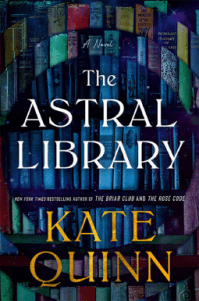
The Astral Library by Kate Quinn

5. Play hide and seek

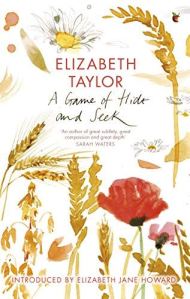
A Game of Hide and Seek by Elizabeth Taylor

6. Sit by the fire

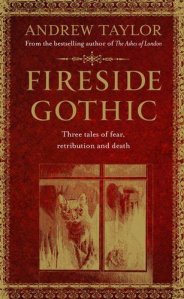
Fireside Gothic by Andrew Taylor

7. Write in your diary

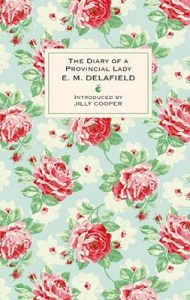
Diary of a Provincial Lady by EM Delafield

8. Decorate your house

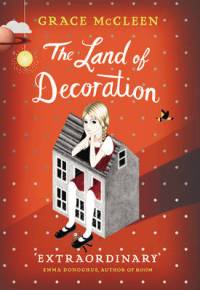
The Land of Decoration by Grace McCleen

9. Tend your indoor plants

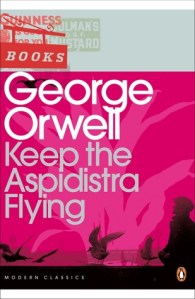
Keep the Aspidistra Flying by George Orwell

10. Wait for the sun

The Sunrise by Victoria Hislop

~

What do you like to do when it’s raining outside? Can you think of any other books I could add to this list?

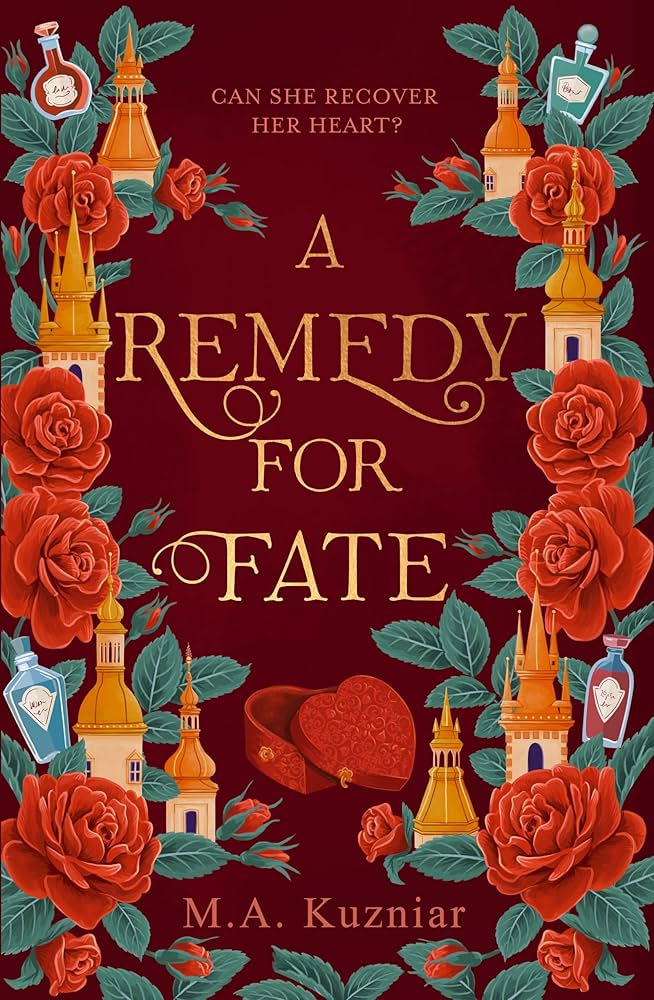
A Remedy for Fate by MA Kuzniar

I wasn’t sure whether to read this as I didn’t care for MA Kuzniar’s previous book, Midnight in Everwood, but I loved the idea of a story set in 18th century Prague so I decided to give her a second chance. I’m glad I did as I thought this book was much better.

A Remedy for Fate is very loosely based on the fairy tale Rumpelstiltskin and is written from the perspective of Thea, a ‘fate weaver’ who runs Stiltskin’s Apothecary, brewing special potions that can change her customers’ futures – for a terrible price. Thea herself paid that price seven years earlier when she agreed to lose her memories and her heart for reasons she can no longer remember and in return has been given the ability to weave fates. Although she’s still human, Thea’s body is held together by a spell controlled by her employer, Jasper Stiltskin. The only way to free herself from the spell is to correctly guess her birth name, which she has forgotten as it’s yet another memory taken from her by Jasper.

The Apothecary is located in Prague’s Magic Quarter, a secret world hidden beneath the city which can only be accessed by people in need of help. However, the protections that keep the Magic Quarter safe from those who wish it harm are starting to break down, allowing entry to the sinister Magic Hunters who are determined to find the evidence they need to close the whole area down.

Although the historical Prague setting was the thing that attracted me to this book, I found that we didn’t actually see as much of Prague as I’d expected. Although Thea does occasionally venture up into the city, most of the action takes place in the Magic Quarter, which is described very vividly – a maze of narrow streets, wreathed in mist and lined with enchanted pastel-painted shops. It’s also populated with colourful characters including Pani Dagmar, an elderly witch who claims to be five hundred years old; Wojslav the vampire, who leads a solitary life running an antique shop; and Thea’s friend Zofka, the kitchen-witch, who bakes magical cakes and pies. The world-building is wonderful and I loved the way Kuzniar creates a feeling of community where the residents of the Magic Quarter, despite not always seeing eye to eye, all come together to fight the forces threatening their lives and livelihoods.

Because the story is set mainly in the Magic Quarter, a fantasy land which is very separate from Prague itself, there’s very little sense of the time period. Apart from some references to Empress Maria Theresa’s recent banning of witch burning and torture in 1768, I felt that the book could really have been set in any period, past, present or future. I also thought Thea, although she’s supposed to be a woman in her thirties, felt much less mature and the book in general, like Midnight in Everwood, seemed to be aimed more at younger readers, despite them both being marketed as adult novels. Not necessarily a problem, but something to be aware of if you’re planning to read them.

Thea’s actions frustrated me at times, but I thought Jasper was a great character and I enjoyed watching his relationship with Thea unfold and change throughout the book. The answer to the question of Thea’s real name seemed quite obvious to me, though, and I’m surprised she was having so much trouble guessing it! Overall, then, I found this an entertaining read, with just a few negative points, and the writing style didn’t irritate me the way it did in Midnight in Everwood. I would be happy to try Kuzniar’s other adult novel, Upon a Frosted Star, which is based on Swan Lake.

Thanks to Hodderscape for providing a copy of this book for review via NetGalley