Top Ten Tuesday: May Flowers

This week’s topic for Top Ten Tuesday (hosted by That Artsy Reader Girl) is “May Flowers”. There are a number of suggestions for ways to approach this topic, such as books with flowers on the covers or books about flowers or gardeners, but I’ve decided just to list ten books with names of flowers in the title.

These are all books that I’ve read and reviewed on my blog – and I’ve managed to find ten different flower names!

1. Blackberry and Wild Rose by Sonia Velton – An interesting historical novel about the community of Huguenot silk weavers living and working in London’s Spitalfields in the 18th century. I was drawn to this book by the pretty cover, but enjoyed the story as well.

2. The Lady of the Camellias by Alexandre Dumas, fils – The novel which inspired the opera La traviata. I read a translation by Liesl Schillinger and enjoyed this story of Marguerite Gautier, who uses bouquets of red and white camellias to send messages to her lovers.

3. The Orchid Hour by Nancy Bilyeau – Historical thriller set in New York’s Little Italy during Prohibition. It’s a fascinating setting and we do learn a little bit about growing orchids too.

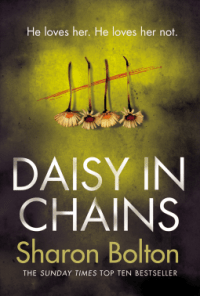
4. Daisy in Chains by Sharon Bolton – This is a contemporary crime novel about a man serving a life sentence for murder and the lawyer he chooses to help him overturn the verdict. A typical Bolton novel with lots of twists and turns!

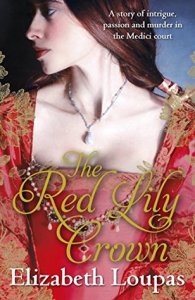
5. The Red Lily Crown by Elizabeth Loupas – An excellent historical fiction novel set in 16th century Florence and following the story of an alchemist’s daughter who enters the household of Francesco de’ Medici, Grand Duke of Tuscany.

6. The Black Tulip by Alexandre Dumas, père – I would never have imagined that a book about a tulip-growing contest could be so exciting, but this one is! I love Dumas and have thoroughly enjoyed everything I’ve read by him so far.

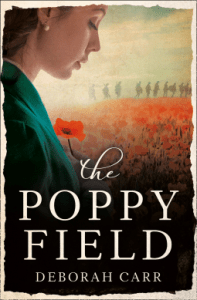
7. The Poppy Field by Deborah Carr – A dual-timeline novel split between the present day and 1916-18 where the story unfolds of a VAD nurse at a casualty clearing station in France during the war. Interesting but predictable.

8. Black Narcissus by Rumer Godden – This classic novel from 1939 follows a group of nuns who set out to establish a new convent in the Himalayas. I loved the atmosphere Godden creates as she explores the relationships between the nuns and how they adjust to the unfamiliar environment.

9. Jasmine Nights by Julia Gregson – A novel about a singer working for ENSA (Entertainments National Service Association) during World War II, performing for the troops in North Africa. An aspect of the war I hadn’t read about before.

10. The Daffodil Affair by Michael Innes – This 1942 mystery novel about a stolen horse, a missing girl and a haunted house is part of Innes’ Inspector Appleby series. I found it too bizarre to be very enjoyable and would recommend starting with a different Appleby novel.

~

Have you read any of these? Which other books can you think of with flowers in the title?

Six Degrees of Separation: From The Anniversary to Wild Swans

It’s the first Saturday of the month which means it’s time for another Six Degrees of Separation, hosted by Kate of Books are my Favourite and Best. The idea is that Kate chooses a book to use as a starting point and then we have to link it to six other books of our choice to form a chain. A book doesn’t have to be connected to all of the others on the list – only to the one next to it in the chain.

This month we are starting with The Anniversary by Stephanie Bishop. It’s not a book I’ve read – or had even heard of until now – but here’s what it’s about:

Novelist J.B. Blackwood is on a cruise with her husband, Patrick, to celebrate their wedding anniversary.

Patrick is older than J.B., formerly her professor. But now his success is starting to wane and hers may overshadow his.

For days they sail in the sun. They lie about drinking, reading, sleeping, having sex. There is nothing but dark water all around them.

Then a storm hits, and Patrick falls off the ship. J.B. is left alone, as the search for what happened to Patrick – and the truth about their marriage – begins.

With a stay-up-all-night plot and breathtaking prose, this is the haunting and unforgettable story of a marriage and a death.

~

I’m using the idea of ‘falling off the ship’ as my first link. Someone else who was swept overboard on a cruise is Nona Ranskill in Miss Ranskill Comes Home by Barbara Euphan Todd (1). Stranded on a desert island just before the start of World War II, Miss Ranskill is rescued after almost four years and returns to England to find that war has broken out in her absence and life has changed almost beyond recognition. I loved this book; it was one of the first books published by Persephone that I read and still one of my favourites.

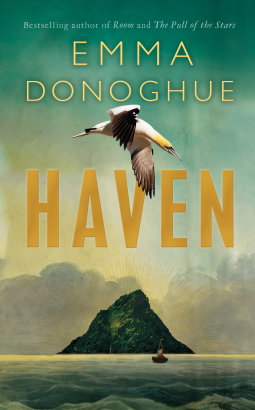
Another novel set on an island is Haven by Emma Donoghue (2). In 7th century Ireland, three monks set out on a pilgrimage to look for an isolated place to build a monastery. Their search takes them to the steep, rocky island of Skellig Michael, uninhabited except for thousands of birds. The novel follows the monks as they try to establish their new settlement and prepare for a life of seclusion. It’s more interesting than it sounds, although I’ve preferred other books by Donoghue.

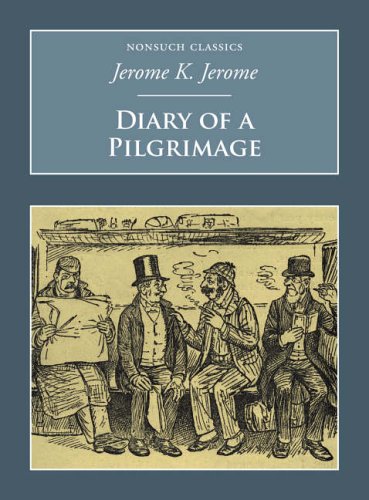
A pilgrimage of a very different sort takes place in Jerome K. Jerome’s Diary of a Pilgrimage (3). First published in 1891, the Diary is narrated by J, an Englishman who travels to Germany with a friend to see the famous Passion Play at Oberammergau. Although it’s not as funny as Jerome’s Three Men in a Boat, it is written in a similar style, with J sharing amusing anecdotes about the things he experiences and people he meets during the journey.

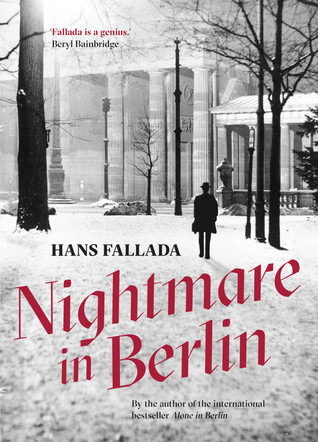
Staying with books set in Germany, my next link is to Nightmare in Berlin by Hans Fallada (4). Despite the title, there’s no connection to Fallada’s more famous book, Alone in Berlin, and this is a completely separate novel, following the story of Dr Doll and his wife Alma in post-war Berlin. Apparently the book is very autobiographical, as Fallada himself, like Dr Doll in the novel, was appointed mayor of a small rural town after the war and later struggles with a serious morphine addiction. I read a translation by Allan Blunden from 2016 (the first time the book was made available in English).

Nightmares are bad dreams and the title of my next book is the opposite – Dreams of Joy by Lisa See (5). Set in the 1950s, this is the sequel to See’s Shanghai Girls and follows nineteen-year-old Joy Louie as she leaves her home in Los Angeles to travel to Shanghai, full of enthusiasm for Chairman Mao’s new communist China. As you can imagine, the story isn’t very joyful at all and Joy eventually begins to learn that the new regime isn’t as wonderful as she hoped.

Another book about Communist China, a non-fiction one this time, finishes my chain. It’s Wild Swans (6), Jung Chang’s autobiography, telling the stories of her grandmother, mother and finally herself and taking us on a journey through the history of 20th century China. I found this book fascinating and was able to learn a lot from it; it’s also one of the most gripping non-fiction books I’ve ever read.

~

And that’s my chain for May! My links have included: falling overboard, islands, pilgrimages, books set in Germany, good and bad dreams and Communist China.

In June we’ll be starting with Butter by Asako Yuzuki.

Six Degrees of Separation: From Black Lamb and Grey Falcon to The Map of Lost Memories

It’s the first Saturday of the month which means it’s time for another Six Degrees of Separation, hosted by Kate of Books are my Favourite and Best. The idea is that Kate chooses a book to use as a starting point and then we have to link it to six other books of our choice to form a chain. A book doesn’t have to be connected to all of the others on the list – only to the one next to it in the chain.

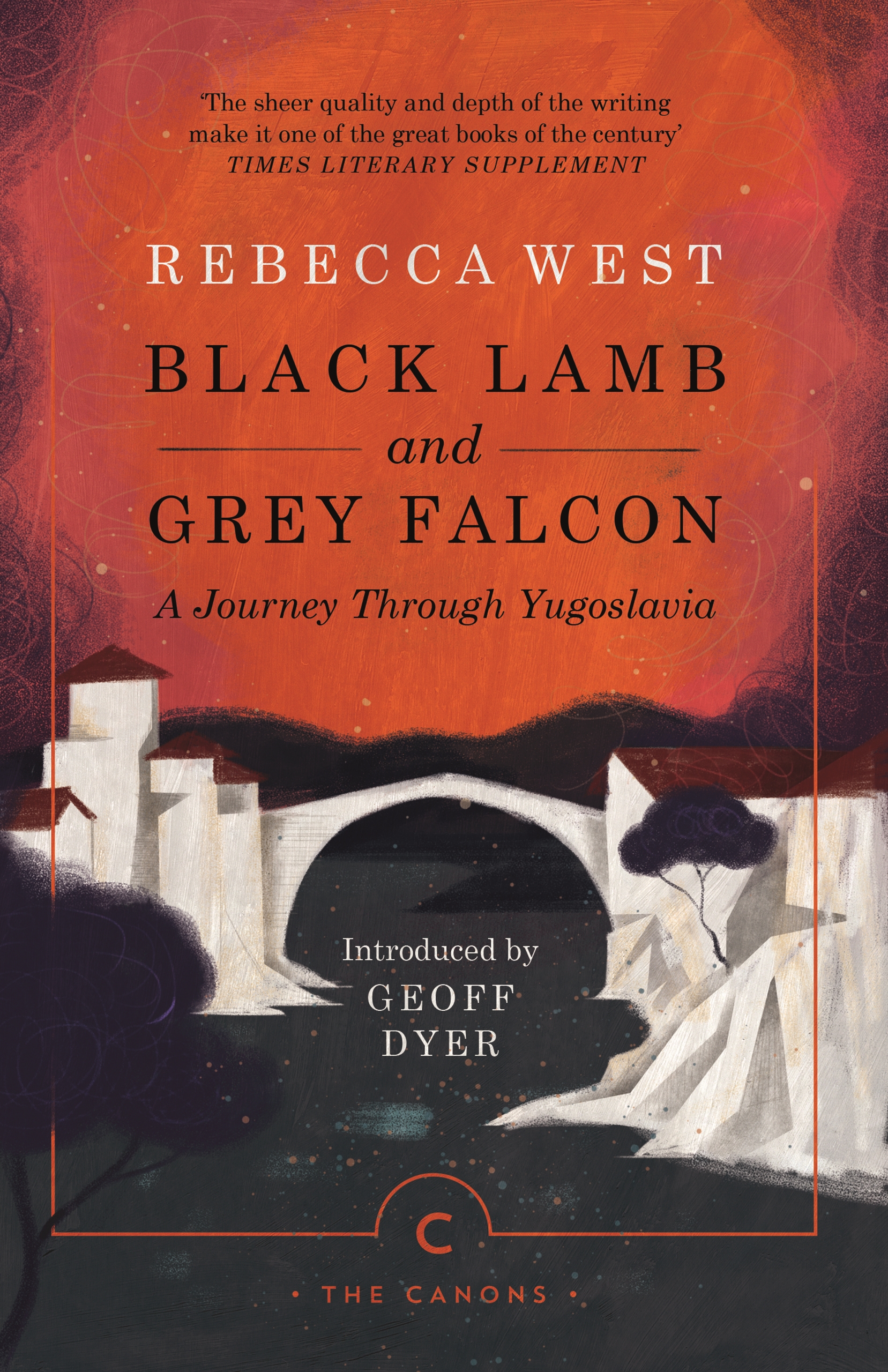
This month we were told we could begin with any travel guide of our choice. Coincidentally, I have just begun reading Black Lamb and Grey Falcon, Rebecca West’s 1941 travel book about her journey through the former Yugoslavia. I’ve wanted to read this for years and have been put off by the length, but I’ve finally decided to just plunge in.

Rebecca West’s epic masterpiece not only provides deep insight into the former country of Yugoslavia; it is a portrait of Europe on the brink of war. A heady cocktail of personal travelogue and historical insight, this product of an implacably inquisitive intelligence remains essential for anyone attempting to understand the history of the Balkan states, and the wider ongoing implications for a fractured Europe.

Girl at War by Sara Nović (1) is set in Croatia in 1991, during the breakup of Yugoslavia. As the country descends into war, we see events unfold through the eyes of a ten-year-old girl. I found this a very moving and emotional novel and enjoyed reading it during a trip to Dubrovnik.

A book with a shared word in the title is War Horse by Michael Morpurgo (2). It’s a children’s book, but can also be appreciated by adults; I read it in preparation for going to see the Steven Spielberg film version in 2012. The story is narrated by Joey, a young horse who serves in the cavalry on the battlefields of World War I.

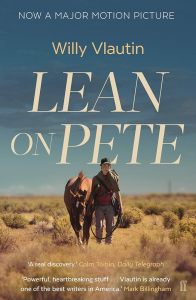
Lean on Pete by Willy Vlautin (3) is also a book about a horse. It’s the story of fifteen-year-old Charley, who gets a job at the Portland Meadows race track in Oregon and forms a close bond with the racehorse, Lean on Pete.
As well as being an author, Vlautin is currently the guitarist and vocalist with the American country soul band The Delines.

Another author who is also a musician is Mat Osman, the bassist in the band Suede (and brother of author and TV presenter Richard Osman). I have read his second novel, The Ghost Theatre (4), which is set in an alternate history version of Elizabethan London, where one of our protagonists belongs to a community of bird-worshippers known as Aviscultans.

Birds provide the link to my next book, The Bird King by G Willow Wilson (5), in which a mapmaker accused of sorcery and the ability to draw magical maps flees across 15th century Spain in search of the legendary island of Qaf, said to be the home of the King of the Birds. I found this a very unusual novel, combining history, myth and fantasy.

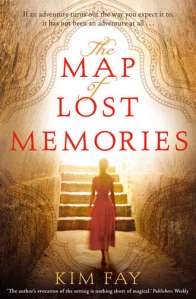
In Kim Fay’s novel, The Map of Lost Memories (6), a woman dreams of making an important historical discovery and establishing her own museum. Setting off on an expedition to Cambodia, she begins a search for ten lost copper scrolls recording the history of the Khmer people. I think this is possibly the only book I’ve read set in Cambodia!

~

And that’s my chain for April. My links have included: books set in the former Yugoslavia, books with war in the title, horses, authors who are musicians, birds and maps. Staying with the ‘travel’ theme, my chain this month has taken me to Croatia, France, USA, England, Spain and Cambodia.

In May we’ll be starting with a novel longlisted for the 2024 Stella Prize – The Anniversary by Stephanie Bishop.

Top Ten Tuesday: Books on my Spring TBR

This week’s topic for Top Ten Tuesday (hosted by That Artsy Reader Girl) is “Books on my Spring TBR”.

I’m expecting to read more than ten books this spring, but here’s a selection that are coming up soon on my TBR:

Some NetGalley review copies:

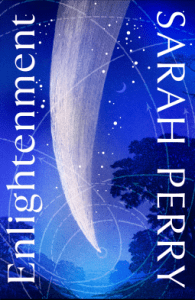
1. Enlightenment by Sarah Perry
2. The Puzzle Wood by Rosie Andrews
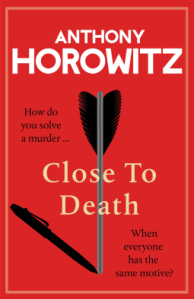
3. Close to Death by Anthony Horowitz
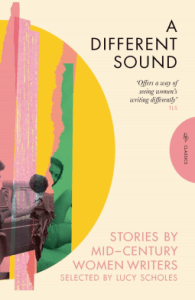
4. A Different Sound by various authors

From my Classics Club list:

5. The Elusive Pimpernel by Baroness Orczy
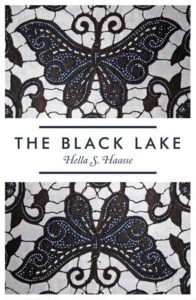
6. The Black Lake by Hella S. Haasse

For Read Christie 2024:

7. Lord Edgware Dies by Agatha Christie
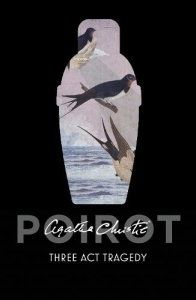
8. Three Act Tragedy by Agatha Christie

From the Walter Scott Prize longlist:

9. The Fraud by Zadie Smith
10. The House of Doors by Tan Twan Eng

~

What are you hoping to read this spring?

Six Degrees of Separation: From Tom Lake to The Cellist of Sarajevo

It’s the first Saturday of the month which means it’s time for another Six Degrees of Separation, hosted by Kate of Books are my Favourite and Best. The idea is that Kate chooses a book to use as a starting point and then we have to link it to six other books of our choice to form a chain. A book doesn’t have to be connected to all of the others on the list – only to the one next to it in the chain.

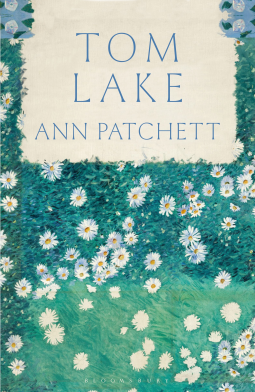
This month we’re starting with Tom Lake by Ann Patchett. I read this last year and liked it, although not as much as I hoped to. Here’s how I described it in my review:

“The title of Ann Patchett’s latest novel, Tom Lake, doesn’t refer to a person, as I’d assumed before I started reading, but to a place – a town in Michigan with a theatre overlooking the lake. One summer in the 1980s, a theatrical group gather at Tom Lake to rehearse the Thornton Wilder play, Our Town. The role of Emily has gone to Lara, a young woman who previously played that same part in a high school production. Here at Tom Lake, Lara meets and falls in love with the charismatic Peter Duke, the actor who plays her father in Our Town and who goes on to become a famous Hollywood star.

Many years later, in 2020, Lara and her husband, Joe, are living on a Michigan farm with their three adult daughters, Emily, Maisie and Nell, who have all come home to be with their parents as the Covid pandemic sweeps across the world. While they help to harvest cherries from the family orchard, the girls ask Lara to tell them about her relationship with Duke. As they listen to her story unfold, they discover things about their mother’s past that makes them reassess everything they thought they knew about her and about themselves.”

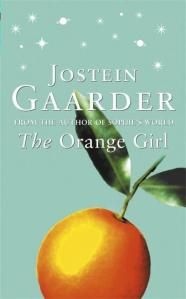
Using cherries as my first link takes me to another book featuring fruit: The Orange Girl by Jostein Gaarder (1), a novel first published in Norwegian and translated into English by James Anderson. Our narrator, a teenage boy whose father has died, reads a letter left to him by his father describing how, as a young man in 1970s Oslo, he had a series of encounters with a mysterious young woman wearing an orange dress and carrying a bag of oranges.

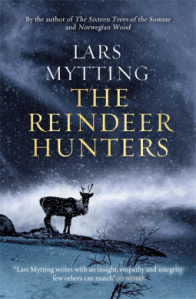
Another novel set in Norway and translated from Norwegian (this time by Deborah Dawkin) is The Reindeer Hunters by Lars Mytting (2). This is the second book in the Sister Bells trilogy about life in the remote village of Butangen where two church bells are said to have supernatural powers. I’ve just discovered that the final book, The Night of the Scourge, is being published in January next year, so that’s something to look forward to!

From reindeer hunting to fortune hunting now! Daisy Goodwin’s The Fortune Hunter (3) is the story of Empress Elizabeth of Austria (known as Sisi) and her relationship with Captain Bay Middleton, a British cavalry officer who acts as her ‘pilot’ (or guide) when she visits England for the hunting season in 1875. Bay, like Sisi, was a real person; he was a notable horseman and jockey who, in the novel, is preparing to race in the Grand National with his horse, Tipsy.

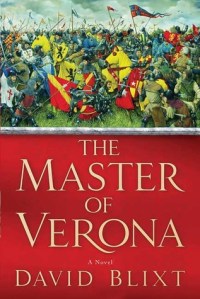
The Master of Verona by David Blixt (4) also features a horse race, in this case the Palio, the medieval race that still takes place today in Siena. The Palio is just one small part of this very entertaining novel set in 14th century Italy and inspired by both the story of Romeo and Juliet and the life of the poet Dante Alighieri. It’s the first in a series of which I’ve also read the second, but still need to finish the others.

A book with a shared word in the title is Madame Verona Comes Down the Hill (5) by Belgian author Dimitri Verhulst. This novella, translated from the original Dutch by David Colmer, is the story of a woman who lives alone in a cottage on a hill, waiting for a cello to be made from the wood of the tree from which her husband hanged himself. This is a beautifully written little book, but it wasn’t really for me.

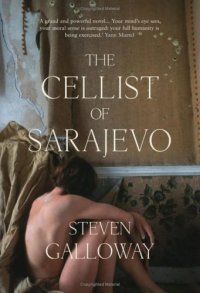
My final link is to another novel featuring cellos. The Cellist of Sarajevo (6) by Steven Galloway is set in 1992 during the Bosnian War. It tells the story of a cellist in the besieged city of Sarajevo, who plays his music in the street for twenty-two consecutive days as a message of hope and resilience.

~

And that’s my chain for March! My links have included fruit, Norway, hunting, horse races, Verona and cellos. It’s a very international chain this month, taking me from America to Bosnia via Norway, England, Italy and Belgium – and including three translated books.

In April we’ll be starting with any travel guide of our choice.

Top Ten Tuesday: Ten Quick Reads

This week’s topic for Top Ten Tuesday (hosted by That Artsy Reader Girl) is “Top Ten Quick Reads/Books to Read When Time is Short”. I am listing below a selection of ten books with fewer than 200 pages – perfect if you don’t have much time to read.

1. Every Eye by Isobel English – A beautifully written novella published by Persephone in which a woman on her honeymoon in Ibiza looks back on her life. (144 pages)

2. Carmilla by Sheridan Le Fanu – This early example of the vampire novel was first published in 1872 and is thought to have influenced Bram Stoker’s Dracula. (160 pages)

3. The Man from London by Georges Simenon – One of many standalone novellas by Simenon, this psychological thriller from 1937 is available in an English translation by Howard Curtis. (160 pages)

4. Water by John Boyne – The first in a new quartet of books based on the four elements. I’m looking forward to reading the second one, Earth, soon. (161 pages)

5. The Beacon by Susan Hill – An atmospheric and unsettling story about a family living in a lonely farmhouse in the north of England. (162 pages)

6. Mr Harrison’s Confessions by Elizabeth Gaskell – This 1851 novella about a young doctor working in a small, rural community is a prequel to Gaskell’s better known book, Cranford. (113 pages)

7. The Lifted Veil by George Eliot – I think this science fiction/horror story will surprise a lot of people as it’s not typical of Eliot at all! My edition also includes her essay, Silly Novels by Lady Novelists. (110 pages)

8. Chocky by John Wyndham – This short book about a boy with an imaginary friend is one of my favourites so far by Wyndham! (164 pages)

9. The End of the Alphabet by CS Richardson – A moving little book in which a man with only a month to live sets out on a tour of the world, visiting each place on his list in alphabetical order. (128 pages)

10. The Frozen Deep by Wilkie Collins – I love Collins and enjoyed this novella based on the ill-fated 1845 Franklin Expedition to the Arctic in search of the North West Passage. (112 pages)

~

Have you read any of these? Which other short books have you read and enjoyed?

Six Degrees of Separation: From The Loving Spirit to Endless Night

It’s the first Saturday of the month which means it’s time for another Six Degrees of Separation, hosted by Kate of Books are my Favourite and Best. The idea is that Kate chooses a book to use as a starting point and then we have to link it to six other books of our choice to form a chain. A book doesn’t have to be connected to all of the others on the list – only to the one next to it in the chain.

This month we are each starting with either the book with which we finished last month’s chain or the last book we read. My January chain finished with The Loving Spirit by Daphne du Maurier, so I’m going to use that as my starting point. The novel was published in 1931 and was du Maurier’s first. Here’s what I said in my review:

The Loving Spirit is a family saga spanning four generations of the Coombe family. It begins in 1830 with the story of Janet Coombe, a passionate young woman who is forced to abandon her dreams of going to sea when she marries and settles down to start a family with her husband, a boat builder. We then move forward through the decades, ending one hundred years later in the 1930s. Along the way we meet Janet’s son, Joseph, her grandson, Christopher, and finally her great-granddaughter, Jennifer. The book is divided into four parts, one devoted to each of the main characters, but I won’t go into any plot details here as each story has its own set of dramas and surprises which I’ll leave you to discover for yourself.

The Loving Spirit takes its title from an Emily Brontë poem, Self-Interrogation:

“Alas! The countless links are strong,
That bind us to our clay;
The loving spirit lingers long,
And would not pass away!”
.

Another book with a title taken from a poem (in this case Rudyard Kipling’s A Smuggler’s Song) is Watch the Wall, My Darling by Jane Aiken Hodge (1), a Gothic suspense novel set during the Napoleonic Wars. I described it in my review as a tale of “smugglers, soldiers and spies, a crumbling abbey believed to be haunted, family secrets and an inheritance to be decided”.

The plot of Alex Preston’s Winchelsea (2) also features smuggling. Our heroine’s adoptive father is murdered by a gang of smugglers in the East Sussex town of Winchelsea and she and her brother set out to take revenge. The book is set in the 1740s and includes a subplot involving the Jacobites and Bonnie Prince Charlie.

The Masqueraders by Georgette Heyer (3) also takes place just after the Jacobite Rising of 1745. This was one of the first Heyer novels I read and although I’ve read better ones since, it still holds a special place in my heart. I loved the Georgian setting, the characters and the entertaining plot.

The idea of ‘masqueraders’ leads logically to The Man in the Iron Mask by Alexandre Dumas (4). This is the final volume in Dumas’ d’Artagnan series, which began with The Three Musketeers, and revolves around a plot involving a man imprisoned in the Bastille who bears a striking resemblance to the King of France. I always enjoy Dumas and this is one of the stronger novels in the series.

A book which shares a word in the title is The Iron King by Maurice Druon (5), the first book in Druon’s series Les Rois maudits (The Accursed Kings). The series tells the story of Philip IV of France and his descendants, a line of kings “cursed to the thirteenth generation” by the Grand Master of the Knights Templar, whom Philip sent to burn at the stake. I still have the last two books in the series to read – hopefully this year!

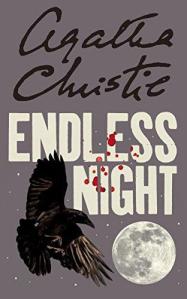
Another book which features a curse as part of the plot is Agatha Christie’s Endless Night (6). And the title of the book is also taken from a poem, bringing the chain full circle! The poem this time is William Blake’s Auguries of Innocence:

“Every Night and every Morn
Some to Misery are born.
Every Morn and every Night
Some are born to Sweet Delight.
Some are born to Sweet Delight,
Some are born to Endless Night.”

~

And that’s my chain for this month! My links have included: titles taken from poems, smugglers, Jacobites, masked men, the word ‘iron’ and curses.

In March we’ll be starting with Tom Lake by Ann Patchett.