My Commonplace Book: October 2022

A selection of words and pictures to represent October’s reading:

commonplace book
noun
a book into which notable extracts from other works are copied for personal use.

~

“Ah well, we all have our failings,” Capranis said philosophically. “And if failing to return borrowed books was the worst, the world wouldn’t be such a bad place.”

The Butterfly Picnic by Joan Aiken (1972)

~

‘I’m not so old,’ Father said. ‘I’m only forty-six and I must be the most eligible catch in Christendom.’

I smiled, but I was wondering if, with two dead wives and two divorces behind him, the princesses of Europe would agree with him.

In the Shadow of Queens by Alison Weir (2021)

~

“What I have heard comes straight out of a fairy-tale. But that is just what inventors are doing, is it not? They are stealing all the things out of the old wonder-tales and making them come real.”

Fool Errant by Patricia Wentworth (1929)

~

Blue plaque on Enid Blyton’s childhood home, East Dulwich

She said: ‘It is partly the struggle that helps you so much, that gives you determination, character, self-reliance – all things that help in any profession or trade, and most certainly in writing.’

The Real Enid Blyton by Nadia Cohen (2018)

~

Military officers saluting Benazhir. You could cry remembering it, and perhaps no matter how long you lived on this earth you would always cry remembering it. They’d hanged her father, put her in prison, cast her into exile. And now they saluted her, this woman of only thirty-five, because millions upon millions of people went to the ballot box and said they must. Zahra brushed her hand across her eyes. What did all this matter – the school cliques, Maryam’s awfulness, Hammad’s inattentiveness, the scuffed toes of her shoes. Why should any of this matter when the world was transformed?

Best of Friends by Kamila Shamsie (2022)

~

‘I understand and would have expected your desire to protect, because that is you, Tom. It is instinctive. My instinct is to abhor any fighting. No good comes from it – only human suffering.’

The Drums of War by Michael Ward (2022)

~

“Why do men like me want sons?” he wondered. “It must be because they hope in their poor beaten souls that these new men, who are their blood, will do the things they were not strong enough nor wise enough nor brave enough to do. It is rather like another chance with life; like a new bag of coins at a table of luck after your fortune is gone.”

Cup of Gold by John Steinbeck (1929)

~

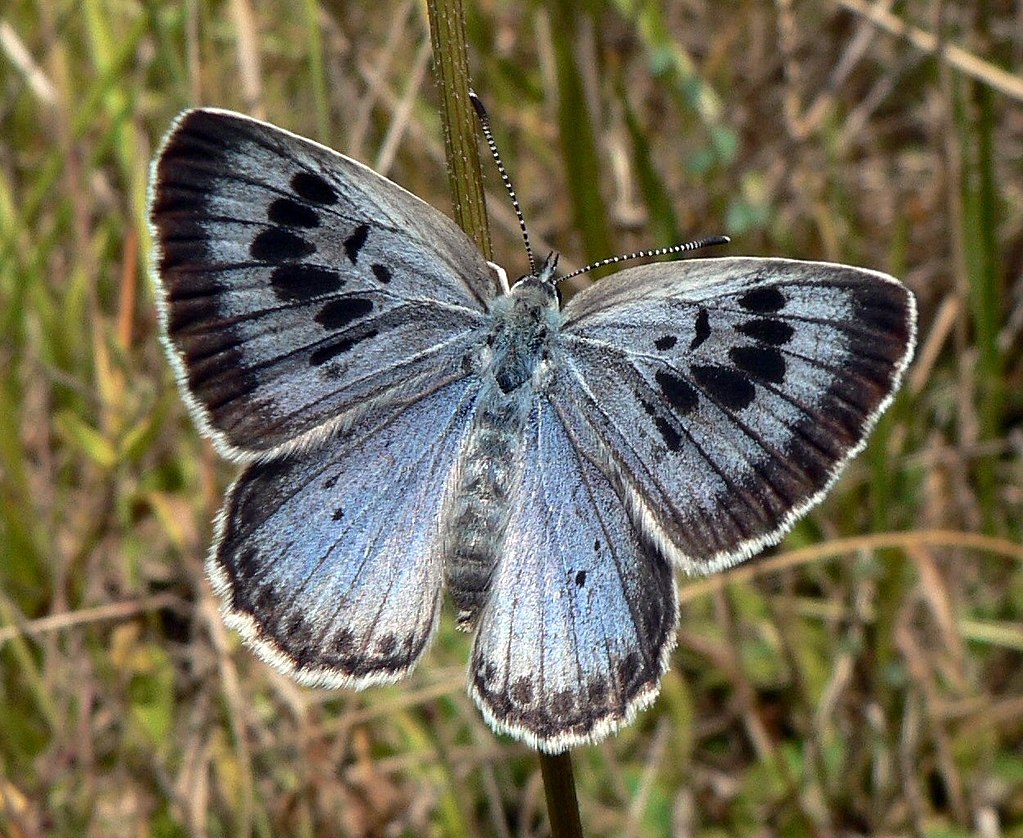
Large blue butterfly

Again, I should like to know more about the experience of that Chinese scholar, celebrated in Japan under the name Soshu, who dreamed that he was a butterfly, and had all the sensations of a butterfly in that dream. For his spirit had really been wandering about in the shape of a butterfly; and, when he awoke, the memories and the feelings of butterfly existence remained so vivid in his mind that he could not act like a human being.

Kwaidan: Stories and Studies of Strange Things by Lafcadio Hearn (1904)

~

PHILPOTT’S NAVAL SUPERSTITIONS

C: The Ship’s Cat is a venerated Personage, and never to be harassed by Dog, Man or Bear. Not only can she keep the Ship’s population of Mice and Rats to acceptable Numbers, she can also predict the Weather, tell when Land is near or raise a Storm if she is displeased.

Blue Water by Leonora Nattrass (2022)

~

Besides, there is no encouragement for ghosts in most of our villages, for they have scarcely had time to finish their first nap and turn themselves in their graves, before their surviving friends have travelled away from the neighborhood; so that when they turn out at night to walk their rounds, they have no acquaintance left to call upon. This is perhaps the reason why we so seldom hear of ghosts except in our long-established Dutch communities.

The Legend of Sleepy Hollow by Washington Irving (1820)

~

He sighed and rolled over. Calm yourself, brain, he admonished. Stop churning away. Don’t examine the what-ifs and the maybes, the wrong turnings and the dead ends in your life. That way madness lies.

The Romantic by William Boyd (2022)

~

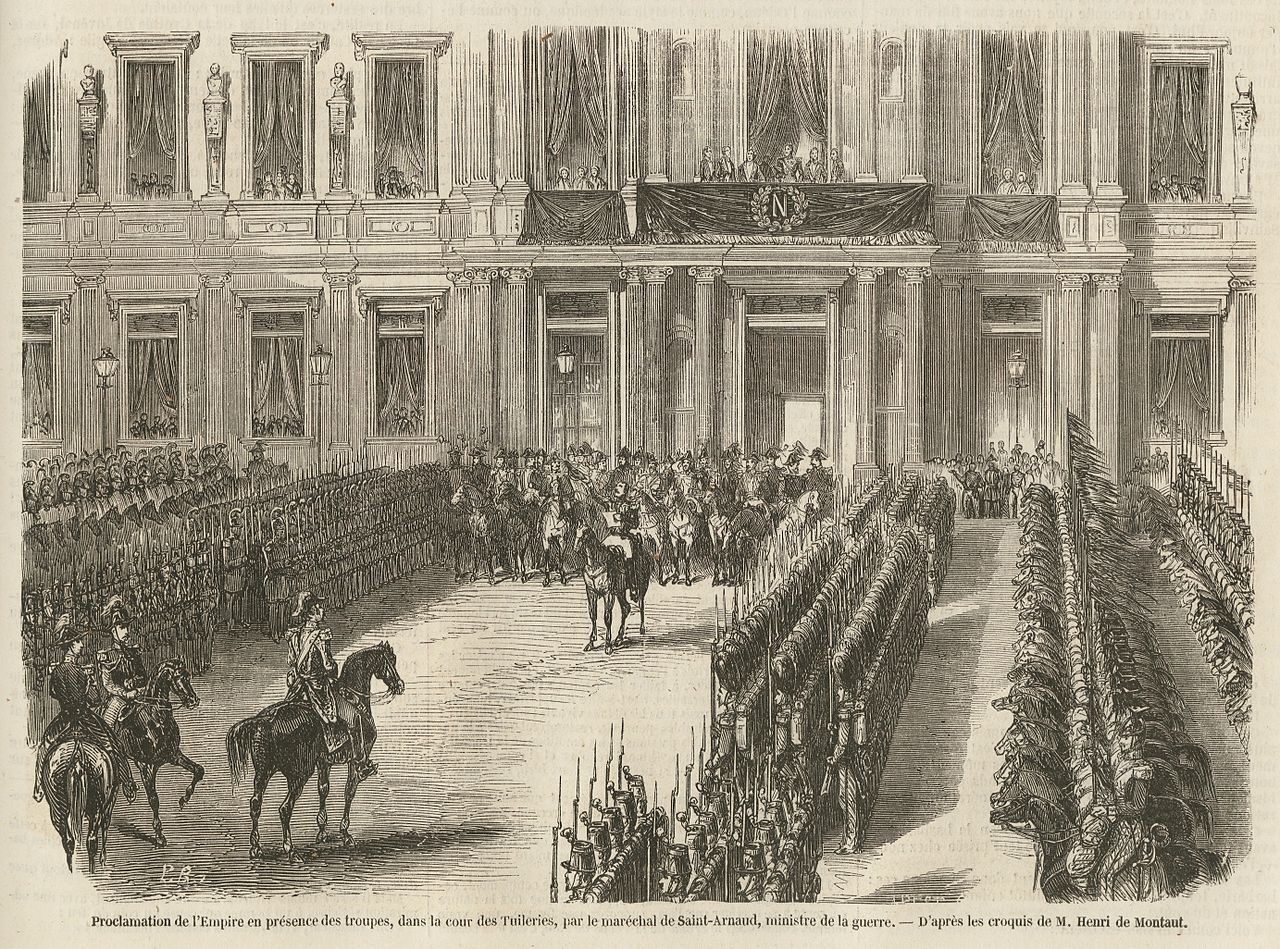
Official declaration of the Second Empire, 2 December 1852

He pondered over the growth of the family, with its different branches springing from one parent stock, whose sap carried the same seeds to the furthest twigs, which bent in different directions according to the ambient sunshine or shade. For a moment he thought he could see, in a flash, the future of the Rougon-Marquart family, a pack of wild, satiated appetites in the midst of a blaze of gold and blood.

The Fortune of the Rougons by Émile Zola (1871)

~

It struck Maureen that a person could be trapped in a version of themselves that was from another time, and completely miss the happiness that was staring them in the face.

Maureen Fry and the Angel of the North by Rachel Joyce (2022)

~

‘So much depends upon what it was that she treasured,’ Maud said, thoughtfully. ‘For me it is my health these days, as well as my family. During the war years, it was our liberty above all else. It varies at different times and from person to person: wisdom, money, life and love…’

The Winter Garden by Nicola Cornick (2022)

~

Favourite books read in October:

The Romantic and Blue Water

Authors read for the first time in October:

Nadia Cohen, Lafcadio Hearn, William Boyd, Patricia Wentworth, Washington Irving

Places visited in my October reading:

Greece, England, Ireland, Italy, US, Pakistan, Japan, Madeira, Cape Verde, Wales, Panama, Jamaica, France

~

October reading notes: October was a great reading month for me and included two books for 1929 Club, my Classics Club Spin book, some RIP XVII reads and a few NetGalley review copies. I also visited, in fictional form, lots of fascinating locations around the world.

November is a very busy time in the book blogging calendar, with Witch Week, Novellas in November, Non-Fiction November, AusReading Month, German Literature Month, SciFi Month and Margaret Atwood Reading Month all taking place right now! I’m unlikely to be able to take part in all of these, but there’s a lot going on and I’ll look forward to reading everyone’s posts.

Did you read any good books in October? What are your plans for November?

My Commonplace Book: September 2022

A selection of words and pictures to represent September’s reading:

commonplace book
noun
a book into which notable extracts from other works are copied for personal use.

~

‘The most learned minds in England disagree with you.’

‘Learned minds can still believe wicked things, especially when their own interests are at stake.’

Act of Oblivion by Robert Harris (2022)

~

He had never trusted anyone his entire life, only his instincts. Such a life creed afforded one wisdom because it meant he was never disappointed by the actions of men.

Hawker and the King’s Jewel by Ethan Bale (2022)

~

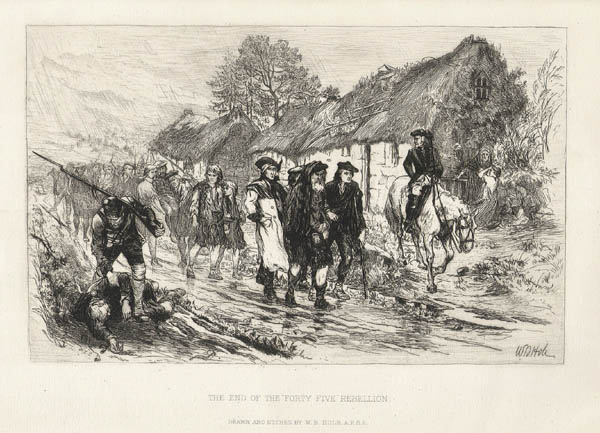
The End of the ‘Forty Five’ Rebellion, by William Brasse Hole

What was the point in a life without honour, and where the honour in a promise that is not kept?

The Bookseller of Inverness by SG MacLean (2022)

~

‘But the whole point about stories is that they’re for sharing. That’s the very nature of their existence. Stories are what bring us together. It’s how we try to understand each other and understanding is exactly what my job is all about.’

The Twist of a Knife by Anthony Horowitz (2022)

~

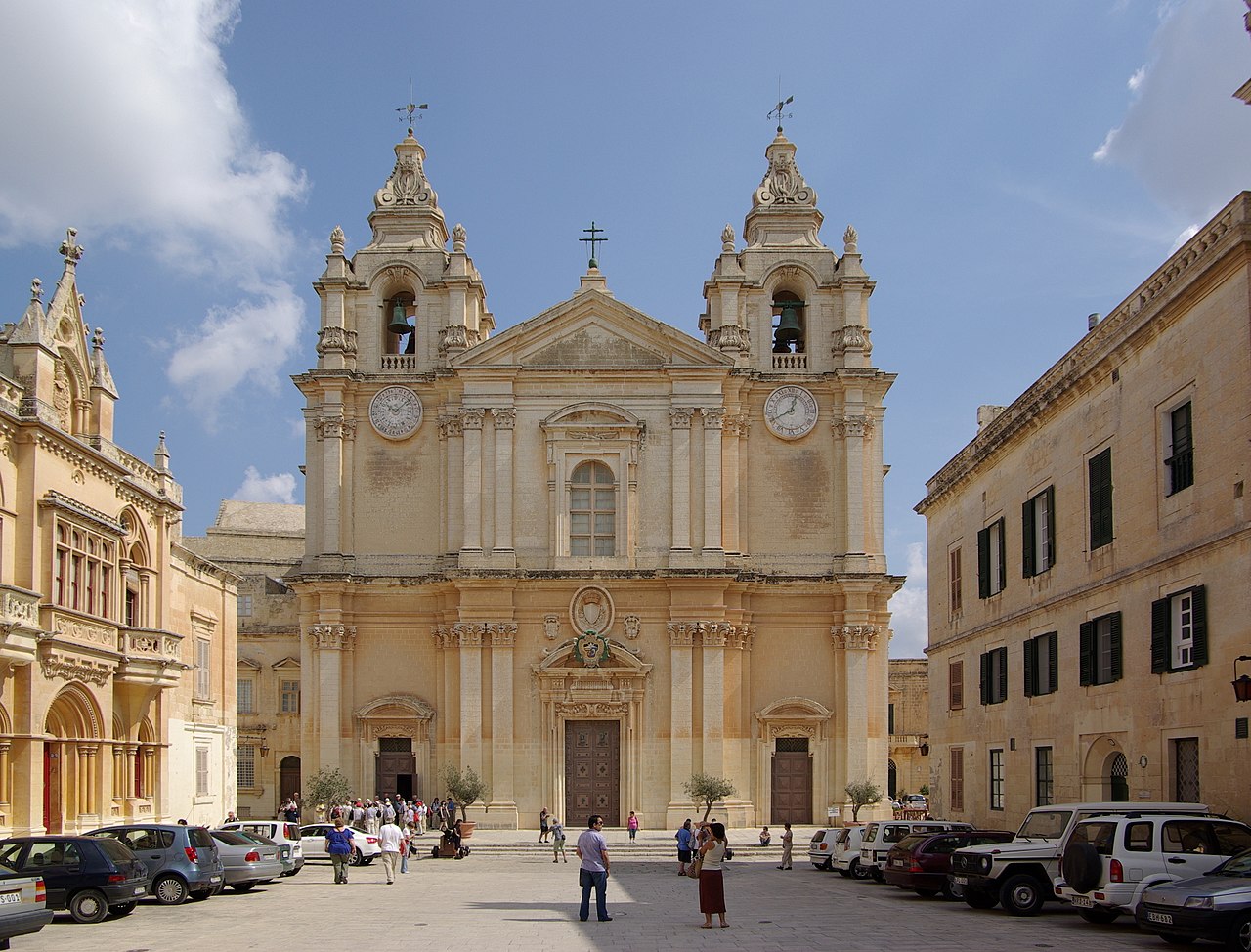
Mdina, Malta

And now it was changing again. How unsettled it made you feel – you thought your world would remain unchanged and go on just as it always had but then suddenly, without you doing anything, anything at all, it completely turned on its head.

The Hidden Palace by Dinah Jefferies (2022)

~

‘Some people wear armour,’ he remarked. ‘If you try and tear it off them you discover things you’d never have suspected. A past of suffering, an unavowable secret that made them into what they are, for better or worse.’

Ashes in the Snow by Oriana Ramunno (2022)

~

Only, words confused everything, they said either too much or not enough.

The Hatter’s Ghosts by Georges Simenon (1949)

~

Penelope and the Suitors by John William Waterhouse

He finds that silence on this topic lends the hearer the power of imagination, which is usually far richer than the truth.

Ithaca by Claire North (2022)

~

Favourite books read in September:

The Twist of a Knife

Authors read for the first time in September:

Ethan Bale, Oriana Ramunno, Claire North

Places visited in my September reading:

US (Connecticut and Massachusetts), England, Italy, Scotland, France, Malta, Poland, Greece

~

Reading notes: My September reading got off to a good start, but I seem to have read very little in the second half of the month. I’m pleased, though, that I’ve visited so many different countries in my reading – 8 in total. In October I need to read my Classics Club Spin book, The Fortune of the Rougons by Émile Zola, and 1929 Club is also coming up at the end of the month, so I will be reading something from that year as well. Otherwise, I’ll be continuing with some autumnal reads for R.I.P. XVII and catching up with some NetGalley review copies with October publication dates.

Did you read any good books in September? Do you have any plans for your October reading?

My Commonplace Book: August 2022

A selection of words and pictures to represent August’s reading:

commonplace book
noun
a book into which notable extracts from other works are copied for personal use.

~

At countless crossroads, the future becomes the past and an infinite number of possibilities die as an infinite number are born.

Fool’s Quest by Robin Hobb (2015)

~

‘In my experience,’ he told me, ‘if you run away from a thing just because you don’t like it, you don’t like what you find either. Now, running to a thing, that’s a different matter, but what would you want to run to? Take it from me, it’s a lot better here than it is most places.’

The Chrysalids by John Wyndham (1955)

~

The Lupanar, Pompeii

“When you see a bird flying,” she says, “that moment when it chooses to swoop lower or soar higher, when there’s nothing but air stopping it, that’s what freedom feels like.” She pauses, knowing that this isn’t the whole truth. The memory she tries to keep buried, the agony of her last day as a free woman rises to the surface. “But hunger feels the same, Fabia. Whether you are slave or free, hunger is the same.”

The Wolf Den by Elodie Harper (2021)

~

At times, circumstances conspire to make us believe the lies we tell ourselves. Everything – the weather, the season, the fall of light – sets the stage for our play; we find ourselves, instead of acting, becoming the characters, moving into a reality in which we’re inseparable from our roles.

The Flight Portfolio by Julie Orringer (2019)

~

Not knowing the truth was like leaving a book half read.

The Blood Flower by Alex Reeve (2022)

~

“Why do you decry the world we live in? There are good people in it. Isn’t muddle a better breeding ground for kindliness and individuality than a world order that’s imposed, a world order that may be right today and wrong tomorrow? I would rather have a world of kindly, faulty human beings, than a world of superior robots who’ve said goodbye to pity and understanding and sympathy.”

Destination Unknown by Agatha Christie (1954)

~

Florence Nightingale, an angel of mercy. Scutari hospital 1855

‘There is always a crisis of some kind in a hospital. Can’t you see? That’s why I so want to work here. I want to intervene at the point in people’s lives where they most need me.’

The Rose of Sebastopol by Katharine McMahon (2007)

~

“And what, finally, has he done with it?”

“Left it all to the nation.”

“Of all the dull and undeserving -”

“Precisely. He held the economic view that money paid to the nation in any form, taxes or gifts, was always wasted and did nobody any good, and he wanted to do nobody any good. At one time he thought of putting up shower baths in the North Pole or Turkish ones in the Sahara, but then he dropped that as being childish.”

Excellent Intentions by Richard Hull (1938)

~

If at this point Louisa plumbed her professional nadir, there is always this about a nadir, that any subsequent motion must inevitably be upwards.

Something Light by Margery Sharp (1960)

~

Favourite books read in August:

Fool’s Quest, The Rose of Sebastopol and The Wolf Den

Authors read for the first time in August:

Elodie Harper, Katharine McMahon

Places visited in my August reading:

The fictional Realm of the Elderings, post-apocalyptic Canada, France, Morocco, England, Ancient Rome, Crimea, Turkey

~

Reading notes: This month I’ve been concentrating on trying to finish my 20 Books of Summer list. This is the last day of the challenge, so I’ll be posting a summary soon. Although I didn’t manage to read all twenty books on my list, I came very close this year and am quite happy with that result!

Tomorrow marks the start of another of my favourite reading events – R.I.P! This involves reading mysteries, thrillers, ghost stories and anything else dark, spooky or suspenseful. I’ll be posting my list of potential reads in the next few days.

Did you read any good books in August? Do you have any plans for your September reading?

My Commonplace Book: July 2022

A selection of words and pictures to represent July’s reading:

commonplace book
noun
a book into which notable extracts from other works are copied for personal use.

~

That is how it was every year. It was the previous year that was wonderful, or even previous autumns and winters, regardless of their bouts of influenza and minor children’s ailments and all the worry they caused then. Was this due to an inability in him to be happy other than as a delayed reaction, or was this the fate of most men? He had no idea, for lack of having asked anyone the question, especially not his work colleagues, who would laugh at him.

The Venice Train by Georges Simenon (1965)

~

When did the skills of a cunning woman become witchcraft? When did Elizabeth Mortlock, with her magic girdle and prayers that so helped women in childbed, become wicked – when did that change, and admiration and trust in the secret knowledge of women in their great sufferings turns to fear and arrests?

The Bewitching by Jill Dawson

~

Elizabeth of York

“In my day, it was frowned upon for a woman to know her letters. People feared it might lead to light behaviour, such as writing love letters. But my father, God be thanked, was forward in his thinking, and now it is becoming accepted than an educated woman can still be a virtuous woman. Being able to read and write will equip you with the skills needed to run castles and palaces. You can write your own letters and your mind will be broadened by reading books.”

Elizabeth of York: The Last White Rose by Alison Weir (2022)

~

“You may say so if you like,” she said quietly. “You can call a sunset by a filthy name, but you do not spoil its beauty, monsieur.”

Pied Piper by Nevil Shute (1942)

~

“I learned (what I suppose I really knew already) that one can never go back, that one should not ever try to go back — that the essence of life is going forward. Life is really a one way street, isn’t it?”

At Bertram’s Hotel by Agatha Christie (1965)

~

Skellig Michael, Ireland

To travel is to turn the pages of the great book of life.

Haven by Emma Donoghue (2022)

~

‘It will do you good, doesn’t fix anything to mope, lad,’ the warder says encouragingly, slapping Mahmood on the shoulder. ‘I’ve seen plenty come and go and I’ll tell you this for not a penny, if your mind is a jail then it don’t matter where you are, but if you wake up thanking the Lord for the air in your lungs and wanting to make the most out of your predicament, then you’re halfway out the prison gate.’

The Fortune Men by Nadifa Mohamed (2021)

~

One by one they were all becoming shades. Better pass boldly into that other world, in the full glory of some passion, than fade and wither dismally with age.

Dubliners by James Joyce (1914)

~

Thomas Cromwell

“That’s the point of a promise, he thinks. It wouldn’t have any value, if you could see what it would cost you when you made it.”

The Mirror and the Light by Hilary Mantel (2020)

~

“You’re so fond of literature. I should have thought you would have been good at grammar.”

Julia thrilled to the unconscious compliment of that “you,” even as she replied smilingly: “Oh, I’m afraid I care more for what people write than the way they write it, and I love history because it’s stories about people.”

A Pin to See the Peepshow by F. Tennyson Jesse (1934)

~

Favourite books read in July:

Pied Piper, The Mirror and the Light and A Pin to See the Peepshow

Authors read for the first time in July:

Nevil Shute, Jill Dawson, F. Tennyson Jesse

Places visited in my July reading:

France, Italy, England, Wales, Ireland

~

Reading notes: I’ve continued to make good progress with my 20 Books of Summer list this month, finishing another six from the list. That brings my total to twelve – and I’m halfway through the next two, so I think there’s still a chance that I might actually complete the challenge this year!

Did you read any good books in July? Do you have any plans for your August reading?

My Commonplace Book: June 2022

A selection of words and pictures to represent June’s reading:

commonplace book
noun
a book into which notable extracts from other works are copied for personal use.

~

‘Yes.’ Eddie reached for his cigarettes. ‘There’s an appointment, and one day we have to keep the appointment. There’s no getting out of it. Until then we might as well live.’

Ada watched the tiny flame burst from Eddie’s match.

Tito said, ‘We should all have mottos, I think. That’s a good one.’

Fortune by Amanda Smyth (2021)

~

I once worked out that I’ve probably written more than ten million words in my lifetime. I’m surrounded by silence but at the same time I’m drowning in words and it hardly ever leaves me, that sense of disconnection.

A Line to Kill by Anthony Horowitz (2021)

~

Thomas Mann in 1905

“And my book?”

“It may be about that. Yes, it may. But readers will feel more that they are peering in through a window.”

“That might be the perfect description of what a novel is.”

“In that case, you have written a masterpiece. I should not be surprised that you are already so famous.”

The Magician by Colm Tóibín (2021)

~

She told him how Aunt Ellen had said she had to harden her heart. He shook his head. ‘I’m sure your aunt’s a wise woman, but I don’t think that’s the way to go. We’re none of us better for having harder hearts, whatever we’ve lost.’

That Bonesetter Woman by Frances Quinn (2022)

~

It was an isolated island of granite, thick with red pine trees, and inhabited only by a few fishermen, descendants of the pirates of the past. The feudal lord decided to make the island a place of exile. From that time on, for many years, all the criminals in his territory who had their death sentence commuted were imprisoned on this island, and it became known by the inauspicious moniker Gokumon, which can be read as Prison Gate as well as Hell’s Gate…

Death on Gokumon Island by Seishi Yokomizo (1971)

~

The Tempest by Giorgione

He has listened. That alone is remarkable. In that instant it strikes Zorzo that humans have a willingness to comprehend each other, and to share what they learn. It is the combination of these things that makes societies, and civilizations.

The Colour Storm by Damian Dibben (2022)

~

Do children inherit a parent’s characteristics? Will Janeska also have a propensity for blithe deceit and blind egotism? She has her father’s charm and garrulousness, his easy sociability – God knows, she didn’t get those traits from me. But maybe each soul comes into the world complete in itself and experience carries out the subtle carving of the final design.

The White Hare by Jane Johnson (2022)

~

There was an old Scots saying that came into Mary’s head as she hurried through the neglected gardens of her home:

It’s no what ye ha’e,
It’s what ye dae wi’ what ye ha’e
That matters.

Summerhills by D.E. Stevenson (1956)

~

Joan of Arc – illustration from 1504 manuscript

No one can walk this path for you. You cannot simply follow in another’s footsteps, as though life were a complicated dance, every turn and twist memorized and prepared for ahead of time. There are many things in the world you can inherit: money, land, power, a crown. But an adventure is not one of them; you must make your own journey.

Joan by Katherine J. Chen (2022)

~

Copper said: ‘In the absence of any concrete evidence, I plump for Leonard Stock as the murderer. First, because he’s the most unlikely person, and as anyone who has ever read a murder story knows, it’s always the most unlikely person who turns out to have done the deed – and fifty thousand authors can’t be wrong.’

Death in the Andamans by M.M. Kaye (1960)

~

She felt intensely; where she loved, there she loved absolutely. This had already caused her some conflict and drama. She fully accepted that, one day, it might bring on her undoing. Yet she would not change it, could not see why one would even live in this world without ecstasy or misery or genuine feeling.

Godmersham Park by Gill Hornby (2022)

~

Favourite book read in June:

That Bonesetter Woman

Places visited in my June reading:

Germany, Trinidad, Alderney, England, Japan, Italy, Andaman Islands, Scotland, France

Authors read for the first time in June:

Amanda Smyth, Frances Quinn, Katherine J. Chen

~

Reading notes: I’m off to a great start with my 20 Books of Summer – six books from my list read and reviewed already! I still have some long ones to read (including The Mirror and the Light, which I’m about 200 pages into so far), but I’m optimistic about my chances of actually completing the challenge this year! In July I’ll be continuing to work through my list and I also have a few upcoming review copies from NetGalley to read, as well as my Classics Club Spin book, The Chrysalids.

One final thing I want to mention here is Jo’s Six in Six meme, which is returning for another year. To take part, all you need to do is look back at your reading over the first six months of the year and list six books in six categories – the full instructions are on Jo’s blog now!

~

How was your June reading? Do you have any plans for July?

My Commonplace Book: May 2022

A selection of words and pictures to represent May’s reading:

commonplace book
noun
a book into which notable extracts from other works are copied for personal use.

~

Sometimes the decisions of our lives, decisions affecting many lives in some cases, are made after reflection, conversation, correspondence, sleepless nights, the weighing of disparate elements amid doubt and uncertainty. Sometimes they come in a moment at a window, looking out on a springtime day.

All the Seas of the World by Guy Gavriel Kay (2022)

~

But with them went deference and courtesy, fidelity and faith, a belief in man’s work and the pride that goes hand in hand with that belief. These fundamental standards wove the pattern of a Victorian day, and the writers and artists of that day became part of the pattern and echoed it in print or upon canvas, stamping it with their individuality, their own genius, creating an era that was at once warm and colourful and prosperous, an age away from our present world of meagre mediocrity.

The Rebecca Notebook: and Other Memories by Daphne du Maurier (1981)

~

Lyudmila Pavlichenko

Because people love war heroes…but even in my own beloved homeland, war heroes are supposed to be clean and uncomplicated. Those urging me to write my memoir will want a patriotic young woman who fought to defend her country, a heroine to root for with a story clean and simple as a full moon – and I was that young woman, but I was more. My moon had a midnight side.

The Diamond Eye by Kate Quinn (2022)

~

‘Once you meet Miss Talbot, I’m sure you’ll adore her,’ Lady Radcliffe said reassuringly. ‘We all do – even Dottie.’

‘I’m sure I would like very much to meet her,’ he said quite affably, although inside, the flames of suspicion had been fanned. And after all, though Dottie was a discerning judge of character and admittedly difficult to impress, Dottie was also a cat.

A Lady’s Guide to Fortune-Hunting by Sophie Irwin (2022)

~

“My friend, in working upon a case, one does not take into account only the things that are “mentioned”. There is no reason to mention many things which may be important. Equally, there is often an excellent reason for not mentioning them.”

The Murder on the Links by Agatha Christie (1923)

~

Perseus with the head of Medusa, (Benvenuto Cellini)

And while I am all in favour of using precision to describe something, might I suggest that you would be better off not doing something so dangerous so often that you need a specific word for it? Perhaps develop your self-control, rather than your vocabulary.

Stone Blind by Natalie Haynes (2022)

~

But there are temptations which it is not in the power of human nature to resist, and few know what would be their case if driven to the same exigencies. As covetousness is the root of all evil, so poverty is, I believe, the worst of all snares.

Moll Flanders by Daniel Defoe (1722)

~

Guilt was what kept you awake in the middle of the night or, if you managed to sleep, poisoned your dreams. Guilt intruded upon any happy moment, whispering in your ear that you had no right to pleasure. Guilt followed you down streets, interrupting the most mundane moments with remembrances of days and hours when you could have done something to prevent tragedy but chose to do nothing.

All the Broken Places by John Boyne (2022)

~

Favourite books read in May:

The Lady’s Guide to Fortune Hunting, Stone Blind and All the Broken Places

Places visited in my May reading:

England, US, Russia, France, Australia, Greece

Authors read for the first time in May:

Sophie Irwin

~

Reading notes: I haven’t read as many books in May as in previous months, but I still managed to take part in Daphne du Maurier Reading Week and Read Christie 2022, as well as getting ahead with some upcoming NetGalley reads. Tomorrow is the first day of this year’s 20 Books of Summer challenge (you can see my list here). Let’s see whether I can actually complete the challenge this time; I have my first book, Fortune by Amanda Smyth, ready to start!

How was May for you? What are you planning to read in June?

My Commonplace Book: April 2022

A selection of words and pictures to represent April’s reading:

commonplace book
noun
a book into which notable extracts from other works are copied for personal use.

~

Could it be each fate is not ordained, but random? No masterful design, but patched together with mere moments. That we were victims or victors of chance, nothing more?

The Trial of Lotta Rae by Siobhan MacGowan (2022)

~

It’s the way of the world, though unfair, and I hope one day women will have more agency to make decisions, especially about issues that affect them. Men control our lives, though I believe this should not be so. We should not be married off at the convenience of our fathers, brothers and uncles.

The Stone Rose by Carol McGrath (2022)

~

Replica of the Batavia

The world can think you’re all wrong when one person thinks you’re just right.

The Night Ship by Jess Kidd (2022)

~

He did not think: This must come to an end in time. A circle had no beginning or end; it existed. He did not allow thought to enter the hours that he waited for her, laved in memory of her presence. He seldom left the apartment in those days. In the outside world there was time; in time, there was impatience. Better to remain within the dream.”

In a Lonely Place by Dorothy B Hughes (1947)

~

“You’ve never been in a scrape yet but what it came about by accident. The thing is, no one else has these accidents.”

The Toll-Gate by Georgette Heyer (1954)

~

The Silchester eagle which inspired Rosemary Sutcliff

“We do not understand. And when the time comes that we begin to understand your world, too often we lose the understanding of our own.”

The Eagle of the Ninth by Rosemary Sutcliff (1954)

~

We talked of literature, of the novels we had read, of Shakespeare and Milton, and I recognised that books sparked the same joy in him that they did in me, for reading is an expression of fondness for life. It is love of life in the shape of words, not words in the shape of a life.

Winchelsea by Alex Preston (2022)

~

An entire wall is covered by three towering bookshelves, packed with volumes. It’s an awe-inspiring library, though another saying of Voltaire’s dances maliciously in my mind: “The more I read, the more I acquire, the more certain I am that I know nothing.”

The Fugitive Colours by Nancy Bilyeau (2022)

~

Brunhilde, Queen of Austrasia by Mary Evans

Some historians have viewed these letters as evidence of Brunhild’s fierce maternal instincts; others insist the emotion expressed in them was manufactured for politically expedient ends. It is most likely that both are true. Can a person ever completely divorce her genuine emotions from socially and politically useful ones?

The Dark Queens by Shelley Puhak (2022)

~

Lady almoners like Mrs Sinclair had spent their days engaged in a simple, if brutal, sorting of humanity. The indigent and destitute were the business of the Poor Laws and the workhouses. The wealthy had to be sniffed out and sent packing to their own doctors and their own bank accounts. The middling layer, thick and worried, were sent to provident societies, workers’ benefit unions or the right charity for their complaint. ‘The aim, Helen,’ Mrs Sinclair used to say, ‘is to end each month with no ill untreated and no bill unpaid.’

In Place of Fear by Catriona McPherson (2022)

~

Favourite books read in April:

In a Lonely Place, The Fugitive Colours, The Eagle of the Ninth, The Trial of Lotta Rae and In Place of Fear. Yes, it’s been a good month – I loved all of these and can’t leave any of them out!

Authors read for the first time in April:

Siobhan MacGowan, Shelley Puhak, Alex Preston, Catriona McPherson

Countries visited in my April reading:

Australia, England, Scotland, US, France

~

Reading notes: This month I managed to read my Classics Club Spin book and two books for 1954 Club, as well as continuing to work through the titles on my NetGalley shelf. I don’t have many plans for May, but I will try to take part in Ali’s Daphne du Maurier Reading Week and I’ll probably read the May selection for Read Christie 2022, which is The Murder on the Links.

How was your April? What are you hoping to read in May?