Good by Stealth by Henrietta Clandon – #ReadIndies

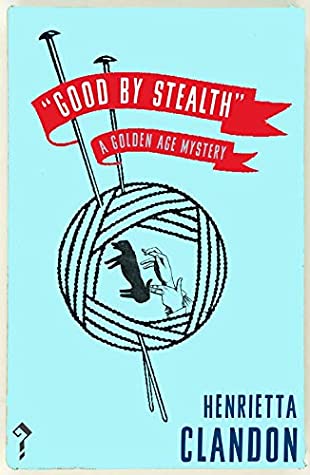
I had so many reading plans for February, yet the month is slipping away and I’ve hardly read any of the books I’d hoped to read. However, I really wanted to read something for the Read Indies Month hosted by Karen and Lizzy and I’m pleased that I’ve managed to fit in Good by Stealth by Henrietta Clandon, published by Dean Street Press.

This wonderful Golden Age crime novel from 1936 was written by John Haslette Vahey; Henrietta Clandon was one of his many pseudonyms – he seems to have been very prolific and used different names for his work with different publishers or in different genres. I found this one so much fun to read, I will certainly be reading more of his books! It reminded me very strongly of The Murder of My Aunt by Richard Hull, but also a little bit of Miss Buncle’s Book by DE Stevenson and Queen Lucia by EF Benson.

Good by Stealth is what is known as an ‘inverted mystery’. We know from the beginning that our narrator, Miss Edna Alice, has been found guilty of sending anonymous letters – letters which have caused suicides, broken engagements and ruined relationships – but what we don’t know is why. In Miss Alice’s own words, we watch the sequence of events unfold which lead to the writing of the letters and we hear her reasons for doing so. There’s no real suspense because we know that eventually she will be caught, tried and sent to prison, but by the end of the book we have enough information to decide for ourselves whether there is any justification for Miss Alice’s actions.

Miss Alice begins her story by describing her arrival in the small English village of Lush Mellish, where she settles into her new cottage with her dog and sets out to make friends with the other residents, but succeeds only in turning them all against her. Her attempts to join the art circle, the literary society and the tennis club all end in disaster – and of course, it is never Miss Alice’s fault.

I paid my subscription and joined the tennis club. It was sometime later that I heard how my comments – which were quite harmlessly witty – had been repeated and exaggerated, causing great offence. It was no good trying to prove that, and in the end I decided that the truth still remains the truth, even if embroidered. But people hate to recognise themselves in what they take to be a faulty mirror.

Although Miss Alice is undoubtedly an unpleasant, self-righteous woman, it’s impossible not to have sympathy for her when, first of all, not just one but several of her pet dogs die in ways which seem not to have been accidental, and then the other inhabitants of Lush Mellish appear to engage in a series of campaigns designed to humiliate her and drive her out of the village. The cruelty of these people, particularly the elderly woman who lives next door, is so excessive and spiteful that you can’t help but feel sorry for our poor narrator, despite her own nastiness.

But these things did me no harm, the more so as cook knew a great deal about the slanderers and backbiters, and as good as told me that some of them were determined to drive me out of the town. Can you imagine people so lost to any sense of decency? In the end they had their wicked will, and so contrived it that I appeared technically to be at fault. But was it my fault if I had not their cunning and lack of principle?

In Miss Alice’s version of events, she has the best of motives for beginning to send anonymous letters to the people of Lush Mellish containing helpful pieces of advice aimed at improving their morals and correcting their behaviour. But of course the recipients of the letters don’t see things that way and as we are only given one side of the story we have to make up our own minds as to whether Miss Alice was really as well-meaning as she claims to have been.

The book is hugely entertaining and often very funny (I particularly loved Miss Alice’s descriptions of the ‘wicked old woman’ next door) and although some parts of the story don’t seem at first to have much to do with the overall plot, everything falls into place by the end and the significance of even the smallest detail becomes clear. This is not a conventional crime novel or mystery in any way, but there is still an element of detection towards the end, when the police begin to investigate Miss Alice’s alleged crimes. Again, because we are seeing things from the suspect’s point of view rather than the detective’s, my sympathies were with Miss Alice and even though I knew from the opening chapter what the outcome would be, I was still hoping she wouldn’t be caught!

If anyone has read any of Henrietta Clandon’s other books – or anything published under one of Vahey’s other names – please let me know which one I should try next!

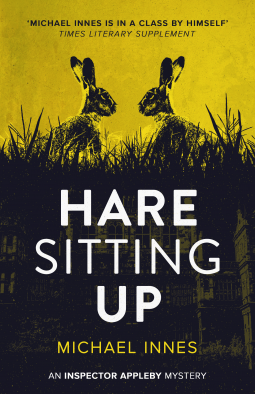
Hare Sitting Up by Michael Innes

Hare Sitting Up was originally published in 1959 and is the eighteenth book in Michael Innes’ Inspector John Appleby series – the good news is that it’s absolutely not necessary to have read the first seventeen before starting this one! I have read a few of the previous books and they do all stand alone; they are also all very different and this one is different again.

The unusual title comes from Women in Love by D H Lawrence:

“You yourself, don’t you find it a beautiful clean thought, a world empty of people, just uninterrupted grass, and a hare sitting up?”

At the time when Innes was writing this novel, which was the era of the Cold War, scientists were developing ways that could make the sort of world Lawrence describes – a world free of human beings – into reality, through means such as nuclear and biological weapons. In Hare Sitting Up, Sir John Appleby is investigating the disappearance of Professor Howard Juniper, a top government scientist who has been conducting secret research into biological warfare. As there’s a chance that Juniper may have taken some of these dangerous substances out of the laboratory with him, it is important that he is found as quickly as possible and with the minimum publicity. Appleby enlists the help of Juniper’s brother Miles, a headmaster at a prestigious boys’ school – and to say any more would start to give too much of the plot away!

This book is more of a thriller than a mystery, although there are elements of both. Due to the short length, once we get past the slow opening chapter, the story moves forward at a steady pace with the action switching between the home of an eccentric ornithologist, an island off the coast of Scotland, and Splaine Croft School, where Miles Juniper works. There’s a great chapter in which Judith, Appleby’s wife, visits the school to look for clues and has to find a way to explore the buildings without attracting suspicion; I like Judith, whom we met earlier in the series, and it was good to see her being entrusted with some investigations of her own.

Reading this novel in the middle of a pandemic made the discussions on the end of humanity and the destruction of the world feel particularly bleak, but the twists and turns which accompany the search for the missing Juniper brother were entertaining and, thankfully, the book was not as depressing as I thought it might be at first! Some parts of the plot were very predictable (I guessed one of the twists very early in the book), but others were very far-fetched and unlikely and, as is often the case with Innes, you have to be prepared to suspend your disbelief. I didn’t like it as much as some of his others, but for a short, quick read I found it quite enjoyable.

Thanks to Agora Books for providing a copy of this book for review via NetGalley.

Dance of Death by Helen McCloy

This is the latest addition to Agora Books’ Uncrowned Queens of Crime series, making long-forgotten crime novels by female authors available again to modern readers. I think it’s probably my favourite so far. Originally published in 1938, it’s the first of several books written by American author Helen McCloy which feature the psychiatrist Dr Basil Willing.

The novel begins with the discovery of the body of a young woman, buried under a heap of snow in a New York street. Bizarrely, the cause of death appears to be heatstroke and the girl’s face is stained bright yellow. The police think they have identified her as Kitty Jocelyn, a beautiful debutante who has become famous as the face of an advertising campaign, but things take an even more confusing turn when they speak to her cousin, Ann Claude, who closely resembles the dead girl and who claims that she had been persuaded to impersonate Kitty at her recent coming out party.

Inspector Foyle begins to investigate this intriguing mystery, assisted by Basil Willing, an expert in Freudian psychoanalysis who provides a very different and, for the time, probably quite modern approach to crime-solving. While Foyle looks for tangible evidence and clues that will point to the culprit, Willing is more interested in the ‘blunders’ people make: a slip of the tongue, a lost item, a forgotten name. “Every criminal leaves psychic fingerprints,” he says, “And he can’t wear gloves to hide them.” I found Willing’s methods of solving the mystery fascinating, whether it was suggesting psychological reasons for the blunders, conducting word association tests or using his knowledge of the human mind to find out the motivation behind the crime.

Apart from Basil Willing, whom I liked and will look forward to meeting again, the other characters in the book are well drawn and believable too, which is important as the psychological angle of the story wouldn’t have worked if the characters had been nothing more than stereotypes. I didn’t manage to solve the mystery myself; although I suspected the right person, their motive came as a complete surprise to me, so I was content to let Willing do the investigating and explain the solution to me at the end. There are other aspects of the novel which I found nearly as interesting as the mystery, though, such as the ethics of advertising, attitudes towards money in 1930s society and the responsibilities of being a public figure. I thoroughly enjoyed Dance of Death and I’m sure I’ll be looking for more by Helen McCloy.

Thanks to Agora Books for providing a copy of this book for review via NetGalley.

Dead March for Penelope Blow by George Bellairs – #RIPXV

This is the third of George Bellairs’ Inspector Littlejohn mysteries I’ve read. I enjoyed the other two (A Knife for Harry Dodd and Death in Room Five), but I think this one is the best so far.

First published in 1951, Dead March for Penelope Blow is set in the small English town of Nesbury, home to the Blow family who live in the big house adjoining the bank which used to be the family business. The novel opens with Penelope Blow, one of the two surviving daughters of old William Blow, the banker, calling at Scotland Yard in the hope of seeing Inspector Littlejohn. Littlejohn, however, is away attending a murder trial and Penelope is forced to return to Nesbury, leaving a message for the Inspector to call her as soon as possible. Unfortunately, before Littlejohn has time to contact her and find out what she had been so desperate to tell him, Penelope falls to her death from a window while leaning out to water flowers in a window box.

As Littlejohn, with the help of his assistant Cromwell, begins to investigate the circumstances of Penelope Blow’s death, an intricate mystery unfolds involving family secrets, wills and inheritances, forgeries and thefts, and a suspected case of poisoning. The novel is carefully plotted, with some clever red herrings, and various revelations coming at just the right points in the story. It’s not really a very original mystery, but I still found it intriguing and although I correctly guessed who did it, I didn’t manage to work everything out before Littlejohn and Cromwell did.

What makes this a particularly enjoyable novel, though, is the strong, almost Dickensian, characterisation (in fact, when Cromwell is listening to the housekeeper, Mrs Buckley, talking about her ‘umble home, he thinks of Uriah Heep from David Copperfield). From Mr Jelley, the frail, elderly butler, and John Slype, the cheerful little window cleaner, to the fierce and beautiful Lenore Blow and her father Captain Broome, whom Littlejohn describes as ‘like a character out of Kipling’, they are all very strongly drawn and each of them, however minor, adds something special to the story. In contrast, Littlejohn and Cromwell are quite ordinary, but I do like them both!

Another interesting thing about this book is that, although it’s set in the post-war period and there are a few references to this (we are reminded that food rationing is still in place, for example), the story feels as though it could have been taking place in a much earlier period. The Blow family almost seem to be frozen in time, with relationships between the male and female members of the household and between servants and employers as rigidly structured as they would have been in Victorian times. The social history aspect of the novel is almost as fascinating as the mystery.

Having enjoyed this one so much, I’m looking forward to reading more from the Littlejohn series!

Thanks to Agora Books for providing a copy of this book for review via NetGalley.

This is my third and final book read for this year’s RIP Challenge.

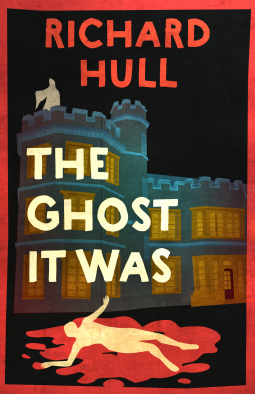
The Ghost It Was by Richard Hull – #RIPXV

I’ve enjoyed several of Richard Hull’s novels over the last few years – particularly The Murder of My Aunt and Left-Handed Death – and with Halloween quickly approaching, The Ghost It Was (first published in 1936) sounded like a good one to read next.

The novel begins with aspiring journalist Gregory Spring-Benson trying to get a job as a newspaper reporter. Having failed to impress the editor, Gregory is given new hope when he comes across a badly written article about James Warrenton’s purchase of the supposedly haunted Amberhurst Place. James Warrenton happens to be his uncle – his very rich uncle – and perhaps if Gregory goes to visit him in his new home he will be able to gather material for a much more interesting article that will help to launch his career in journalism. If he can also persuade Uncle James to leave him as much money as possible in his will, even better!

On his arrival, however, Gregory finds that he is not the only one hoping to secure his inheritance; three other nephews and a niece have also descended upon the house in an attempt to ingratiate themselves with their uncle. But while the cousins are busy plotting and scheming against each other, the ghost of Amberhurst Place makes an appearance at the top of a tower. Deaths soon follow, but is the ghost responsible or is there a human culprit?

Although all of the books I’ve read by Richard Hull so far have been very different, unlikeable characters seem to be the one thing they have in common! This worked very well in The Murder of My Aunt, where the characters were so horrible they were funny, but in this book they are just thoroughly unpleasant and not much fun to spend time with at all. I could easily have believed that almost any of them was the murderer and didn’t really care which of them was. It didn’t help that after a strong opening, introducing us to Gregory Spring-Benson and describing his ordeals at the newspaper office, the narrative then jumps around between the other cousins, the butler, a clergyman and some Scotland Yard investigators. We barely see Gregory after this and I felt that the novel lost focus through trying to involve too many different characters at once.

The ghost story aspect of the novel is well done – not at all scary, but it adds some atmosphere and makes it more difficult to work out exactly how the murders are being carried out. Despite the unpleasant characters and the lack of focus I’ve mentioned, it’s quite an enjoyable mystery to try to solve and the denouement, when it comes, is unusual and unexpected. Instead of tying everything up for the reader, Hull leaves us to make up our own minds and to decide whether we’ve correctly interpreted what we have been told. Not a favourite Hull novel, then, but still worth reading and I will continue to explore his other books.

Thanks to Agora Books for providing a copy of this book for review via NetGalley.

This is my second book read for this year’s R.I.P. Challenge.

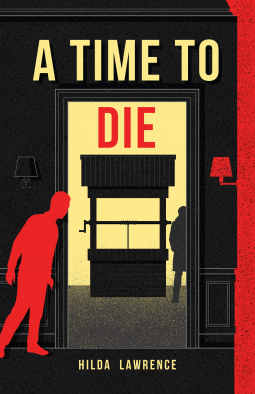
A Time to Die by Hilda Lawrence

This is the second of Hilda Lawrence’s three mystery novels featuring the private detective Mark East, but the last one I have read. Having previously enjoyed the first book, Blood Upon the Snow, and the third, Death of a Doll, I was hoping that this one would be just as good. It was originally published in 1945 and has been reissued by Agora Books as part of their Uncrowned Queens of Crime series.

Like Blood Upon the Snow, A Time to Die is set in the small town of Crestwood, near Bear River. Mark East, having solved a crime there the winter before, has returned in the summer to spend a few weeks with the friends he made during his previous visit. He’s looking forward to a nice relaxing break this time, but on the evening of his arrival he is invited to a charity supper at the church where two fellow guests – a child and an old woman – are struck by arrows during an archery contest. When, later that night, the Beacham family’s governess goes missing, it seems that the two incidents could be related. Aware that his peaceful holiday is quickly becoming much more eventful than he’d anticipated, Mark is reluctant to take on the case, but changes his mind when a body is discovered…

Of the three books in the Mark East series, I think this one is the weakest, but I did still find it entertaining. The plot is quite complex, or at least it seems to be at the beginning when I felt I was wading through a jumble of confusing and unconnected events and struggling to follow what was happening, but once things begin to fall into place and we learn a little bit more about the background of the missing governess, the story becomes much more compelling. The novel has a huge cast of characters (more than necessary really; a lot of them could probably have been left out without having any impact on the story), which means there are plenty of suspects and I didn’t guess who the murderer was before the solution was revealed.

If you haven’t read any of Hilda Lawrence’s novels yet, I would recommend reading Blood Upon the Snow before this one if you can. Many of the characters we meet in this book were introduced in the previous one and it’s also interesting to revisit the same community in two different seasons and see how life in the town has changed now that the cold, snowy winter weather has been exchanged for blazing summer heat. One thing that disappointed me, though, was that Beulah and Bessy, the two elderly spinsters who play important roles in solving the mysteries in the other two books, hardly appear at all in this one – I think we only see Bessy once or twice. It’s a shame because seeing them carrying out their own amateur detective work in parallel with Mark had been one of the highlights of this series.

Not my favourite by Hilda Lawrence, then, but I’m glad I discovered this series and I just wish she had written more than three of these books!

Thanks to Agora Books for providing a copy for review via NetGalley.

This is book 2/20 from my 20 Books of Summer list.

The Split by Sharon Bolton

Sharon Bolton is an author whose books I always enjoy, even though I don’t read a lot of contemporary crime fiction these days. I had expected her next book to be the promised sequel to 2018’s The Craftsman, but I was quite happy to find that The Split was a standalone thriller as her earlier standalones such as Sacrifice, Awakening and Little Black Lies have been some of my favourites.

The Split takes us to South Georgia, a remote and inhospitable island in the southern Atlantic Ocean where twenty-eight-year-old Felicity Lloyd is working as a glaciologist for the British Antarctic Survey. It’s fascinating work and Felicity knows she has been given a wonderful opportunity, but she also has another reason for accepting the job – a chance to put as much distance as possible between herself and Freddie, a man from her past of whom she is still afraid. However, it seems that even here, on the other side of the world, she has been unable to escape. Freddie is coming for her, on the last tourist boat of the summer, and has sent her a letter that fills her with fear:

My dearest Felicity,
Finally, I’ve found you. South Georgia? Wow! Know, my darling, that there is nowhere you can go that I won’t follow –

Who exactly is Freddie and what does he want with Felicity? We find out later in the book, but first we have to go back nine months in time to Cambridge where a series of murders has been committed. Felicity’s connection, if any, with these murders is unclear; all we do know is that she is still haunted by some previous traumatic experiences and has been attending sessions with a therapist. Eventually everything will be revealed, but before we get to that point there are plenty of the twists and turns that are to be expected from a Sharon Bolton novel.

When I first started to read this book it was the South Georgia setting that initially appealed to me, but although we are given some beautiful descriptions of the landscape and the cold, harsh environment, I found I wasn’t being drawn into the story as much as I would have liked. The details of whaling operations and Felicity’s research into glaciers didn’t really interest me – and being thrown straight into the middle of the story with no idea of who anybody was or what was happening didn’t help, even though I understood the reasons for that structure. It wasn’t until the action switched to Cambridge and the backgrounds of Felicity and the other characters began to be explored that I was able to settle into the novel and enjoy it.

I can’t really tell you much about the Cambridge section of the book as it would be too difficult to avoid spoilers, but it quickly becomes clear that we can’t rely on everything Felicity tells us because she has been left so badly scarred by her past experiences. Joe, her therapist, who is one of the other main characters whose perspective we see, has suffered his own recent traumas and it’s obvious that there is also more going on in his life than we are aware of at first. The truth about these two characters – and others, including Bamber, a wild and angry young woman who is very protective of Felicity, and Sean, a mysterious figure who stalks the streets of Cambridge at night – unfolds slowly, with everything coming together when we return to South Georgia in the dramatic final third of the novel. However, I found most of the twists quite easy to guess, which is unusual for a Sharon Bolton book and a bit disappointing.

This hasn’t become one of my favourites, then, but I did enjoy it after a slow start. I must find time to read Blood Harvest, the only one of her previous books I still haven’t read!

Thanks to Trapeze for providing a copy of this book for review via NetGalley.