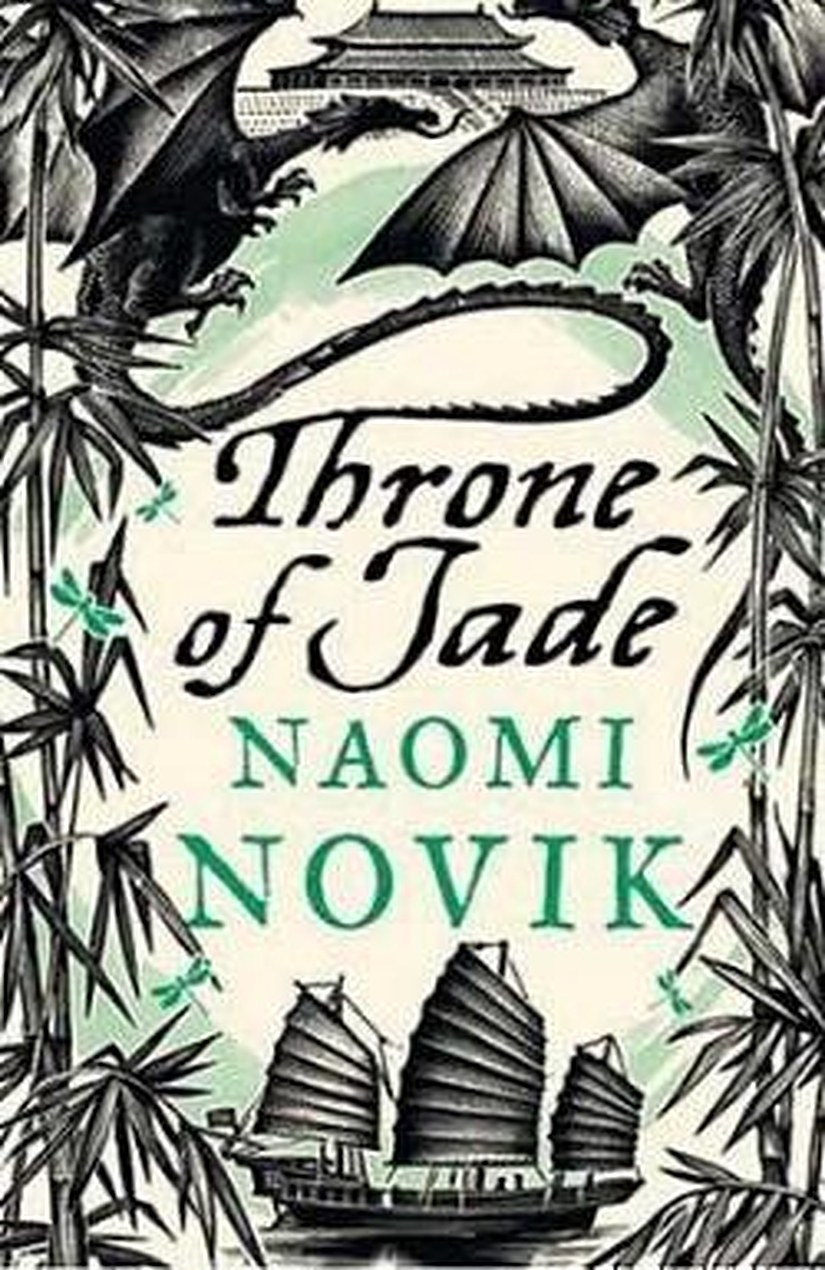
Throne of Jade by Naomi Novik

Throne of Jade is the second book in Naomi Novik’s Temeraire series set during an alternate version of the Napoleonic Wars where domesticated dragons are used for aerial warfare. It’s been a long time since I read the first book, Temeraire – in fact, I was shocked to discover that it’s been eight years! – but I found that I could pick up the story again without too much trouble and will try not to wait so long before starting the third one.

If you’re not a fan of fantasy and are put off by the mention of dragons, I can reassure you that the dragons are the only real fantasy element in these books (at least in the two that I’ve read) and they feel much closer to the seafaring historical novels of Patrick O’Brian than anything else. In Novik’s series, dragons have existed for centuries and by the time of the Napoleonic Wars in the early 19th century they have become an accepted part of the armed forces of many countries around the world. The dragons are intelligent creatures, capable of human speech, and form strong bonds with their human handlers.

In the first novel, we were introduced to Will Laurence, a former Royal Navy Captain who becomes the handler of Temeraire, a dragon who hatches from an egg found on a captured French ship. Having trained together for service in Britain’s Aerial Corps, Laurence and Temeraire develop a close friendship, but when it emerges that Temeraire is one of a rare breed – a Chinese Celestial – it seems that they may have to be separated. Celestials are supposed to be reserved for royalty and the Chinese had intended Temeraire to be a gift for Napoleon. As Throne of Jade opens, a group of envoys have arrived from China to recover their rare dragon. Due to Temeraire’s bond with Laurence, the envoys agree to allow Laurence to accompany them back to China with the dragon and the Navy provides a dragon transport vessel, HMS Allegiance, for the voyage.

In 1805, when the novel is set, it takes many months to sail from Britain to China. This means that most of the story takes place at sea on board the Allegiance, which gives the book a transitional feel with the sense that you’re always waiting for the destination to be reached so that the plot can finally pick up pace. That’s not to say that nothing happens during the journey, because it does – there are encounters with the enemy, storms and sickness, and several possible attempts on Laurence’s life – but I did feel that it was very drawn out and I was pleased when the ship eventually arrived on the shores of China.

As with the first book, the writing style and language are suitable for the setting, with none of that inappropriately modern dialogue that can pull you out of the time period. Although the addition of the dragons and the Aerial Corps obviously means that a large part of the story is fictional, real historical events are still playing out in the background. During the voyage, Laurence and his companions receive news of the French victory at the Battle of Austerlitz and the death of the Prime Minister, William Pitt the Younger.

The long period spent at sea does allow for more character development and for some interesting conversations between Laurence and Temeraire in which Laurence begins to see things from Temeraire’s point of view and to understand how much he has taken for granted regarding the feelings and sensibilities of dragons. He also starts to discover that the Chinese people treat their dragons very differently than the British – and once in China, these differences become more obvious and pronounced. Even if he’s allowed to, will Temeraire want to return to Britain with Laurence after experiencing another way of life? I won’t tell you what happens, although knowing that there are another seven books in the series after this one does take away a lot of the suspense in that respect. Black Powder War is next and I’m looking forward to reading it, hopefully not after another break of eight years!

This is book 13/20 of my 20 Books of Summer 2023

This is book 34/50 for the 2023 Historical Fiction Reading Challenge.

The Summer Tree by Guy Gavriel Kay

Having read most of Guy Gavriel Kay’s more recent novels, I decided it was time to go back to the beginning and read his earliest work, The Fionavar Tapestry, a fantasy trilogy published between 1984 and 1986. I had been warned that this was very different from his later books, and now that I’ve read the first volume, The Summer Tree, I would agree, but I was pleased to find that I enjoyed it anyway.

The Summer Tree begins with five Canadian students – Kevin Laine, Paul Schafer, Kimberly Ford, Jennifer Lowell and Dave Martyniuk – attending a lecture by Professor Lorenzo Marcus at Toronto University. After the lecture, the Professor invites the five of them back to his hotel, where he reveals to them that his true identity is Loren Silvercloak, a mage from the land of Fionavar. His High King, Ailell of Brennin, is celebrating his fiftieth year on the throne, and Loren has been sent to our world to bring five guests to the celebrations. Once in Fionavar, however, the five find themselves caught up in the politics of this other land and discover that each of them will have a part to play in the upcoming battle against the evil god Rakoth Maugrim, the Unraveller.

I was already familiar with Guy Gavriel Kay’s incredible worldbuilding from his other books – the way he plunges the reader straight into fully formed landscapes based on thinly disguised versions of real historical settings (such as China’s Song Dynasty in River of Stars or medieval Spain in The Lions of Al-Rassan). The worldbuilding is just as strong in this novel, but although he does draw on the mythology of our own world (particularly Celtic and Norse), this time he relies much more heavily on Tolkien and traditional high fantasy. That’s not surprising as Kay did work with Tolkien’s son Christopher on the editing of Tolkien’s posthumous book The Silmarillion. And so, in The Summer Tree we have Loren Silvercloak in the role of Gandalf the Grey, Rakoth Maugrim who resembles Sauron, an exiled Dwarf king, and the Elf-like lios alfar and their counterparts the svart alfar. There’s also a CS Lewis influence, I think, as there’s a character with the name Maugrim in the Narnia books and the Fionavar city of Paras Derval made me think of Narnia’s Cair Paravel.

With such a vast and complicated world to explore, Kay gives each of his five main characters individual storylines, taking them to different areas of Fionavar and allowing them to interact with different groups and tribes. For example, Dave Martyniuk becomes separated from the others early on and spends most of the novel getting to know the Dalrei, a plains-dwelling tribe of hunters, while Kim Ford discovers that she has the powers to become a Seer. However, I felt that some of the characters lacked depth and the novel as a whole feels less mature and polished than his later books.

I didn’t love The Summer Tree, but I liked it enough to want to continue with the second book in the series, The Wandering Fire – and as this one ended on a cliffhanger I probably shouldn’t wait too long before picking the next one up! I also still have A Song for Arbonne and The Sarantine Mosaic left to read, although at this point I’ll be surprised if anything surpasses Tigana as my favourite book by Kay.

This is book 4/20 of my 20 Books of Summer 2023

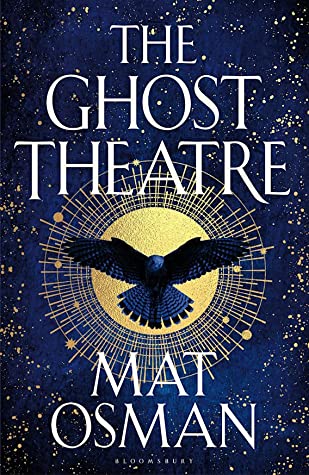
The Ghost Theatre by Mat Osman

The Ghost Theatre, Mat Osman’s second novel, is the story of two young people who meet on the rooftops of Elizabethan London. One of them is Shay, a teenage girl who dresses as a boy and belongs to a community of bird-worshippers. As the novel opens, Shay has released some caged birds from captivity in a shop and is being chased by the angry owner; with the instincts of a bird herself, she flees upwards to the roof and here she has her first encounter with Nonesuch. Taking his name from Henry VIII’s grand palace, Nonesuch claims to be the abducted son of a great lord, forced into performing at the Blackfriars Theatre, dressing as a woman to play leading female roles such as Cleopatra.

As Shay begins to fall in love with Nonesuch, she helps him to create the Ghost Theatre, a troupe of young actors who stage special plays in secret locations all over London. But it is another talent of Shay’s – her ability to tell fortunes – that brings her to the attention of Queen Elizabeth I and leads her into danger.

Mat Osman is the brother of the author and TV presenter Richard Osman and also the bassist in the British rock band Suede. I haven’t read his first novel, The Ruins, and had no idea what to expect from this one, but I can tell you it’s a very unusual book – not purely historical fiction but not quite fantasy either. It’s set in a city we can recognise as the London of the late Elizabethan period – there are outbreaks of plague, attempted rebellions, references to popular Elizabethan sports such as cock-fighting and bear-baiting – but there are also some imagined elements. As far as I know there was no community of Aviscultans living in Birdland and predicting the murmurations of starlings!

I have to be honest and say that this book wasn’t really for me. Perhaps because of the blend of alternate history with real history, it didn’t have the strong period feel I prefer – the dialogue was too modern, for example. I also found it quite difficult to focus on the plot; the imagery and descriptions were lovely but slightly distracting and sometimes I read several pages without really absorbing any of the words. If I had to compare this book to anything, it would be Megan Campisi’s The Sin Eater, another novel set in an alternate Elizabethan world and which I had some similar problems with. Incidentally, there is a sin eater in Osman’s novel too, although only mentioned in passing!

It would seem that Osman’s own love of music has influenced this story, with a lot of emphasis placed on the power of song, performing on stage and entertaining an audience. The novel as a whole is imaginative, creative, dreamlike and completely original. I wish I had been able to enjoy it more, but the right reader will love it.

Thanks to Bloomsbury Publishing for providing a copy of this book for review via NetGalley.

This is book 16/50 read for the 2023 Historical Fiction Reading Challenge.

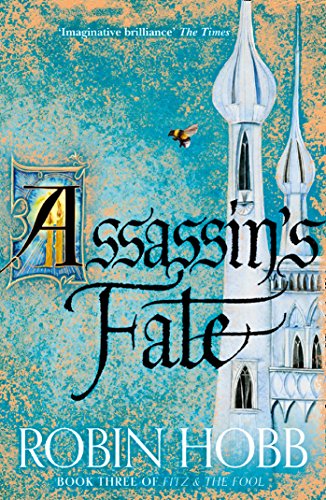
Assassin’s Fate by Robin Hobb

It’s been almost nine years since I decided to read Assassin’s Apprentice, the first book in Robin Hobb’s sixteen-volume fantasy sequence following the adventures of FitzChivalry Farseer, his friend the Fool, and the people of Bingtown and the Rain Wilds. Not being a big reader of fantasy, I wasn’t sure what to expect, but I trusted the opinions of the fellow bloggers who had recommended it – and I loved it! I went on to read the other books in the individual trilogies and quartets that make up the sequence: the Farseer Trilogy, the Liveship Traders Trilogy, the Tawny Man Trilogy, the Rain Wild Chronicles and, finally, the Fitz and the Fool Trilogy. Assassin’s Fate is the final book in this final trilogy, bringing the entire series to a close.

Naturally, I can’t really discuss the last of sixteen books without spoiling certain aspects of the fifteen previous ones, so be warned! If you haven’t read any of these books yet, I strongly recommend starting at the beginning, with Assassin’s Apprentice – and I hope you’ll enjoy your journey through Robin Hobb’s world as much as I did. This particular novel, though, hasn’t become a favourite and even now, more than a week after I finished it I can’t really decide how I felt about it.

Assassin’s Fate picks up the story from the previous book, Fool’s Quest, with Fitz and his companions heading for the distant city of Clerres in pursuit of the people who have captured his young daughter, Bee. As well as Fitz, the party consists of the Fool, in his female guise of Amber, the trainee assassin Spark, Chade’s illegitimate son Lant, and the stableboy, Per. Fitz is convinced that Bee is dead and their mission is one of vengeance only, but Amber senses that she is still alive. Either way, now that they have embarked on their journey, they need to reach Clerres as quickly as possible and passage has been arranged on the liveship Paragon.

The story of Fitz’s journey alternates with chapters narrated by Bee as she describes her ordeal at the hands of her captors, led by the evil Dwalia. I’ve had mixed feelings about Bee throughout this trilogy – on the one hand, I like her as a character and I can see that her viewpoint allows us to witness things that Fitz does not and so fills in the gaps in the story; on the other, having spent the Farseer and Tawny Man trilogies solely inside Fitz’s head, I would have preferred to continue like that. I often find that I start to lose interest slightly when a long series or saga begins to move on to the next generation and the older characters I have grown to love start to take a back seat. In this book, the earlier Bee chapters felt drawn out and repetitive, although later on, when she and her captors arrived in Clerres, I found her story much more compelling.

A bigger problem for me was the amount of time spent on characters from the Liveship Traders and Rain Wilds novels. As this is the book that wraps up the whole sequence, it’s understandable that Hobb would want to give us a chance to say our farewells to the characters from those books as well as the Farseer ones, but I felt that they came to dominate the story too much. I was happy to see Paragon again and his captains Althea and Brashen, but I had no interest in their son Boy-O or in Kennitson of the Pirate Isles. Instead, I would have preferred more interactions between Fitz and the Fool (not Amber, as I shared Fitz’s dislike of her), more communication with Verity, which was hinted at in the previous book but not followed through, and while we were saying our goodbyes to various characters, I would have liked a better send-off for Chade.

I probably sound as though I didn’t enjoy this book much at all, but that’s not true! I did find plenty of things to like, such as the dramatic scenes within the walls of Clerres, the roles of Nighteyes and Motley the crow, and the final few chapters which, despite not being quite the ending to Fitz’s story I would have chosen, still made me cry. I’m just slightly disappointed that so much of this final novel was devoted to characters and storylines I didn’t feel very invested in. I’m sure people who loved the Liveship and Rain Wilds books more than I did will feel much more satisfied with it.

I’m not sure whether any of Robin Hobb’s other books appeal to me (she has also written as Megan Lindholm) but I’m pleased to have read these ones as overall, apart from a few that have been less successful, I’ve thoroughly enjoyed them.

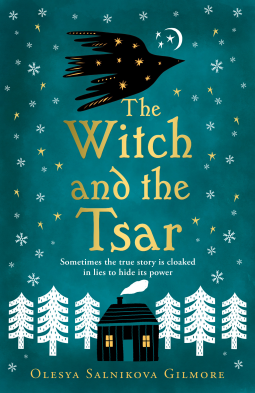
The Witch and the Tsar by Olesya Salnikova Gilmore

I was drawn to this book by the pretty cover, but also because it sounded similar to Katherine Arden’s Winternight trilogy, which I loved. Set in 16th century Russia, during the reign of Ivan the Terrible, The Witch and the Tsar is a blend of history, fantasy and folklore featuring as its heroine the legendary Baba Yaga. Unlike the traditional idea of Baba Yaga as a ferocious old witch who eats children, however, Moscow-born author Olesya Salnikova Gilmore’s portrayal is something very different.

We first meet Yaga, as she is known, living alone in a forest with her wolf Dyen, owl Noch, and Little Hen, a living hut who stands on chicken legs and has a mind of her own. Half-mortal and half-goddess, Yaga has been badly treated in the past so has chosen a life of solitude, interacting with other people only when they come and seek out her knowledge of healing and potions. She is reluctantly drawn back into society when an old friend, the Tsaritsa Anastasia – wife of Tsar Ivan IV – comes to her to ask for help. Convinced that Anastasia is being poisoned by someone at court, Yaga decides to accompany her friend on the journey back to Moscow to keep her safe.

Returning to the world from which she has hidden away for so long, Yaga is dismayed by the evil she senses all around her. Unsettled by an encounter with a former adversary, Koshey Bessmertny (usually known in Slavic myth as Koschei the Deathless), she is then introduced to Ivan Vasilyevich, the man who will later become Ivan the Terrible, and is struck by his power and volatility. When tragedy strikes the Russian court, Ivan becomes more unstable and launches a campaign of terror with his band of oprichniki burning, raiding and pillaging Russia’s towns and cities. It seems that Yaga is the only one who can stop him, but to do so she will have to learn things about herself and her family that she would prefer not to uncover.

I enjoyed some aspects of The Witch and the Tsar, but others not so much. I wasn’t sure what to think of Yaga herself. On the one hand, it’s good to see a much-maligned character given a more sympathetic interpretation; on the other, Gilmore’s Yaga has so little in common with the mythical Baba Yaga she’s really not the same character at all. Also, we are told that although she has the appearance of a young woman, she has actually lived for hundreds of years – yet she never sounds, thinks or behaves the way I would expect someone with centuries of wisdom and experience to sound, think and behave. She just feels like the young woman she appears to be.

It was interesting to see how Gilmore works characters from other Russian and Slavic myths into the story. As well as Koschei the Deathless, we meet Marya Morevna, Morozko the frost demon, the god Volos, the house spirit Kikimora and others. The fantasy/mythology element becomes very dominant in the second half of the book, more than I would have preferred, but Gilmore does a good job of tying it together with the historical storyline, showing how the actions of the gods and demons are linked to the actions of Ivan and his oprichniki. I was particularly intrigued by the character of Ivanushka, the Tsar’s son and heir; Yaga promises Anastasia she will protect him, but we know from history that his story will take a tragic turn.

I think The Witch and the Tsar is worth reading if you’re interested in Russian history and mythology, but naturally I couldn’t help comparing it to Katherine Arden’s trilogy (beginning with The Bear and the Nightingale) which I found much more enjoyable.

Thanks to HarperVoyager for providing a copy of this book for review via NetGalley.

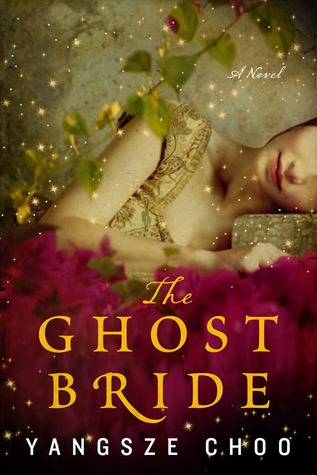
The Ghost Bride by Yangsze Choo

I originally intended to read The Ghost Bride for this year’s RIP challenge but ran out of time. I then thought it might be suitable for Chris and Lizzie’s Witch Week earlier this month (it seemed to fit their theme of Polychromancy – fantasy/sci-fi by authors from diverse backgrounds) but I didn’t finish it in time for that either. Never mind – I’ve read it now and enjoyed it, although it wasn’t really what I’d expected. Having previously read Yangsze Choo’s other novel, The Night Tiger, a story steeped in Chinese and Malaysian folklore but with only a small amount of magical realism, I had thought this book would be similar. However, I discovered that this one has a much stronger fantasy element.

The Ghost Bride is narrated by seventeen-year-old Li Lan, a young Chinese woman who lives with her opium-addicted father and her beloved amah (nursemaid) in 1890s Malacca, a city in what was then known as Malaya. The time has come for Li Lan to marry, but her father has fallen into financial difficulties and her options are limited. When she receives an offer from the wealthy Lim family to become the wife of their son, Lim Tian Ching, this should have been a wonderful opportunity for Li Lan, but instead she is horrified – because Lim Tian Ching is dead. This arrangement would provide financial security and comfort for Li Lan, but it would mean living the rest of her life as a widow.

Li Lan vows to resist the attempts of the Lim family to turn her into a ‘ghost bride’, but Lim Tian Ching has other ideas and begins to visit her in her dreams every night, claiming that he was murdered by his cousin, Tian Bai. Li Lan wants nothing to do with the whole situation, but when her soul becomes separated from her body during an illness, she finds herself thrust into the afterlife. In this world populated with ghosts and spirits, she must try to discover the truth about Lim Tian Ching’s death if she wants to have any chance of returning to her body and living in peace.

As you can probably tell, this is a book with a very strange plot – I’ve never read anything quite like it! It’s definitely not my usual sort of read and as I’ve said, I was expecting something more like The Night Tiger – historical fiction with just a little bit of fantasy. Instead, I found I was reading a book set almost entirely in the Chinese underworld, complete with dragons and ‘ox-headed demons’. It was interesting, though, and Yangsze Choo’s worldbuilding is excellent. I was fascinated by the way she incorporates the Chinese custom of burning ‘funeral money’ as offerings for the dead into the plot, with the paper money burnt in the real world corresponding to the appearance of paper houses, paper animals and even puppet-like paper servants in the afterlife.

Although a lot of time is spent on describing the bureaucracy of the world in which Li Lan finds herself, the court cases that take place in the Plains of the Dead and the ways in which the souls of the recently deceased are judged, the focus is always on Li Lan’s personal story and the people she meets in the underworld who can help her with her task. There’s even a touch of romance, although Li Lan’s love interest is certainly not Lim Tian Ching, whom she despises from the beginning. I won’t tell you who he is, but he ended up being my favourite character.

I felt that this book was longer than it really needed to be and some of Li Lan’s adventures in the Plains of the Dead were too drawn out, but overall I found The Ghost Bride an unusual and intriguing novel which has left me wanting to know more about the Chinese afterlife!

Fool’s Quest by Robin Hobb

Although I don’t read a lot of fantasy, I do love Robin Hobb’s books and would count her as one of my favourite authors. I’ve now read fifteen of her novels, all from the various trilogies and quartets that make up the larger sequence known as the Realm of the Elderlings. After this book, I’ll only have one more to read and then I’ll be finished.

Fool’s Quest is the second book in the final trilogy, Fitz and the Fool. If you’re new to Hobb, I think it’s quite obvious that you won’t want to start here – and I certainly wouldn’t recommend it! Begin with Assassin’s Apprentice instead and then continue from there. There may be spoilers in the rest of this post that you would prefer to avoid, so keep reading at your own risk!

Anyway, Fool’s Quest opens with FitzChivalry Farseer back at Buckkeep Castle, helping to heal the Fool, having unintentionally stabbed his old friend at the end of the previous book, Fool’s Assassin. Unknown to Fitz, in his absence a group of mysterious and menacing strangers have attacked his country estate of Withywoods and abducted his young daughter, Bee. It will be a while before Fitz receives this devastating news, but meanwhile another momentous event takes place in his life – something which I had been hoping would happen for a very long time!

The story moves forward at a very slow pace while we’re waiting for Fitz to discover what has happened to Bee – and even once he becomes aware, he still doesn’t set off in pursuit immediately but waits until he has gathered more information and made his preparations. This is a change from the more impetuous young Fitz we knew in the earlier books (and slightly frustrating for the reader) but at the same time, the slow pace didn’t bother me and I was never bored. While Fitz is at Buckkeep, Hobb continues to develop his relationships with long-standing characters such as Chade, Kettricken, Dutiful and Nettle, as well as introducing some new ones, including Chade’s latest apprentice assassin, Spark, and Motley the talking crow! We don’t hear as much from Bee herself as we did in the previous book – only a few chapters are written from her perspective, but what we do hear gives us an idea of the nature of her abductors and the plans they have for her.

Later in the novel, strong connections with the other trilogies and quartets in the sequence begin to emerge and I understood why other Hobb readers had recommended not skipping the Liveship Traders and Rain Wild Chronicles books. I was so glad that I’d read all of those books; not only do they add to an understanding of the world Hobb has created (particularly the role of dragons), but being reacquainted with characters like Malta and Reyn Khuprus or Rapskal the dragon keeper would have meant nothing to me. And as well as the appearances from the Liveship and Rain Wild characters, I was delighted to see Fitz reconnect with a long-departed character from the earlier Farseer novels.

By the end of the book, Fitz and the Fool are on their way to far-off Clerres in search of Bee and her captors and although I’m sure Robin Hobb could have brought us to this point in half the number of pages, I enjoyed every minute of this slowly-unfolding story. Once I’ve finished my 20 Books of Summer reading I’m looking forward to moving on to Assassin’s Fate and finding out what Hobb has in store next for Fitz and his friends.

This is book 12/20 from my 20 Books of Summer list.