The Witch and the Tsar by Olesya Salnikova Gilmore

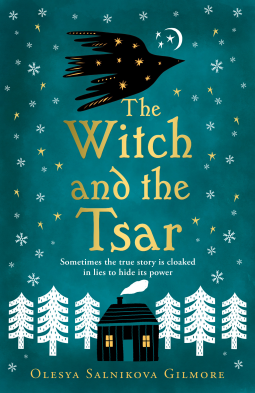
I was drawn to this book by the pretty cover, but also because it sounded similar to Katherine Arden’s Winternight trilogy, which I loved. Set in 16th century Russia, during the reign of Ivan the Terrible, The Witch and the Tsar is a blend of history, fantasy and folklore featuring as its heroine the legendary Baba Yaga. Unlike the traditional idea of Baba Yaga as a ferocious old witch who eats children, however, Moscow-born author Olesya Salnikova Gilmore’s portrayal is something very different.

We first meet Yaga, as she is known, living alone in a forest with her wolf Dyen, owl Noch, and Little Hen, a living hut who stands on chicken legs and has a mind of her own. Half-mortal and half-goddess, Yaga has been badly treated in the past so has chosen a life of solitude, interacting with other people only when they come and seek out her knowledge of healing and potions. She is reluctantly drawn back into society when an old friend, the Tsaritsa Anastasia – wife of Tsar Ivan IV – comes to her to ask for help. Convinced that Anastasia is being poisoned by someone at court, Yaga decides to accompany her friend on the journey back to Moscow to keep her safe.

Returning to the world from which she has hidden away for so long, Yaga is dismayed by the evil she senses all around her. Unsettled by an encounter with a former adversary, Koshey Bessmertny (usually known in Slavic myth as Koschei the Deathless), she is then introduced to Ivan Vasilyevich, the man who will later become Ivan the Terrible, and is struck by his power and volatility. When tragedy strikes the Russian court, Ivan becomes more unstable and launches a campaign of terror with his band of oprichniki burning, raiding and pillaging Russia’s towns and cities. It seems that Yaga is the only one who can stop him, but to do so she will have to learn things about herself and her family that she would prefer not to uncover.

I enjoyed some aspects of The Witch and the Tsar, but others not so much. I wasn’t sure what to think of Yaga herself. On the one hand, it’s good to see a much-maligned character given a more sympathetic interpretation; on the other, Gilmore’s Yaga has so little in common with the mythical Baba Yaga she’s really not the same character at all. Also, we are told that although she has the appearance of a young woman, she has actually lived for hundreds of years – yet she never sounds, thinks or behaves the way I would expect someone with centuries of wisdom and experience to sound, think and behave. She just feels like the young woman she appears to be.

It was interesting to see how Gilmore works characters from other Russian and Slavic myths into the story. As well as Koschei the Deathless, we meet Marya Morevna, Morozko the frost demon, the god Volos, the house spirit Kikimora and others. The fantasy/mythology element becomes very dominant in the second half of the book, more than I would have preferred, but Gilmore does a good job of tying it together with the historical storyline, showing how the actions of the gods and demons are linked to the actions of Ivan and his oprichniki. I was particularly intrigued by the character of Ivanushka, the Tsar’s son and heir; Yaga promises Anastasia she will protect him, but we know from history that his story will take a tragic turn.

I think The Witch and the Tsar is worth reading if you’re interested in Russian history and mythology, but naturally I couldn’t help comparing it to Katherine Arden’s trilogy (beginning with The Bear and the Nightingale) which I found much more enjoyable.

Thanks to HarperVoyager for providing a copy of this book for review via NetGalley.
The Ghost Bride by Yangsze Choo

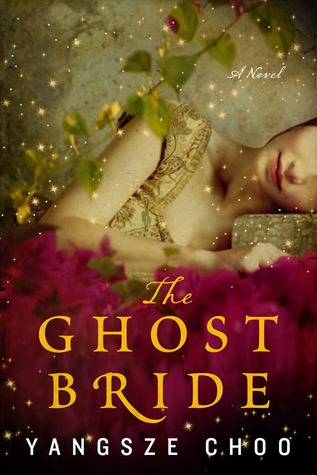
I originally intended to read The Ghost Bride for this year’s RIP challenge but ran out of time. I then thought it might be suitable for Chris and Lizzie’s Witch Week earlier this month (it seemed to fit their theme of Polychromancy – fantasy/sci-fi by authors from diverse backgrounds) but I didn’t finish it in time for that either. Never mind – I’ve read it now and enjoyed it, although it wasn’t really what I’d expected. Having previously read Yangsze Choo’s other novel, The Night Tiger, a story steeped in Chinese and Malaysian folklore but with only a small amount of magical realism, I had thought this book would be similar. However, I discovered that this one has a much stronger fantasy element.

The Ghost Bride is narrated by seventeen-year-old Li Lan, a young Chinese woman who lives with her opium-addicted father and her beloved amah (nursemaid) in 1890s Malacca, a city in what was then known as Malaya. The time has come for Li Lan to marry, but her father has fallen into financial difficulties and her options are limited. When she receives an offer from the wealthy Lim family to become the wife of their son, Lim Tian Ching, this should have been a wonderful opportunity for Li Lan, but instead she is horrified – because Lim Tian Ching is dead. This arrangement would provide financial security and comfort for Li Lan, but it would mean living the rest of her life as a widow.

Li Lan vows to resist the attempts of the Lim family to turn her into a ‘ghost bride’, but Lim Tian Ching has other ideas and begins to visit her in her dreams every night, claiming that he was murdered by his cousin, Tian Bai. Li Lan wants nothing to do with the whole situation, but when her soul becomes separated from her body during an illness, she finds herself thrust into the afterlife. In this world populated with ghosts and spirits, she must try to discover the truth about Lim Tian Ching’s death if she wants to have any chance of returning to her body and living in peace.

As you can probably tell, this is a book with a very strange plot – I’ve never read anything quite like it! It’s definitely not my usual sort of read and as I’ve said, I was expecting something more like The Night Tiger – historical fiction with just a little bit of fantasy. Instead, I found I was reading a book set almost entirely in the Chinese underworld, complete with dragons and ‘ox-headed demons’. It was interesting, though, and Yangsze Choo’s worldbuilding is excellent. I was fascinated by the way she incorporates the Chinese custom of burning ‘funeral money’ as offerings for the dead into the plot, with the paper money burnt in the real world corresponding to the appearance of paper houses, paper animals and even puppet-like paper servants in the afterlife.

Although a lot of time is spent on describing the bureaucracy of the world in which Li Lan finds herself, the court cases that take place in the Plains of the Dead and the ways in which the souls of the recently deceased are judged, the focus is always on Li Lan’s personal story and the people she meets in the underworld who can help her with her task. There’s even a touch of romance, although Li Lan’s love interest is certainly not Lim Tian Ching, whom she despises from the beginning. I won’t tell you who he is, but he ended up being my favourite character.

I felt that this book was longer than it really needed to be and some of Li Lan’s adventures in the Plains of the Dead were too drawn out, but overall I found The Ghost Bride an unusual and intriguing novel which has left me wanting to know more about the Chinese afterlife!

Fool’s Quest by Robin Hobb

Although I don’t read a lot of fantasy, I do love Robin Hobb’s books and would count her as one of my favourite authors. I’ve now read fifteen of her novels, all from the various trilogies and quartets that make up the larger sequence known as the Realm of the Elderlings. After this book, I’ll only have one more to read and then I’ll be finished.

Fool’s Quest is the second book in the final trilogy, Fitz and the Fool. If you’re new to Hobb, I think it’s quite obvious that you won’t want to start here – and I certainly wouldn’t recommend it! Begin with Assassin’s Apprentice instead and then continue from there. There may be spoilers in the rest of this post that you would prefer to avoid, so keep reading at your own risk!

Anyway, Fool’s Quest opens with FitzChivalry Farseer back at Buckkeep Castle, helping to heal the Fool, having unintentionally stabbed his old friend at the end of the previous book, Fool’s Assassin. Unknown to Fitz, in his absence a group of mysterious and menacing strangers have attacked his country estate of Withywoods and abducted his young daughter, Bee. It will be a while before Fitz receives this devastating news, but meanwhile another momentous event takes place in his life – something which I had been hoping would happen for a very long time!

The story moves forward at a very slow pace while we’re waiting for Fitz to discover what has happened to Bee – and even once he becomes aware, he still doesn’t set off in pursuit immediately but waits until he has gathered more information and made his preparations. This is a change from the more impetuous young Fitz we knew in the earlier books (and slightly frustrating for the reader) but at the same time, the slow pace didn’t bother me and I was never bored. While Fitz is at Buckkeep, Hobb continues to develop his relationships with long-standing characters such as Chade, Kettricken, Dutiful and Nettle, as well as introducing some new ones, including Chade’s latest apprentice assassin, Spark, and Motley the talking crow! We don’t hear as much from Bee herself as we did in the previous book – only a few chapters are written from her perspective, but what we do hear gives us an idea of the nature of her abductors and the plans they have for her.

Later in the novel, strong connections with the other trilogies and quartets in the sequence begin to emerge and I understood why other Hobb readers had recommended not skipping the Liveship Traders and Rain Wild Chronicles books. I was so glad that I’d read all of those books; not only do they add to an understanding of the world Hobb has created (particularly the role of dragons), but being reacquainted with characters like Malta and Reyn Khuprus or Rapskal the dragon keeper would have meant nothing to me. And as well as the appearances from the Liveship and Rain Wild characters, I was delighted to see Fitz reconnect with a long-departed character from the earlier Farseer novels.

By the end of the book, Fitz and the Fool are on their way to far-off Clerres in search of Bee and her captors and although I’m sure Robin Hobb could have brought us to this point in half the number of pages, I enjoyed every minute of this slowly-unfolding story. Once I’ve finished my 20 Books of Summer reading I’m looking forward to moving on to Assassin’s Fate and finding out what Hobb has in store next for Fitz and his friends.

This is book 12/20 from my 20 Books of Summer list.

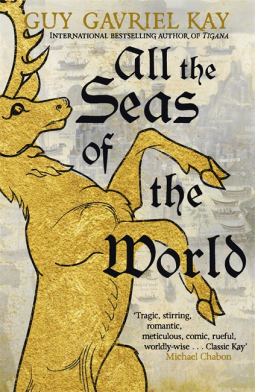
All the Seas of the World by Guy Gavriel Kay

Guy Gavriel Kay’s new novel is set in the same world as his previous two, Children of Earth and Sky and A Brightness Long Ago, but although the three books are closely linked, they are separate stories and I’m sure you could read this one as a standalone if you wanted to.

The world to which I’ve just referred is a fictional world which closely resembles the area surrounding the Mediterranean during the 15th century. Countries and cities are given different names (Italy becomes Batiara, Spain is Esperaña, Venice is Seressa) and the characters belong to one of three religions which clearly correspond to the main three religions in that part of the world at that time. The Asharites (Muslims) worship the stars, the Jaddites (Christians) worship the sun and the Kindath (Jews) worship the two moons, one blue and one white, which both shine in the sky. This third novel is set just after the Jaddite city of Sarantium has fallen to the Asharite Osmanlis, who have renamed it Asharias – like our own world’s Constantinople which fell to the Ottoman Empire in 1453 and would become Istanbul.

Some of the characters we met in A Brightness Long Ago appear again in this book, but the focus is mainly on two new characters. First, there’s Lenia Serrano, a young woman who was abducted by Asharite raiders as a child and raised as a slave. Now free, she longs to return home to Batiara but, convinced that her years in slavery will have brought shame upon her family, home is the one place she’s determined to avoid. Rafel ben Natan, our other protagonist, is a Kindath merchant whose family fled persecution in Esperaña some years earlier. Rafel’s brother has disappeared without trace, leaving Rafel responsible for his sister-in-law and her children.

As the novel opens, Lenia and Rafel have been hired by two pirate brothers to carry out the assassination of the khalif of Abeneven. Their decision to accept this assignment brings them life-changing wealth, but also has huge consequences for the balance of power between rival states, bringing the world to the brink of war.

Some readers may be put off by the labelling of Kay’s novels as ‘fantasy’, but other than the alternate names for people, places and religions, and one or two very subtle supernatural elements, this book (like most of his others) is much closer to historical fiction than it is to traditional fantasy. Setting his story in a thinly-disguised version of Renaissance Europe gives Kay an opportunity to explore that period of history while being freed from the constraints of having to stick to historical fact. However, in this particular book, there are also some obvious parallels with today’s world; exile and displacement are major themes, with various characters being forced to leave their own countries because of war, persecution or other reasons and then either searching for somewhere new to make their home or trying to find a way to return.

This is a beautifully written novel, but I do think Kay’s writing style is probably a bit of an acquired taste. Much as I like his books, I’m starting to find his habit of going off on tangents to explore the lives of minor characters and the heavy messaging around choices and the consequences of our actions very repetitive. These most recent books are not his best, in my opinion – his earlier ones seemed to have stronger plots and a tighter focus, so if you’re new to his work I would recommend starting with one of those; Tigana is my favourite and The Lions of Al-Rassan is also very good (and set in this same two-mooned world several centuries earlier). Readers who’ve already enjoyed some of his other historical fantasy novels should enjoy this one too; I did and am looking forward to reading the remaining ones I still haven’t read.

Thanks to Hodder & Stoughton for providing a copy of this book for review via NetGalley.

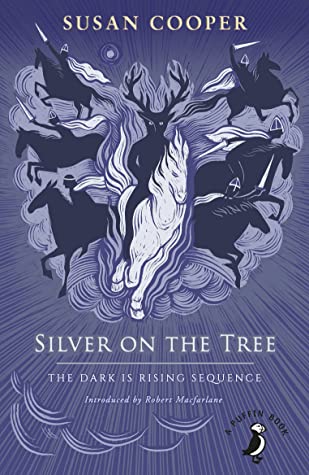
Silver on the Tree by Susan Cooper

Silver on the Tree is the fifth and final book in Susan Cooper’s The Dark is Rising sequence and although I’m sorry to have come to the end of the series, I enjoyed every minute of it. This particular novel is the perfect finale, bringing together all the characters and storylines from the first four books as we head towards the great, decisive battle between the forces of the Dark and the Light. If you are new to the series, I would recommend starting with the first book, Over Sea, Under Stone; don’t start with this one, or I think you’ll be very confused!

Silver on the Tree, like the previous book The Grey King, is set mostly in Wales, where Will Stanton and his friend Bran Davies are searching for the mysterious Lady who holds the knowledge that will set the final part of their quest in motion.

‘Until the Lady comes,’ Merriman said. ‘And she will help you to the finding of the sword of the Pendragon, the crystal sword by which the final magic of the light shall be achieved, and the Dark put at last to flight. And there will be five to help you, for from the beginning it was known that six altogether, and six only, must accomplish this long matter. Six creatures more and less of the earth, aided by the six Signs’.

Will and Bran, together with their wise, elderly mentor Merriman Lyon, make up three of the six who are needed to complete the quest. The other three are Simon, Jane and Barney, the Drew children who appeared in some of the earlier novels and who happen to be visiting Wales with their parents. The six are soon united and each has a part to play in the adventures to come.

The Arthurian elements which were introduced in the previous books are stronger here – we finally meet King Arthur himself; there’s a glimpse of the Battle of Badon, the conflict between the Britons and Anglo-Saxons in which he was said to be involved; and there are appearances by other characters who sometimes appear in Arthurian legend, such as Gwion (or Taliesin) the bard. Welsh folklore also plays a part and the children have some chilling encounters with creatures such as the afanc, a Welsh lake monster, and a terrifying horse known as the Mari Lwyd! These are both used as agents of the Dark, along with the more commonplace but equally sinister (in this context) black mink and polecat.

The fantasy sequences in the novel are very well done, particularly an episode where Will and Bran travel through the Lost Lands in search of the crystal sword and meet the legendary king, Gwyddno Garanhir. Meanwhile, the Drew children find themselves transported through time, to a 19th century shipyard and then to the Welsh stronghold of Owain Glyndwr. Back in the ‘real world’, we are reacquainted with the other members of the Stanton family, mainly Will’s brothers, Stephen and James, who have an unpleasant encounter with a racist bully. This part of the story felt out of place at first, but I think it was intended to show how the Dark can find its way into the world through those who are susceptible to evil. Will reflects later that maybe ‘the Dark can only reach people at extremes – blinded by their own shining ideas, or locked up in the darkness of their own heads’.

I still have the same complaint I had after reading some of the previous books – that the tasks are solved too easily and the correct solutions just ‘come’ to Will and the others without them having to put too much effort into it. However, I know this series is intended for younger readers, so maybe I was expecting too much. Apart from that, I loved Silver on the Tree and the whole of The Dark is Rising and just wish I could have discovered these books as a child!

Midnight in Everwood by MA Kuzniar

If you’re looking for a different kind of Christmas read this year, Midnight in Everwood could be it. This retelling of The Nutcracker will whisk you away to a fantasy land of snow and sugar and will be best read in front of a fire with a hot drink on a cold day. Sadly, I didn’t like it as much as I’d hoped to but I know other readers will enjoy it much more than I did (and judging by the early reviews, they already are).

The novel opens in Nottingham in 1906, where twenty-year-old ballet dancer Marietta Stelle is hoping to audition for a prestigious ballet company. Her parents, however, have other plans for Marietta; they want her to give up dancing and settle down into a conventional and respectable married life. The husband they have in mind is their new neighbour, the inventor Dr Drosselmeier, who has been delighting everyone with his wonderful clockwork toys – everyone except Marietta, who senses something cold and cruel behind Drosselmeier’s charming exterior. Trying to escape from Drosselmeier’s unwelcome attentions on Christmas Eve, Marietta hides inside a grandfather clock, but when the clock strikes midnight she finds herself trapped within the enchanted, snow-covered land of Everwood.

This book is being marketed as children’s author MA Kuzniar’s debut adult novel – ‘The Nutcracker for adults’ – but I think this is misleading as it feels much more like a book for teenagers. There’s nothing wrong with that, of course, but it’s not what I expected and the book lacked the depth I would have preferred. I also found the writing style much too flowery; there are long descriptions of clothes and food and every sentence is packed with adjectives and similes, most of them related to cakes and sweets – voices are ‘smooth and rich as buttercream’, eyes are the colour of ‘butterscotch’ and expressions ‘soften like melted chocolate’. The sugary theme continues throughout the entire book and while I found it quite captivating at first, my senses began to feel overwhelmed with sights, tastes and smells! I can see, though, that this is exactly what other people loved about the book, so it really does depend on the individual reader.

On a more positive note, it was interesting to read a book set in Edwardian Nottingham, rather than the usual London. I wished we had seen more of that setting, but the majority of the story takes place in the magical land of Everwood (which is reached in a way that reminded me of The Lion, the Witch and the Wardrobe). Although Everwood seems enchantingly wonderful at first and a safe haven in which Marietta can hide from the sinister Drosselmeier, it quickly becomes clear that it is more of a prison, making this a dark Christmas read rather than a happy, festive one. The friends Marietta makes in Everwood – Dellara the fairy and Pirlipata, princess of Crackatuck – are imprisoned there too, and there is a feminist thread running through the story, exploring the various constraints on women’s lives, both in the fantasy world and in the real one.

I have to confess, I’ve never actually read the original ETA Hoffmann Nutcracker story or the Alexandre Dumas one on which the famous ballet is based. Maybe if I had, I would have appreciated this novel more, although I would still have struggled with the sweet and sugary writing style which just wasn’t for me at all.

Thanks to HQ for providing a copy of this book for review via NetGalley.

The Grey King by Susan Cooper

This is the fourth book in Susan Cooper’s five-volume sequence, The Dark is Rising, and I feel as though things are starting to fall nicely into place ahead of the fifth and final book, Silver on the Tree. I’m beginning to form a better understanding of the opposing forces of the Light and the Dark and how the various characters and elements of the series have their roots in Arthurian legend and British folklore. However, this book also raises new questions and explores issues and topics not yet touched upon in the earlier novels, so there’s still a long way to go before the end!

The Grey King begins with Will Stanton, the eleven-year-old boy – and ‘Old One’ – we met in The Dark is Rising and Greenwitch, going to stay with an aunt and uncle in Wales while recuperating from hepatitis. His parents hope it will be a nice, relaxing break for him, but it turns out to be just the opposite! During Will’s illness, he has forgotten the details of the quest begun in the previous novels, but as his memories slowly return he remembers that his next task is to find the golden harp that will awaken six sleepers who will join the final battle between Dark and Light.

The three Drew children, who played such important roles in Over Sea, Under Stone and Greenwitch, don’t appear in this book, but Will receives help this time from a new friend, Bran, a boy he meets in the Welsh hills. With his white hair and pale skin, as well as a mystery surrounding the disappearance of his mother, Bran has never fitted in with other children and leads a lonely, solitary life with only his beloved dog, Cafall, for company. When Will learns that Bran is ready to help him with the next stage of the quest, a bond forms between the two and they set out together to find the harp and wake the sleepers.

The villain this time is the Brenin Llwyd, or the ‘Grey King’, an ancient and powerful Lord of the Dark who lives high in the mountains, his breath forming a ragged grey mist that can be seen for miles around. Although Will and Bran have little direct contact with the Grey King for most of the book, they are aware of his presence all around them and of the work of his agents, the bitter and spiteful farmer, Caradog Prichard, and the powerful grey foxes known as the Milgwn. Like the other books in the series, this one is wonderfully eerie and atmospheric, and while the Dark continues to feel evil and malevolent, we are again made to question how ‘good’ the Light really is:

Those men who know anything at all about the Light also know that there is a fierceness to its power, like the bare sword of the law, or the white burning of the sun…Other things, like humanity, and mercy, and charity, that most good men hold more precious than all else, they do not come first for the Light…At the centre of the Light there is a cold white flame, just as at the centre of the Dark there is a great black pit bottomless as the Universe.

As with The Dark is Rising, I felt that the mission was completed much too easily (I was particularly disappointed with a game of riddles, as very little effort went into solving them). The tasks that have faced the Drew children seem to be more difficult and dangerous somehow, maybe because they are ‘ordinary’ children and don’t have the powers that Will has. However, the quest is only one aspect of the novel and there are other elements that interested me as much or more. I particularly loved the Welsh setting – and was grateful for the lesson in Welsh pronunciation Will receives early in the novel! I also enjoyed getting to know Bran and discovering how he fits into the overall story.

I’m looking forward to reading Silver on the Tree and finding out how it all ends!

Book 4 for R.I.P. XVI