Daisy in Chains by Sharon Bolton

Daisy in Chains I don’t read a lot of crime fiction these days and when I do it tends to be the vintage or historical sort, but one author of contemporary crime whose books I always look forward to reading is Sharon Bolton. Her latest novel, Daisy in Chains, is a standalone, which I was pleased about as although I did enjoy reading her Lacey Flint series, her standalones are usually my favourites. This one is a fascinating psychological thriller with the typically dark, twisty and suspenseful plot I have come to expect from this author.

Hamish Wolfe, once a successful surgeon, is serving a life sentence for the murder of three women. Despite being found guilty, he insists that he is innocent – and he thinks he has found the person who can get his sentence overturned. She is Maggie Rose, an eccentric blue-haired lawyer and true-crime author, who has already had several convicted murderers released on technicalities. Maggie agrees to visit Hamish in prison but insists that she needs more information before she can decide whether to take on his case.

DC Pete Weston, the man responsible for Hamish Wolfe’s arrest and imprisonment, is not happy to hear that he has been in contact with Maggie. Pete is adamant that he got the right man and that there is no question of Wolfe’s guilt…but is this what he truly believes or does he just want to stop Maggie from getting involved before she uncovers something he would prefer to keep hidden? As Maggie begins to investigate, she becomes caught in the middle between the detective and the prisoner, and it is unclear which of them, if either, can be trusted.

Being a handsome, intelligent and charismatic man, Hamish has his own fan club who send him letters declaring their love for him and who are determined to prove his innocence. I wasn’t quite sure what to think of Hamish: I thought he was innocent – I wanted him to be innocent – but because Bolton never allows us to get right into the minds of any of the novel’s main characters, I couldn’t be certain. The question, of course, is that if Hamish didn’t kill the three women, who did?

It’s never easy to work out exactly what is happening in a Sharon Bolton novel. Her plots are always filled with twists and revelations which leave you questioning everything you have read up to that point – and this one is no exception. I did manage to guess one of the novel’s big twists – not immediately, but well before it was revealed – but another, near the end, came as a complete surprise to me and changed the way I thought about the whole story.

I won’t say any more about the plot or the characters because I think it’s best to know as little as possible before you start to read, but I do want to mention some of the other things I liked about this book, particularly the way in which Bolton uses so many different types of media to tell the story. There are newspaper reports, blog posts, emails, letters, interview transcripts, and even draft chapters from the new book Maggie has started writing about Hamish Wolfe! She also touches on some interesting issues, such as the reasons why a woman might be attracted to a convicted criminal, the difficulties of relationships where one partner is in prison, and the way in which overweight women are perceived by society (all three of Hamish Wolfe’s alleged victims are described as ‘fat’).

Another of the things I always love about Bolton’s books is the mood she creates – the eeriness, the feeling of isolation and the sense of danger and foreboding. There’s usually a lonely, atmospheric setting too: previous novels have been set in the Falkland Islands, the Shetlands, a remote English village and a houseboat on the River Thames. This book does have its moments, with some great scenes set in the caves of Somerset’s Cheddar Gorge, a deserted fairground and a prison on the Isle of Wight, but I didn’t find it quite as atmospheric as some of Bolton’s other novels and for this reason only, although I did enjoy Daisy in Chains, it’s not one of my favourites. I do think all of her books are excellent, though, and if you’ve never tried one before this might be a good place to start!

I received a copy of this book for review via NetGalley.
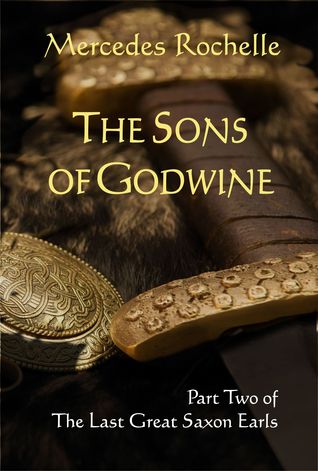
The Sons of Godwine by Mercedes Rochelle

The Sons of Godwine This is the second of Mercedes Rochelle’s Last Great Saxon Earls novels which tell the story of the Godwinesons in the years leading up to the Norman Conquest. The first book, Godwine Kingmaker, follows Godwine, Earl of Wessex, as he rises to become one of the most powerful men in 11th century England. In this second novel we get to know the Earl’s family as his children take turns to narrate their own stories, each from his or her own unique viewpoint.

We begin with a prologue in which Queen Editha, daughter of Godwine and wife of Edward the Confessor, explains that the book she commissioned on the life of her husband – the famous Vita Ædwardi Regis – was originally intended to be a history of her own family and that she had asked her brothers to write down their memories to be included in the manuscript. The Sons of Godwine is presented as a collection of the brothers’ memoirs (fictional but based closely on historical fact).

Editha’s brother, Harold – the future King Harold II of England – is naturally the most famous member of the family and much of the novel revolves around him, but we also hear from Tostig, Gyrth, Leofwine and Wulfnoth (though not from the eldest brother, Swegn) and through their alternating narratives the story of the sons of Godwine gradually unfolds.

Having read several other novels set during this period over the last year or two I feel that I’m beginning to know and understand it (though not as well as other periods, such as the Tudors or the Wars of the Roses). The Sons of Godwine takes us through all of the famous events and incidents of the time, including Harold’s marriage to Edith Swanneck, Swegn’s abduction of the Abbess of Leominster, and the violence in Godwine’s town of Dover during the visit of Eustace of Boulogne. These are all things that have been written about before, but what makes this book different is that we hear about them or see them happen through the eyes and ears of the Godwinesons themselves. I really liked this approach as it made the story feel more intimate and personal; the only problem was that there didn’t seem to be much difference between the narrative voices of the brothers.

As I’ve mentioned, Harold is given a lot of attention, but the other brothers have interesting stories of their own too, especially Tostig, who is made Earl of Northumbria, and Wulfnoth, held hostage by first King Edward and then by William, Duke of Normandy. They also each offer a different perspective on Harold’s character, viewing him with a mixture of admiration, irritation and envy. There is a particularly intense rivalry between Harold and Tostig, which slowly grows throughout the novel. Their relationship is going to be explored further in the third book in this series – Fatal Rivalry.

Thanks to the author for providing a review copy of this book.

Mary Anne by Daphne du Maurier

Mary Anne I fell in love with Daphne du Maurier’s writing as a teenager when I read Rebecca for the first time, quickly followed by Jamaica Inn, and since then, I have been (very slowly) working through the rest of her novels, short stories and non-fiction. I have thoroughly enjoyed most of her books, with only a few exceptions – and sadly this one, Mary Anne, was one of the exceptions. I wouldn’t say that I didn’t enjoy it at all – there were still a lot of things that I liked – but I didn’t think it was as strong as most of the other du Maurier novels I’ve read.

Du Maurier often draws on her own family history as an inspiration for her work; The Glass-Blowers is the story of her ancestors who lived in France during the Revolution, while The Parasites also has autobiographical elements and the houses in both Rebecca and The King’s General are based on her own home, Menabilly. Mary Anne is a fictional account of the life of Mary Anne Clarke, du Maurier’s great-great-grandmother, best known for being a mistress of Prince Frederick, Duke of York.

I loved the first few chapters of the book which follow Mary Anne throughout her childhood and teenage years. Born into a poor London family in 1776, Mary Anne Thompson grows up on Chancery Lane with her mother, younger brother and stepfather, who works as a copy editor. When her stepfather becomes ill and is unable to go to work, the thirteen-year-old Mary Anne secretly collects his copy from the printer and corrects it herself – and from this moment I knew she was going to be a great character: strong, clever and resourceful from an early age.

Mary Anne is also an ambitious person but she makes a big mistake when, in 1791, she elopes with Joseph Clarke, a stonemason. The marriage is an unhappy one; Joseph is an alcoholic who drinks and gambles away most of his money, leaving Mary Anne desperate to escape and build a new life for herself and her children. The breakdown of her marriage proves to be a turning point and it’s not long before Mary Anne comes to the attention of Frederick, Duke of York.

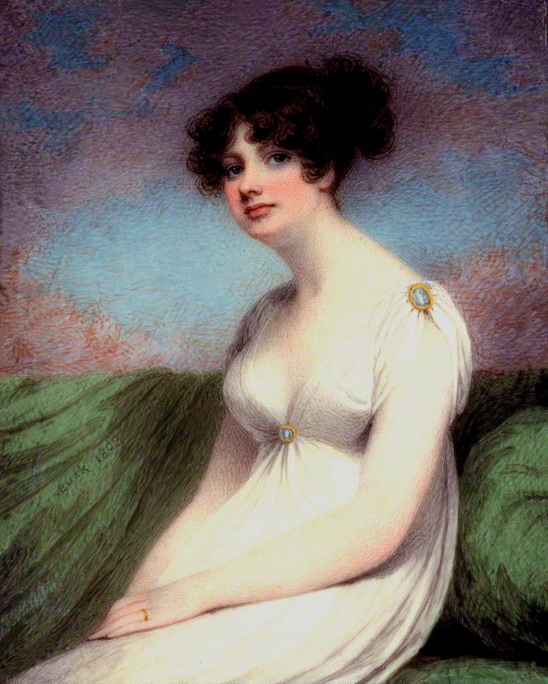
Portrait of Mary Anne Clarke by Adam Buck, 1803

Portrait of Mary Anne Clarke by Adam Buck, 1803

As the Duke’s mistress, Mary Anne enjoys the comfort and luxury that comes with her new status, but she quickly discovers that the money he provides her with is not sufficient to pay for the lifestyle she wants. Taking advantage of Frederick’s position as Commander-in-Chief of the Army, she decides to add to her income by secretly accepting payments in exchange for using her influence with the Duke to obtain army commissions. Mary Anne is sure nothing will go wrong, but to the reader it’s obvious that she is playing a dangerous game and that if her relationship with the Duke should ever come to an end, her life could begin to fall apart.

As I’ve said, I thought the first part of the book was wonderful and I enjoyed watching Mary Anne use her wits and her charm to rise from her humble beginnings to a position of power. She’s a real social-climber and reminded me of characters like Becky Sharp from Vanity Fair and Amber St Clare from Forever Amber. Remembering that du Maurier was writing about her own ancestor, I think her interest in and affection for Mary Anne come across strongly, while at the same time she is open about Mary Anne’s faults and flaws.

The second half of the novel is devoted to several court cases and scandals in which Mary Anne becomes involved, and this is where I started to get bored. The court proceedings are described in great detail, with page after page of witness statements, letters, testimonies and dialogue, which I just didn’t find very interesting to read. I can appreciate that du Maurier was trying to stay true to history here and incorporate her research into the story, but I don’t think she got the balance quite right between fact and fiction.

I’m glad I’ve had the chance to meet and get to know Mary Anne Clarke but this book left me slightly disappointed. I’m hoping for better luck with the remaining du Maurier books I still need to read (Frenchman’s Creek, Castle Dor and some of the non-fiction and short story collections).

A review for Shiny New Books: The Sun King Conspiracy

This is just a quick post to let you know that Issue 10 of Shiny New Books is out today!

SNB

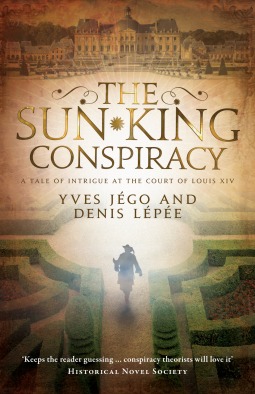
If you haven’t come across it yet, Shiny New Books is an online recommendations magazine for book lovers and is packed with reviews and other features. I was happy to provide a review of The Sun King Conspiracy by Yves Jégo and Denis Lépée for this edition.

This is what the book is about:

The Sun King Conspiracy “This fascinating and complex historical thriller is set in 1661 at the court of France’s Sun King, Louis XIV. As the novel opens, Cardinal Mazarin, Chief Minister to the young king, is dying. Having effectively ruled France alongside Anne of Austria throughout Louis’ early years, the balance of power is set to change with his death. When a fire breaks out in Mazarin’s palace, some incriminating coded documents are stolen from the dying Cardinal – documents which must be prevented from falling into the wrong hands. The theft sparks a power struggle among rival factions, with political figures as prominent as Nicolas Fouquet and Jean-Baptiste Colbert drawn into a race to find the mysterious papers.

Also drawn into this dangerous game – much against his will – is Gabriel de Pontbriand, an aspiring young actor who has come to Paris to pursue his dream of a career in the theatre. Mazarin’s stolen documents unexpectedly come into Gabriel’s possession and, to his horror, he recognises the signature at the bottom of one of the papers. Caught between the schemes of unscrupulous politicians on one side and a secretive religious brotherhood on the other, Gabriel finds himself at the heart of a conspiracy which has the potential to change the future of France and its monarchy forever…”

You can read the rest of my review here – and don’t forget to explore the rest of the new issue!

The Royal Succession by Maurice Druon

The Royal Succession The Royal Succession is an English translation of Maurice Druon’s 1957 French novel La Loi des mâles, the fourth volume of his Accursed Kings series which began with The Iron King. Described by George R.R. Martin as “the original Game of Thrones”, the seven books in this series tell the story of Philip IV the Fair of France and the kings who follow him, said to have been cursed “to the thirteenth generation” by the vengeful Grand Master of the Knights Templar.

Books two and three – The Strangled Queen and The Poisoned Crown – described the troubled reign of Philip’s son, Louis X. As The Royal Succession opens in the year 1316, Louis is dead, leaving no clear heir to the throne. There is some doubt over the parentage of Jeanne, his five-year-old daughter from his first marriage, so all eyes are on Queen Clémence, his pregnant second wife.

While France looks forward to the birth of Clémence’s child, a regent is needed; the obvious choices are Louis’ younger brother, Philippe of Poitiers, and his uncle, Charles of Valois. At this crucial moment, Philippe is away in Lyon awaiting the election of a new pope, but by resorting to some underhand methods he is able to turn the situation to his advantage and becomes regent on his return to Paris. However, his mother-in-law, Mahaut, Countess of Artois, is even more ambitious and vows to clear the path to the throne for Philippe.

Nobody is safe from Mahuat’s plotting, and when Clémence gives birth to Louis’ posthumous child, the sickly Jean I, the baby king finds himself at the centre of one of her schemes. Meanwhile, Philippe searches for a way to deal with the claim of his little niece, Jeanne, and finds a possible solution in the Salic Law, which excludes females from the line of succession.

I hope I haven’t made all of this sound too complicated! Some concentration is needed, but Druon does explain everything clearly and the plot is easy enough to follow, especially if you have also read the previous three books (something I would highly recommend). The period covered in this particular novel is fascinating and I found this a much more gripping and entertaining read than The Poisoned Crown.

The Accursed Kings series is based closely on historical fact, but there is one part of The Royal Succession which feels more like fiction – and that is the storyline surrounding the fate of little Jean I. However, having looked this up, it seems that Druon has developed this storyline out of a theory which has never been proved or disproved. It’s unlikely, but not impossible, and other books have been written on the subject. It also explained for me the role in the series of Guccio Baglioni and Marie de Cressay, something I’ve been wondering about since the first book as their story had previously seemed so disconnected from the central history.

There are three books left in the series and I’m looking forward to continuing with the next one, The She-Wolf.

Love and Other Happy Endings, edited by M. R. Nelson

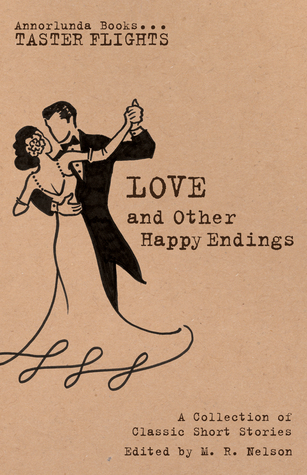
This is a collection of five classic short stories from five very different authors: Katherine Mansfield, L.M. Montgomery, Wilkie Collins, F. Scott Fitzgerald and James Oliver Curwood. The title given to the collection by its editor, M.R. Nelson, means that we know before we begin that each story will have a happy ending of some sort, but I can assure you that this doesn’t spoil the pleasure of reading them. The interest is in seeing how each happy ending is reached and how the conflicts or problems in each story are resolved.

Love and Other Happy Endings First is The Singing Lesson by Katherine Mansfield, a story which appeared in her 1922 collection, The Garden Party and Other Stories. This is a very short story, but Mansfield (a new author for me) manages to pack a lot of meaning into it. The story follows Miss Meadows, a singing teacher, who has had some bad news and begins the day “With despair — cold, sharp despair — buried deep in her heart like a wicked knife”. We see how Miss Meadows’ state of mind affects not only herself but the girls in her class; she is someone who brings her personal troubles into work with her. Later in the day, something happens to change the teacher’s mood and the way she perceives the world is suddenly quite different.

Story two is Akin to Love by L.M. Montgomery, best known for her Anne of Green Gables series. I read her Anne novels (or most of them anyway) as a child, but this is the first time I’ve read any of her other work. Akin to Love is from her 1909-1922 collection of short stories. It’s a simple tale of two single people, Josephine Elliott and David Hartley, who are friends and neighbours. David has proposed to Josephine many times over the last eighteen years and she has turned him down every time. Eventually Josephine begins to experience a feeling akin to love, but will she act on her feelings?

The third story, Mr Lismore and the Widow is by Wilkie Collins, who has long been one of my favourite Victorian authors, so it’s not surprising that this was one of the stories I enjoyed most from this collection. Originally published in 1883, it’s the story of a man in need of money and a woman in need of a husband. It’s easy to predict what will happen – or is it? This is a tale with a twist…a slightly implausible twist, but a fun one!

Next is Head and Shoulders, a story from F. Scott Fitzgerald’s Flappers and Philosophers (1920). It’s a great story, again with a twist, about Horace Tarbox, a clever, intellectual student and Marcia Meadow, a dancer (a philosopher and a flapper?). Despite being complete opposites, the two fall in love, but their relationship does not follow the course you might expect. I’m not really a fan of Fitzgerald, but this is a bright, witty story which really stands out from the others in the book.

The final story is The Other Man’s Wife, taken from the 1920 collection Back to God’s Country and Other Stories by James Oliver Curwood, another author I have never read before. In this story we meet a man who has taken refuge in the wilderness because he needs some time away from the woman he loves – and from her husband, whom he describes as “a scoundrel, a brute, who came home from his club drunk, a cheap money-spender, a man who wasn’t fit to wipe the mud from her little feet, much less call her wife.” This is another very short story, and I found it easy to guess how it would end, but that didn’t make it any less satisfying to read.

Reading these five stories one after the other encouraged me to look for common themes and ideas and to think about the ways in which different authors tackle the subject of love. I wondered why, out of all the short stories in the world, Nelson chose these particular five, so I was interested to read her notes at the end explaining her choices. I really enjoyed this little collection and am pleased to be able to give this review a happy ending!

Thanks to M.R. Nelson for providing a copy of Love and Other Happy Endings for review.

The Paying Guests by Sarah Waters

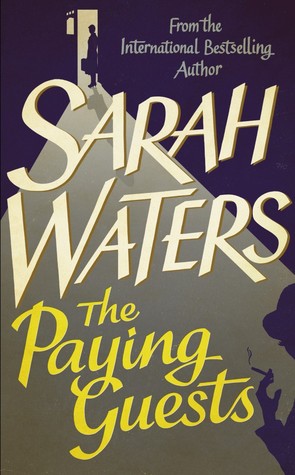
The Paying Guests This is Sarah Waters’ sixth novel, published in 2014. I have read and enjoyed all of her previous five, but after seeing some very mixed reviews of The Paying Guests around the time of publication, I decided I wasn’t in any hurry to read this one. I knew I would read it eventually, but I wanted to wait until I was in the right mood for it.

This book is set in London in 1922 which I was pleased about as, surprisingly, I have preferred Sarah Waters’ 20th century novels (The Little Stranger and The Night Watch) to the Victorian ones (Fingersmith, Affinity and Tipping the Velvet). I always find the 1920s an interesting decade to read about; it was so soon after the end of the war and, for most people, life would never be the same again.

In The Paying Guests we meet twenty-six-year-old Frances Wray, a young woman whose life has certainly been affected by the war – her two brothers were killed in action and her father died not long after, leaving Frances and her mother alone and struggling financially. Frances is now doing the work that the servants used to do and, to avoid having to sell the house, she and her mother have decided to take in lodgers or ‘paying guests’.

The paying guests are a young married couple, Leonard and Lilian Barber, and from the moment of their arrival the atmosphere in the house changes. The Barbers belong to what Frances calls the ‘clerk class’ and they have different views, different attitudes and different ways of living their lives. Sarah Waters captures perfectly what it feels like to suddenly have to share your home with strangers:

Water was run after that, and then another odd noise started, a sort of pulse or quick pant – the meter again, presumably, as the gas ran through it. Mrs Barber must be boiling a kettle. Now her husband had joined her. There was conversation, laughter… Frances caught herself thinking, as she might have done of guests, Well, they’re certainly making themselves at home. Then she took in the implication of the words, and her heart, very slightly, sank.

As Frances gets to know the new lodgers, she finds herself increasingly attracted to Lilian. Having ended an earlier romance with another girl, Christina, for the sake of her family, Frances is determined not to let another chance of happiness slip away. This time, though, she faces not only the disapproval of her mother, but also an even bigger obstacle in the form of Lilian’s husband, Leonard.

The relationship between Frances and Lilian develops slowly throughout the first half of the novel. Although it’s difficult to tell what Lilian is truly thinking or feeling, there’s no doubt about the intensity of Frances’s emotions. While I can’t say that I particularly liked Frances, I did feel worried for her: she had already been through so much in the past and I could sense that there would be more trouble coming her way in the future. And I was right. The tension builds and builds in the Wray household and there is the sense that something big and significant is going to happen. Eventually something does happen (something horrible, dramatic and shocking) and from that point the plot begins to go in a very different direction.

The second half of the book is still interesting and compelling in its own way, but it does feel like an entirely different story and I think I might have been happier if this had continued to be the quiet 1920s domestic novel it seemed to be at the beginning. I did enjoy The Paying Guests, though, and I’m intrigued by the list of books Sarah Waters mentions as her influences; I’m particularly interested now in reading A Pin to See the Peepshow by F. Tennyson Jesse.