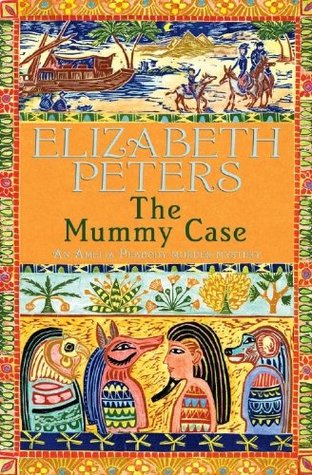
The Mummy Case by Elizabeth Peters

It’s been years since I last read an Amelia Peabody mystery and when I picked up The Mummy Case, the third in the series, I was concerned that I had left too big a gap between books. Luckily, this seems to be a series you can easily return to after a long absence as each book, at least so far, has worked as a standalone mystery.

The Mummy Case is set in 1894 and opens with married Egyptologists Amelia Peabody and Radcliffe Emerson at home in England planning their next trip to Egypt. Amelia dreams of exploring the pyramids of Dahshoor on this visit, but her hopes are shattered with the discovery that her husband has left it too late to submit their application and permission has already been granted to another archaeologist. Amelia and Emerson are offered Mazghunah instead – a barren and uninspiring site believed to be of little historical significance – and they reluctantly accept.

Despite their lack of enthusiasm, the expedition proves to be much more exciting than either of them had expected. Before they even reach their destination, they become caught up in the murder of an antiquities dealer in Cairo who is found dead in his own shop – and when they eventually arrive at Mazghunah, Amelia becomes convinced that somebody connected with the murder has followed them there. When a scrap of papyrus is stolen from their camp and an entire mummy case belonging to a visiting tourist also disappears, even Emerson has to agree that they have stumbled onto the trail of a clever and ruthless Master Criminal!

Unlike their first two mysteries (described in Crocodile on the Sandbank and The Curse of the Pharaohs), Amelia and Emerson have help in solving this one. For the first time, their young son Ramses has accompanied them on a dig and while he often proves to be more of a hindrance, getting into trouble at every opportunity, he also manages to appear at several crucial moments to save the day. Described as ‘catastrophically precocious’ by Amelia, he sounds more like a seventy-year-old professor with a speech impediment than a seven-year-old child and although I’ve been told that he improves as a character later in the series, in this book I found him extremely irritating. However, he’s clearly not meant to be taken too seriously – and to be fair, Amelia finds him irritating too:

The old woman’s cacodemonic laughter broke out again…”The wisdom of the Prophet is yours, great lady. Accept an old woman’s blessing. May you have many sons – many, many sons…”

The idea was so appalling I think I turned pale.

I enjoyed this book, despite Ramses, but I don’t think it was as strong as the previous two in the series. The plot seemed to meander all over the place and it was easy to lose sight of what the central mystery was that the characters were trying to solve. I do still love Amelia and Emerson, though – their good-natured bickering is always entertaining! It was also interesting to learn a little bit about Mazghunah and its disappointingly incomplete ‘pyramids’ and to meet the real-life archaeologist Jacques de Morgan – although seeing him only through Amelia’s eyes gives us a slightly biased impression as he is their rival and the man who is excavating the much more attractive site of Dahshoor!

I am looking forward to continuing with the fourth book in the series, Lion in the Valley.
Book 43/50 read for the 2021 Historical Fiction Reading Challenge.

Book 2 read for R.I.P. XVI
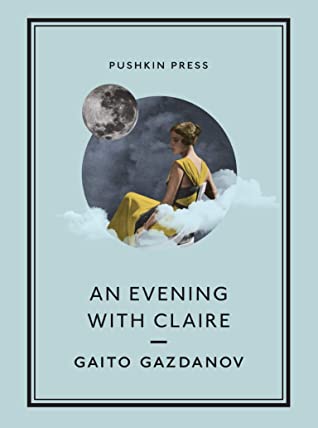
An Evening with Claire by Gaito Gazdanov – Translated by Bryan Karetnyk

When An Evening with Claire was originally published in 1930, Russian author Gaito Gazdanov was living in Paris and hadn’t seen his home country for nearly a decade. This, his first novel, was a success for Gazdanov, bringing him to the attention of other émigré writers, and now that I’ve read it I can understand why. It’s not my usual sort of book but I was drawn to it because I’ve enjoyed other books which have been reissued by Pushkin Press recently and because, apart from Mikhail Bulgakov and Boris Pasternak, I can’t think of any other 20th century Russian authors that I’ve read. This new edition has an introduction by Bryan Karetnyk, who is also responsible for the excellent English translation, which I found very readable.

The novel opens with our narrator, Kolya, in Paris spending an evening with Claire while her husband is away from home. Although we know very little about Kolya’s relationship with Claire at this stage, we do learn that he first met her ten years ago and has been in love with her ever since. However, they have spent most of that time apart and have only now been reunited. Later that evening, while Claire is asleep, Kolya remembers their first meeting, along with many of the other significant moments in his past. As he continues to remember and reminisce, the story of his life begins to take shape: his childhood, his schooldays, his relationships with family members and his experiences during the Russian Revolution and the Civil War that followed.

We actually see very little of Claire herself and I never really felt that I knew her or understood the sort of person she was, but that didn’t matter too much because the main part of the novel concentrates on Kolya’s own history as it unfolds through a chain of memories. His love for the absent Claire is always there and can be seen as a symbol of hope as he dreams of meeting her again one day. I enjoyed the first half of the novel, which includes anecdotes from Kolya’s childhood and his education at a strict military school and gymnasium, but the second half is more interesting as he begins to remember his time serving with the White Army in the Russian Civil War. It all feels very autobiographical and although I don’t know much about Gaito Gazdanov, I’m sure he must have been drawing on some of his own personal experiences and feelings in the writing of this novel.

At just over 200 pages in this edition, An Evening with Claire is a very short novel, but I thought it was the right length for the story being told. In general, I prefer books with more plot and this one has very little, but while this might have been a problem for me in a longer novel, there was just enough here to interest me and hold my attention throughout those 200 pages. This may sound like a strange comparison, but I was reminded of one of my other recent reads, Goodbye Mr Chips, another short book published in the same decade in which a man is looking back on episodes from earlier in his life. They share a focus on the power of memory, recollections of better days and regret for a disappearing world – which are also the reasons why I think An Evening with Claire would have resonated so much with other Russian émigrés of the 1930s. I would be happy to read more by Gazdanov and I see there are four of his other books available in English from the same publisher.

Thanks to Pushkin Press for providing a copy of this book for review via NetGalley.

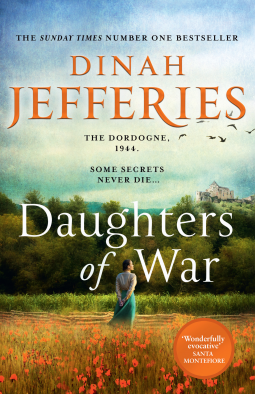
Daughters of War by Dinah Jefferies

After six novels set in Asia, all of which I’ve read and enjoyed, Dinah Jefferies has recently switched her focus to Europe during World War II. Last year’s The Tuscan Contessa was set in 1940s Italy; her new book, Daughters of War, is the first in a new trilogy set in wartime France.

It’s 1944 and France is occupied by the Nazis. In a cottage in the Dordogne live three sisters, all in their twenties, who are each doing their best to protect themselves and their friends and neighbours and to ensure that they all survive the war. Hélène, the eldest, took on the responsibility of caring for the other two after their father died and their mother departed for England, and as well as trying to look after her little family, she also works as a nurse alongside the village doctor. Élise is the rebellious and daring sister, the one who is determined to do whatever she can to help the Resistance, whether that is hiding weapons in the cottage grounds or intercepting and passing on messages. Finally there’s Florence, the innocent and kind-hearted dreamer, who is always happiest when she is at home, spending time in the kitchen or the garden.

As the Occupation continues and liberation still seems like a distant dream, the sisters are faced with a series of important decisions to make. Should they give shelter to Tomas, a deserter from the German army? Can they trust Jack, a British SOE soldier who arrives injured at the cottage one night, asking for help? All they can do is follow their instincts and try to find a balance between keeping themselves safe and working to regain France’s freedom. Along the way, each of the sisters has her own set of personal challenges to overcome, family secrets are exposed and the bonds between the three of them are tested. As the first in a trilogy, not everything is resolved in this book, but the foundations are laid for the characters and ideas to be developed further in the second and third novels.

The book is written from the perspectives of all three sisters; we spend a few chapters with one, then a few chapters with another. I felt the closest to Hélène, although each of the sisters is a strongly drawn character with a distinct personality of her own. Élise has potentially the most exciting storylines, but I would have liked to have read about her activities with the Resistance in more detail – they are skimmed over quite quickly and I thought this was a missed opportunity. I also found it unconvincing that the sisters are so ready to trust and confide in everyone they meet, even when it appears that someone around them might be a traitor; I would have expected them to have shown more caution.

Those are the negatives, but there were also plenty of positives; I particularly loved the descriptions of the beautiful countryside and villages of the Périgord Noir, the region of France where the story is set. I’m sure I’ll be reading the other two books in the trilogy, whenever they are available.

Thanks to HarperCollins UK for providing a copy of this book for review via NetGalley.

Book 42/50 read for the 2021 Historical Fiction Reading Challenge.

Six Tudor Queens: Katharine Parr, the Sixth Wife by Alison Weir

This is the final book in Alison Weir’s Six Tudor Queens series retelling, in fictional form, the stories of the wives of Henry VIII. Katharine Parr, the subject of this sixth novel, has never interested me as much as some of the other wives, yet this book has turned out to be my favourite of the series, not just for what we learn about Katharine herself, but also for the depiction of the political and religious situation in England during the later stages of Henry’s reign.

I have read other novels about Katharine Parr, such as Elizabeth Fremantle’s Queen’s Gambit and Philippa Gregory’s The Taming of the Queen (interestingly, every author seems to choose a different spelling of her name!), but none of them go into as much depth and concentrate almost solely on her time as Henry’s wife and her relationship with Thomas Seymour. This book starts at the beginning, with Katharine’s childhood, and then takes us through her entire life, devoting plenty of time to her earlier two marriages, first to the young Edward Burgh and then to John Neville, Lord Latimer. I particularly enjoyed the section of the book where Katharine is married to Latimer; although it’s not a passionate romance, Katharine comes to love and trust her husband and they have a happy nine years together despite the religious turmoil going on around them (the uprising known as the Pilgrimage of Grace takes place during this period and provides one of the most exciting episodes in the novel).

Although Lord Latimer remains faithful to the Catholic Church, Katharine becomes a supporter of religious reform. When Latimer dies in 1543 and the King, having recently had his fifth wife beheaded, asks her to marry him, Katharine reluctantly accepts, knowing that turning down his proposal would be very unwise and hoping that her influence at court can further the cause of the reformers. Over time she becomes quite fond of Henry, engaging in lively debates with him on the subject of religion, but there is always an undercurrent of danger and Katharine knows that if she is to avoid the fate of her predecessors, she can’t allow her sympathies for the new Protestant religion to become too obvious. Somehow, Katharine manages to survive and outlive the King, free at last to marry Thomas Seymour, the man she really loves…but their time together is tragically short and marred by Seymour’s inappropriate behaviour with the young Princess Elizabeth.

I loved reading about Katharine’s life before she became Queen, as so much of this was new to me – and unlike the book on Anne of Cleves, where Weir admits that she invented a lot of Anne’s story, this one seems to be more grounded in historical fact. Once the novel moves on to her marriages to Henry VIII and Thomas Seymour, I was on more familiar ground and found these sections slightly less interesting to read – particularly as I have never liked Thomas Seymour and wished I could reach into the pages of the book and stop Katharine from marrying him!

Something that has intrigued me throughout this series is the way in which Alison Weir has chosen to portray Henry VIII. She shows him in a much more positive light than usual, to the point where she almost seems to be absolving him of any responsibility for his actions, putting the blame on the people around him instead – Thomas Cromwell, Bishop Gardiner, even some of his victims such as poor Katheryn Howard. On the one hand, it’s interesting to see a more nuanced depiction of Henry, but on the other I’m not convinced that his wives would all have viewed him as favourably as these books suggest!

Katharine Parr herself is portrayed as an intelligent, well-educated and compassionate woman; her previous marriages and experience of life have given her a maturity and common sense that some of Henry’s other wives lacked. She makes an effort to befriend her stepchildren and plays an important part in persuading Henry to restore his daughters Elizabeth and Mary to the line of succession. She gains the King’s trust and is named regent while he is away on a military campaign, as well as becoming the first queen to have books published in English under her own name. Katharine’s life is maybe not as dramatic as some of the other wives’, but because I liked her so much I was able to become fully invested in her story.

Now that this series has come to an end, Alison Weir is moving further back in time with her next novel to tell the story of Henry VIII’s mother, Elizabeth of York, in The Last White Rose.

Thanks to Headline for providing a copy of this book for review via NetGalley.

Book 41/50 read for the 2021 Historical Fiction Reading Challenge.

Top Ten Tuesday: From One to Ten

This week’s topic for Top Ten Tuesday (hosted by Jana at That Artsy Reader Girl) is “Books with Numbers in the Title”. I’m sure a similar topic has come up before, but I didn’t take part that time so thought I’d join in today – and to make things more difficult, I have chosen a different title for each number from one to ten and have only used books that I have read and reviewed!

One Night in Winter by Simon Sebag Montefiore – There were a few books I could have used for number one, but I’ve chosen this thriller set in Stalin’s Moscow at the end of World War II and based on a true story.

Two on a Tower by Thomas Hardy – This is a lesser known Hardy novel, but I still really enjoyed this story of Lady Viviette Constantine and her love for the young astronomer, Swithin St Cleeve.

Three Singles to Adventure by Gerald Durrell – I avoided the more obvious choices here, such as The Three Musketeers and Three Men in a Boat and went with this non-fiction account of Durrell’s expedition to Guyana in 1950. I loved the descriptions of the animals and birds he finds there and the funny anecdotes about things that happen to Durrell and his companions during the journey.

The Four Emperors by David Blixt – Ancient Rome has never been one of my favourite periods to read about, but this novel brought to life the Rome of AD 69, the year in which four different emperors ruled in quick succession.

Five Little Pigs by Agatha Christie – This 1942 Poirot mystery is slightly unusual in that Poirot is trying to solve a crime that took place many years before the story begins. It’s one of several Christie novels with a title based on a children’s rhyme!

Daisy Jones and the Six by Taylor Jenkins Reid – I didn’t think this would be my kind of book, but I enjoyed it much more than I expected to. Written in a documentary style, it tells the story of a fictional 1970s rock band.

The Seven Sisters by Lucinda Riley – I had several choices for number seven too, but I decided on this one, the first in Lucinda Riley’s Seven Sisters series. Each book in the series tells the story of one of seven adopted sisters and in this first novel we meet the eldest, Maia, as she traces her family history back to Brazil during the creation of the statue of Christ the Redeemer.

Around the World in Eighty Days by Jules Verne – I’m cheating slightly here as I don’t seem to have read any books with ‘eight’ in the title. Anyway, I enjoyed this classic tale of a man who sets out to prove that it’s possible to travel round the entire world in eighty days – although it seemed such a waste to visit so many different countries and not have time to actually explore any of them!

Nine Coaches Waiting by Mary Stewart – I love Mary Stewart! This wonderful Gothic suspense novel set in France was the first of her books that I read and probably still my favourite.

Ten-Second Staircase by Christopher Fowler – This is the fourth novel in Fowler’s Bryant and May series about a pair of elderly detectives who work for the Peculiar Crimes Unit. In this book, Arthur Bryant and John May are on the trail of a mysterious serial killer dressed as an 18th century highwayman.

~

Have you read any of these books? Could you put your own ‘one to ten’ together?

Historical Musings #68: Historical fiction in translation

Welcome to this month’s post on all things historical fiction.

August was Women in Translation Month, a popular event in the book blogging calendar, and although I was only able to join in with one book – The Country of Others by Leïla Slimani, set in Morocco in the 1940s and 50s – I thought it would be interesting for this month’s Musings to look at some of the other historical fiction novels I have read in translation. I’ve read plenty of older classics, many of which I’ve reviewed on my blog, but sadly very few recent books published within the last ten years or so. Here is everything I could find in my blog archives, although I might have missed one or two (and for the purposes of this list, I am referring to books that have been translated from their original language into English, not from English into other languages):

French to English:

Maurice Druon – The Accursed Kings series (translated by Humphrey Hare)
Alexandre Dumas – The Three Musketeers and sequels (translated by William Barrow); The Black Tulip (Franz Demmler); The Red Sphinx (Lawrence Ellsworth)
Victor Hugo – The Hunchback of Notre-Dame (translated by Isabel F. Hapgood); Les Miserables (Norman Denny)
Madame de Lafayette – The Princess of Cleves (unknown translator)
Robert Merle – The Brethren (translated by T Jefferson Kline)
George Sand – Mauprat (translated by Stanley Young)
Olivier Barde-Cabuçon – Casanova and the Faceless Woman (translated by Louise Rogers Lalaurie)
Leïla Slimani – The Country of Others (translated by Sam Taylor)

Italian to English:

Umberto Eco – The Name of the Rose (translated by William Weaver)
Giuseppe Tomasi di Lampedusa – The Leopard (translated by Archibald Colquhoun)

German to English:

Oliver Pötzsch – The Beggar King (translated by Lee Chadeayne)

Norwegian to English:

Lars Mytting – The Bell in the Lake (translated by Deborah Dawkin)
Sigrid Undset – Kristin Lavransdatter (translated by Tiina Nunnally)

Catalan to English:

Rafel Nadal Farreras – The Last Son’s Secret (translated by Mara Faye Lethem)

Spanish to English:

Isabel Allende – The Japanese Lover (translated by Nick Caistor and Amanda Hopkinson); A Long Petal of the Sea (Caistor and Hopkinson)

Russian to English:

Boris Pasternak – Doctor Zhivago (translated by Max Hayward and Manya Harari)
Leo Tolstoy – War and Peace (translated by Pevear and Volokhonsky)

Dutch to English:

Hella S Haasse – In a Dark Wood Wandering (translated by Lewis C Kaplan)
Simone van der Vlugt – Midnight Blue (translated by Jenny Watson)

~

Have you read any of these? Can you recommend any other historical fiction novels in translation, particularly anything recent?

There’s a Goodreads list here with 295 books and an interesting article here on the particular challenges of translating historical fiction.

~

My current historical reading:

I have just finished two novels, both long ones which have occupied most of my reading time for the last couple of weeks: Katharine Parr, the Sixth Queen by Alison Weir and Daughters of War by Dinah Jefferies. I’m also in the middle of an even longer non-fiction book, Powers and Thrones by Dan Jones, which is fascinating but has a lot of information to take in and absorb. As I wanted something lighter to read alongside this, I have just started The Mummy Case by Elizabeth Peters, the third book in her Amelia Peabody mystery series featuring a female Victorian Egyptologist. It will count towards the RIP XVI challenge. After this, I have review copies of two new September releases which I would like to read before the end of the month: The Royal Game by Anne O’Brien and A Marriage of Lions by Elizabeth Chadwick.

New to my historical TBR in the last few weeks:

The Splendour Before the Dark by Margaret George, the sequel to The Confessions of Young Nero, which I read a few years ago, and Pour the Dark Wine by Deryn Lake, a novel about the Seymour family (the ebook was free on Amazon last week). Also, The Vanished Days by Susanna Kearsley and Theatre of Marvels by Lianne Dillsworth, both via NetGalley and due to be published in 2022.

~

Have you read any good historical novels lately? And what are your thoughts on historical fiction in translation?

Goodbye, Mr Chips by James Hilton

Since reading James Hilton’s Lost Horizon, which I loved, I have wanted to try more of his work – and although it’s taken me a few years, I’ve finally read another of his books! If I’d known how short Goodbye, Mr Chips was I would have tried to read it before now; there are only about 120 pages in my edition, so it’s a very quick read.

Before starting the book, I thought I already knew the story because I’ve seen two of the adaptations – the 1939 one and the 1969 musical version (both of which I enjoyed). The earlier film is much more faithful to the book, but neither follow the original story exactly and there are incidents in both that don’t appear in Hilton’s text. The novella tells the story of Mr Chipping, a quiet, unassuming teacher, and follows his career at the fictional Brookfield School over a period of many decades. Chipping – or Mr Chips as the boys call him – teaches Greek and Latin and, as the years go by and the world begins to change around him, he gains a reputation for being old-fashioned and traditional, reluctant to embrace new teaching methods and belonging to an earlier time. We first meet him as an old man – the sort of old man people struggle to imagine ever being young:

…white-haired and only a little bald, still fairly active for his years, drinking tea, receiving callers, busying himself with corrections for the next edition of the Brookfeldian Directory, writing his occasional letters in thin, spidery, but very legible script. He had new masters to tea, as well as new boys. There were two of them that autumn term, and as they were leaving after their visit one of them commented: “Quite a character, the old boy, isn’t he? All that fuss about mixing the tea — a typical bachelor, if ever there was one.”

Of course, Mr Chips was young once and the boys would have been surprised to learn that he wasn’t always a bachelor. Back in 1896, at the age of forty-eight he had married Katherine Bridges – and although their time together was tragically short, Katherine’s kind heart and sense of humour had a profound effect on Chips, leaving him a better person and changing his outlook on life.

The story is told in a series of flashbacks, with the elderly Mr Chips looking back on his life and career, remembering not only the happy days of his marriage to Katherine, but also the more difficult times he has lived through, such as the First World War. It’s a nostalgic and sentimental book, but quite a sad and poignant one too. I found it too short to be completely satisfying and I think this is one of the few occasions where I would say I preferred the film – either of them – to the book, but I did still enjoy it and am looking forward to reading Random Harvest, the other James Hilton novel I have on my TBR.

This is book 23/50 read from my second Classics Club list.