20 Books of Summer – 2021

20 Books of Summer, hosted by Cathy at 746 Books, is a very simple idea: make a list of twenty books (there are also ten and fifteen book options) and read them during the summer months. However, it’s more difficult than it sounds, and although this will be my fifth year of taking part, I have still never managed to read all twenty books on my list!

This year’s 20 Books of Summer starts on Tuesday 1st June and finishes on Wednesday 1st September. I have listed below the books I would like to read, but I don’t expect to have time for all of them and will probably end up reading lots of books that aren’t on the list instead! These are a mixture of review copies, books from my Classics Club list and books that have been waiting on my TBR for a long time. I will also have three books to read for an Agatha Christie challenge I’m participating in, but I don’t know what they will be yet.

~

1. Still Life by Sarah Winman
2. Death in Zanzibar by MM Kaye
3. A Corruption of Blood by Ambrose Parry
4. The Green Gauntlet by RF Delderfield
5. The Women of Troy by Pat Barker
6. Jane and Prudence by Barbara Pym
7. The Lily and the Lion by Maurice Druon
8. Fool’s Assassin by Robin Hobb
9. The Ionian Mission by Patrick O’Brian
10. The Last Daughter by Nicola Cornick
11. These Old Shades by Georgette Heyer
12. The Echo Chamber by John Boyne
13. The Reckoning by Sharon Penman
14. The Infernal Riddle of Thomas Peach by Jas Treadwell
15. High Rising by Angela Thirkell
16. Confusion by Elizabeth Jane Howard
17. Red Adam’s Lady by Grace Ingram
18. St Martin’s Summer by Rafael Sabatini
19. Goodbye, Mr Chips by James Hilton
20. The Sussex Downs Murder by John Bude

~

Have you read any of these? Which one should I read first? And will you be joining in with 20 Books of Summer this year?

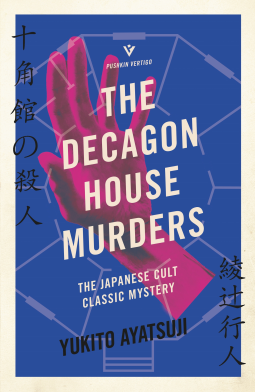
The Decagon House Murders by Yukito Ayatsuji

This Japanese murder mystery was originally published in 1987 and is now available from Pushkin Vertigo in an English translation by Ho-Ling Wong. Having recently read two other reissued Japanese classic mysteries, The Honjin Murders by Seishi Yokomizo and Murder in the Crooked House by Soji Shimada, I jumped at the chance to read this one, especially when I saw comparisons with one of my favourite Agatha Christie novels, And Then There Were None.

After a brief prologue, the book begins with seven students, all members of their university Mystery Club, arriving on the lonely island of Tsunojima, where they are planning to spend the week. It’s the perfect location for a group of crime lovers because a series of unsolved murders took place there the year before, so the students are looking forward to exploring the island and using their skills as amateur detectives to investigate the mystery. Soon after their arrival, however, they discover that someone is planning to murder them one by one – but is the killer one of the seven or is someone else hiding on the island?

This is an interesting novel and a quick one to read; although it takes a while to get started, the pace rapidly picks up once the first murder takes place. The action switches between the island and the mainland, where Kawaminami, an ex-member of the Mystery Club, is carrying out some investigations of his own, having received a letter which leads him to question what really happened on Tsunojima Island the year before. The alternating narratives add some tension to the story as we wait to see whether Kawaminami will solve the mystery before everyone on the island is dead.

The similarities with And Then There Were None were obvious as soon as I started to read, but sadly this book doesn’t come close to the brilliance of the Christie novel – and the eventual solution and motive are quite different anyway. However, it’s clear that Yukito Ayatsuji must have been an admirer of Golden Age crime novels and he pays homage to them in various ways all the way through the book. The seven members of the Mystery Club have all taken the names of classic crime writers and are known as Ellery, Agatha, Leroux, Carr, Van Dine, Poe and Orczy, while Kawaminami’s nickname is Conan – or sometimes Doyle!

The characters themselves, though, never really come to life at all and feel interchangeable, with very little to differentiate one from another. This leads to a lack of emotional involvement and I found that I didn’t really care who was murdered or who the culprit was. I felt completely detached from what was happening and although I could appreciate the cleverness of the plot, it wasn’t a story that I could become fully absorbed in. To be fair, this seems to be typical of Japanese mystery novels in general, particularly the subgenre known as honkaku, of which this book is said to be a classic example. Honkaku books have been described as traditional plot-driven ‘puzzle mysteries’ with complex solutions and appear to be less concerned with character development.

Still, I found things to enjoy in this novel. The revelations at the end took me completely by surprise and, if I hadn’t had so many other books waiting to be read, I would have been tempted to go back and re-read at least the first few chapters to see how I could have missed the clues. And I loved the descriptions of the Decagon House, the building in which the students stay during their time on the island – a decagonal building with decagonal rooms, decagonal tables and even decagonal cups!

Thanks to Pushkin Vertigo for providing a copy of this book for review via NetGalley.

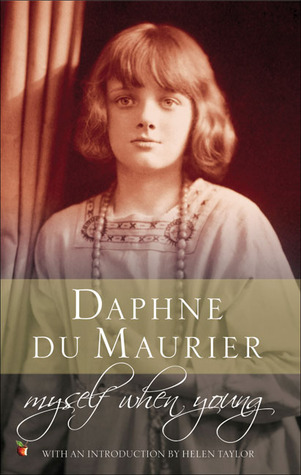
Myself When Young by Daphne du Maurier – #DDMReadingWeek

This is my second contribution to Ali’s Daphne du Maurier Reading Week. As I mentioned in my first post, I have now read all of du Maurier’s novels and short story collections, but still have plenty of her non-fiction books to read. This one, originally published in 1977 as Growing Pains: The Shaping of a Writer, was written towards the end of her career but based on diaries kept throughout her childhood and into her twenties. A lot of the information in this book was already familiar to me through a biography I read a few years ago, Daphne du Maurier and Her Sisters: The Hidden Lives of Piffy, Bird and Bing by Jane Dunn, but it was still interesting to read it again in du Maurier’s own words this time.

Daphne and her two sisters, Angela and Jeanne, were part of a famous theatrical and artistic family – both of their parents, Gerald du Maurier and Muriel Beaumont, were actors and their grandfather, George du Maurier was a cartoonist and author, best known for creating the character Svengali in his 1894 novel Trilby. Daphne undoubtedly had a privileged childhood, being educated privately by governesses before being sent to finishing school in France, but it’s clear that she didn’t always feel very comfortable with the sort of lifestyle into which she’d been born. As a shy and solitary child – the book begins with a vivid description of four-year-old Daphne being ushered into the drawing room with a group of ladies who had come to visit baby Jeanne and being frightened and overwhelmed by the noise – she retreated into a world of imagination, spending her time reading, writing and performing in plays with her sisters. From an early age, Daphne found herself drawn to male roles, eventually creating her own alter ego, Eric Avon, a character whom she said would emerge again later (in different forms) as the male narrator of five of her novels – I’ll Never Be Young Again, My Cousin Rachel, The Scapegoat, The Flight of the Falcon and The House on the Strand.

She talks a lot about her childhood homes in London – Cumberland Terrace, Regent’s Park and Cannon Hall, Hampstead – and the influence they had on her early life:

Who can ever affirm, or deny that the houses which have sheltered us as children, or as adults, and our predecessors too, do not have embedded in their walls, one with the dust and cobwebs, one with the overlay of fresh wallpaper and paint, the imprint of what-has-been, the suffering, the joy? We are all ghosts of yesterday, and the phantom of tomorrow awaits us alike in sunshine or in shadow, dimly perceived at times, never entirely lost.

Later, of course, when the family bought a holiday home in Cornwall, she would fall in love with that part of the country, and in this book she describes her first sight of Menabilly, the house that would appear in The King’s General and as Manderley in Rebecca, and her first trip to Bodmin Moor, where she discovered the old coaching inn that would inspire yet another of her famous novels, Jamaica Inn.

As well as places, she writes about the people who had important roles to play in her life; her adoration of her charismatic father comes through strongly, although her feelings for her mother are less clear, while she also devotes a lot of time to discussing her various love affairs, including her flirtations with her much older married cousin Geoffrey, a brief romance with the film director Carol Reed, and her very close relationship with Fernande Yvon, one of the teachers at her Paris finishing school. Right at the end of the book, she meets her future husband, Tommy ‘Boy’ Browning, who had read her novel The Loving Spirit and sailed to Fowey in Cornwall in search of its author. A few months later they get married but this is where the book ends and as there is no sequel, we aren’t given the opportunity to read her thoughts on her married life.

I enjoyed Myself When Young, particularly the first half where she writes about her childhood, the houses she lived in, the games she played with her sisters and her thoughts on the books she read. I wasn’t quite as interested in the later chapters, apart from where we were given some insights into the writing of her early novels and short stories – such as the difficulties she had in writing Parts Three and Four of The Loving Spirit or where she was when the character of Julius popped into her head. I would have liked more of this, but I suppose it wasn’t really the purpose of the book. Still, it was lovely to learn more about one of my favourite authors and I’m looking forward to reading the rest of her non-fiction.

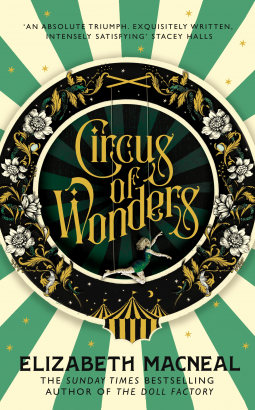
Circus of Wonders by Elizabeth Macneal

I enjoyed Elizabeth Macneal’s first novel, The Doll Factory, so was looking forward to reading her new one, Circus of Wonders.

Beginning in the year 1866, Circus of Wonders tells the story of Nell, a young woman who has always been made to feel like an outsider in her small village on the south coast of England. The unusual birthmarks which cover her skin set her apart from the rest of the community and although her brother does his best to protect her, Nell knows she will never fit in. When Jasper Jupiter’s travelling circus arrives in the village, Nell is horrified to learn that her father has sold her to Jasper, who is looking for a new ‘curiosity’ to draw in the crowds. Once she settles into her new life, however, she begins to think that joining Jasper’s show is the best thing that could have happened to her. Her performance as ‘the Queen of the Moon and Stars’ proves to be a huge success, but how will Jasper feel if she becomes a bigger star than he is himself?

Nell’s story alternates with chapters written from the perspectives of two other characters, Jasper and his brother Toby. There’s a strong bond between the brothers, but they are two very different men. Jasper is very much the leader, an ambitious and ruthless businessman who sees the exploitation of other people as his way to fame and fortune. Toby, who helps him to run the circus, is a gentle, compassionate man desperate to find a way out from his brother’s shadow, but still haunted by his experiences as a photographer in the recent Crimean War. As the novel progresses we learn more about all three main characters as each of them tries to find their place in the world.

Although this is not always a very comfortable book to read, I think Macneal handles a sensitive topic very well. Nell and the other ‘circus attractions’ are treated as commodities to be bought and sold by collectors and showmen, but they are all presented as fully developed characters who, despite their unusual appearances, are normal human beings like anyone else. I have read a few other novels that deal with the same subject, so I was pleased to come across references to Charles Stratton, who appears in The Autobiography of Mrs Tom Thumb by Melanie Benjamin and Julia Pastrana from Orphans of the Carnival by Carol Birch. Unlike Stratton and Pastrana, who both really existed, Nell is a fictional character but her story is no less moving and believable. I was also interested in the flashbacks to the Crimean War, where we gradually find out what really happened to Jasper and Toby, shaping them into the men they are when we meet them at the beginning of the novel.

Of Elizabeth Macneal’s two books, I think I preferred The Doll Factory, but I enjoyed both and will be looking out for whatever she writes next.

Thanks to Picador for providing a copy of this book for review via NetGalley.

Book 25/50 read for the 2021 Historical Fiction Reading Challenge.

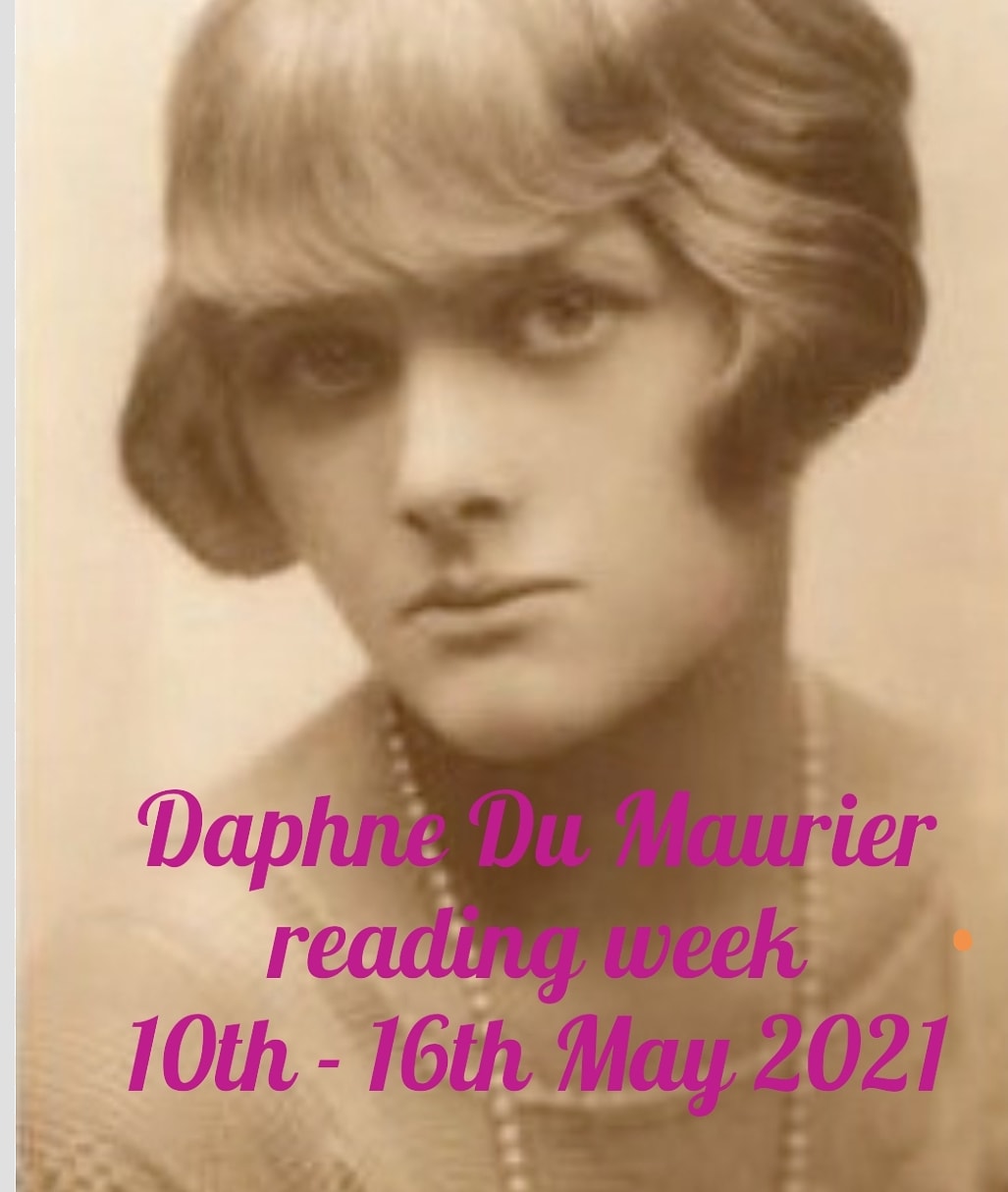
My Daphne du Maurier journey – #DDMreadingweek

This week Ali is hosting another of her Daphne du Maurier Reading Weeks. Du Maurier is one of my favourite authors and over the years I have managed to read all of her novels and short story collections, finishing last May with Castle Dor (my choice for the last Reading Week). I still have plenty of her non-fiction books left to read and hope to post a review of one of them later this week, but today I thought it would be interesting to look back at my journey through her fiction. Below are my thoughts on her novels and short story collections – and to make things more fun, I have ranked them in order of favourite to least favourite!

The Novels

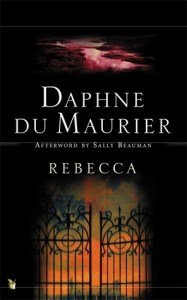
1. Rebecca – This was the first novel I read by Daphne du Maurier when I was sixteen and many years and several re-reads later it is still my favourite. This story of the second Mrs de Winter, haunted by the memory of her husband’s first wife, is a classic for a reason. From the famous opening line, “Last night I dreamt I went to Manderley again”, to the very last page, it’s a wonderful, atmospheric read.

2. The House on the Strand – I started reading this on New Year’s Day in 2011 and knew immediately that it was going to be one of my books of the year. It’s a time travel novel set partly in 14th century Cornwall, but it wasn’t the historical storyline that interested me so much as the method of time travel itself and the implications it has for the lives of our present day (1960s) characters.

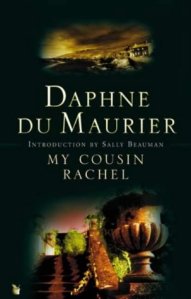
3. My Cousin Rachel – If a newcomer to du Maurier’s work asked me what they should read next after Rebecca, this story of a young man who can’t decide whether or not his cousin Rachel is a murderer would be my recommendation. The plot is obviously very different, but it has a similarly dark and brooding atmosphere.

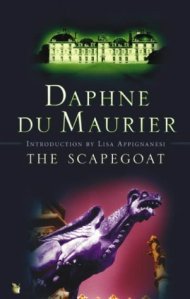
4. The Scapegoat – I love stories about mistaken identities, twins and doubles and this is a wonderful variation on that theme. It’s a book that I’m particularly looking forward to re-reading at some point, as I seem to have interpreted it quite differently from a lot of other readers and am curious to see if I still have the same theories about it.

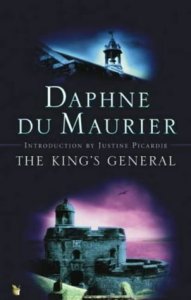
5. The King’s General – Although this well-researched historical novel didn’t make it into my top four, it’s another favourite. Set in 17th century Cornwall during the English Civil War, it’s the story of Honor Harris, the victim of a tragic accident that threatens to destroy her future, and Richard Grenvile, the King’s General in the West. Part of the novel takes place at Menabilly, du Maurier’s own home which was also the inspiration for Manderley in Rebecca.

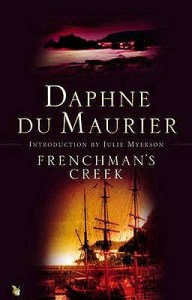
6. Frenchman’s Creek – It took me a while to get into this story of Dona St Columb and her love for a mysterious French pirate, but once I did I was swept away by it. I loved the dreamlike atmosphere and the beautifully described setting. Du Maurier’s sense of place is always wonderful but I found some of the images in this book particularly vivid.

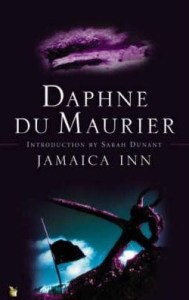
7. Jamaica Inn – I first read this as a teenager after finishing Rebecca, which proved to be a mistake as although it’s a great novel in its own right, I think it suffered from being read immediately after a book I had loved so much. I decided to read it again a few years ago and this time I really enjoyed this Gothic tale of smugglers and shipwrecks set on the Cornish coast.

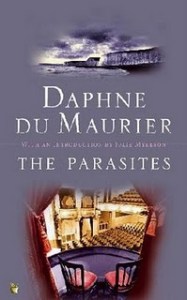
8. The Parasites – After a slow start, I loved this book about three siblings looking back on their childhood and wondering whether they really were ‘parasites’, as a family member once described them. Since reading this book several years ago, I have read some biographies of du Maurier and can see how some elements of the novel were inspired by her own childhood. Despite the title, this book contains some of the funniest scenes in all of du Maurier’s work.

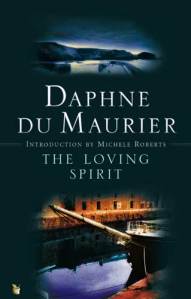
9. The Loving Spirit – This was du Maurier’s first novel and having heard that it wasn’t as good as her later books I wasn’t expecting too much from it. However, I was very pleasantly surprised. The book is divided into four parts each telling the story of a different generation of the Coombe family, a shipbuilding family from Cornwall, and is an impressive achievement from a twenty-four-year-old author.

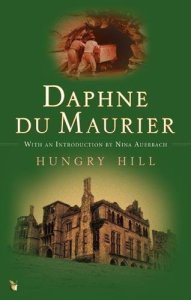
10. Hungry Hill – I love a good historical family saga and although this is a very bleak and depressing one, I still found it an interesting read – and nothing like The Loving Spirit, her other family saga. This one is set in 19th century Ireland and follows a copper-mining family over five generations. The characters are unpleasant and unlikeable and they suffer every kind of misfortune and tragedy you can imagine, but there was still something very compelling about this novel and I think it deserves a place in the middle of my list.

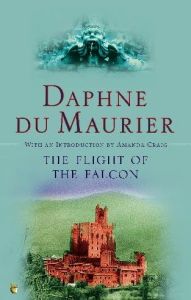
11. The Flight of the Falcon – Most of the details of this one have faded from my memory now, but although it wasn’t a favourite, I know I did enjoy it. I do remember some wonderful descriptions of the fictional Italian university town of Ruffano and a plot involving the re-enactment of the ‘flight’ of the city’s 15th century ruler, Duke Claudio.

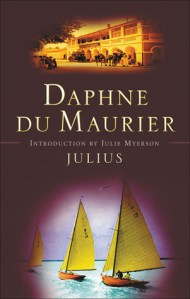
12. Julius – This is probably the darkest and most disturbing of du Maurier’s novels – the story of an ambitious, ruthless man who manipulates everyone around him in order to get what he wants. Despite the unlikeable character (one of the most horrible people I’ve come across in fiction), and some anti-Semitism, I found this a gripping novel with some beautifully atmospheric descriptive writing.

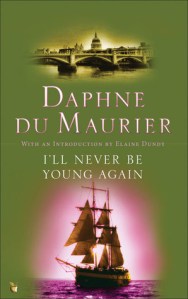
13. I’ll Never Be Young Again – This ‘coming of age’ story is one of several du Maurier novels to have a male narrator and I think she writes from a man’s perspective very well. Richard is an immature, selfish young man at the start of the novel but his life begins to change through his relationships with Jake, a friend with whom he travels around Norway, and Hesta, a woman he meets in Paris. I came to this book having only read Rebecca and Jamaica Inn and found it completely different, but surprisingly good despite the main character being so annoying!

14. Rule Britannia – This is an unusual du Maurier novel in which our protagonist, Emma, wakes up one day to find that the UK has broken away from Europe to form an alliance with the US, creating a new country known as USUK. Published in 1972, this novel may once have seemed like pure fantasy but has a new relevance in post-Brexit Britain! It’s fascinating, but I didn’t enjoy it as much as most of her other books.

15. Mary Anne – A book of two very different halves for me. I loved the first half, which describes (in fictional form) the early life of Mary Anne Clarke, du Maurier’s great-great-grandmother, who is born into a poor London family in the 1770s but goes on to become the mistress of Prince Frederick, Duke of York. The second half of the novel is devoted to several political scandals and court cases in which Mary Anne became involved and I found these quite tedious to read about, which is why this book isn’t higher on my list.

16. The Glass-Blowers – This historical novel based loosely on du Maurier’s own ancestors and set during the French Revolution should have been just my sort of book, so I was disappointed not to have enjoyed it more. I felt that it didn’t have quite the sense of time and place that some of her other books have, which was surprising considering the setting. However, even though it ranks as a lowly 16/17 on my list, I would still recommend reading it. It’s not a bad book at all – just not a personal favourite.

17. Castle Dor – It’s maybe not surprising that this is my least favourite du Maurier novel, as part of it was written by another author, Arthur Quiller-Couch, known as Q. Set in the 19th century and based on the legend of Tristan and Iseult, it should have been a great story, but I never felt fully engaged with either the plot or the characters and I would only really recommend this one if, like me, you’re planning to read all of du Maurier’s work.

The Short Stories

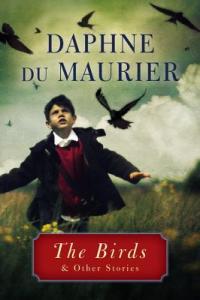
1. The Birds and Other Stories – I’m not usually a fan of short stories, but I love du Maurier’s. Her short story collections are harder for me to rank because each one contains some stories I loved and others I didn’t, but I think this one is the best. Many people are familiar with the title story, in which a family find their home under attack from a huge flock of birds, through the Alfred Hitchcock film, but the others are good too and I particularly enjoyed The Old Man!

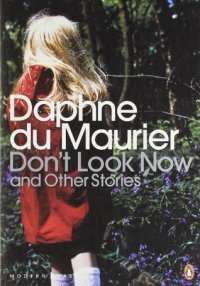
2. Don’t Look Now and Other Stories – Originally published as Not After Midnight and Other Stories. This collection only contains five stories, but that means they’re long enough for plenty of character and plot development. I loved Don’t Look Now (which was also adapted for film) and Not After Midnight, but my favourite story was A Border-Line Case.

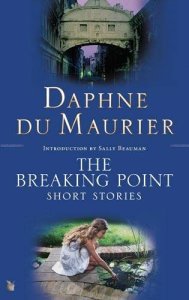
3. The Breaking Point: Short Stories – This is a dark and unsettling collection of stories written during a time in her life when du Maurier said she had been close to a nervous breakdown. Some of the stories are very enjoyable, such as The Alibi, The Blue Lenses and The Lordly Ones, but I found this collection more uneven than the two above, which is why it’s only third on my list.

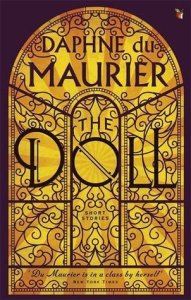
4. The Doll: Short Stories – These thirteen ‘lost’ stories were written very early in Daphne’s career but not published until more recently. Although some of the stories feel quite short and incomplete there are some very strong ones in this collection too and I noticed some themes, ideas and settings that would appear again later in du Maurier’s future work.

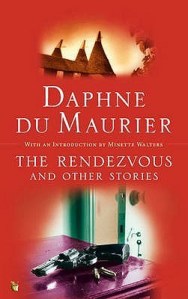
5. The Rendezvous and Other Stories – I read this in 2009 and it was the first Daphne du Maurier book I’d read since Rebecca and Jamaica Inn as a teenager. Like the stories in The Doll, these are early examples of du Maurier’s work and some are too short to be very satisfying, but again there are plenty of signs of the great writer she would become.

I know there are other editions available that contain different combinations of these stories, but I think these are the five main collections. I am now continuing to work through du Maurier’s non-fiction – so far I have read Golden Lads and The Infernal World of Branwell Brontë.

~

If you have read some or all of these books, let me know what you think of my list! Would you have put them in a different order? And if you’re new or nearly new to Daphne du Maurier, which of these are you looking forward to reading?

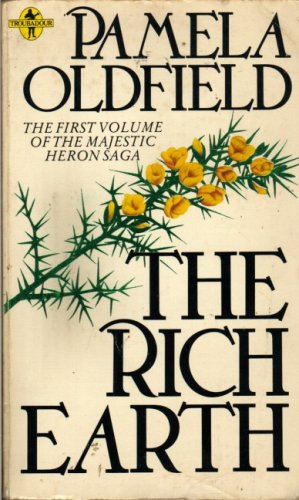
The Rich Earth by Pamela Oldfield

The Rich Earth is the first in a series of four novels following the story of one English family, the Kendals, over the course of more than a hundred years. This particular book, first published in 1980, is set during the Wars of the Roses, one of my favourite periods of history, which is what drew me to it; however, the historical setting is little more than a backdrop as the Kendals spend most of their time on their country estate in rural Devon and only have occasional involvement with the political and military conflict unfolding elsewhere.

The main protagonist of The Rich Earth is Elizabeth Sheldyke who, as the novel opens in 1468, is being married off to Daniel Heron, a much older man who has made his fortune from the tin mines for which Devon is famous. During the journey to her new home and the future that awaits her, Elizabeth briefly meets John Kendal, a young man from Yorkshire who is on his way to London where he is going to be apprenticed to a goldsmith. Time passes and Elizabeth settles into her new life at Heron Manor until, after twelve years of marriage, Daniel dies, leaving her a widow. Shortly afterwards she is reunited with John Kendal who becomes her second husband, but although she loves John, it will be a difficult relationship marred by John’s feelings of inadequacy at living off his wife’s money and by their inability to produce the child and heir they desperately want.

I wasn’t very impressed with this book at first – it seemed like too much of a romance novel with nothing else going on – but it improved as I got further into it and more characters and storylines were introduced. As I’ve said, the Kendals and their neighbours are usually quite detached from events taking place on the battlefield or at court (as far as they are concerned, it makes little difference to them which king wins the war, as either way people like themselves will be taxed to pay for it). However, later in the book, during the Cornish rebellions of 1497, our characters are drawn into the Battle of Deptford Bridge, the siege of Exeter and the invasion by the pretender to the throne, Perkin Warbeck.

The central relationship at the heart of the book – between Elizabeth and John – was difficult to read at times; Pamela Oldfield doesn’t shy away from portraying the misogyny of the period, which includes domestic abuse and cruelty. I felt that Elizabeth was much more forgiving of John’s faults than I would have been, but I suppose that’s easy enough to say from a modern point of view. On the other hand, Elizabeth does value her independence, involving herself in the running of the Heron mines and making decisions on behalf of the estate and its people.

The second book in the Heron saga is This Ravished Land. I haven’t been left feeling desperate to read it immediately, but I haven’t ruled it out either and will keep it in mind for the future.

Book 24/50 read for the 2021 Historical Fiction Reading Challenge.

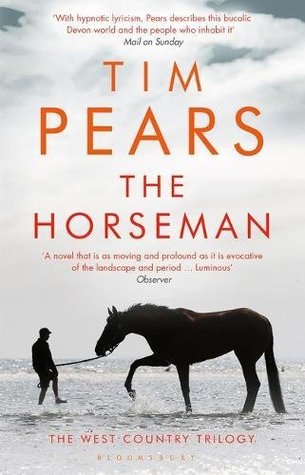
The Horseman by Tim Pears

Tim Pears’ The Horseman is the first in a trilogy of novels set in England’s West Country in the early 20th century. The final book, The Redeemed, was shortlisted for the Walter Scott Prize for Historical Fiction in 2020 and as some of you will know, working through the shortlists for that particular prize is one of my personal reading projects. As I don’t like to start a trilogy or series at the end, I decided to begin with The Horseman in the hope that I would like it enough to want to continue.

Starting in January 1911 and finishing in June 1912, the novel follows the daily life of young Leo Sercombe, the son of a carter who works on the estate of Lord Prideaux on the Devon-Somerset border. Leo has little interest in attending school, preferring to help his family with their work on the farm – and here he has gained a different kind of education: a knowledge of horses and an affinity with nature. Then one day, Leo meets Charlotte, Lord Prideaux’s daughter, and a friendship begins to form based on their shared love of horses.

There’s no doubt that The Horseman is a beautifully written novel, but I’m sorry to have to say that I didn’t enjoy it very much. I’m not necessarily the sort of reader who needs a very strong plot with lots of action on every page, but I do need at least a little bit of plot and this book didn’t seem to have any at all – just one description after another of various farming tasks. As the months go by and the seasons change we are given detailed accounts of grooming horses, gathering hay, ploughing fields, collecting eggs and anything else you can think of that takes place on a large country estate. I suppose it’s not quite true to say that absolutely nothing happens in the novel, because Leo is learning and growing all the time, but because there’s almost no conflict or drama in his life – until right at the very end of the book – I found it difficult to connect with him in any way.

Other reviews of this book are overwhelmingly positive and I can see why, as it’s a lovely, gentle portrayal of a rural community in a time gone forever; unfortunately, it just wasn’t the right book for me. This now leaves me with a dilemma as I had been expecting to go on to read the rest of the trilogy for my Walter Scott Prize project. Am I likely to enjoy the other two books any more than this one? I suspect not, so I might have to leave the 2020 shortlist incomplete.

Book 23/50 read for the 2021 Historical Fiction Reading Challenge.