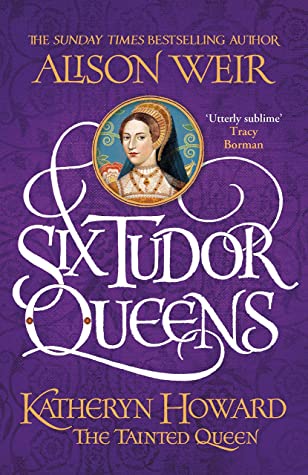
Six Tudor Queens: Katheryn Howard, the Tainted Queen by Alison Weir

Alison Weir’s Six Tudor Queens series aims to retell, in fictional form, the stories of all six of Henry VIII’s wives. This is the fifth book in the series so, as you would expect, the focus is on the fifth wife, Katheryn Howard. Having enjoyed the first three – on Katherine of Aragon, Anne Boleyn and Jane Seymour – I had been slightly disappointed by the one on Anne of Cleves, but I’m pleased to say that I thought this latest book was a return to form.

When Henry VIII sets aside Anne of Cleves and takes nineteen-year-old Katheryn Howard as his next wife, he believes her to be pure, innocent and virtuous, qualities he values highly in a woman. Telling her she is his ‘rose without a thorn’, he is delighted with his young bride and looks forward to her producing another son to secure his lineage. But what Henry doesn’t know is that Katheryn has had more experience with men than he has been led to believe.

Katheryn is surprised to find that, despite the age difference, she is becoming genuinely fond of her obese and ailing husband. The man she really loves, however, is Thomas Culpeper, one of the King’s courtiers, whom she continues to meet in secret even knowing that if they are discovered both of their lives could be in danger. Then there’s Francis Dereham, with whom she was sexually involved before her marriage to the King; Francis won’t leave her alone, insisting that she had been pre-contracted to marry him before she ever met Henry, and Katheryn lives in fear of the King hearing of their relationship.

Of course, history tells us that Katheryn (as Alison Weir chooses to spell her name) will fail to keep her past a secret, that her love affairs with Dereham and Culpeper will become public knowledge and that she will face the same fate as her cousin, Anne Boleyn – but that doesn’t mean there is no tension in this retelling of her story. We know from the start that Katheryn is doomed and we have to watch her make one mistake after another, choose the wrong people to trust and head irreversibly down a path which will lead her to the scaffold. Despite knowing what will eventually happen, though, we are kept in suspense waiting for the moment when she will be betrayed and her secrets will be revealed to Henry.

The novel sticks closely to the known facts of Katheryn Howard’s life; although obviously there are some areas where Weir has to use her imagination or make decisions as to how certain things should be interpreted, she doesn’t seem to invent large chunks of the story as she did in Anna of Kleve, Queen of Secrets. I suppose Katheryn’s life is more well documented than Anne of Cleves’ and already dramatic enough without the need for too much invention.

Although Katheryn is frustratingly naive and reckless, I did have a lot of sympathy for her. A lot of time is spent discussing her early life before her marriage to Henry, when she lived in the household of her father’s stepmother, the Dowager Duchess of Norfolk. The household included several other young women who were also wards of the Duchess and it seems that there was very little supervision and discipline; Katheryn appears to have been easily influenced and sometimes even encouraged by the other girls to behave in a way that would have been seen as promiscuous in the 16th century. Because of the nature of Katheryn’s story, there is a lot of focus on her sex life and her liaisons with various men and this does become a little bit repetitive and tedious at times, but I still found it a more compelling read than the previous book in the series.

I am looking forward to the final novel, which isn’t available yet, but which I’m assuming will be about Katherine Parr, the sixth and final wife.

Thanks to Headline for providing a copy of this book for review via NetGalley.

This is book 8/20 from my 20 Books of Summer list.
Classics Club Spin #24: The Result

The result of the latest Classics Club Spin has been revealed today.

The idea of the Spin was to list twenty books from my Classics Club list, number them 1 to 20, and the number announced by the Classics Club represents the book I have to read before 30th September 2020. The number that has been selected is…

18

And this means the book I need to read is…

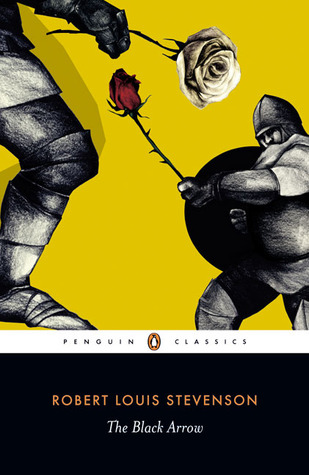
The Black Arrow by Robert Louis Stevenson

Originally serialized in a periodical of boys’ adventure fiction, The Black Arrow is a swashbuckling portrait of a young man’s journey to discover the heroism within himself. Young Dick Shelton, caught in the midst of England’s War of the Roses, finds his loyalties torn between the guardian who will ultimately betray him and the leader of a secret fellowship, The Black Arrow. As Shelton is drawn deeper into this conspiracy, he must distinguish friend from foe and confront war, shipwreck, revenge, murder, and forbidden love, as England’s crown threatens to topple around him.

~

This wasn’t one that I was particularly hoping for from my list, but I’m happy enough with the result. If you’ve read it, let me know what you thought.

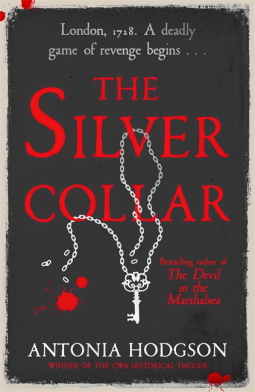
The Silver Collar by Antonia Hodgson

It’s been a four-year wait but The Silver Collar, the fourth book in Antonia Hodgson’s wonderful Thomas Hawkins series, is here at last. If you haven’t yet had the pleasure of meeting ‘Half-Hanged’ Hawkins and Kitty Sparks, this book does work as a standalone, but I would recommend going back to the beginning and starting with The Devil in the Marshalsea.

The Silver Collar is set in 1728. After their adventures in Yorkshire in the previous novel, Tom and Kitty are back in London running Kitty’s bookshop, The Cocked Pistol – ‘an establishment of such ill repute that a brief glance through its window could tarnish the soul‘. The couple still aren’t married and their relationship is still affectionate but stormy – and there are those who seem to want to drive them apart, such as Sir John Gonson, Tom’s old enemy, and the sinister Lady Vanhook.

When Tom is attacked in the street one day by men who appear to be intent on killing him, he is saved only by the intervention of his young ward Sam Fleet, son of an infamous underworld villain. With Sam’s help, Tom begins to investigate, determined to find out who was behind the attack, but while he is preoccupied, Kitty is facing problems of her own and has become reacquainted with a very unwelcome face from her past.

The Silver Collar also introduces another intriguing character by the name of Jeremiah Patience. Jeremiah’s story unfolds in the middle of the book, incorporating escaped slaves, a plantation in Antigua and a little girl forced to wear a silver collar – this was interesting, sensitively written and certainly very topical, but I felt it was a bit too similar to other storylines I’ve been coming across in historical fiction recently. I did like Jeremiah, though, and had a lot of sympathy for his situation.

It was also lovely to meet Tom and Kitty again after such a long wait. Tom, who narrates most of the novel in the first person, is such a great character – a lovable rogue who is always trying his best to reform himself but never quite managing it. In this book, though, his associations with other disreputable figures such as Sam Fleet and his mother Gabriela prove to be very helpful! Kitty is another strong character; I’ve enjoyed getting to know her over the course of the four books and I keep forgetting how young she still is. I didn’t think the parts of the book written from her perspective worked as well as Tom’s, though; they are written in the second person, which always feels a bit strange, I think.

This book is less of a mystery novel than the previous one (A Death at Fountains Abbey); historical thriller is probably a better description. However, we do see Tom keen to put the mystery-solving skills he gained in Yorkshire to good use by establishing a sort of Georgian-style detective agency. Sadly, he becomes too distracted by his own problems to spend much time worrying about other people’s, but maybe this is something that will be returned to in a future book.

I’ve enjoyed all four books in this series, including this one, but I still think The Devil in the Marshalsea was the best. Such a high standard was set with that book, it was always going to be hard for the others to live up to it. They are all entertaining reads, though, and I will look forward to a fifth book and finding out what the future has in store for Tom and his friends.

Thanks to Hodder & Stoughton for providing a copy of this book for review via NetGalley.

This is book 7/20 from my 20 Books of Summer list.
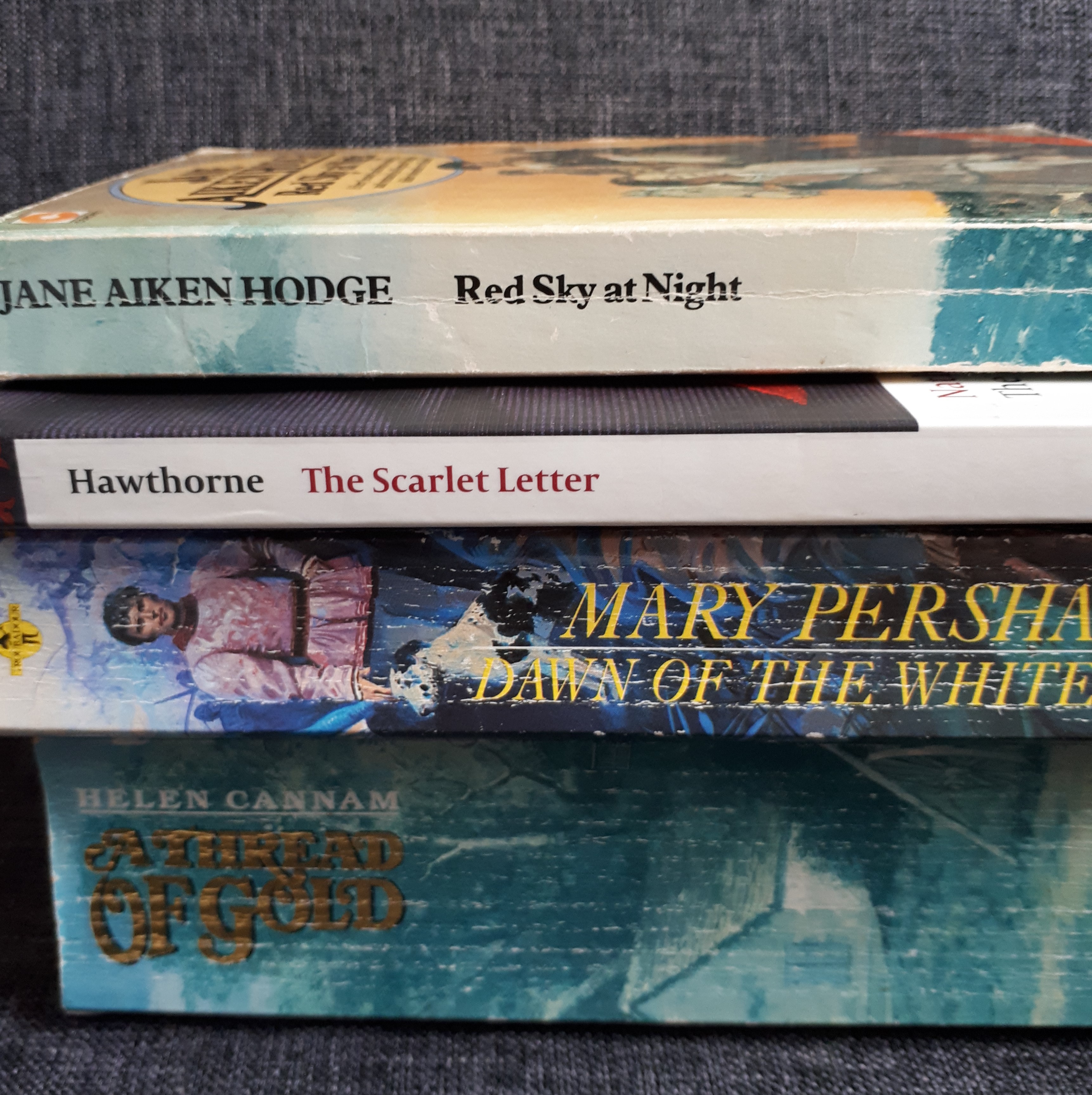
Top Ten Tuesday: Colourful titles on my TBR

The theme for this week’s Top Ten Tuesday (hosted by That Artsy Reader Girl) is Books with Colours in the Titles. Looking at the books I have waiting to be read on my TBR, I was surprised to see how many have a colourful title! Here are ten of them:

1. Red Sky at Night by Jane Aiken Hodge – I have had mixed experiences with Jane Aiken Hodge’s books so far – I’ve enjoyed some but been disappointed by others. I hope this book, which is set in England during the Napoleonic Wars, will be a good one.

2. Black Lamb and Grey Falcon by Rebecca West – I’ve been interested in reading this book about Rebecca West’s journey through 1930s Yugoslavia for years but have been put off by the length. I will make a start on it eventually!

3. Dawn of the White Rose by Mary Pershall – I found this in a charity shop last year. It looks a bit too light and romance-y for my taste, but I was drawn to it because it’s about Isabel de Clare and William Marshal, whom I’ve enjoyed reading about in Elizabeth Chadwick’s books.

4. The Scarlet Letter by Nathaniel Hawthorne – I’ve read some of Nathaniel Hawthorne’s short stories but none of his novels. I’ve had a copy of this one on my shelf for a long time and still haven’t read it.

5. The Black Count: Glory, Revolution, Betrayal, and the Real Count of Monte Cristo by Tom Reiss – This is a non-fiction book on the life of General Thomas-Alexandre Dumas, father of Alexandre Dumas, the author of The Count of Monte Cristo and The Three Musketeers (two of my favourite classics). It has been on my TBR since just after it was published in 2012.

6. Half Blood Blues by Esi Edugyan – Another book that has been on my TBR since 2012, when it was shortlisted for the Walter Scott Prize for Historical Fiction. I still want to read it; it’s just one of those books that I never seem able to get around to!

7. Red Adam’s Lady by Grace Ingram – I downloaded this when it was on special offer for Kindle a while ago. It sounds like an entertaining romantic adventure novel set in medieval England, originally published in the 1970s but recently reissued.

8. A Thread of Gold by Helen Cannam – I found this on the same day as the book above. From the blurb, it seems to be a family saga set in the vineyards of France in the late 19th and early 20th century.

9. The Turquoise by Anya Seton – I read a lot of Anya Seton’s books years ago and loved them, but there are still a few that I haven’t read. This book, set in 19th century New York and New Mexico is one of them.

10. White Corridor by Christopher Fowler – I enjoyed the first four books in Christopher Fowler’s Bryant and May detective series, then for some reason stopped and never continued with the fifth one, White Corridor. I’m determined to read it soon.

~

Have you read any of these? Do you have any colourful titles on your own TBR?

Classics Club Spin #24: My list

I shouldn’t really be taking part in this Classics Club Spin as I still haven’t finished my book from the last Spin, Daniel Deronda (in fact, I’ve only just started it). We have until the end of September to read our books for Spin #24, though, so I will see what comes up – and hope it’s a short one this time!

If you’re not sure what a Classics Spin is, here’s a reminder:

The rules for Spin #24:

* List any twenty books you have left to read from your Classics Club list.
* Number them from 1 to 20.
* On Sunday 9th August the Classics Club will announce a number.
* This is the book you need to read by 30th September 2020.

And here is my list:

1. The Chrysalids by John Wyndham
2. Shadows on the Rock by Willa Cather
3. Nicholas Nickleby by Charles Dickens
4. A Laodicean by Thomas Hardy
5. The White Guard by Mikhail Bulgakov
6. The Cloister and the Hearth by Charles Reade
7. Armadale by Wilkie Collins (re-read)
8. I Will Repay by Baroness Emmuska Orczy
9. La Reine Margot by Alexandre Dumas
10. The Bride of Lammermoor by Sir Walter Scott
11. The Brothers Karamazov by Fyodor Dostoevsky
12. Germinal by Emile Zola
13. Moonfleet by John Meade Falkner
14. Eugene Onegin by Alexander Pushkin
15. Pied Piper by Nevil Shute
16. Goodbye Mr Chips by James Hilton
17. Fire from Heaven by Mary Renault
18. The Black Arrow by Robert Louis Stevenson
19. Jane and Prudence by Barbara Pym
20. Sandokan: The Tigers of Mompracem by Emilio Salgari

~

Have you read any of these? Which number should I be hoping for on Sunday?

Six Degrees of Separation: From How to do Nothing to The Great Impersonation

It’s the first Saturday of the month which means it’s time for another Six Degrees of Separation, hosted by Kate of Books are my Favourite and Best. The idea is that Kate chooses a book to use as a starting point and then we have to link it to six other books of our choice to form a chain. A book doesn’t have to be connected to all of the others on the list – only to the one next to it in the chain.

This month we are starting with How to Do Nothing by Jenny Odell. As usual, I haven’t read it, but here is the blurb:

This thrilling critique of the forces vying for our attention re-defines what we think of as productivity, shows us a new way to connect with our environment and reveals all that we’ve been too distracted to see about our selves and our world.

When the technologies we use every day collapse our experiences into 24/7 availability, platforms for personal branding, and products to be monetized, nothing can be quite so radical as…doing nothing. Here, Jenny Odell sends up a flare from the heart of Silicon Valley, delivering an action plan to resist capitalist narratives of productivity and techno-determinism, and to become more meaningfully connected in the process.

I don’t think this is a book I would be interested in reading, but if you’ve read it let me know what you thought.

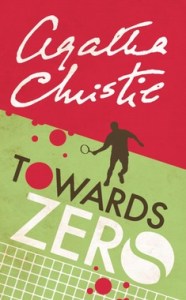
Another word for ‘nothing’ is ‘zero’, so my first link takes me to Towards Zero by Agatha Christie (1), one of only five Christie novels to feature the detective Superintendent Battle. In this book, which I remember enjoying, Battle is investigating the murder of Lady Tressilian in her home by the sea.

Tressilian is also the name of the main character in Rafael Sabatini’s The Sea-Hawk (2). Sir Oliver Tressilian is a gentleman from Cornwall who is betrayed and sold into slavery before being liberated by Barbary pirates who operate from the city of Algiers. I love Sabatini’s books and can highly recommend this one!

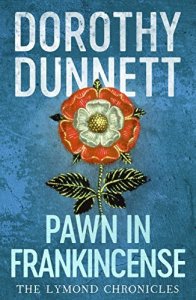
Pawn in Frankincense by Dorothy Dunnett (3) is also set partly in Algiers, as well as several other beautifully described locations around the Mediterranean and North Africa. This, and the other five novels that make up Dunnett’s Lymond Chronicles, are some of my absolute favourites, but if you haven’t read them yet you really need to start with The Game of Kings.

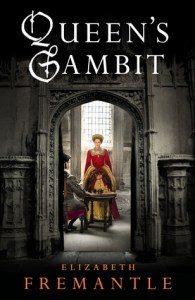
All of the books in the Lymond Chronicles have titles inspired by the game of chess. So does Queen’s Gambit by Elizabeth Fremantle (4), a novel set at the Tudor court and telling the story of Katherine Parr, Henry VIII’s sixth and final wife. The story is told partly from Katherine’s perspective and partly from her maid, Dorothy Fownten’s. Although I think some of Fremantle’s later books are better, I did enjoy this one.

My next link is to another book about a queen – a self-proclaimed queen this time, rather than a real one! Queen Lucia by EF Benson (5) is the first book in Benson’s Mapp and Lucia series; it was my choice for the 1920 Club earlier this year and kept me entertained during the early stages of lockdown when I really needed something fun and light!

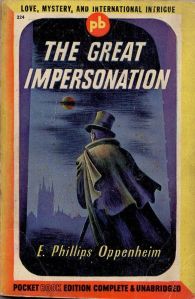
Like Queen Lucia, The Great Impersonation by E Phillips Oppenheim (6) was also published in 1920 and is also a lot of fun to read. It has a very clever plot involving a case of mistaken identities and keeps the reader guessing until the end.

~

And that’s my chain for this month. My links have included synonyms for ‘nothing’, the name Tressilian, Algiers, chess-related titles, queens and the year 1920. In September we will be starting with Curtis Sittenfeld’s latest novel, Rodham.

My Commonplace Book: July 2020

A selection of words and pictures to represent July’s reading:

commonplace book
noun
a book into which notable extracts from other works are copied for personal use.

~

“Yes, I do like to read mysteries. They’re very helpful in my line of work. Of course, real life and fiction are very different, but the way of thinking – the logical thought process – is useful practice for anything life throws at you.”

The Honjin Murders by Seishi Yokomizo (1946)

~

Portrait of Amy Robsart by Charles Robert Leslie

Her eyes met mine and I felt a ripple of shock at the pain and disillusionment I saw there. This woman and I were not so dissimilar though she was Queen of England in her own right and surrounded by all the trappings of majesty. She could not command a man’s good opinion or his loyalty, nor could she, apparently, bear his child.

The Forgotten Sister by Nicola Cornick (2020)

~

Literary festivals all over the country turn writers into performers and open doors into their private lives that, I often think, would be better left closed. In my view, it’s more satisfying to learn about authors from the work they produce than the other way round.

Moonflower Murders by Anthony Horowitz (2020)

~

I want to call it coincidence but I have occasionally wondered whether time can fold in on itself and allow some people, if they are sensitive enough, a glimpse of the future. Some are more receptive to the invisible workings of the world, can intuit things in the way a dog can smell fear. It is often called a gift but to me it seems more of a blight.

The Honey and the Sting by EC Fremantle (2020)

~

Female pilot of the Air Transport Auxiliary.

She smiles awkwardly. ‘Is it really so perplexing for you to see a woman in a cockpit?’

‘No. Why?’

‘You look at me so oddly, and when you first saw me you seemed…’

‘What?’

‘Shocked.’

When We Fall by Carolyn Kirby (2020)

~

My point is that while I was fretting over such nonsense, I failed to notice the one thing that mattered: we were happy. Other people had noticed, however – and they were most decidedly not happy. Envy snaps its teeth at the heels of good fortune, and there is nothing in the world more destructive than a man who wants what he cannot have.

The Silver Collar by Antonia Hodgson (2020)

~

Here was where one came to buy goods from the Rain Wilds: perfume gems with their eternal fragrances; wind chimes that played endless, never-repeating melodies; objects made of gleaming jidzin; and hundreds of other magical items…Containers that heated or chilled whatever was put into them. A statue that awoke as a babe every day, aged through the day, and ‘died’ at night as an old man, only to be reborn with the dawn. Summer tapestries that smelled of flowers and brought warmth to the room when hung. Items that existed nowhere else in the world and were impossible to duplicate.

City of Dragons by Robin Hobb (2011)

~

Favourite book read in July:

Moonflower Murders

New authors read in July

Seishi Yokomizo

Countries visited in my July reading:

Japan, England, Poland, fictional Realm of the Elderlings

~

Have you read any of these books? Which books did you enjoy reading in July?